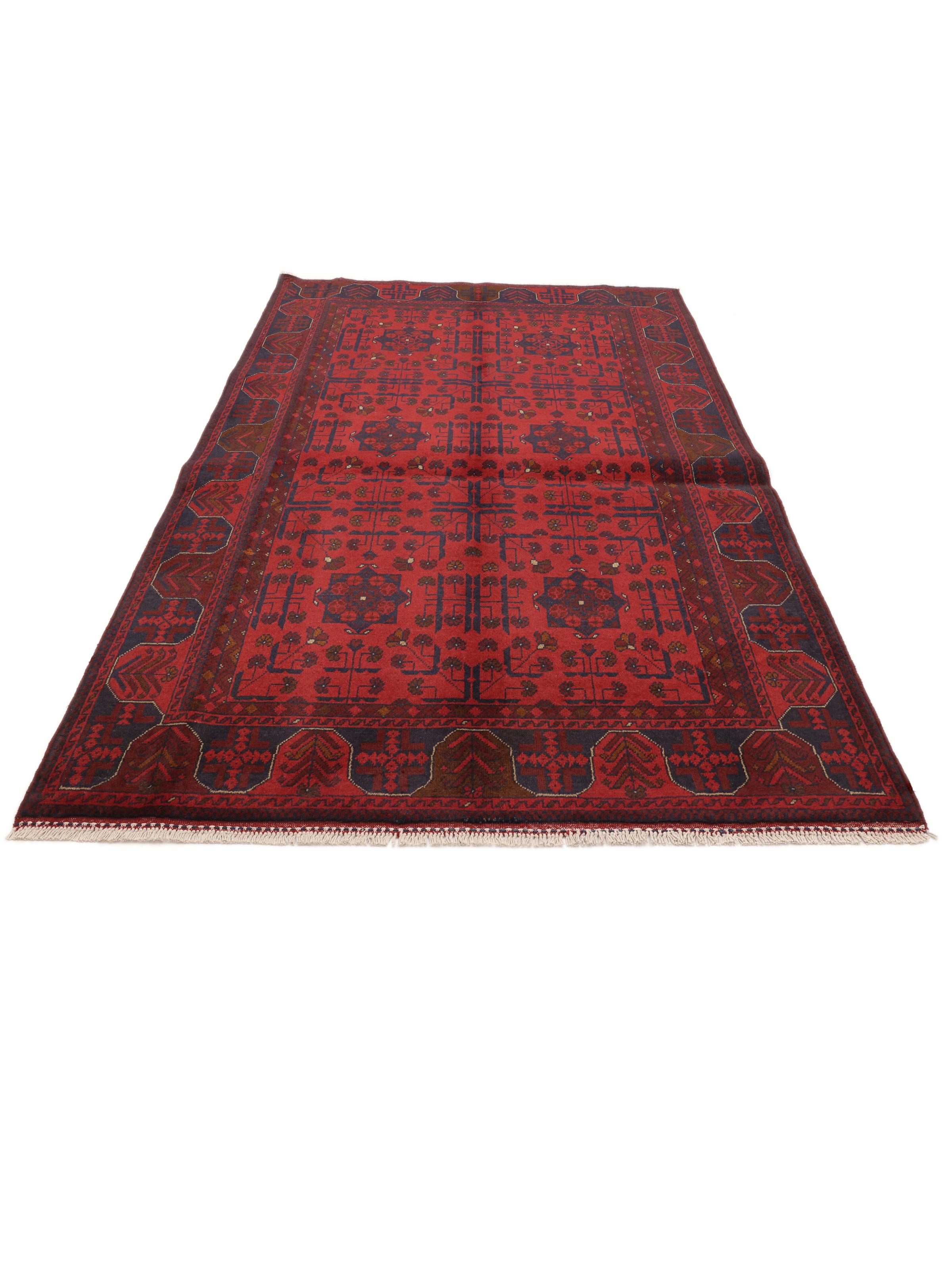
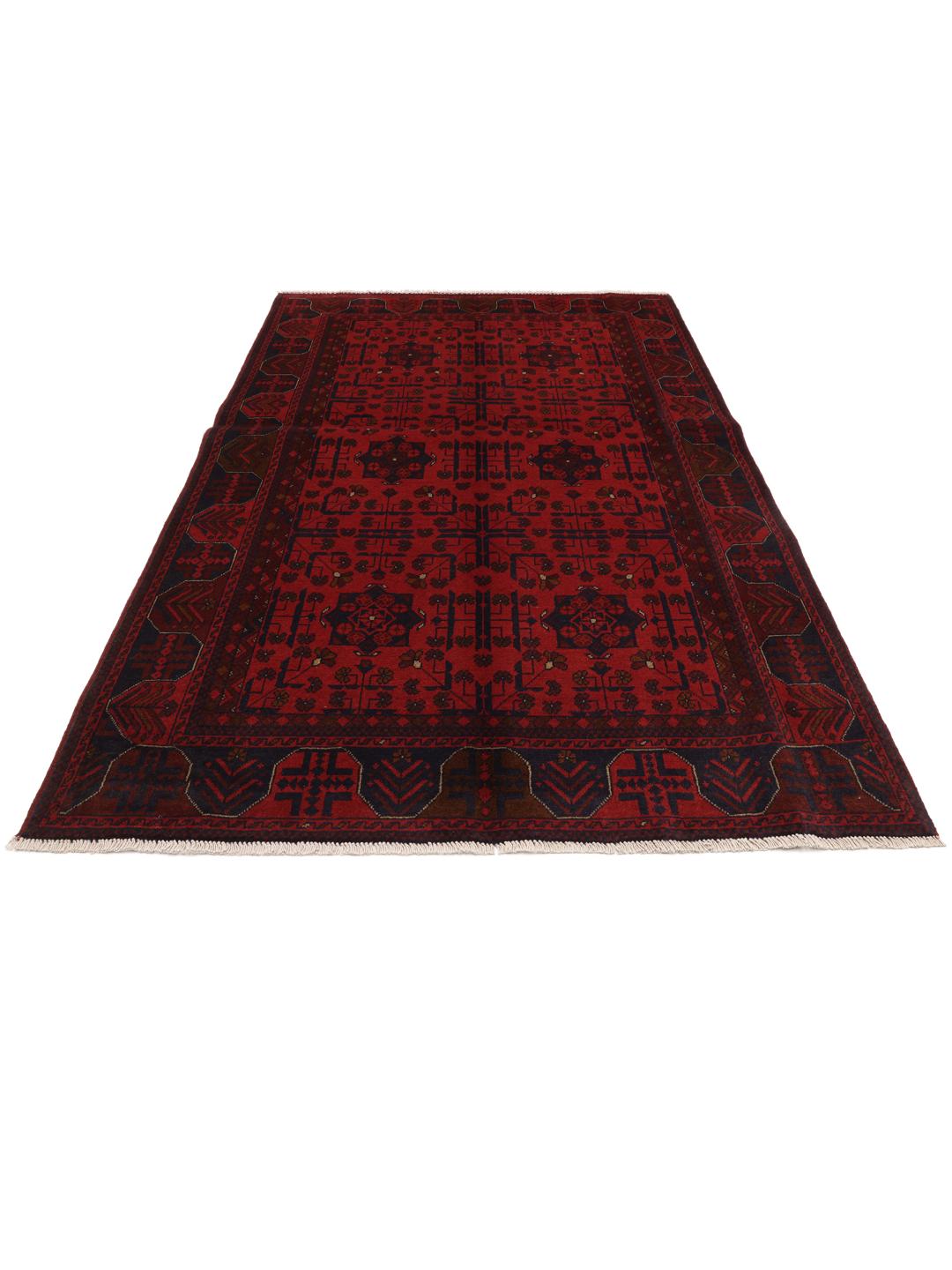
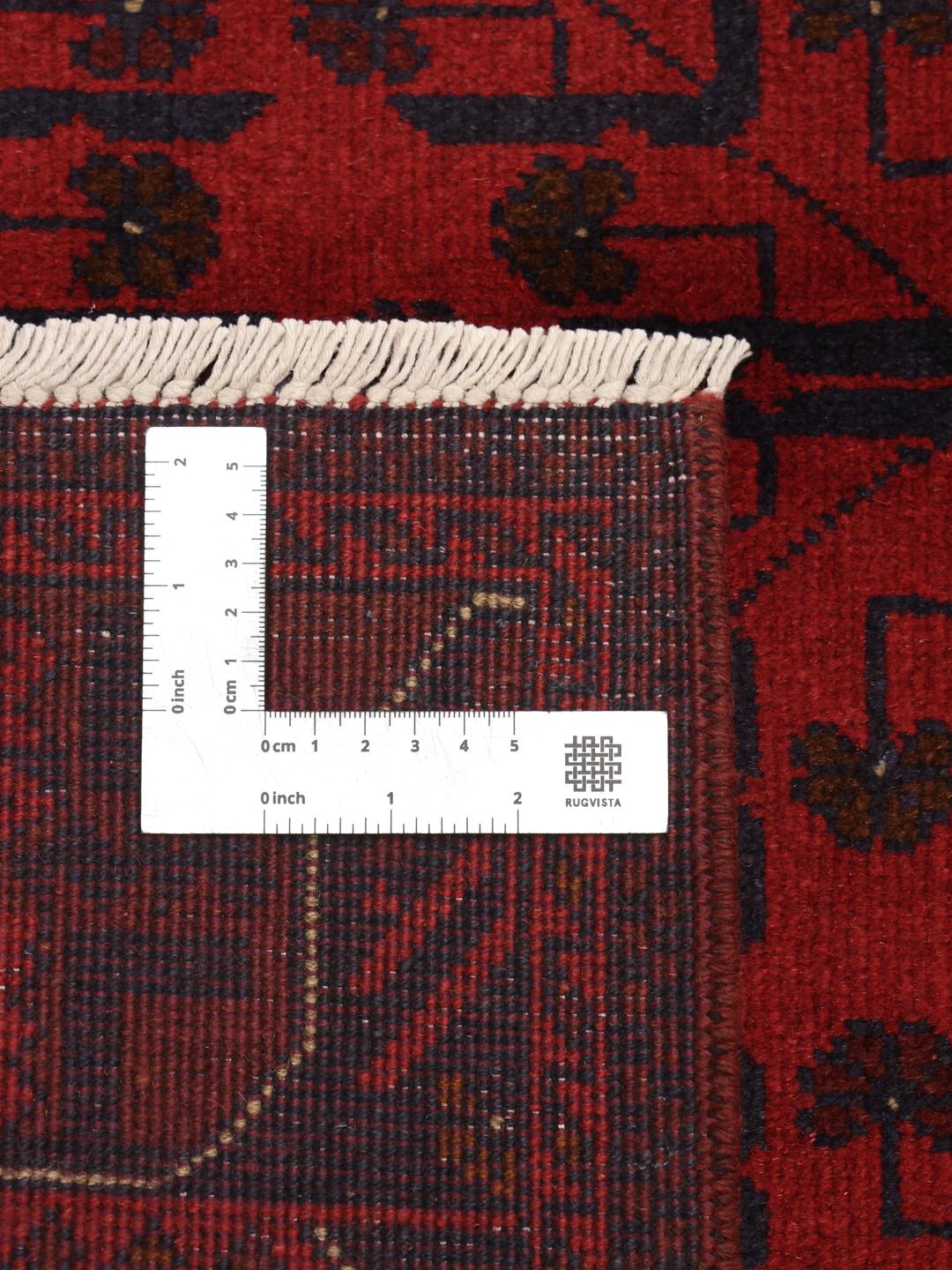
The Khal Mohammadi rug takes its name from the legendary Afghan weaver who first developed this specific style. These rugs represent the pinnacle of Afghan weaving, often produced by Turkmen tribes living in northern Afghanistan. This tradition has evolved over decades, blending ancient nomadic weaving techniques with a refined aesthetic that has made them some of the most sought-after rugs from the region.
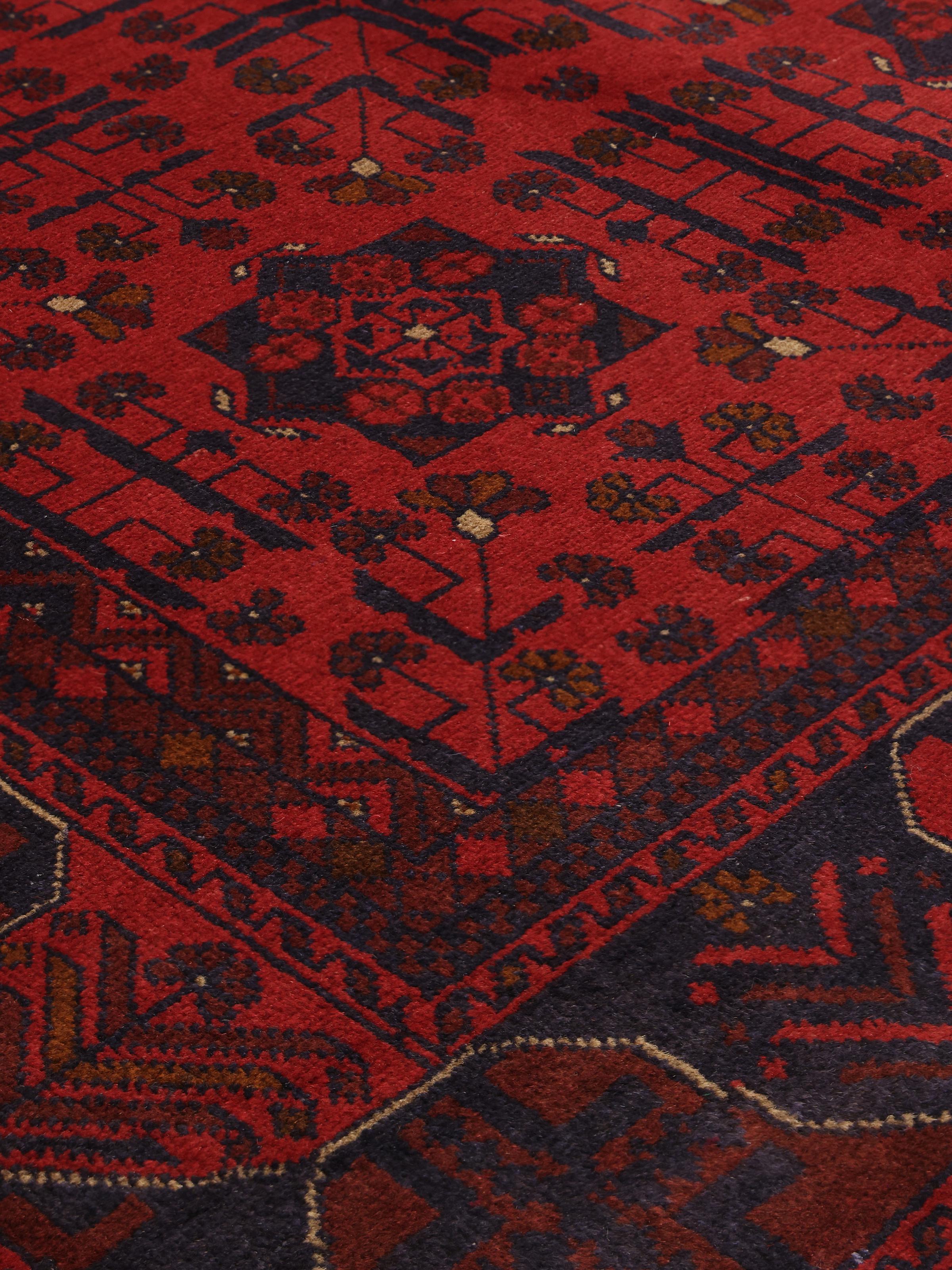
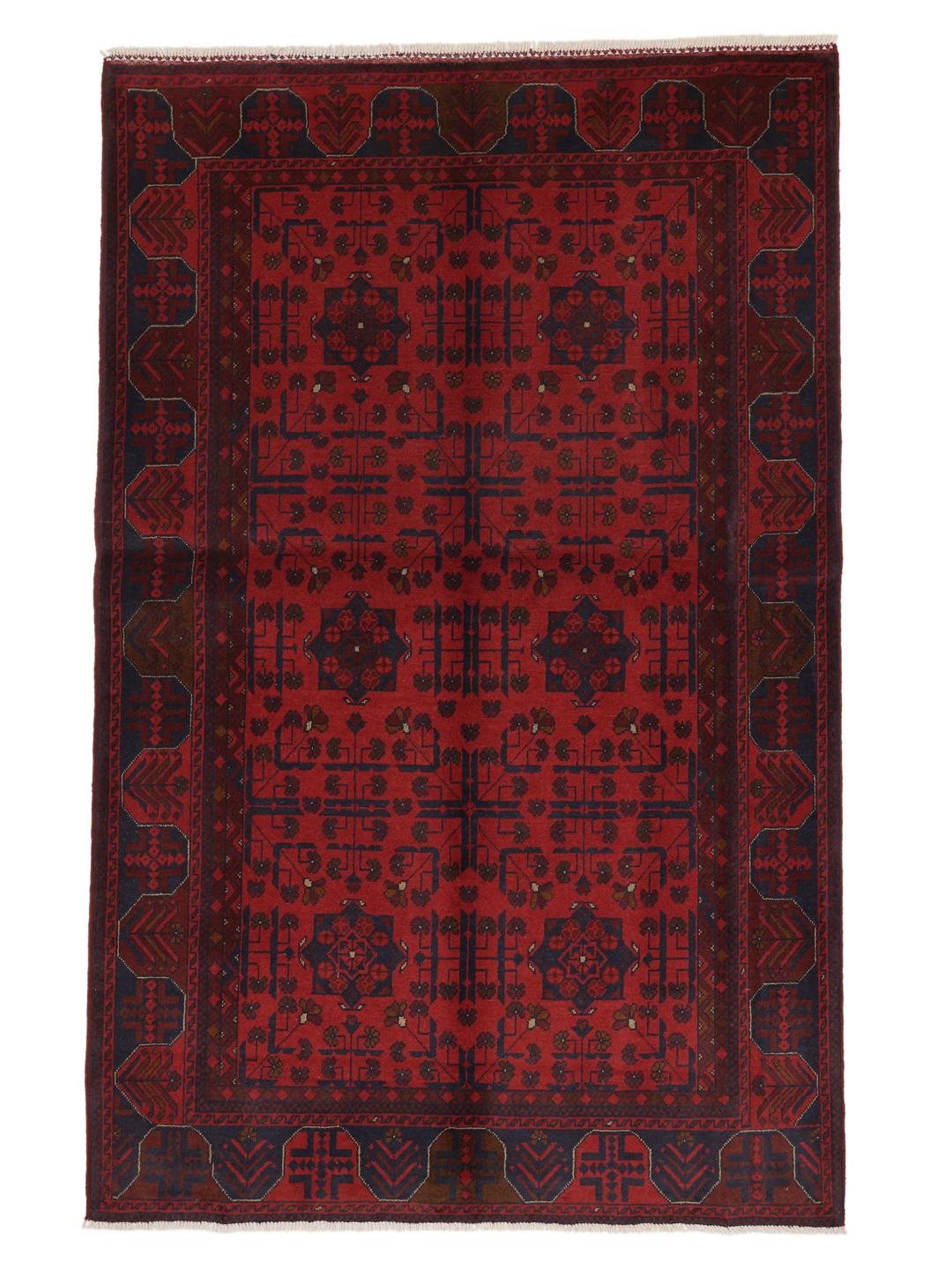
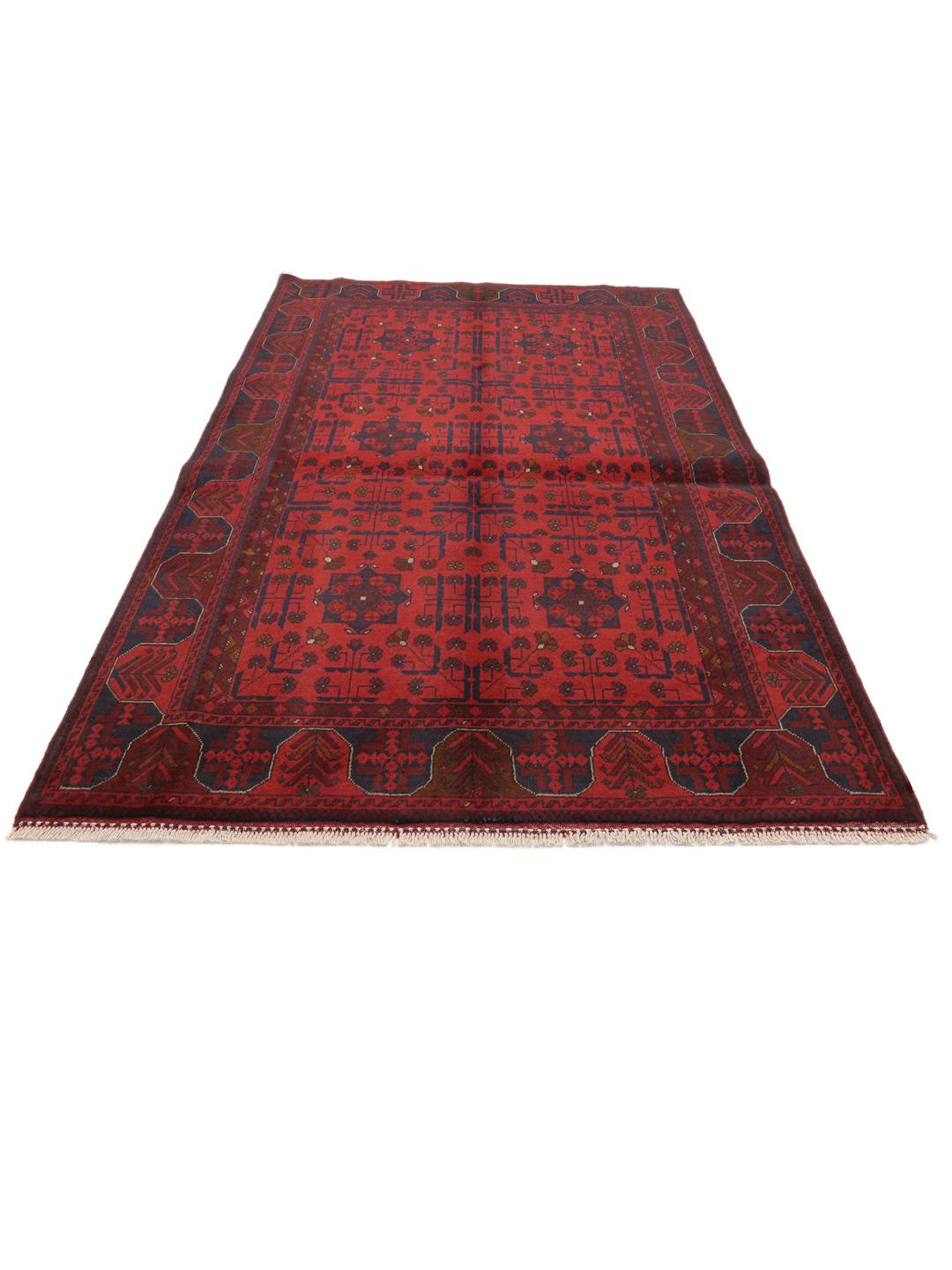
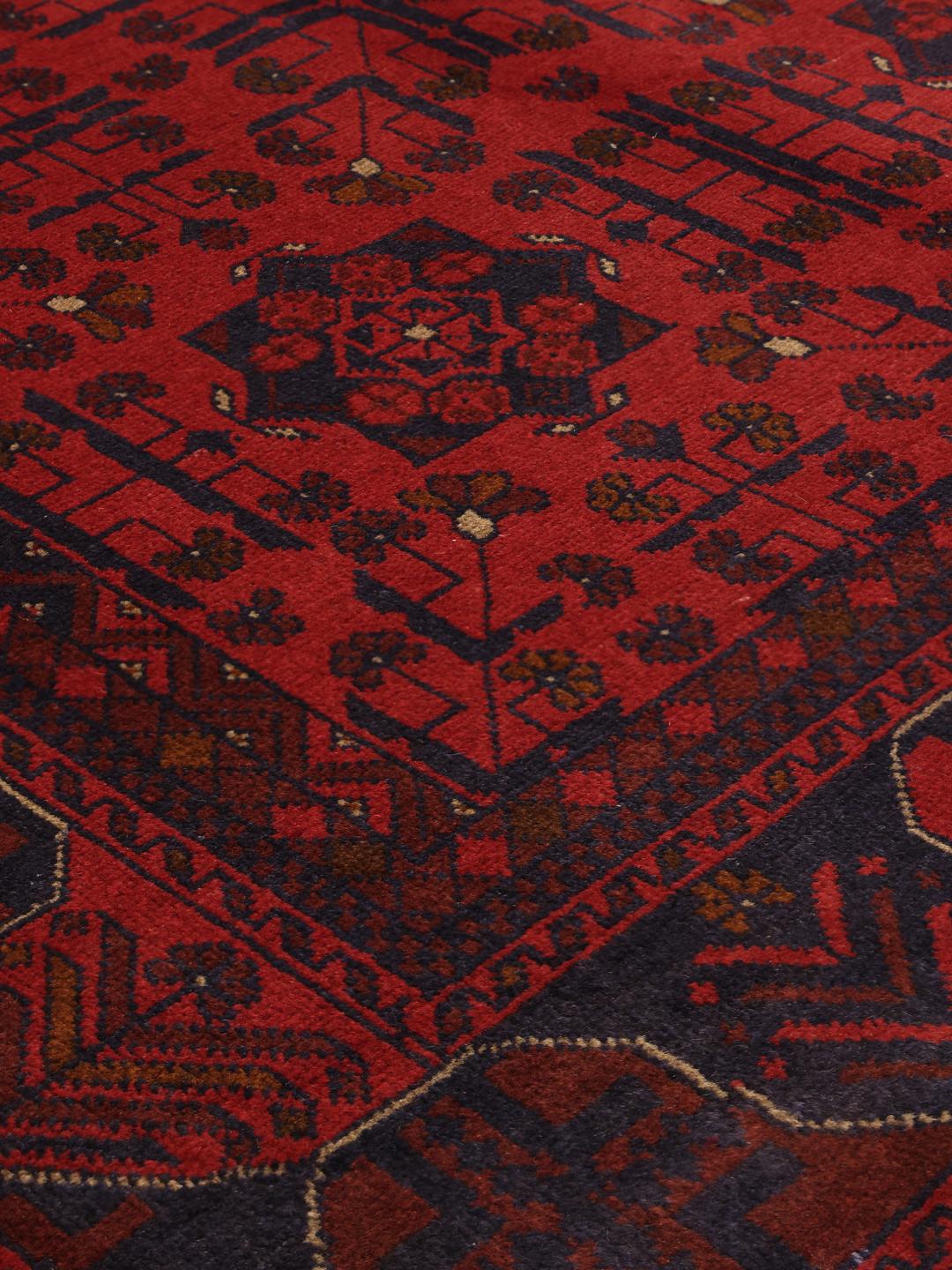
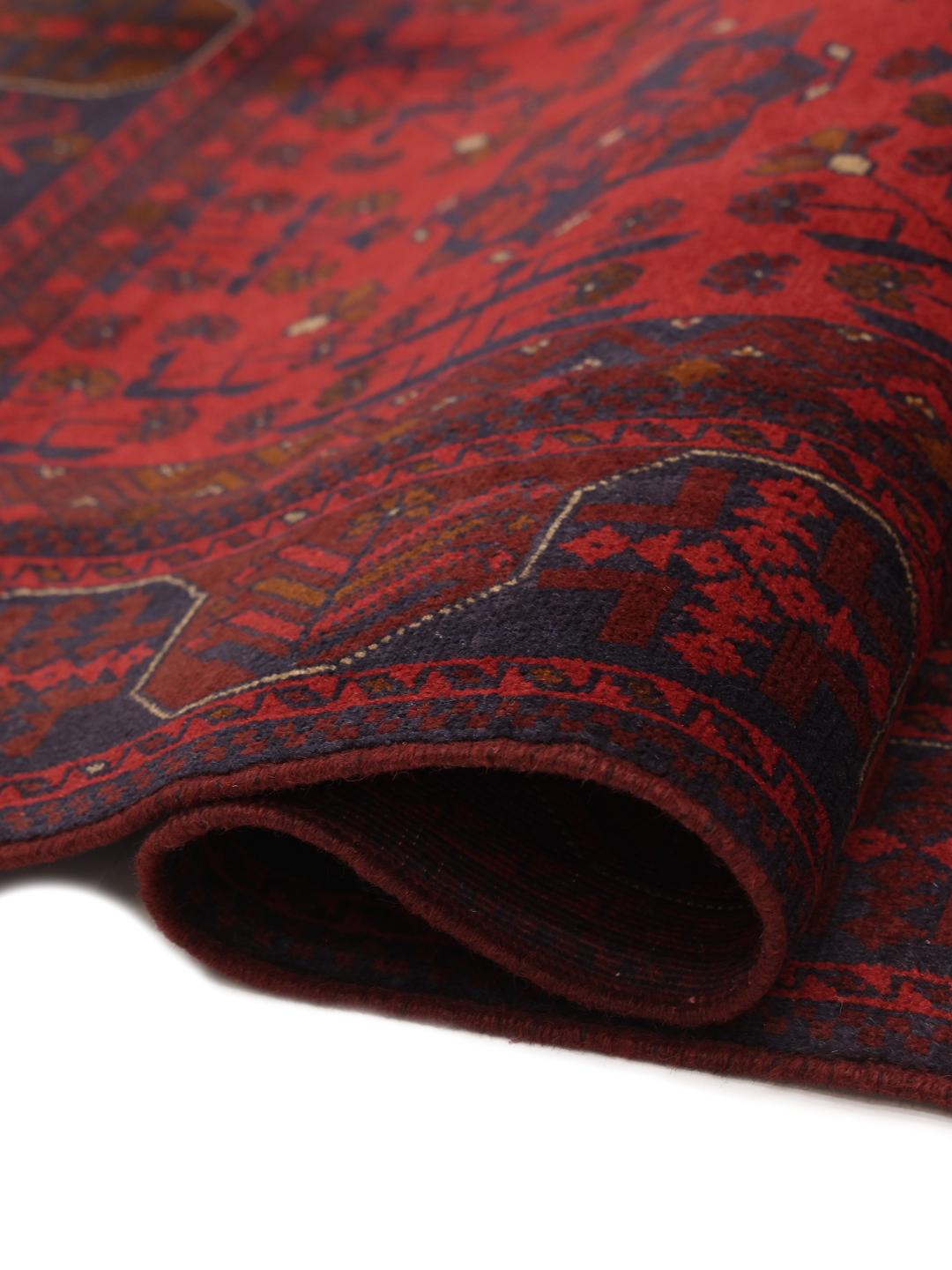
The hallmark of a true Khal Mohammadi is its deep, saturated red palette, often accented with dark blue or black geometric patterns. The term itself is often used to describe a specific quality of wool and dye process that results in a lustrous, velvety finish. The use of high-quality wool is essential to this tradition, as it absorbs the natural dyes beautifully, creating a depth of colour that changes subtly depending on the light in the room.
Signature motifs in these rugs are typically geometric, often featuring repeating guls or octagonal medallions that represent family or tribal identity. The borders are usually intricate, framing the field with repeating patterns that draw the eye inward. The precision of these patterns is a testament to the weaver’s memory and skill, as they often work from traditional designs passed down through generations without the need for written patterns.
Collecting a Khal Mohammadi rug is an investment in cultural heritage. These rugs are prized by collectors worldwide not just for their visual impact, but for the human story they tell. By owning one, you participate in a tradition that values patience, skill, and the preservation of ancient craft. It is a piece that connects the modern home to the enduring spirit of Central Asian artistry.