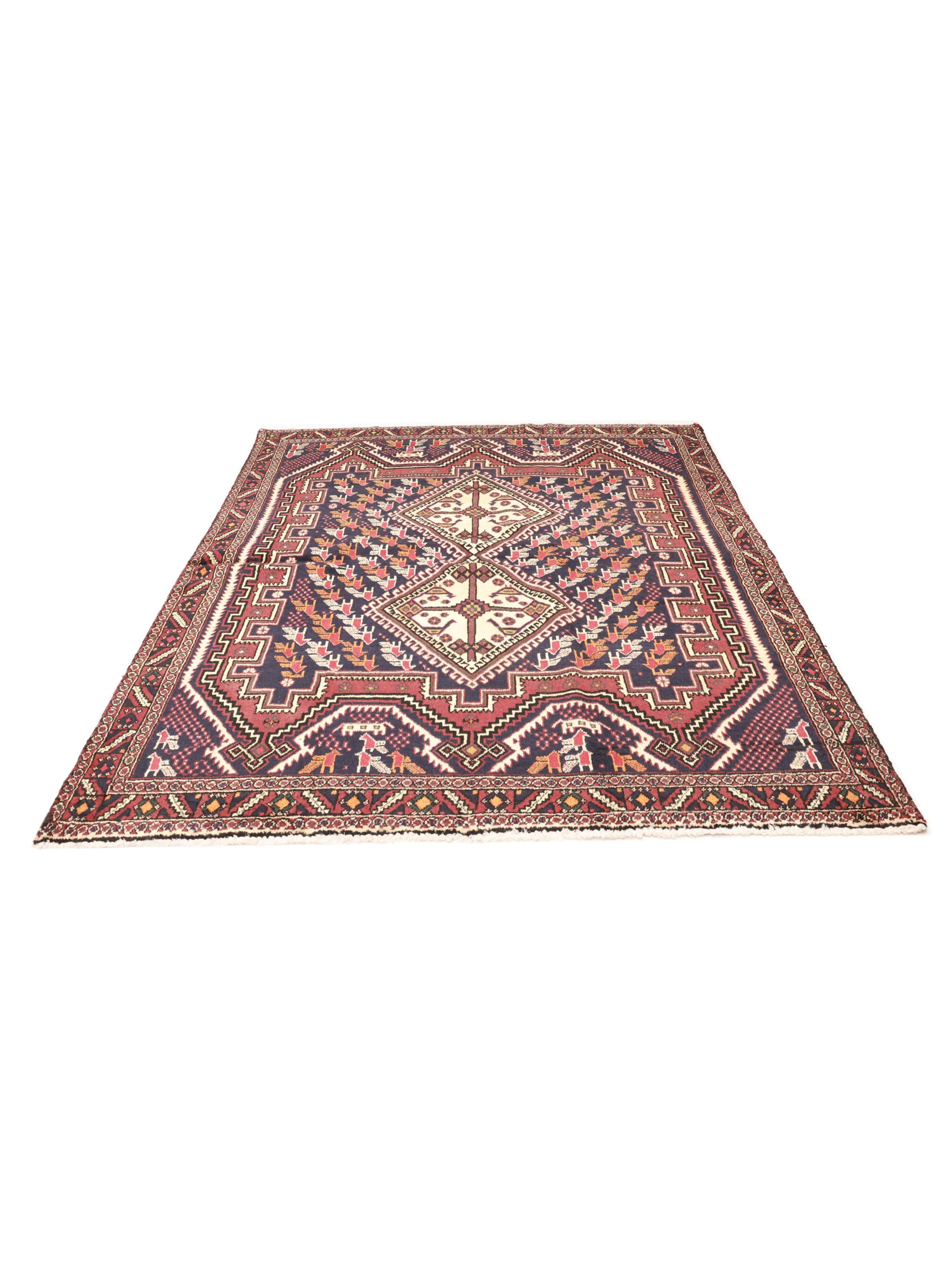
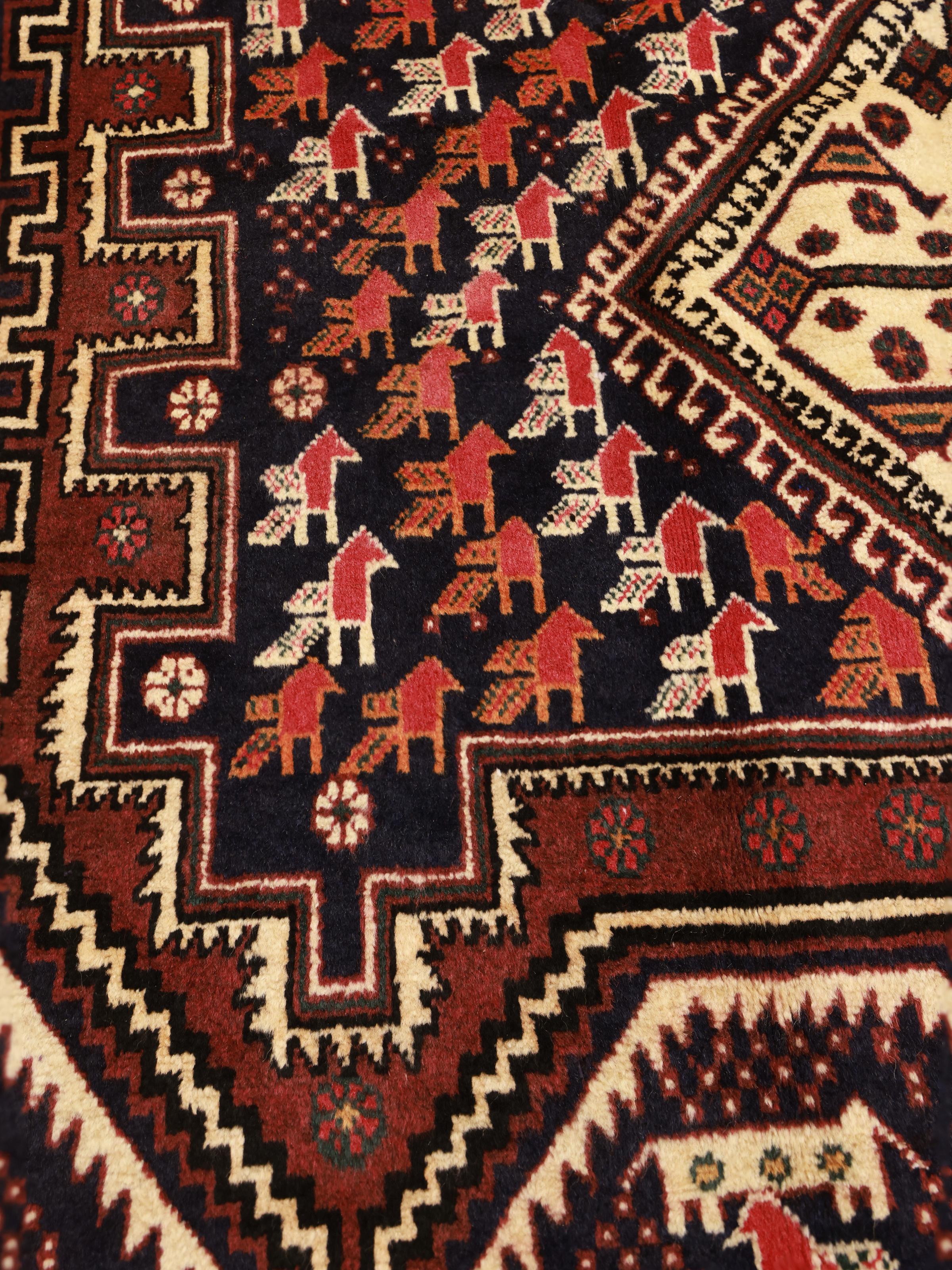
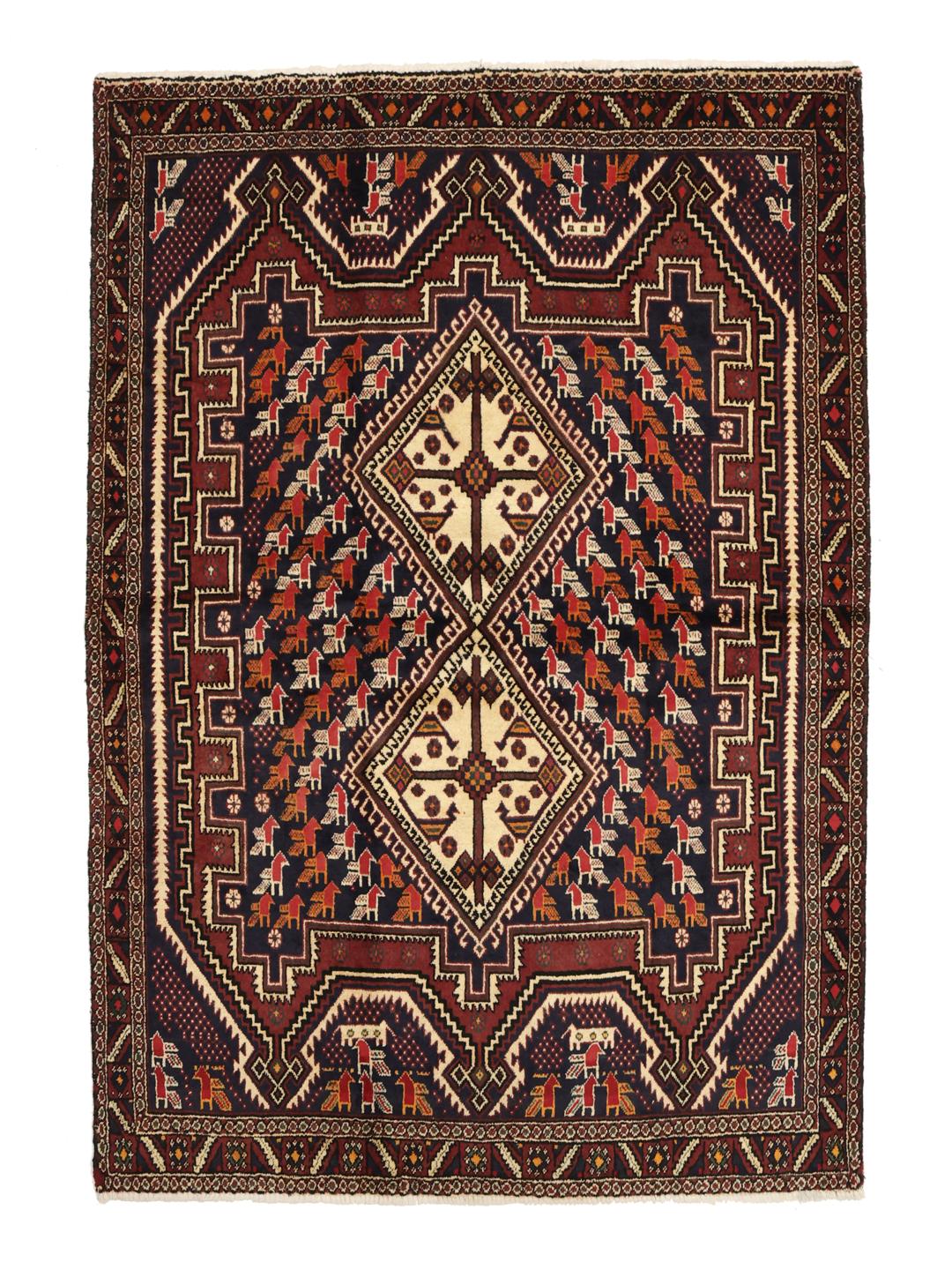
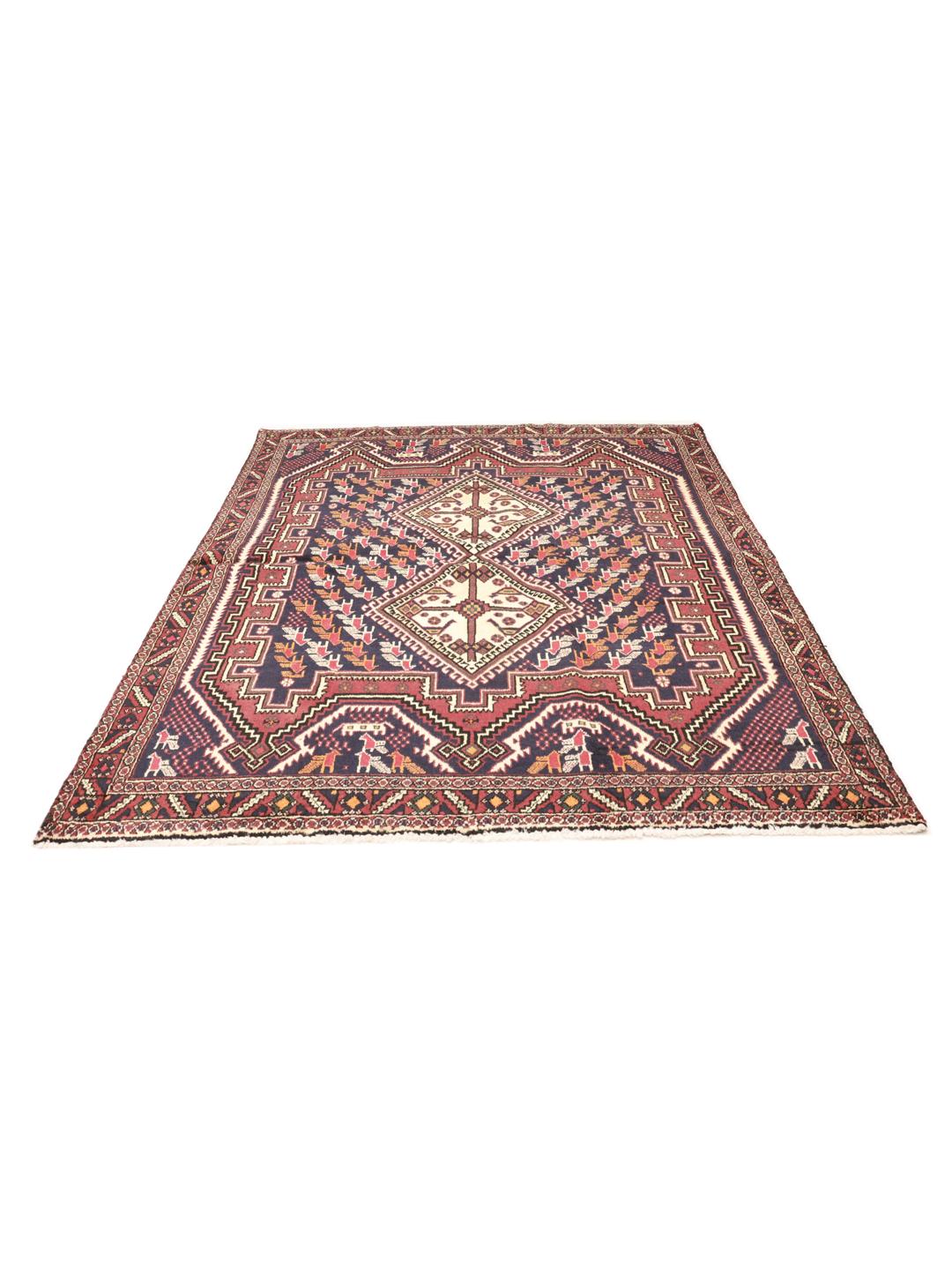
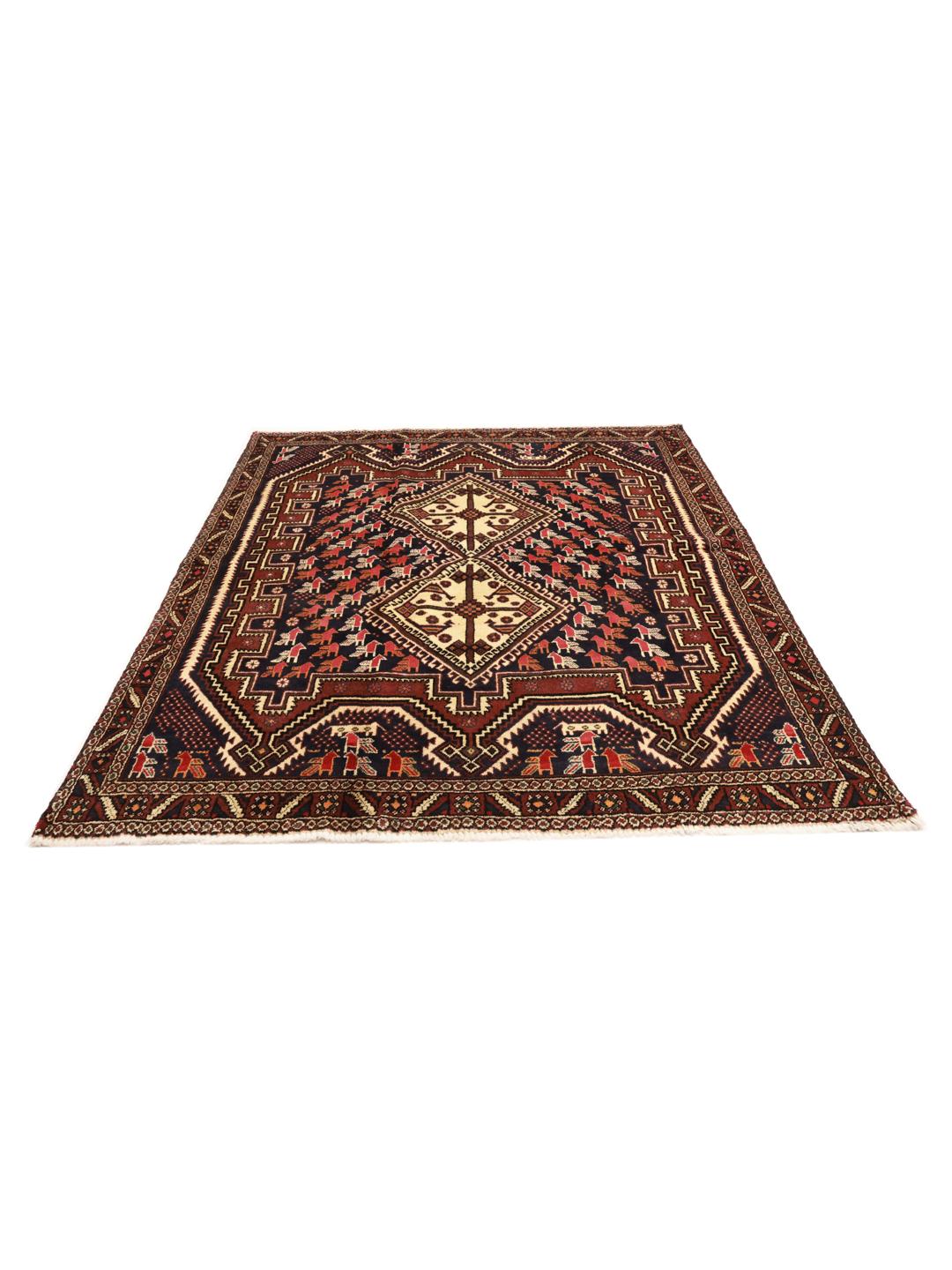
The Afshar Shahre Babak rugs originate from the nomadic and semi-nomadic Afshar tribes of the Middle East. These people have a long, storied history of rug weaving, traditionally using their craft to create functional items for tent life, such as storage bags and floor coverings. Over time, these weaving traditions evolved into the sophisticated, highly sought-after rugs we see today.
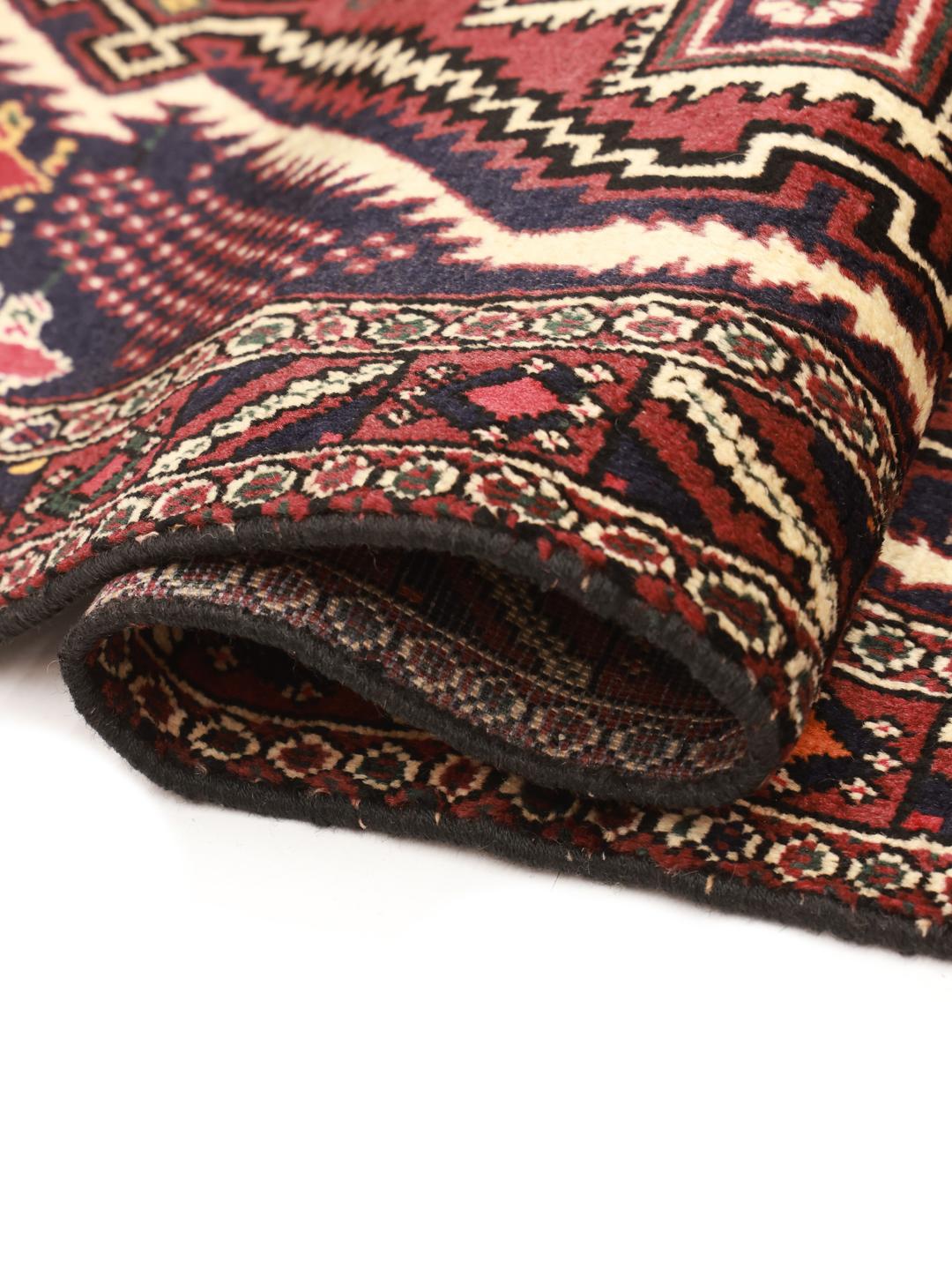
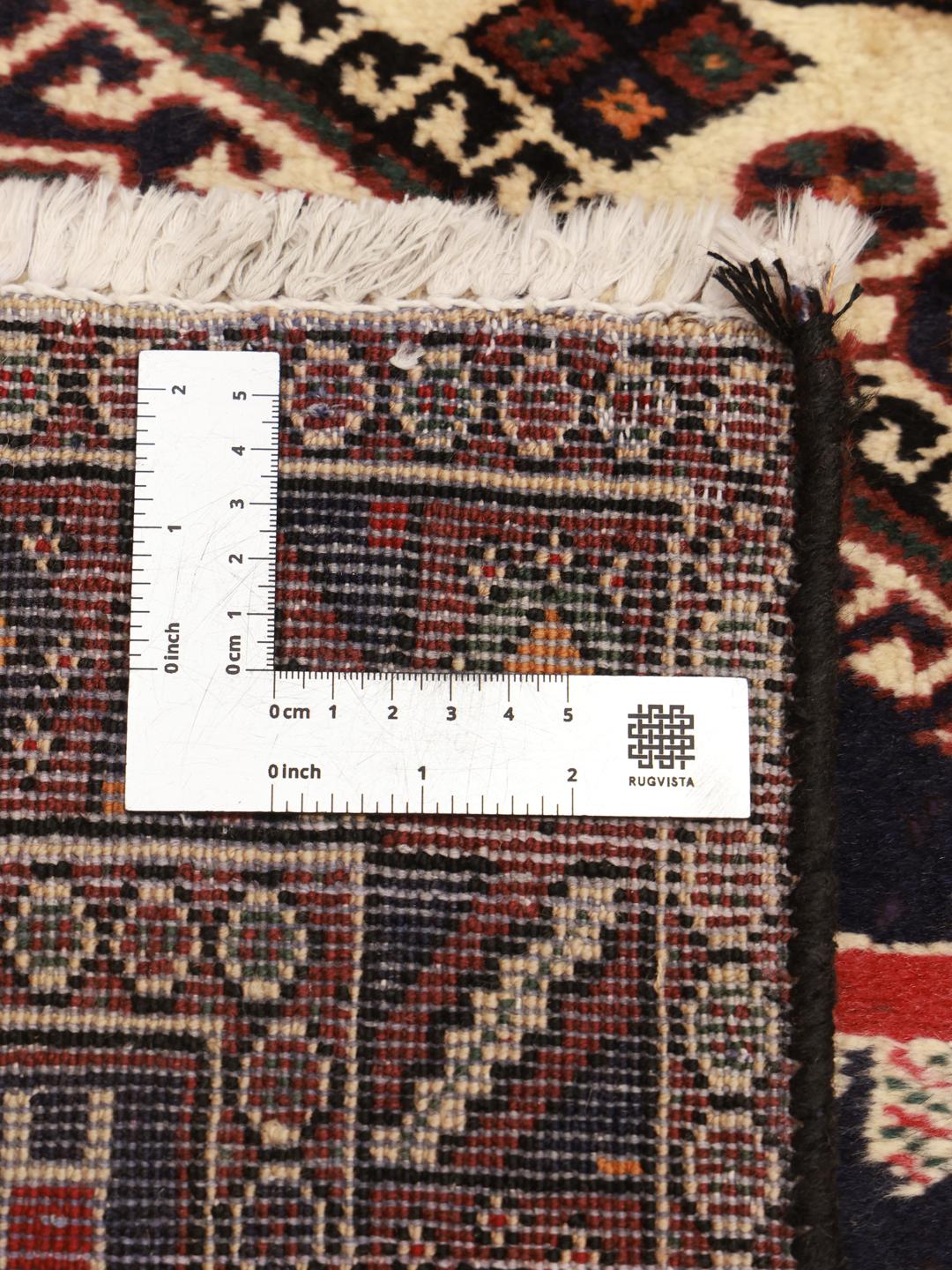
The term 'Shahre Babak' refers to a specific region and style within the broader Afshar tradition. These rugs are known for their technical excellence and the use of high-quality materials. The construction typically involves a very sturdy foundation, which allows for a finer knot count and more intricate, detailed designs that distinguish them from other tribal weavings.
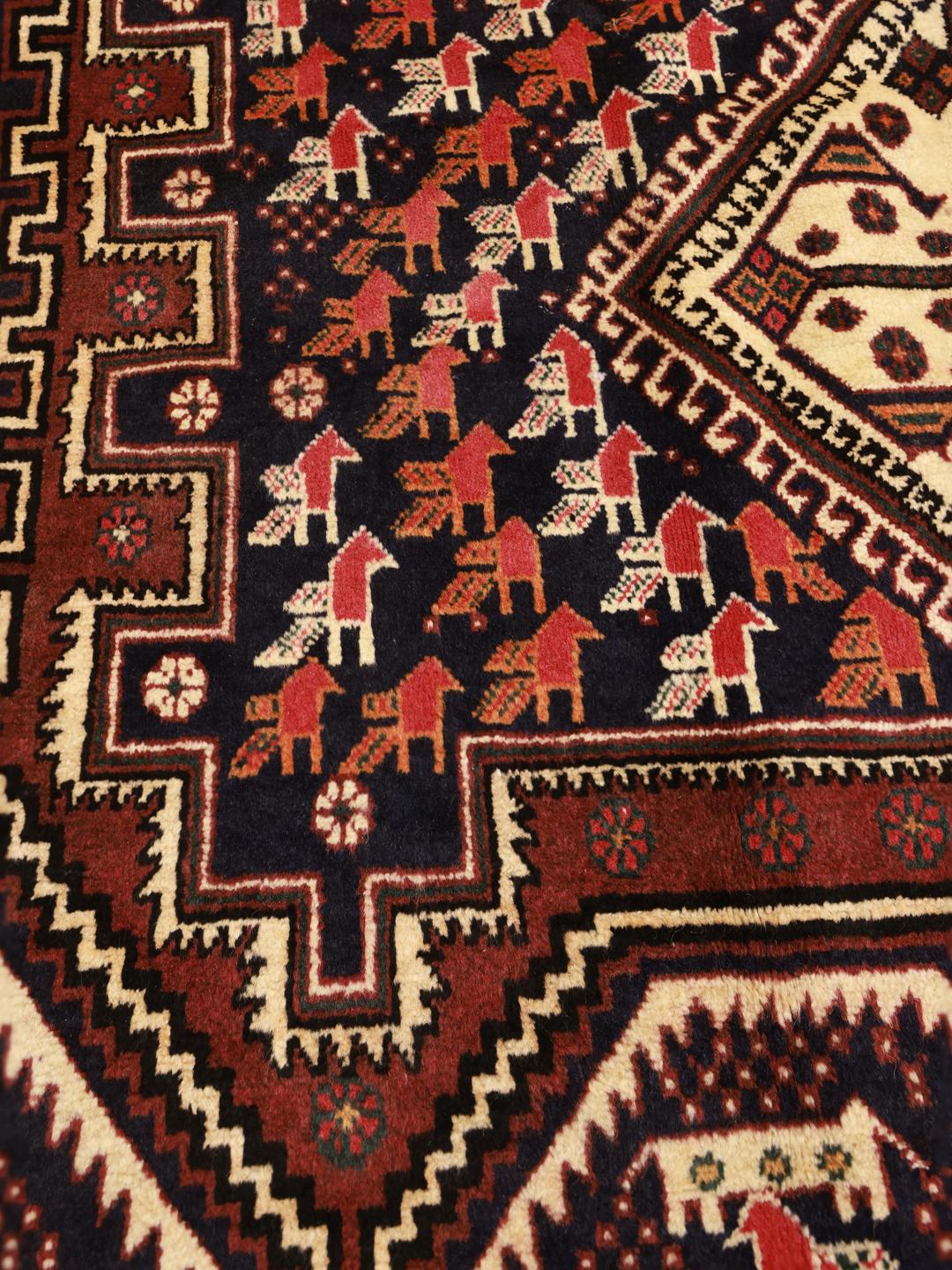
Visually, these rugs are celebrated for their bold use of colour and storytelling motifs. While many tribal rugs lean toward purely geometric patterns, the Afshar Shahre Babak often incorporates stylized animals and human-like figures, set against deep, saturated fields of red and blue. The borders are usually narrow but complex, framing the central field with precision.
Collecting an Afshar Shahre Babak rug is an act of preserving a dying art form. These pieces represent a bridge between the ancient nomadic lifestyle of the Middle East and modern interior design. They are valued not just for their aesthetic beauty, but for the immense human skill required to produce them, making them essential pieces for any serious textile collection.