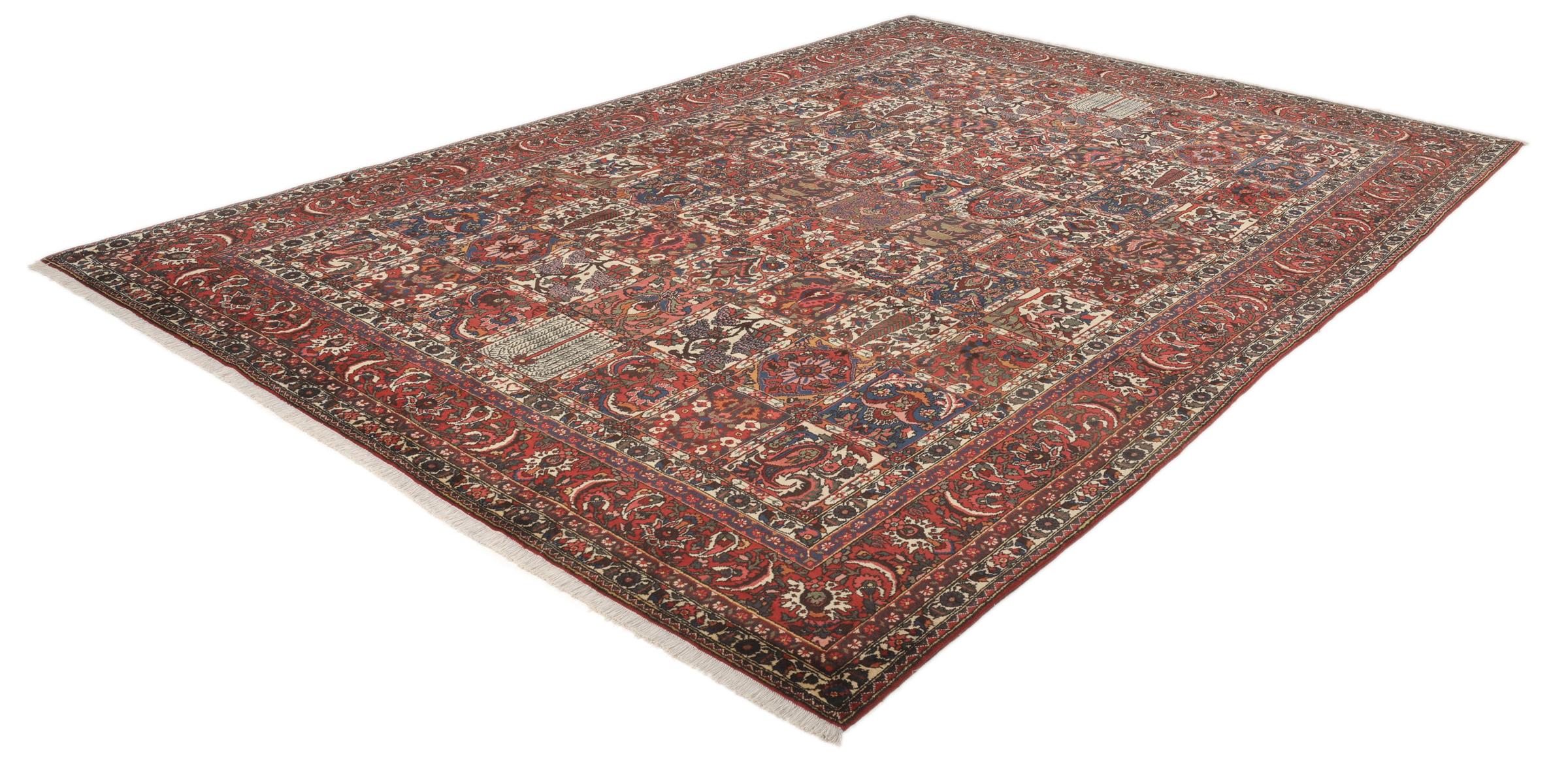
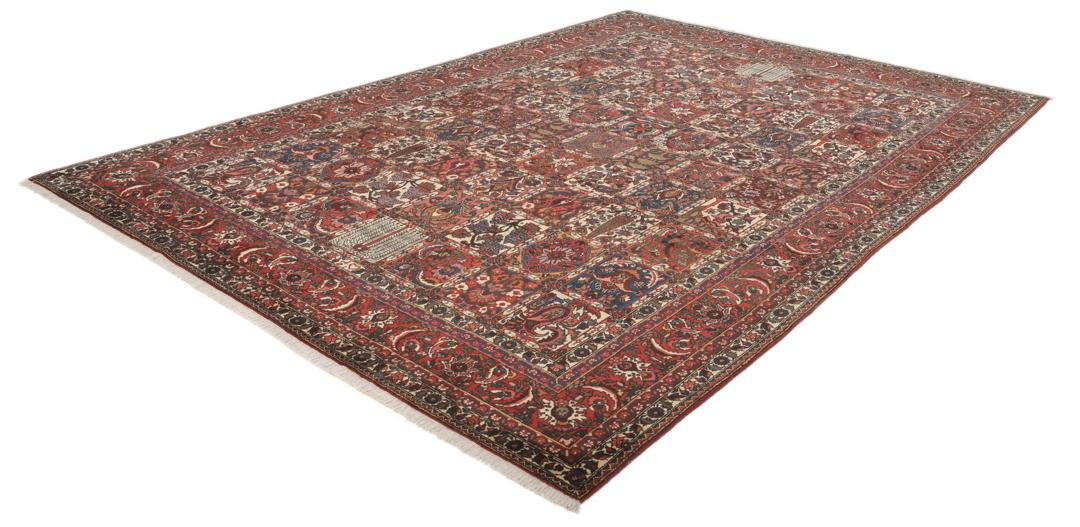
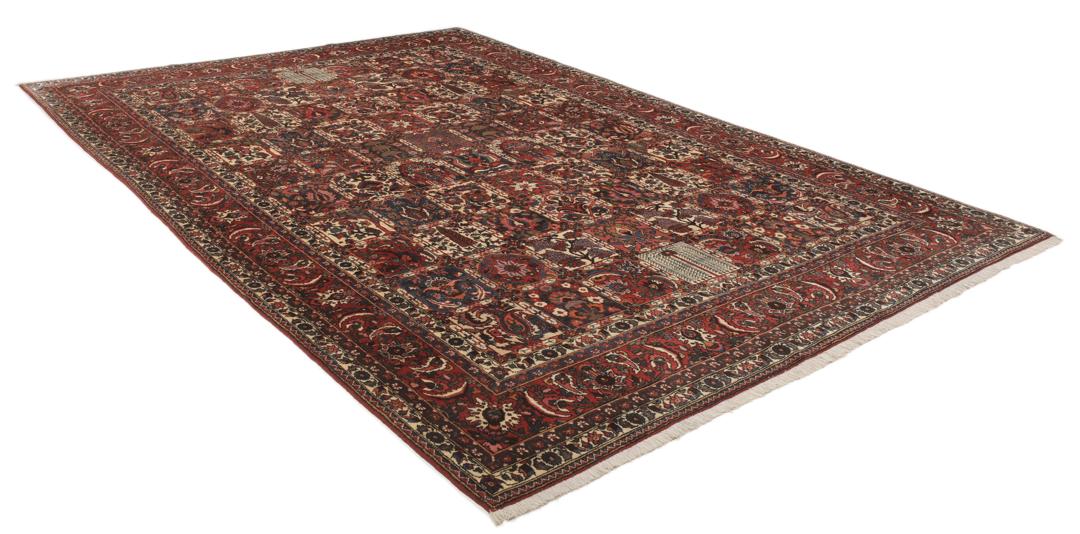
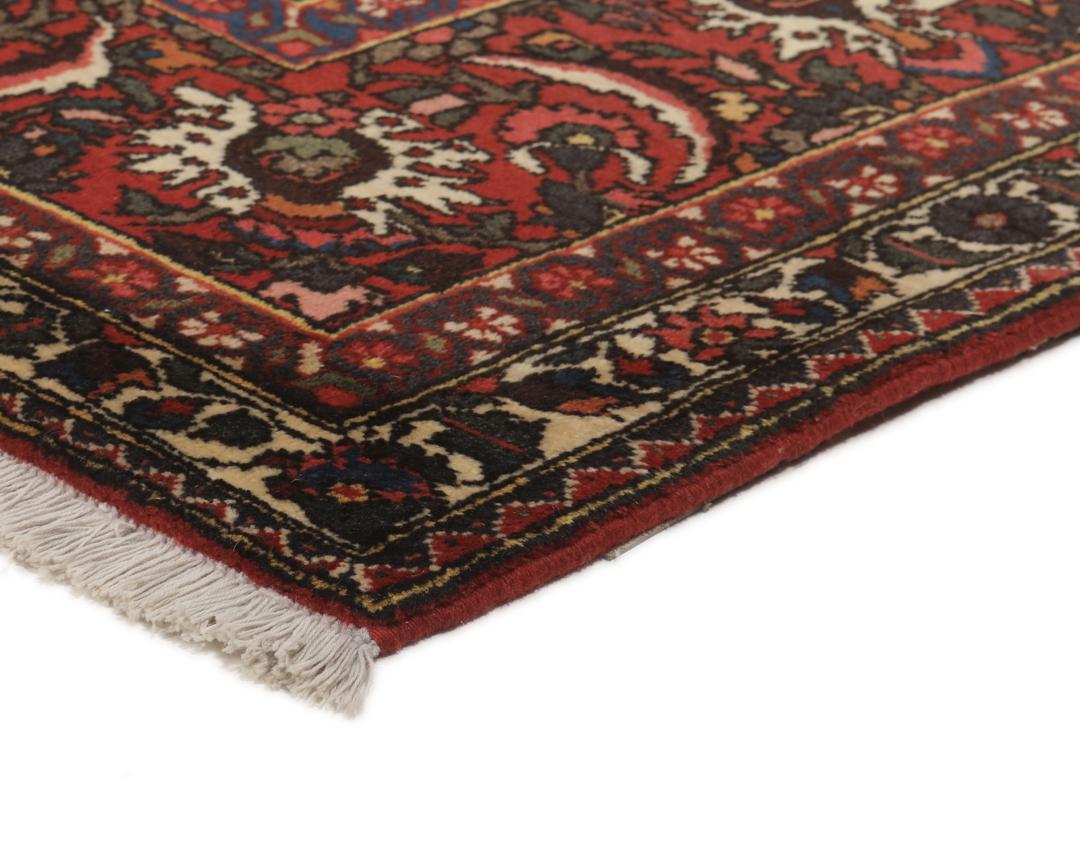
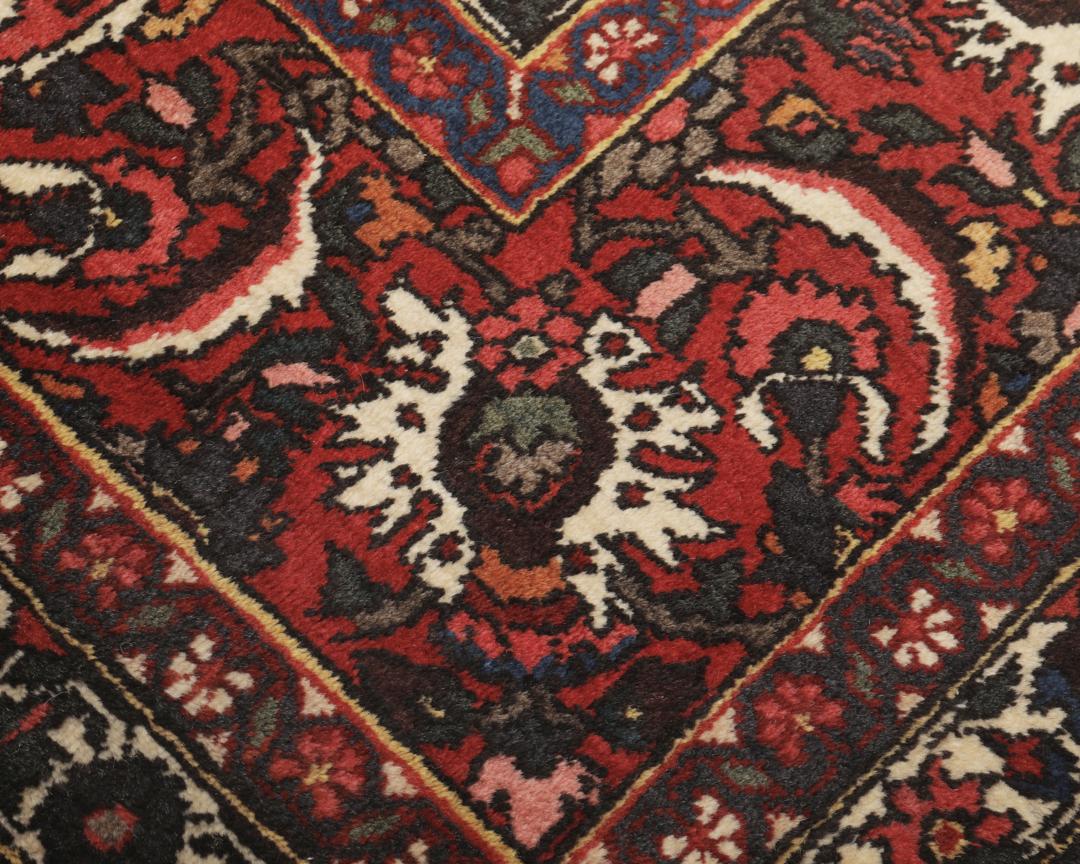
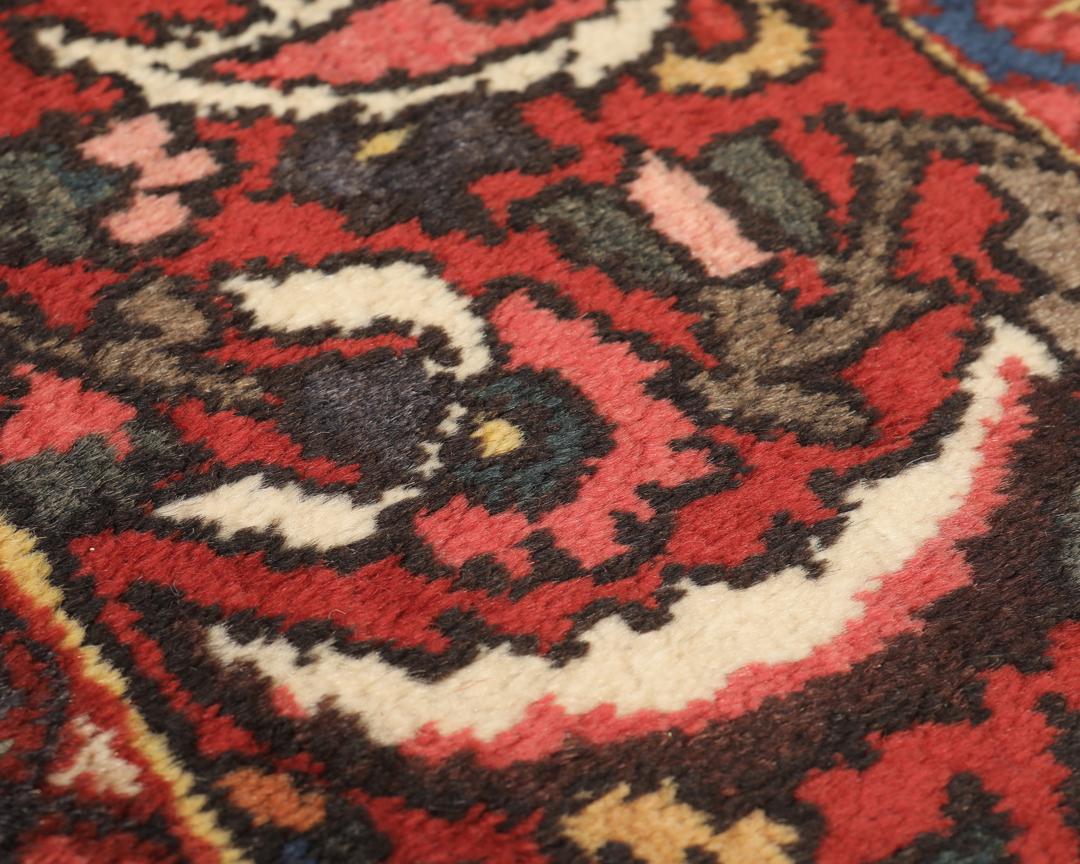
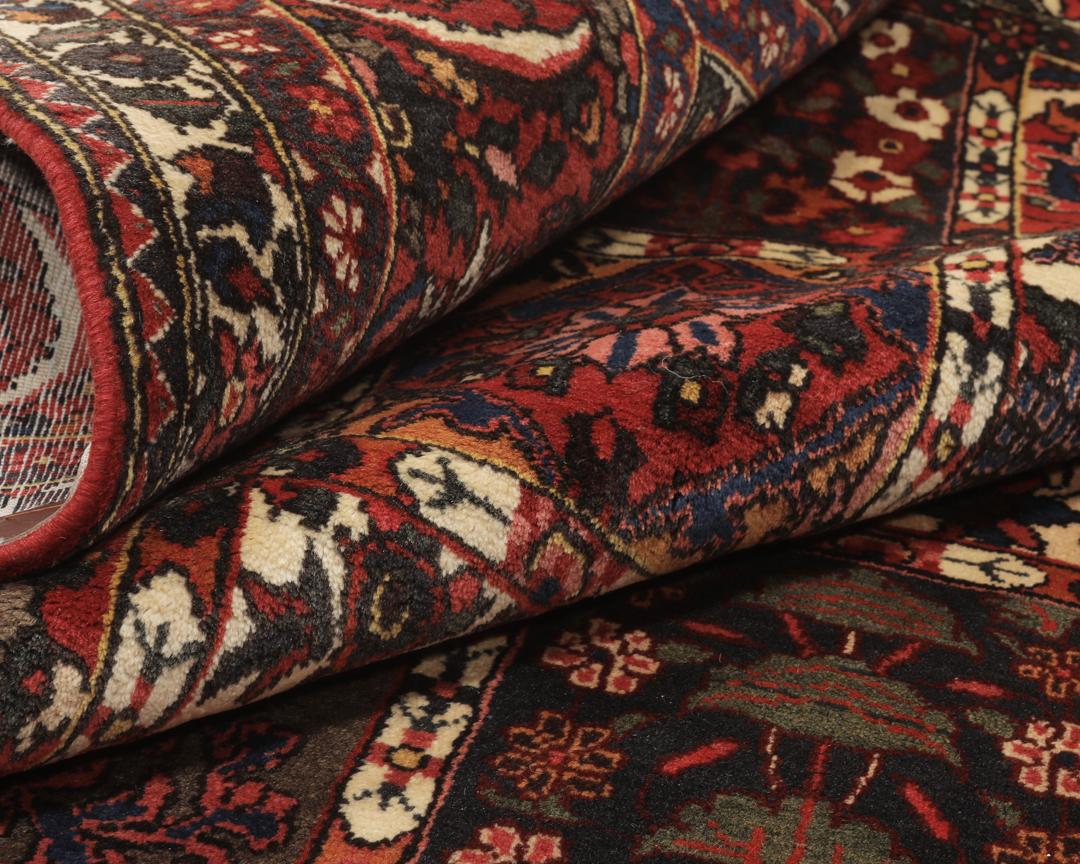
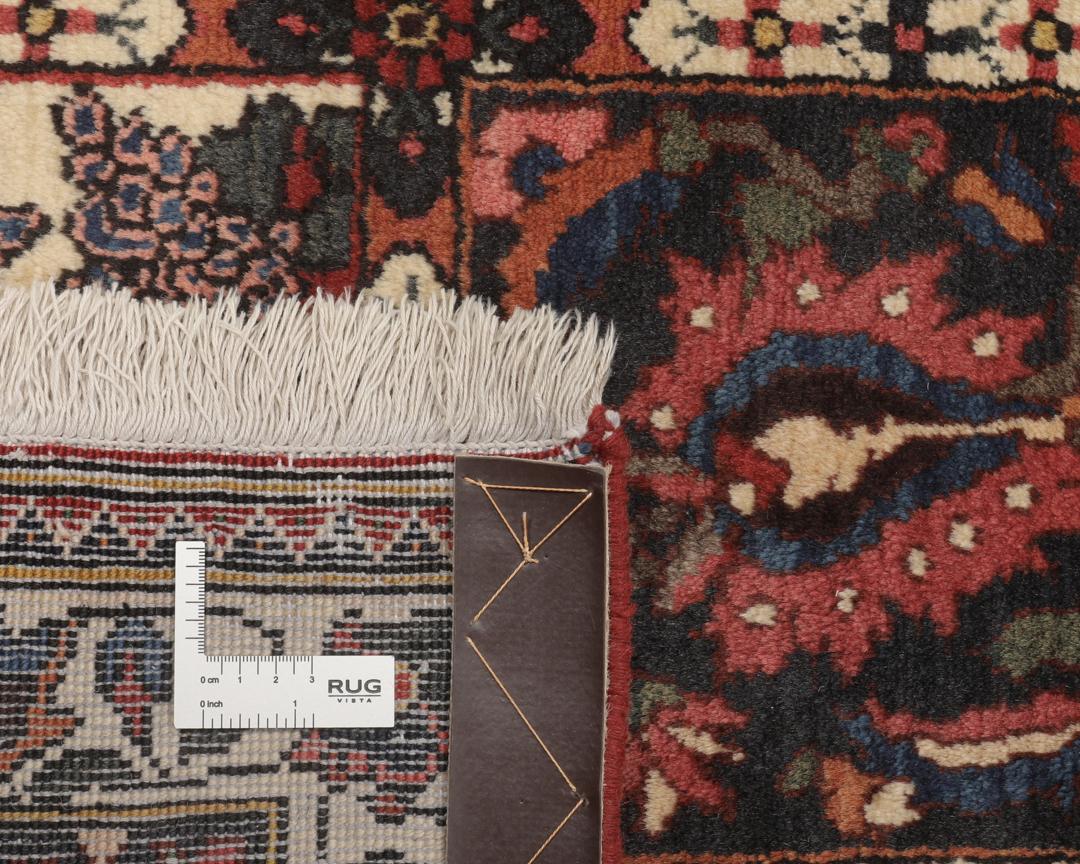
Bakhtiar rugs originate from the mountainous regions of the Middle East, specifically from the lands inhabited by the Bakhtiari nomadic tribes. These people have a long-standing tradition of weaving that is deeply connected to their environment, reflecting the rugged beauty of their surroundings and the seasonal rhythms of their lives.
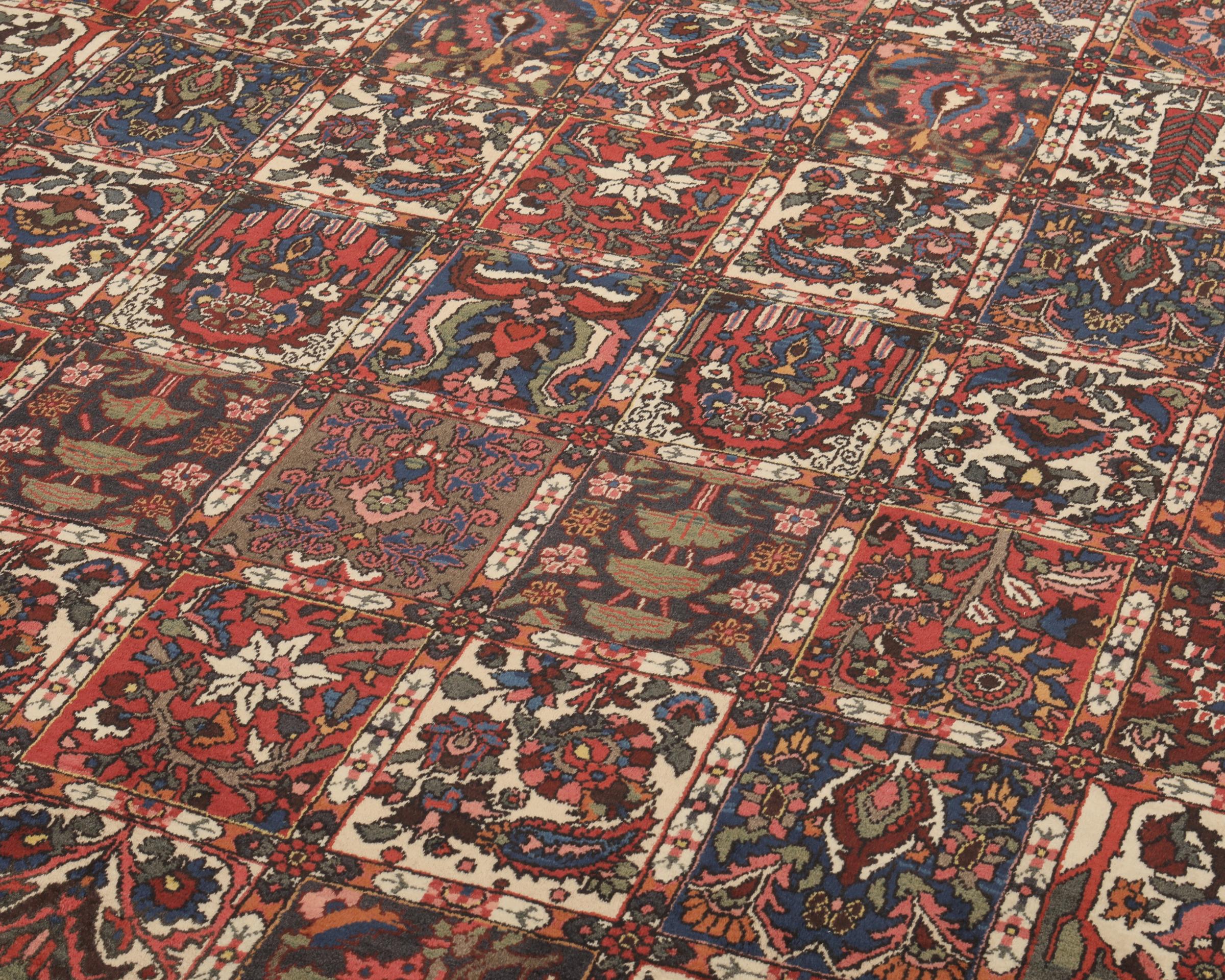
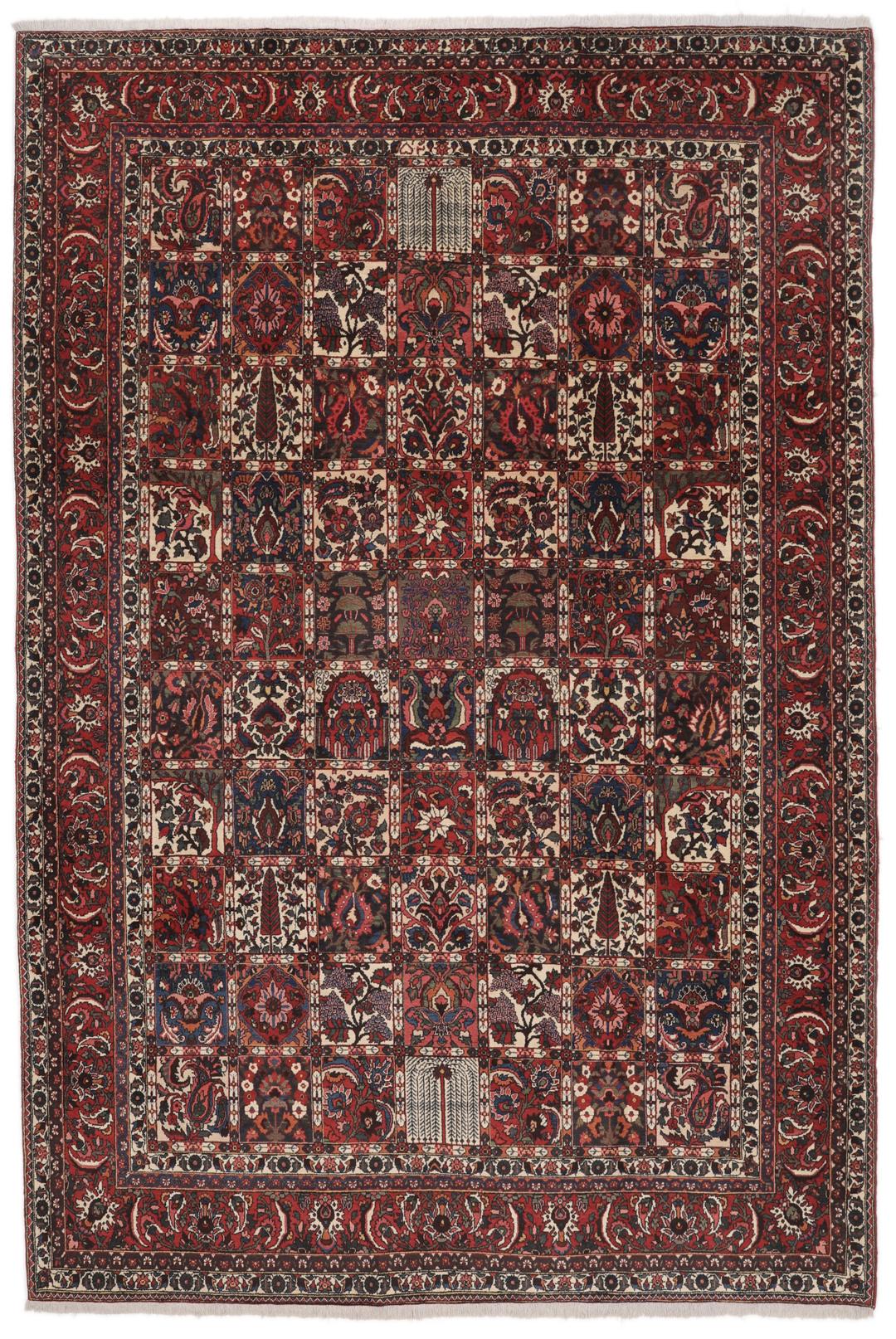
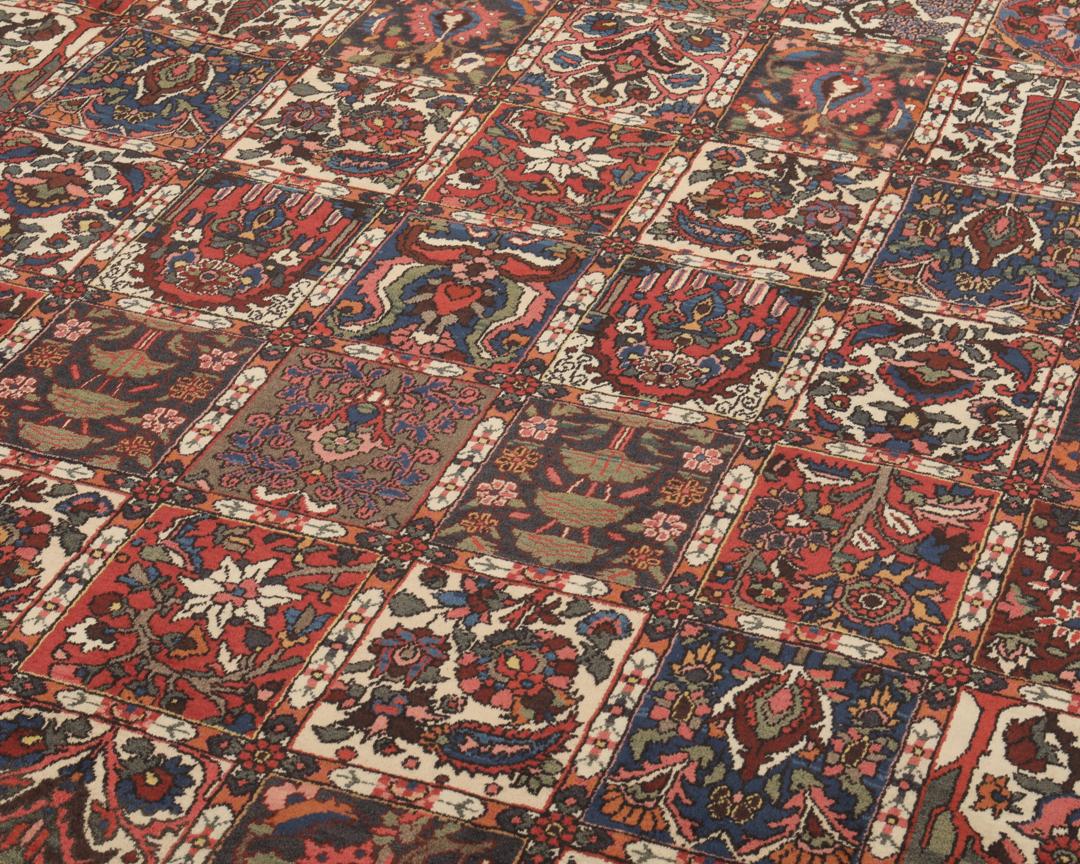
The most iconic feature of these rugs is the 'khesti' or garden-panel design. This motif is historically significant, as it represents the classic Middle Eastern garden divided into geometric sections. Each panel often contains a different floral or tree motif, reflecting the weaver's interpretation of nature and their surroundings, which makes each rug a narrative of its creator's world.
Design elements in these rugs are characterised by their bold, structured layouts and vibrant, earthy colours. While the garden-panel is the most famous, you will also find motifs derived from local flora, such as weeping willows and cypress trees, which symbolise life and longevity. These symbols are woven into the very fabric of the rug, connecting the owner to a vast cultural heritage.
Collectors value these rugs not only for their durability but for the genuine human spirit they embody. Owning a Bakhtiar means possessing a piece of cultural history that has been preserved through generations of craft. These rugs are celebrated for their ability to bring a sense of history and warmth into modern homes, serving as a testament to the enduring appeal of traditional artistry.