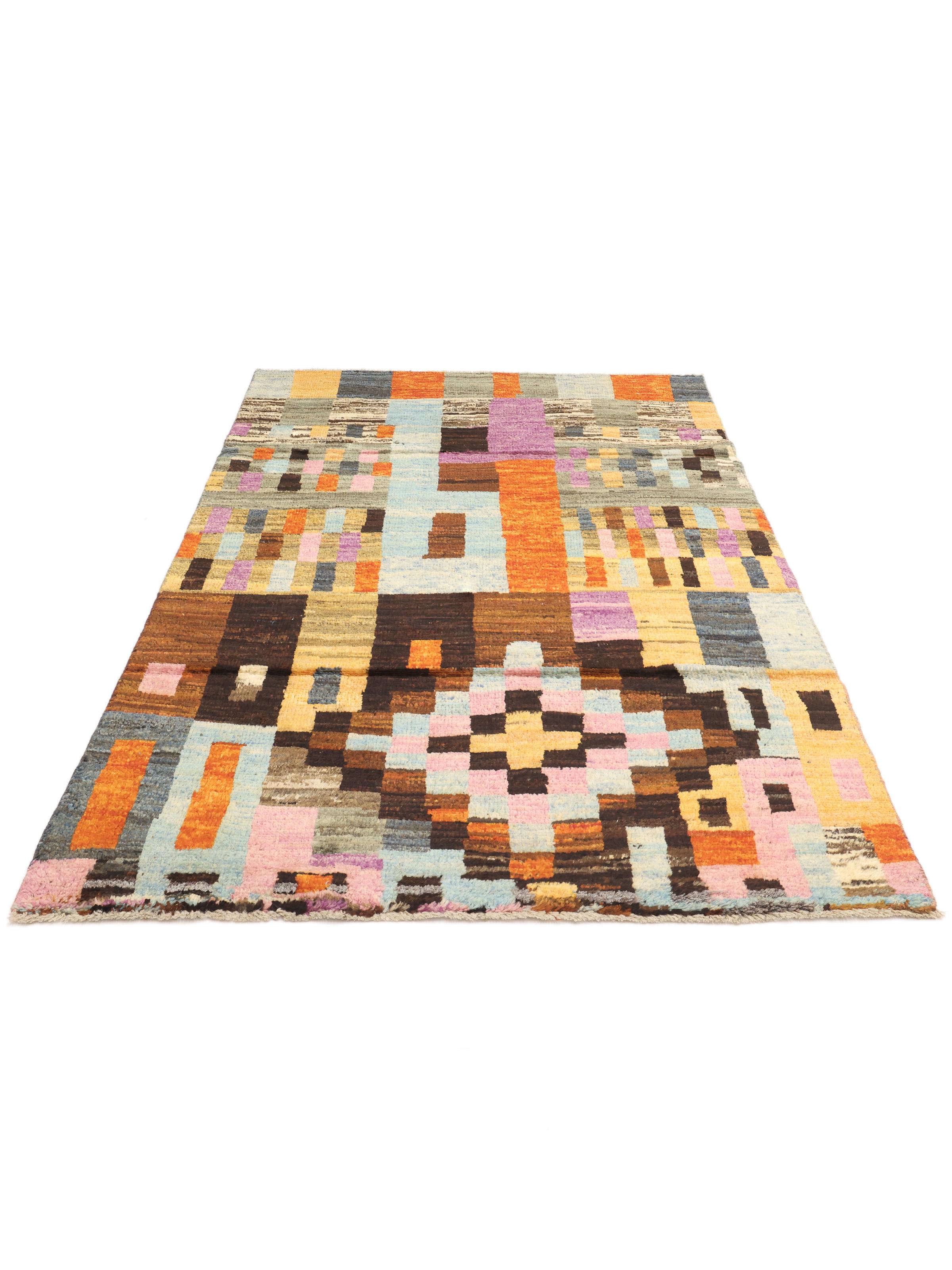
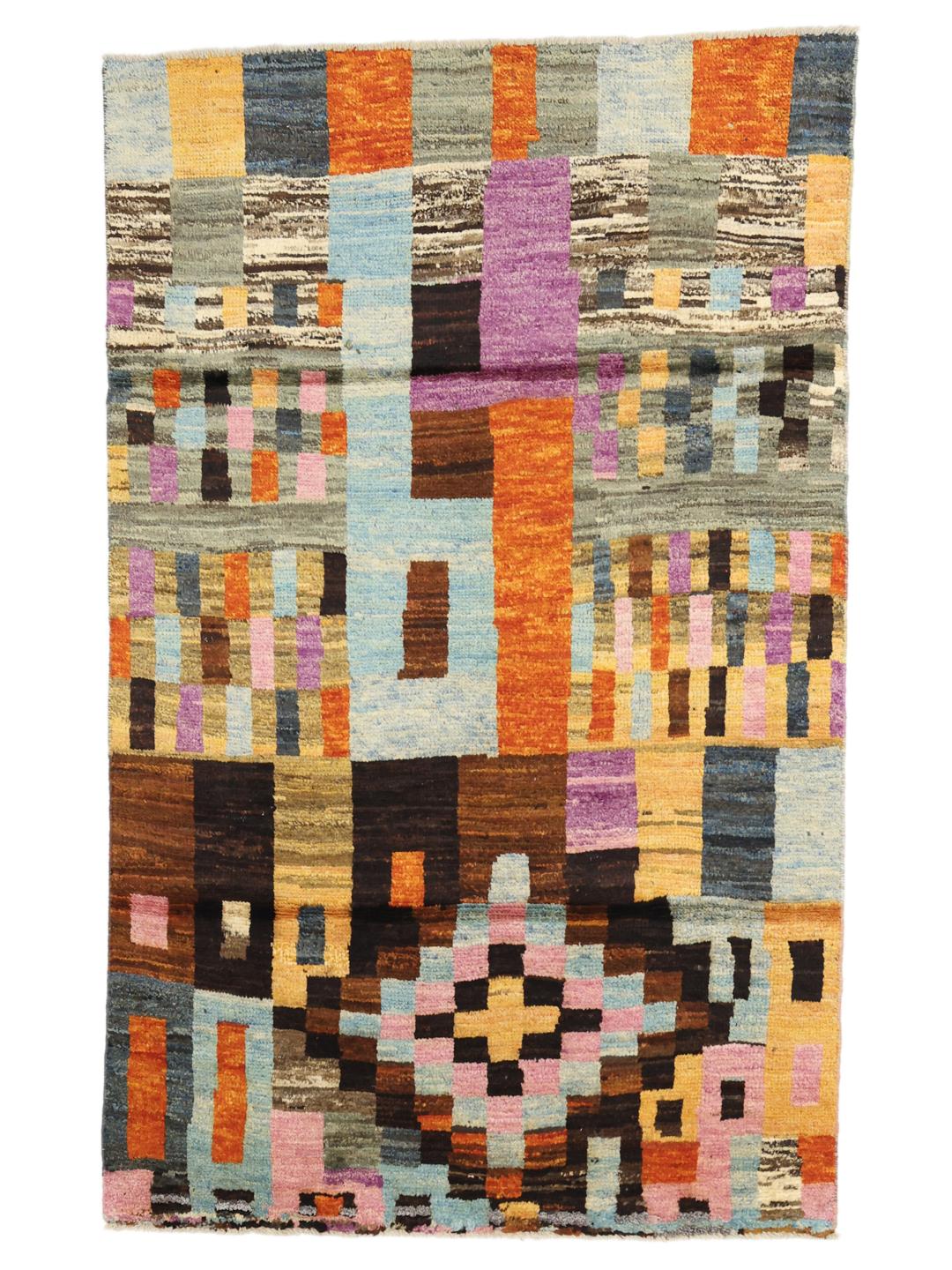
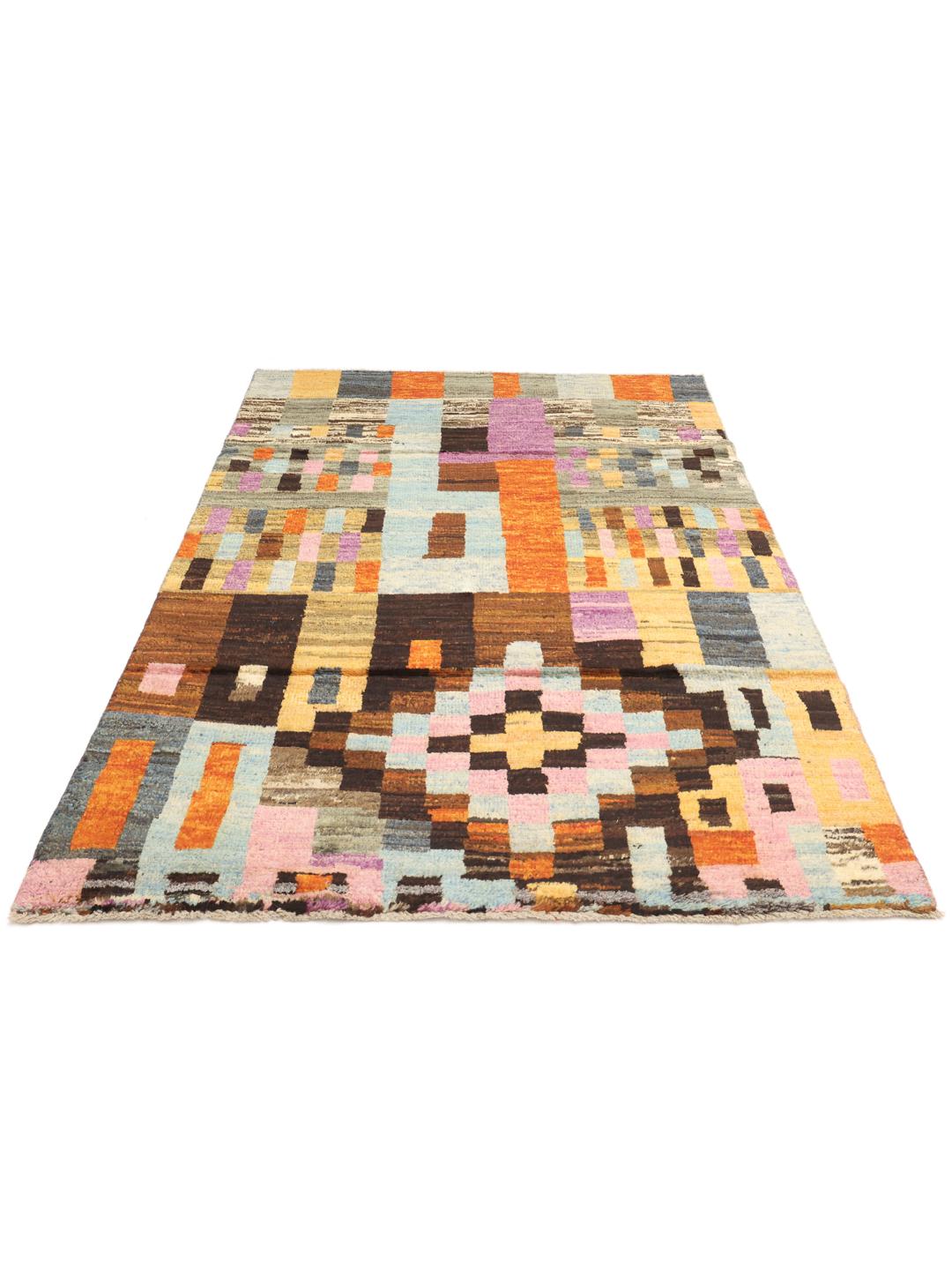
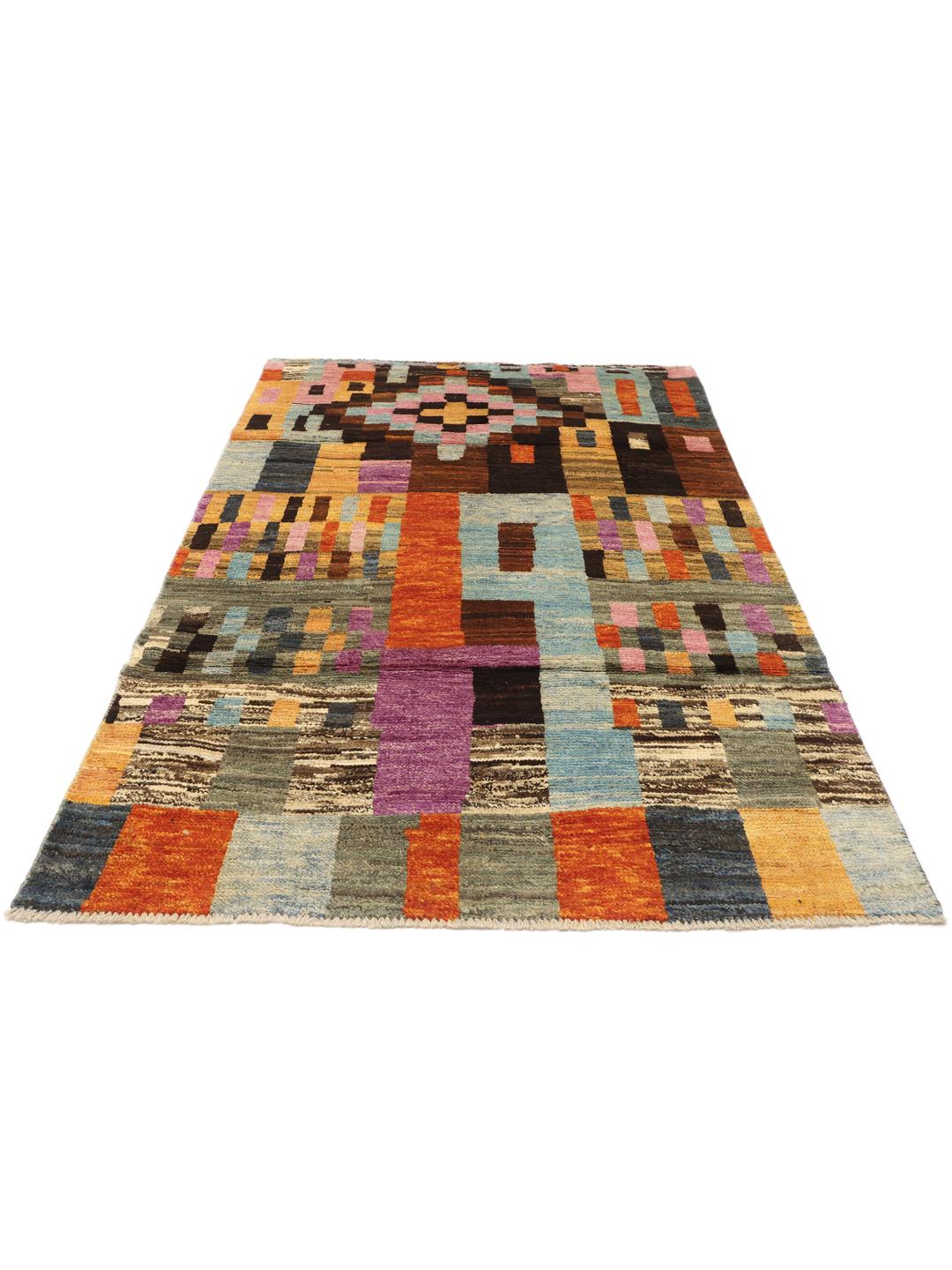
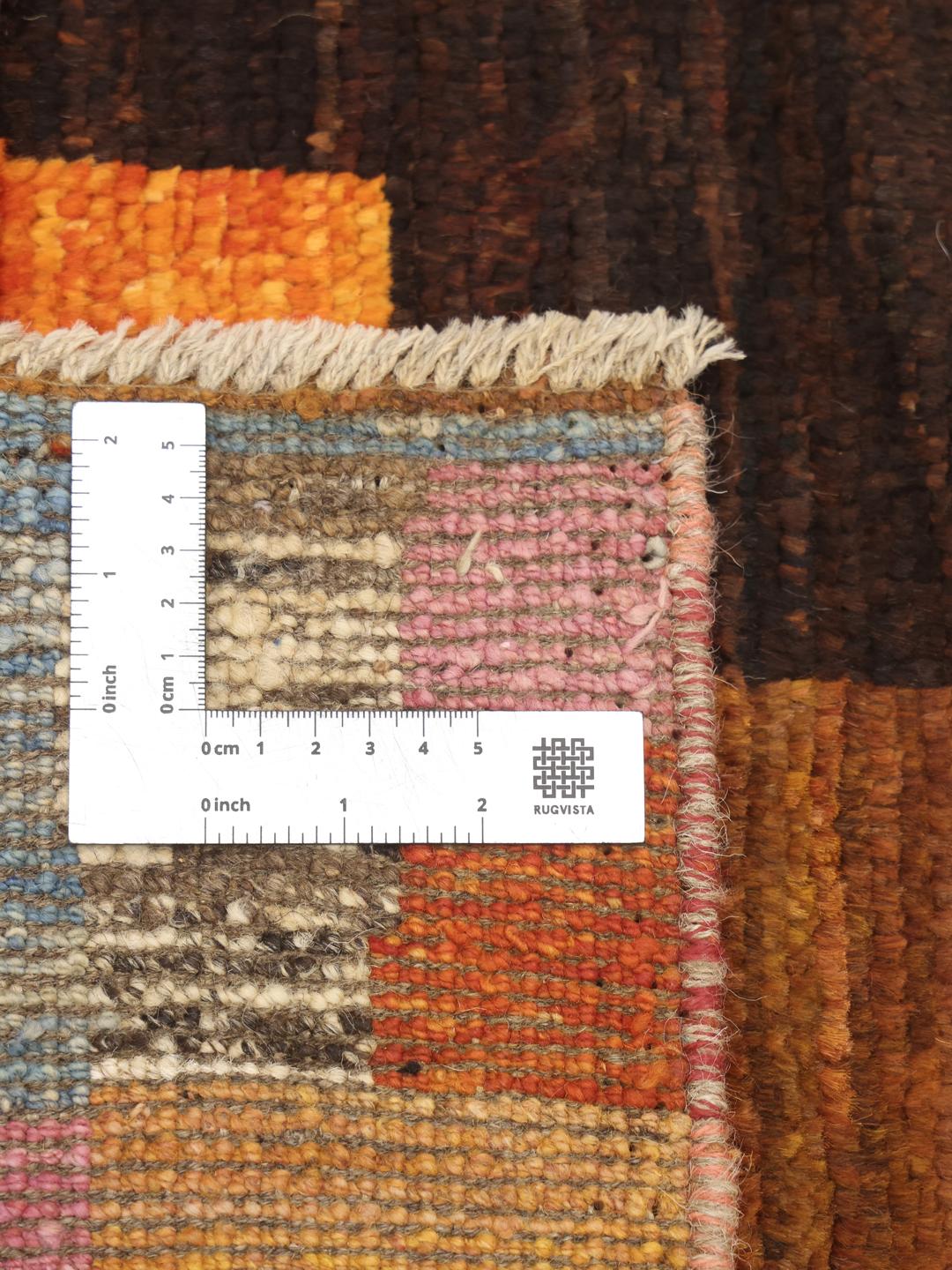
The Berber tradition, while historically rooted in the nomadic tribes of North Africa, has inspired weavers across the globe for centuries. In Afghanistan, this influence has blended with local weaving techniques to create a unique aesthetic that favours bold, abstract forms and deep, saturated colours, moving away from the more formal, curvilinear patterns found in other Middle Eastern traditions.
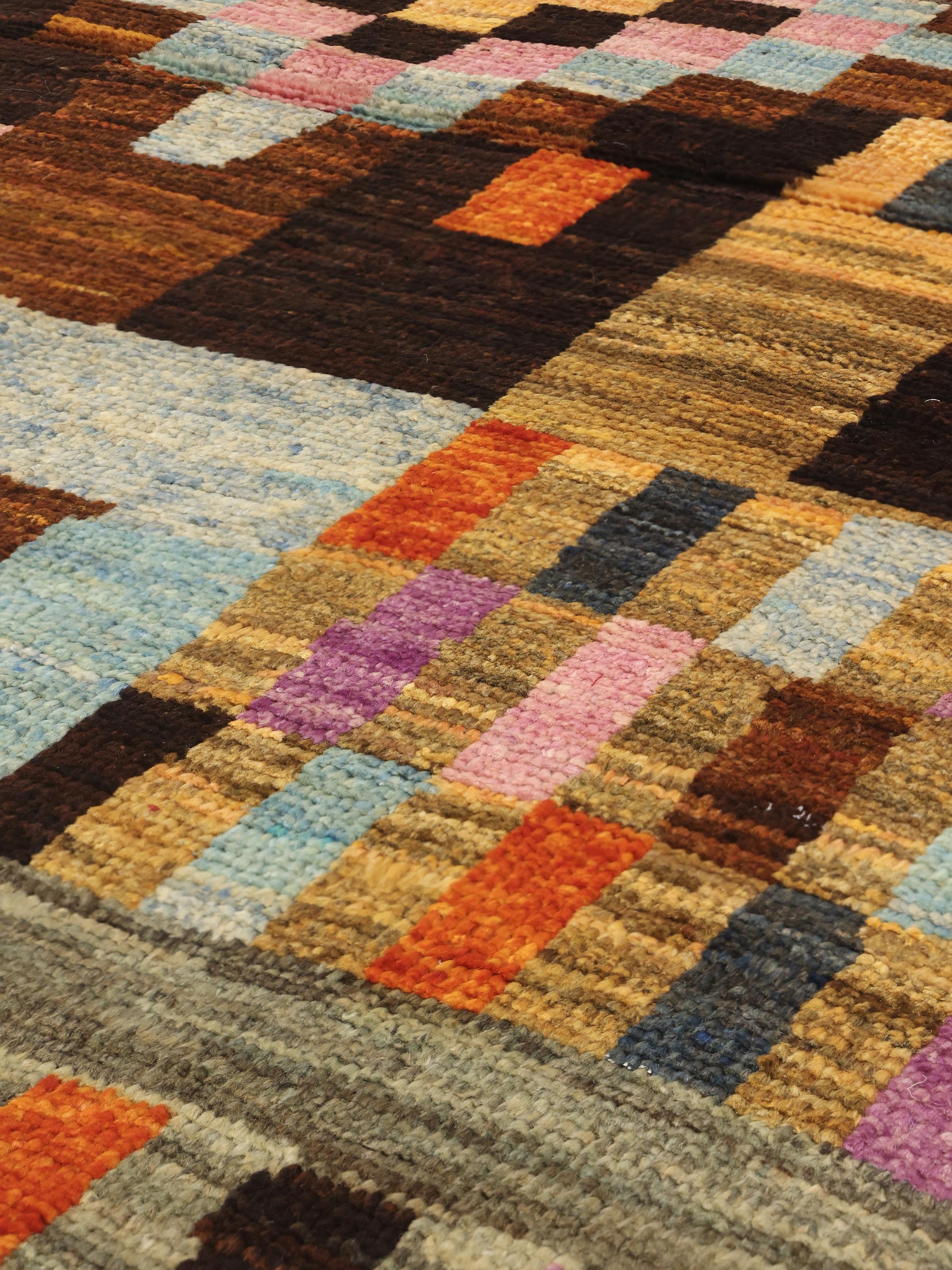
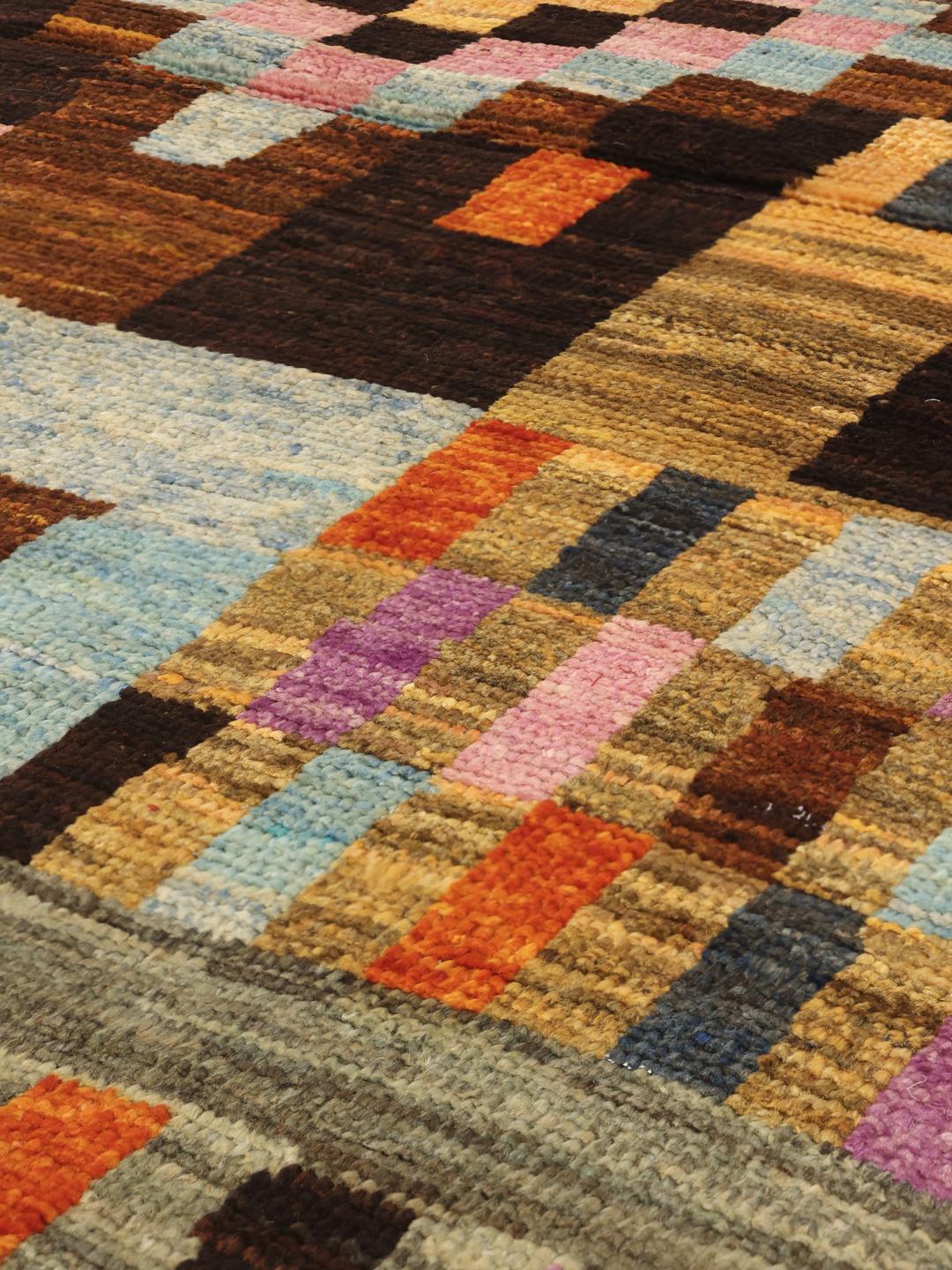
The term 'Berber' often refers to a style characterised by a high, soft pile and a focus on geometric or symbolic motifs that tell a story. In this specific piece, the use of blocks and shapes reflects a modern interpretation of these ancient design languages, showcasing how regional traditions evolve while maintaining their essential, hand-crafted spirit.
Signature elements in this style include a focus on improvisation and the weaver's personal expression. Rather than following a rigid, pre-drawn template, the creator often works from memory or intuition, resulting in subtle variations in the pattern that make each rug feel like a living, breathing document of the maker's creative process.
Collecting a rug from this tradition is an act of supporting a heritage of skill that has been passed down through generations. These pieces are valued not just for their visual impact, but for the human story embedded in every row of knots, offering a connection to a craft that prioritises patience, precision, and the beauty of the handmade.