Berber-style rugs have a deep-rooted history that stretches across nomadic cultures, known for their thick, woollen piles and expressive, often symbolic patterns. While the tradition originated among the indigenous tribes of North Africa, the style has travelled and evolved significantly. Today, master weavers in Afghanistan have embraced these techniques, infusing them with their own regional artistic sensibilities and vibrant colour palettes.
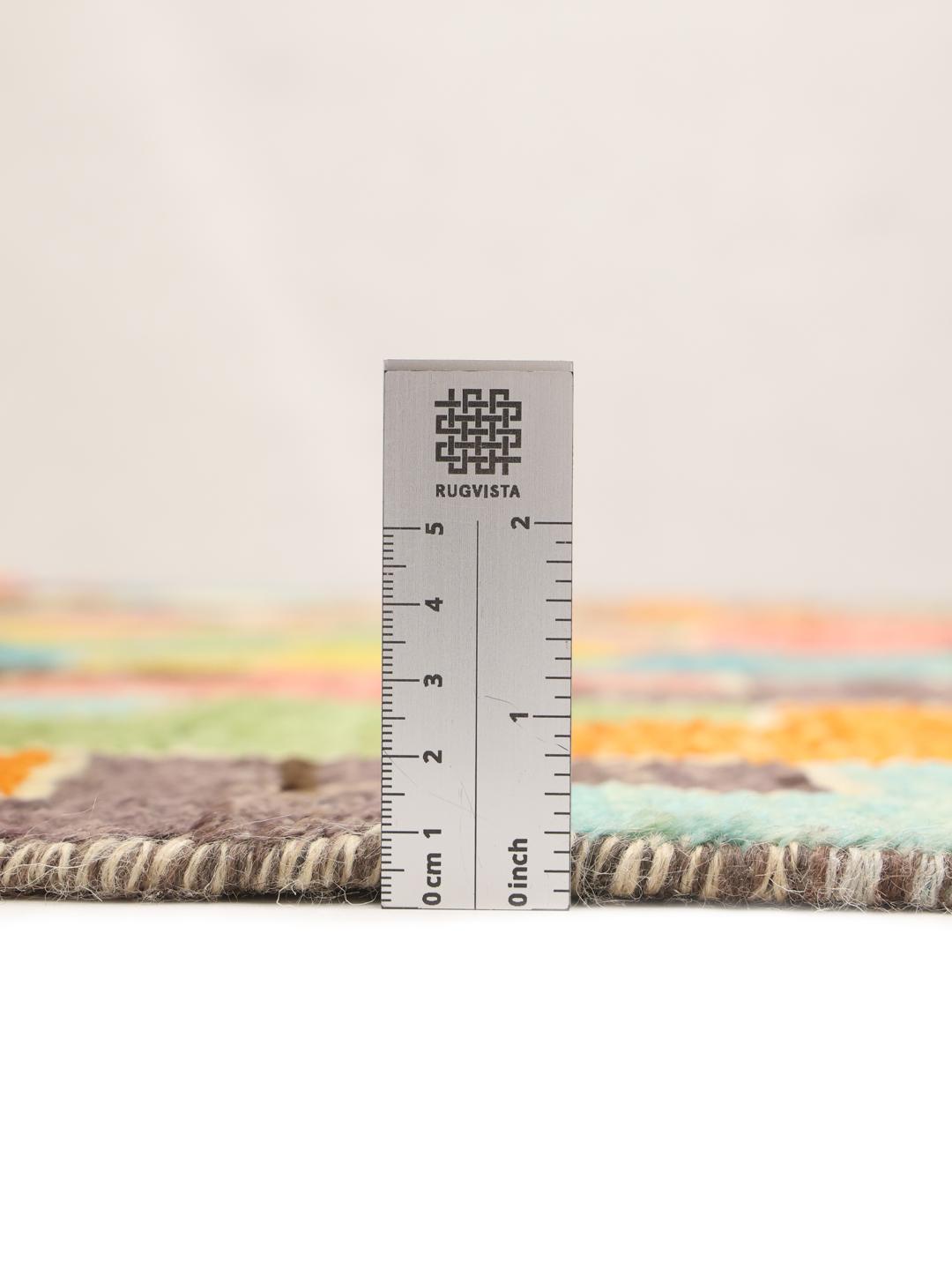
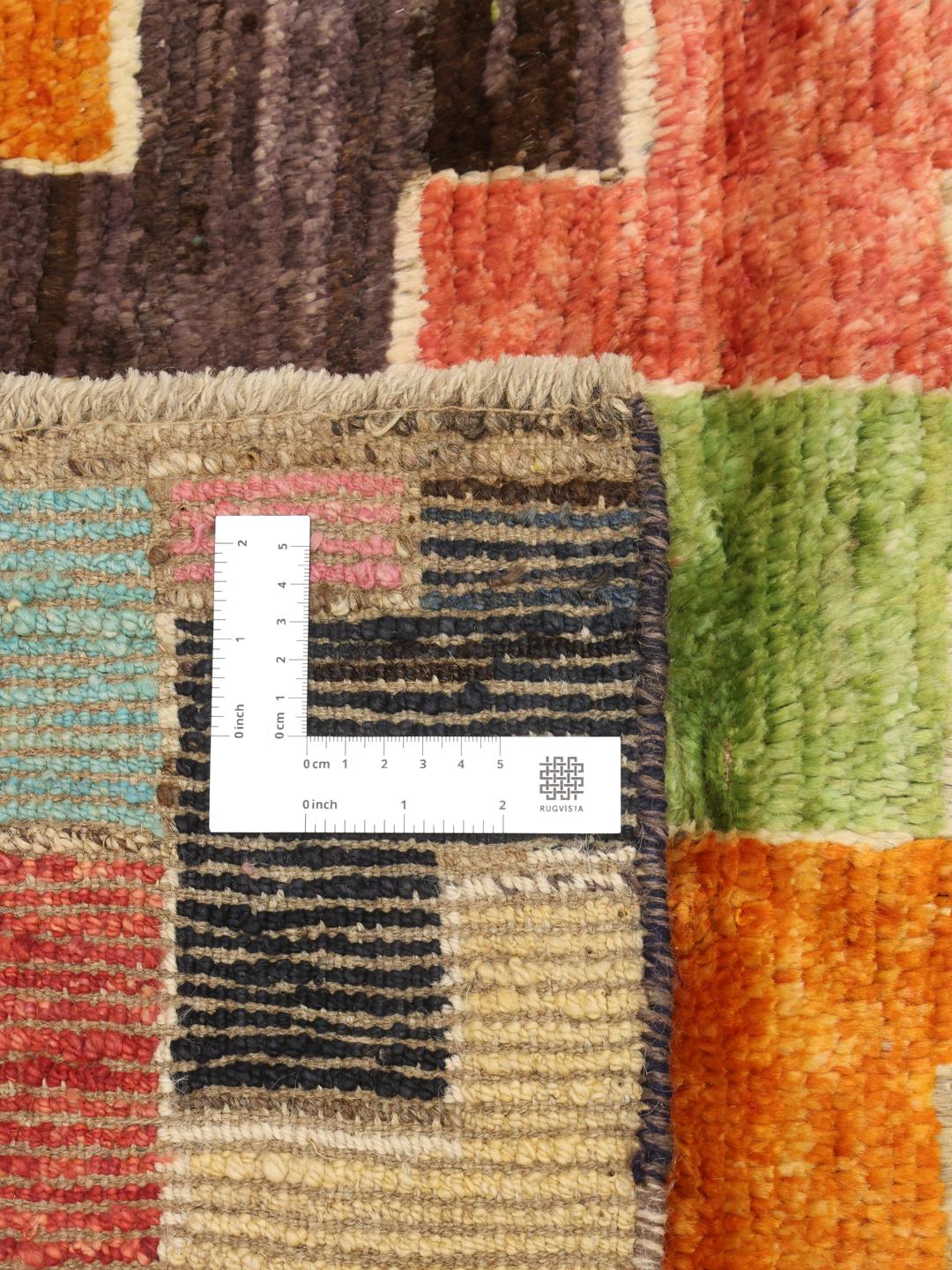
The construction of these rugs typically relies on a technique where the pile is carefully knotted by hand onto a sturdy foundation. This method is essential for creating the characteristic durability and soft, dense pile that these rugs are famous for. The process is not just about utility; it is a way of translating complex stories and cultural motifs into a tactile, functional object.
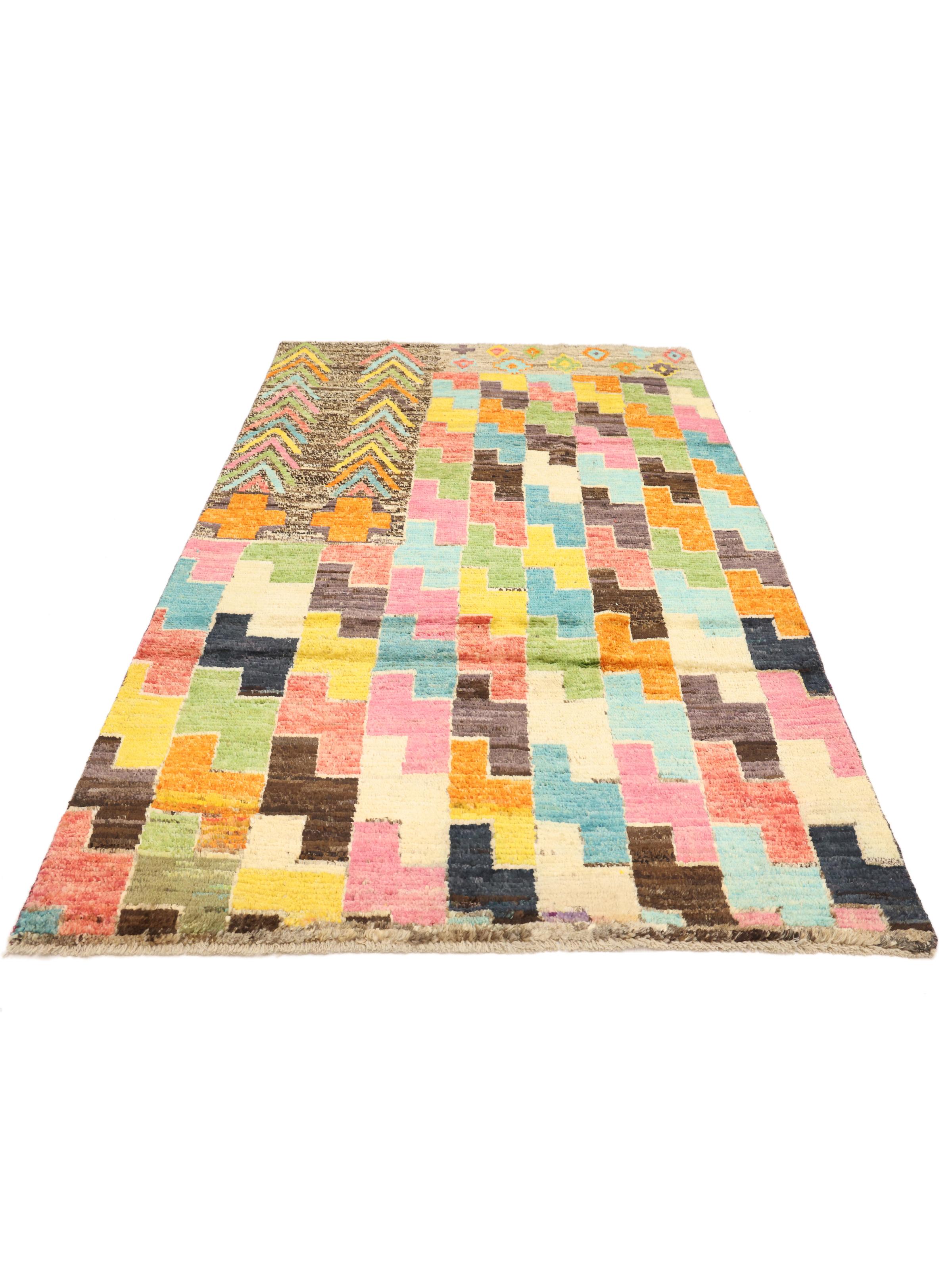
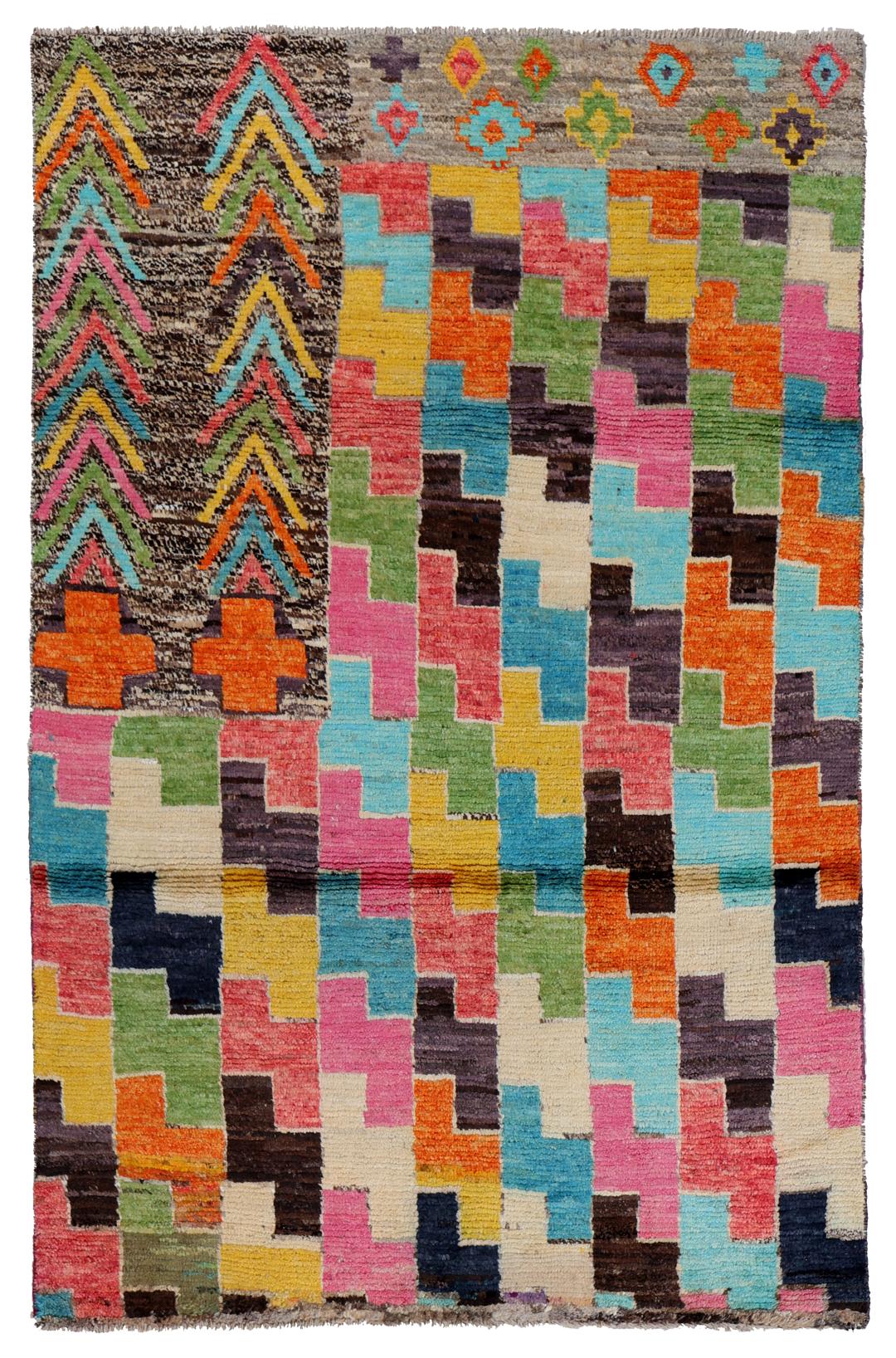
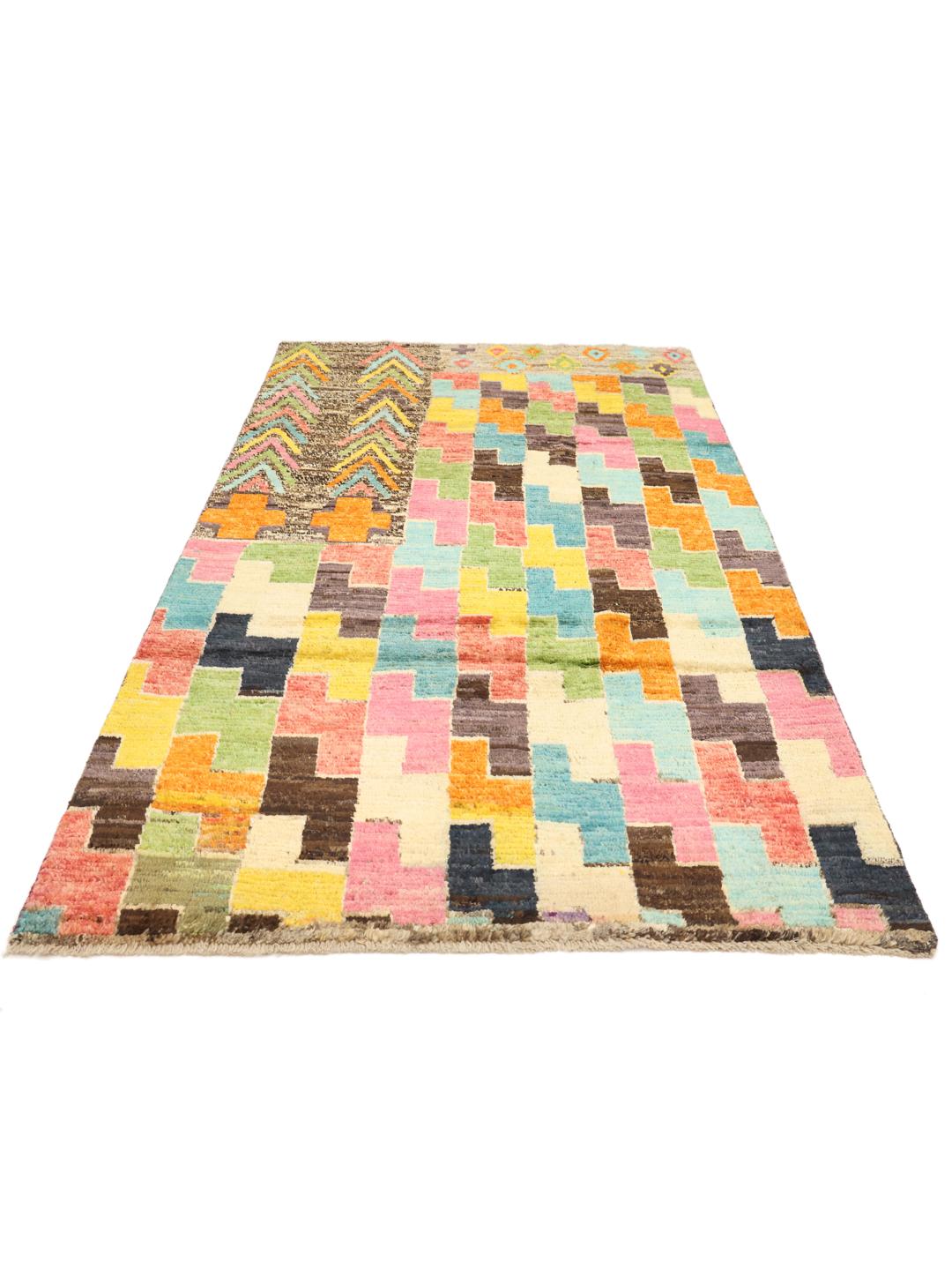
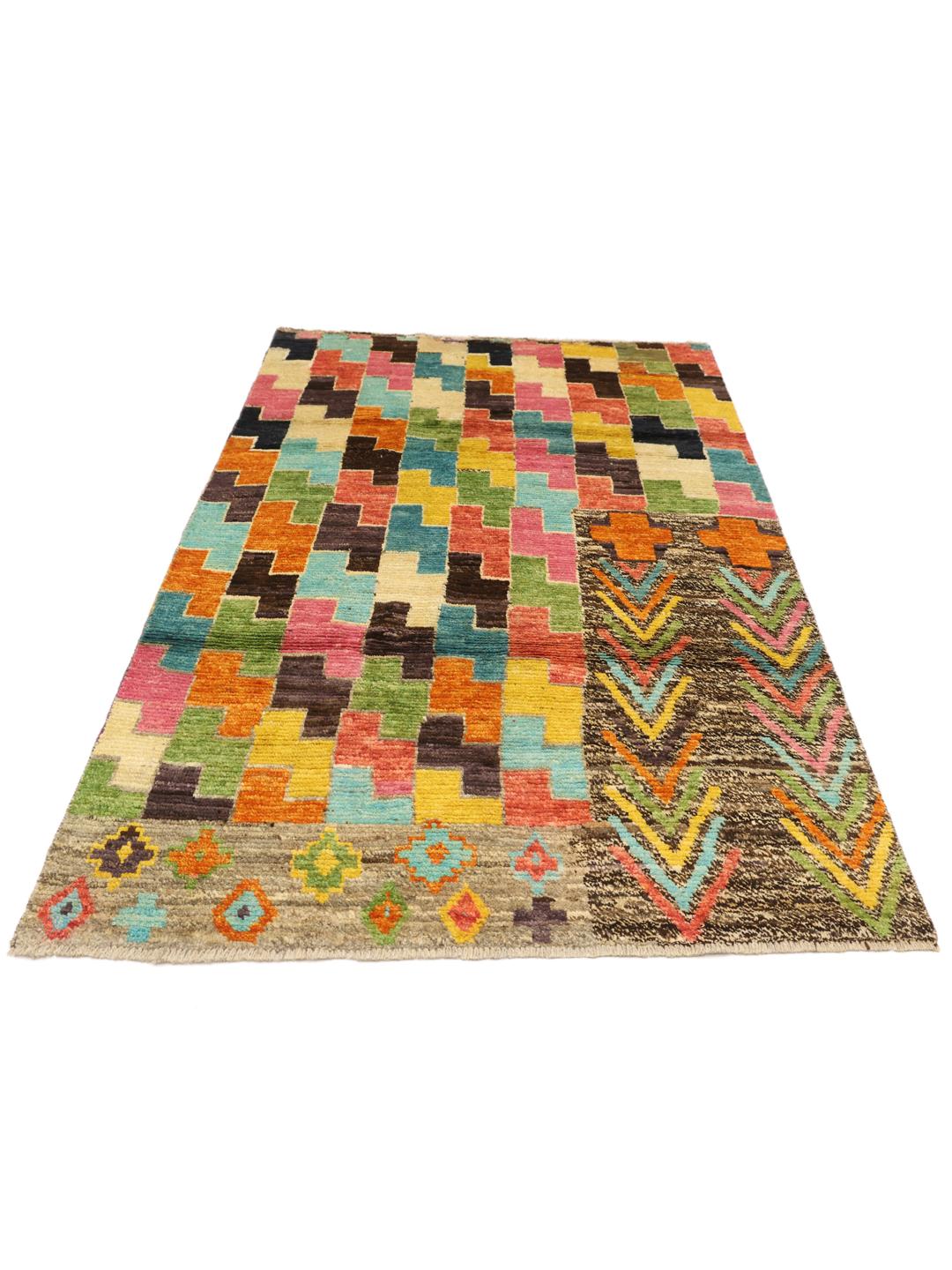
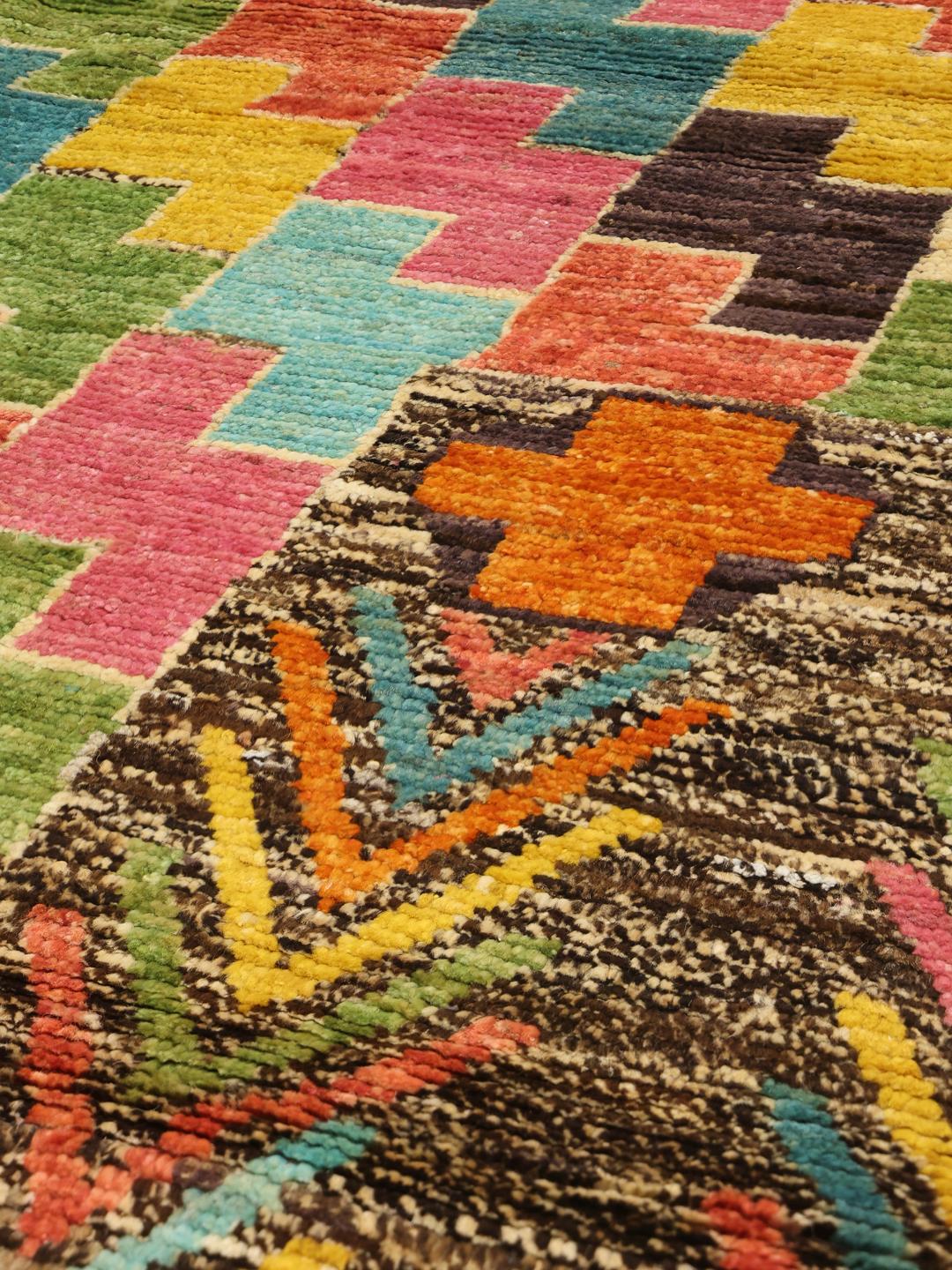
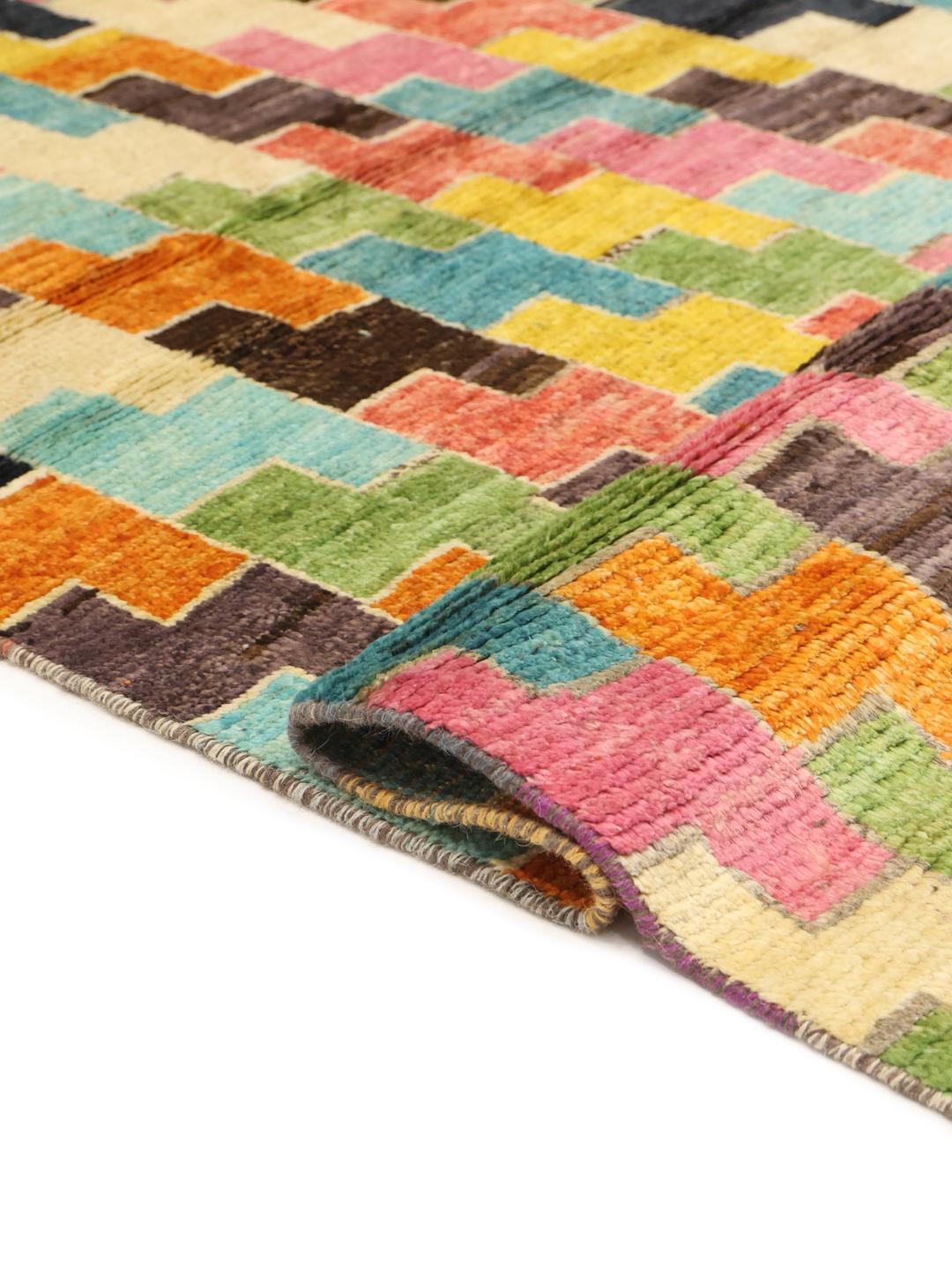
Visually, these rugs are defined by their bold, geometric language. While traditional designs often featured tribal symbols and natural, earthy tones, modern iterations like this one experiment with an expansive spectrum of colour. The use of blocks of bright, contrasting hues paired with angular, repeating shapes creates a rhythmic pattern that is both modern and rooted in ancient textile traditions.
Owning a hand-knotted rug from this tradition is an act of supporting a legacy of human skill. These pieces are valued for their ability to bridge the gap between historical craft and contemporary living. They are collected not just for their utility, but for the story they carry and the undeniable warmth they add to a home, serving as a testament to the enduring power of manual craft.