Berber rugs are rooted in the ancient weaving traditions of the mountain tribes, known for their ability to tell stories through geometric symbolism and bold use of colour. While the tradition originated in North Africa, the craft has migrated and evolved significantly, with Middle Eastern weavers now interpreting these classic motifs through their own cultural lens and high-quality Wool sources.
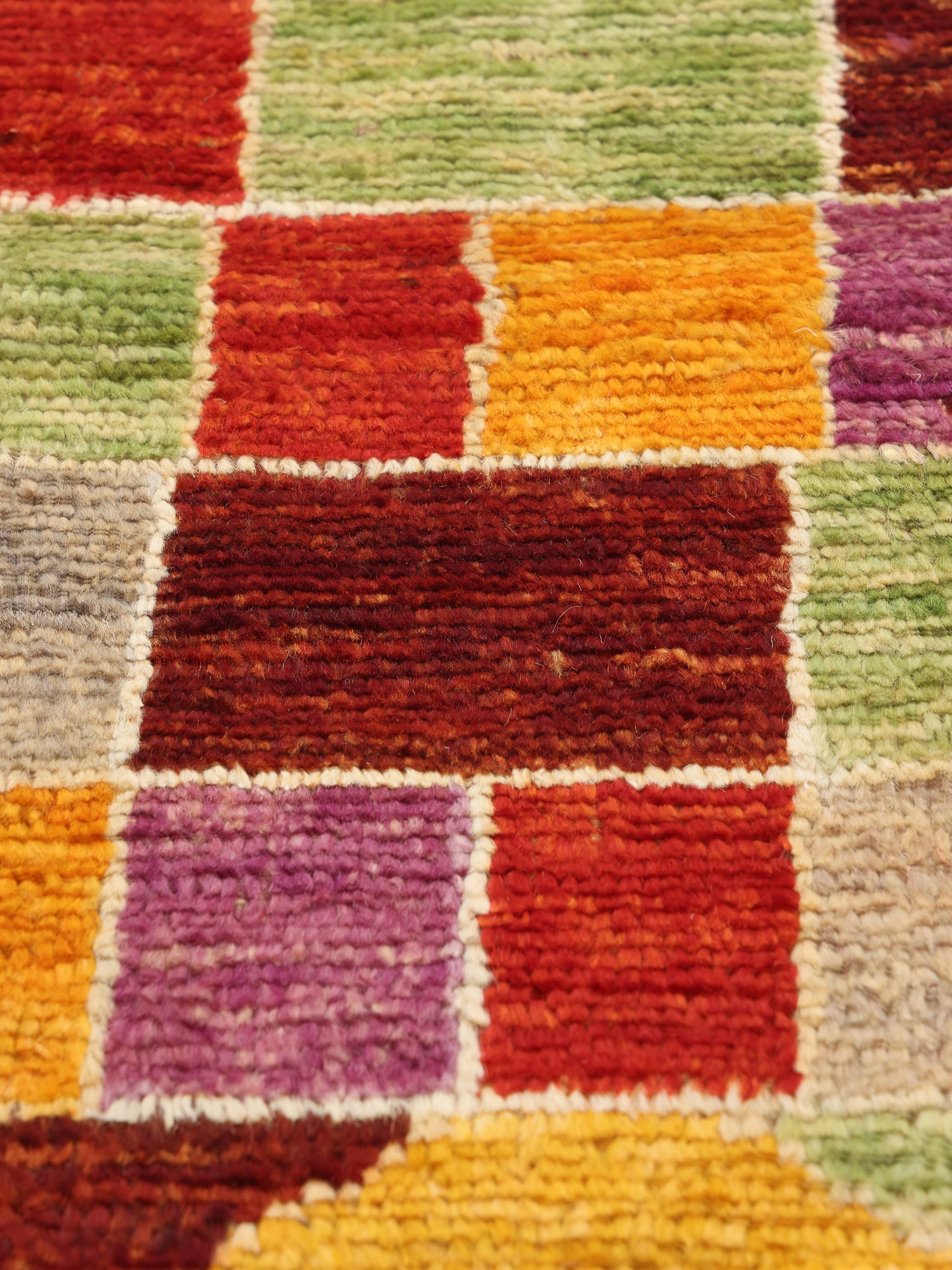
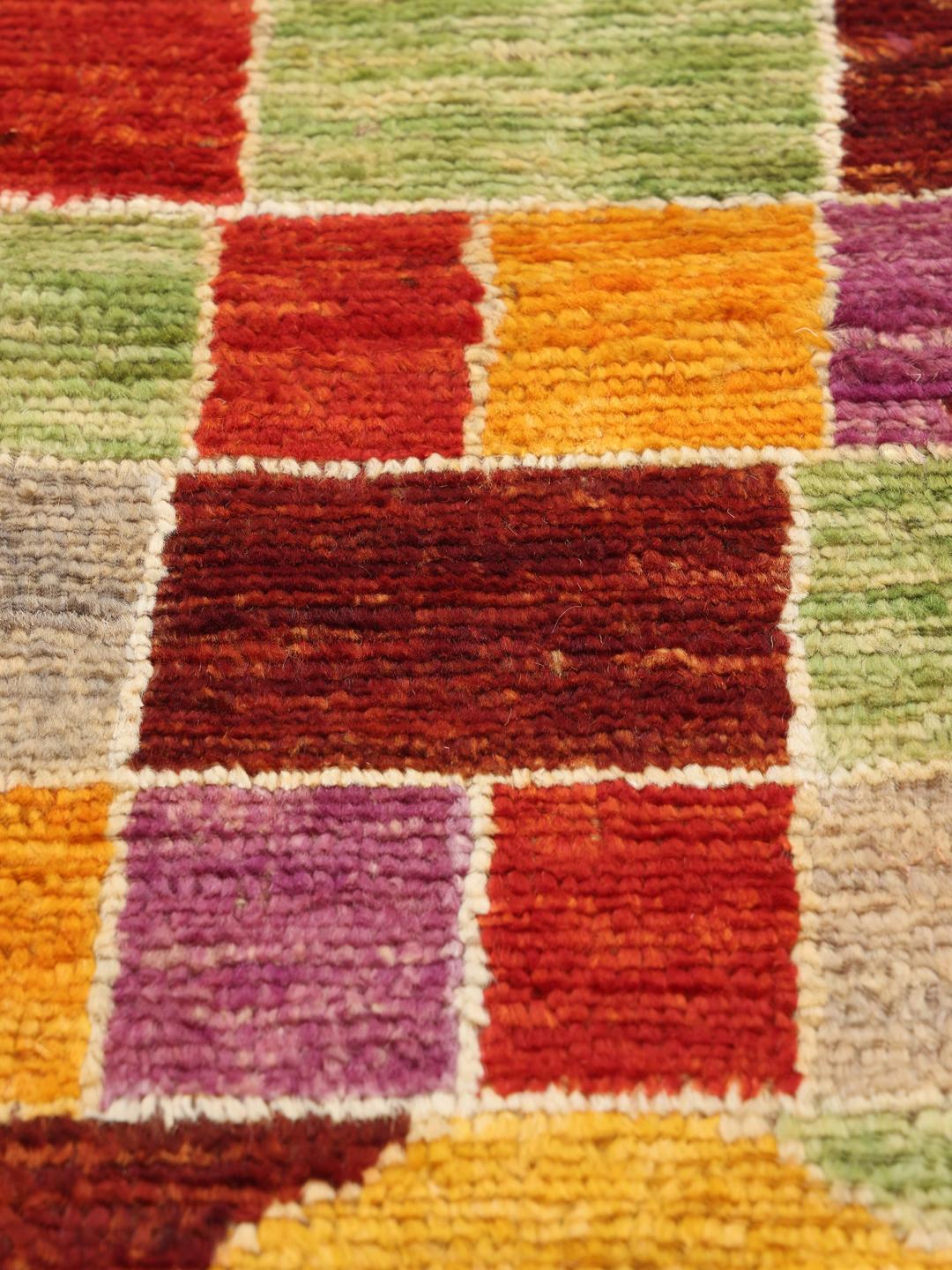
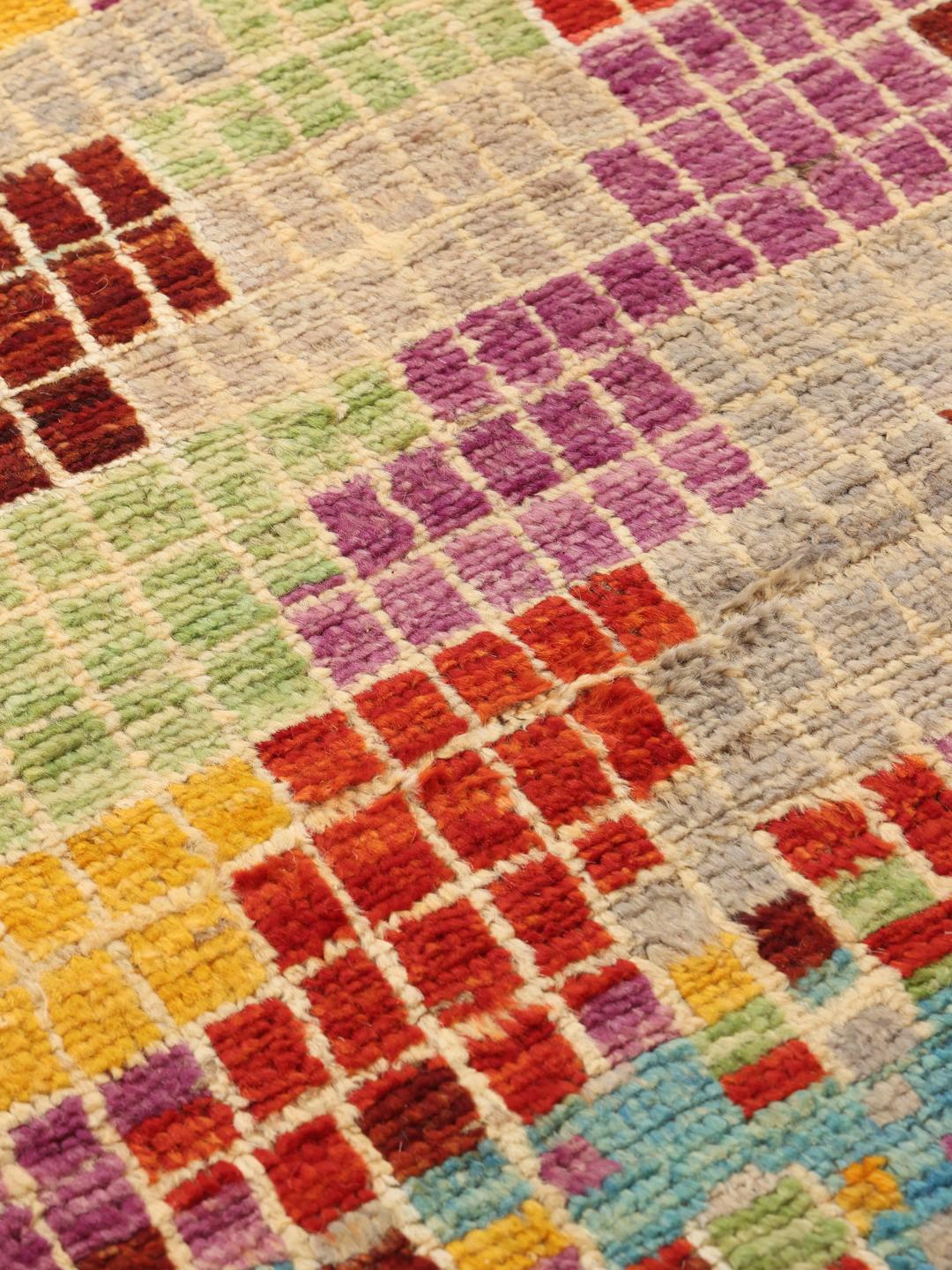
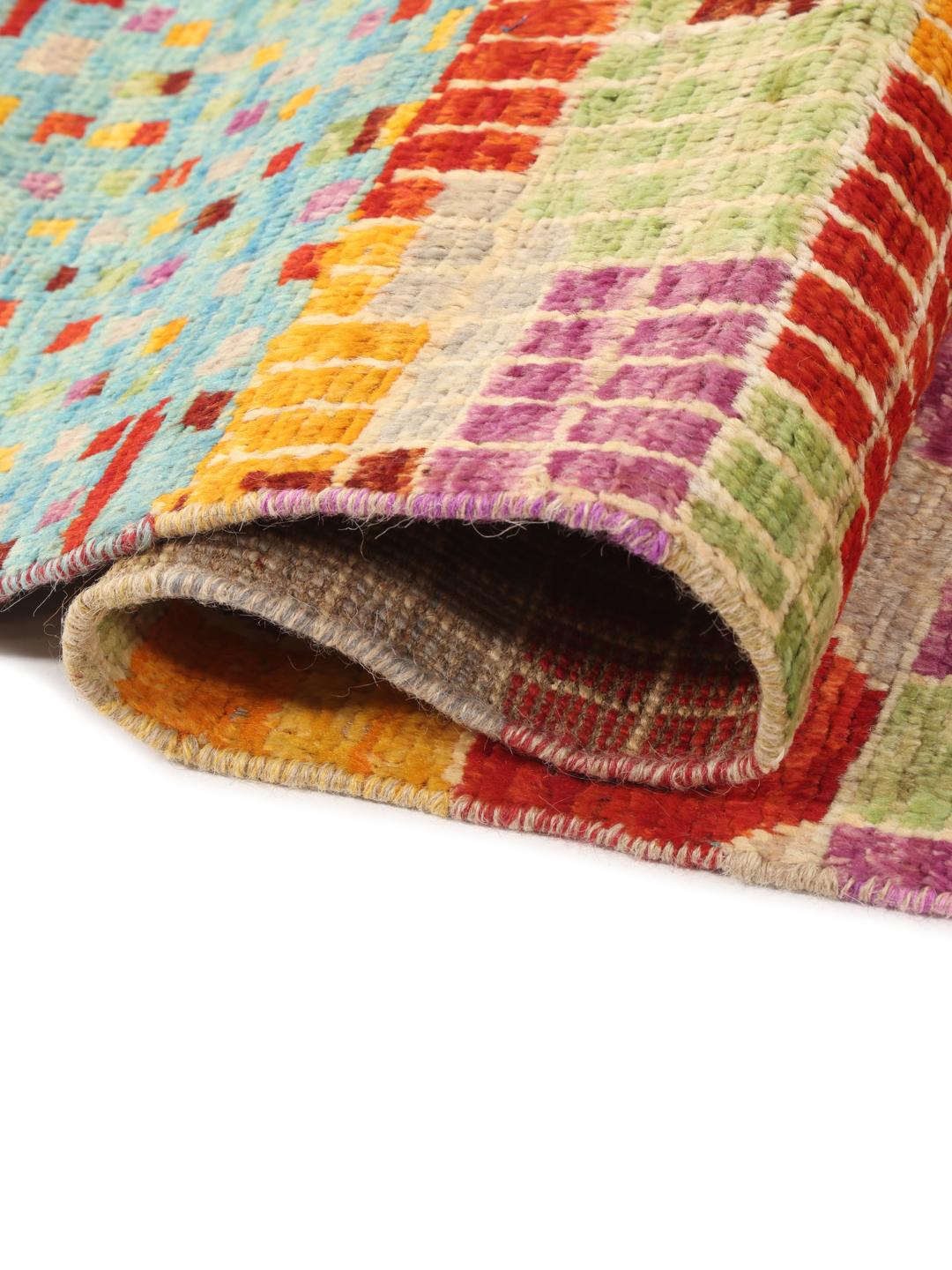
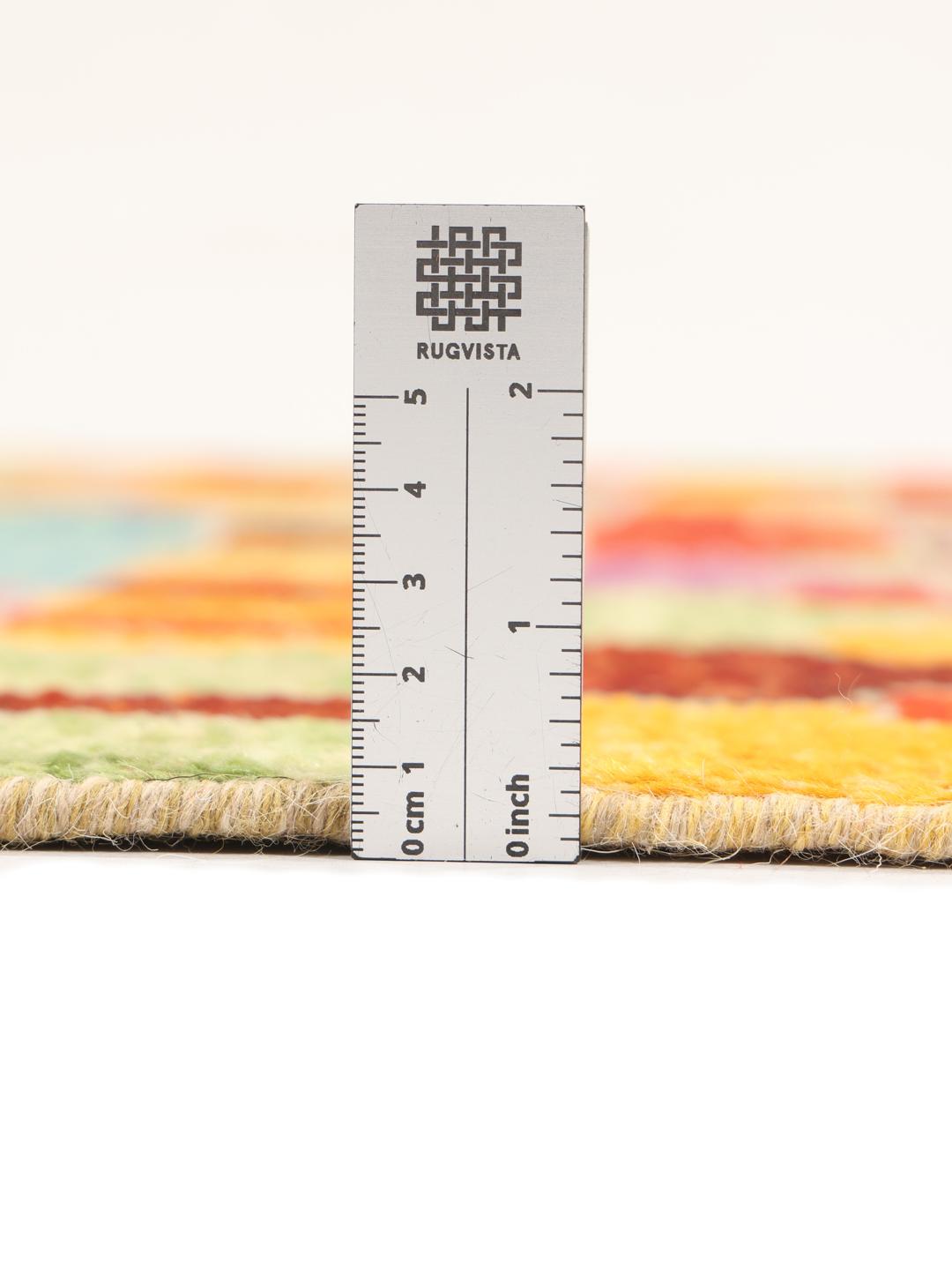
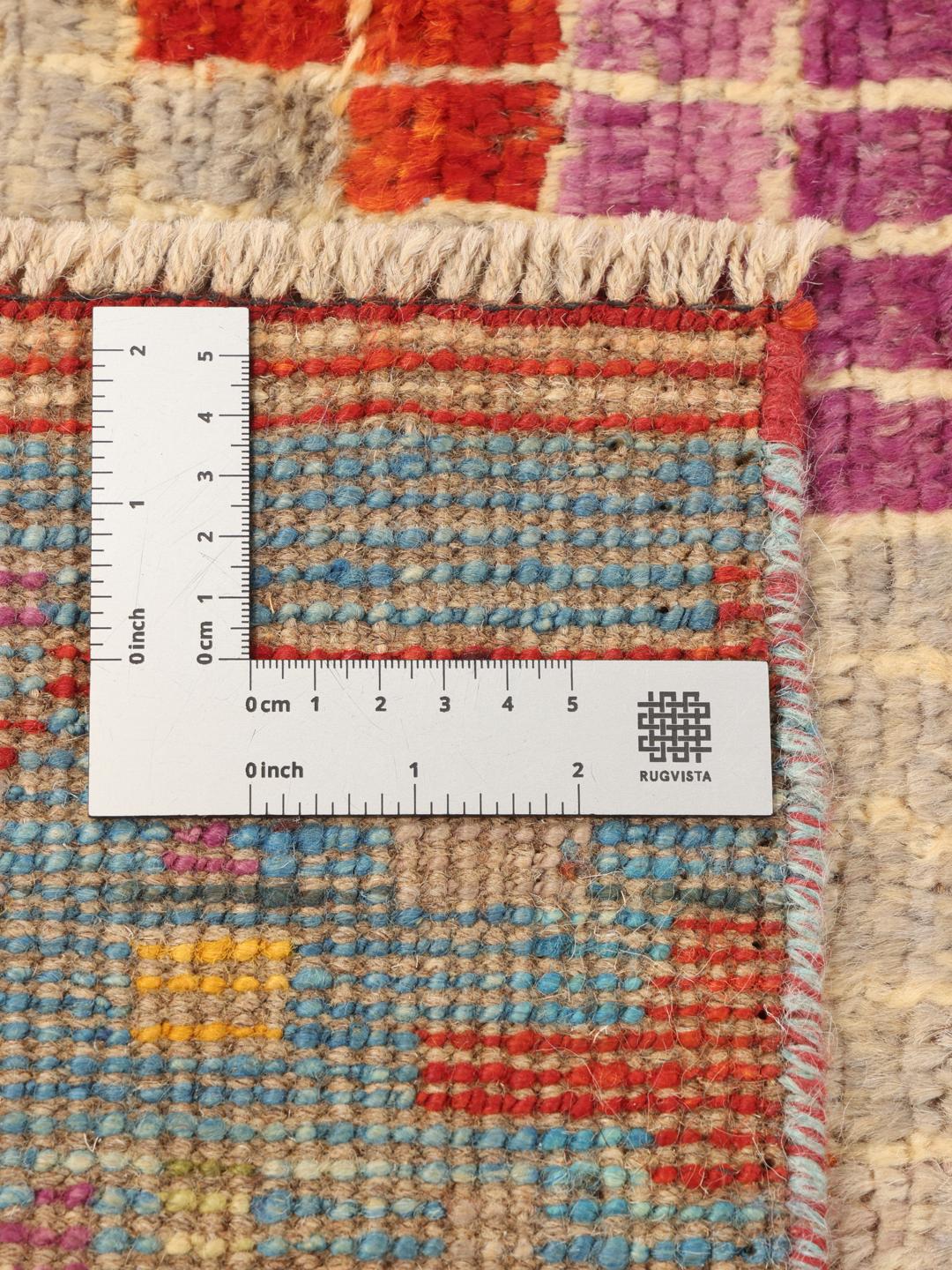
The term hand-knotted refers to the laborious process of tying individual strands of Wool onto a foundation, a technique that defines the quality and longevity of the rug. This method creates a dense pile that is far more resistant to wear than tufted or machine-made alternatives, ensuring that the rug maintains its structure and beauty over decades of use.
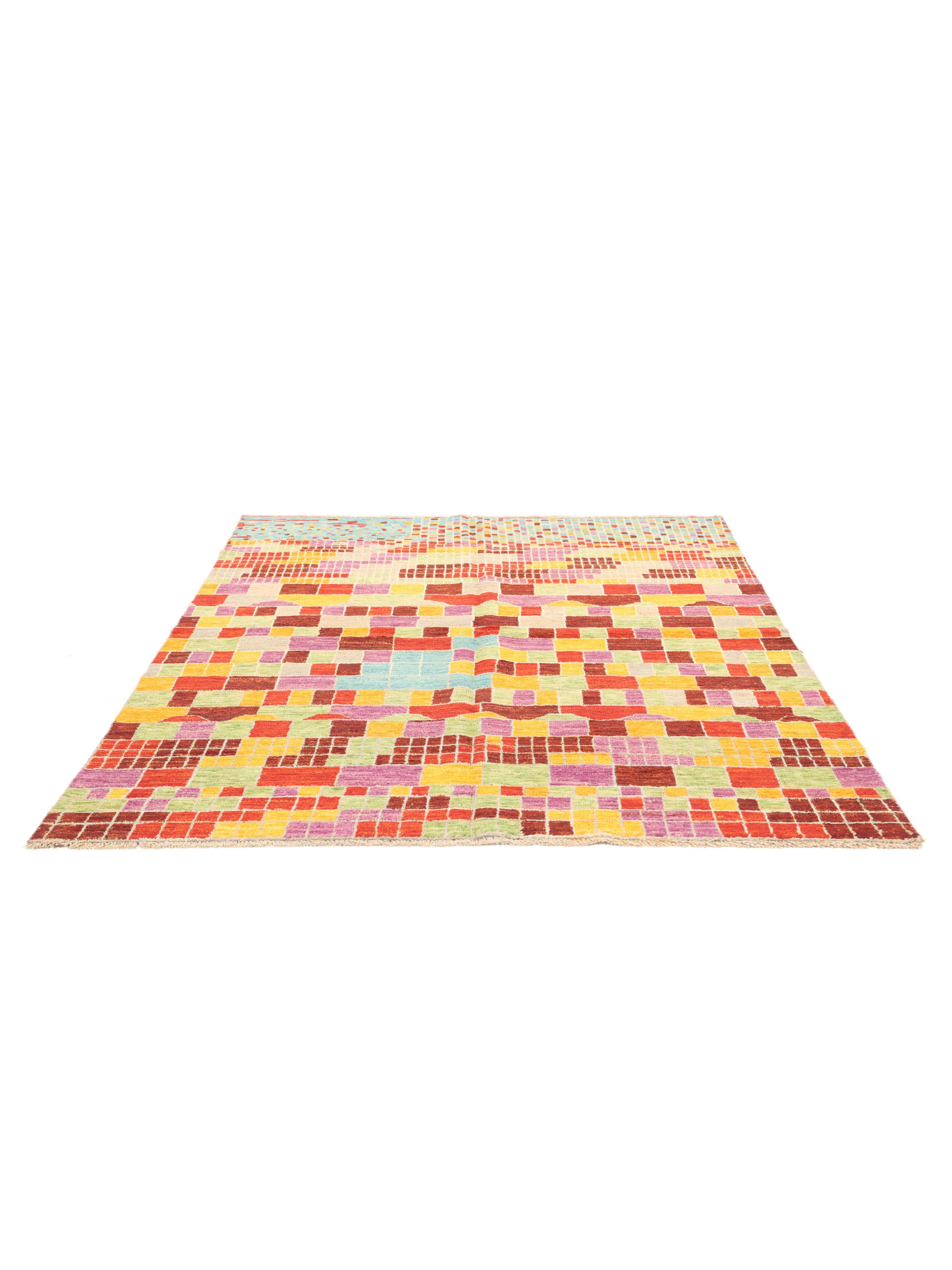
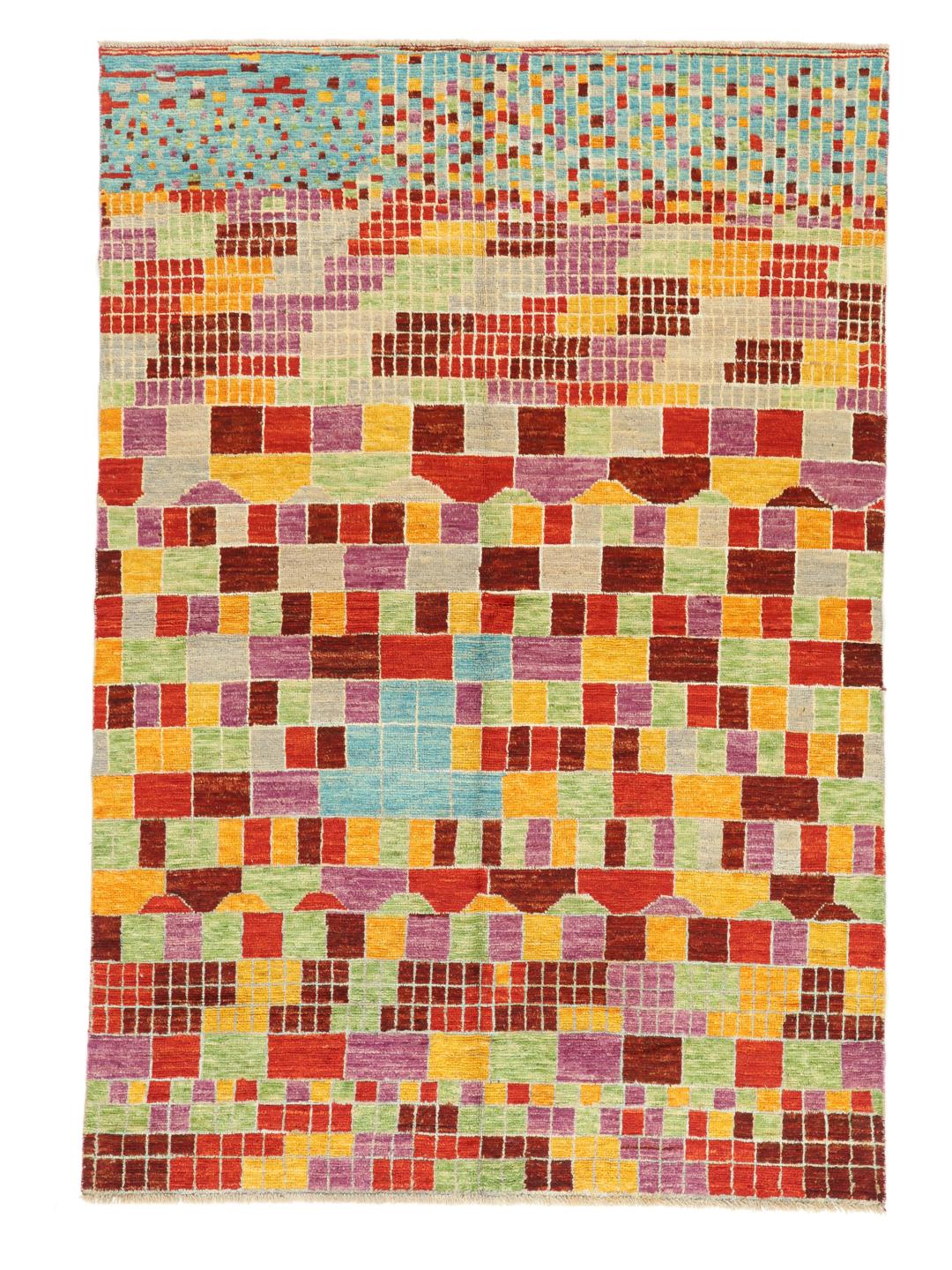
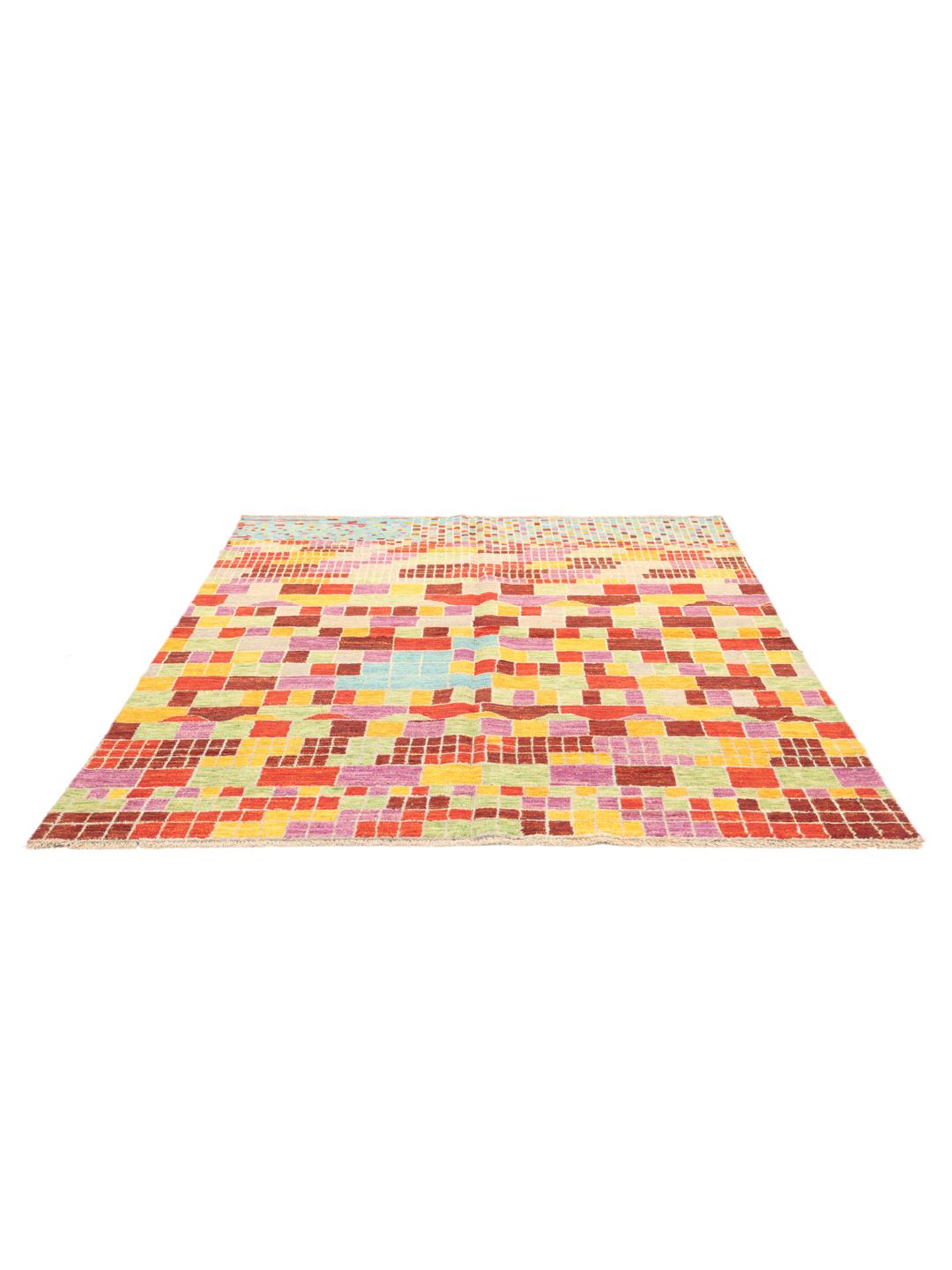
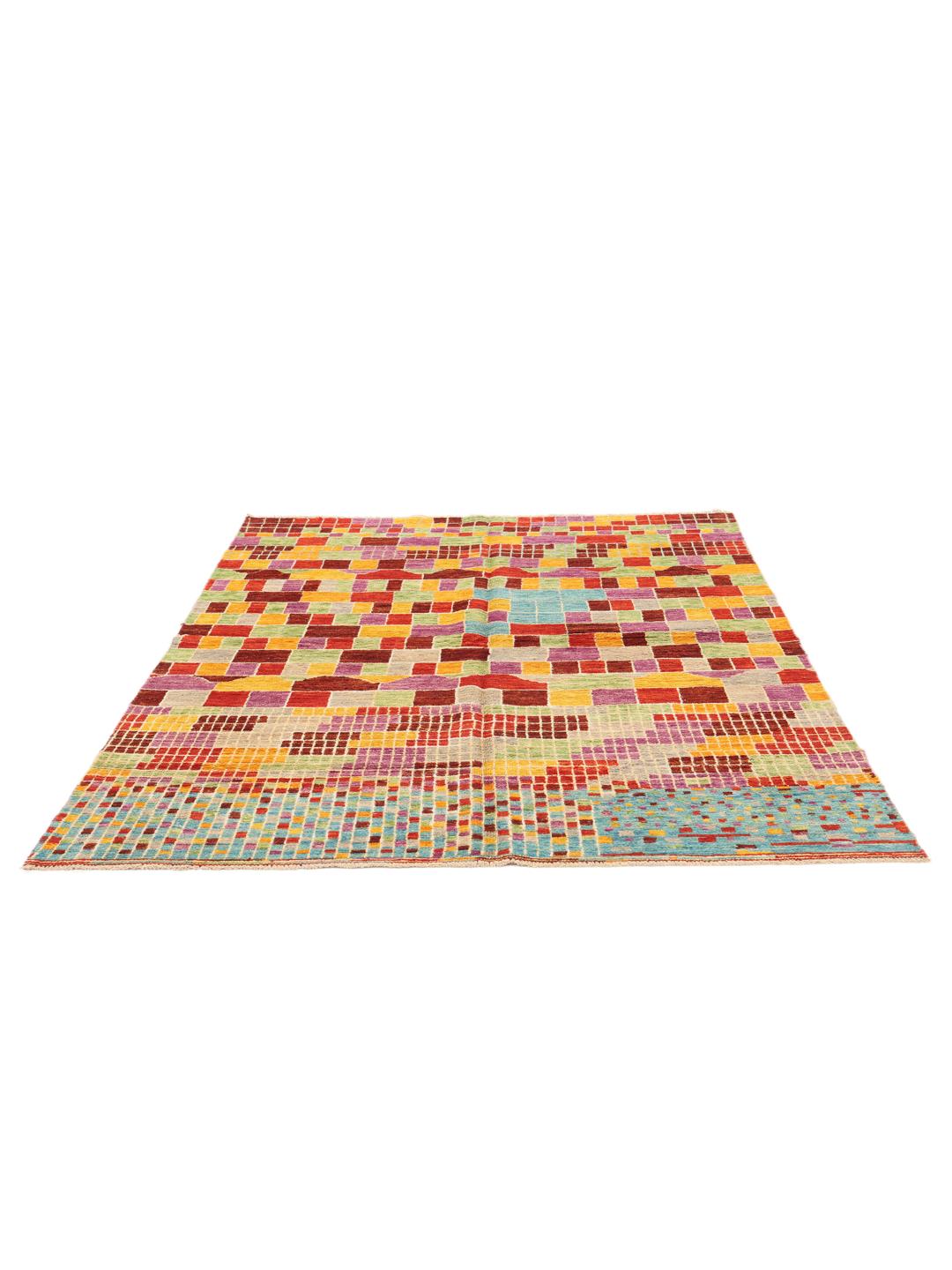
The visual language of this rug is defined by its colourful, grid-like arrangement, which departs from more traditional, symmetrical tribal patterns. This mosaic style uses blocks of vibrant tones to create a modern, artistic effect, while still honouring the spirit of improvisation and individual expression that is central to the Berber weaving heritage.
Collecting a rug from this tradition is an investment in human skill and cultural continuity. These pieces are valued not only for their visual impact but for the history of the hands that shaped them, representing a commitment to slow, intentional production that stands in contrast to the disposable nature of modern home goods.