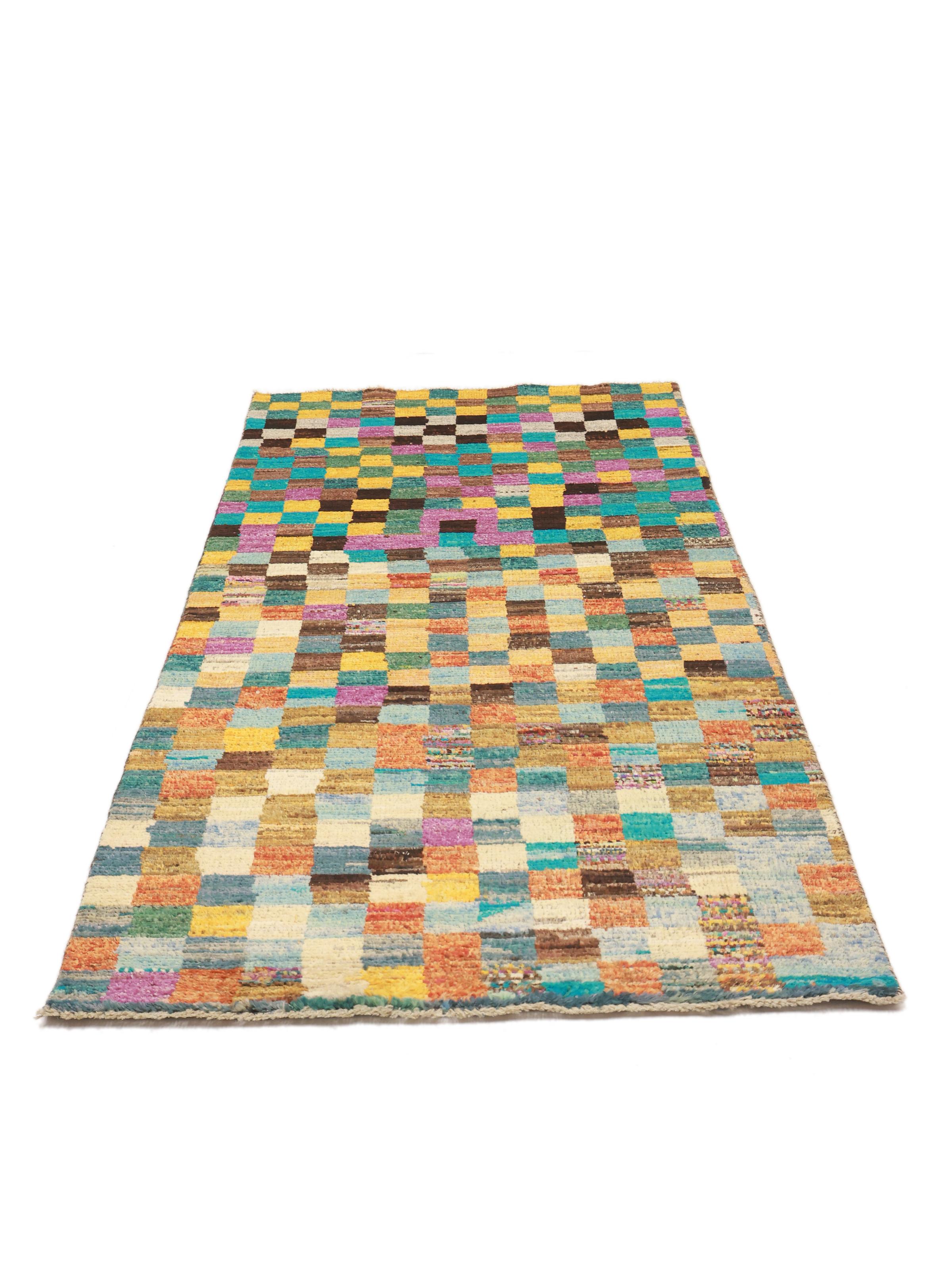
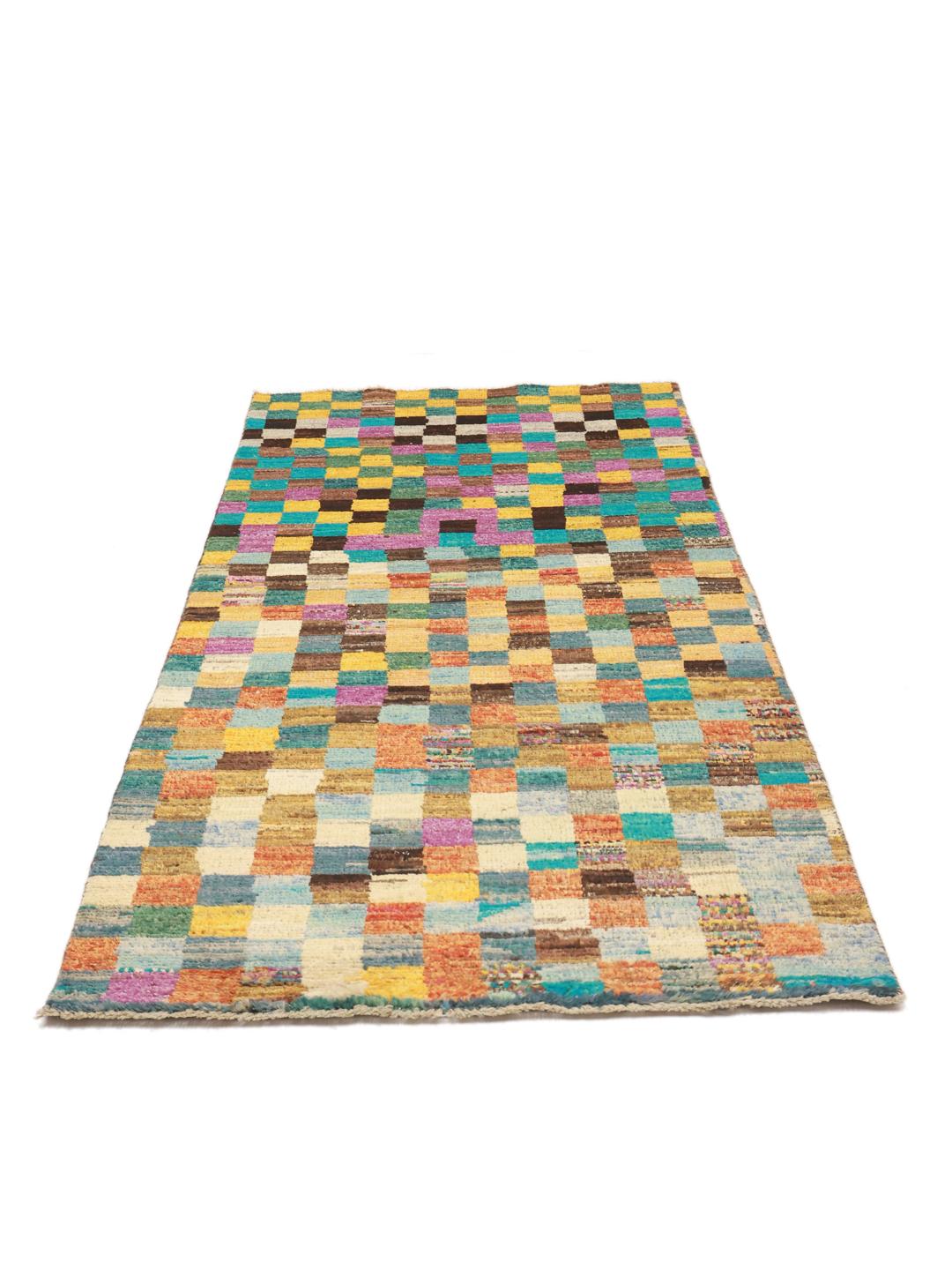
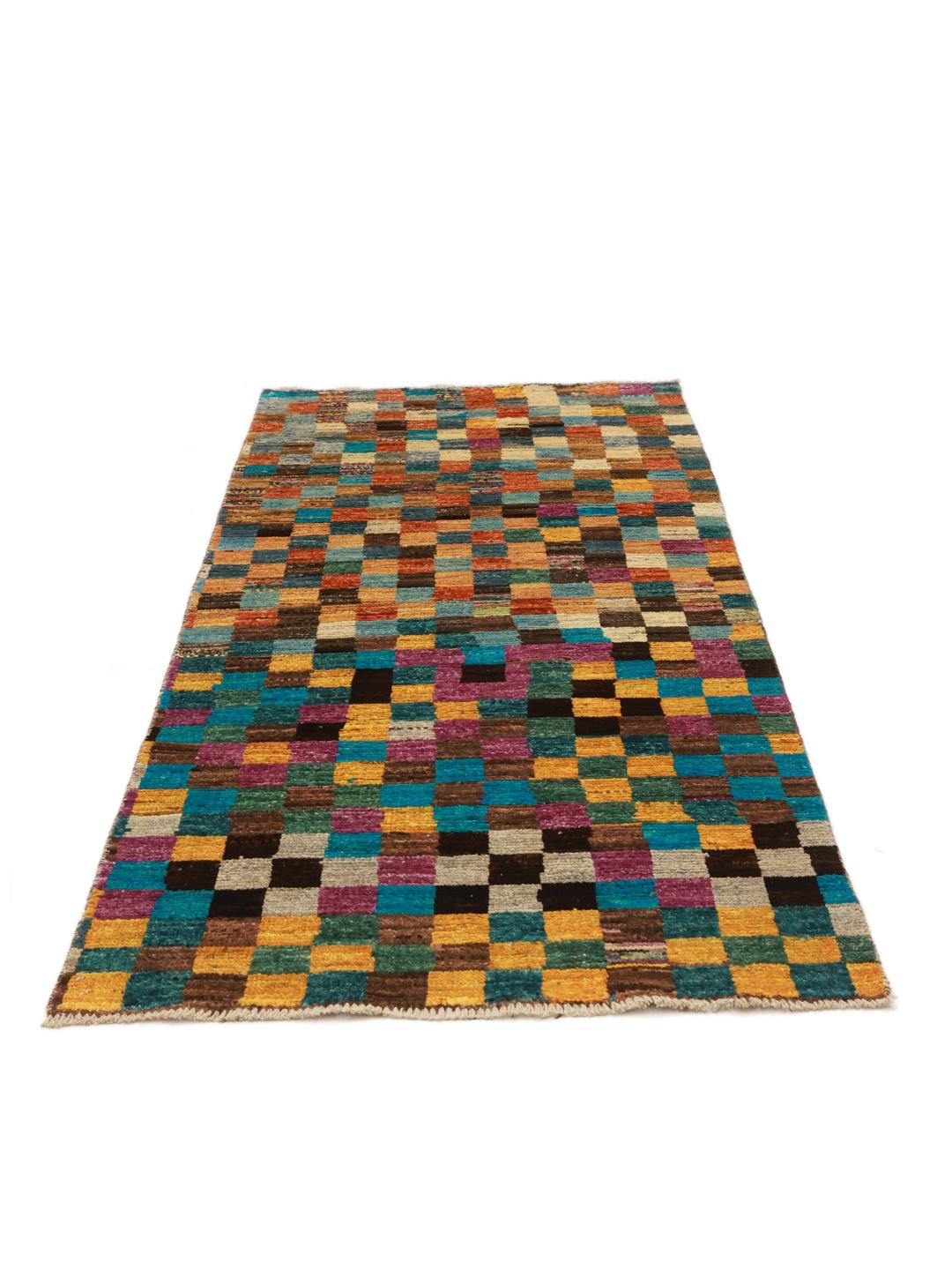
Berber rugs originate from the tribal traditions of North Africa, where they were traditionally woven by indigenous groups for warmth and daily use. Over time, these weaving techniques travelled and evolved, finding a home in the diverse, culturally rich weaving communities of the Middle East, where artisans have adapted these historic methods to create their own unique, colourful interpretations.
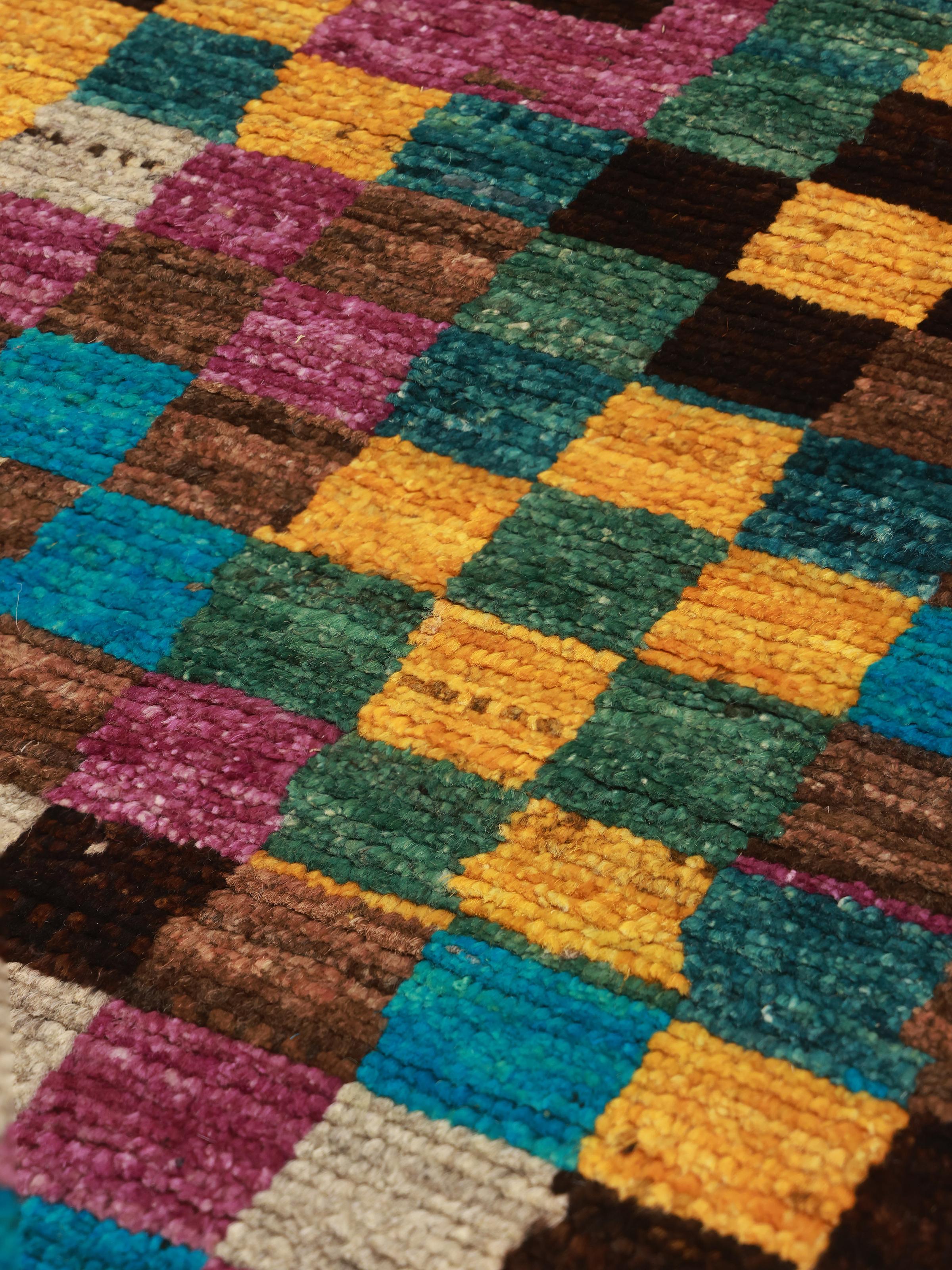
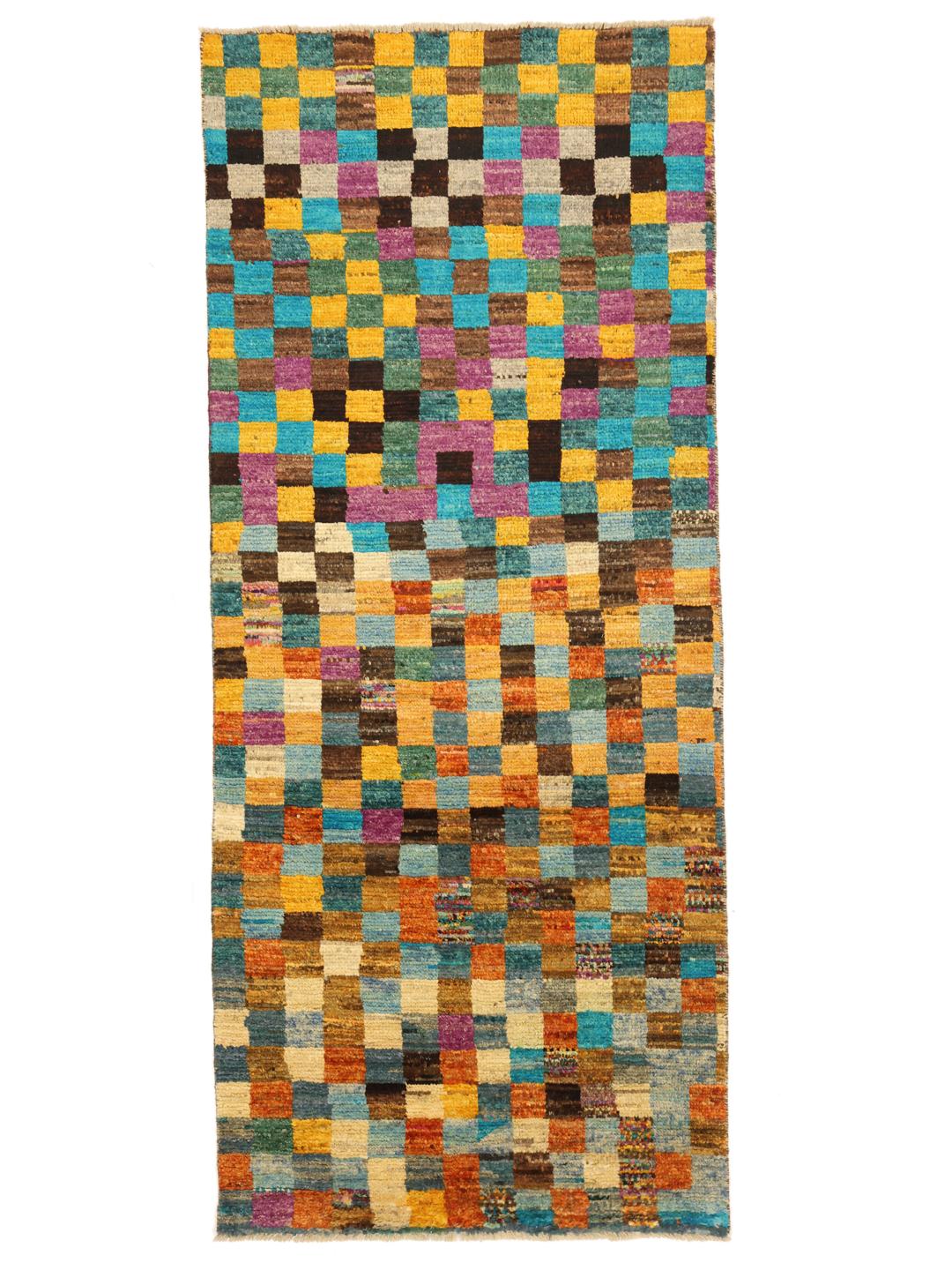
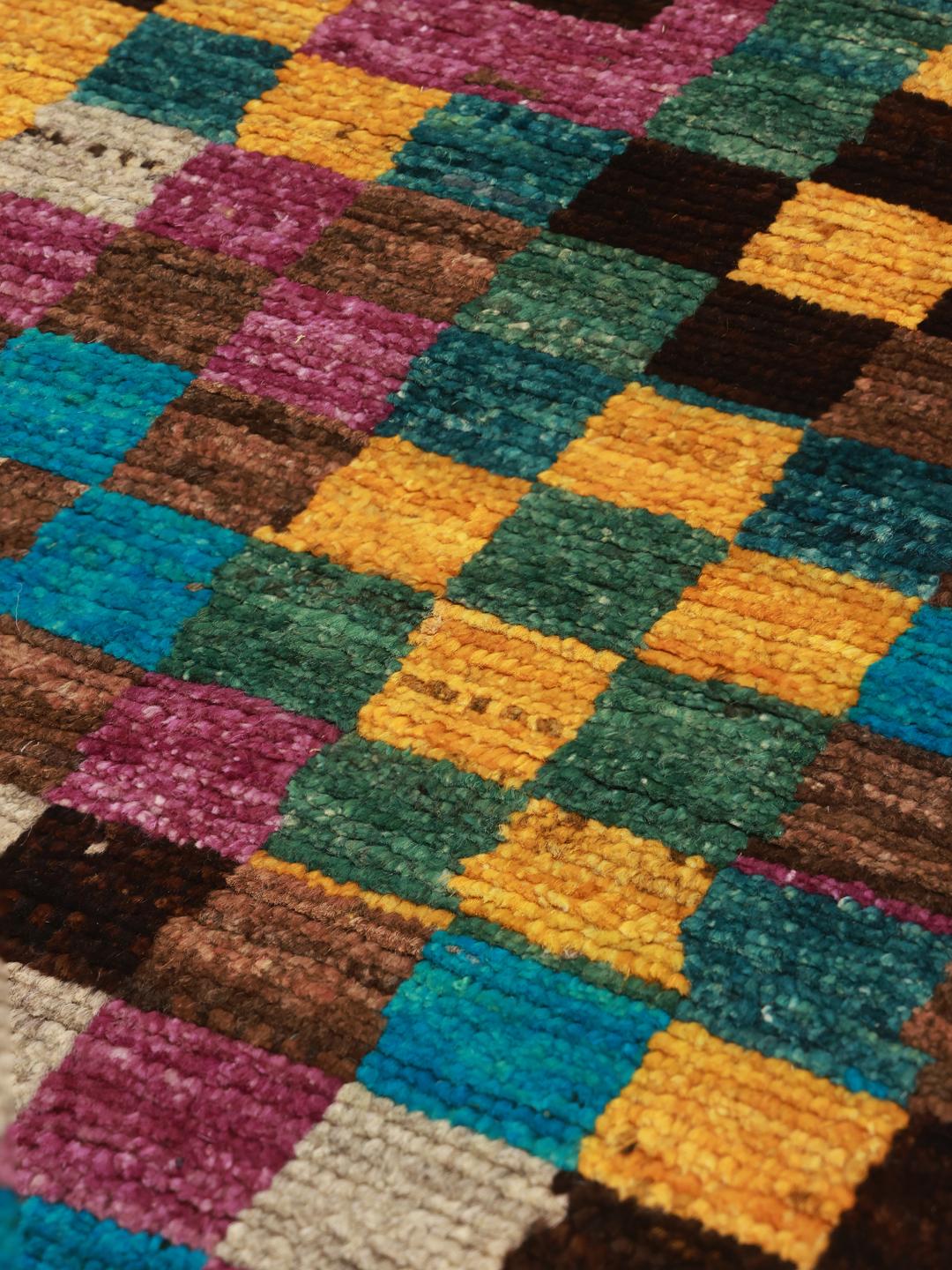
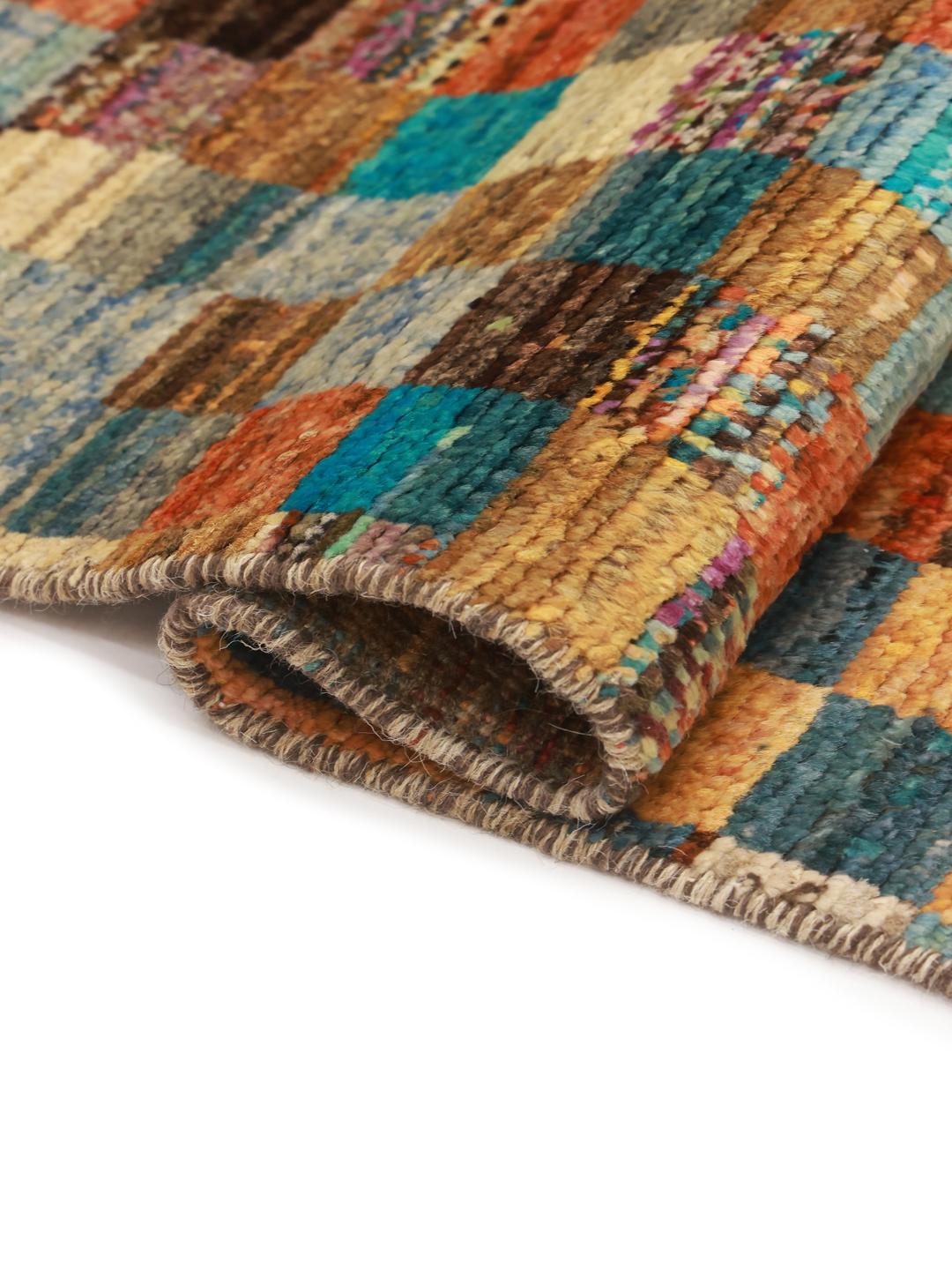
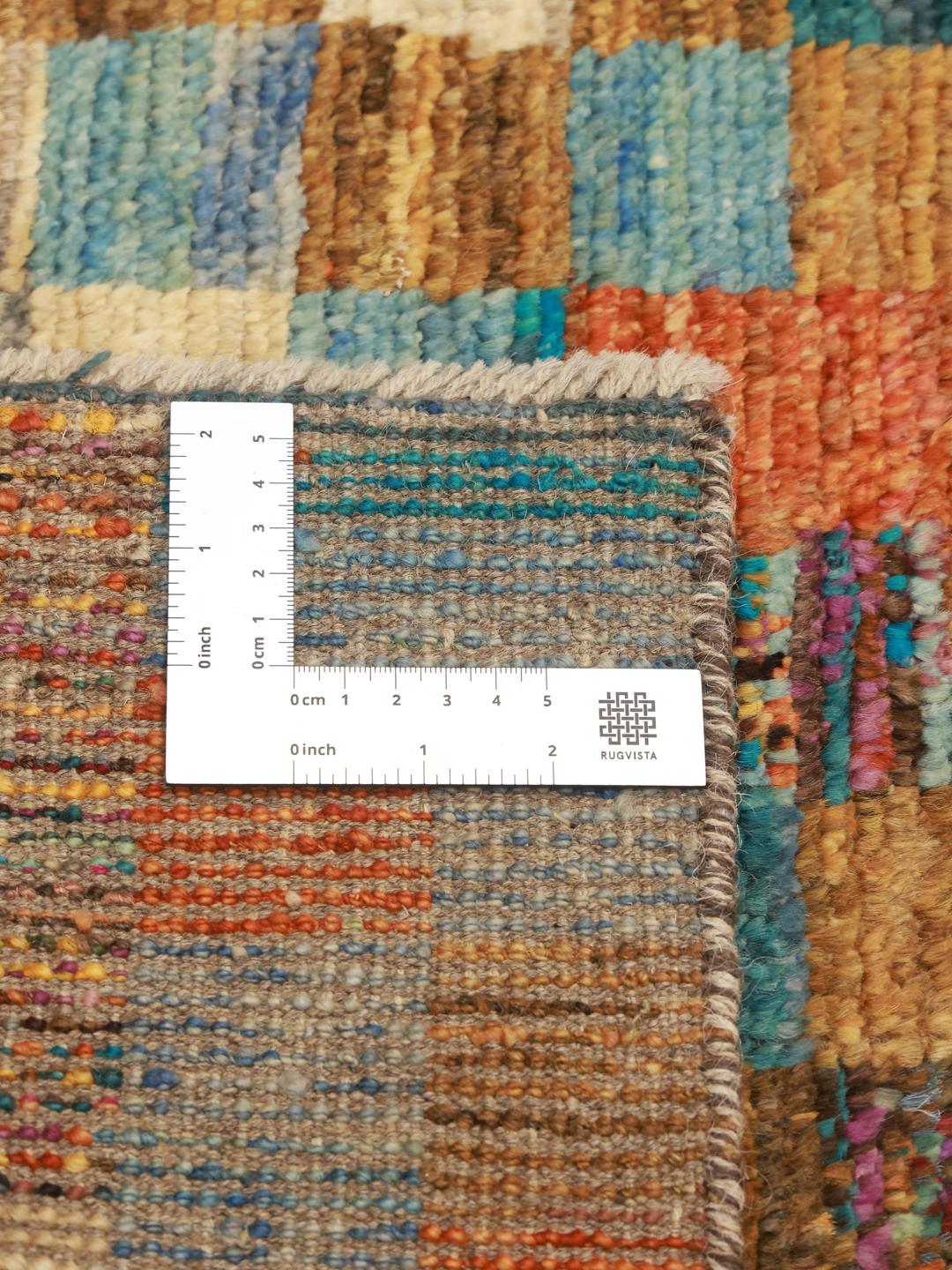
The term hand-knotted refers to the precise method of securing individual lengths of Wool to the foundation threads. This creates a durable, high-density pile that is far more resistant to wear than tufted or machine-made alternatives. This technique allows for the intricate, vibrant colour transitions seen in this piece, as each knot is a distinct point of colour that contributes to the overall visual harmony.
Signature elements of these rugs often include geometric motifs and a high degree of improvisation. While traditional designs are often rooted in local symbolism, the colourful, checkered style of this piece showcases a more modern, playful evolution. The use of vibrant, contrasting hues is a hallmark of this category, intended to brighten interiors and reflect the spirited creativity of the weaver.
Owning a piece from this tradition is an investment in cultural heritage and human skill. These rugs are valued by collectors and homeowners alike for their authenticity and the way they bridge the gap between ancient craft and contemporary living. They carry the story of the artisan's hands and the regional traditions that have been passed down through generations.