Berber rug traditions trace their roots to the indigenous tribal weavers of North Africa and Central Asia, where generations passed down ancient weaving symbols and knotting techniques.
While originally crafted by nomadic families for practical household warmth and bedding, these rugs evolved into expressive storytelling canvases that reflected the weaver's immediate surroundings and daily life.
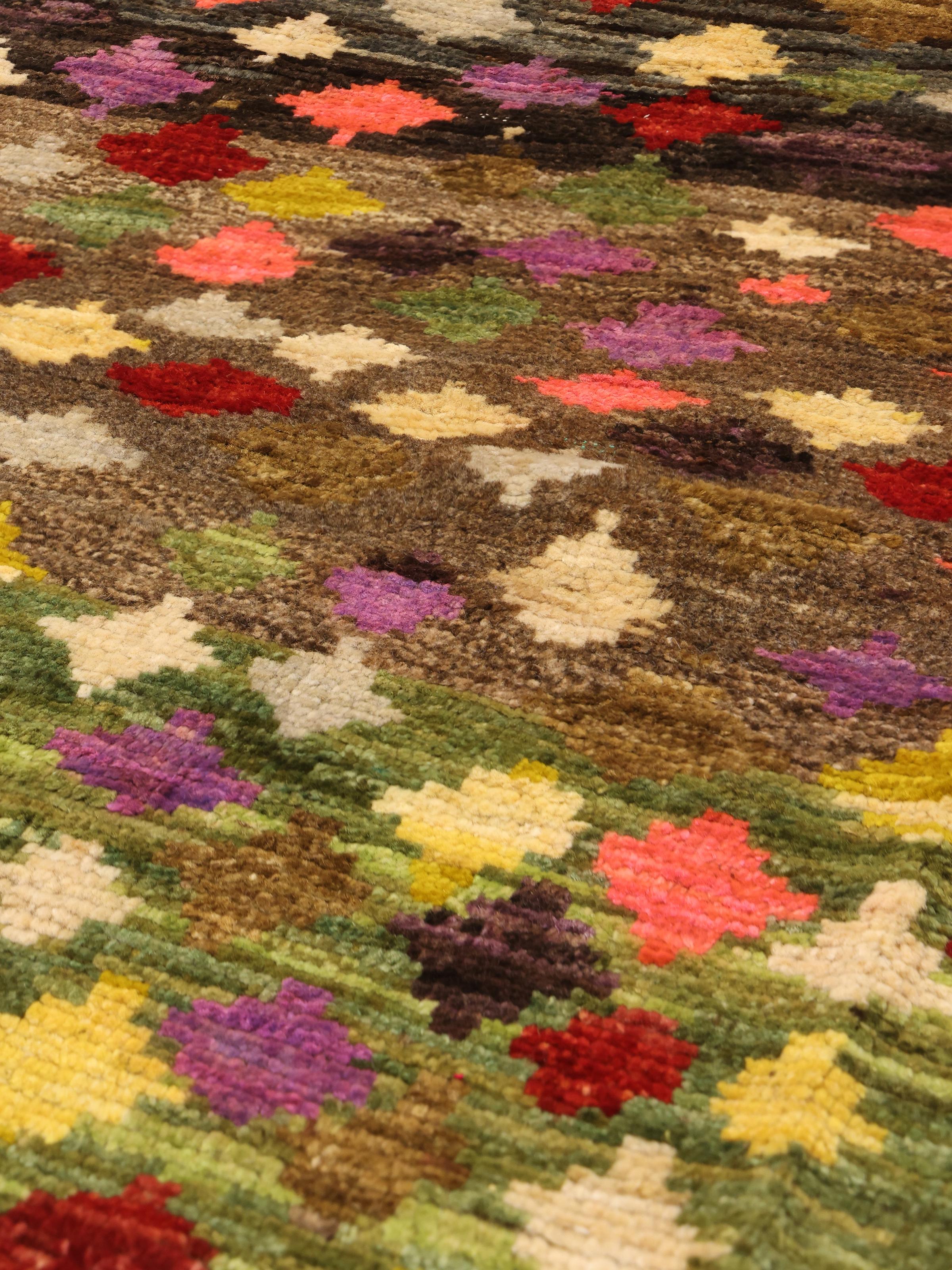
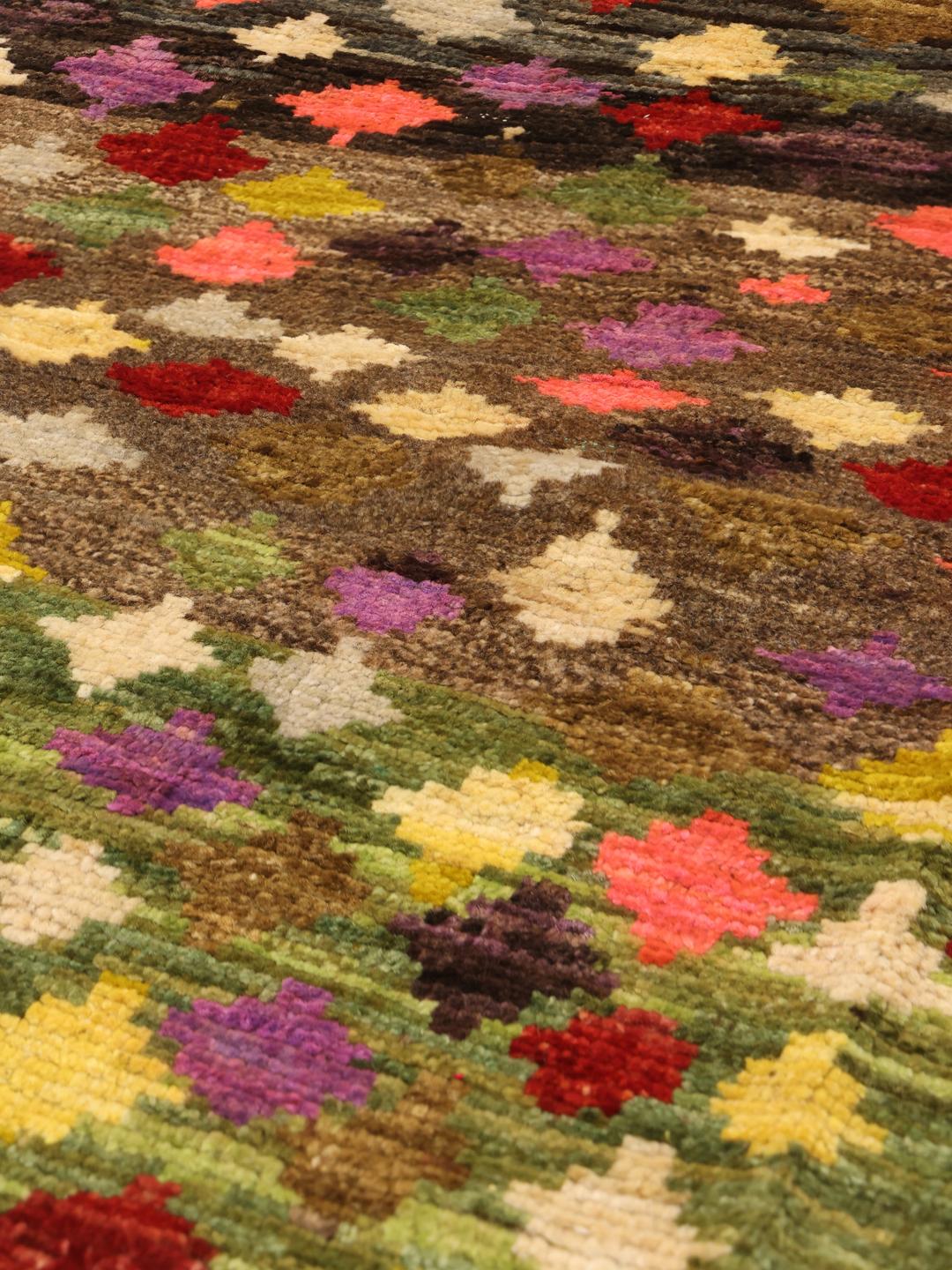
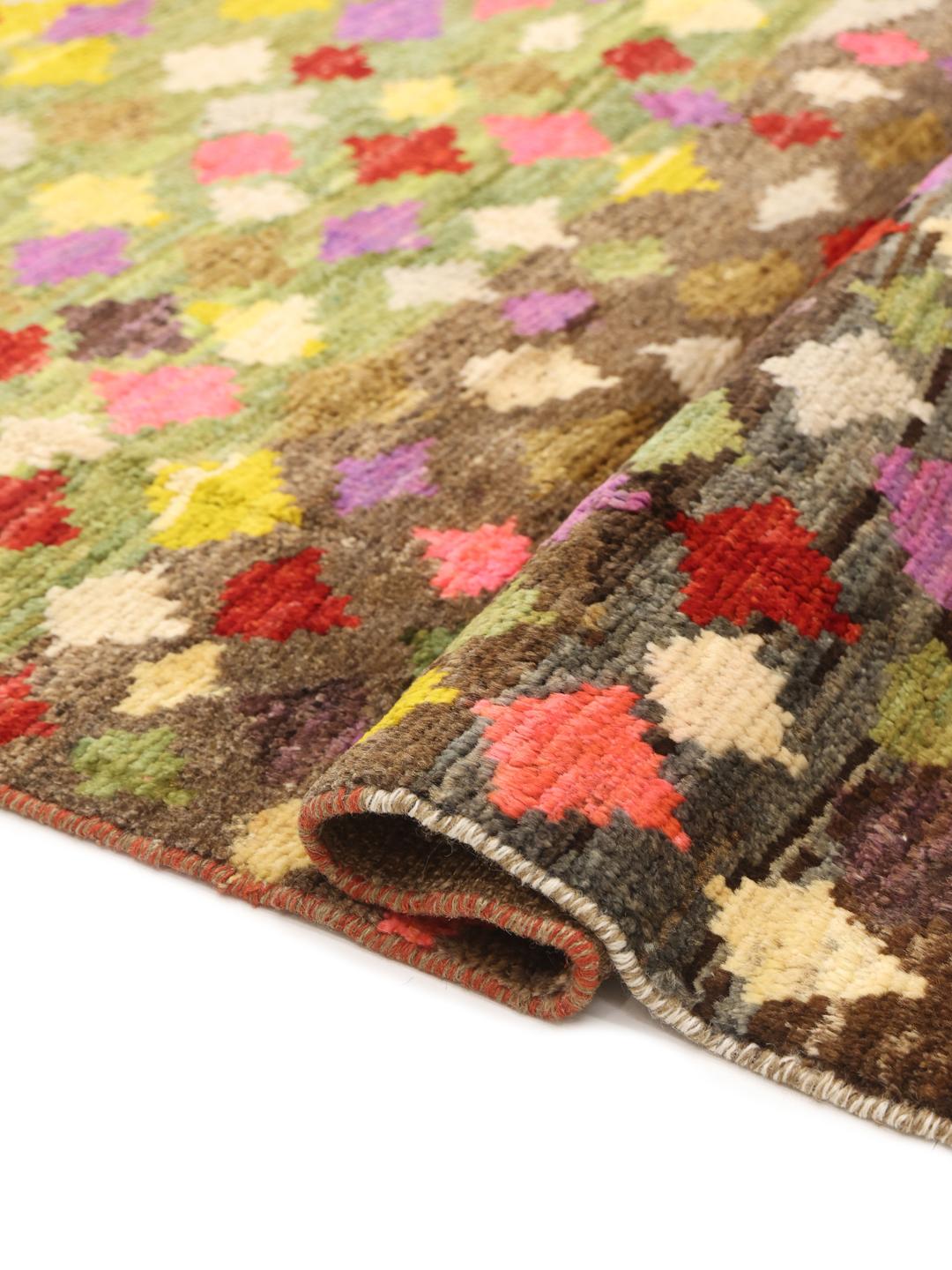
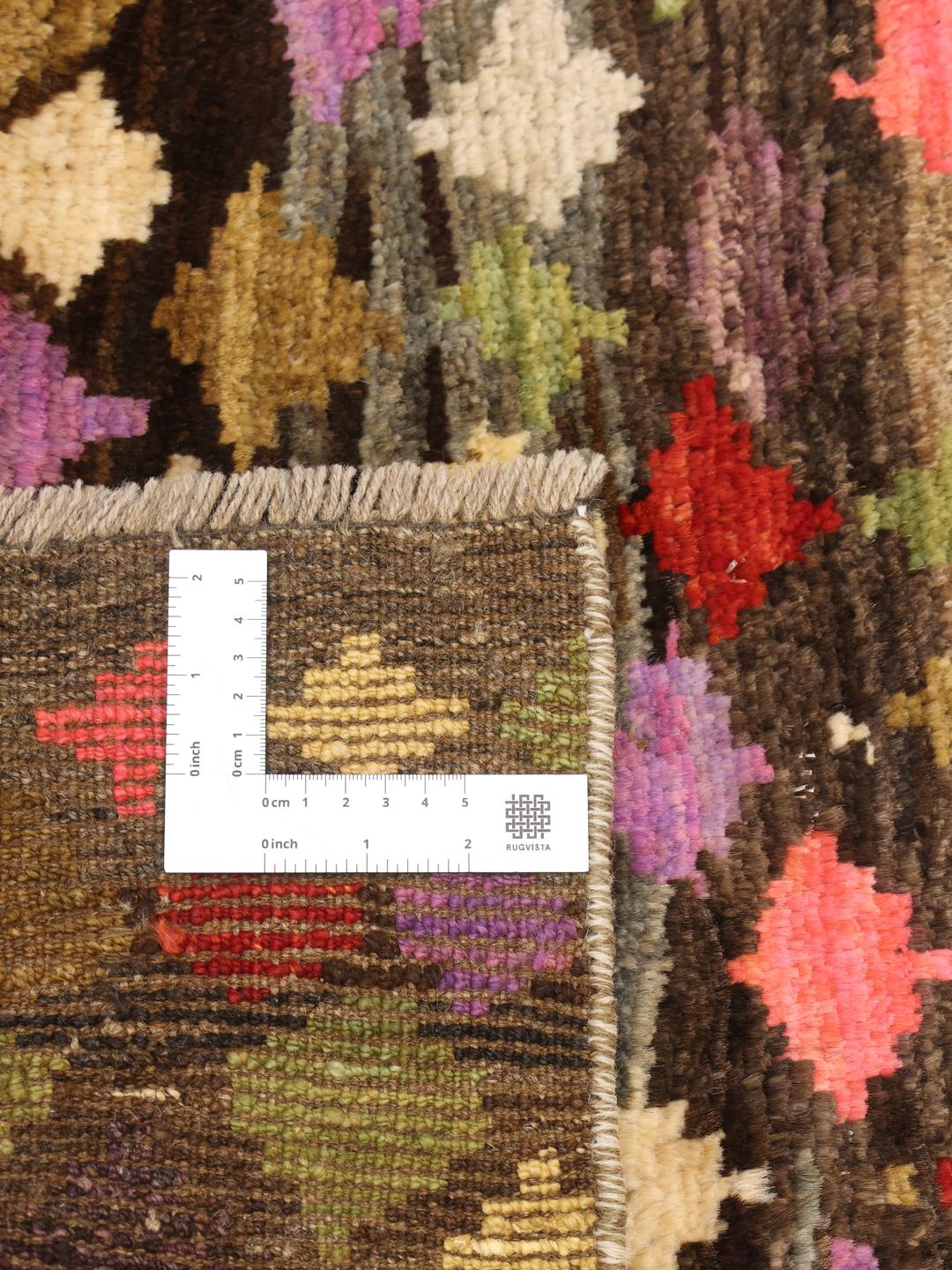
Hand-knotted construction involves tying individual strands of yarn around the foundation warps, a meticulous process that determines the rug's durability and overall weight.
A well-tied knot structure locks the pile firmly in place, ensuring the surface resists everyday wear and maintains its inviting texture over years of use.
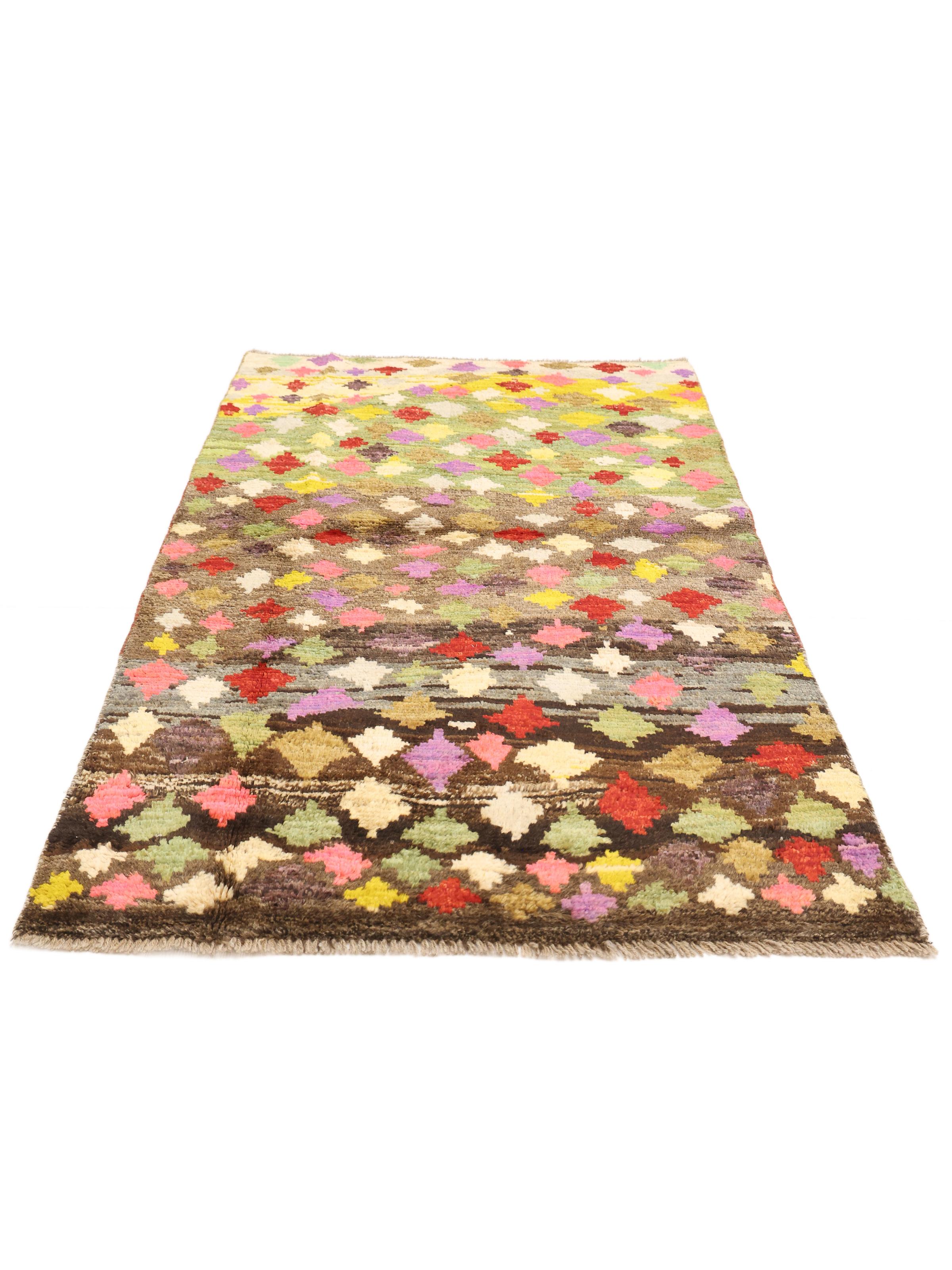
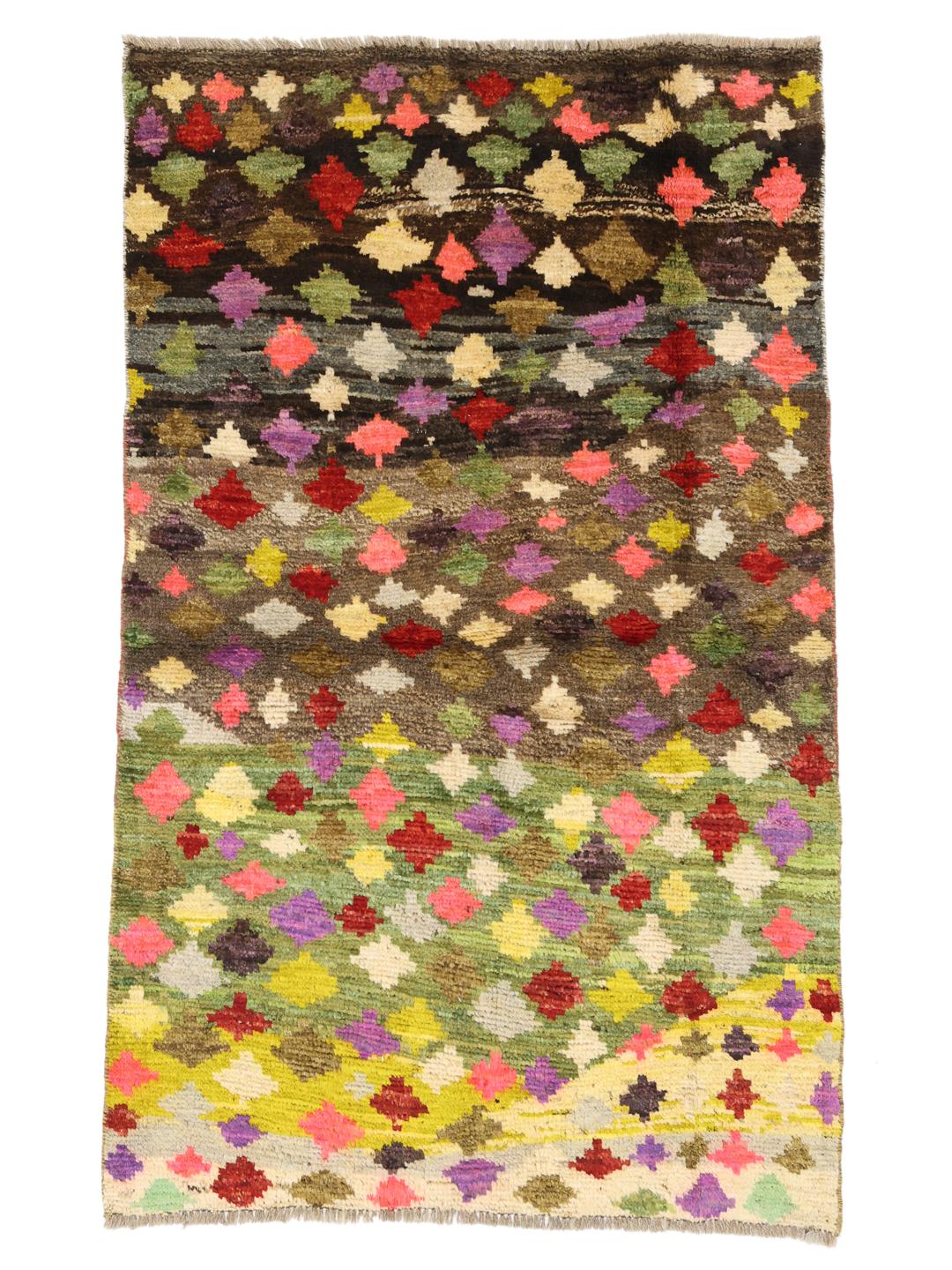
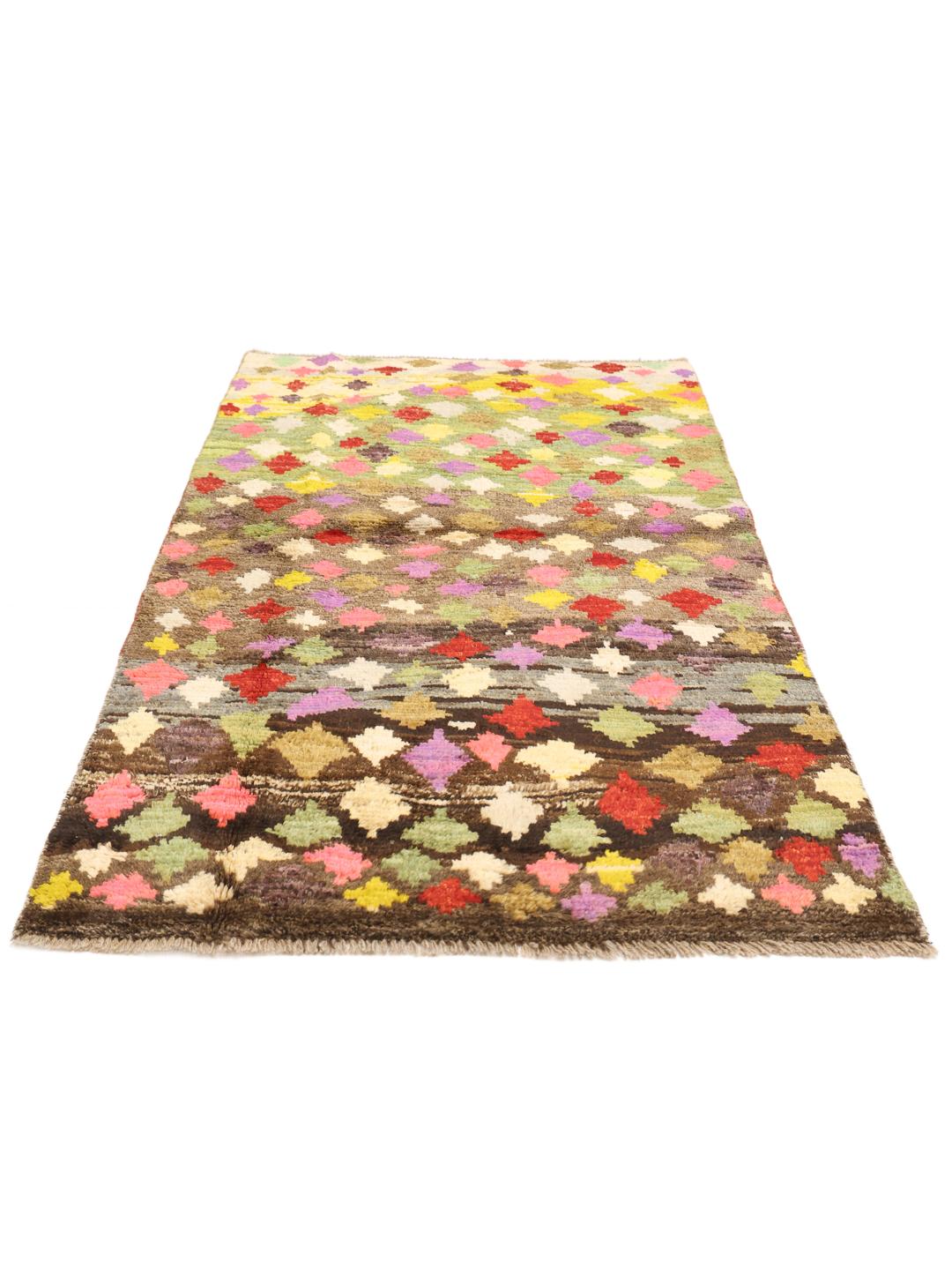
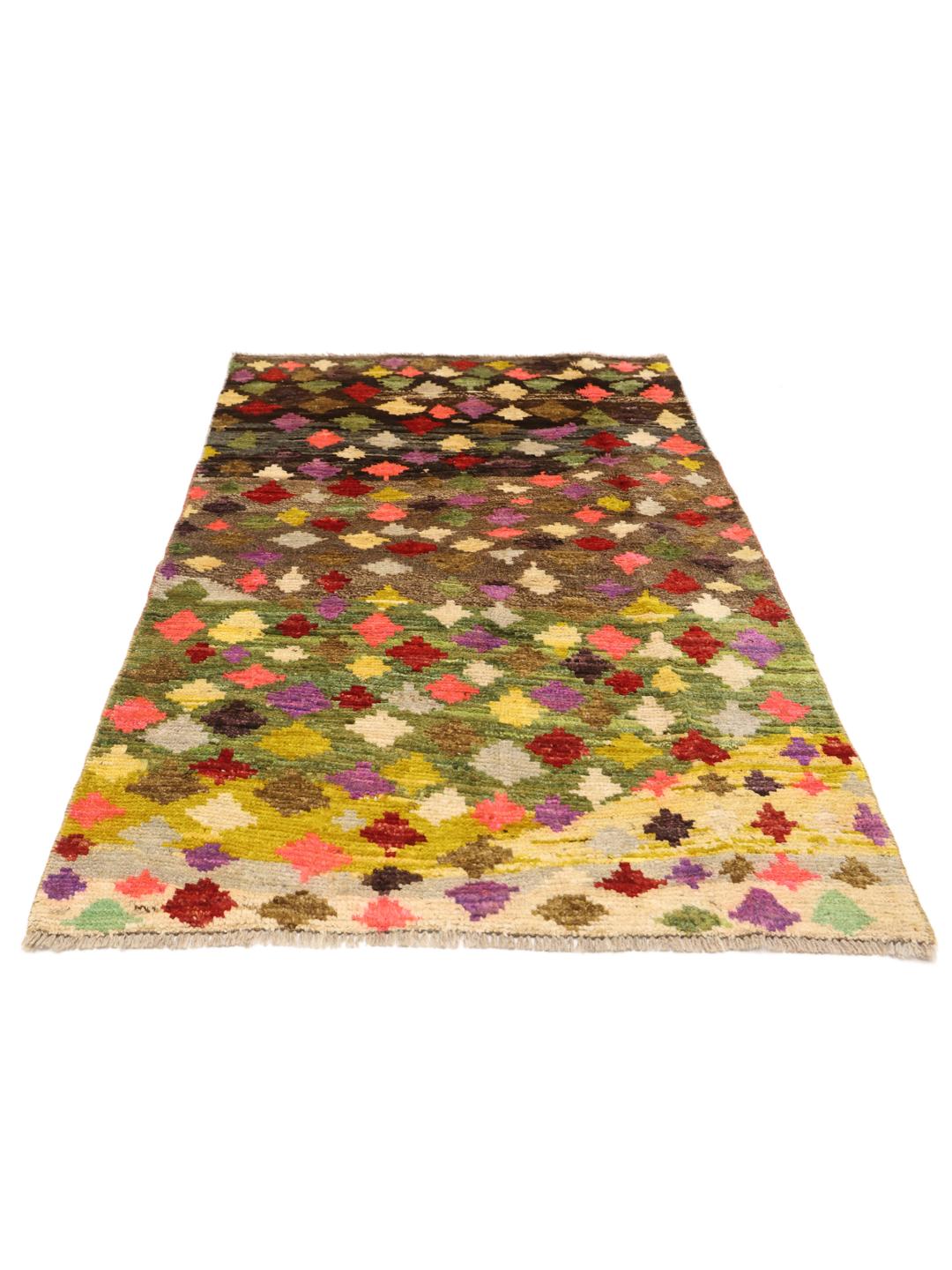
The visual language of this tradition often features playful motifs, geometric markers, and vibrant colour accents scattered across a more grounded field.
In this particular piece, the lively arrangement of colourful shapes creates an engaging contrast against the darker backdrop, offering a modern interpretation of classic motifs.
Collecting a rug from this heritage tradition means preserving centuries of artisanal knowledge and human skill in your home.
It represents an authentic connection to traditional handcrafting methods that prioritise durability and natural materials over mass production.