Berber rug traditions trace their roots back to the indigenous communities of North Africa and neighbouring regions, where weaving traditions were passed down through generations. Over time, these distinct aesthetic sensibilities spread and influenced rug-making practices across various regions, including Afghanistan, where local artisans adapted these geometric visual languages using regional materials and techniques.
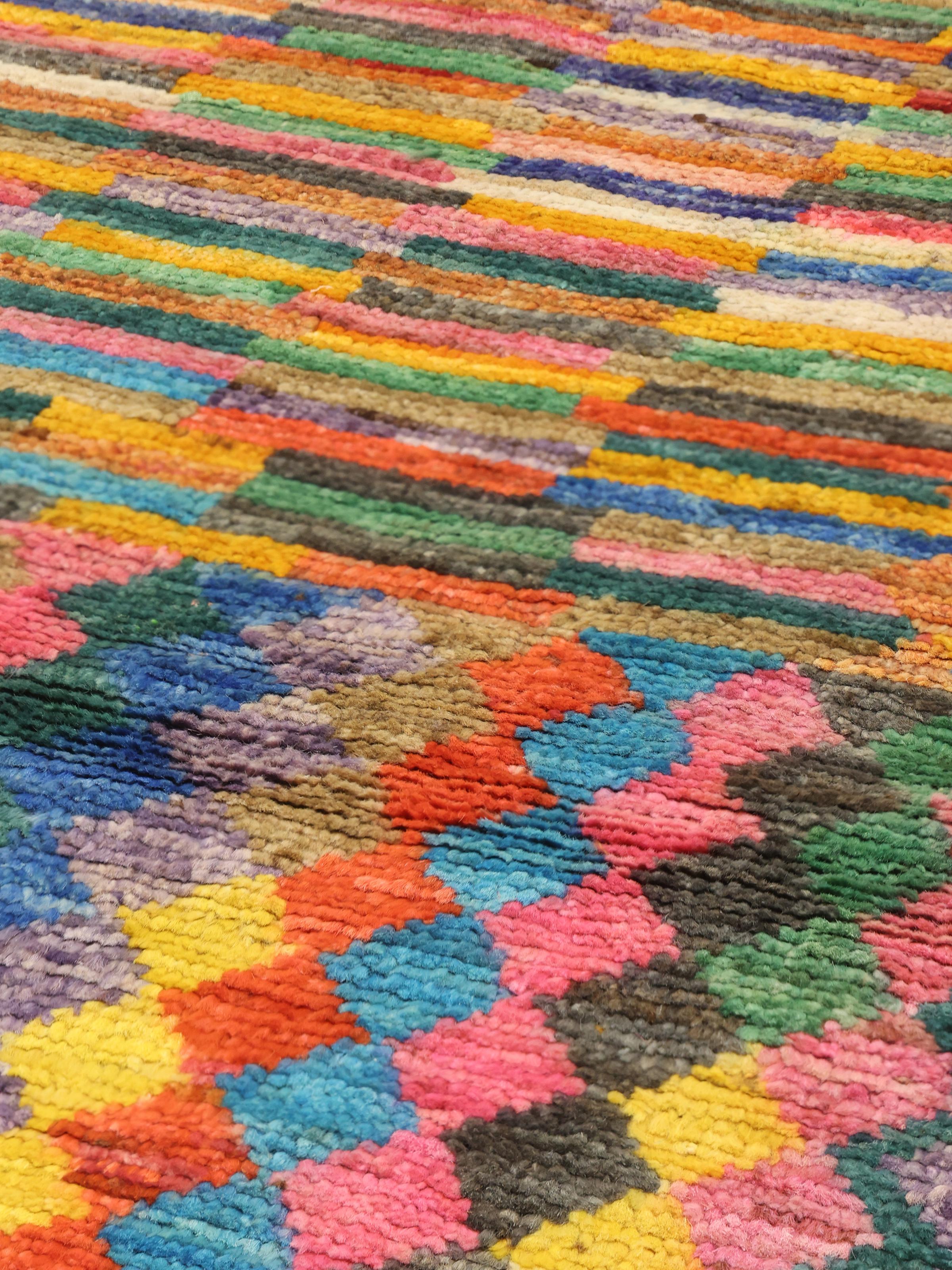
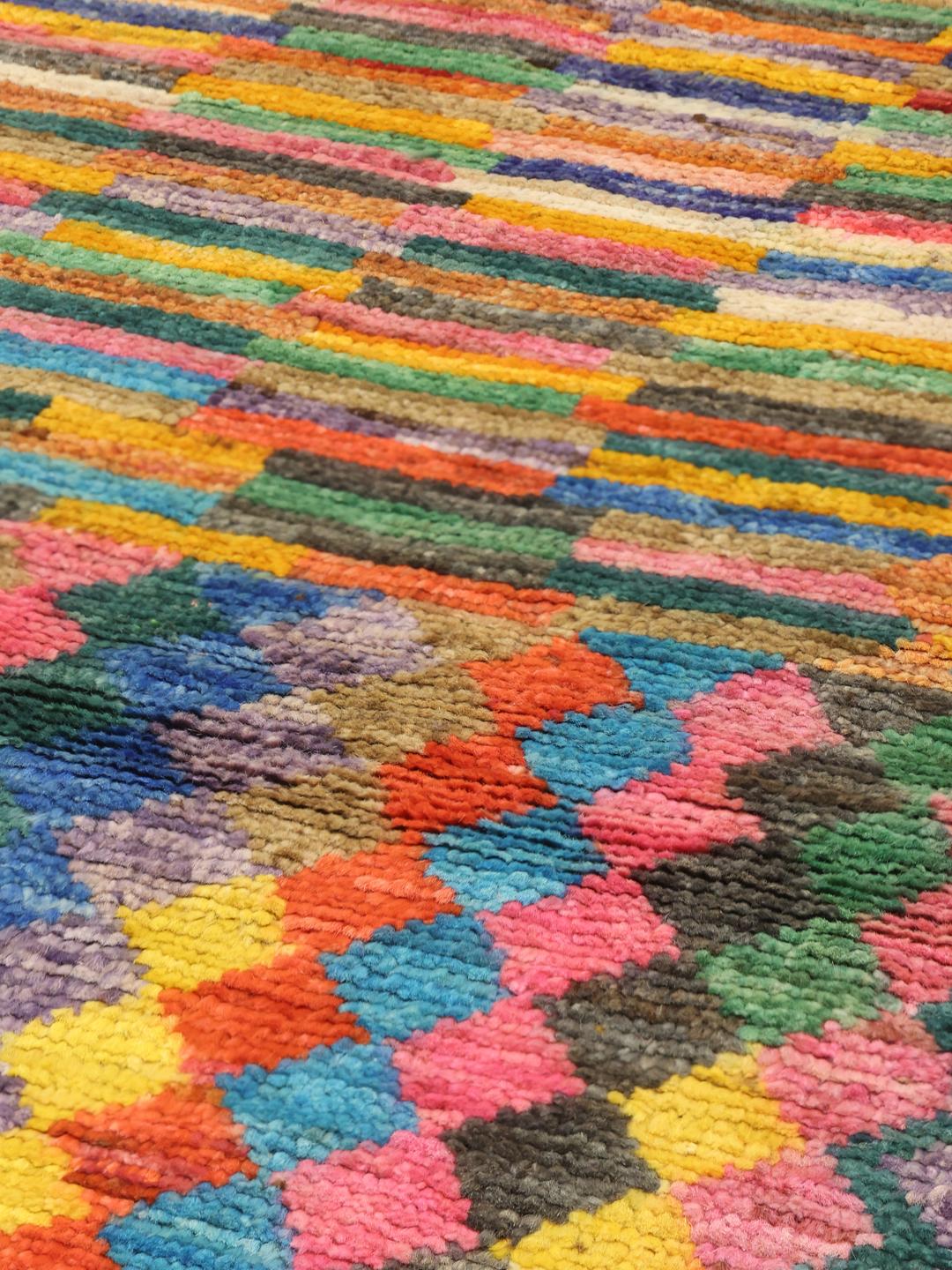
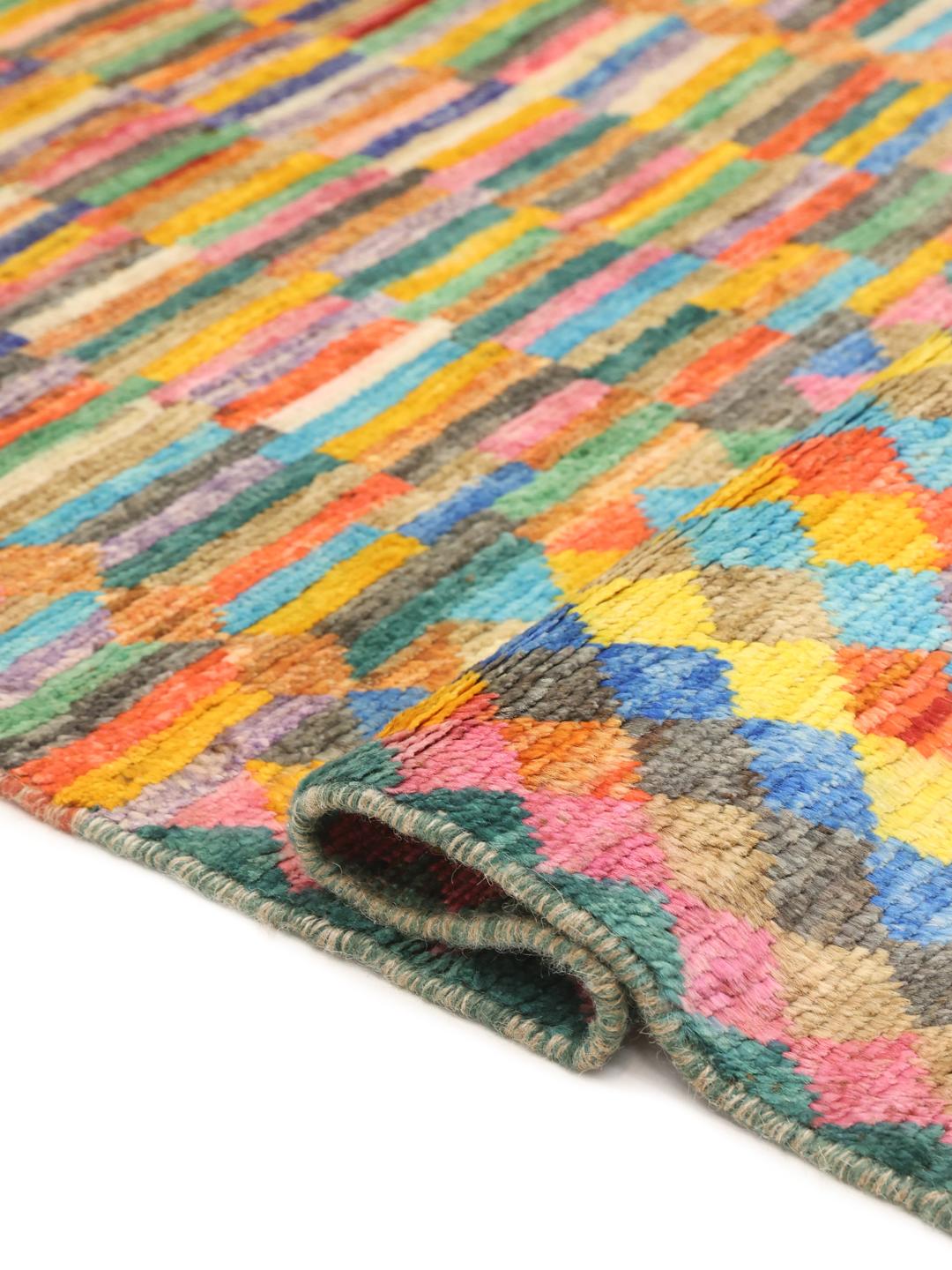
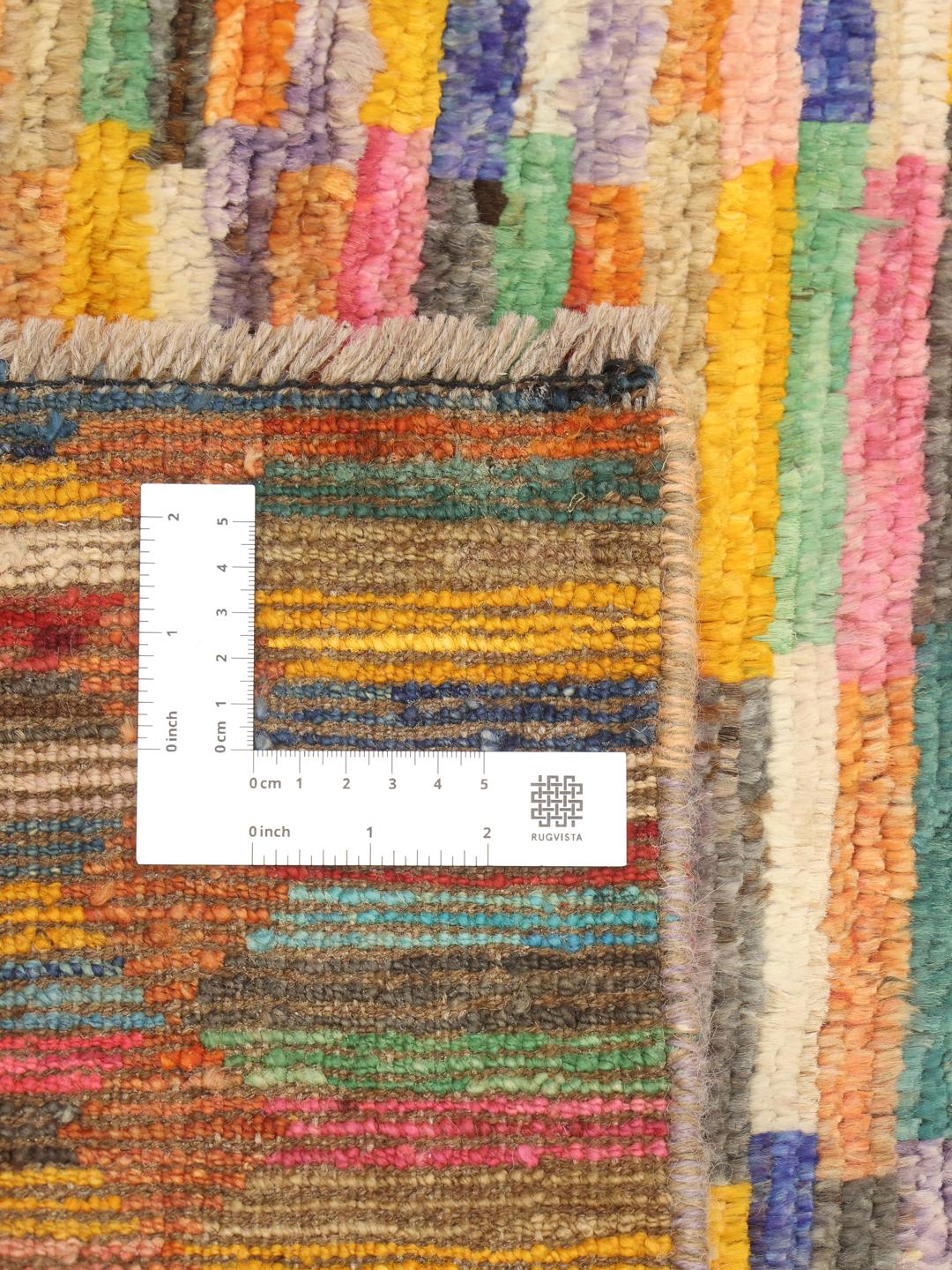
Hand-knotted construction requires patience and deep technical understanding, involving the careful tying of individual strands onto a foundational warp and weft. This traditional method creates a dense, integrated textile where the pile stands securely, offering both tactile comfort and long-lasting resilience.
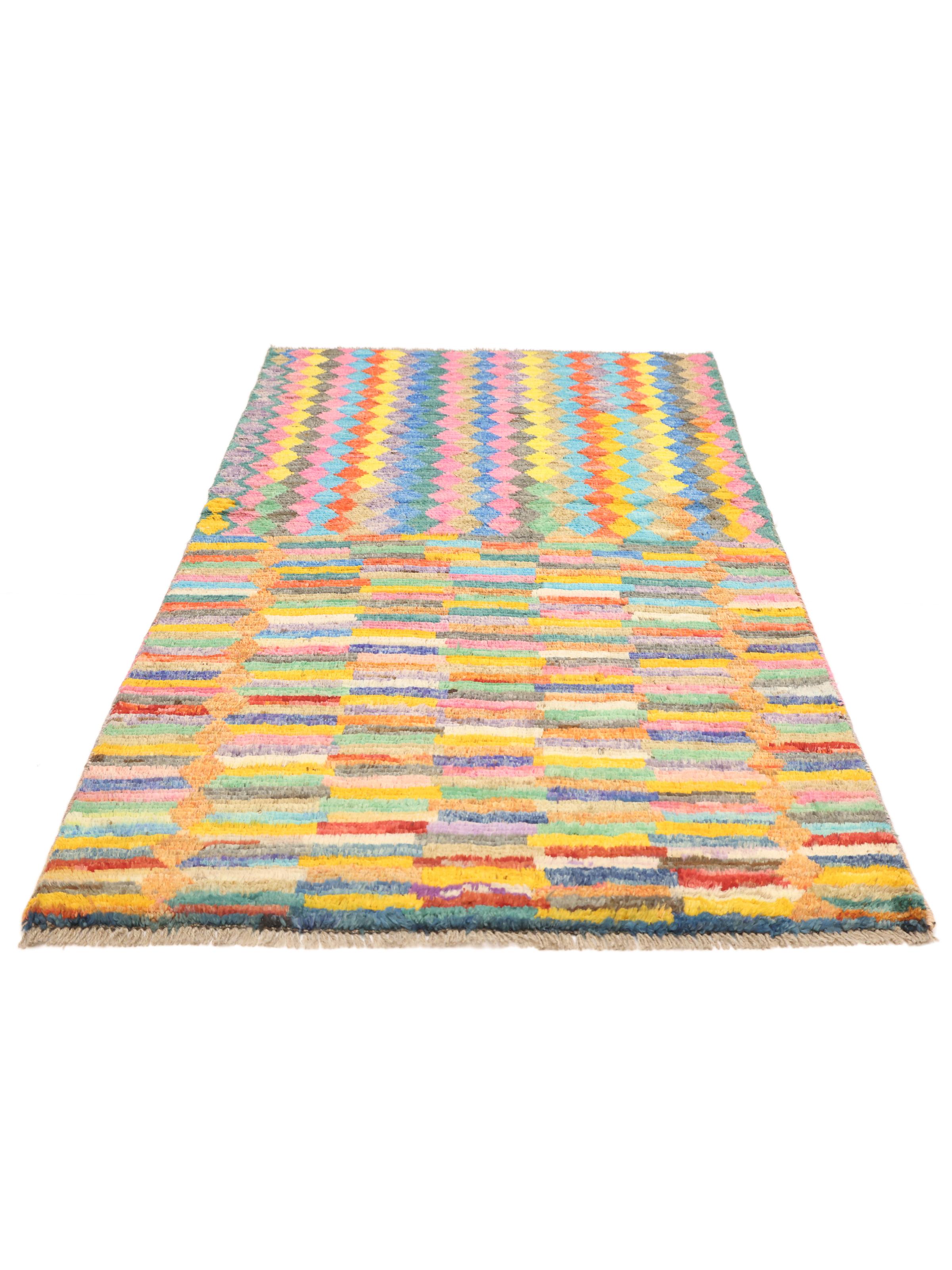
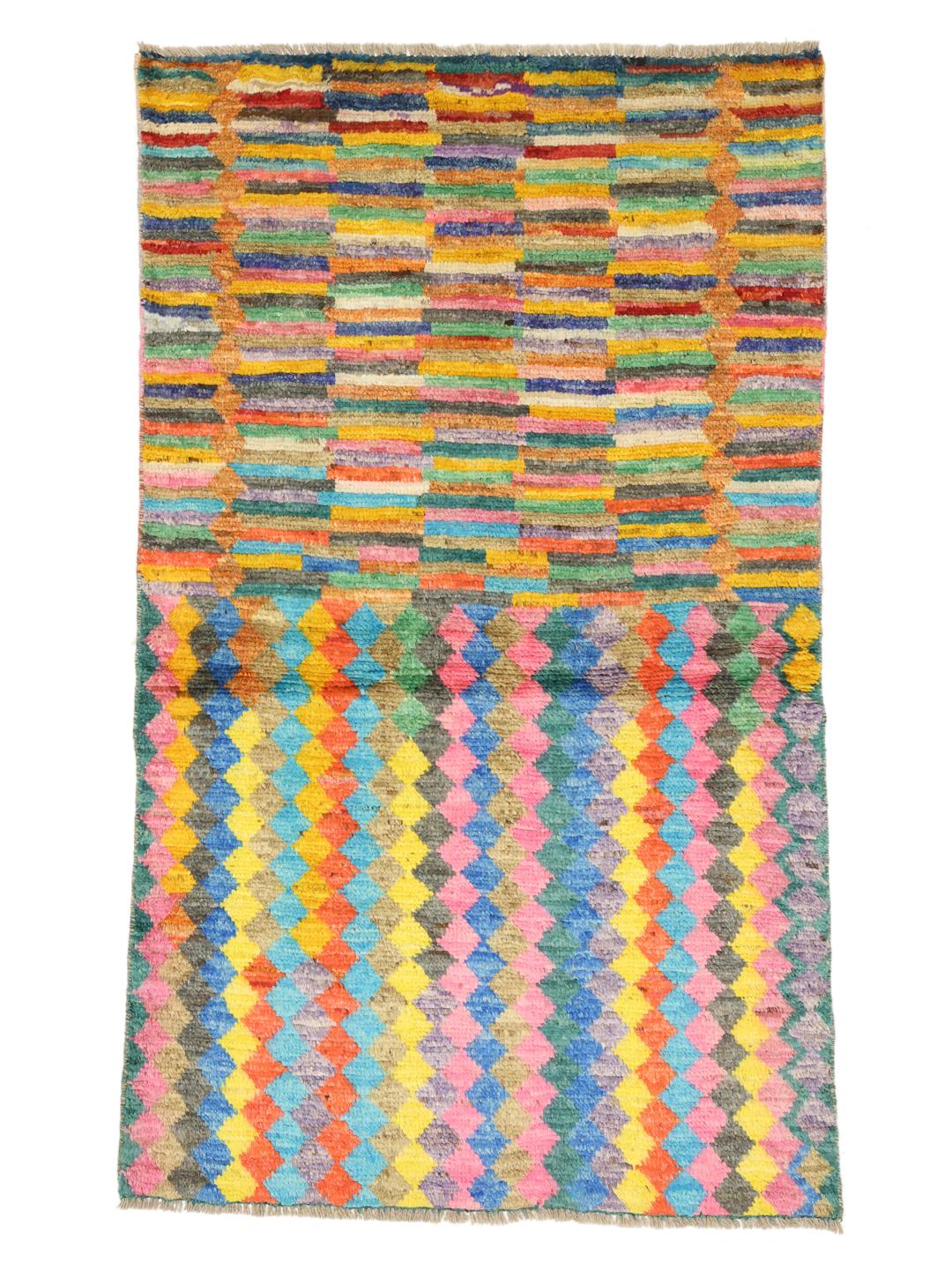
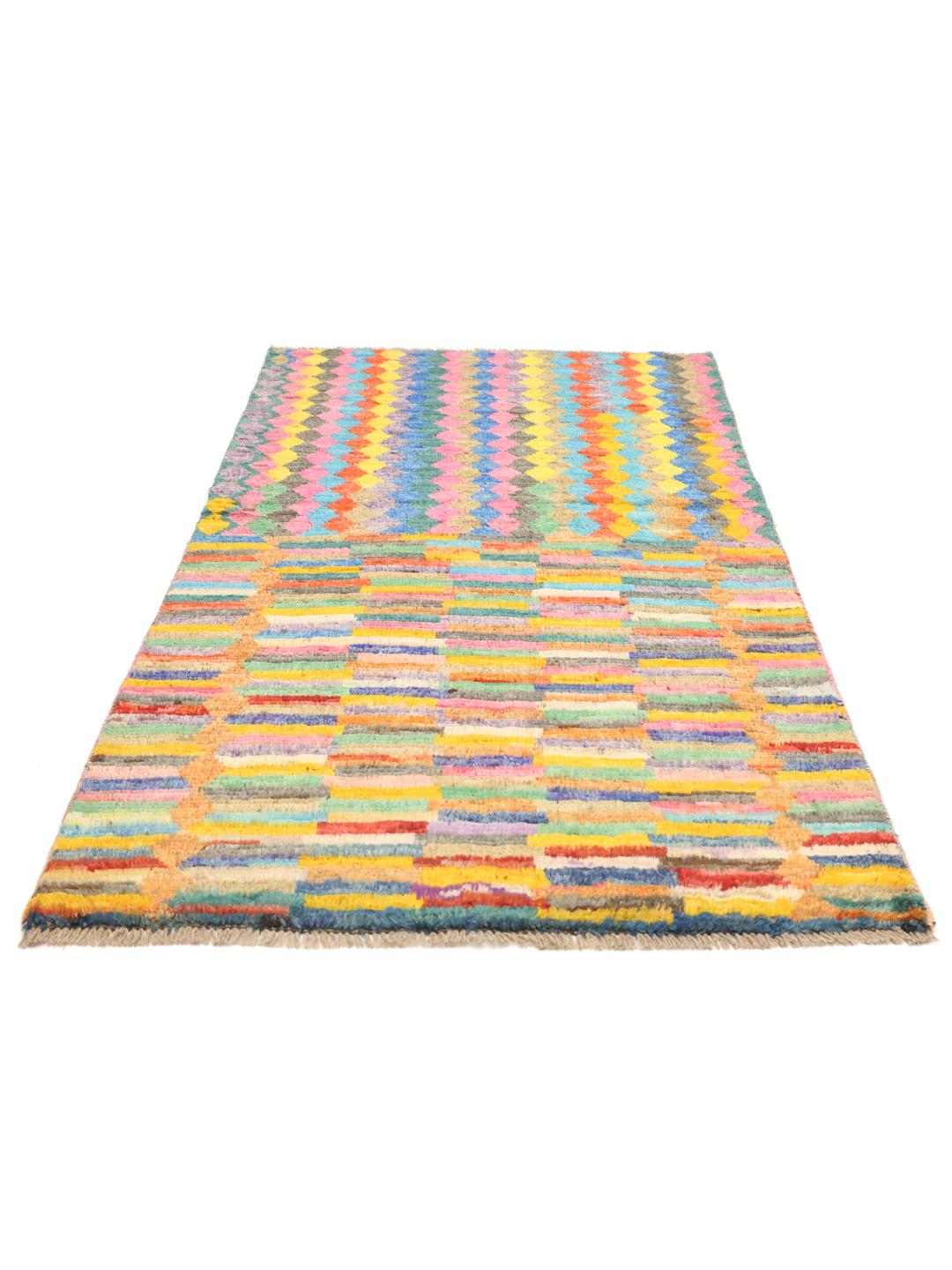
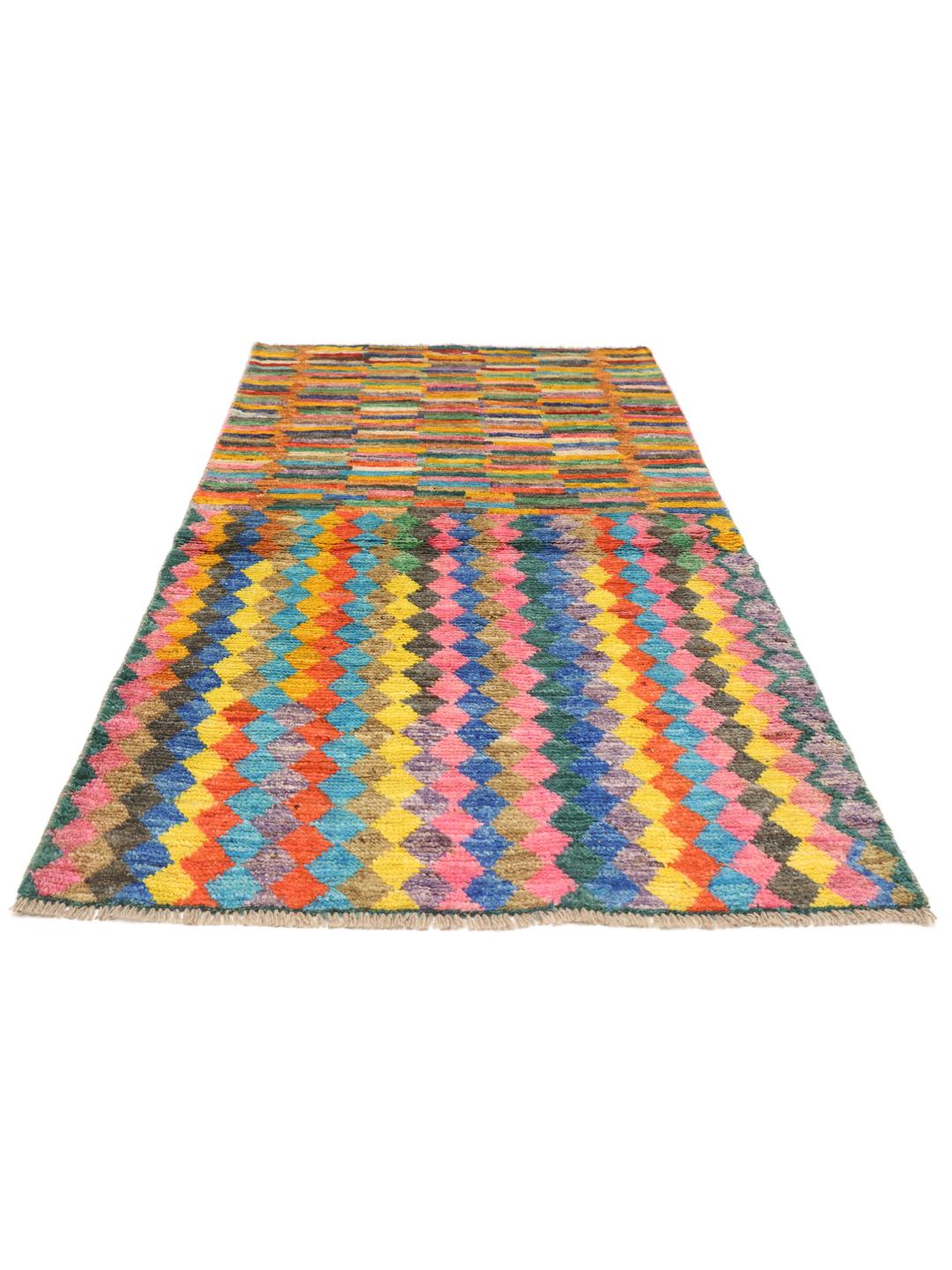
The visual language of this tradition often features playful geometry, bold colour contrasts, and repeating motifs that tell a visual story. This specific piece showcases a vibrant mix of colours and patterns, combining traditional craftsmanship with a lively modern expression.
Collecting a handmade piece from this tradition connects your home to a vast heritage of human creativity and skill. Owning such a rug means valuing the time, tradition, and artistry embedded in every single knot.