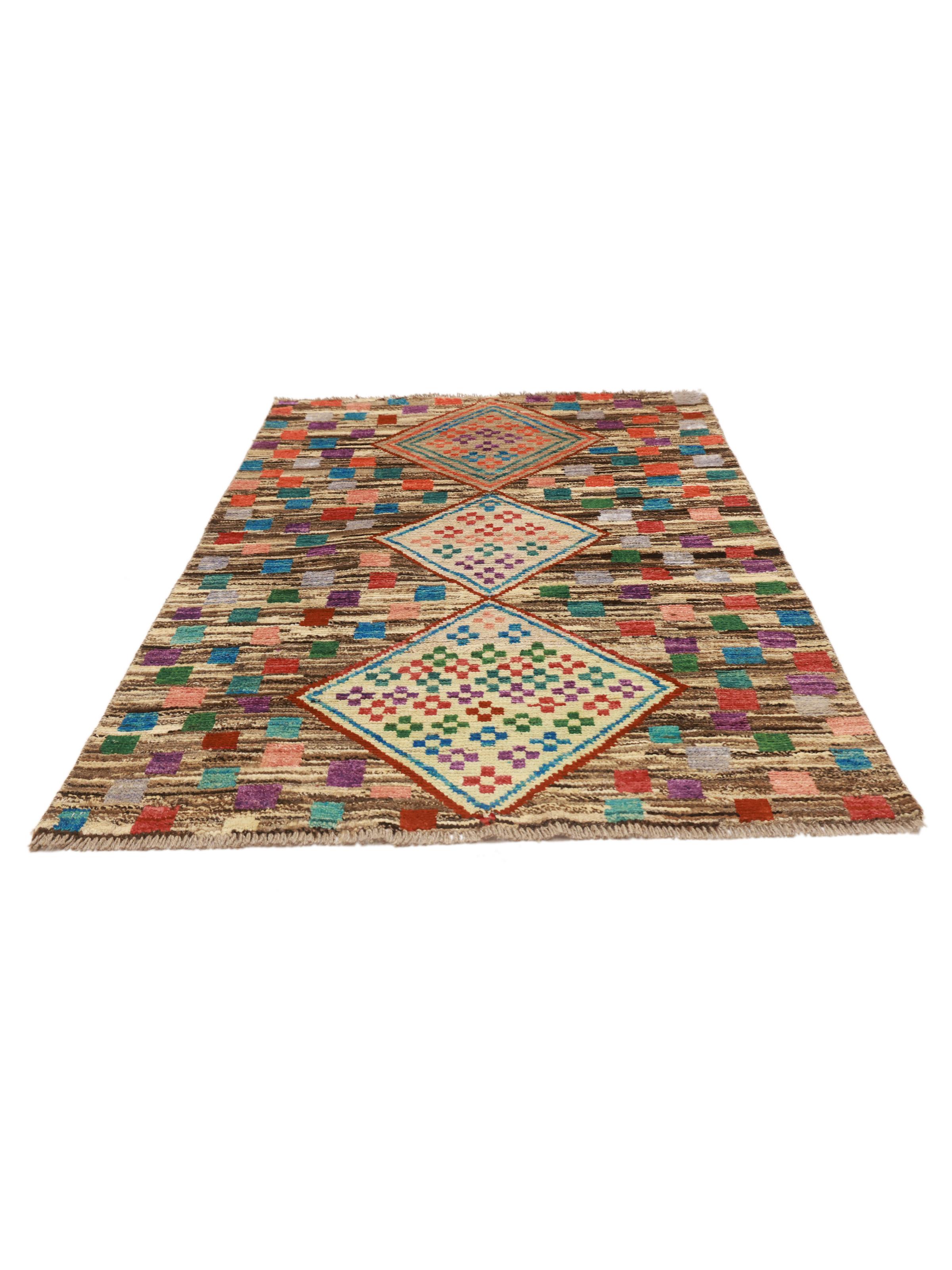
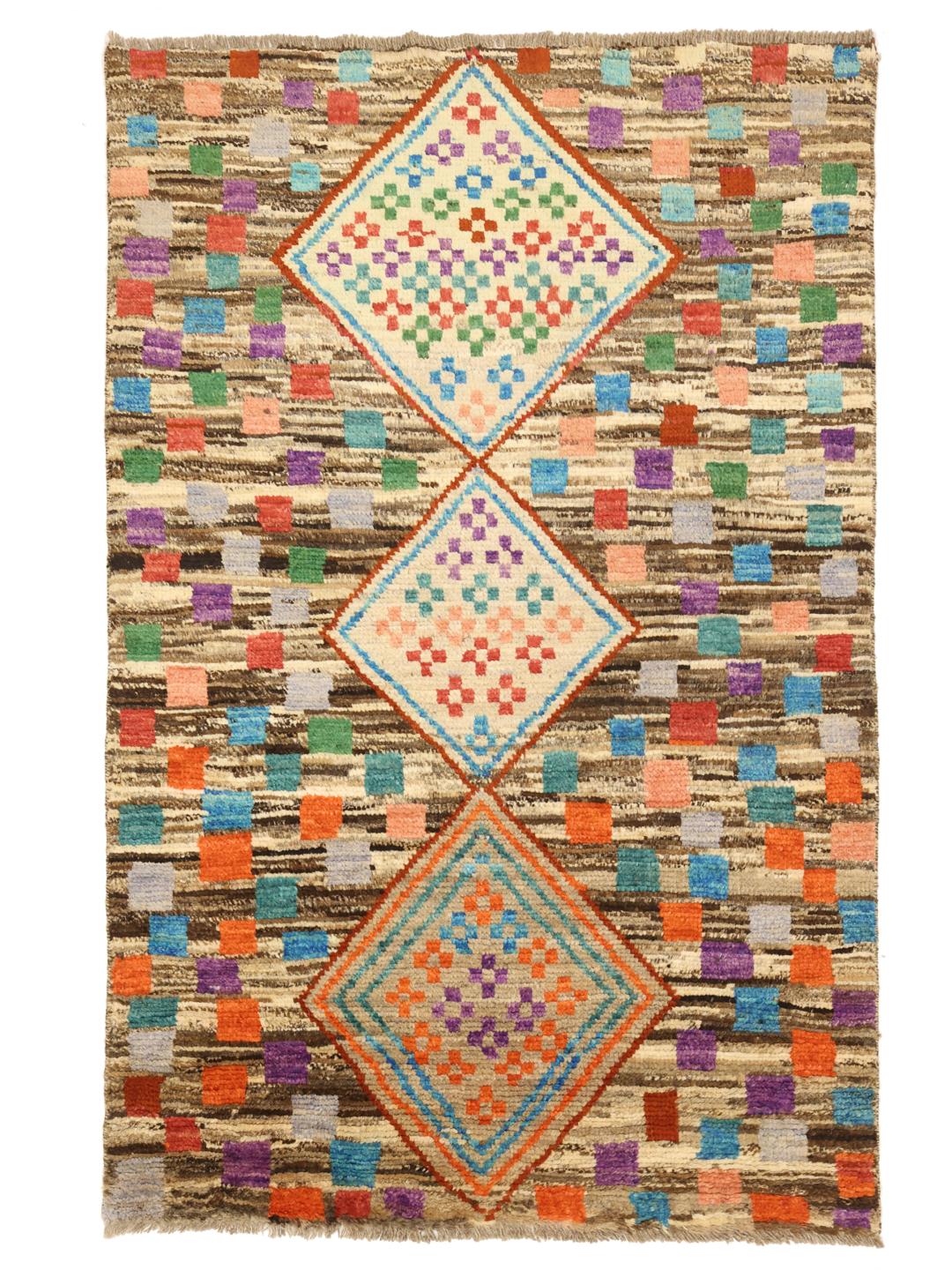
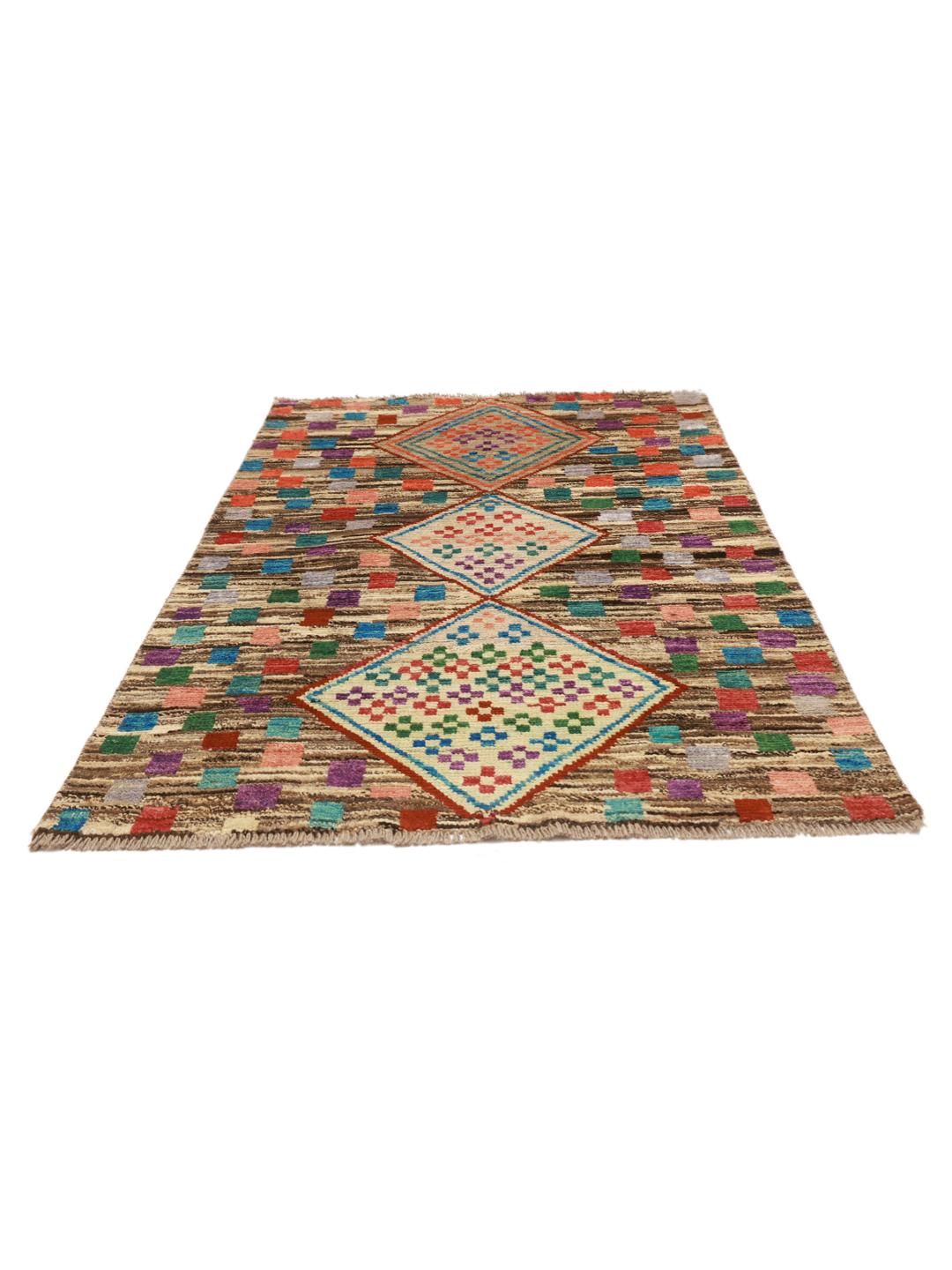
The Berber tradition, while historically associated with the nomadic tribes of North Africa, has seen a fascinating evolution as its distinctive aesthetic and knotting techniques have travelled across borders. In regions like Afghanistan, local artisans have adopted these traditions, blending them with their own deep-rooted weaving heritage to create contemporary pieces that honour historical motifs while embracing a modern, colourful vocabulary.
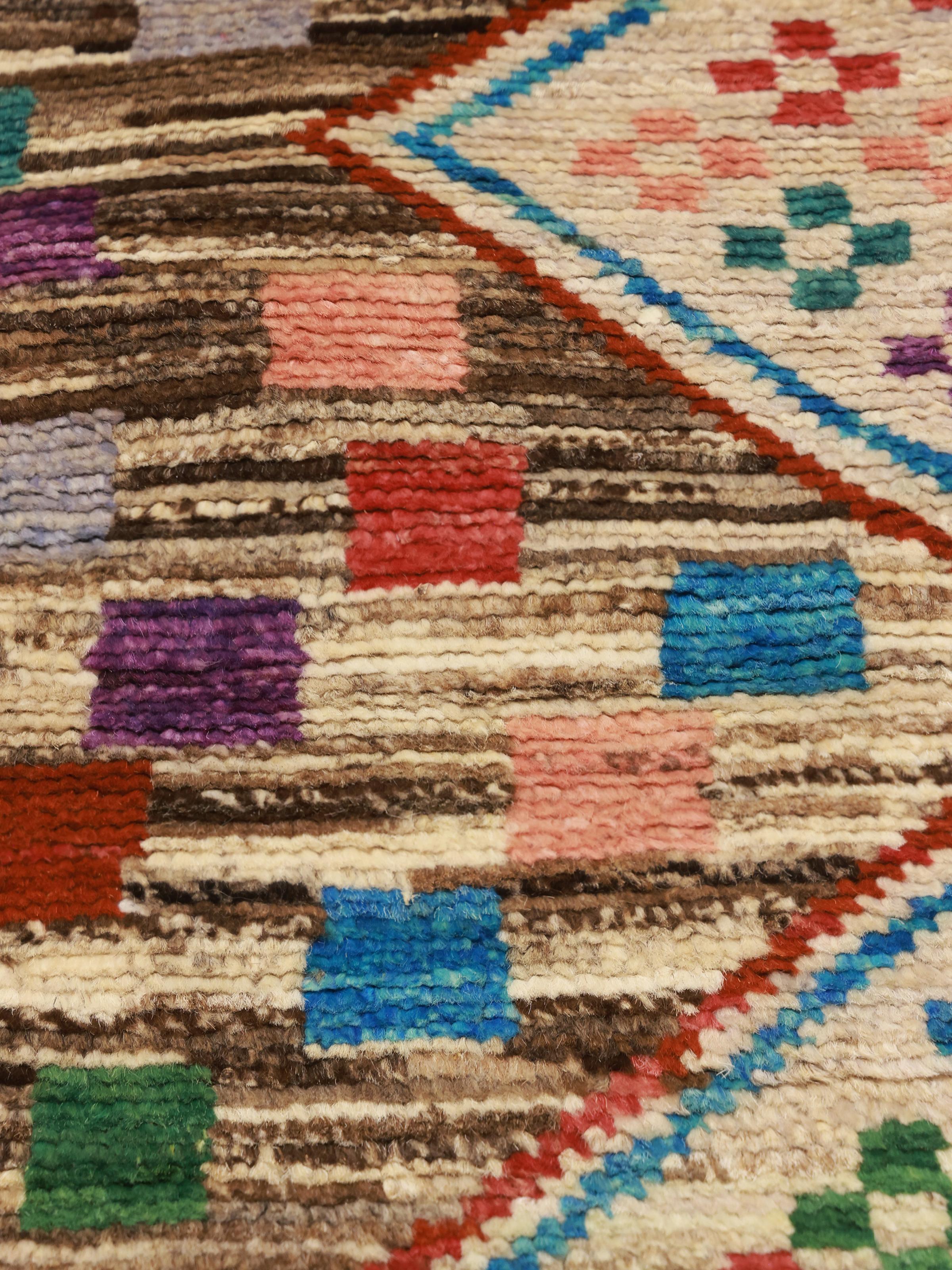
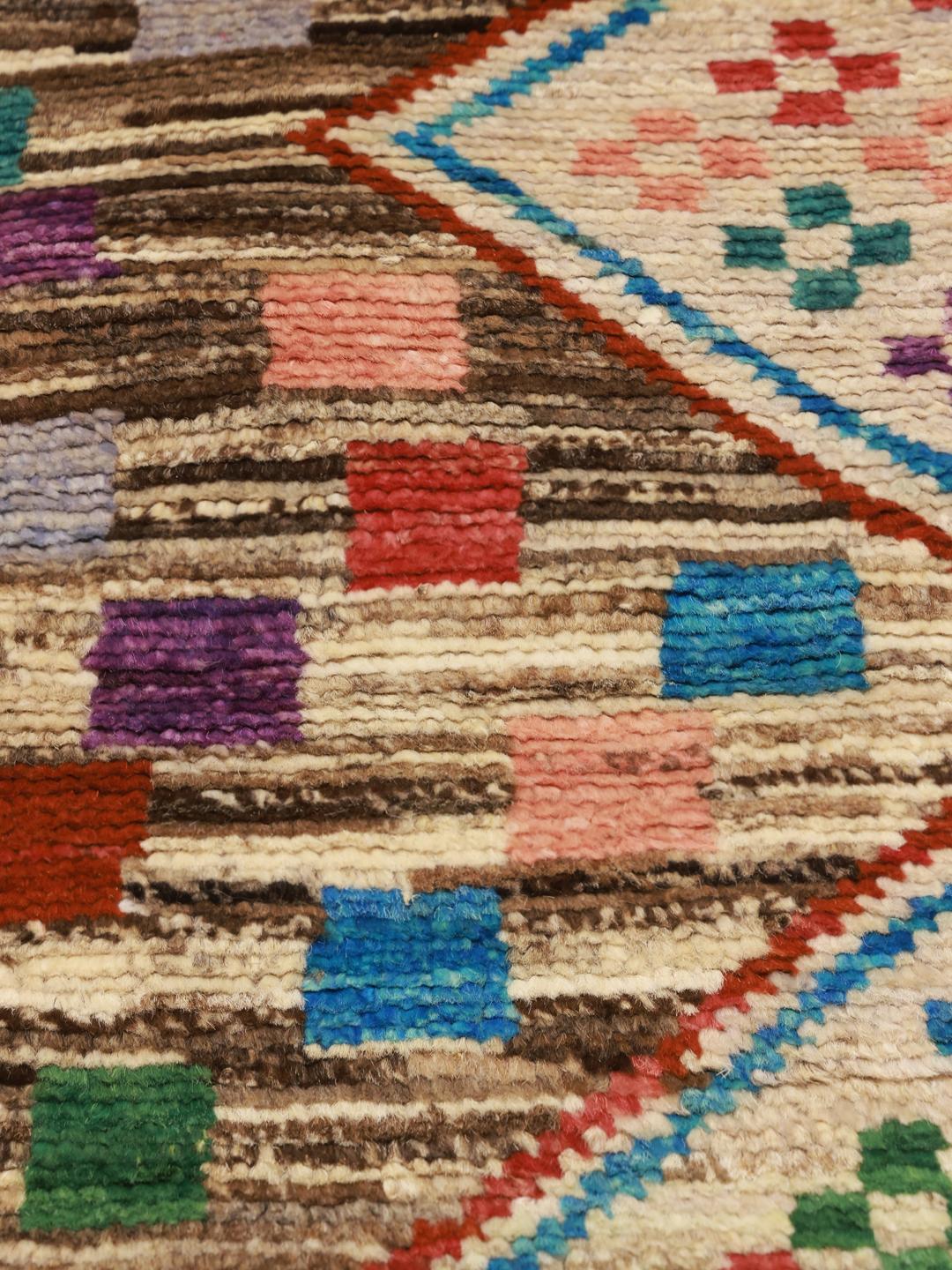
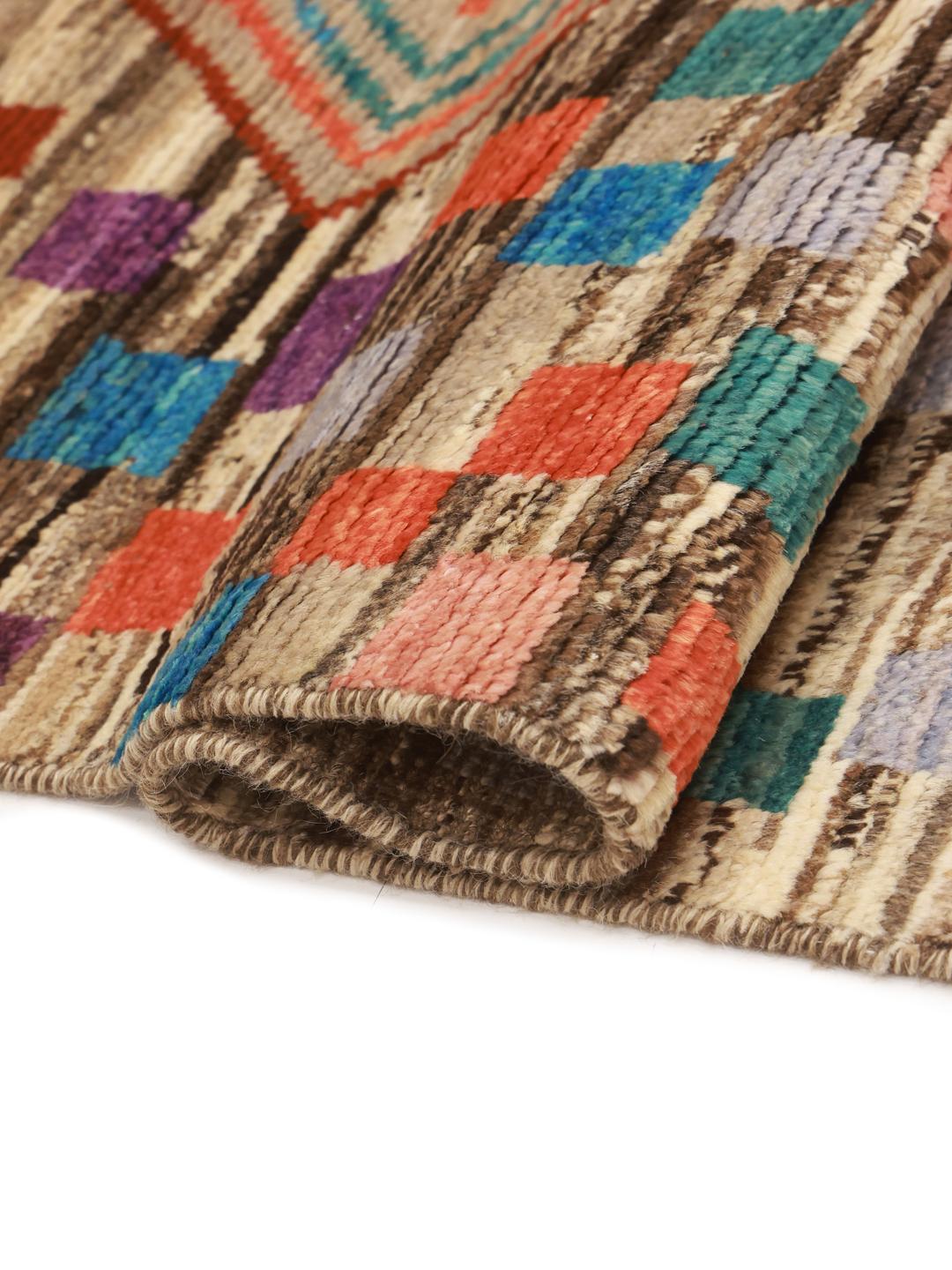
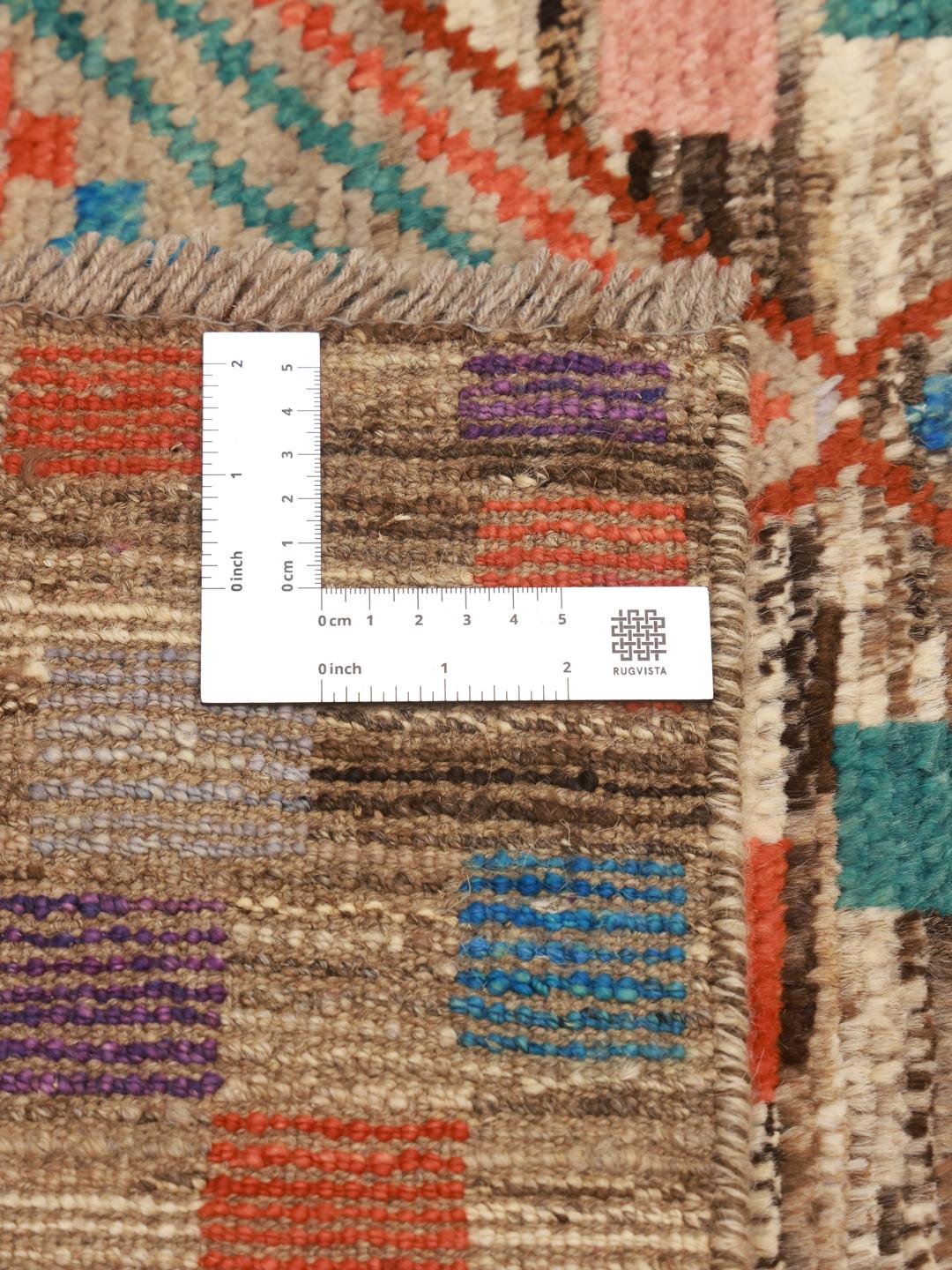
The construction of such a rug is defined by its hand-knotted foundation, a method that allows for greater control over the pattern and a more luxurious, durable pile. This approach ensures that the rug is not only visually striking but also physically robust, capable of retaining its form and colour depth through years of use. It is this commitment to traditional methods that elevates the rug from a simple accessory to a lasting investment.
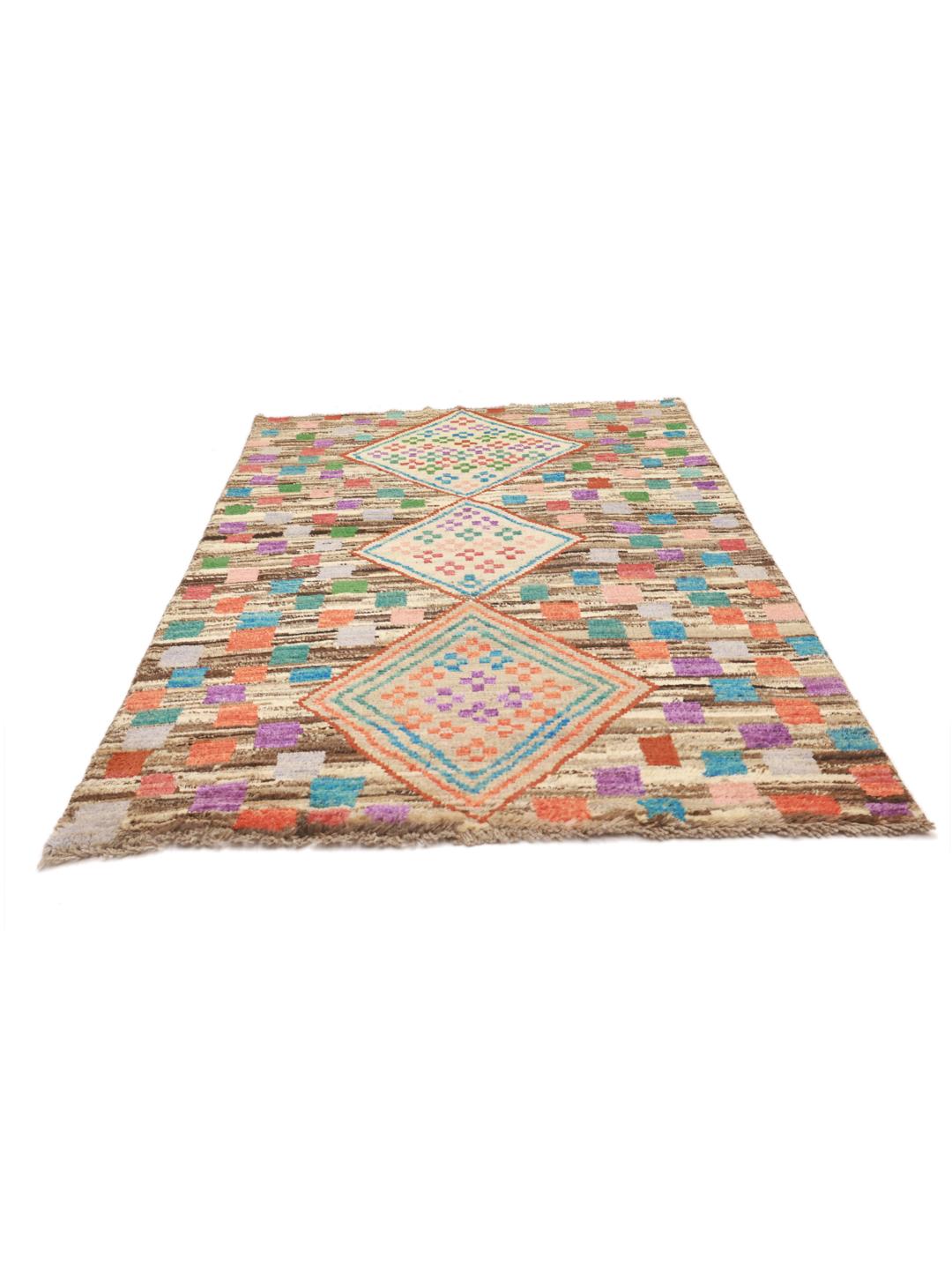
Visually, this piece draws from the classic geometric language of tribal weaving, utilising diamonds and repeating squares to create a rhythmic, balanced composition. While traditional Berber rugs often favoured more subdued, natural tones, this particular iteration celebrates a vibrant palette. The inclusion of such a diverse array of colours against a neutral base makes it a standout example of how traditional design can be reinterpreted to suit a contemporary, expressive interior.
Collecting a rug from this tradition is an act of preserving a piece of cultural history. It represents the intersection of human skill, regional identity, and the timeless desire to create beauty for the home. When you bring this rug into your space, you are carrying forward a lineage of craftsmanship that prioritises quality and narrative, ensuring that your home is enriched by a piece with genuine depth and character.