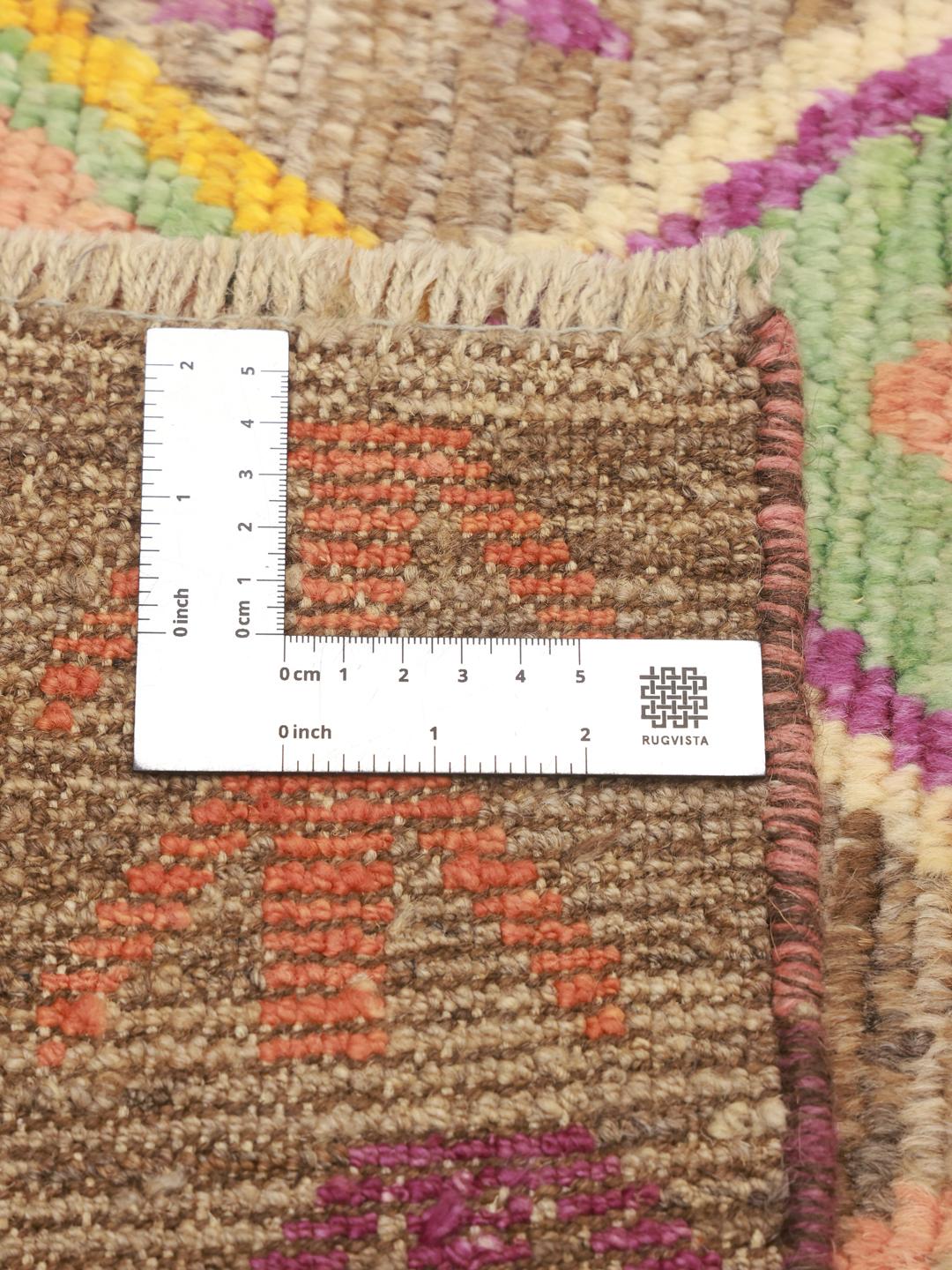
Berber rugs carry a legacy that stretches far beyond their modern popularity, rooted in the nomadic traditions of the Middle East and North Africa. These rugs were originally crafted by tribal groups as functional items for shelter and warmth, serving as blankets, wall hangings, and floor coverings within tents. Over centuries, these traditions migrated and adapted, finding new expressions in the skilled weaving communities of Afghanistan.
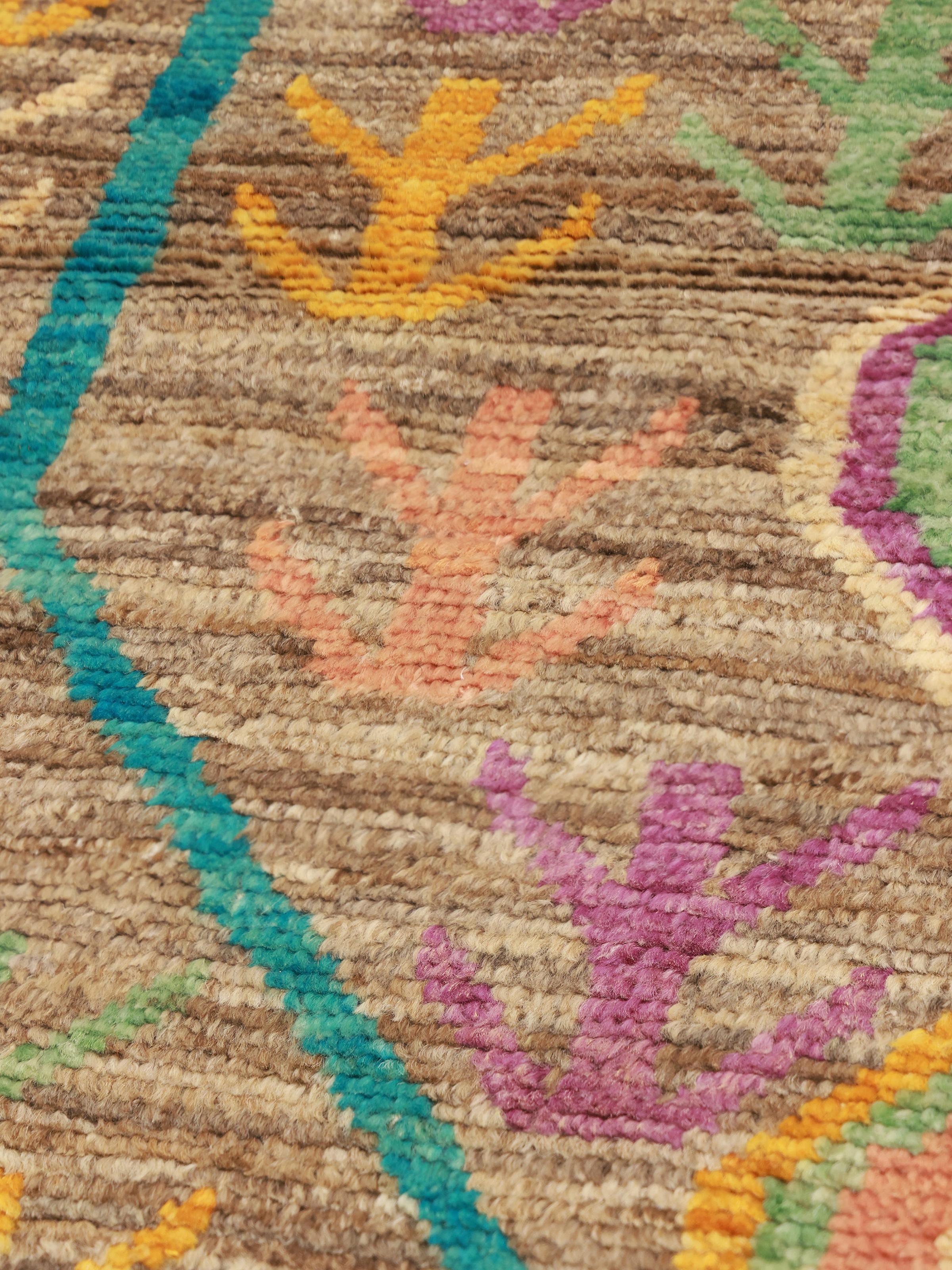
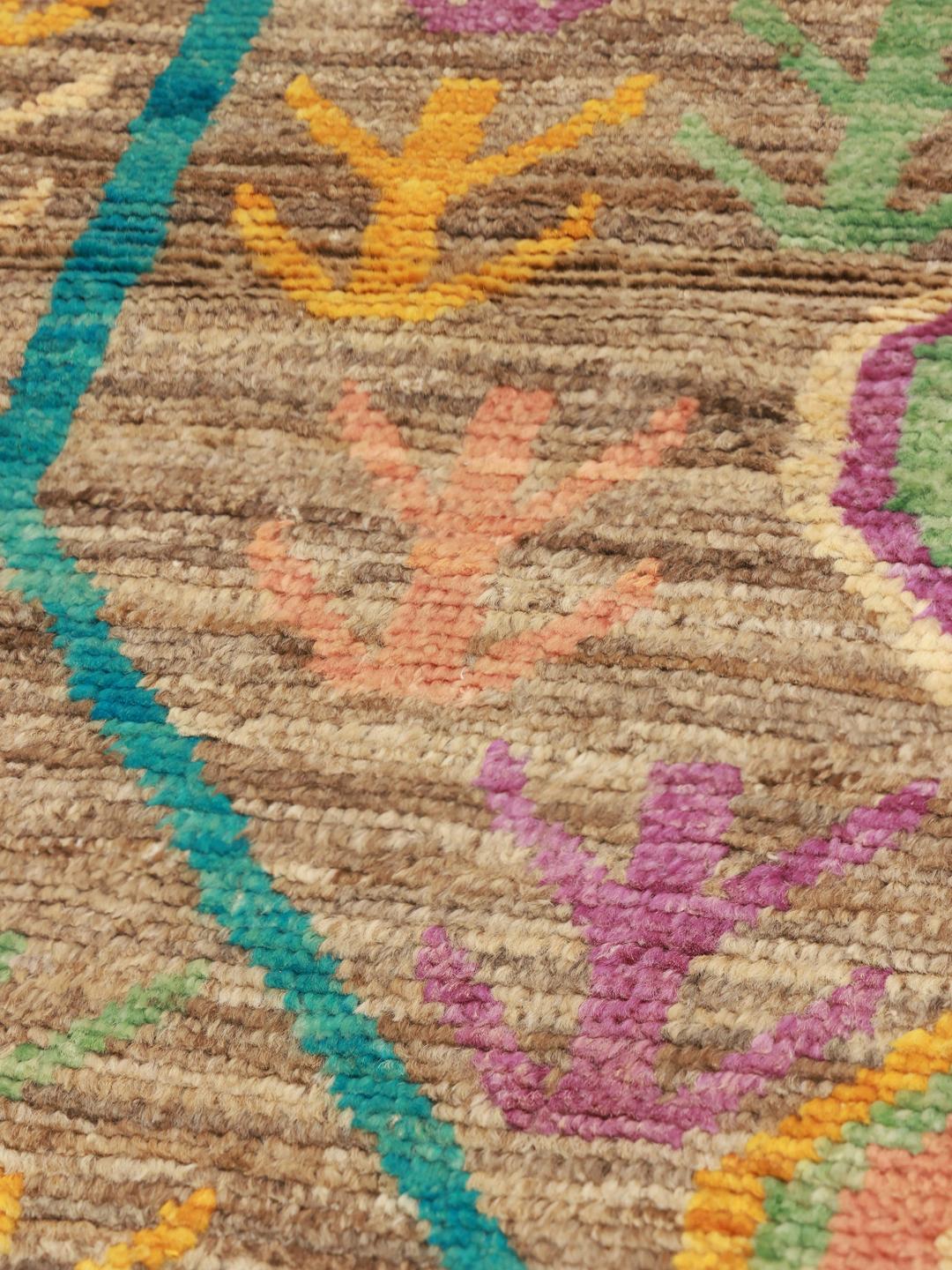
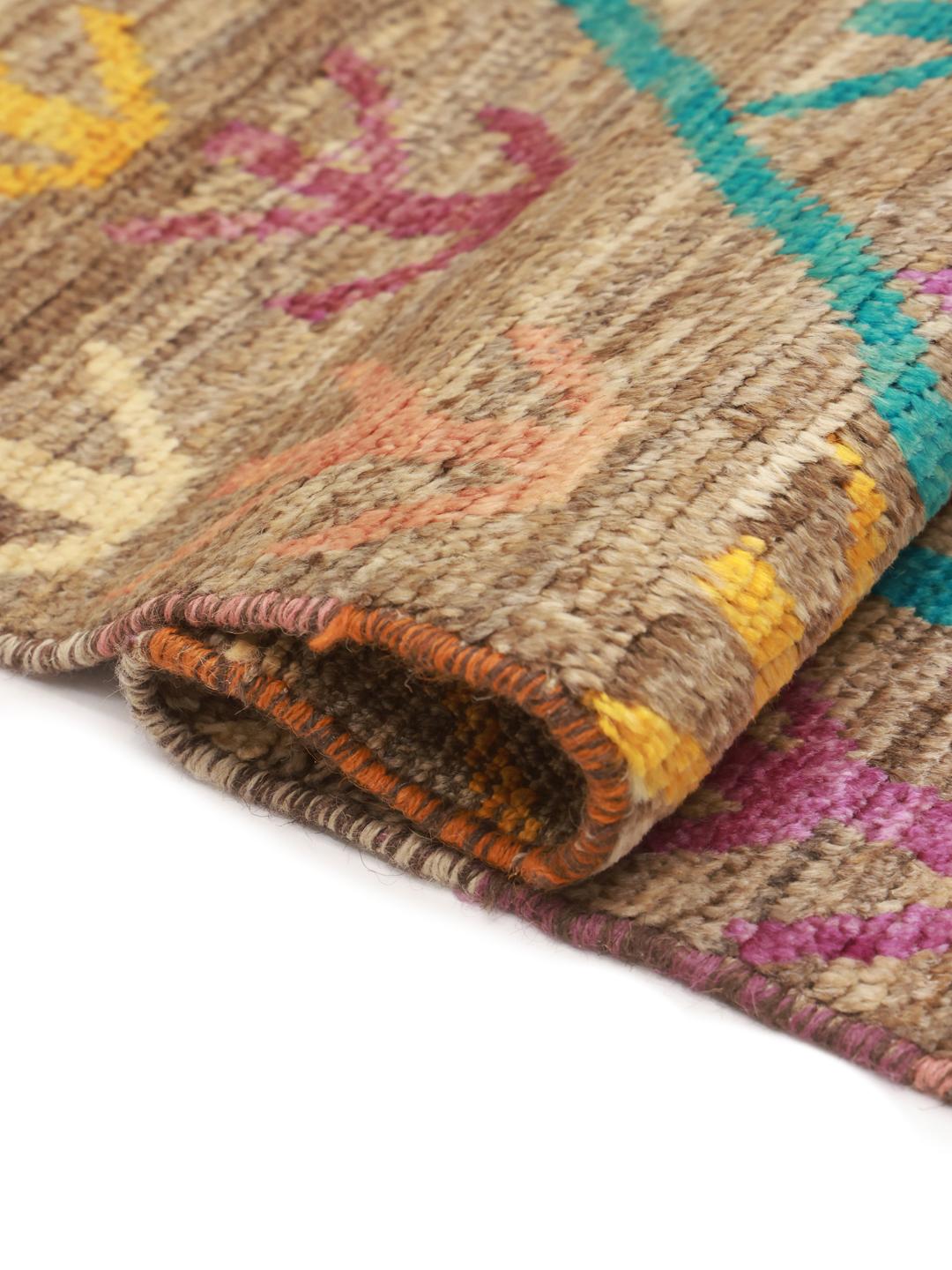
The term Berber refers to the cultural heritage of the weavers, who traditionally used hand-spun wool to create pieces that were deeply connected to their environment. The wool is valued for its natural lanolin content, which makes the finished rug naturally stain-resistant and soft to the touch. This traditional approach to material ensures that the rug is not just a decorative object, but a durable, long-lasting textile that improves with age.
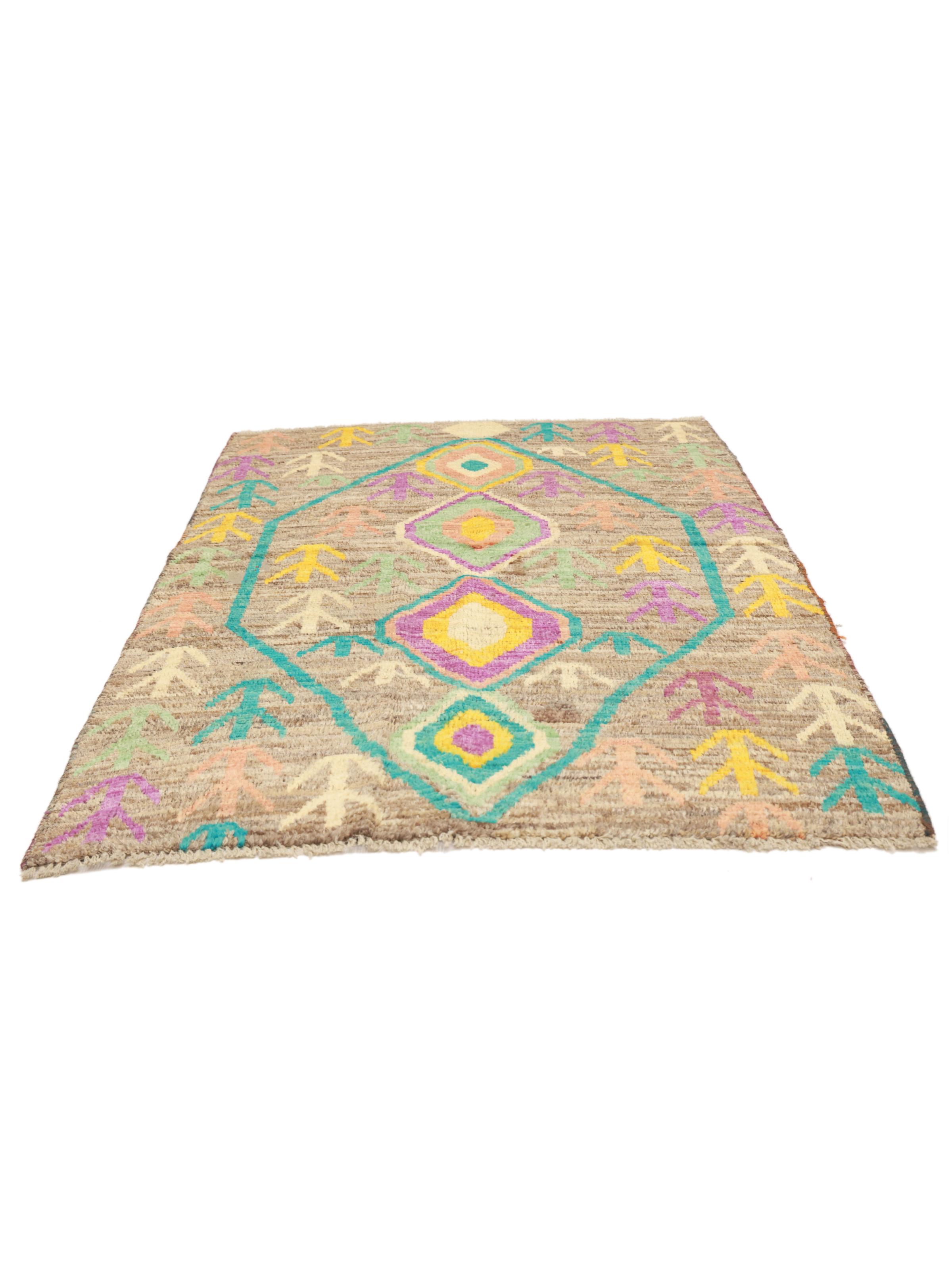
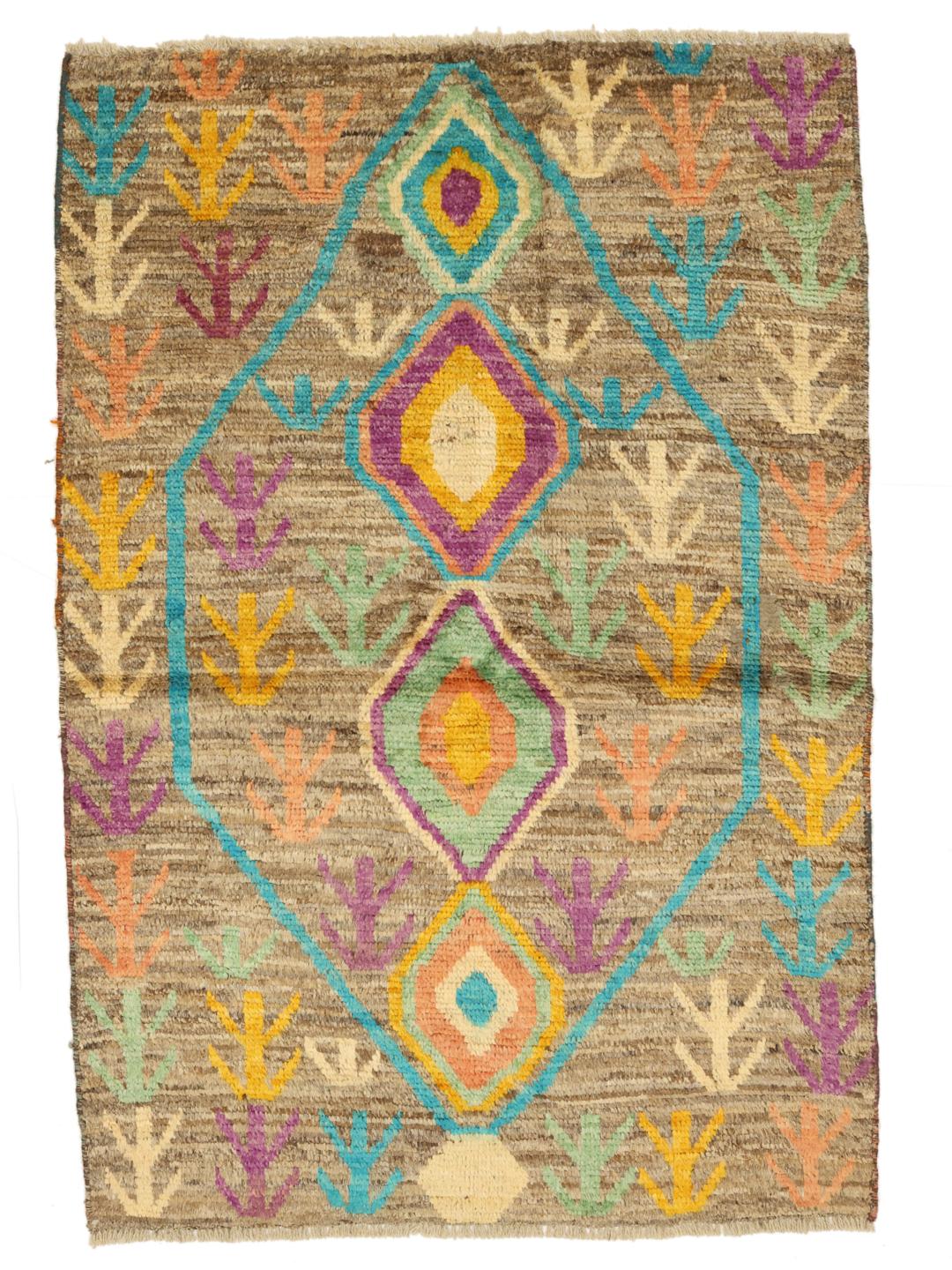
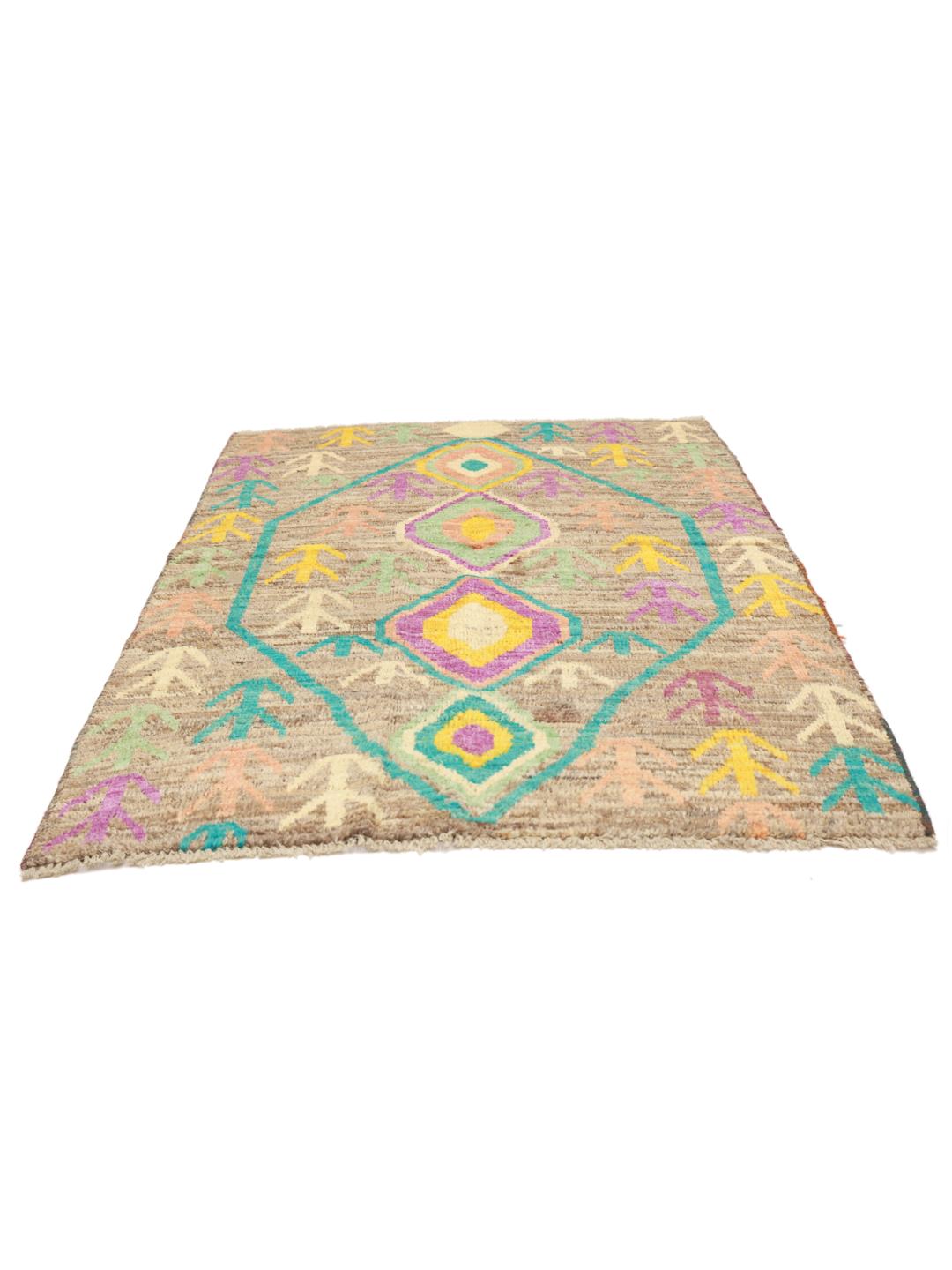
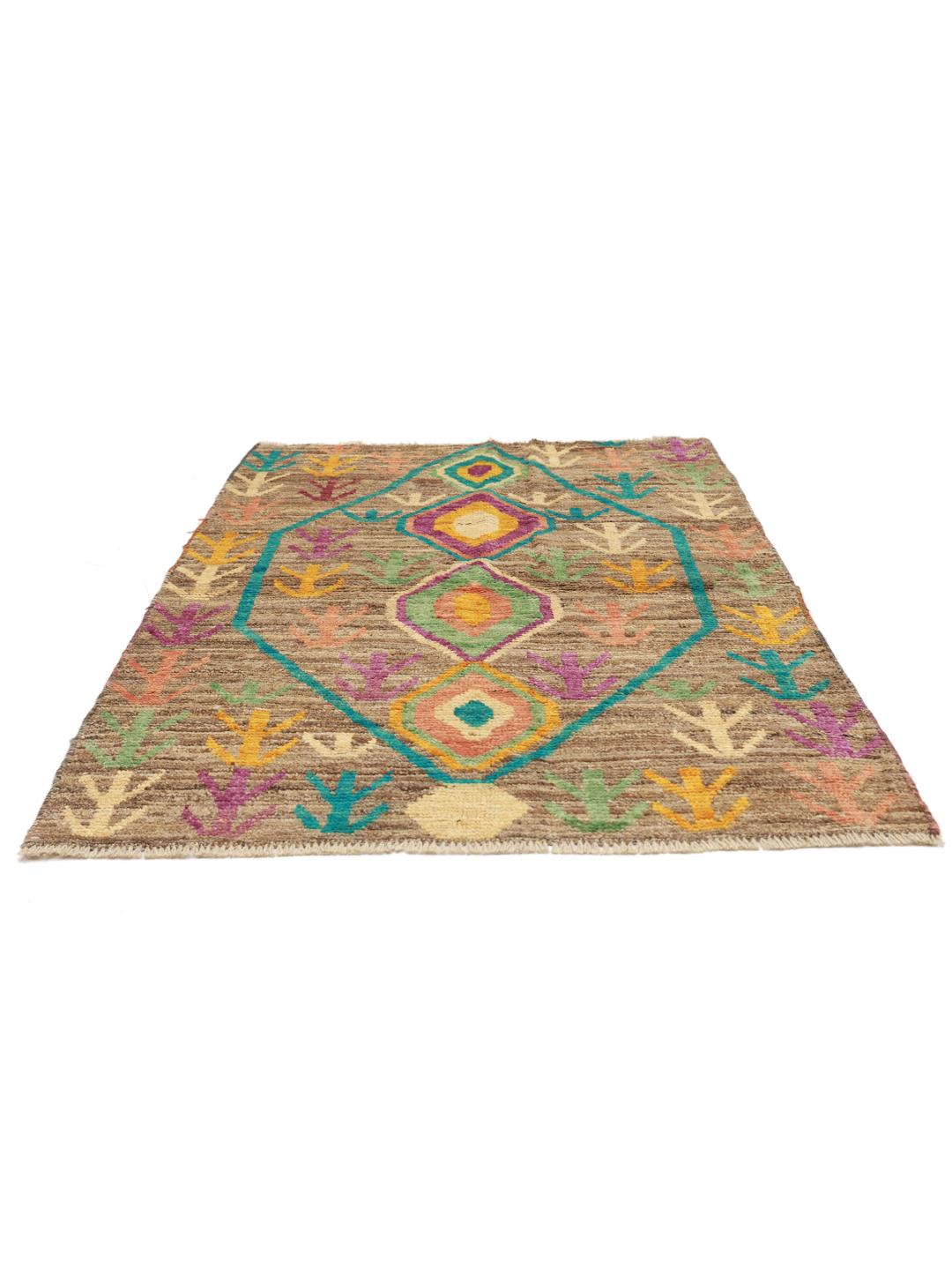
Signature design elements in these rugs often include geometric motifs, diamonds, and stylized plant or animal forms that hold symbolic meaning within their culture of origin. In this particular piece, the repeating diamond structure and playful, tree-like motifs demonstrate a classic tribal aesthetic. The use of bright, contrasting colours against a natural, undyed brown background is a hallmark of this style, intended to bring light and visual interest into the home.
Owning a hand-knotted piece from this tradition is an opportunity to connect with a history of human ingenuity. These rugs are highly valued by collectors not only for their aesthetic appeal but for the skill and patience required to produce them. By choosing this rug, you are supporting a craft tradition that prioritises sustainability, natural materials, and the enduring beauty of handmade objects.