Berber rugs carry a legacy that spans generations, originating from the nomadic tribes of North Africa before influencing weaving traditions across the globe. While the term is historically rooted in the Atlas Mountains, the style has been adopted and adapted by artisans in Afghanistan, who have infused these classic designs with their own regional expertise and vibrant sense of colour. This cross-cultural evolution has resulted in a style that is both deeply traditional and refreshingly modern.
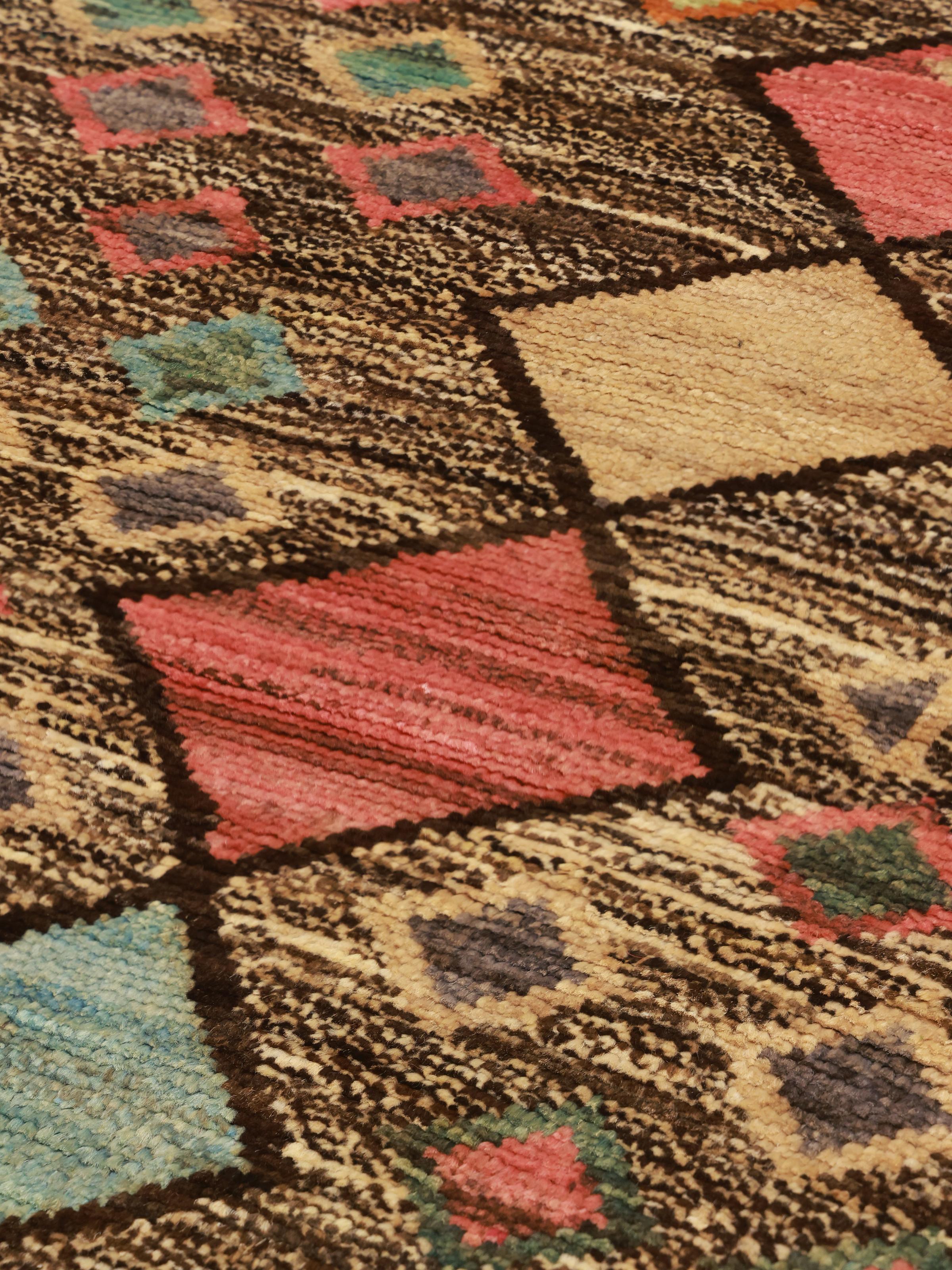
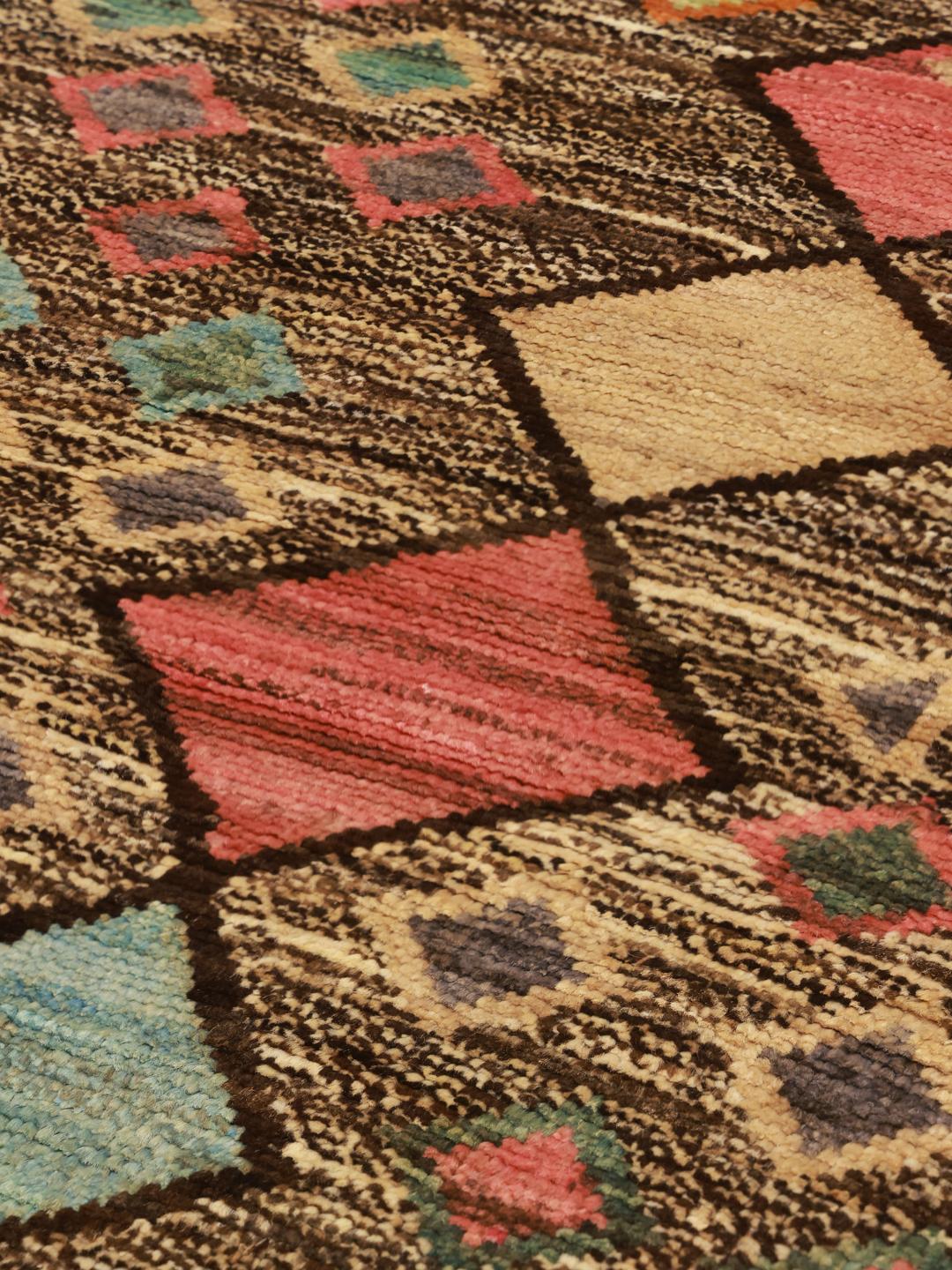
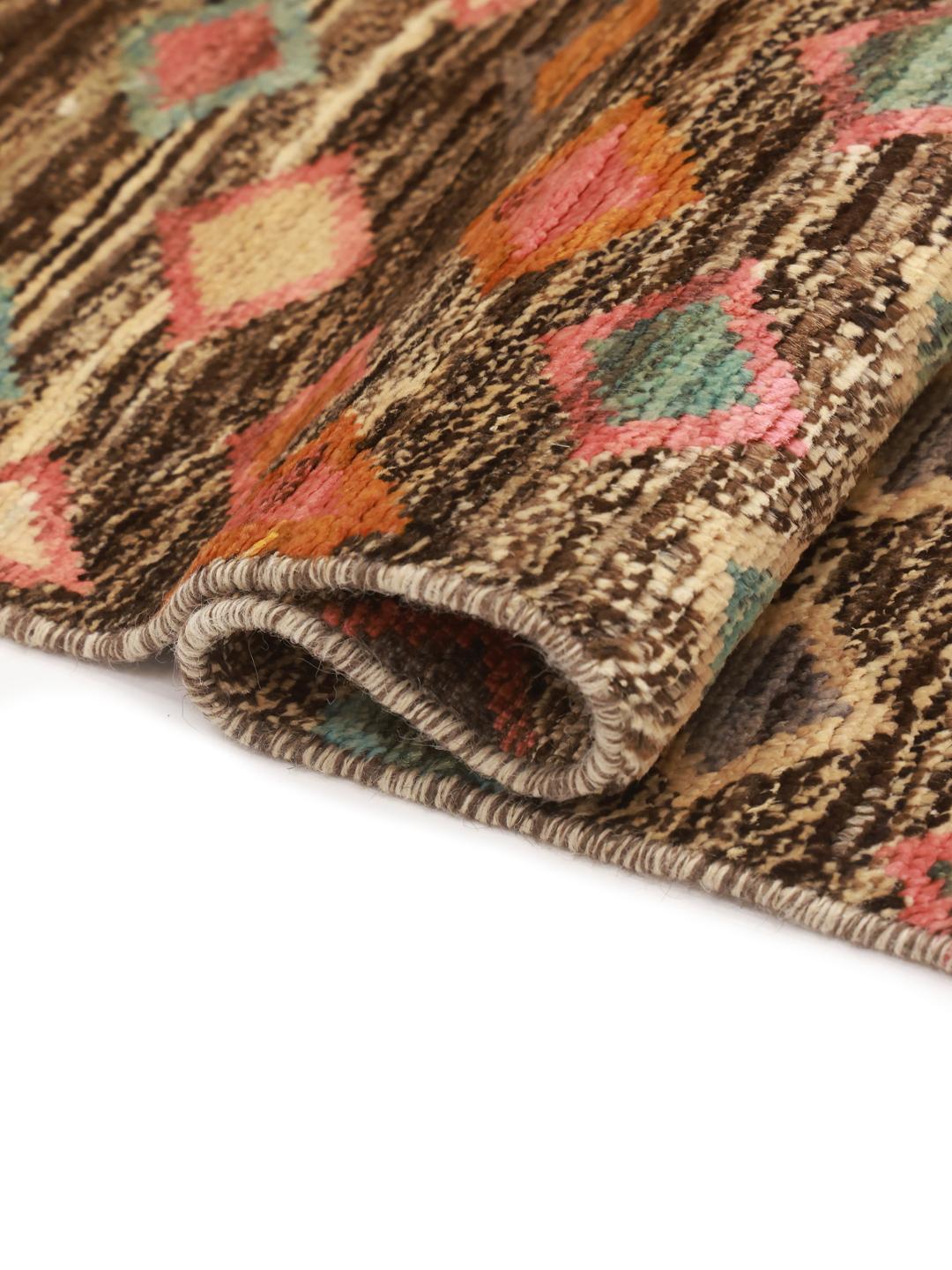
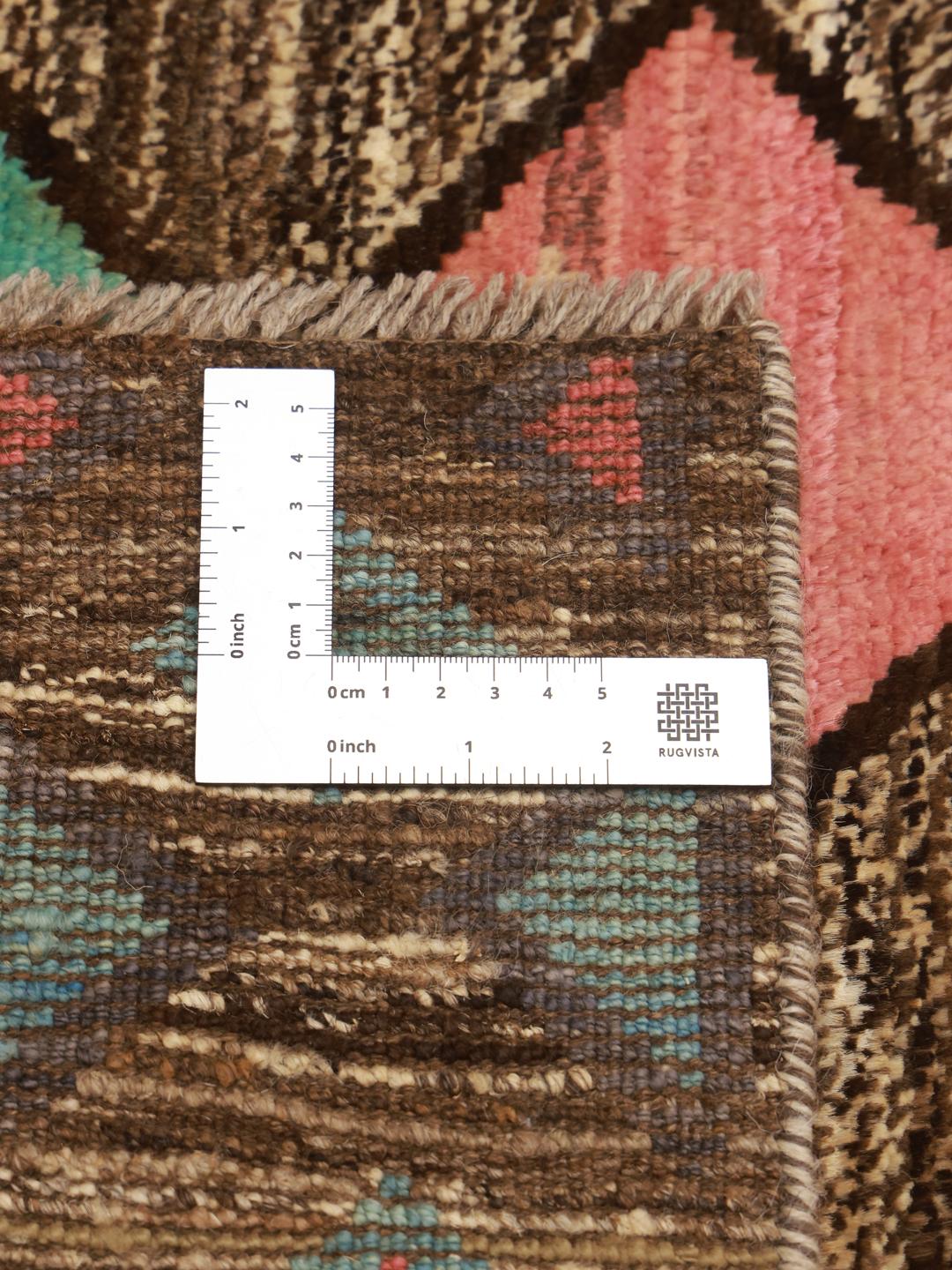
The construction of these rugs relies on the use of high-quality wool, a material prized for its natural durability, warmth, and ability to hold rich dyes. The term hand-knotted refers to the technique where individual strands of wool are tied around the warp and weft threads of the foundation. This laborious process is what creates the pile's density and gives the rug its characteristic weight and long-lasting quality, ensuring it remains an heirloom-worthy piece.
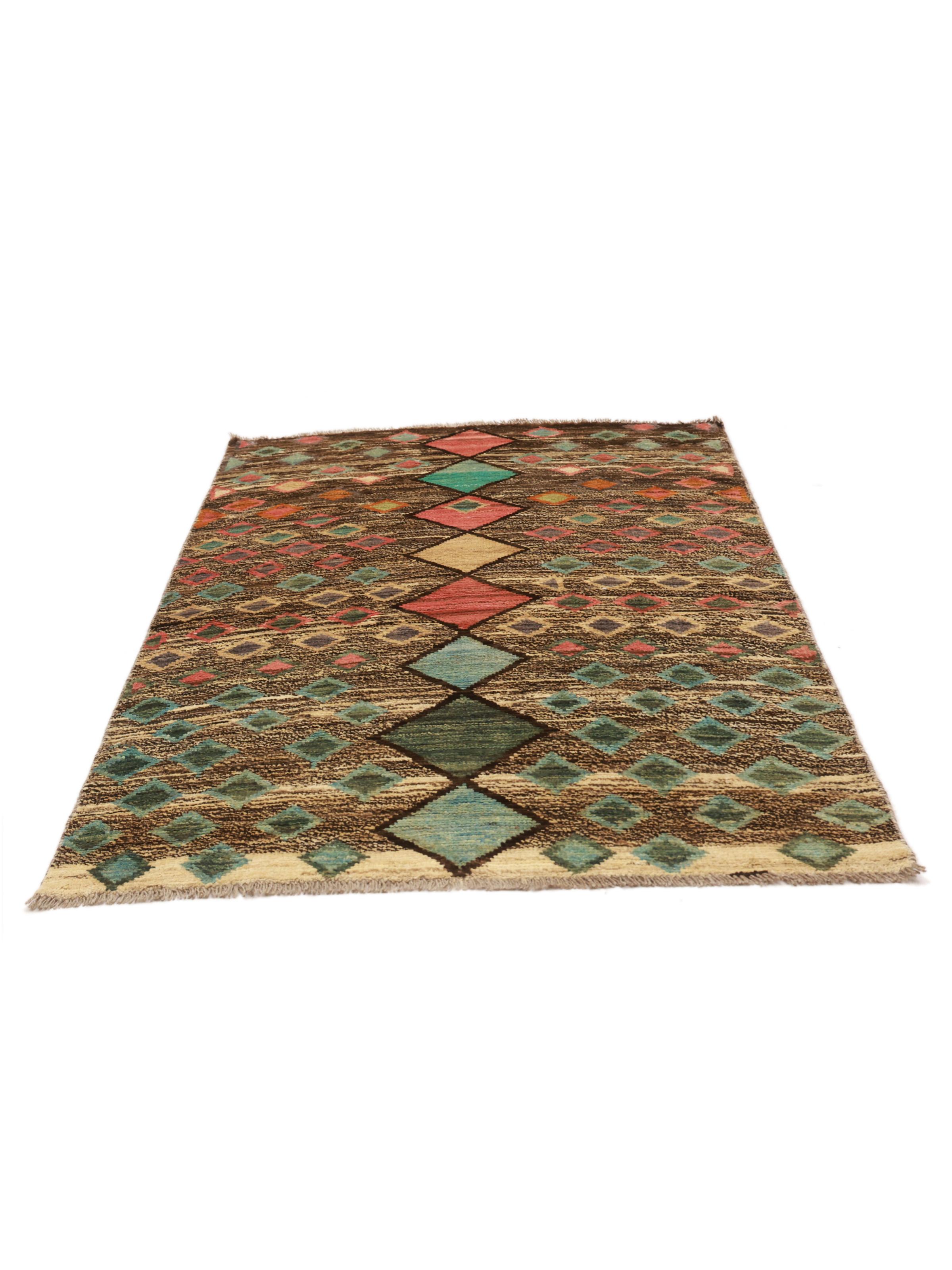
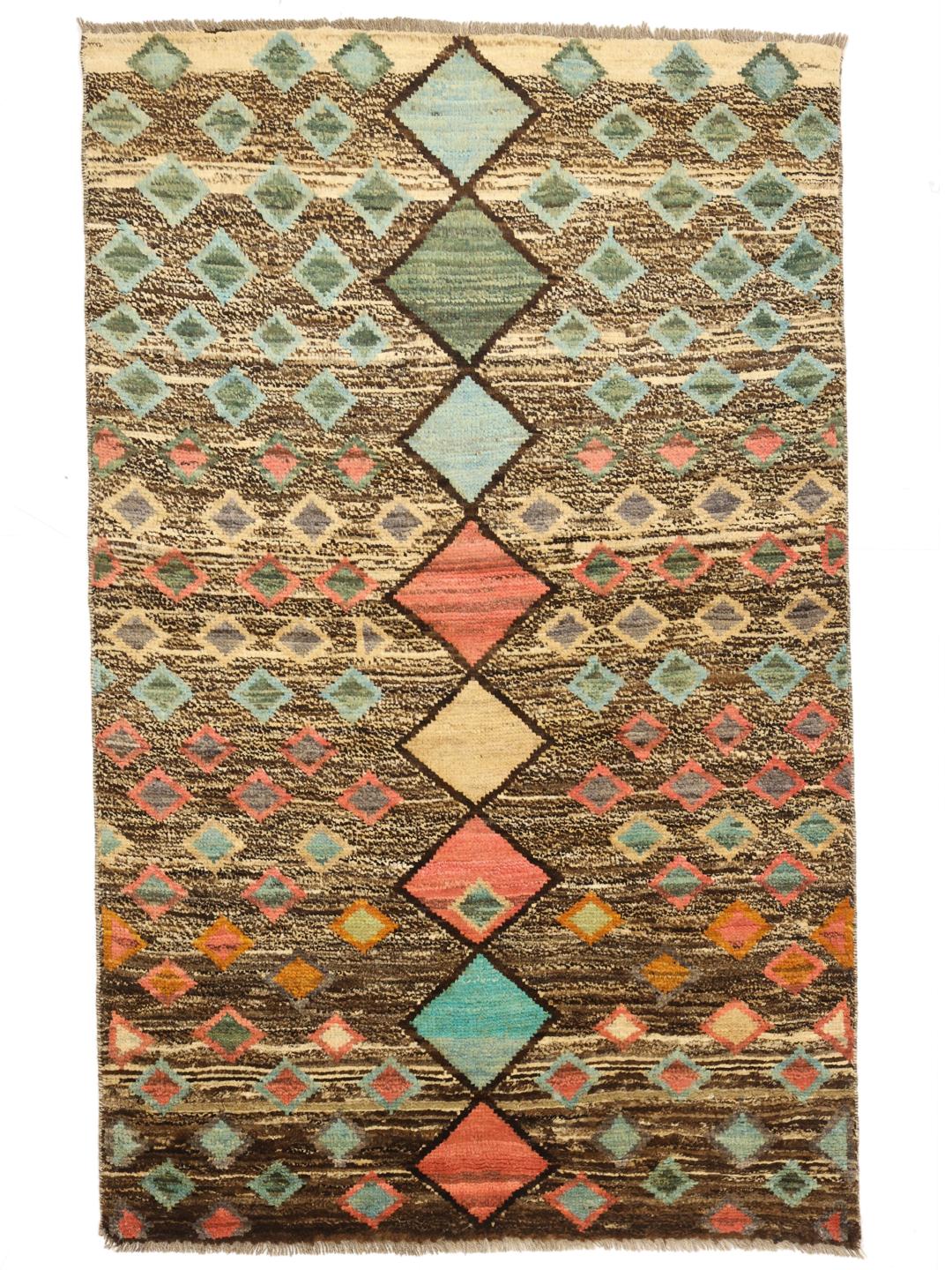
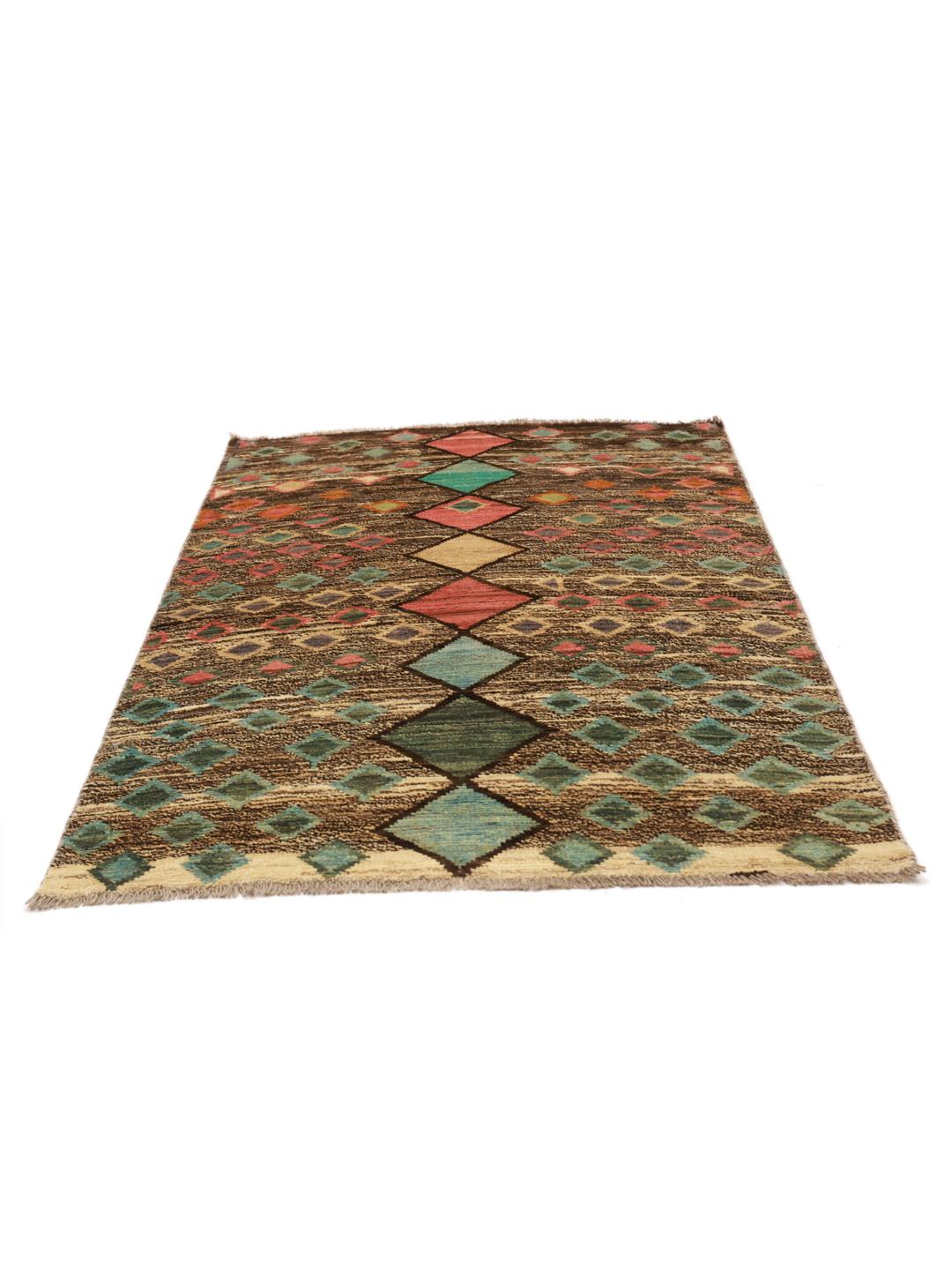
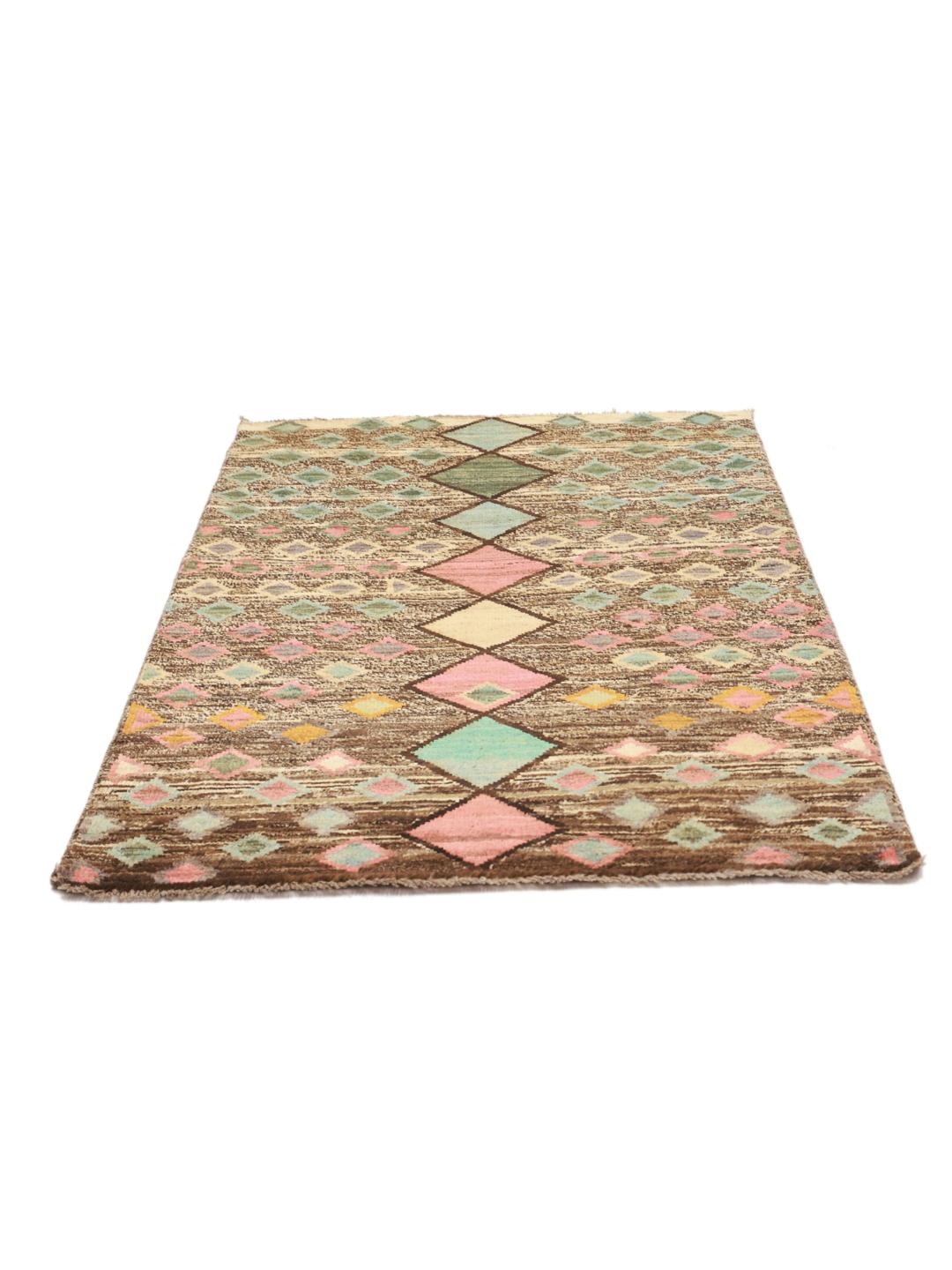
The diamond motif seen here is one of the most iconic elements of the Berber tradition, often symbolising protection, fertility, or the interconnectedness of life. In this specific piece, the diamonds are rendered in a lively array of colours that contrast beautifully against the dark, neutral field. This use of colour is a hallmark of the Afghan interpretation, where weavers are known for their bold artistic choices and their ability to balance intricate geometric patterns with a sense of spontaneity.
Owning a hand-knotted rug from this tradition is about more than just decoration; it is about preserving a craft that has survived the test of time. These rugs are collected for their ability to tell a story through every knot and every colour choice. By choosing this piece, you are celebrating the skill of the weaver and the cultural history that flows through the wool, bringing a piece of genuine, enduring artistry into your home.