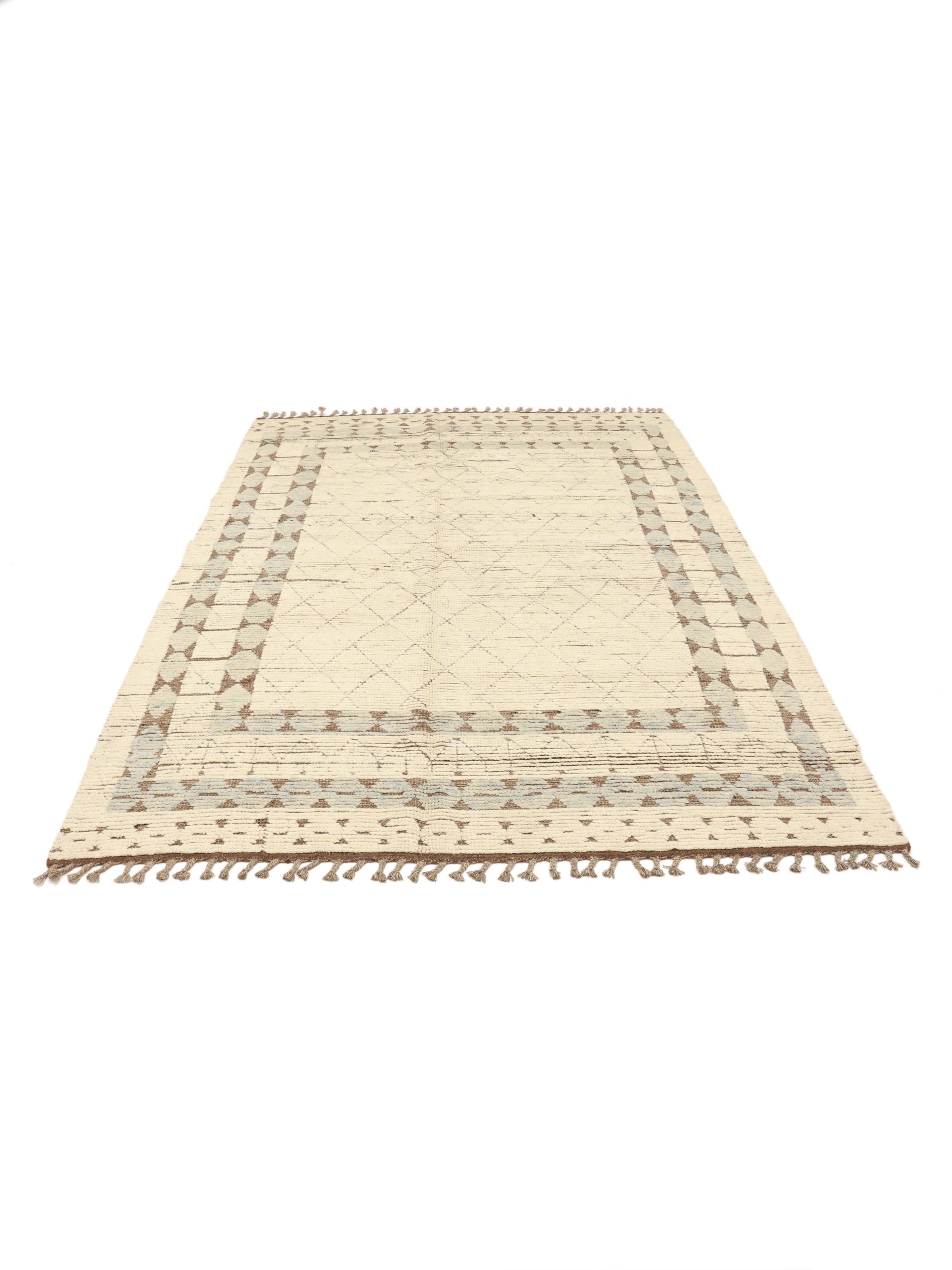
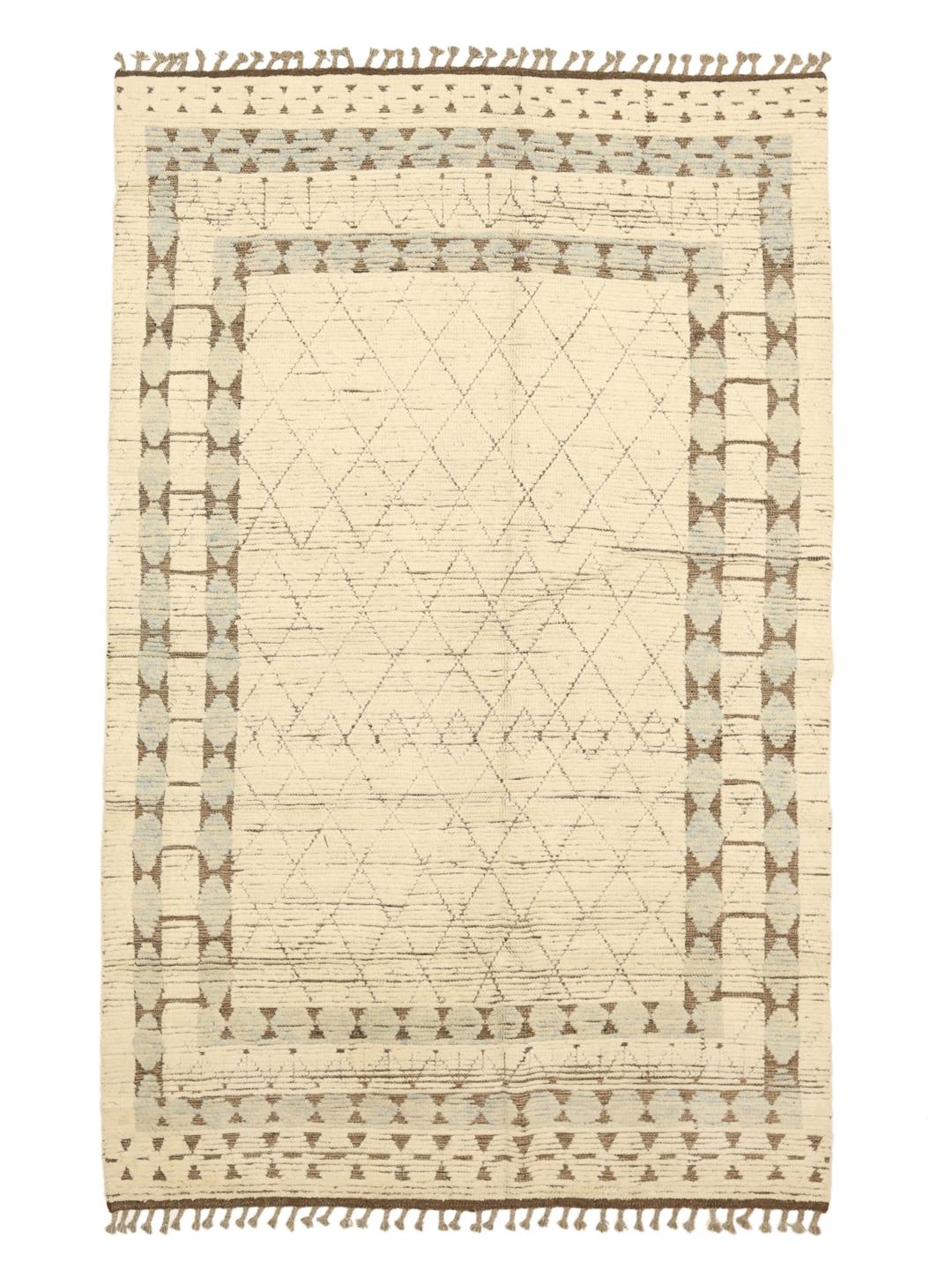
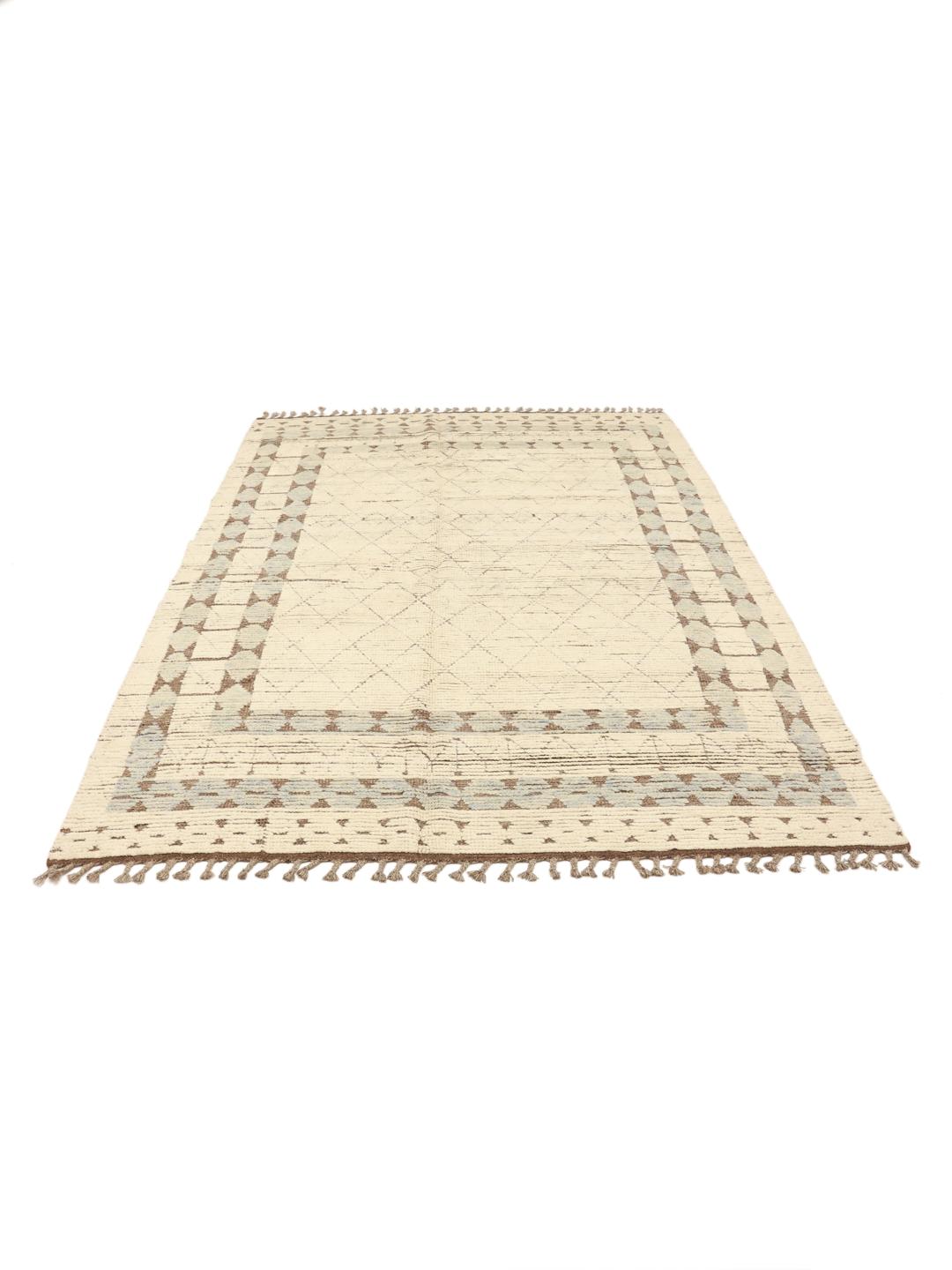
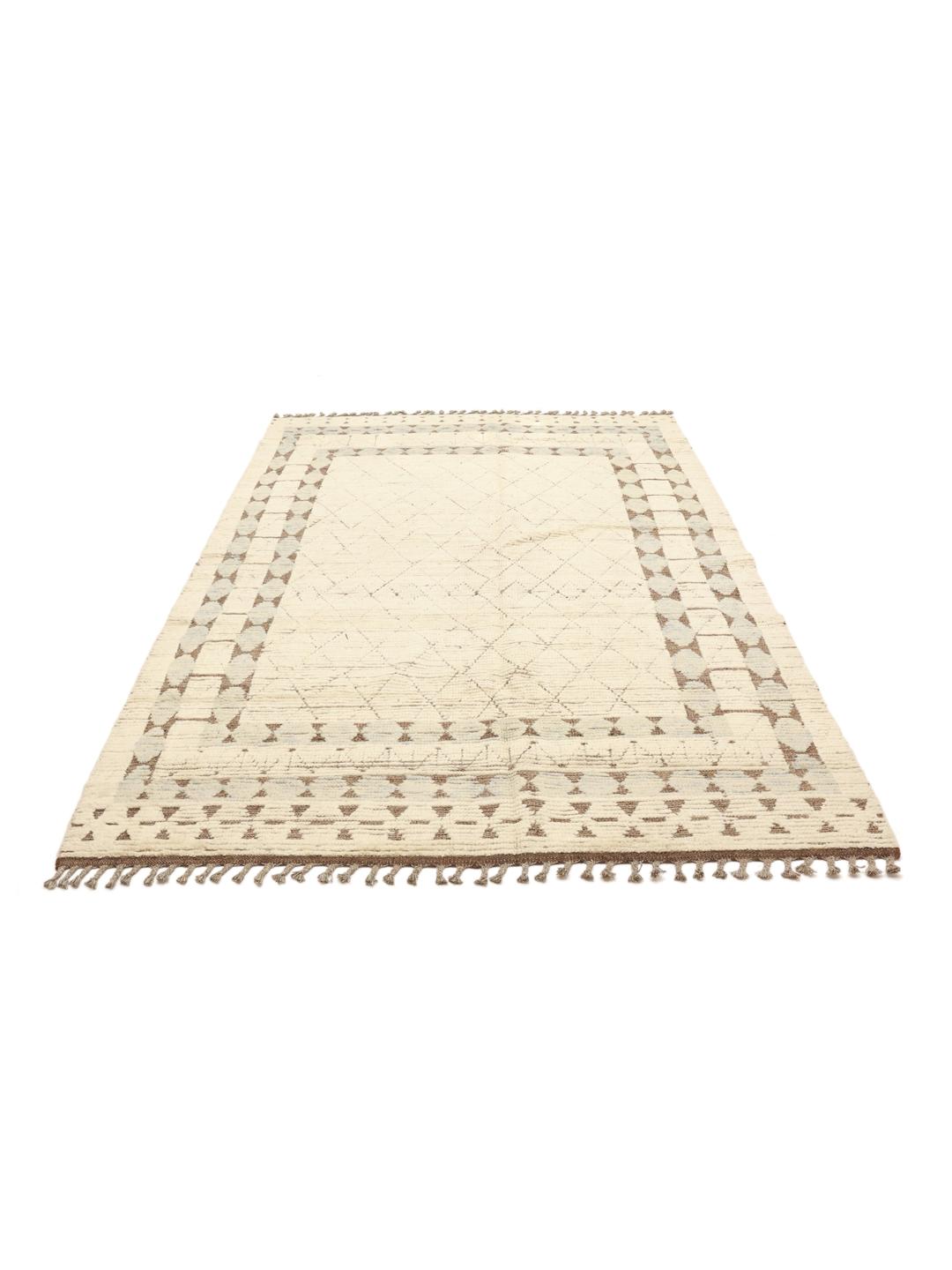
The tradition of Berber-inspired weaving has deep roots in the mountainous regions of North Africa, where nomadic tribes historically created textiles for warmth and utility. Over time, these styles have travelled and evolved, finding a home in the vibrant craft culture of Afghanistan. Today, Afghan weavers bring their own unique interpretations to this aesthetic, blending ancient techniques with a contemporary sensibility.
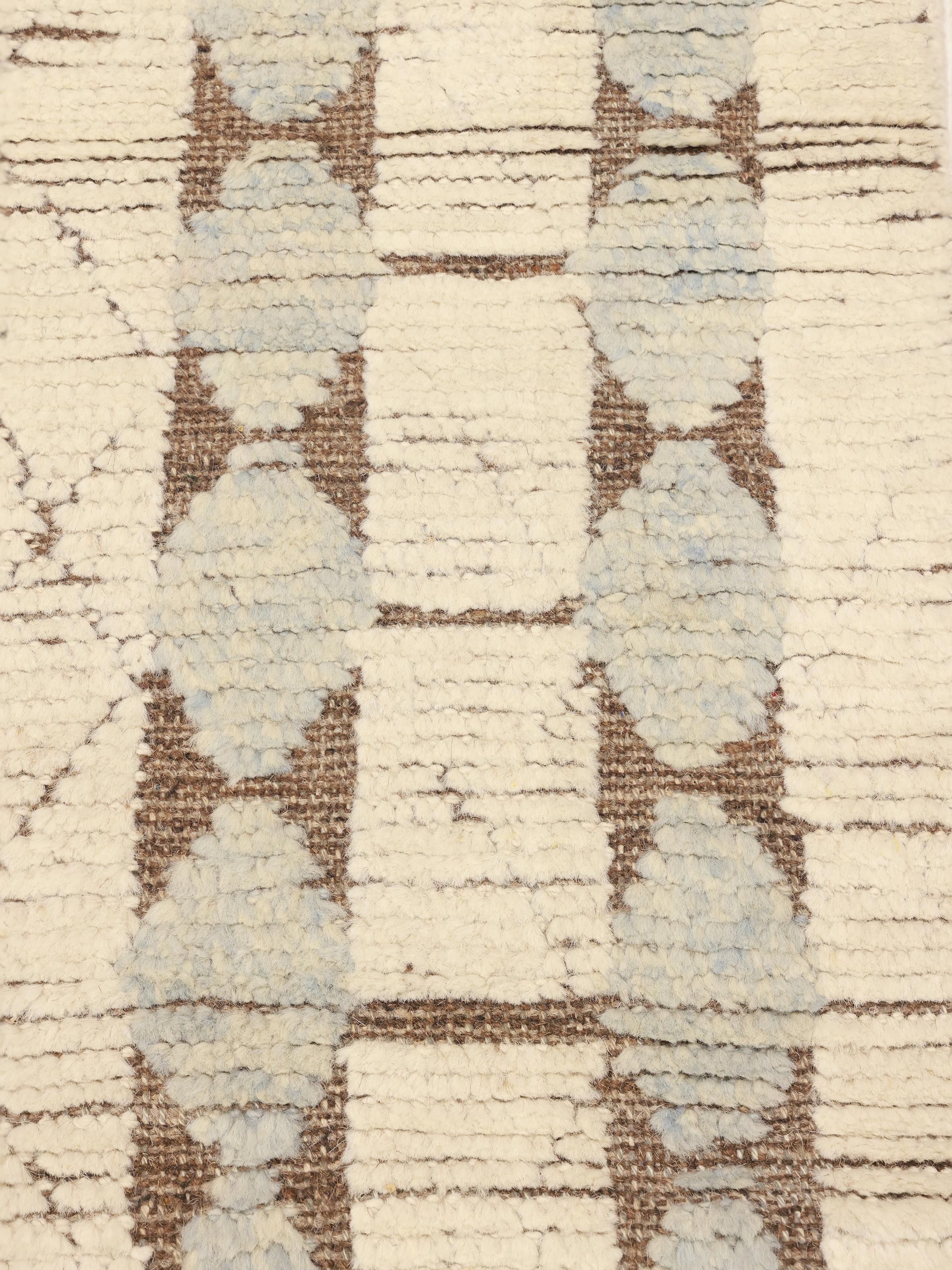
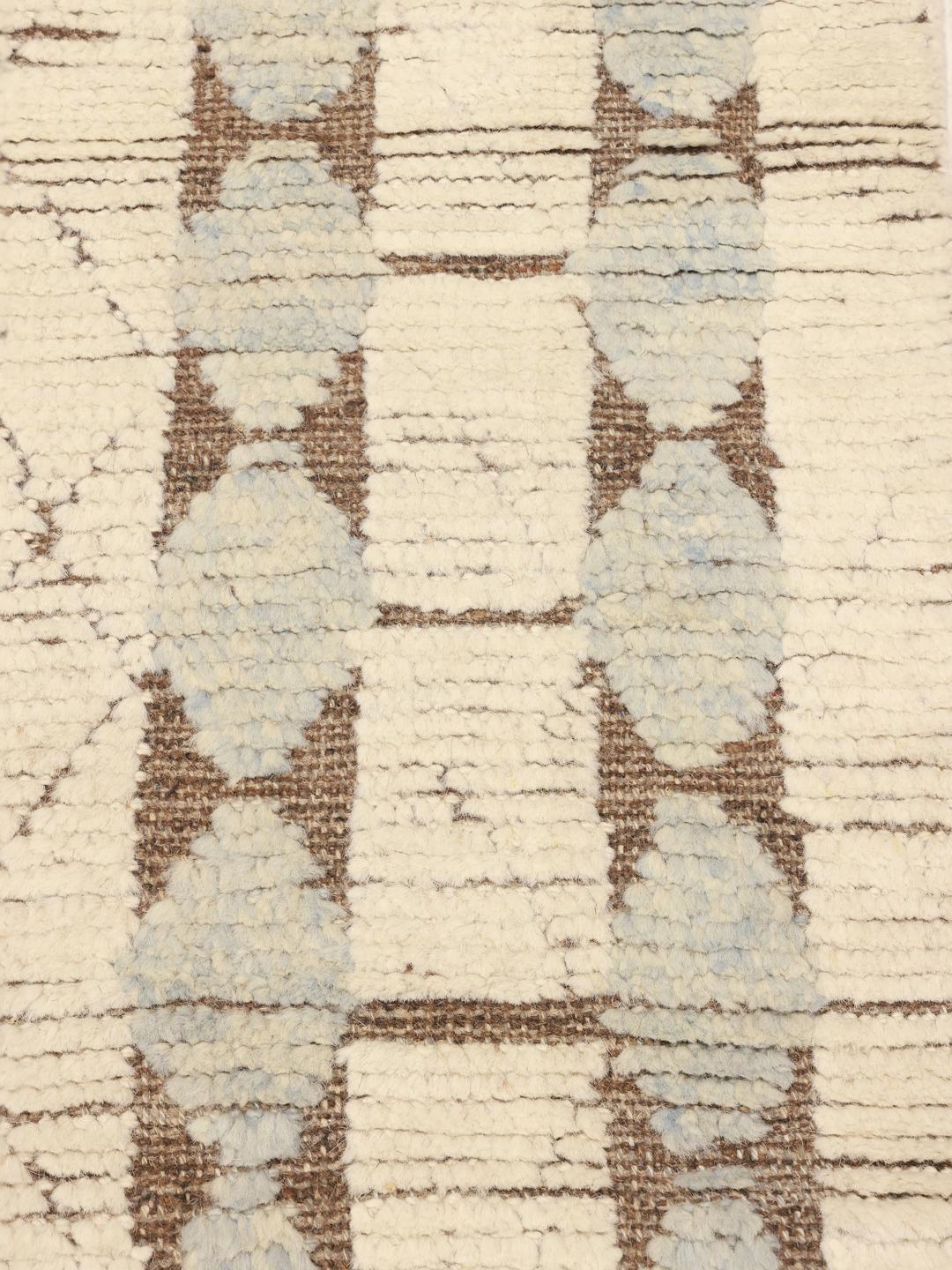
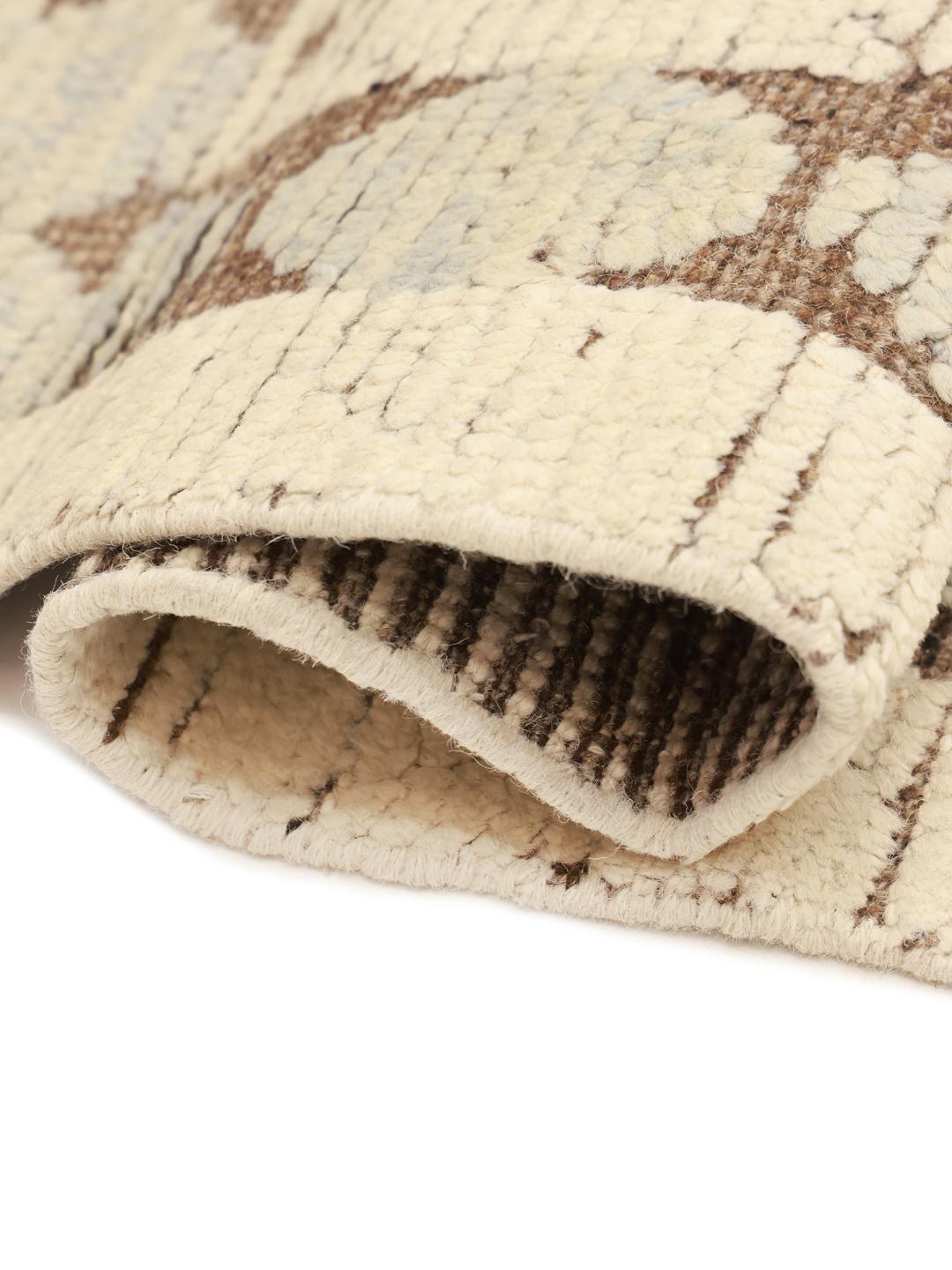
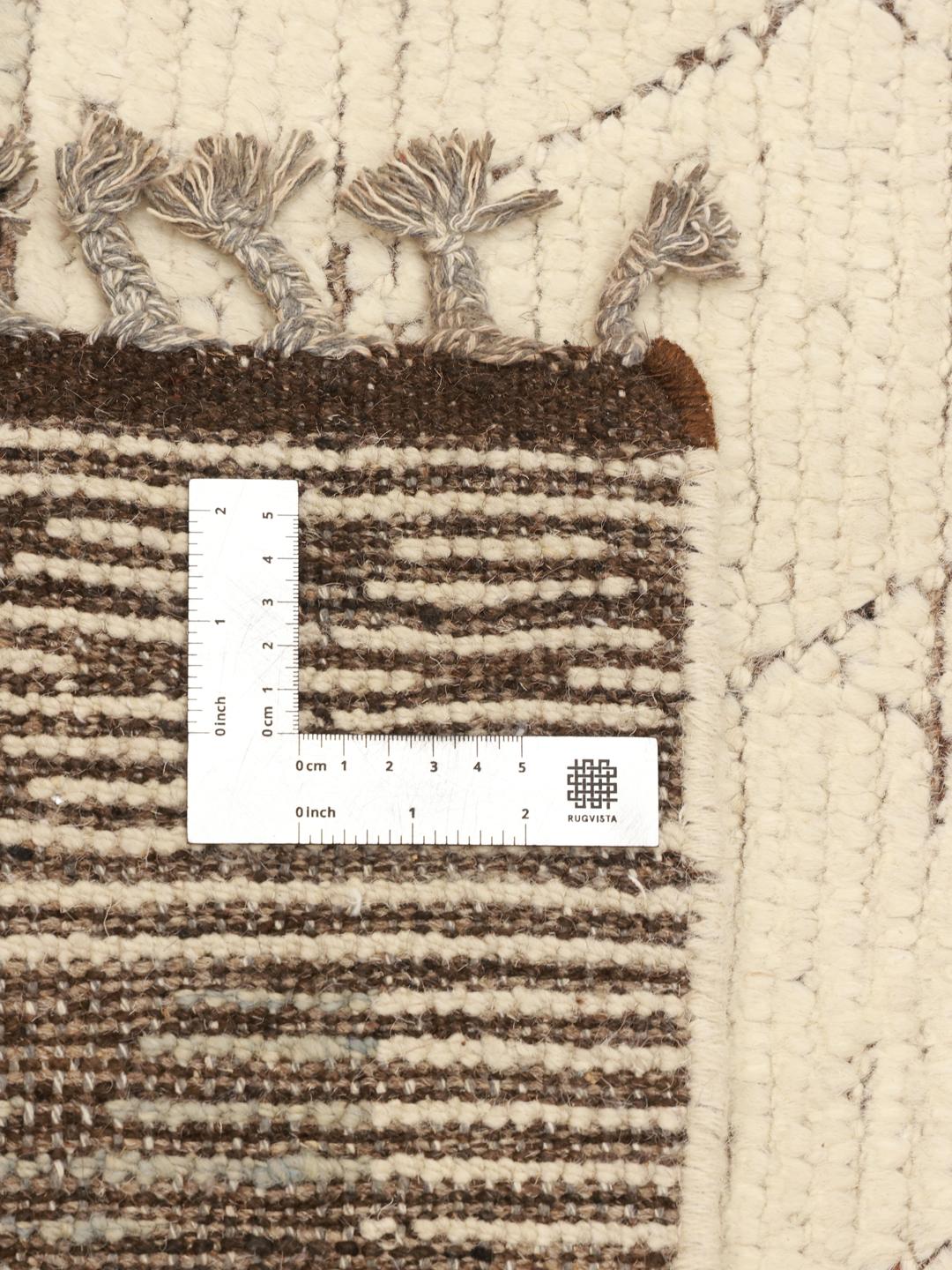
The term hand-knotted refers to the traditional method of securing individual strands of wool onto a foundation of warp and weft. This labour-intensive process is crucial for creating a rug that is both flexible and strong. By avoiding mechanical production, the artisans ensure that every piece retains the subtle variations in texture and tone that define authentic, high-quality textiles.
Visually, this tradition is characterised by minimalist geometric motifs, often utilising diamonds or simple lines that draw inspiration from the natural world. The use of natural, undyed wool colours provides a neutral palette that is highly sought after for its ability to harmonise with a wide variety of decor styles, while the inclusion of soft, muted accents adds a touch of visual interest.
Collecting a rug from this tradition is an investment in cultural heritage and human skill. Each piece serves as a tangible link to a long-standing craft, representing the personal expression of the weaver and the legacy of their community. Owning such a rug means embracing a piece that values quality and enduring design over mass-produced alternatives.