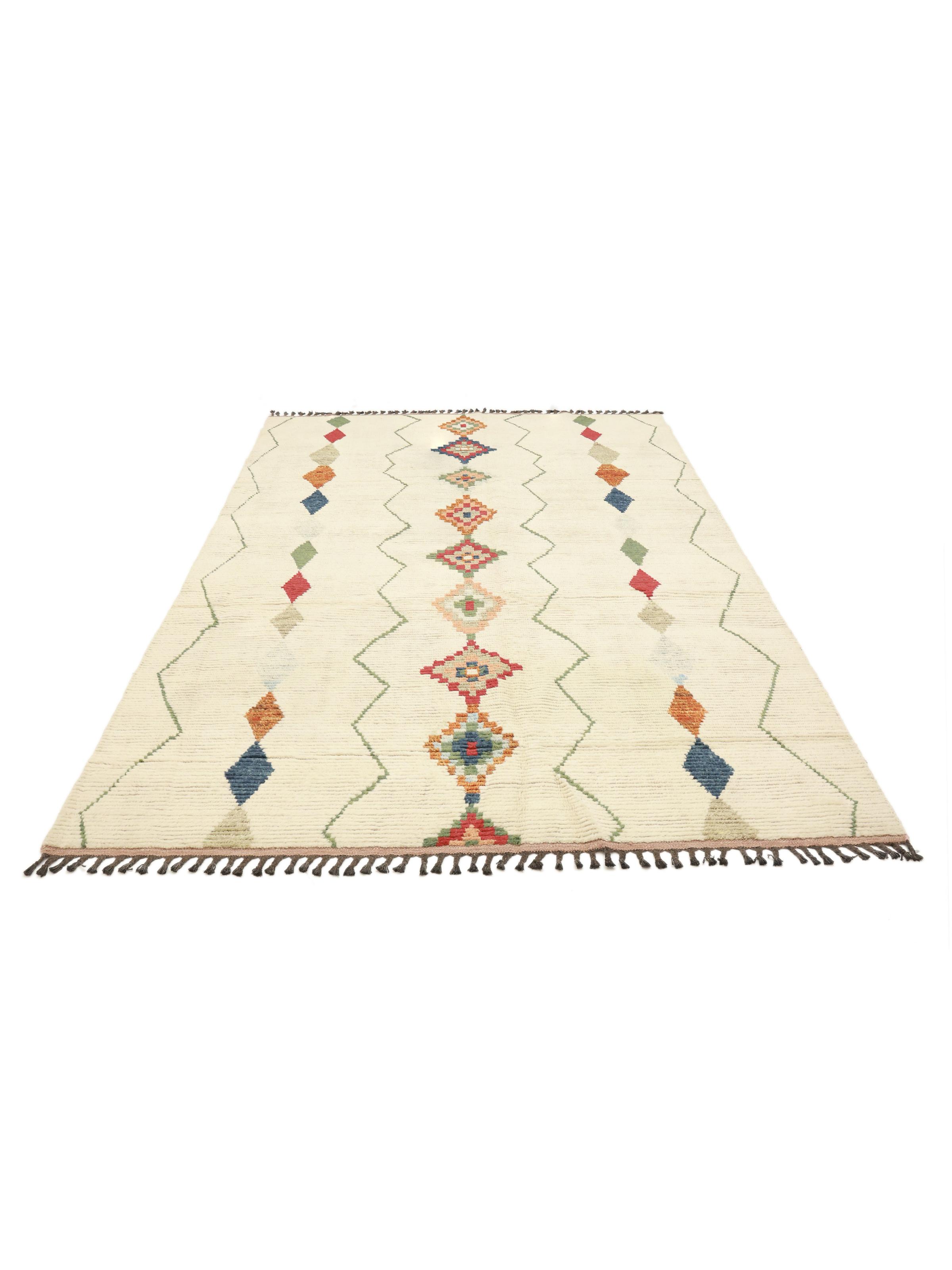
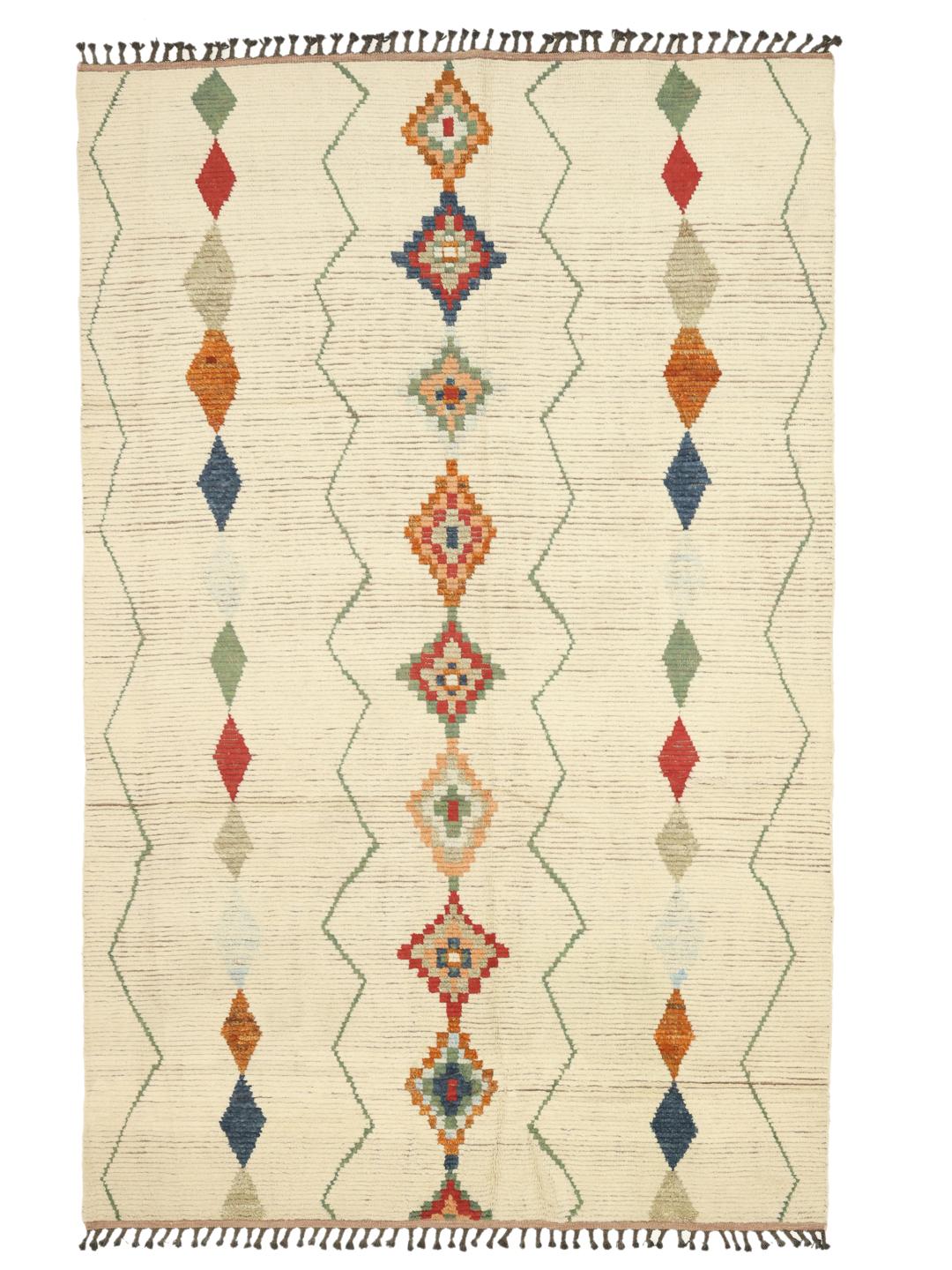
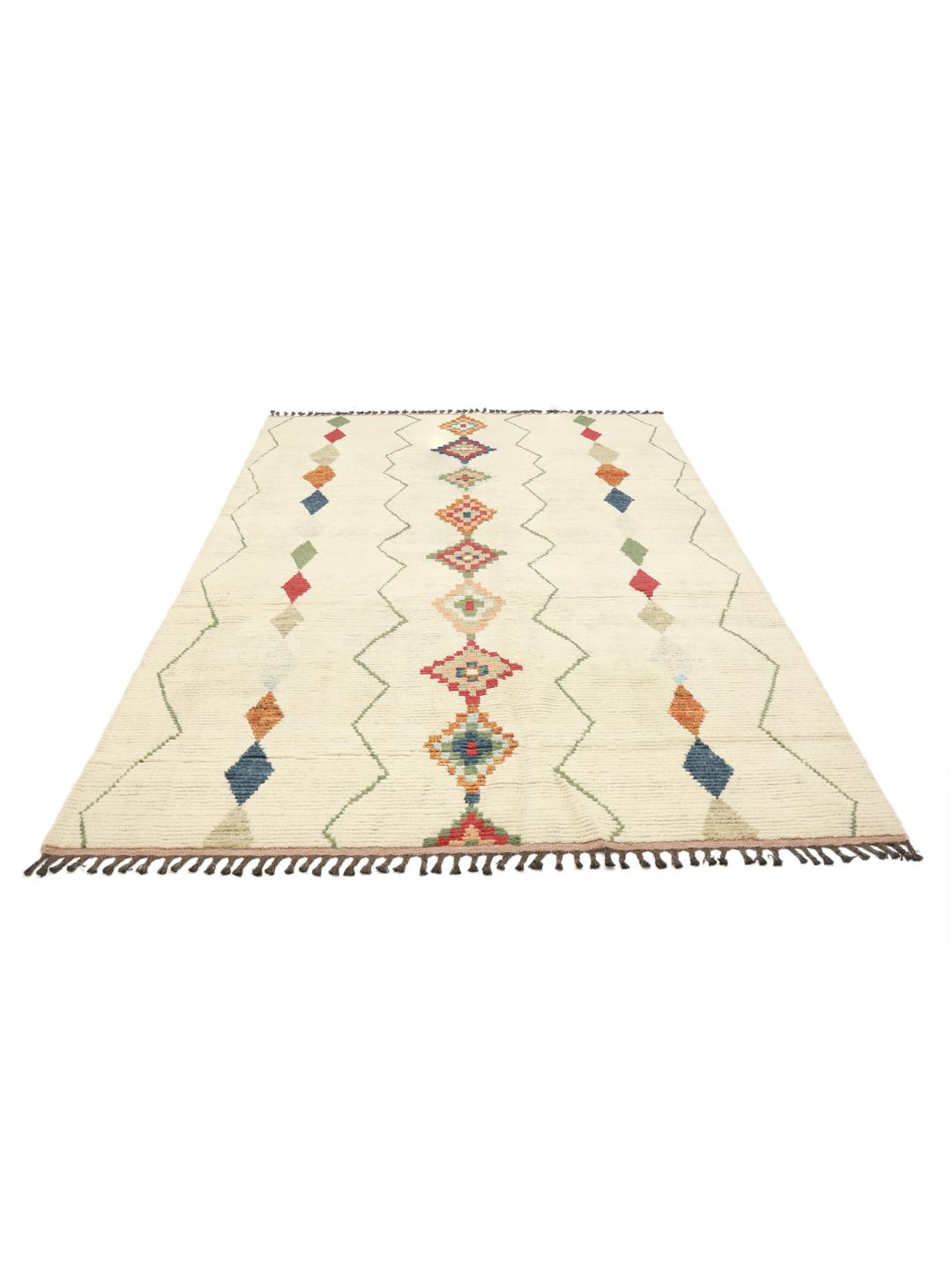
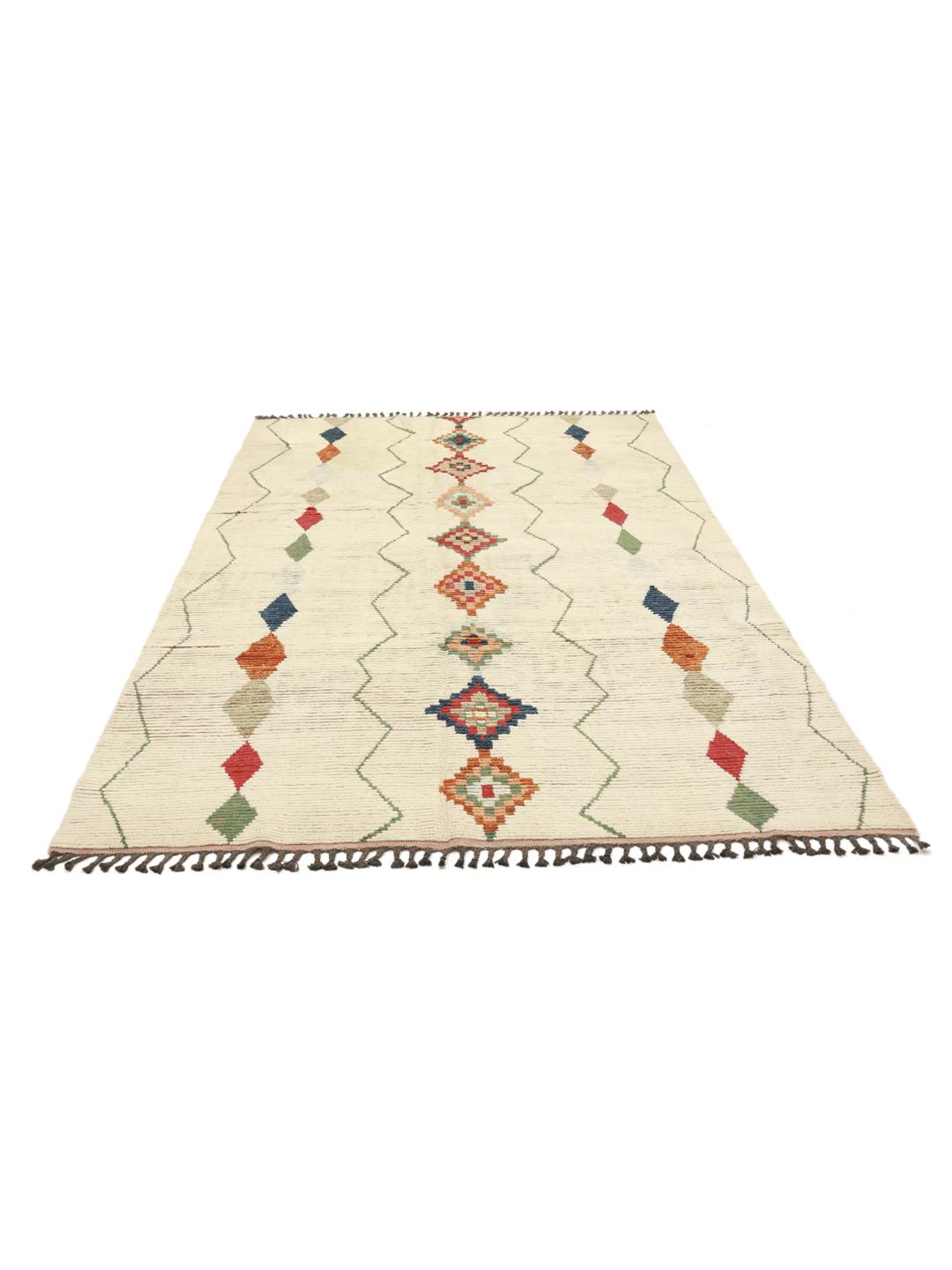
The Berber style of weaving originated with the indigenous peoples of North Africa, a tradition defined by its deep cultural roots and geometric visual language. Over time, these distinct motifs—often centred around symbolic diamond shapes and tribal patterns—have travelled across regions, influencing weaving traditions far beyond their point of origin. Today, skilled artisans in Afghanistan have adopted and evolved this aesthetic, blending their own local techniques with these iconic, time-honoured designs.
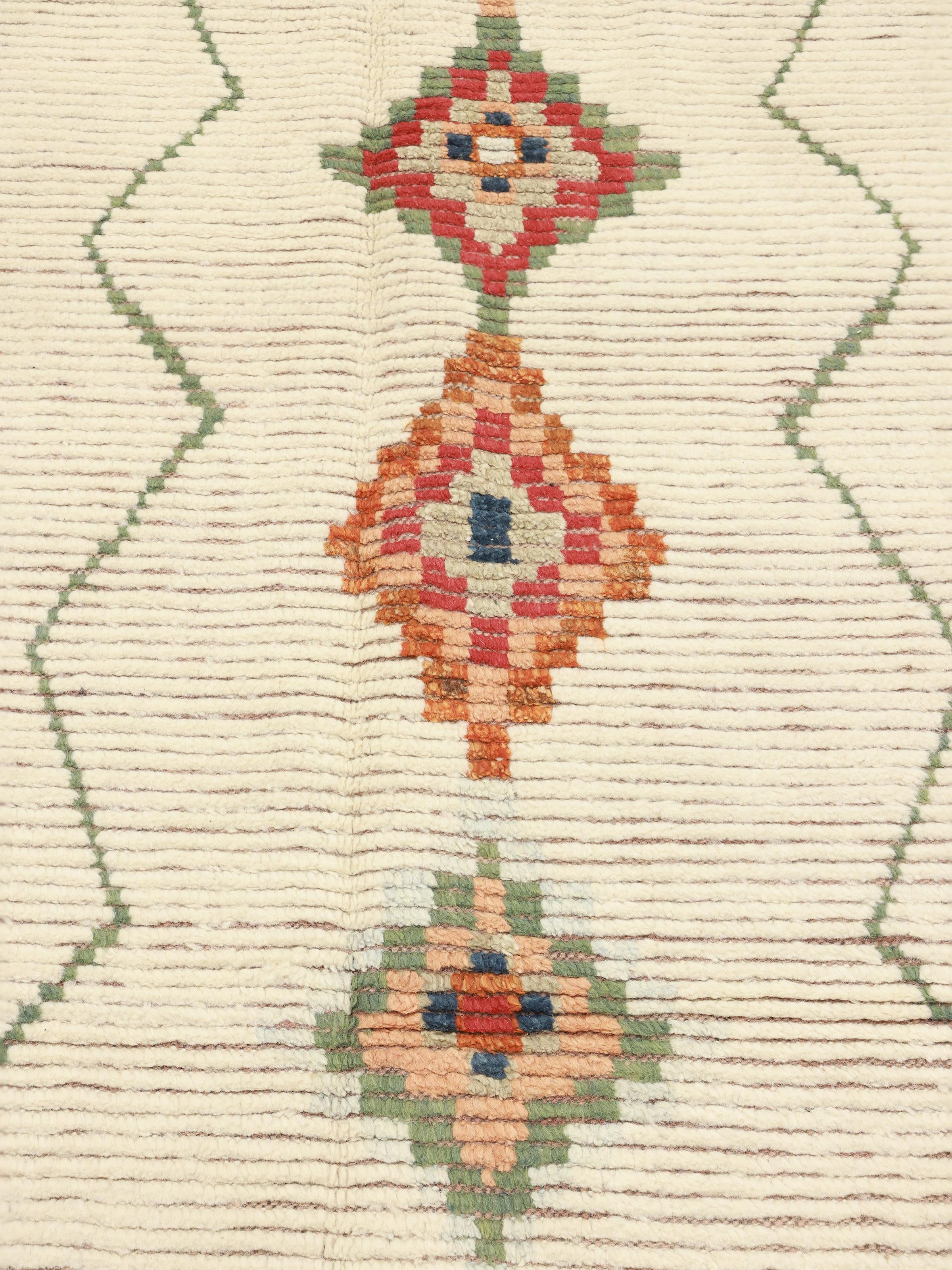
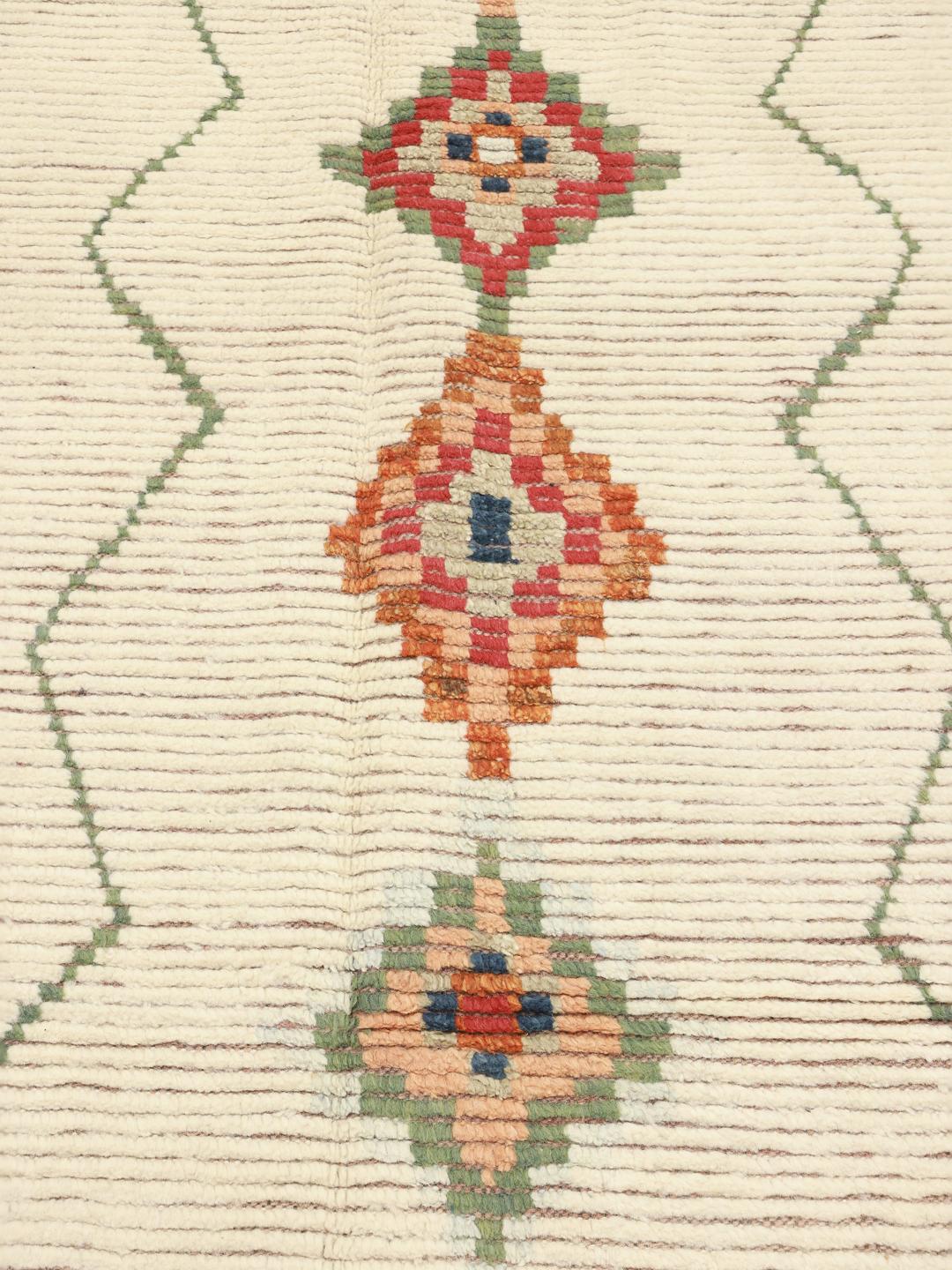
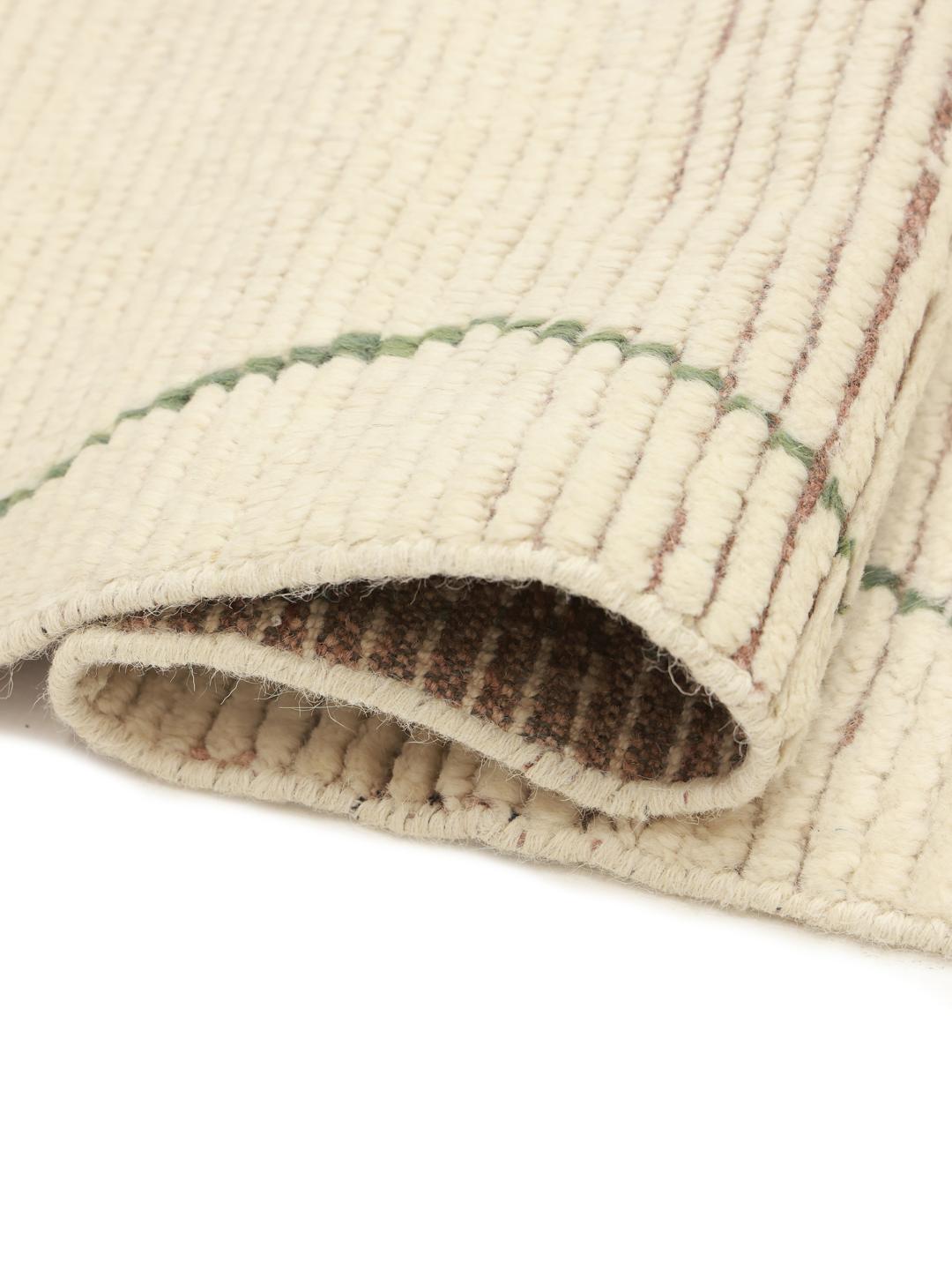
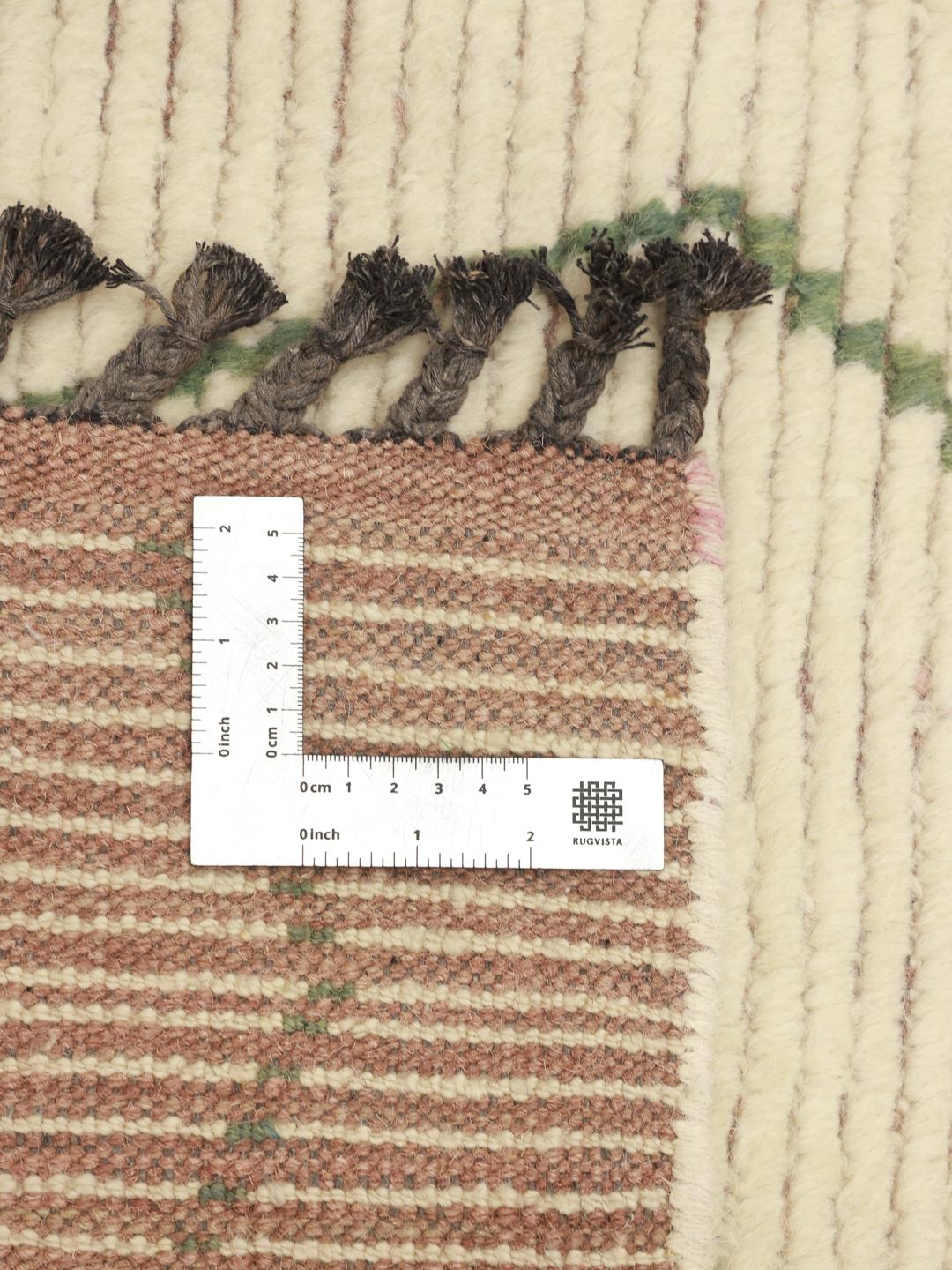
A key element of this rug is the hand-knotted construction, which is a hallmark of high-quality textile production. This method involves tying individual strands of wool onto a base, a process that creates a denser and more resilient pile than other weaving styles. This density not only enhances the rug's durability but also allows for a more lustrous finish, as the way the light catches the hand-knotted surface highlights the depth and texture of the wool.
The visual language of this rug is rooted in the use of diamond motifs, which have long been used in tribal weaving to represent protection, fertility, and the natural world. The vibrant, contrasting colours used for these shapes against the neutral, undyed wool background are a signature of the Berber-inspired tradition. This specific rug is notable for its clean, modern interpretation of these classic symbols, making it highly versatile for contemporary homes.
Collecting a rug from this tradition is an act of appreciating the human skill and history behind every thread. These pieces are valued not only for their beauty but for the cultural weight they carry, representing generations of knowledge passed down through families of weavers. By adding this rug to your home, you are acquiring a piece of living heritage that celebrates the intersection of regional tradition and individual creativity.