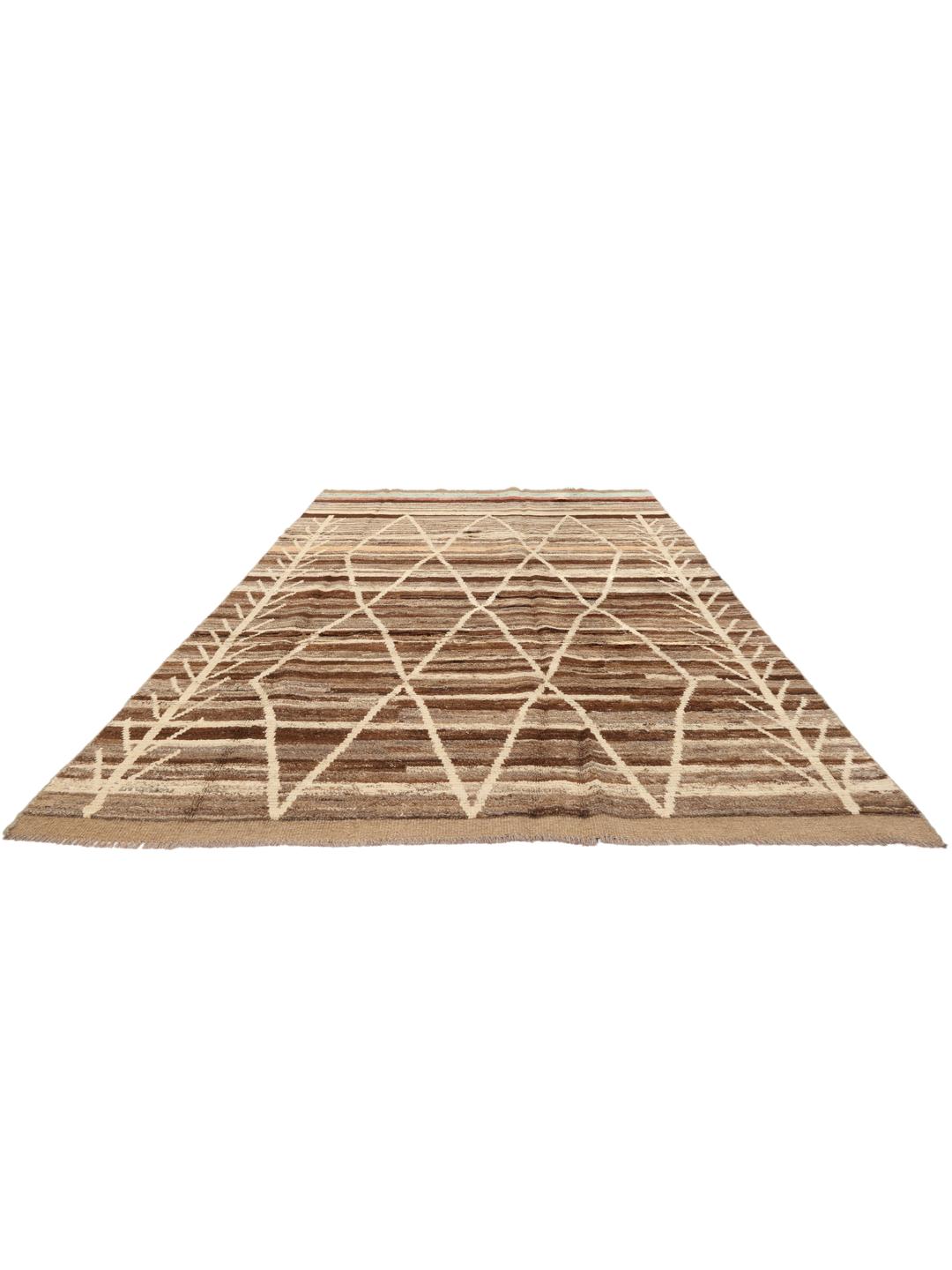
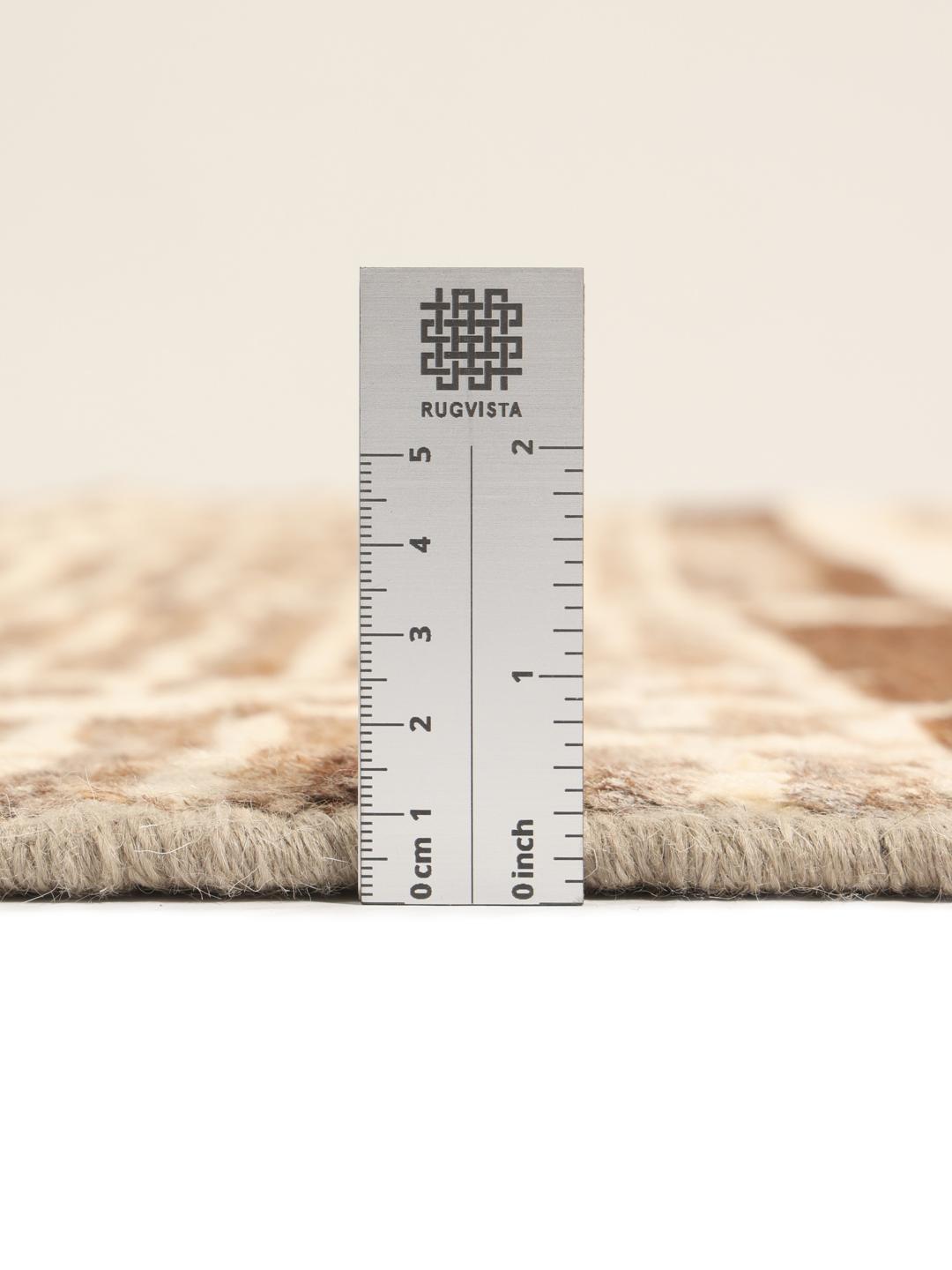
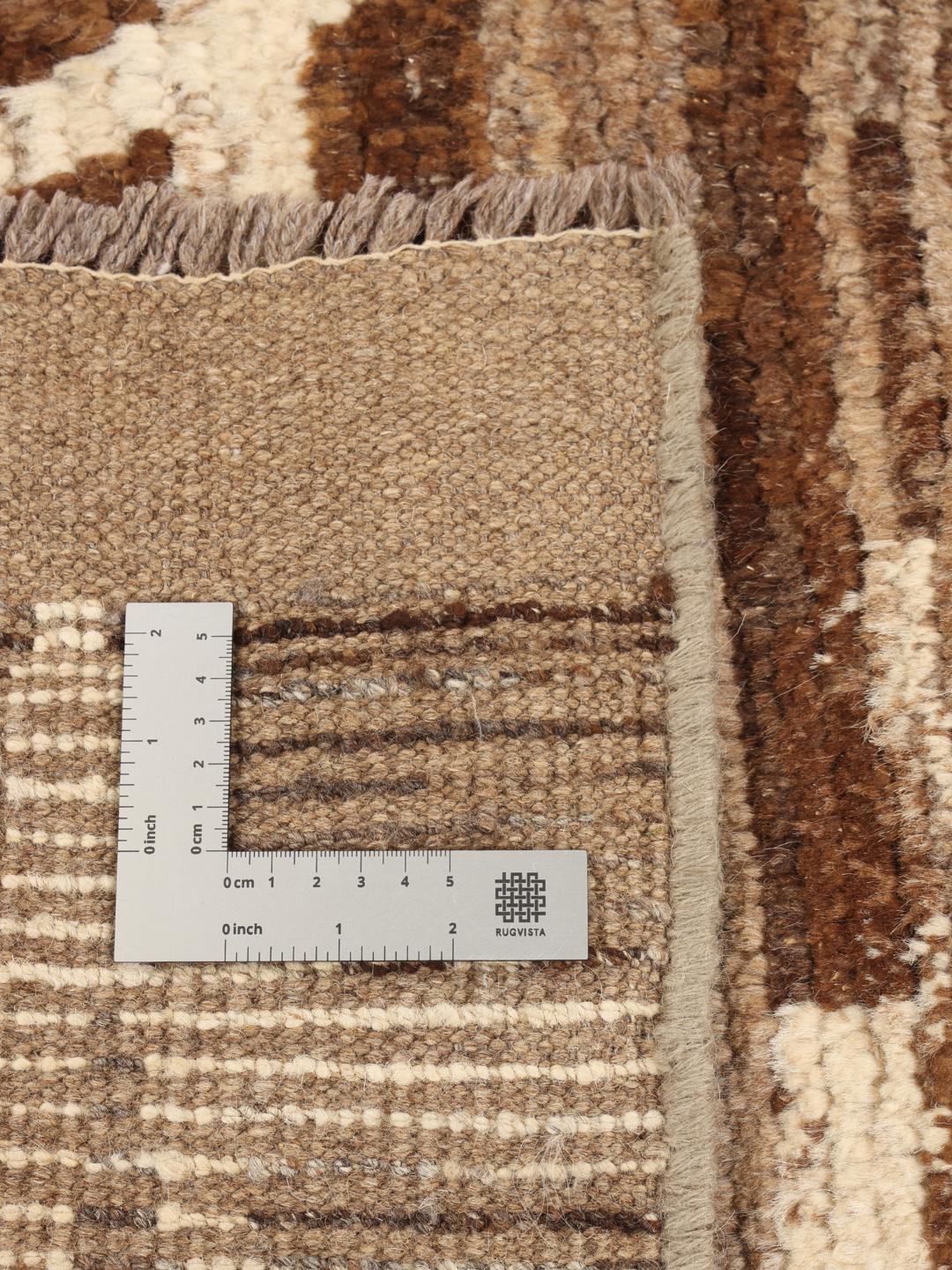
Berber rugs are deeply rooted in the traditions of North African tribal weaving, characterised by their thick, plush piles and minimalist, geometric aesthetic. While the style originated with Berber tribes in the Atlas Mountains, the tradition has evolved and spread, with skilled weavers in Afghanistan now producing exceptional pieces that honour this heritage.
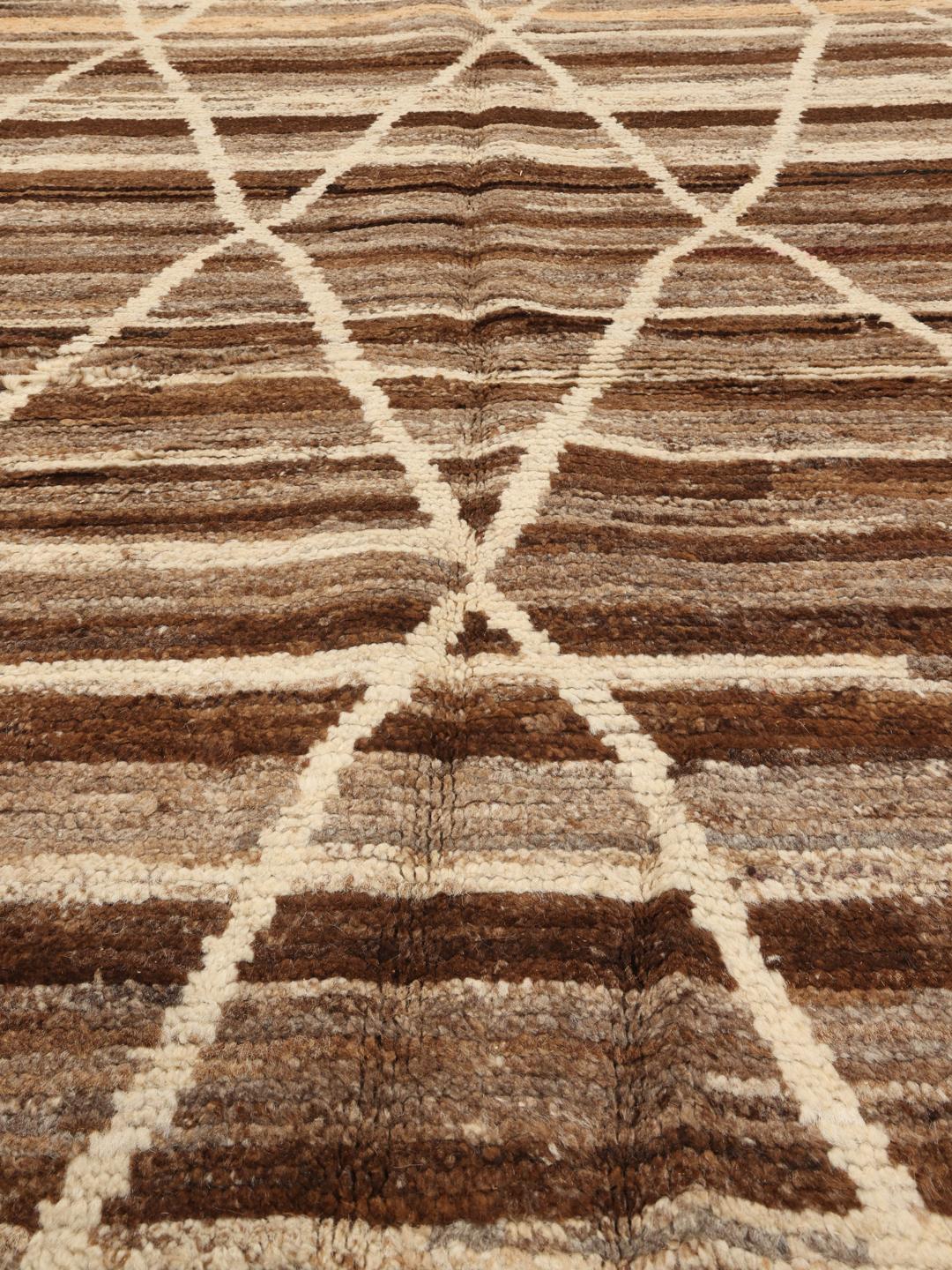
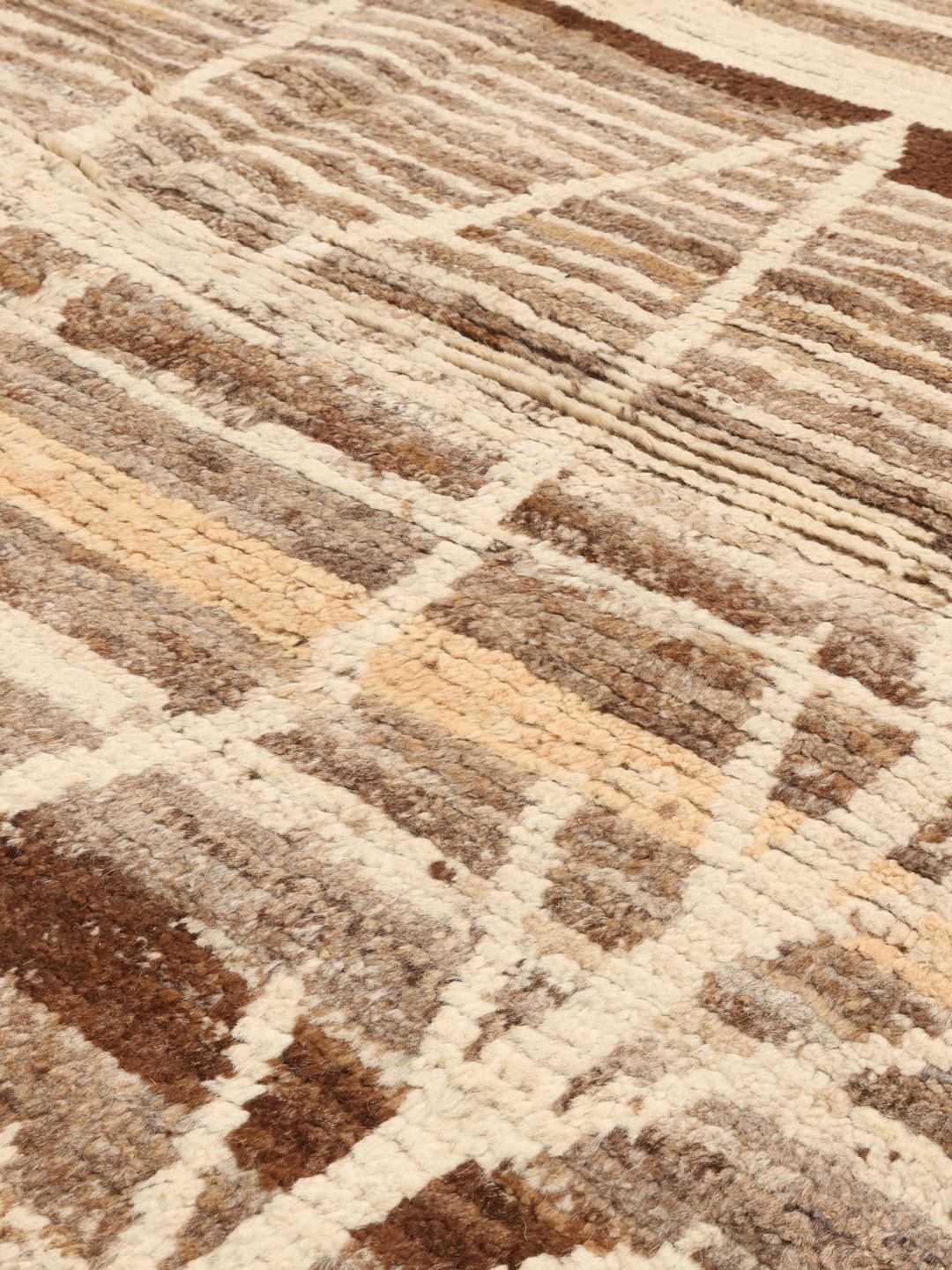
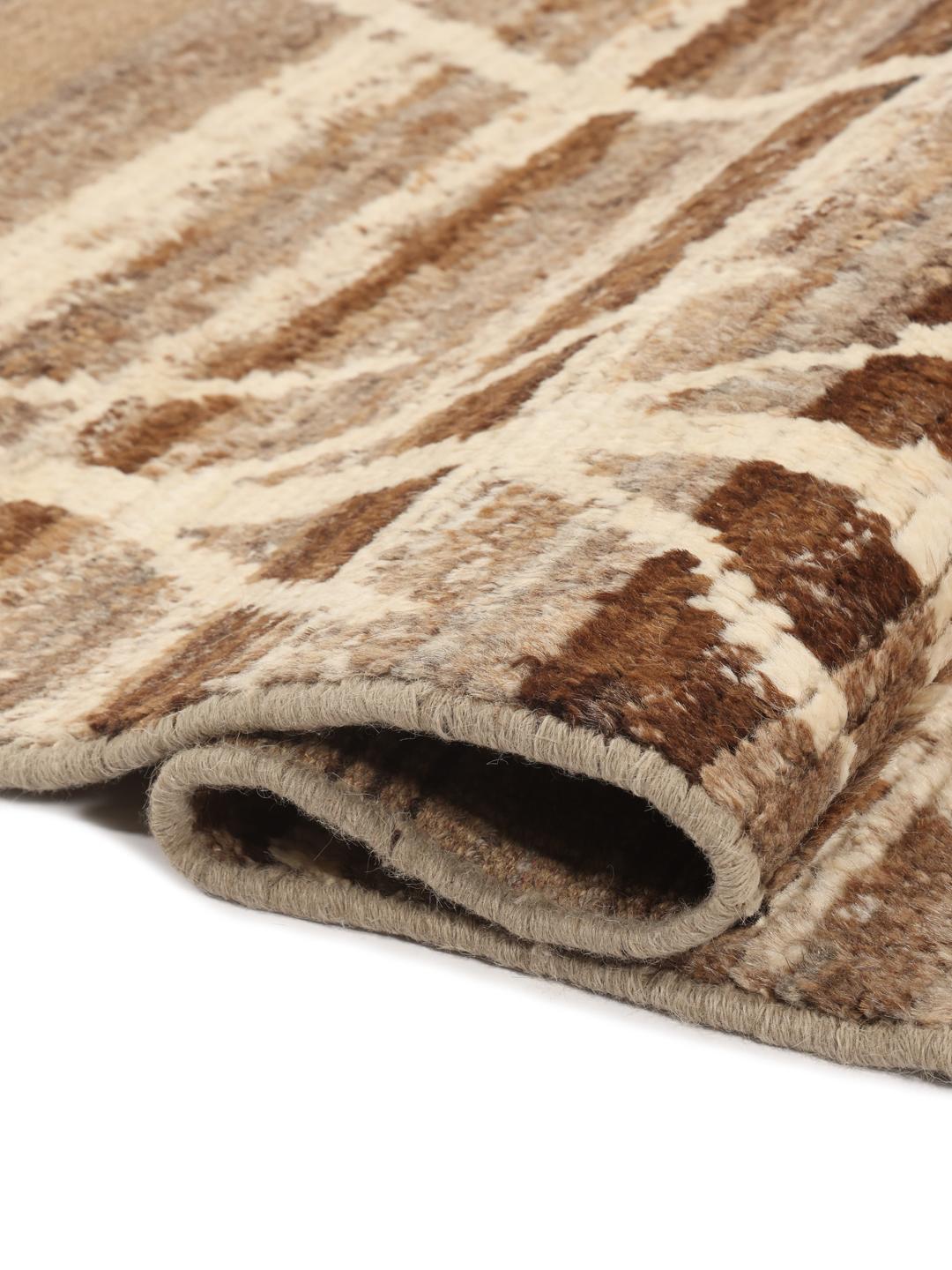
The term 'Berber style' signifies a specific approach to rug making that prioritises natural materials and symbolic, often abstract, patterns. These rugs are typically known for their use of undyed or naturally dyed Wool, which reflects the landscape of the regions where they are created, resulting in the warm, neutral colour palettes that remain popular today.
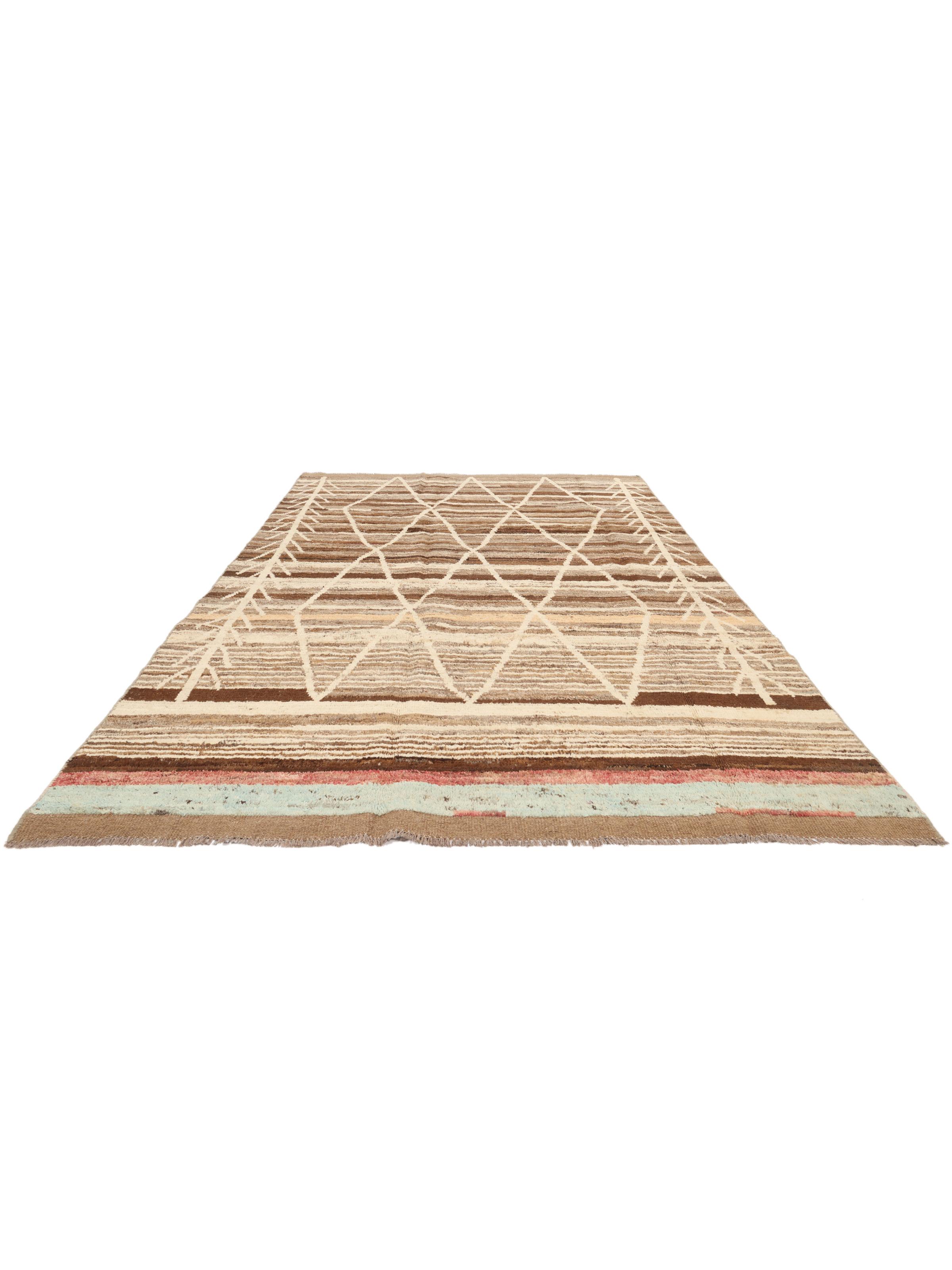
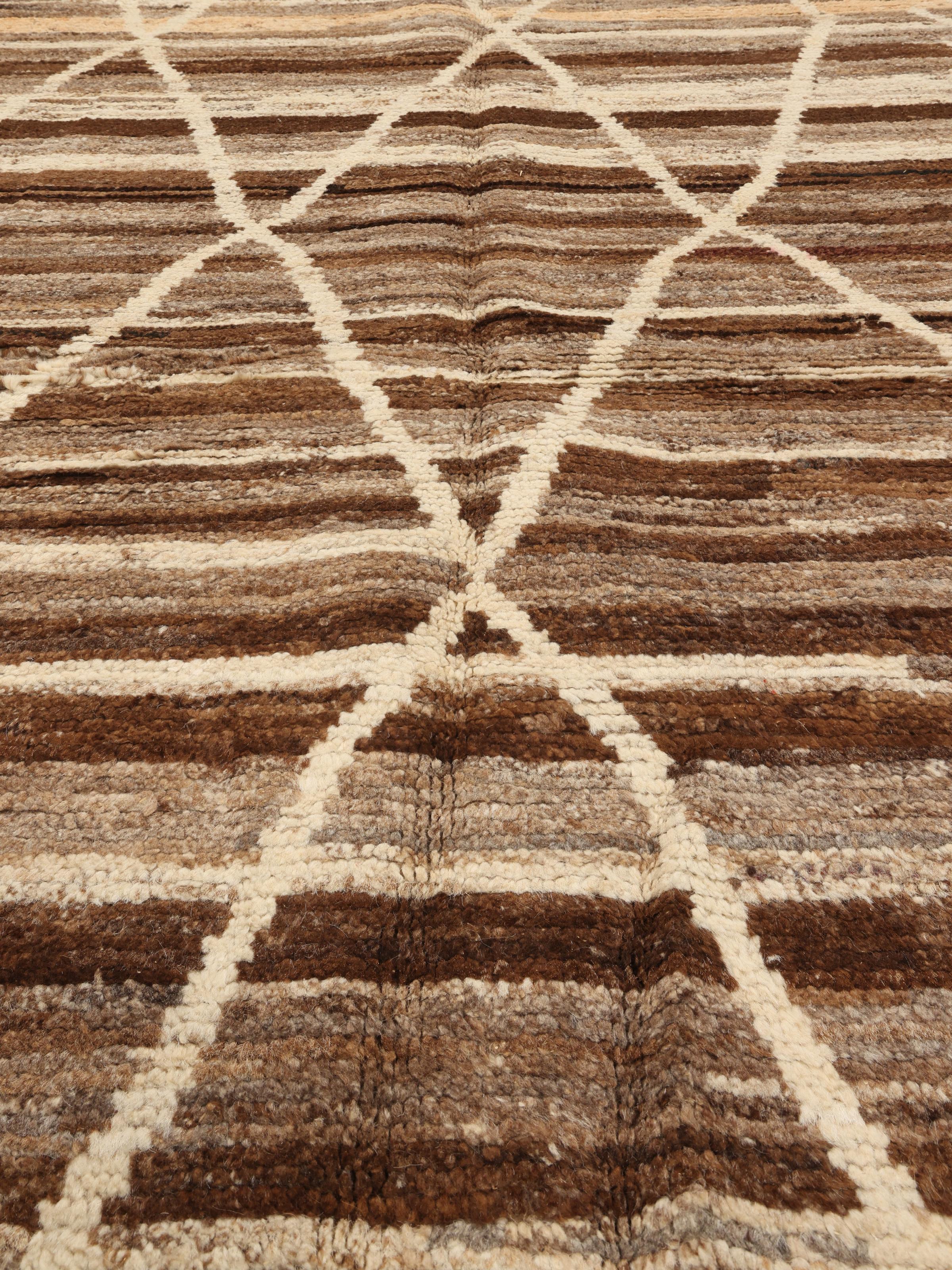
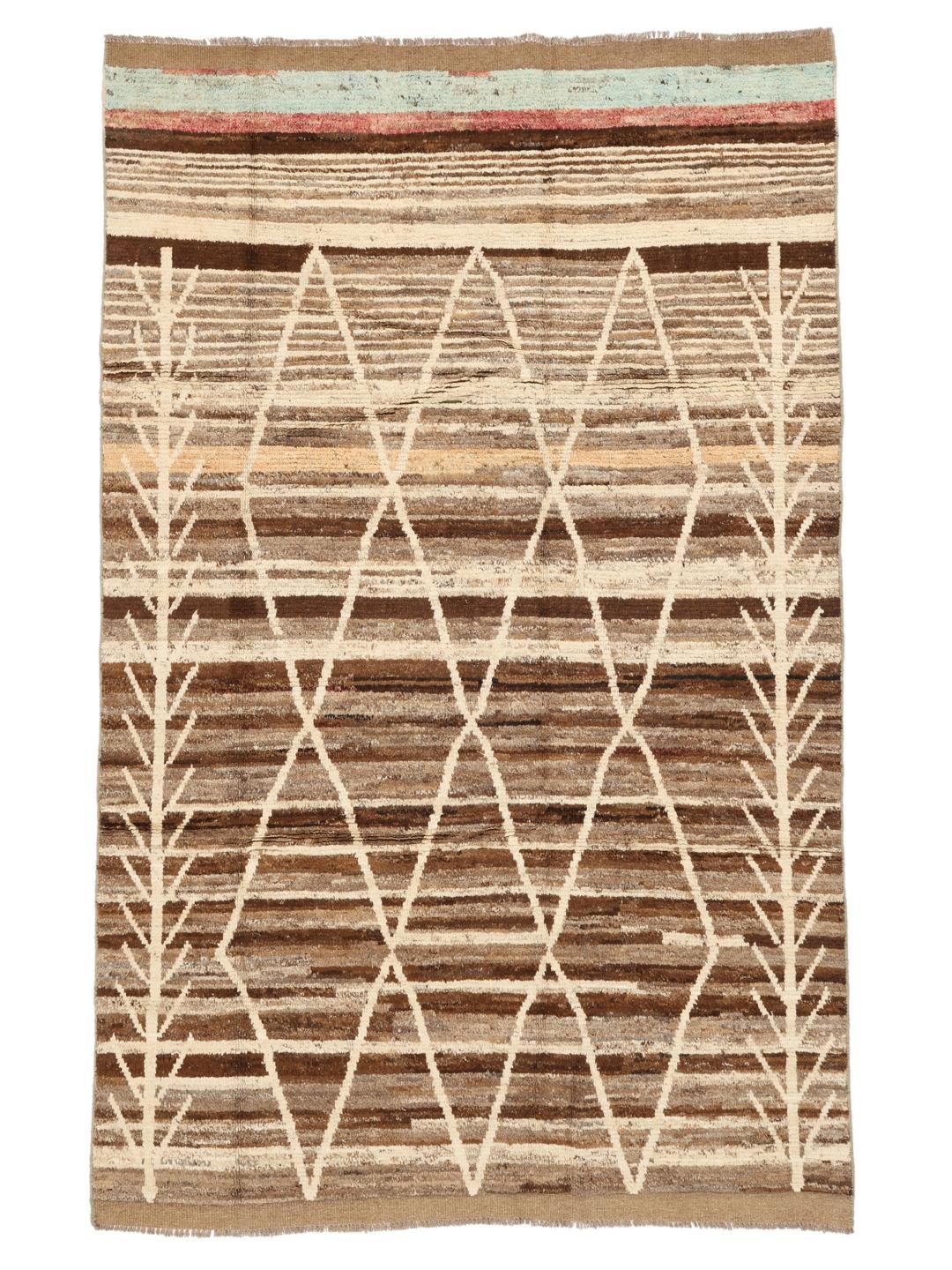
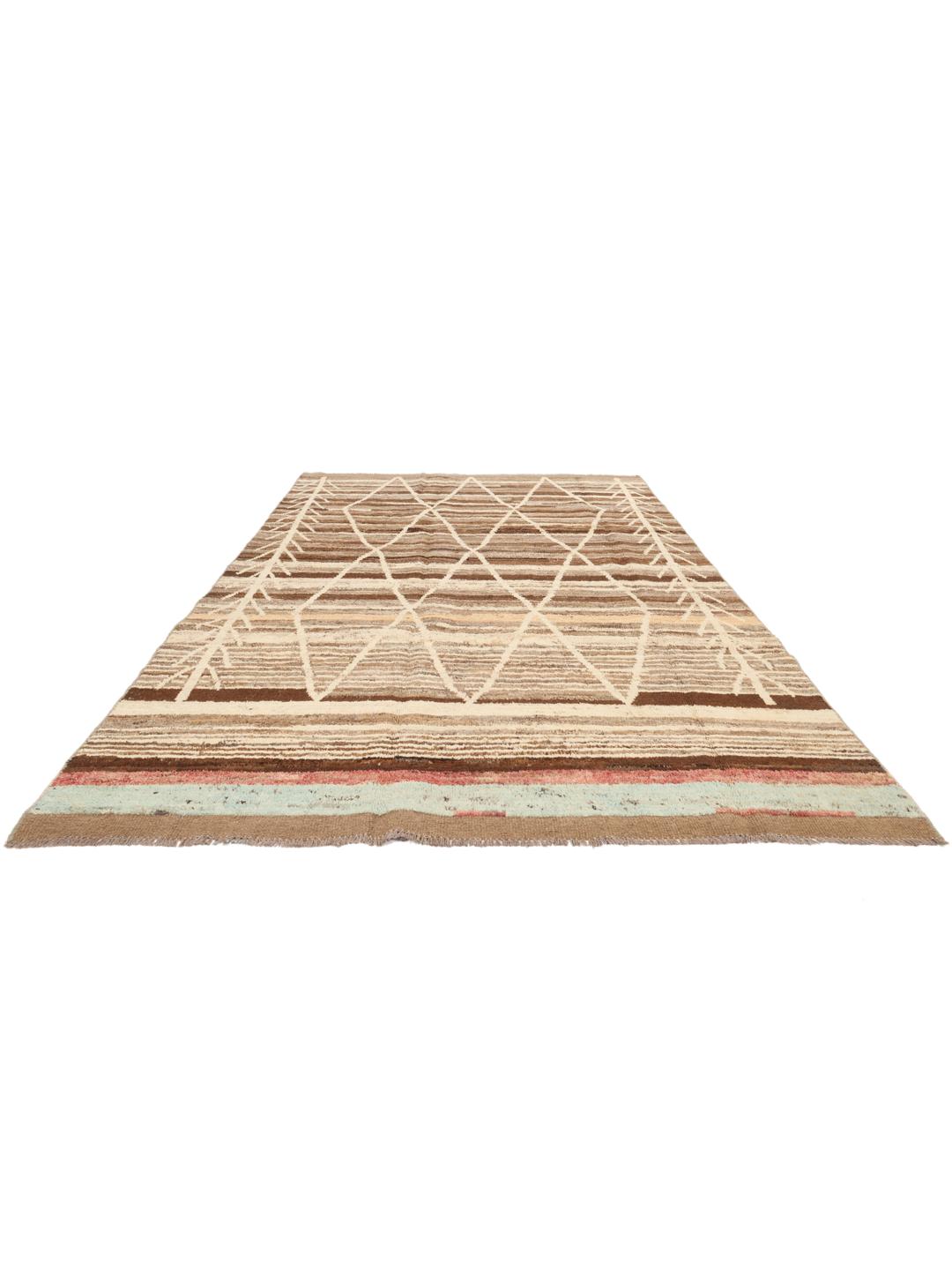
Signature design elements often include diamond shapes, lines, and stylised motifs that hold cultural significance to the weavers. In this particular piece, the interplay between the striped background and the stark geometric overlays creates a modern interpretation of ancient tribal motifs, bridging the gap between historical craft and contemporary interior design.
Owning a piece from this tradition means acquiring a connection to a centuries-old craft. Collectors value these rugs for their authenticity, the human element of their creation, and the way they bring a sense of organic history and texture into a modern home.