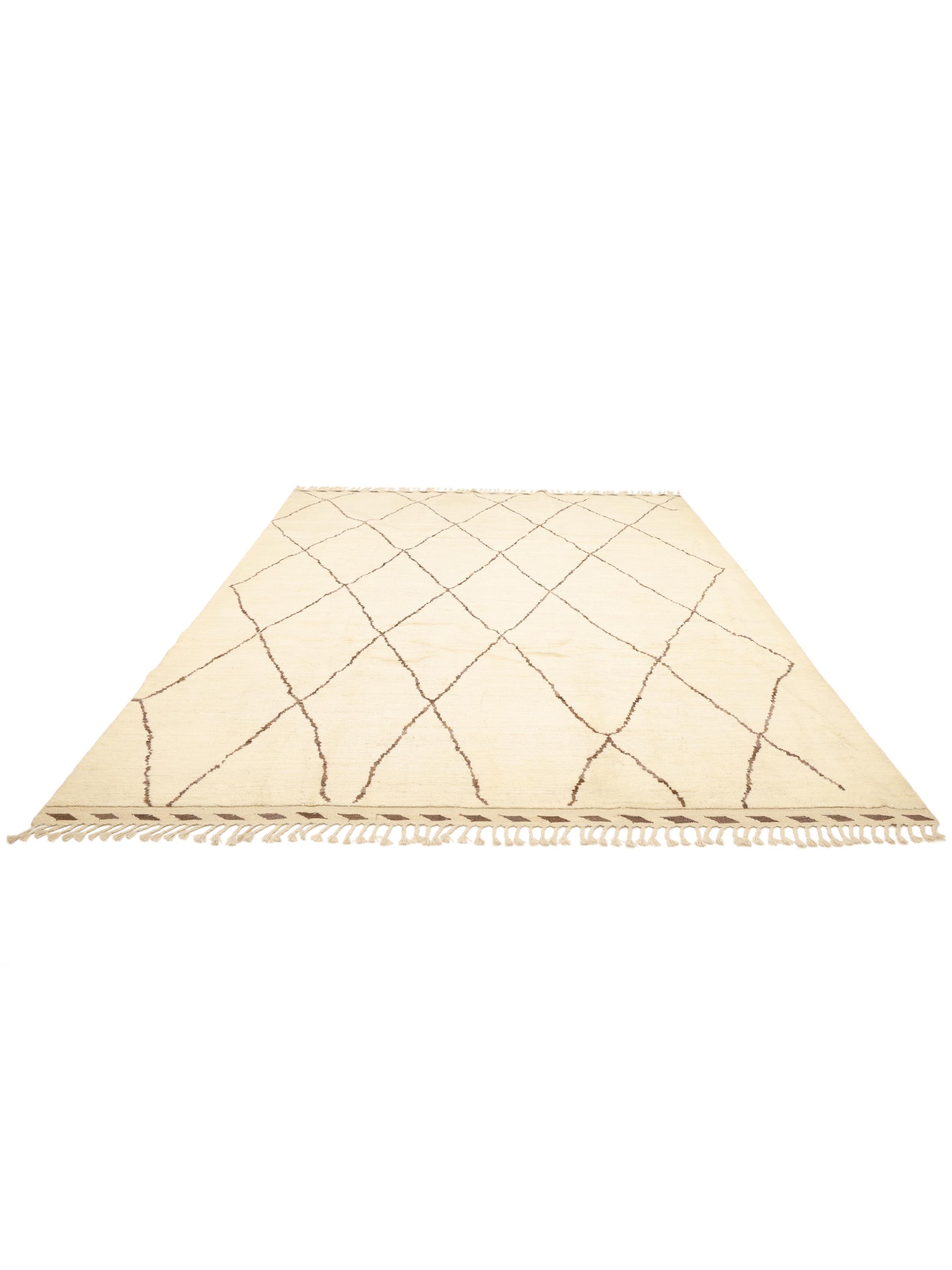
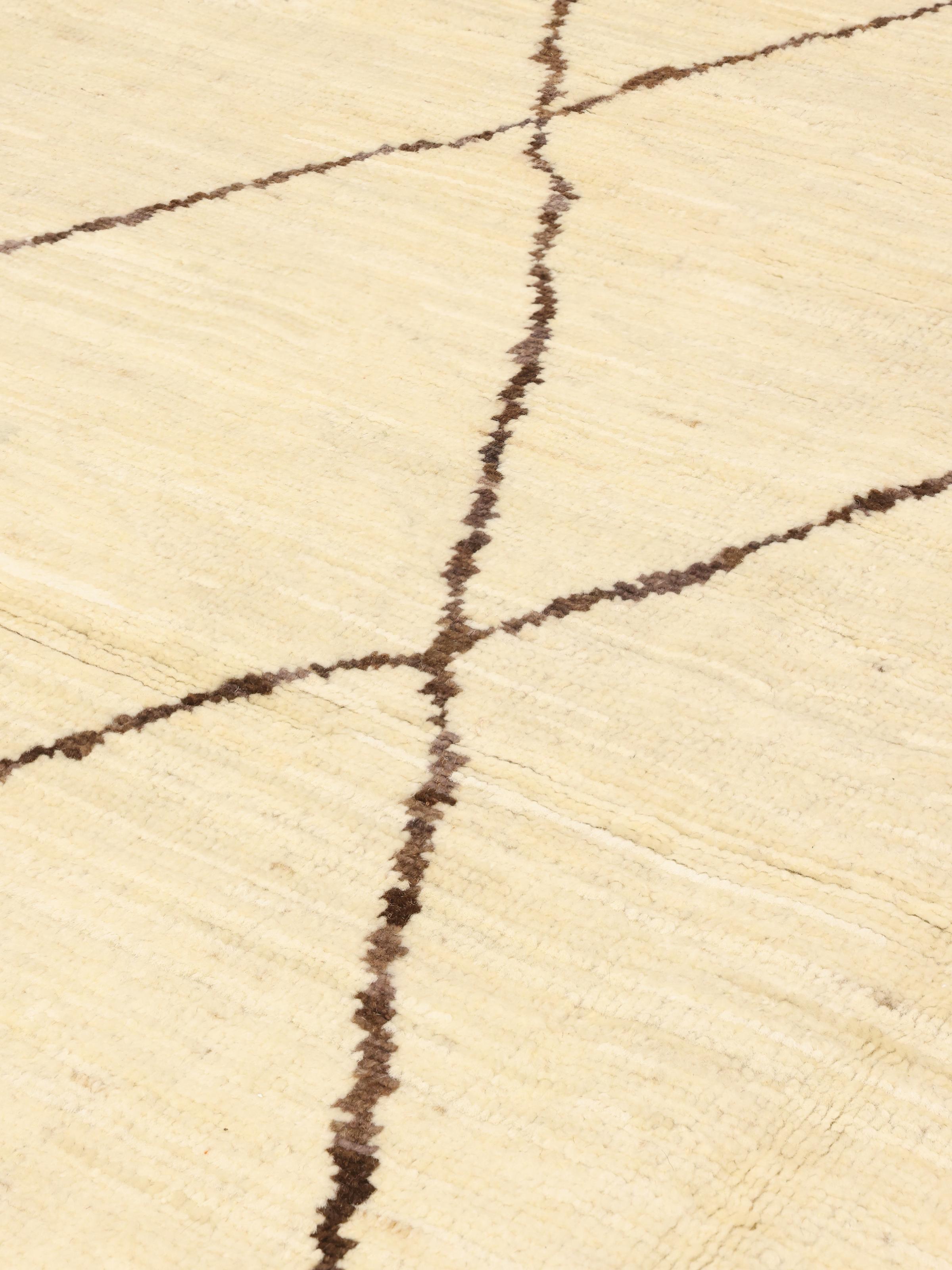
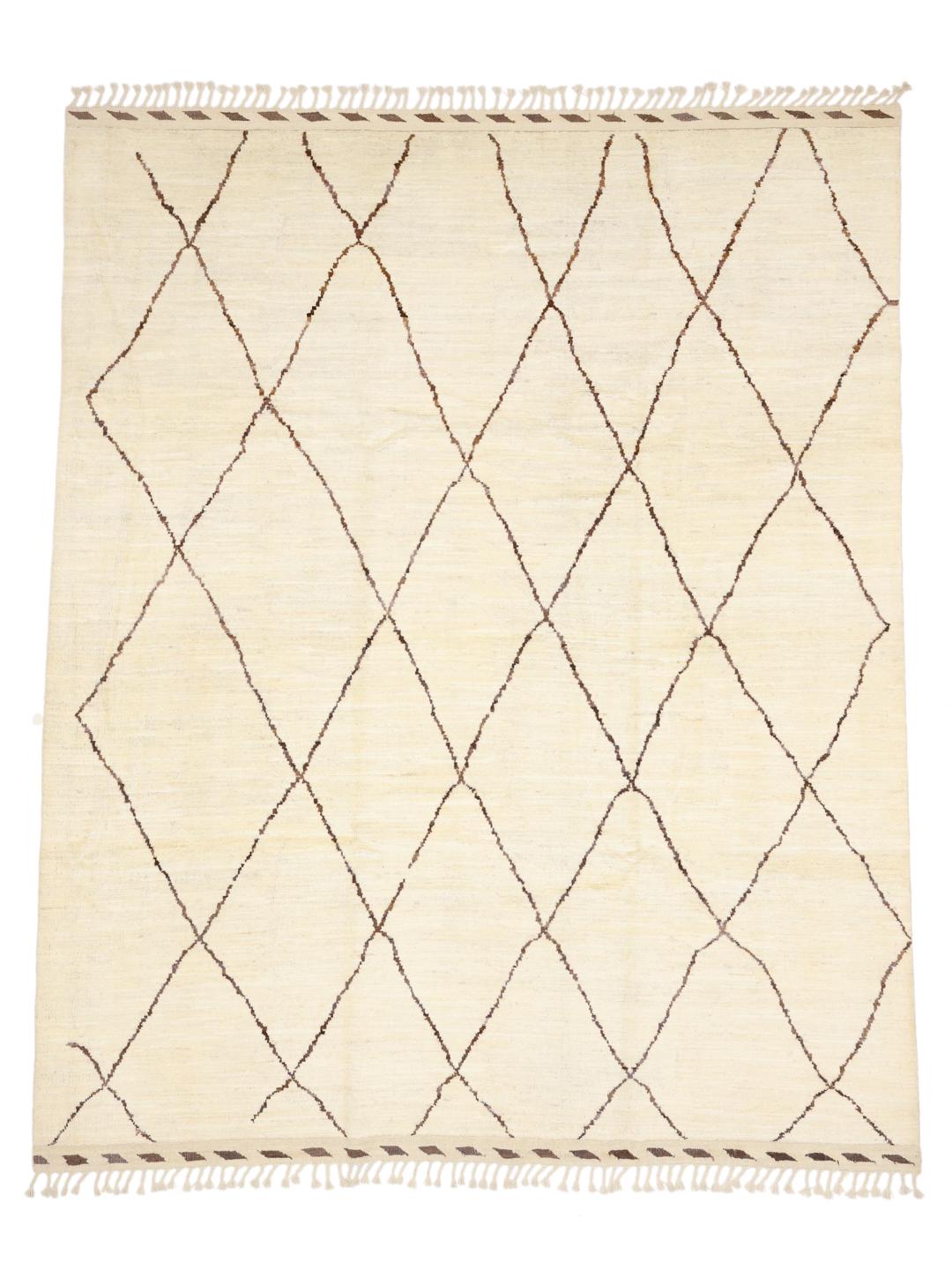
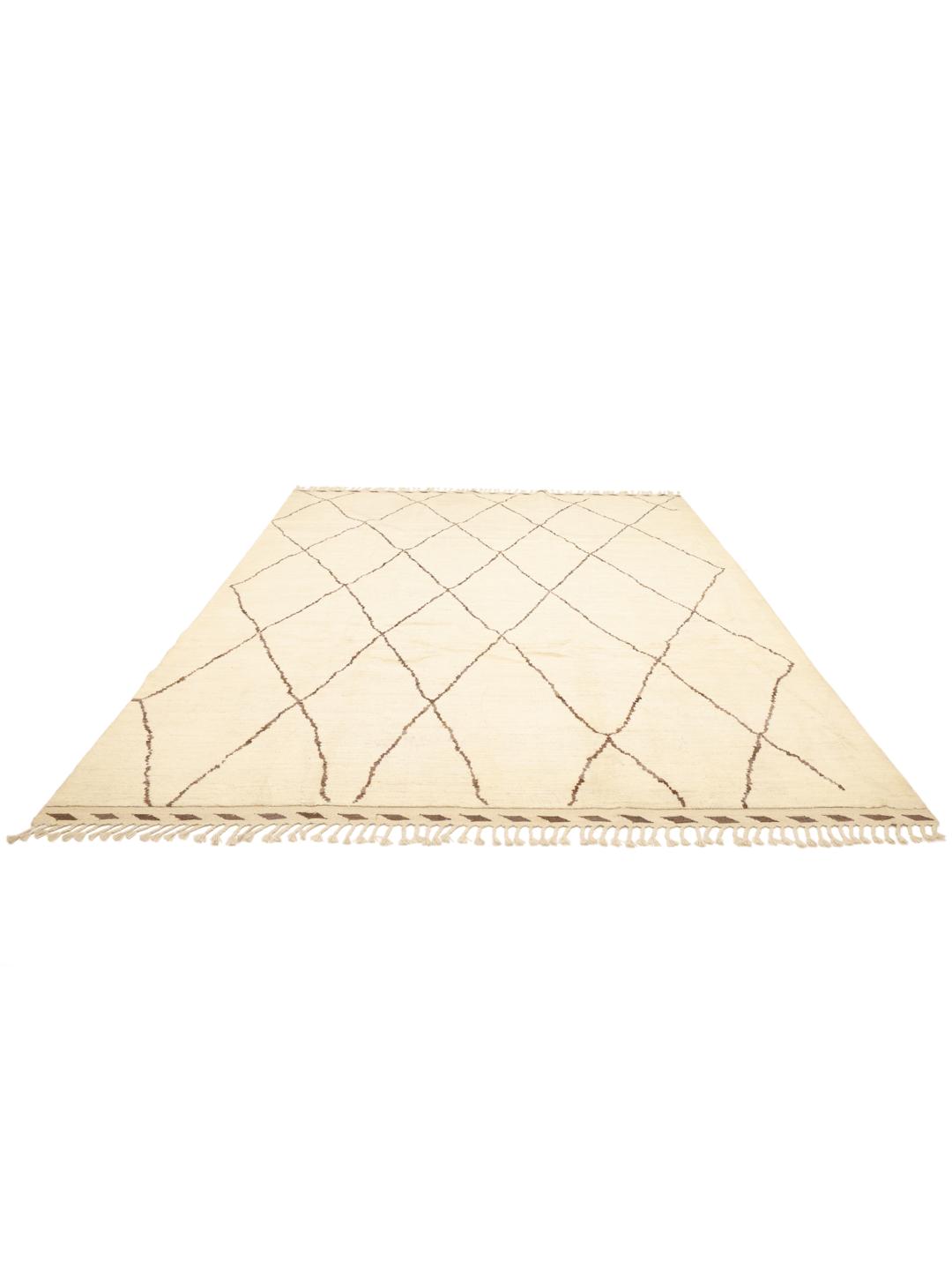
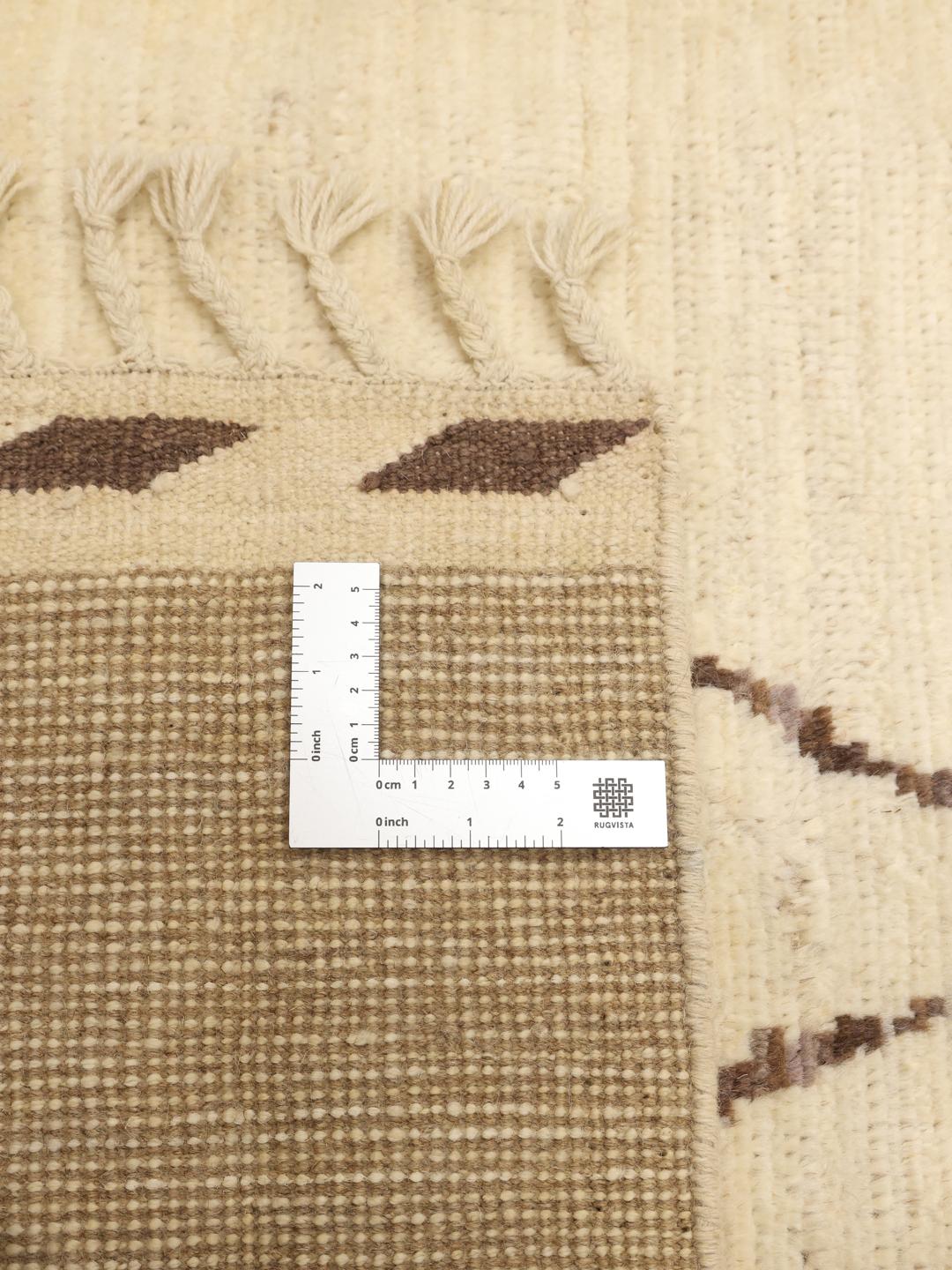
The Berber style originates from the nomadic traditions of North Africa, where indigenous weavers created these rugs for warmth and utility in harsh environments. Over centuries, these iconic designs—characterised by their thick piles and simple, abstract motifs—have inspired weavers across the globe, including the master artisans of Afghanistan.
In Afghanistan, the adaptation of these traditions has resulted in a refined approach to the medium. By combining the classic, thick-pile aesthetic with regional techniques for knotting and finishing, weavers produce rugs that are both deeply rooted in history and perfectly suited for contemporary life.
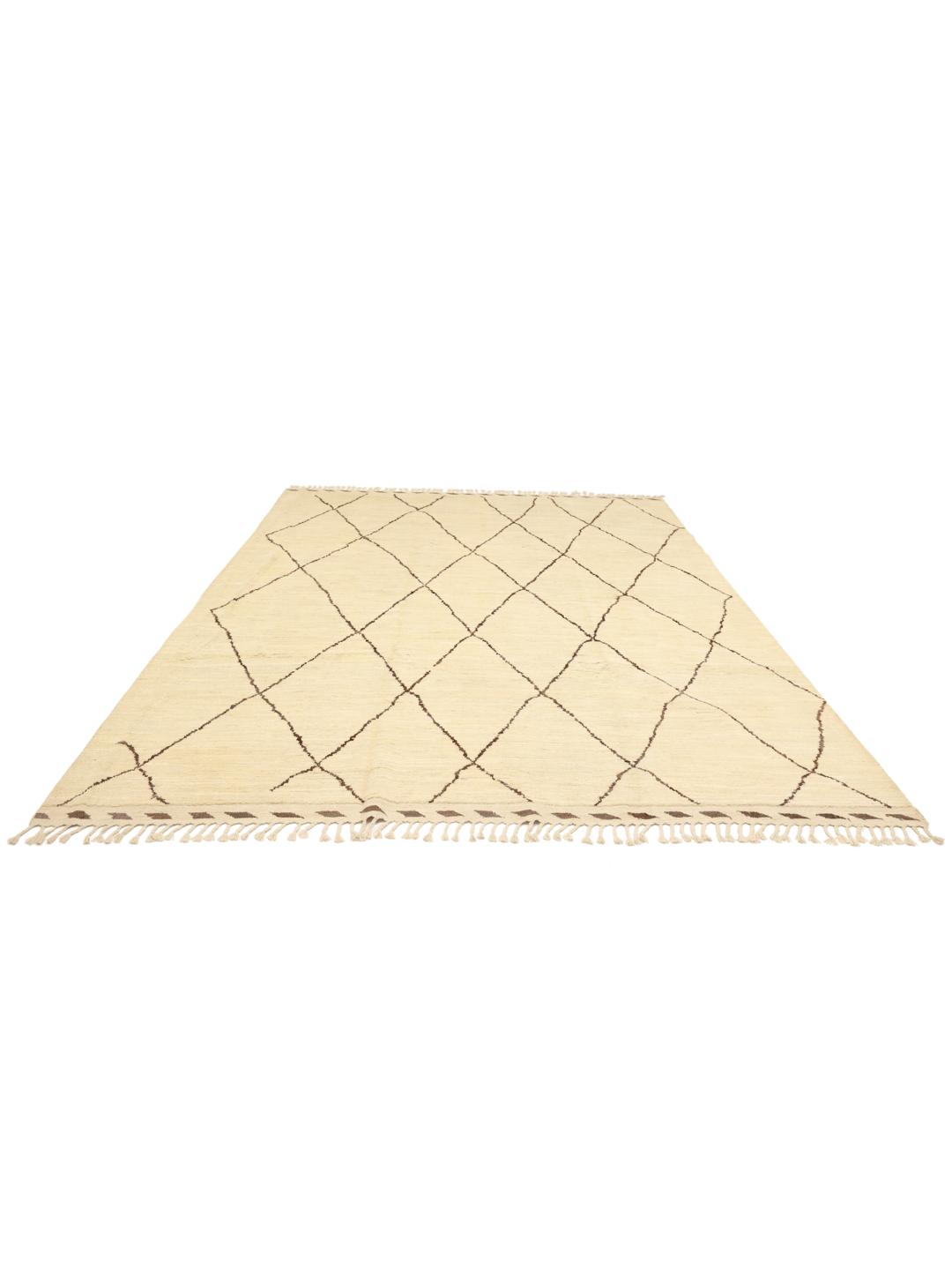
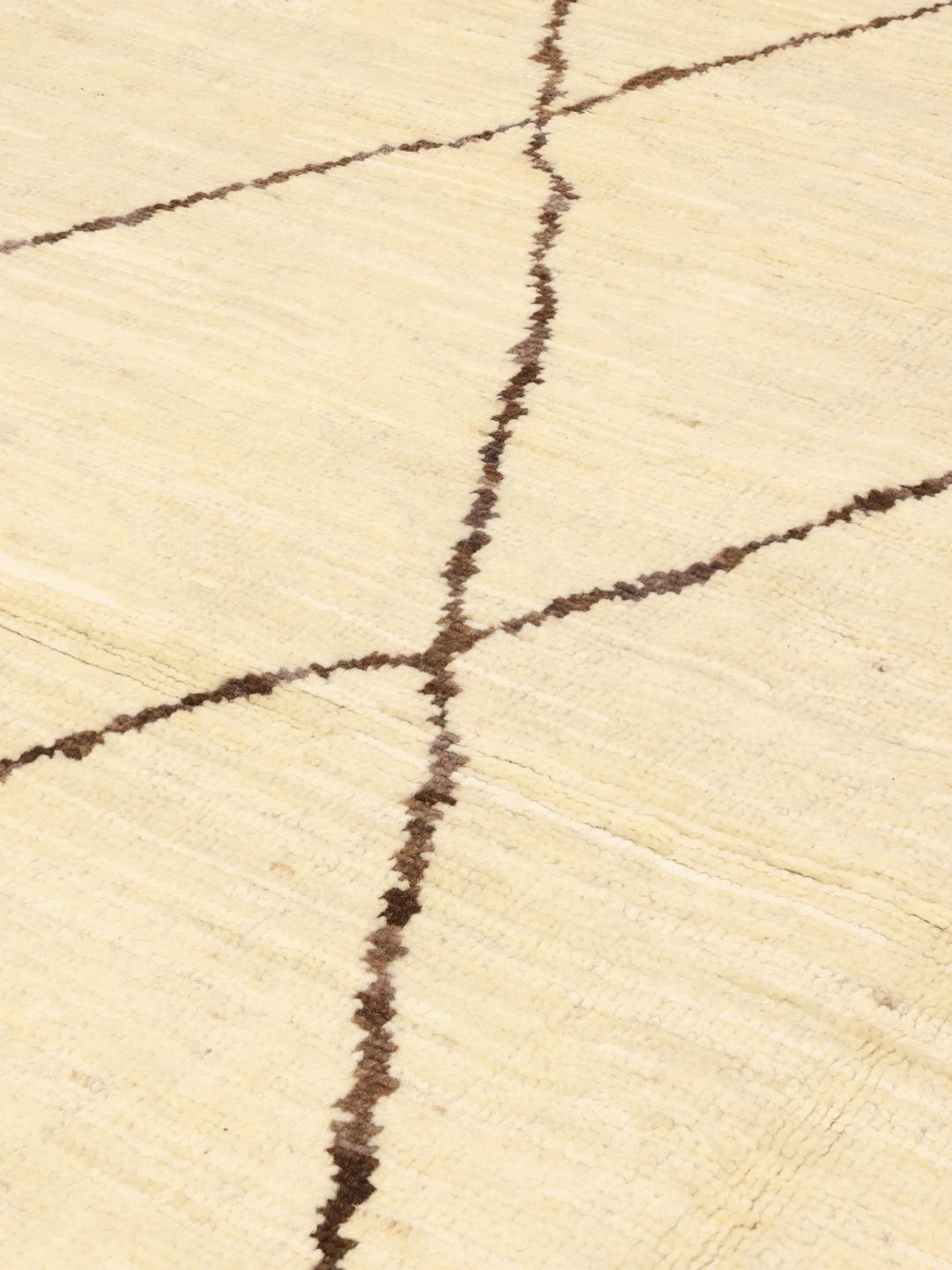
The diamond pattern seen here is a classic motif in this design tradition, often symbolising protection or tribal identity. These shapes are not just decorative; they represent a visual language passed down through generations, allowing weavers to express stories and cultural heritage through a simple, repetitive geometry.
Collecting these pieces is an investment in cultural heritage and human skill. By choosing a hand-knotted rug, you are supporting a craft that has survived for centuries, preserving a legacy of artistry that transforms functional floor coverings into meaningful, lasting objects of beauty.