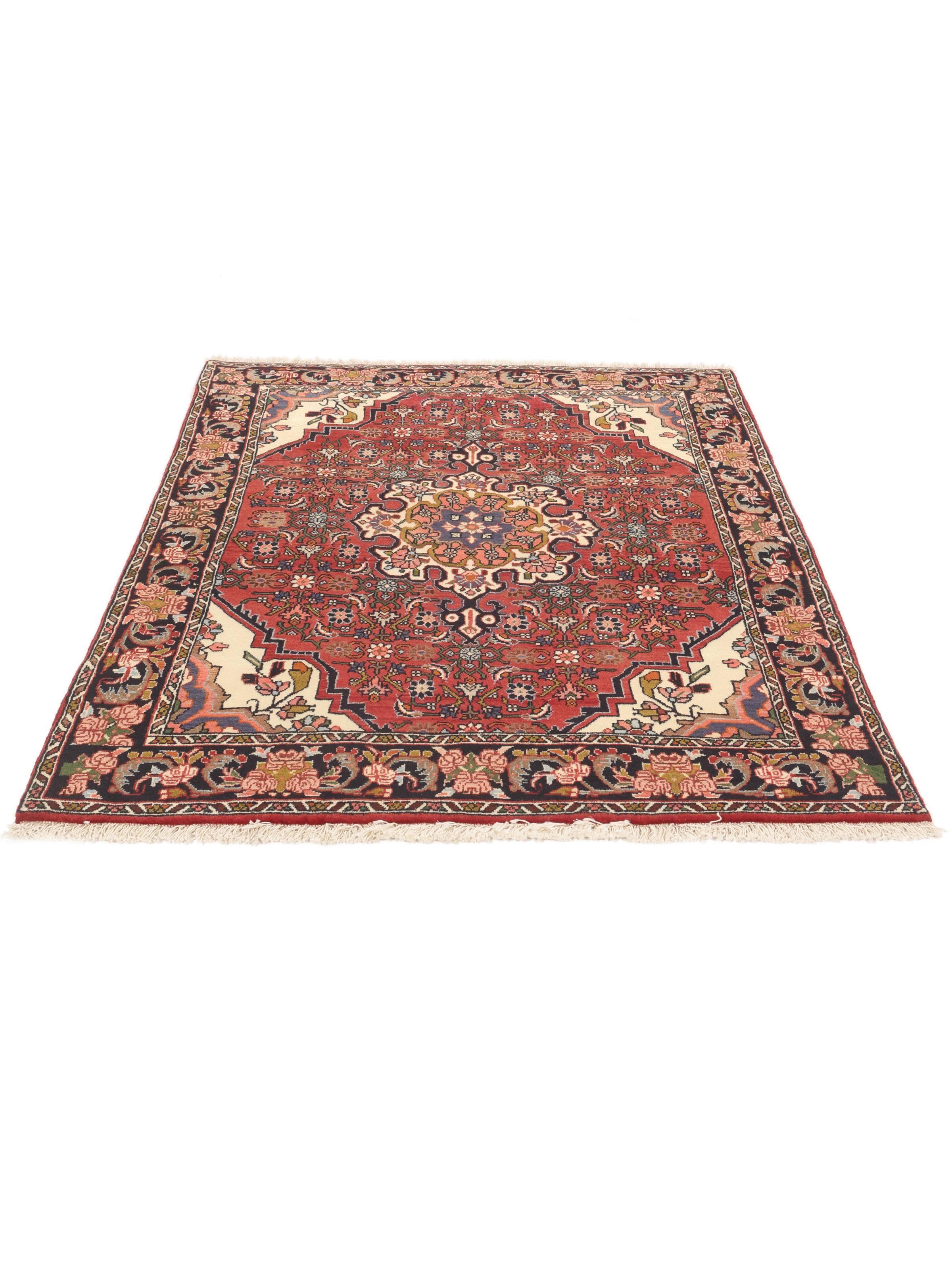
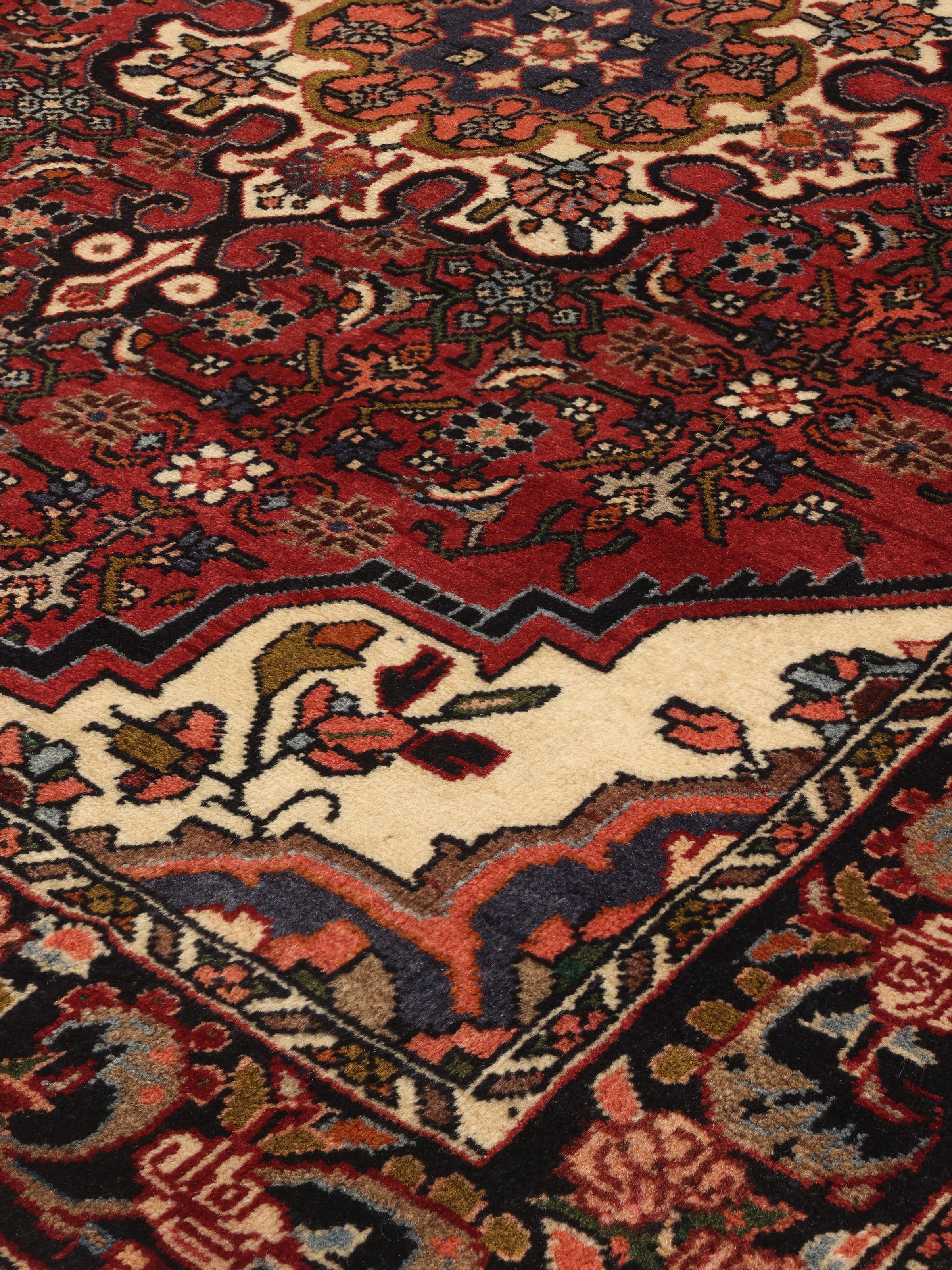
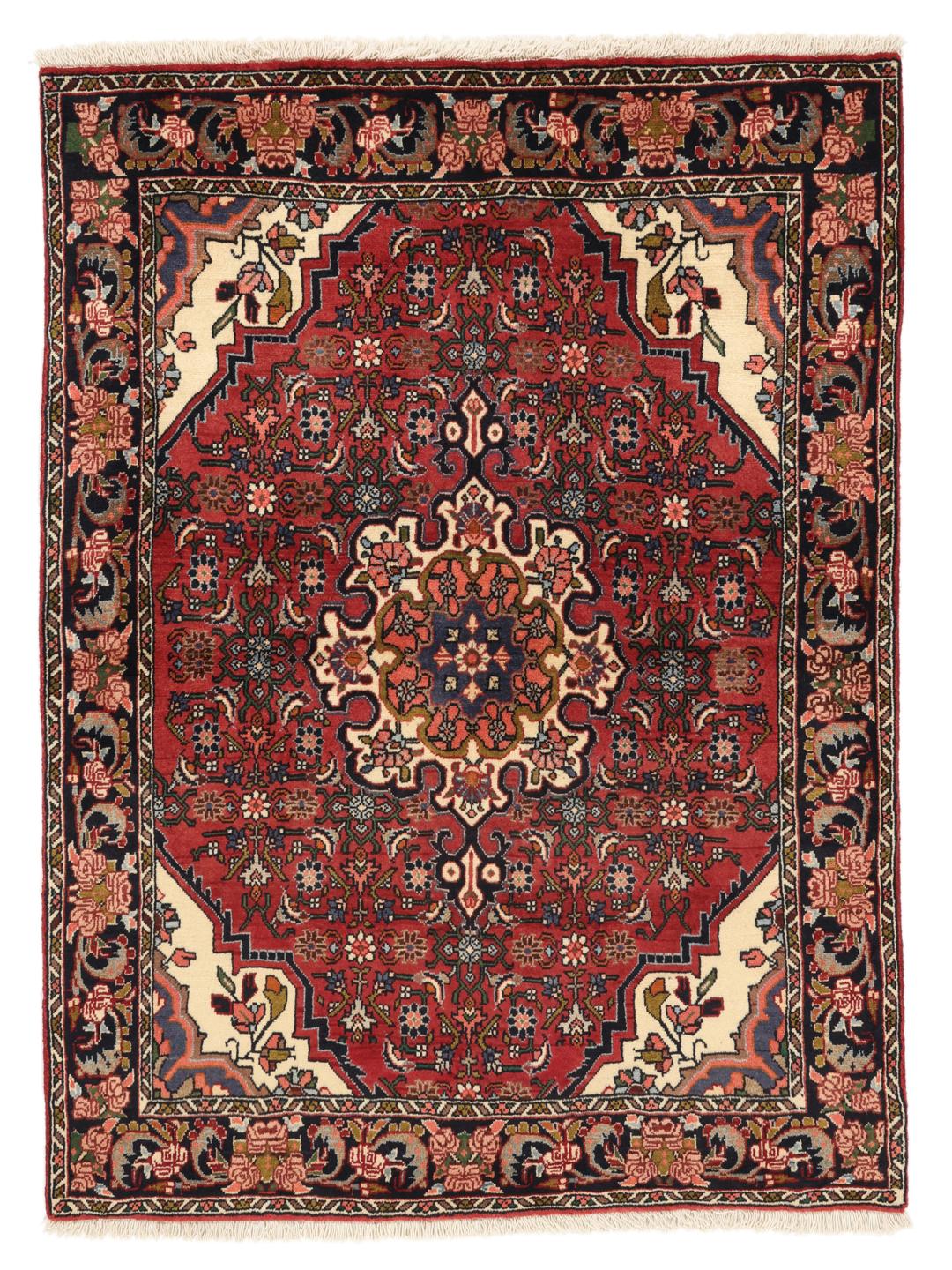
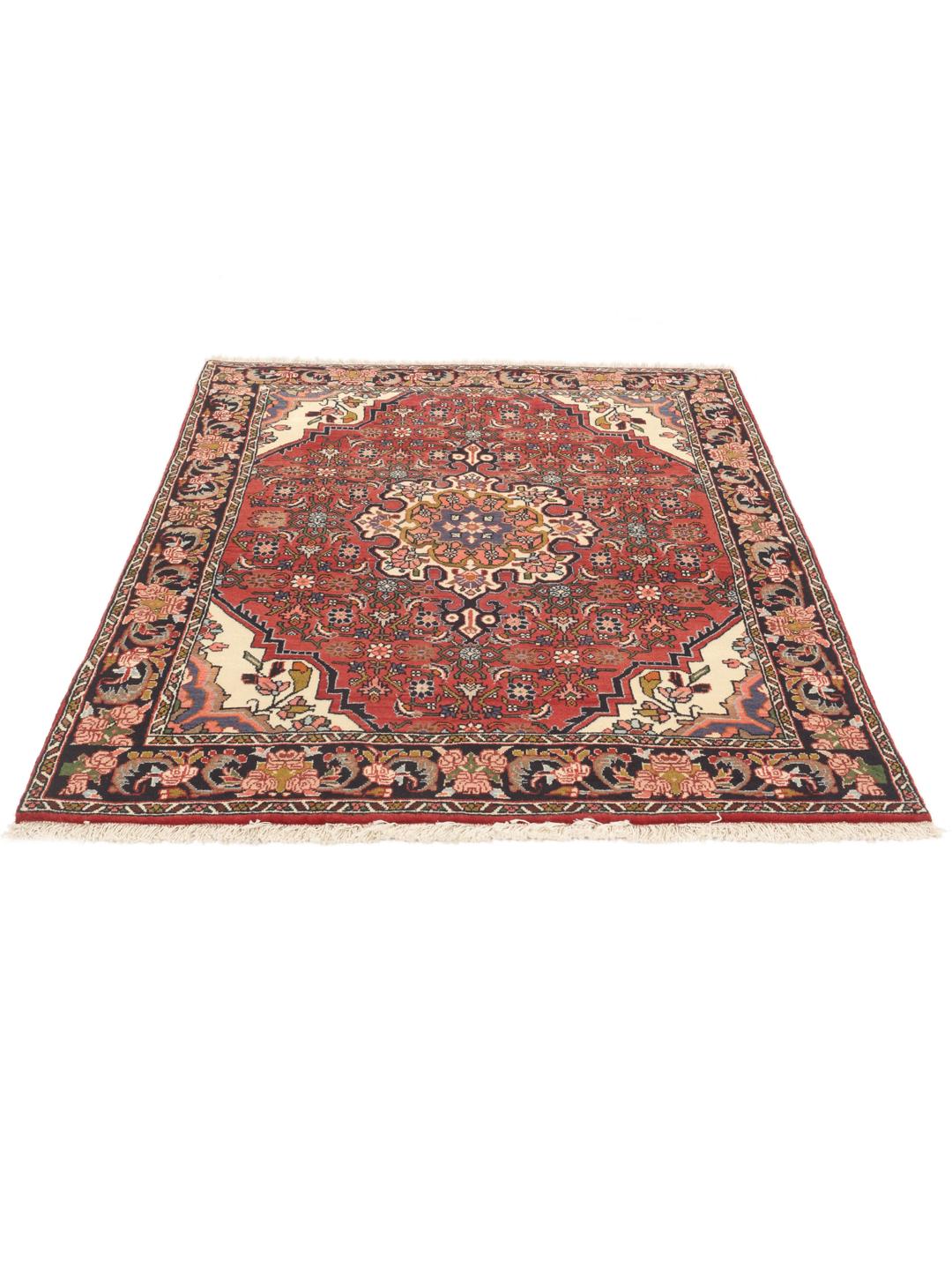
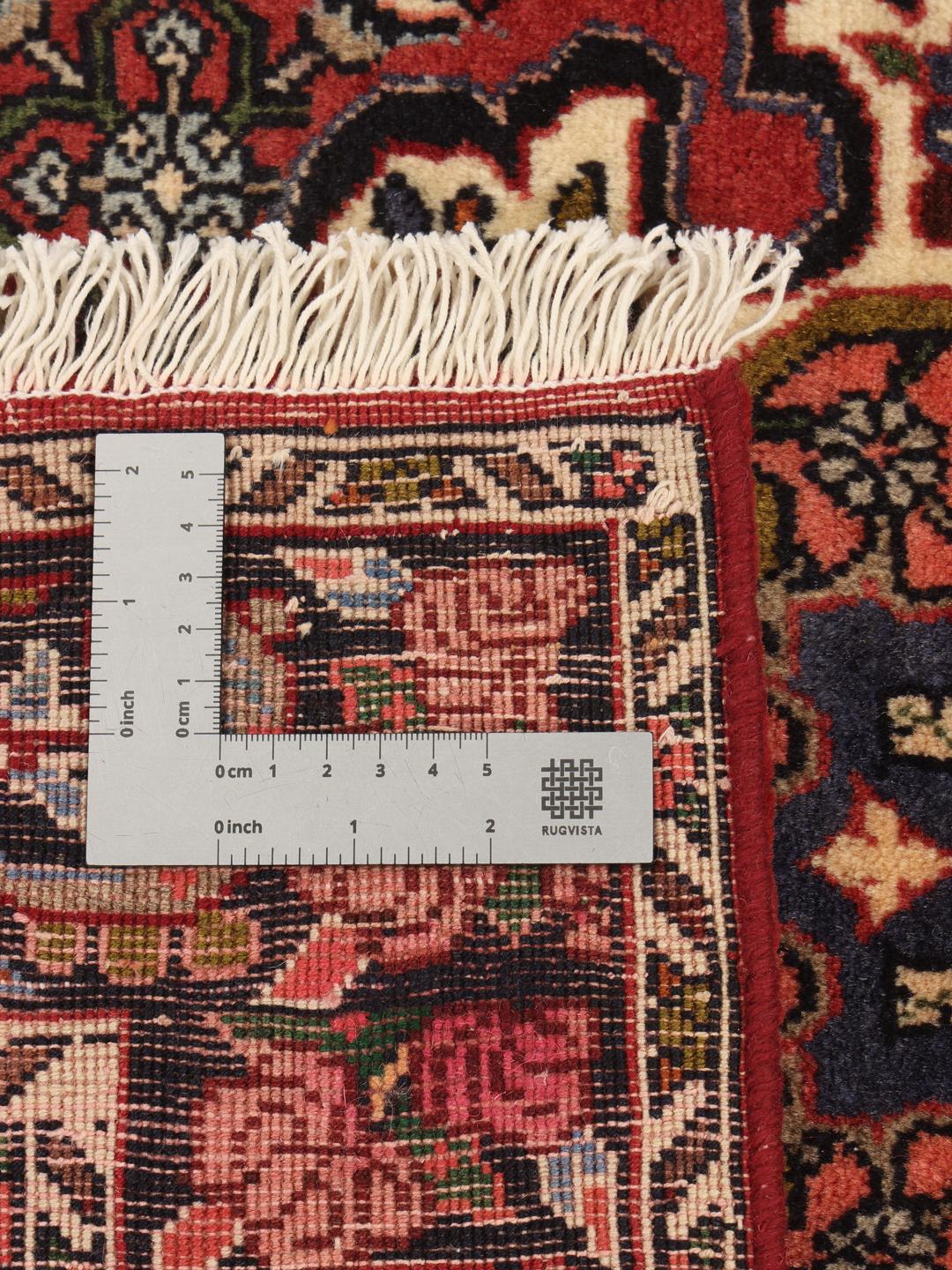
The Bidjar rug tradition originates from the Kurdish region of the Middle East, specifically the town of Bijar. Known as the 'Iron Rugs' of the region, these pieces have long been celebrated for their exceptional density and incredible durability, a reputation earned through centuries of perfecting their unique weaving techniques.
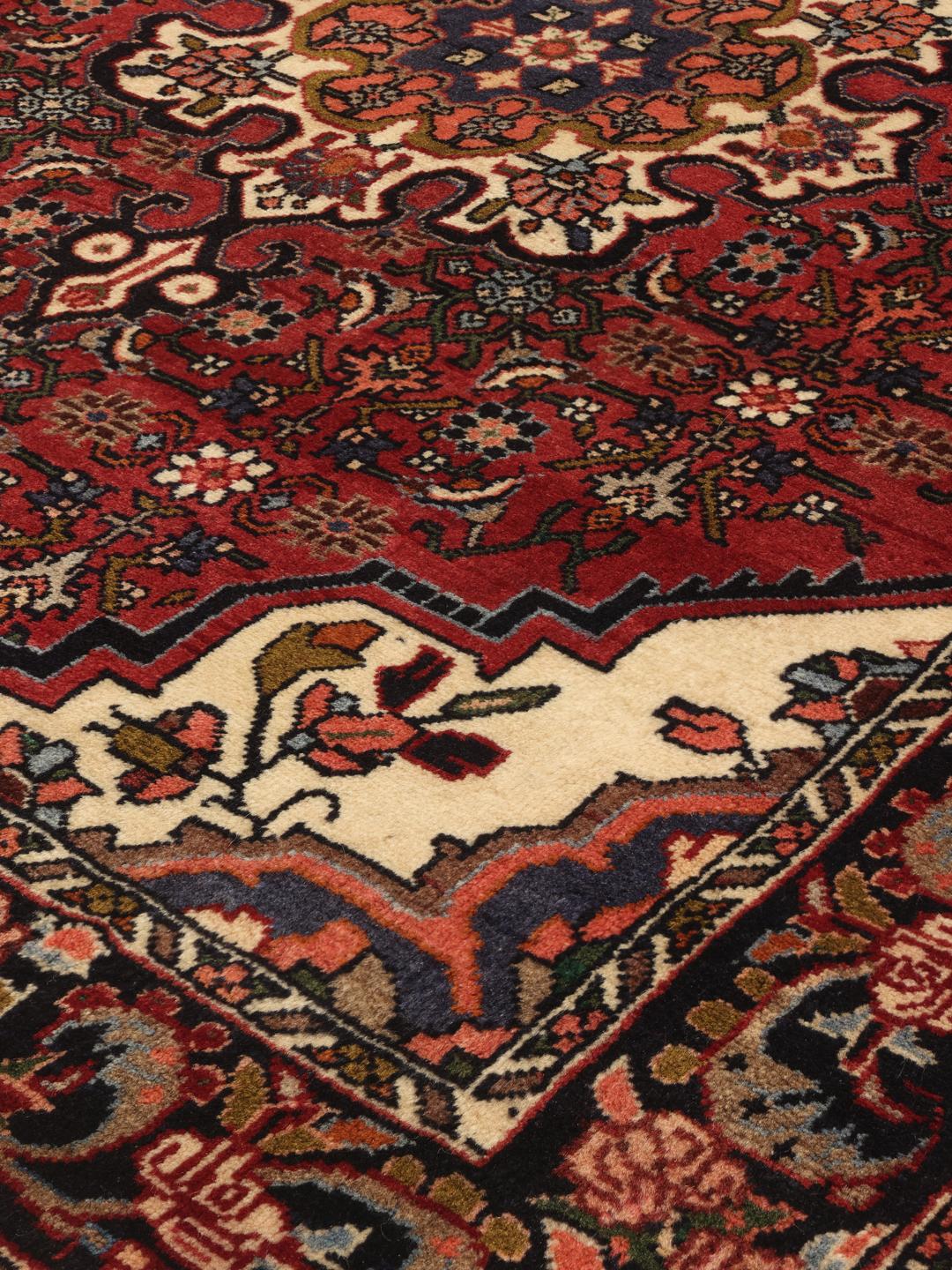
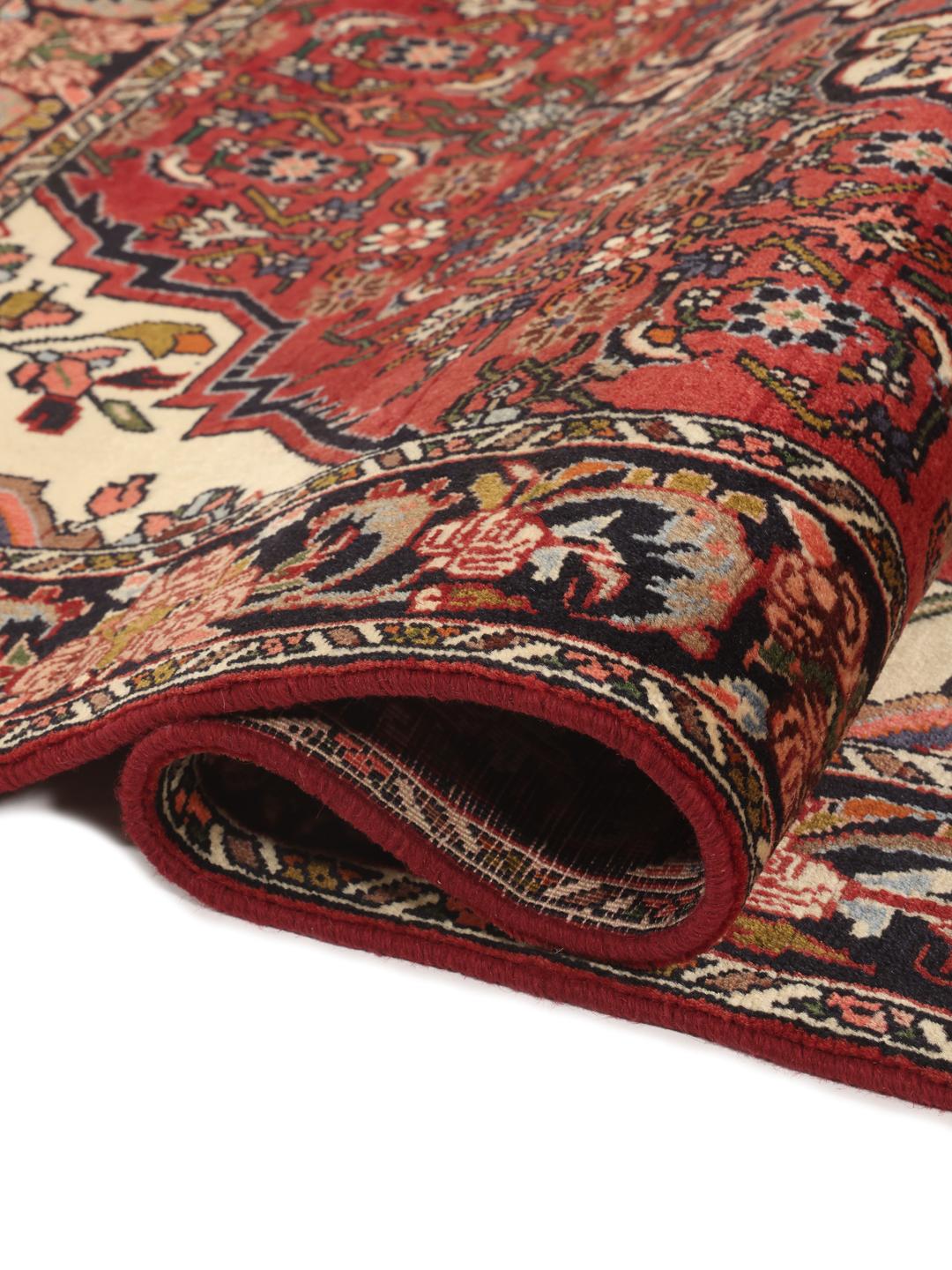
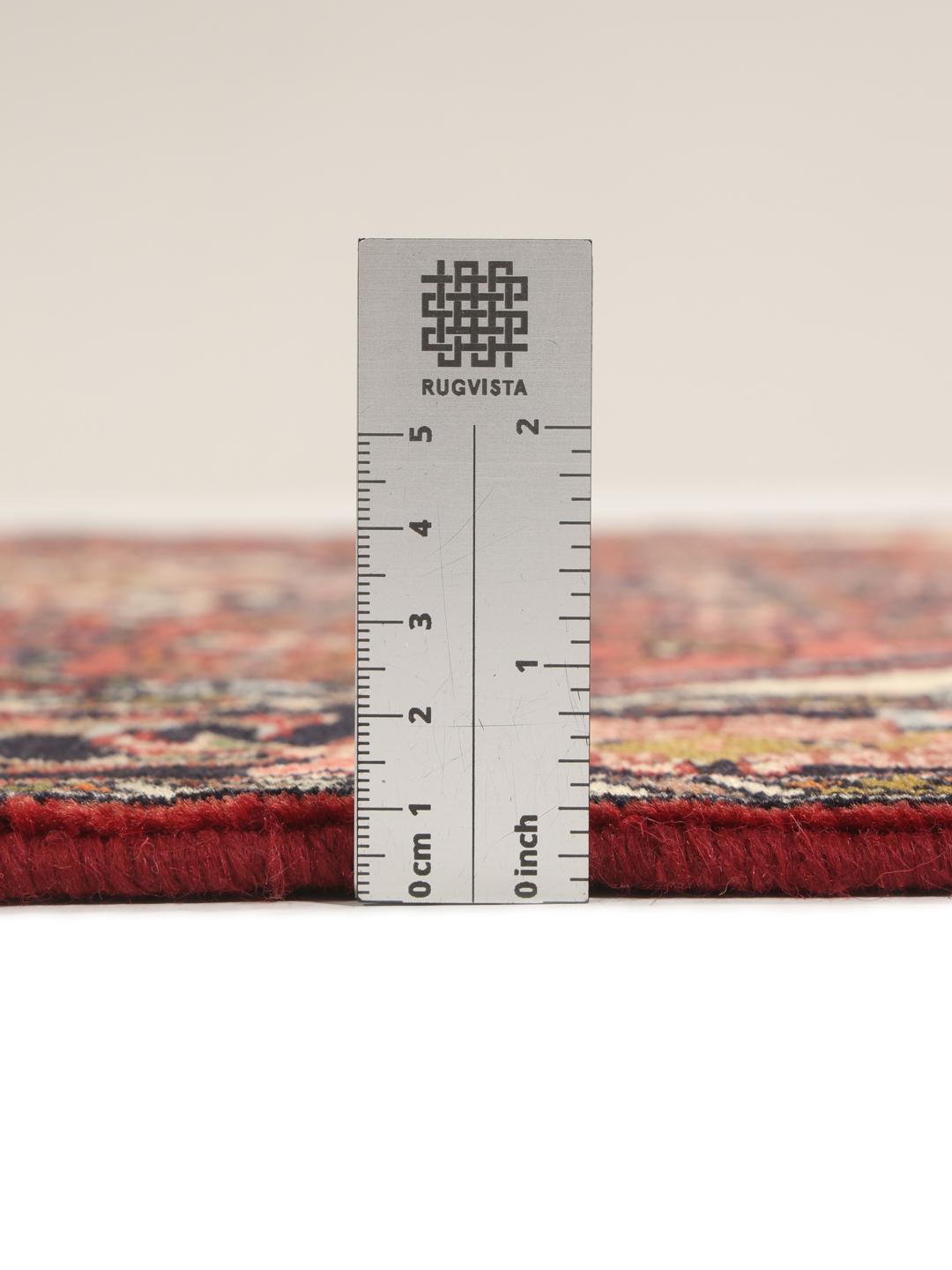
The term 'Iron Rug' refers to the intense way these rugs are constructed. Traditionally, the weft threads are beaten down with a heavy metal comb, resulting in a pile so tight that it is almost impossible for dust or dirt to penetrate. This technical approach creates a stiff, heavy, and long-lasting fabric that is highly valued by collectors for its ability to withstand decades of use without losing its form.
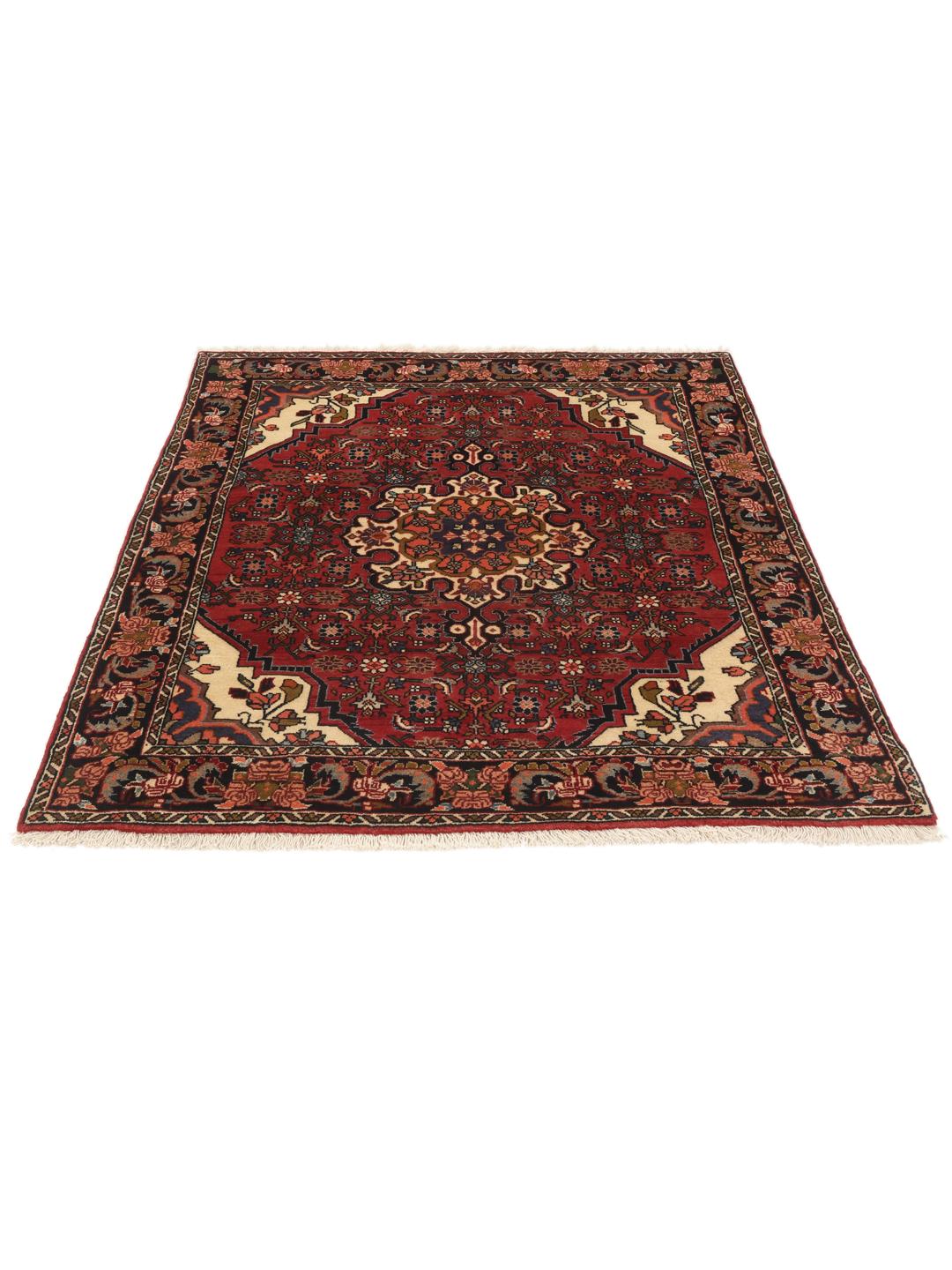
Visually, these rugs are often defined by their bold, geometric interpretations of floral patterns. The medallion design, such as the one featured here, is a hallmark of the style, often set against a deep, saturated field. The borders are typically wide and filled with intricate, repeating botanical motifs, creating a balanced and formal aesthetic that is both striking and sophisticated.
Collecting a Bidjar rug is an investment in a specific regional craft that has resisted the pressures of modern, automated production. Each rug represents a living lineage of design, where local motifs are passed down through generations. Owning one is a way to preserve this cultural heritage, ensuring that the skill and artistic vision of the weavers continue to be appreciated in homes around the world.