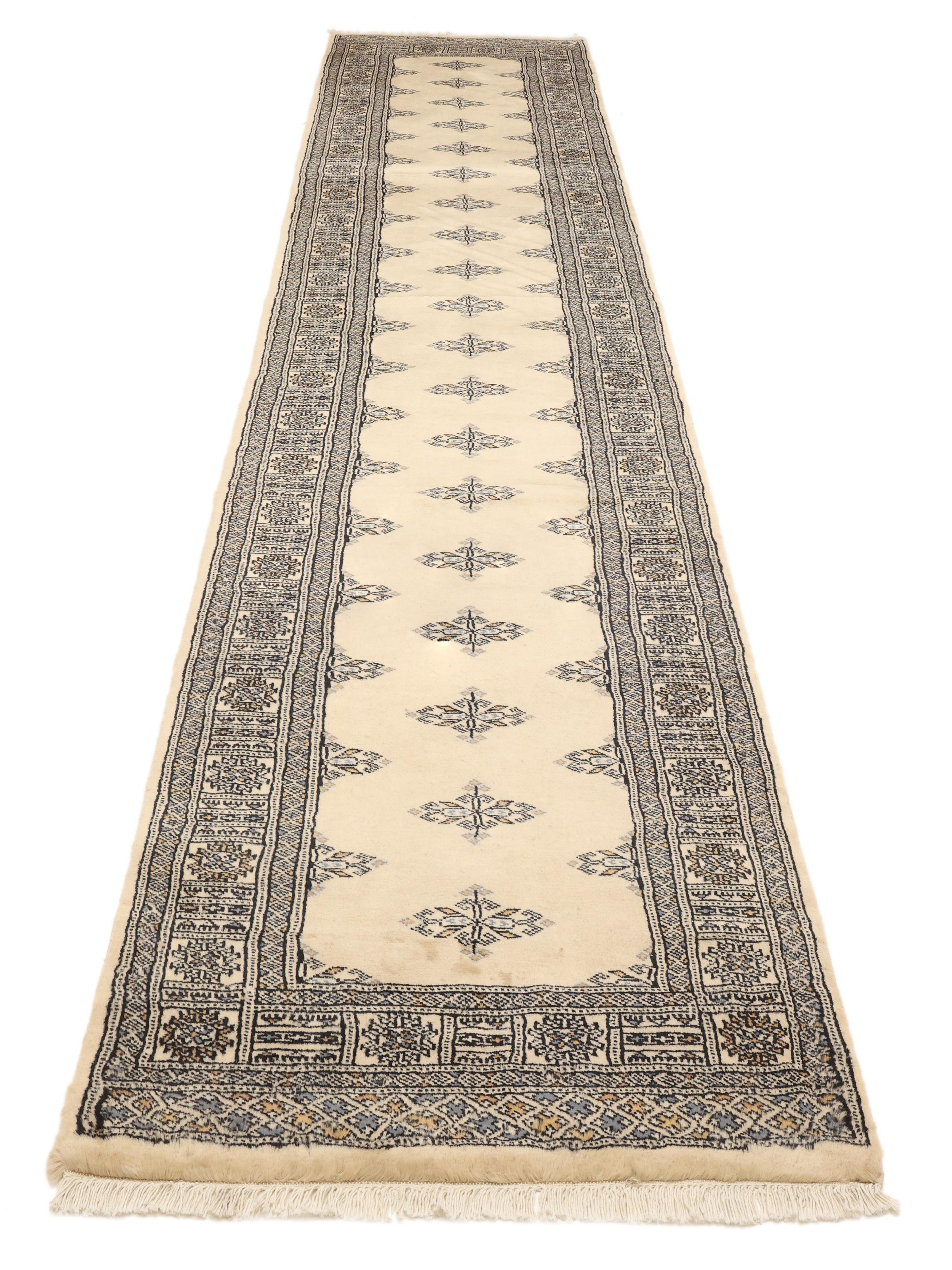
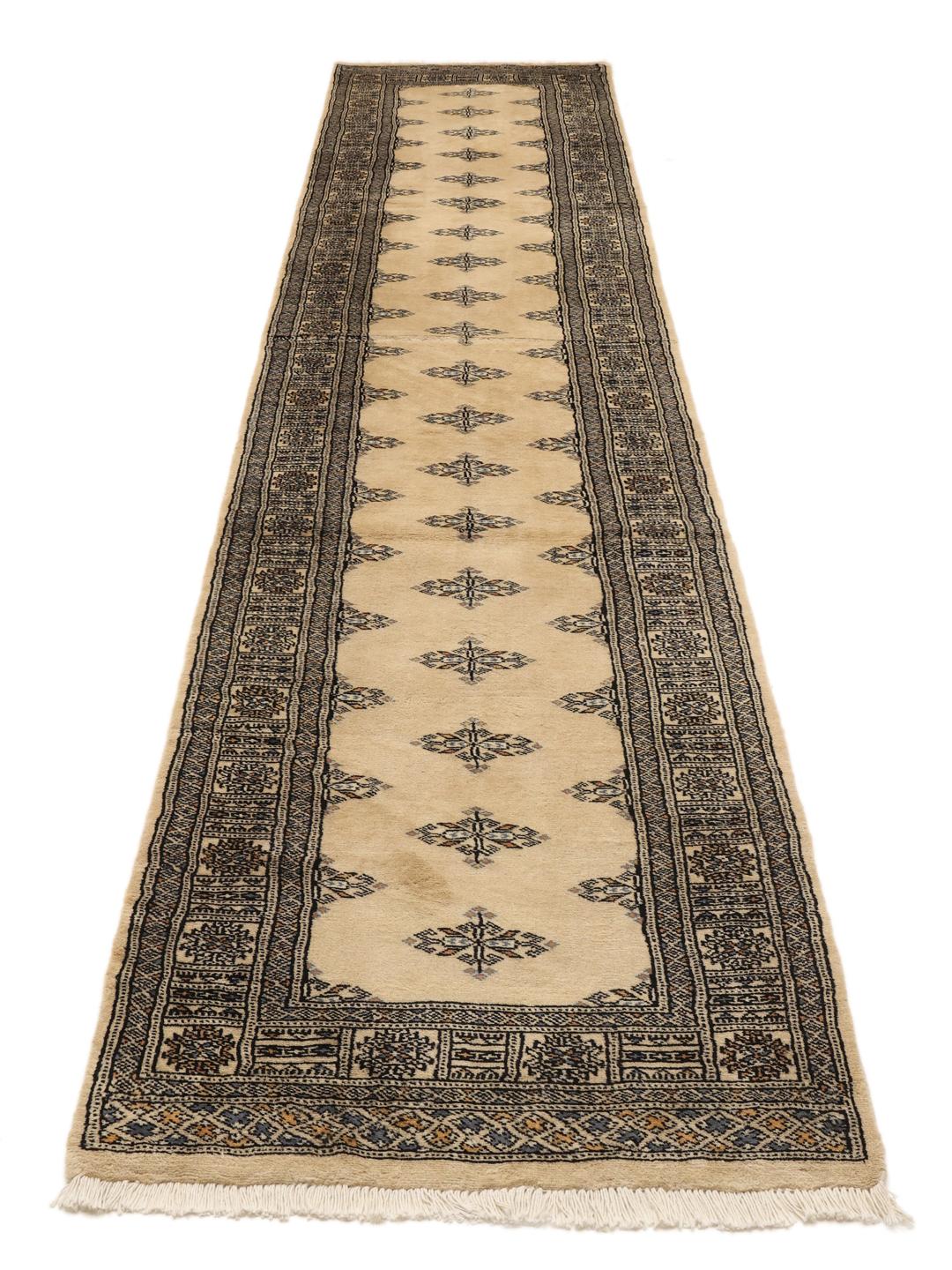
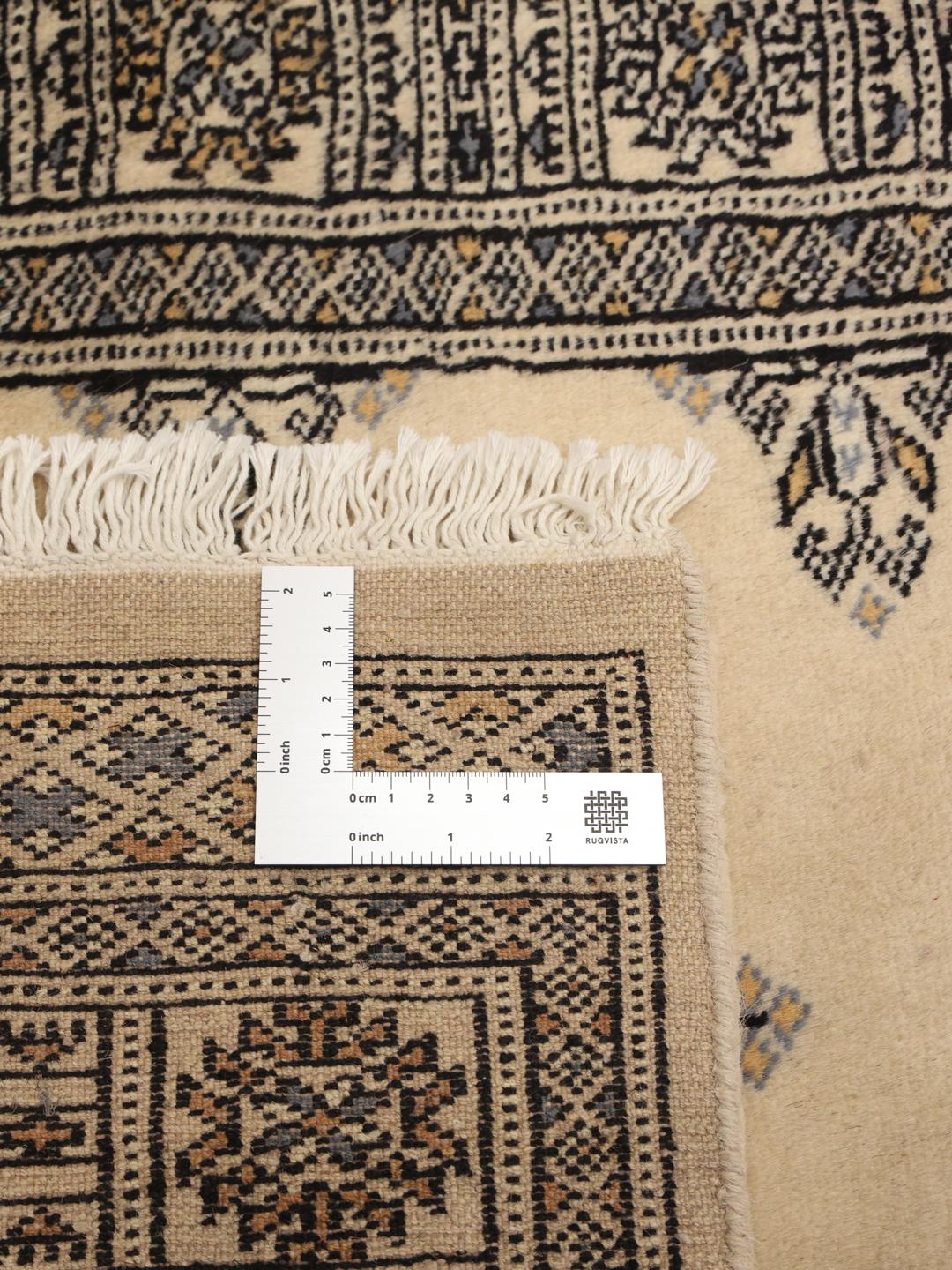
The Bokhara rug tradition is deeply rooted in the history of Central Asian nomadic tribes, particularly the Tekke Turkmen. Over centuries, these designs migrated along the ancient Silk Road, evolving into the refined styles we recognise today. While the name pays homage to the historic city of Bukhara, the finest examples of these rugs are now predominantly crafted in Pakistan, where artisans have perfected the technique to produce exceptional quality and consistency.
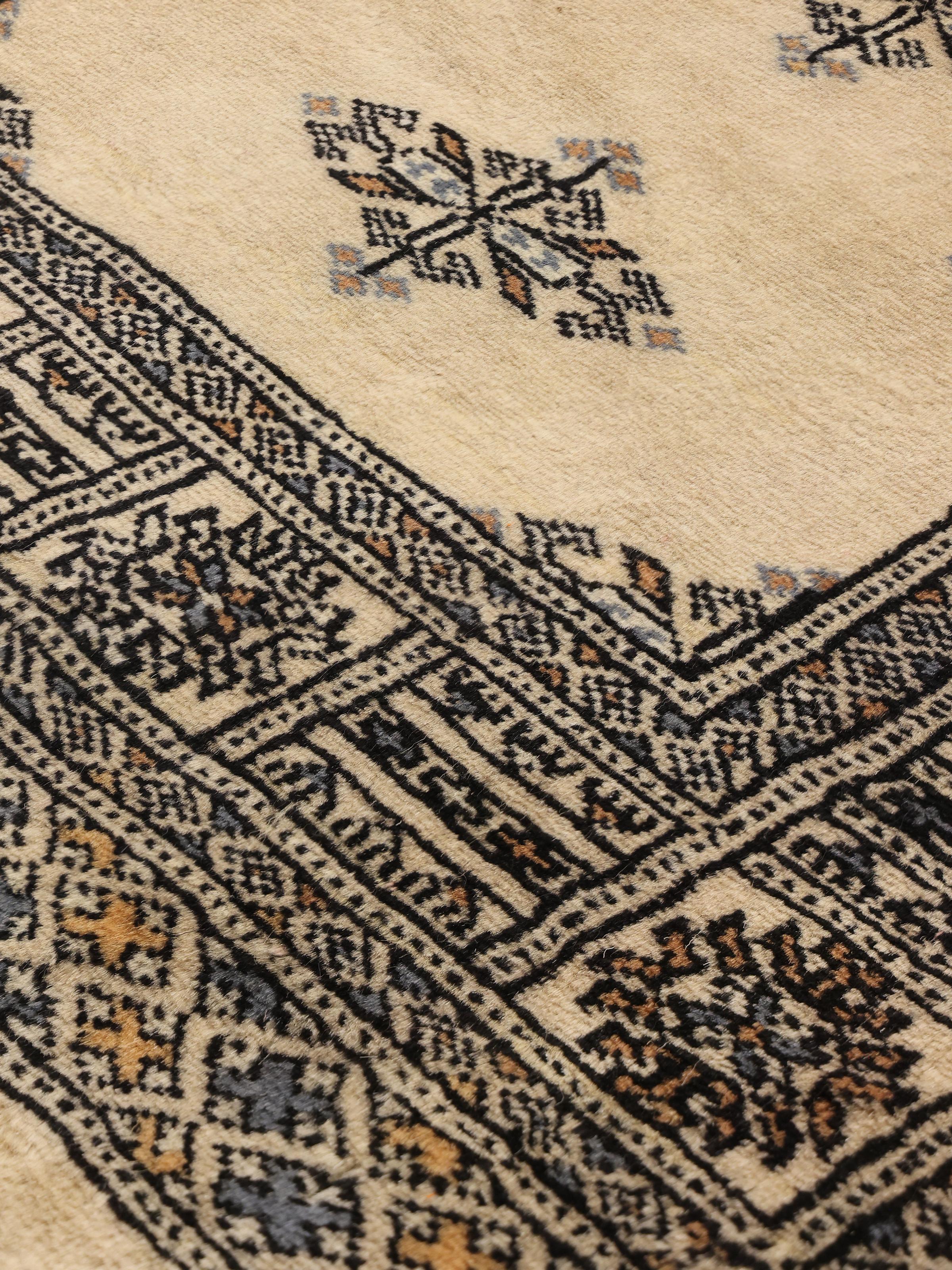
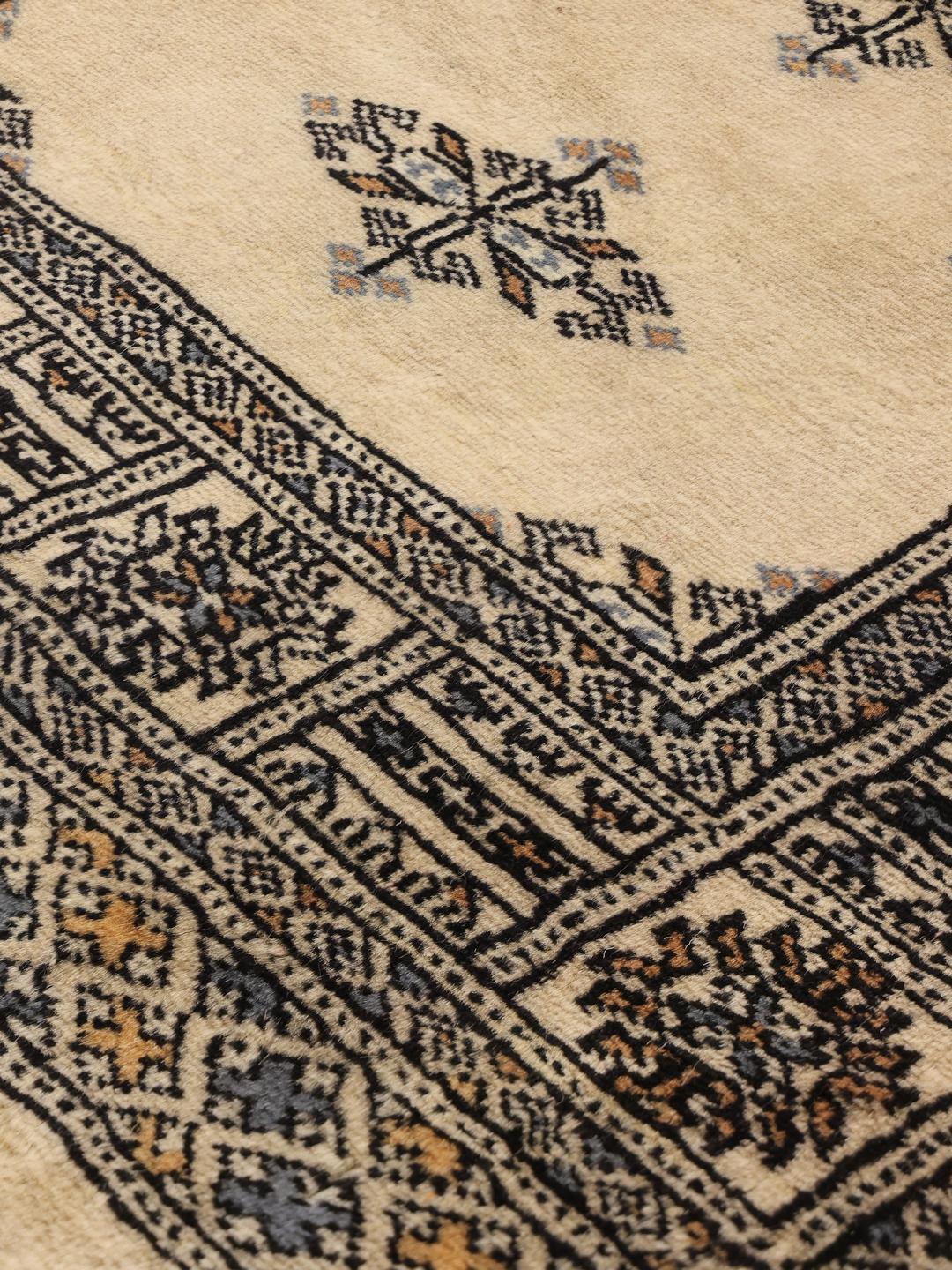
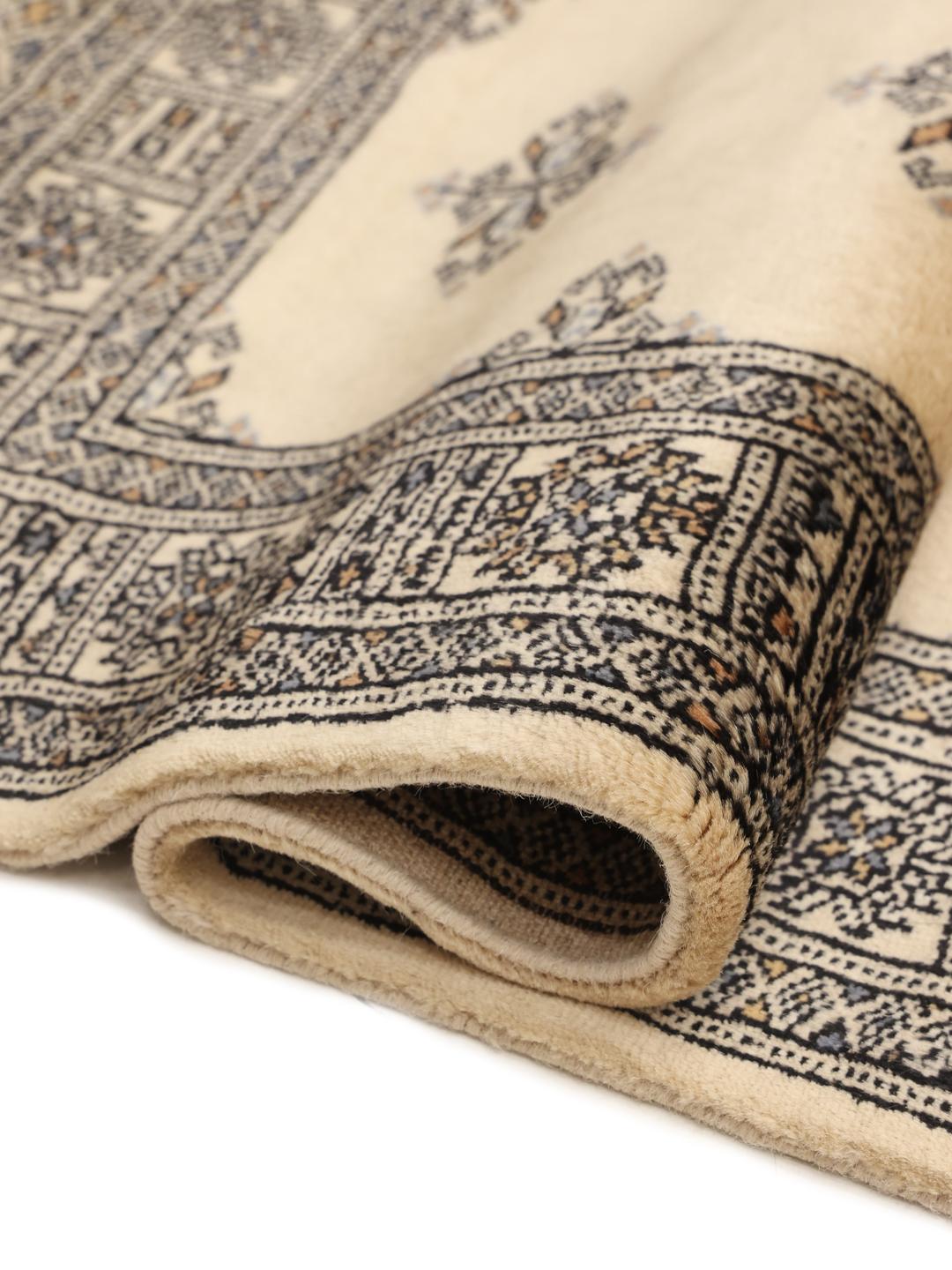
The term 2ply refers to the specific way the wool is prepared before weaving. By twisting two strands of wool together, the yarn becomes stronger and more lustrous, offering a richer, more resilient pile that stands up to heavy use. This technical choice is a hallmark of quality, ensuring that the rug not only looks beautiful but also retains its structural integrity and depth of colour for a lifetime.
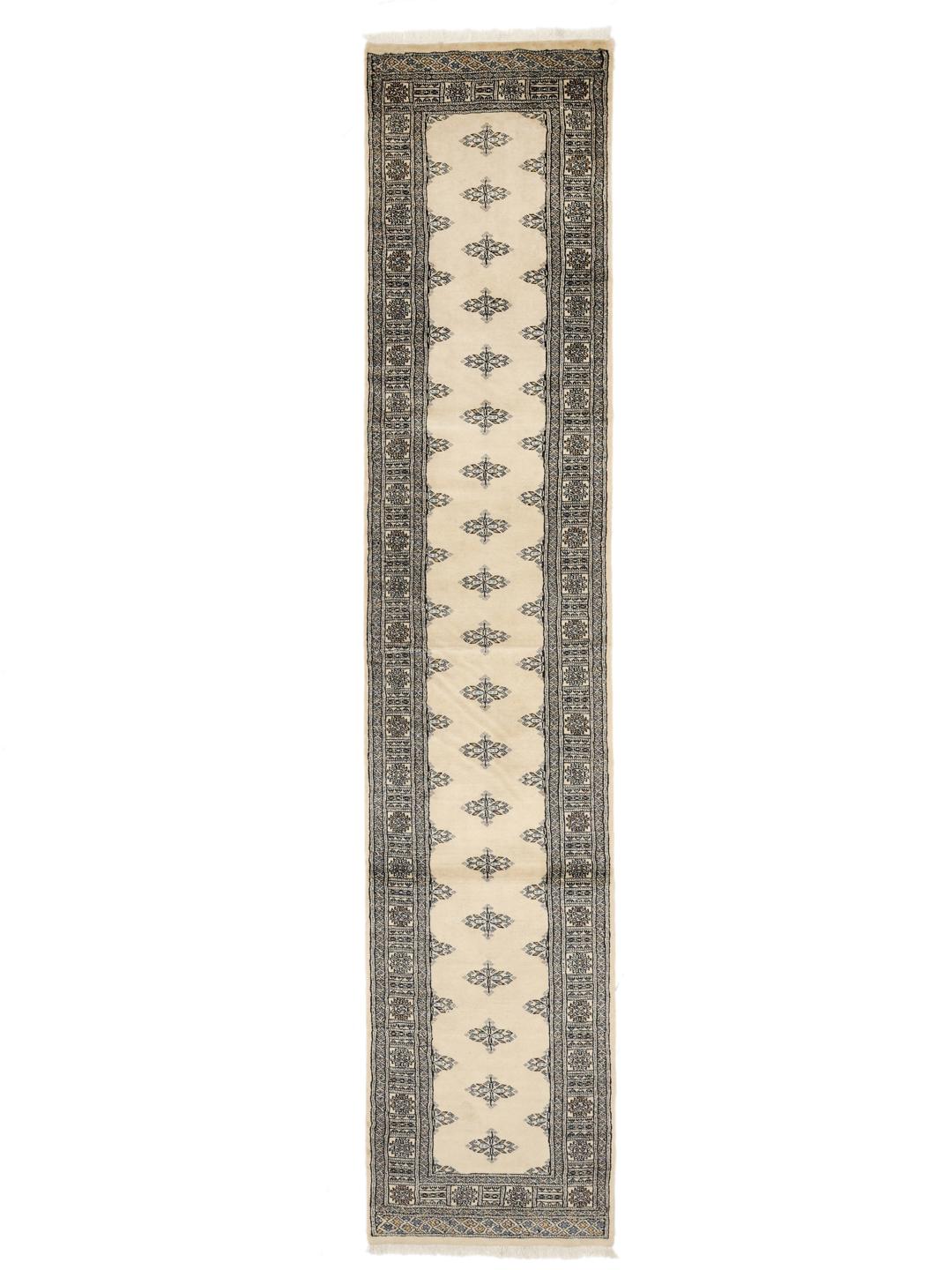
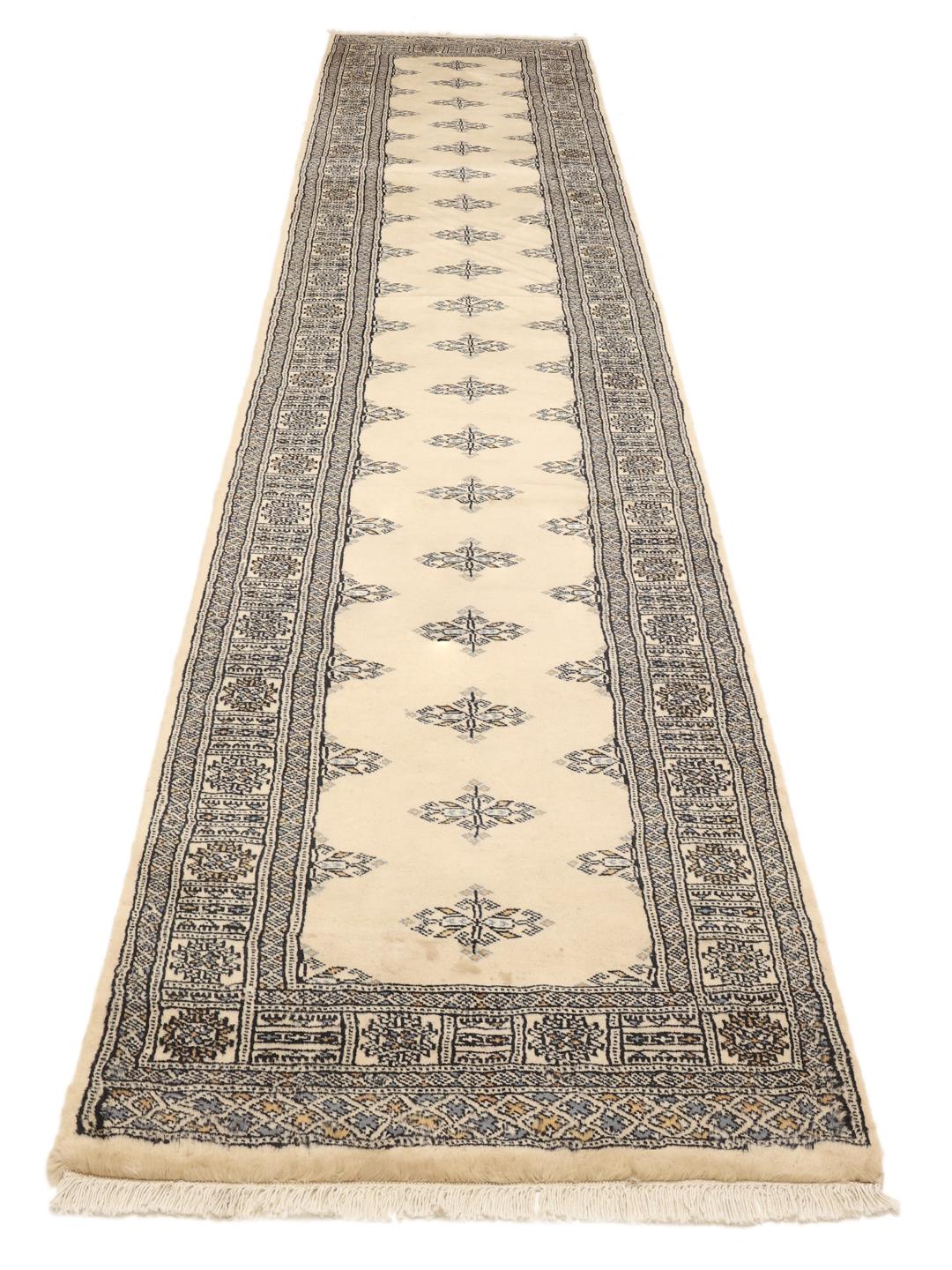
Signature Bokhara design elements are famously centred around the gul motif, which often resembles an elephant foot or a repeating octagonal medallion. These motifs are typically arranged in clean, geometric rows, framed by complex, repeating borders that draw the eye inward. This particular runner follows these classical principles, maintaining the traditional symmetry and balance that have made the style a favourite among collectors for generations.
Owning a hand-knotted Bokhara is more than just a decorative choice, as it represents a connection to a long lineage of craft and cultural heritage. These rugs are valued for their ability to bring a sense of history and quiet sophistication into a modern home. Each piece serves as a testament to the skill of the weaver, offering an investment in both aesthetic beauty and enduring, tangible quality.