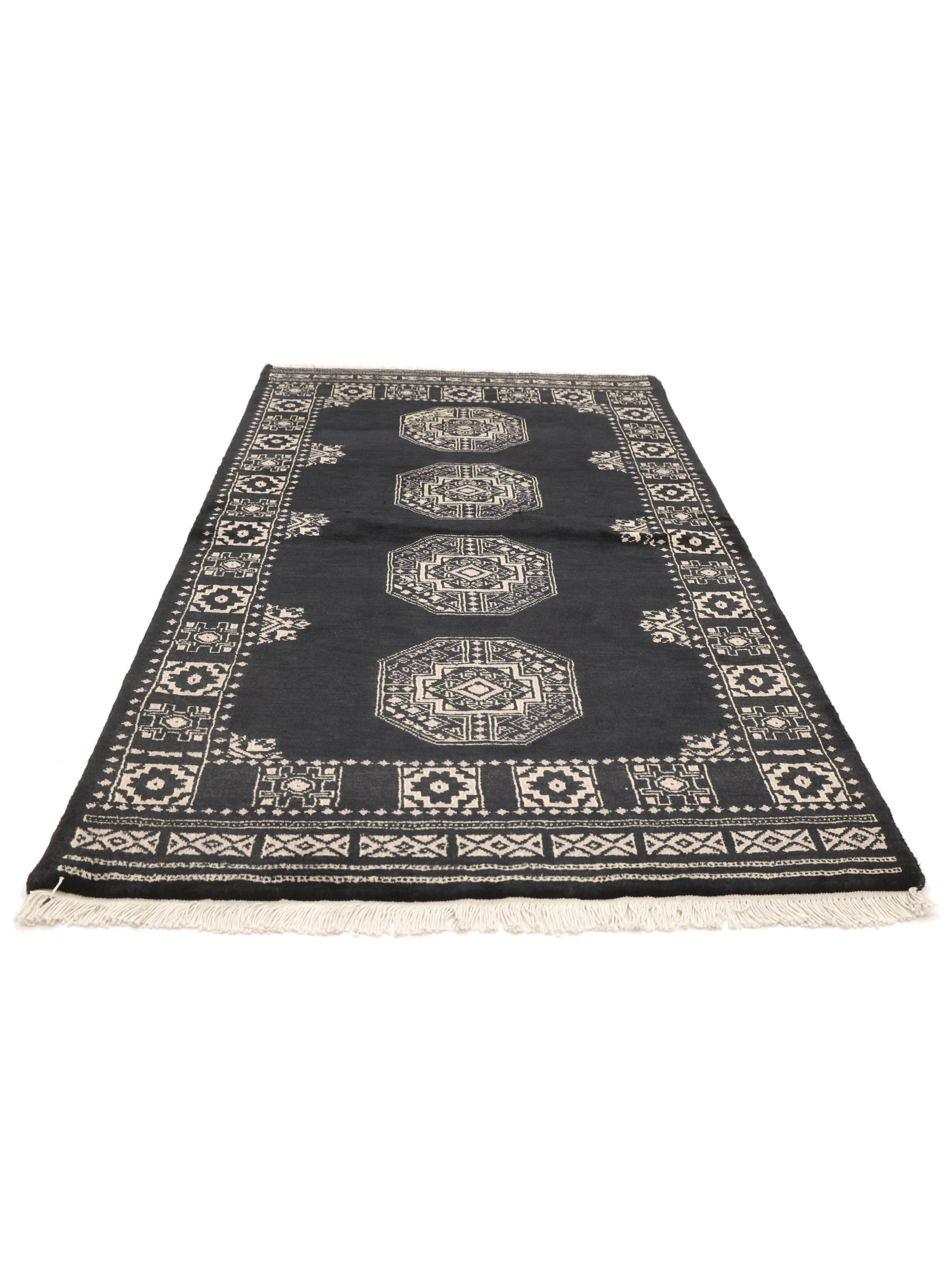
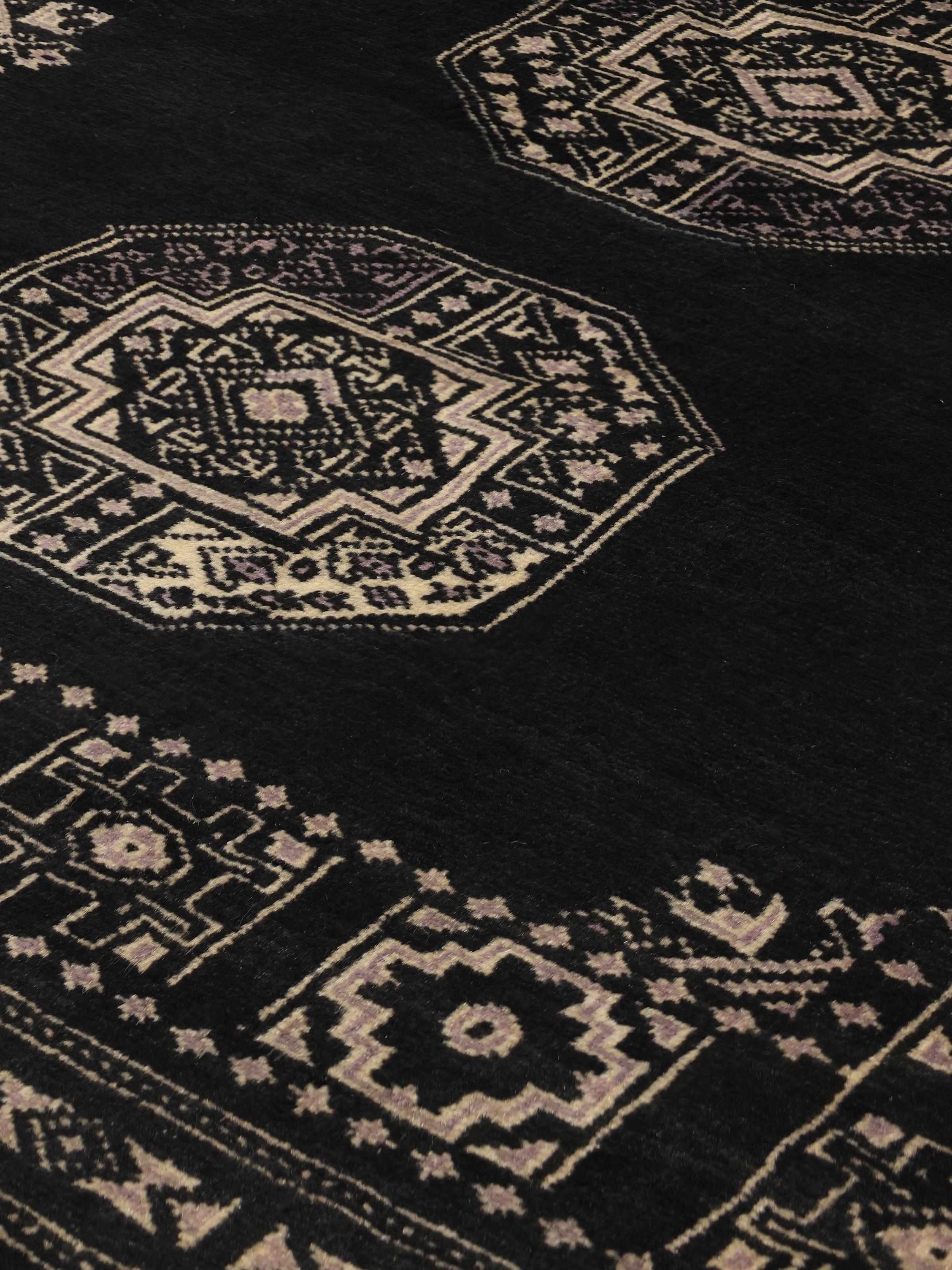
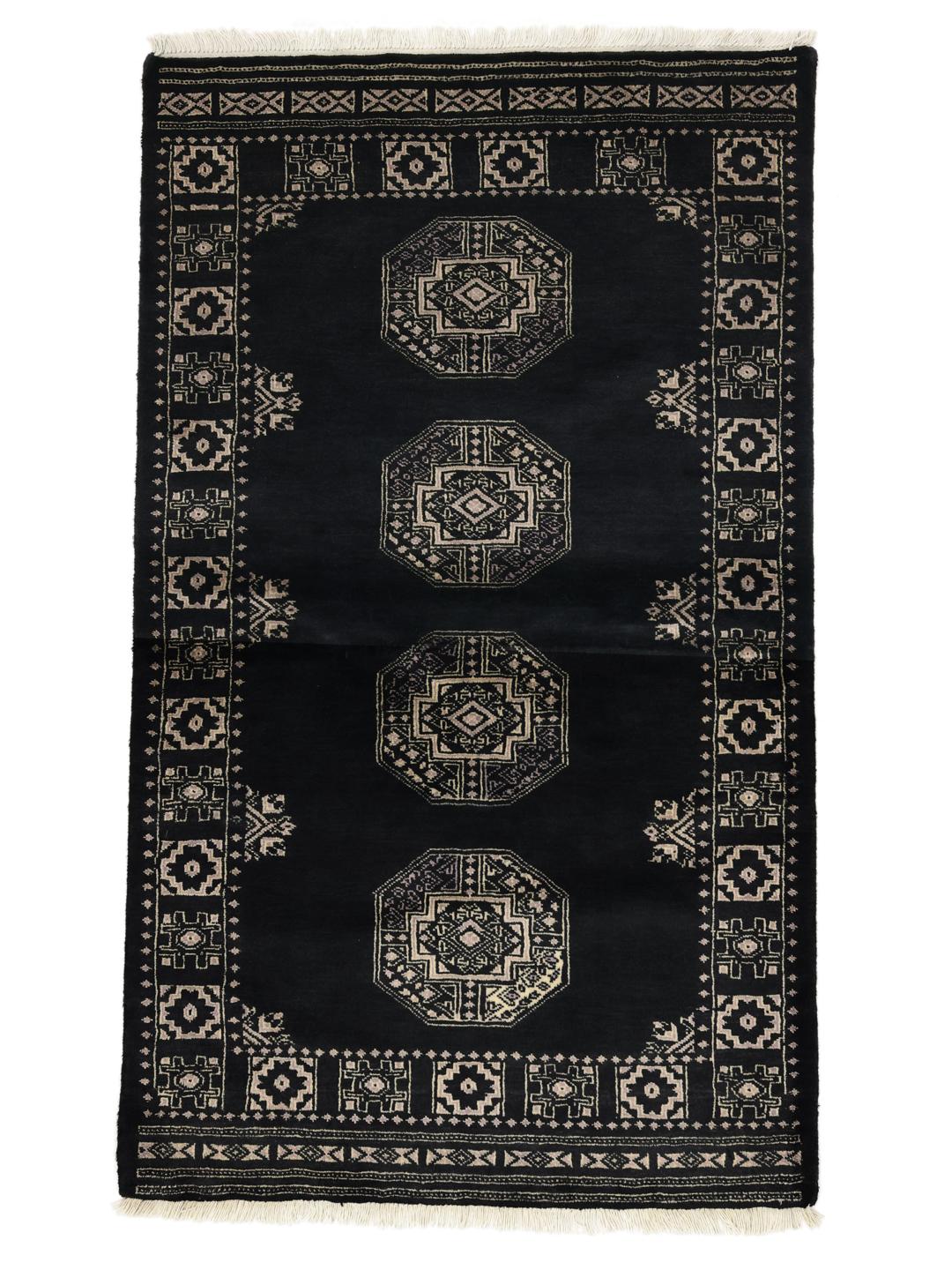
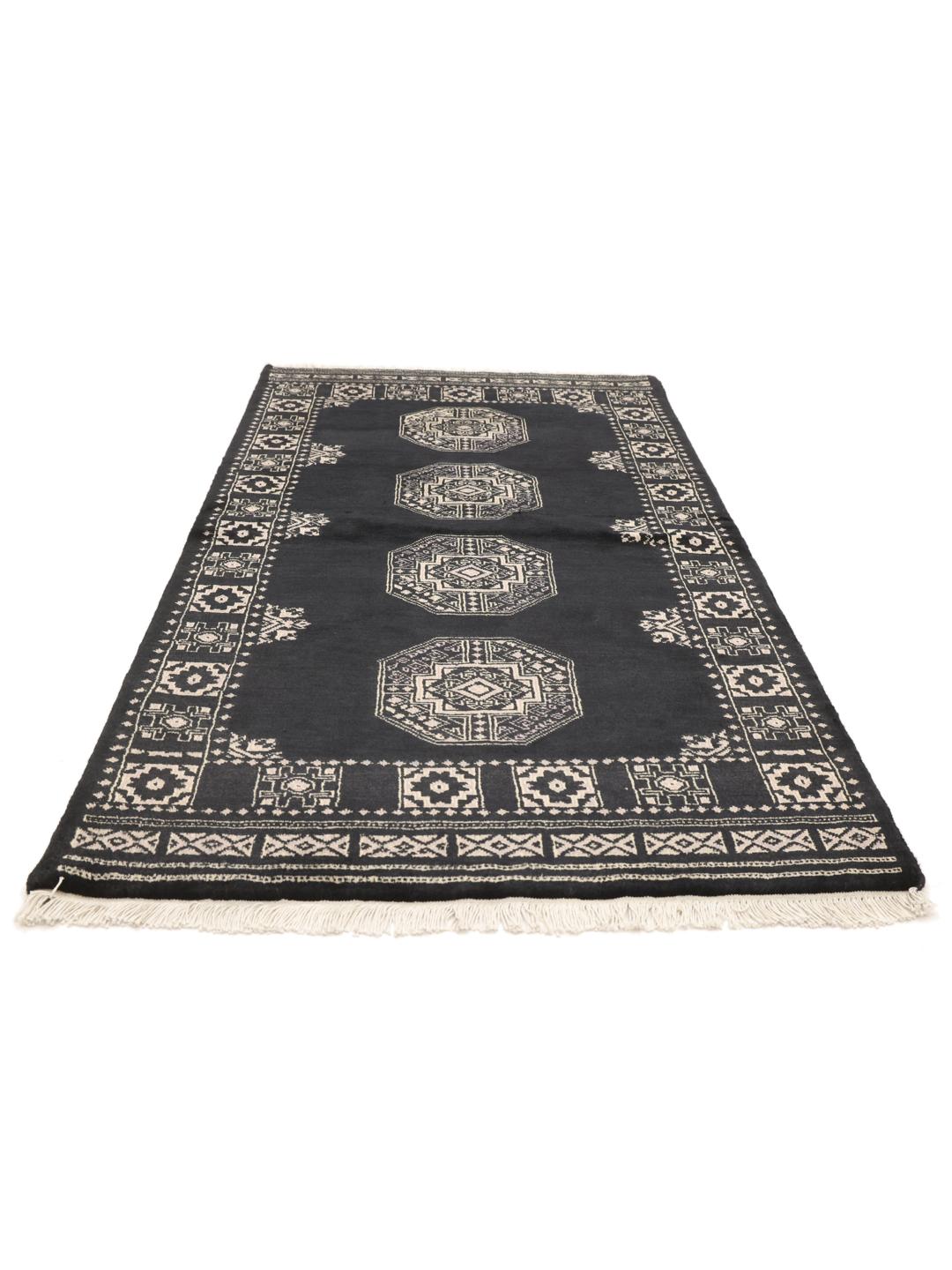
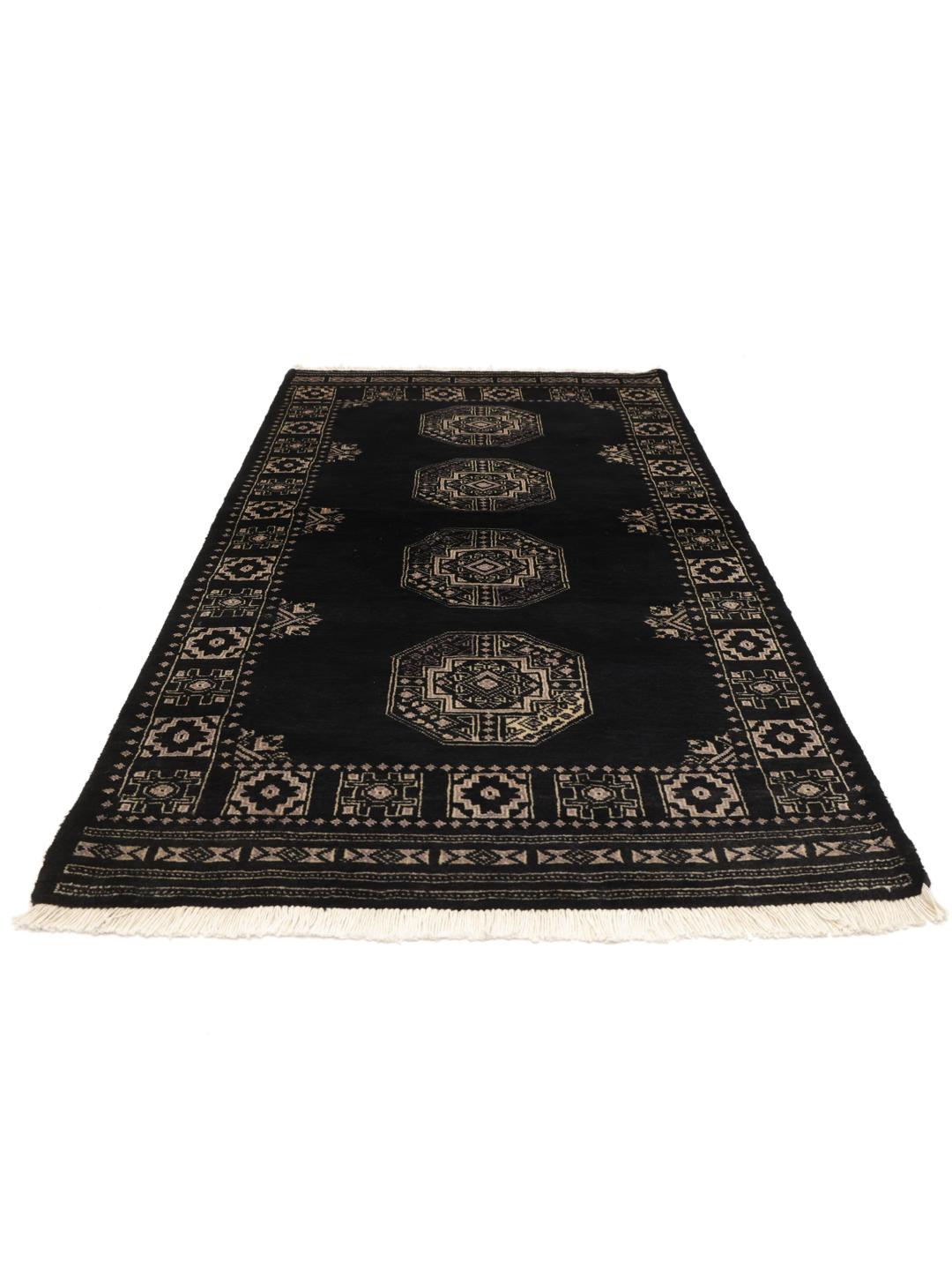
Bokhara rugs trace their design roots back along the ancient Silk Road, taking their name from the historic Central Asian trading hub of Bukhara. Over generations, weaving families migrated and established workshops in Pakistan, where artisans kept the distinctive geometric design language alive while refining the quality of the wool and the precision of the knotting.
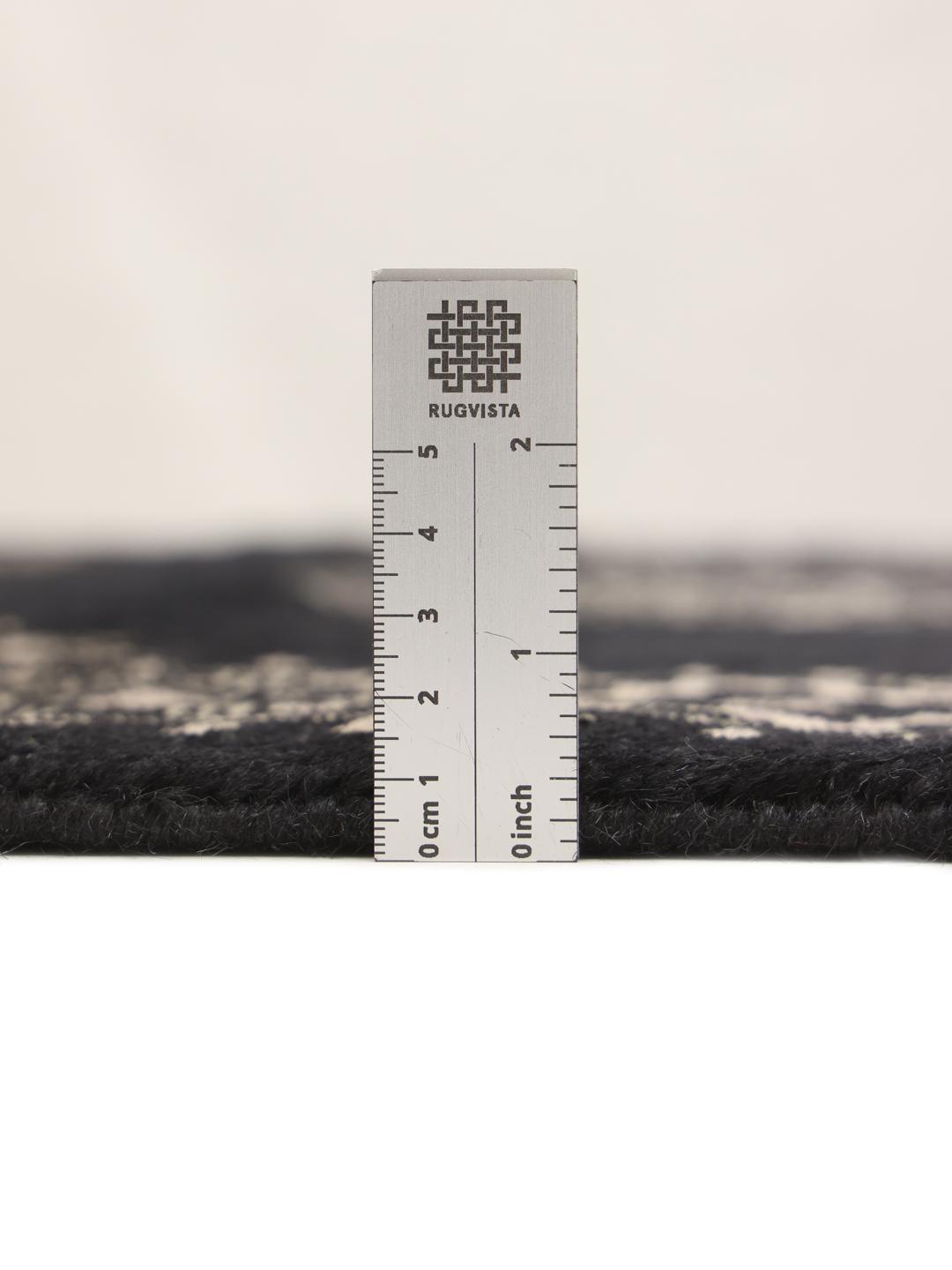
The 3ply designation in the name refers to the construction of the pile yarn, which is spun from three separate strands of wool twisted together before knotting. This multi-strand yarn yields a notably dense, resilient, and lustrous pile that stands up to daily wear much better than single-ply alternatives while maintaining a softer touch underfoot.
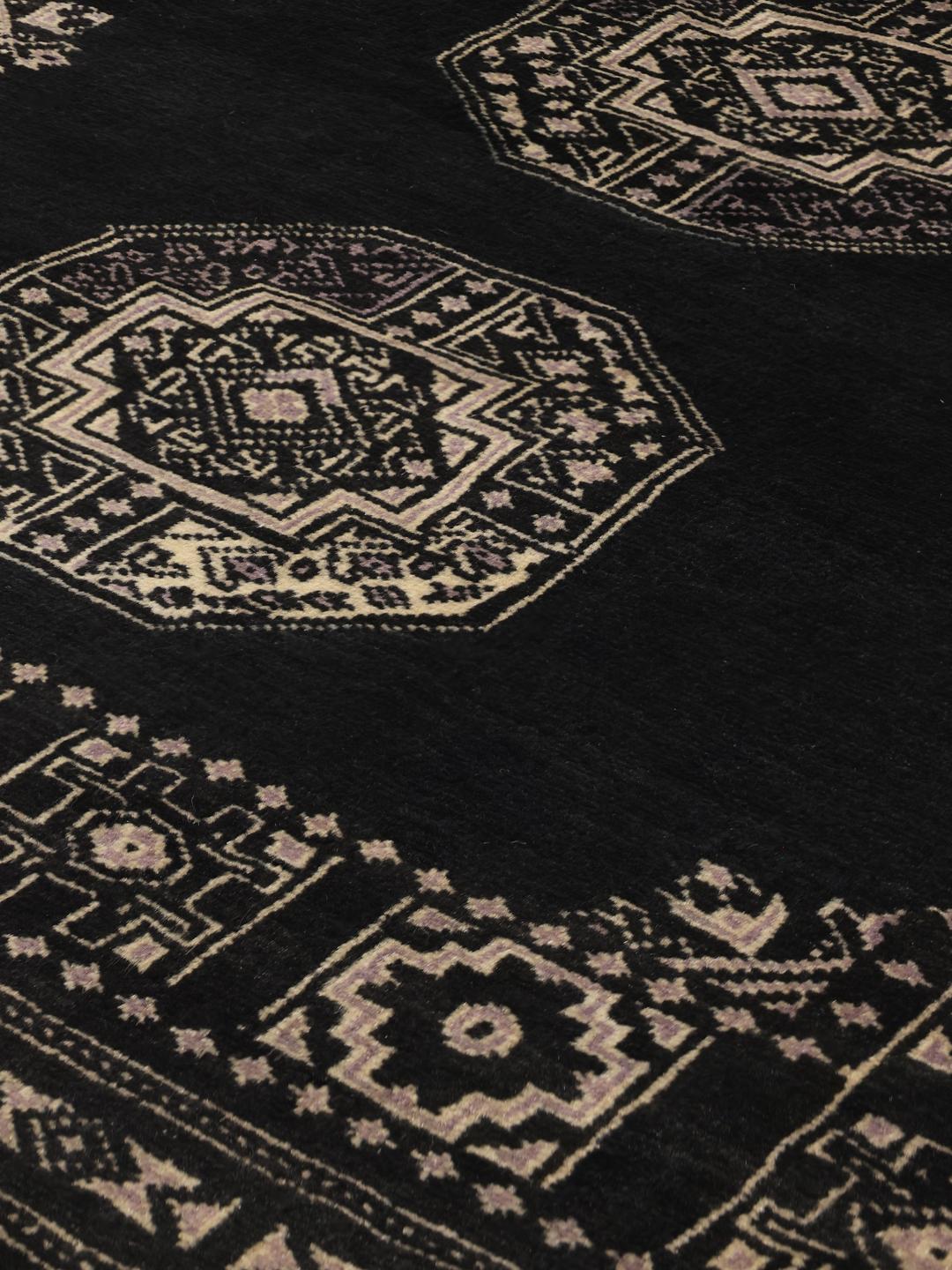
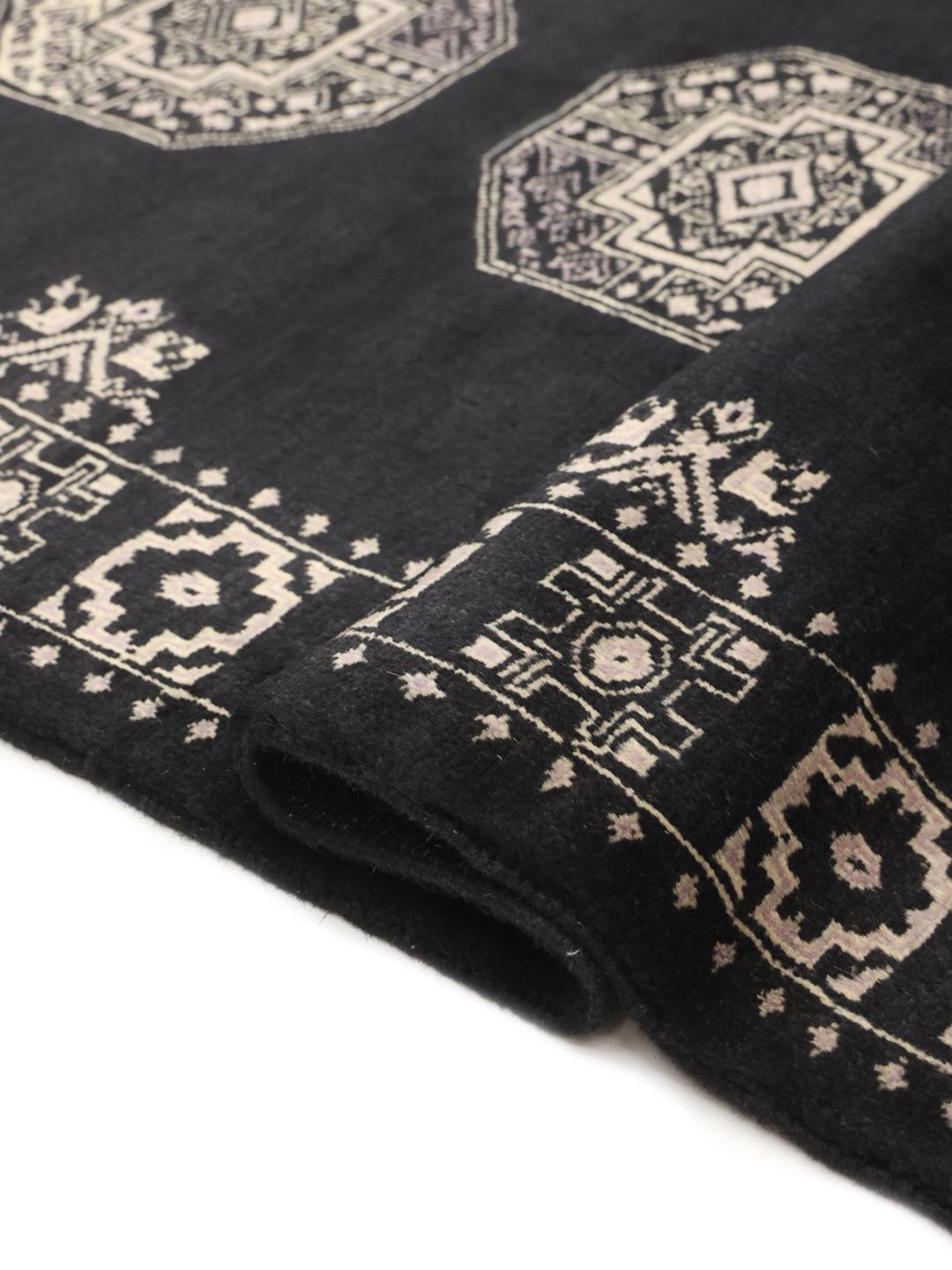
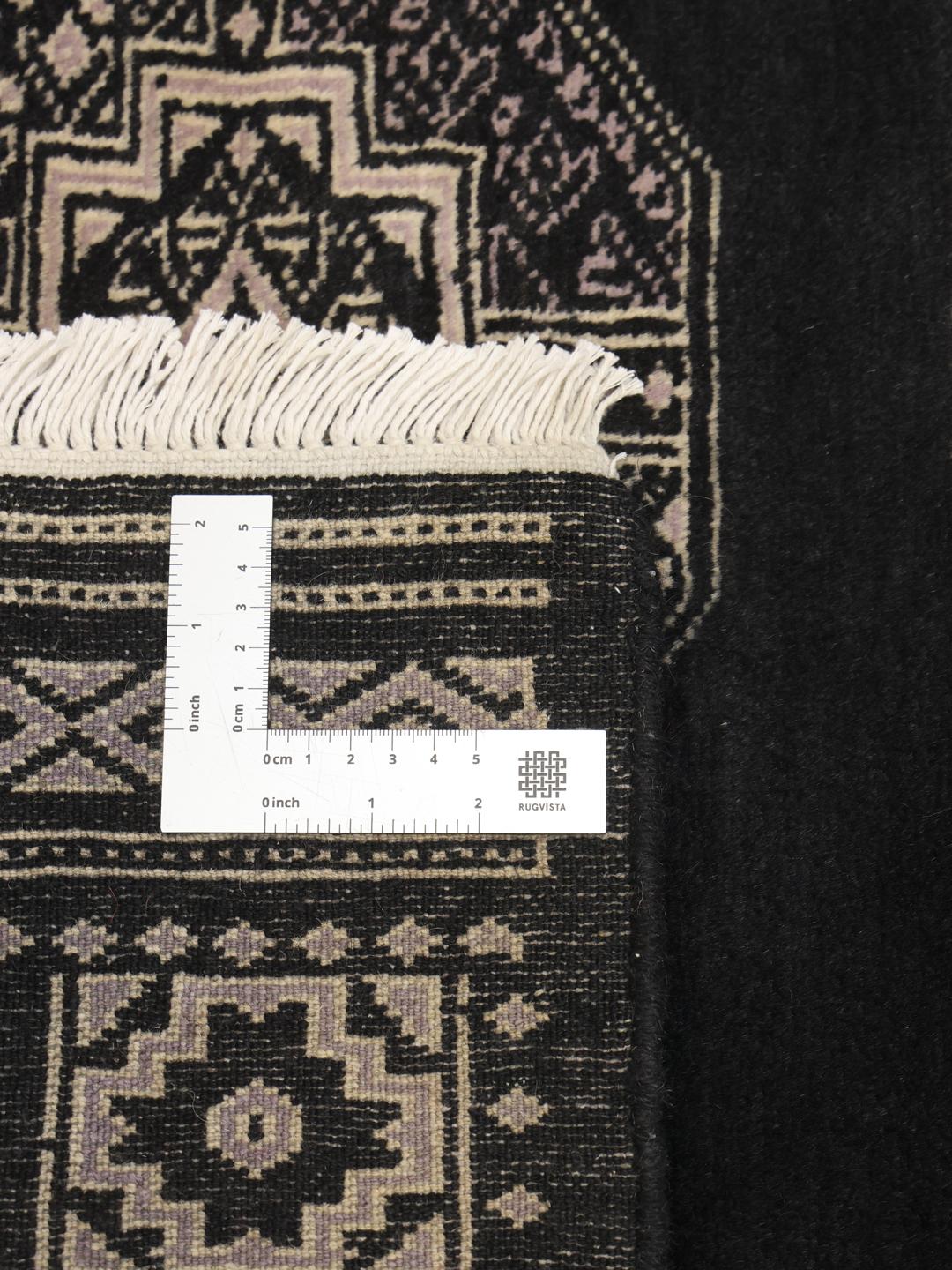
The visual hallmark of this tradition is the repeated gul motif, an octagonal or elephant-foot medallion arranged in orderly rows across the field. While traditional Bokhara rugs are most commonly found in rich reds, this particular piece features a striking black field, offering a fresh, contemporary contrast while honoring the classical border geometry and secondary guls.
Collecting a rug from this tradition means acquiring a tangible piece of textile history rooted in generations of human skill. Owning a hand-knotted wool rug brings not only enduring quality to your floors but also a connection to a slow, deliberate craft tradition that values heritage above mass production.