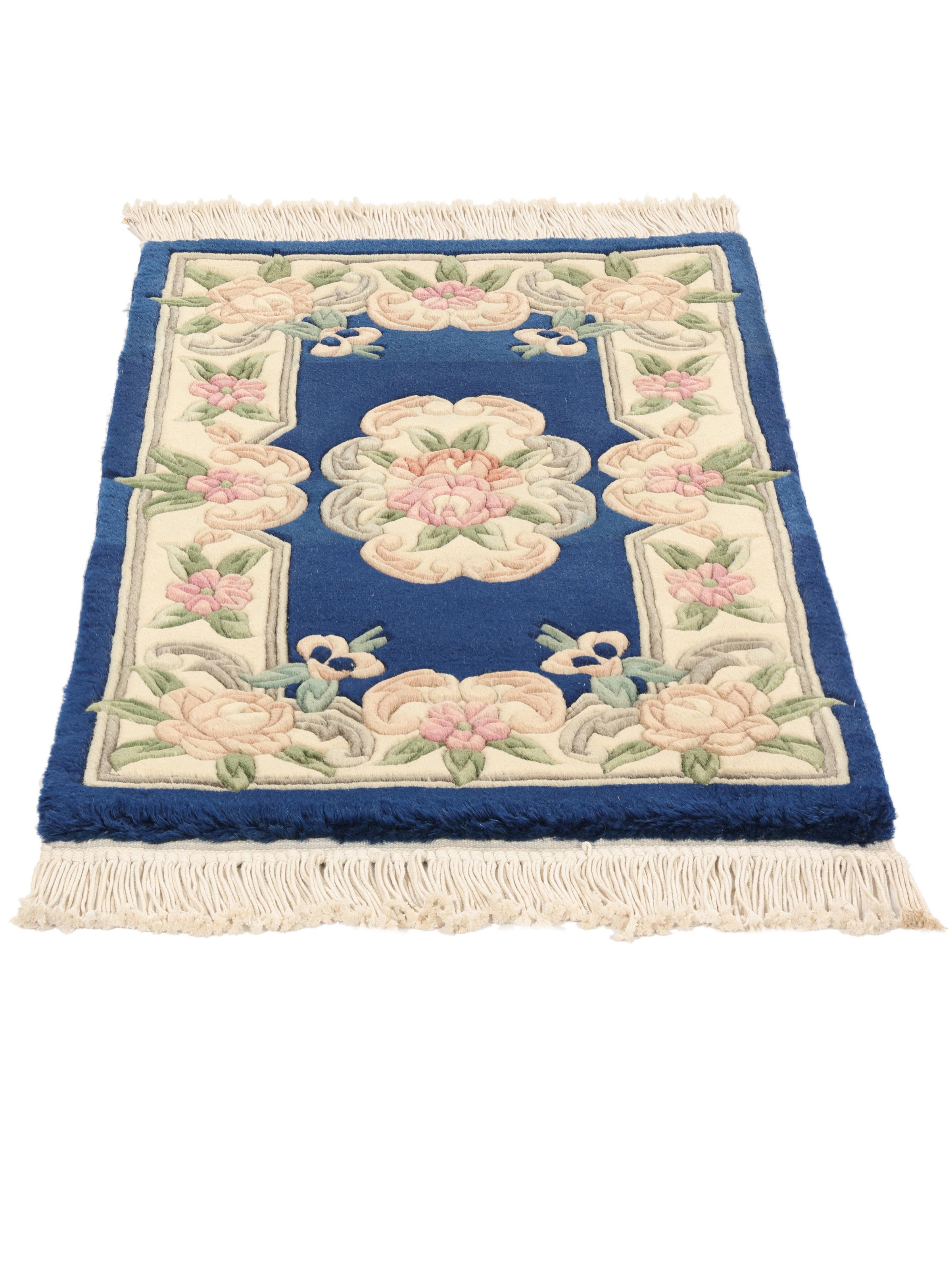
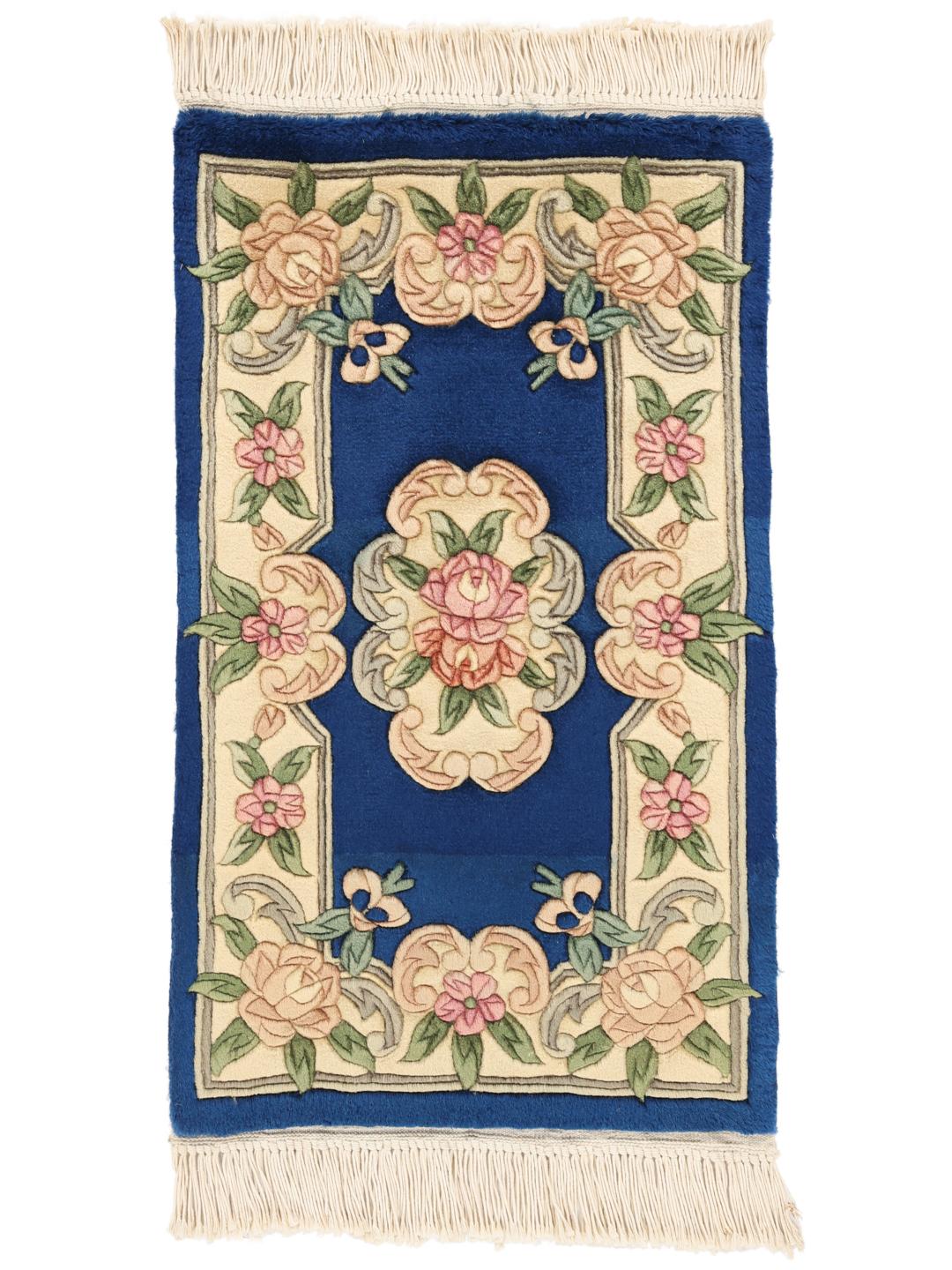
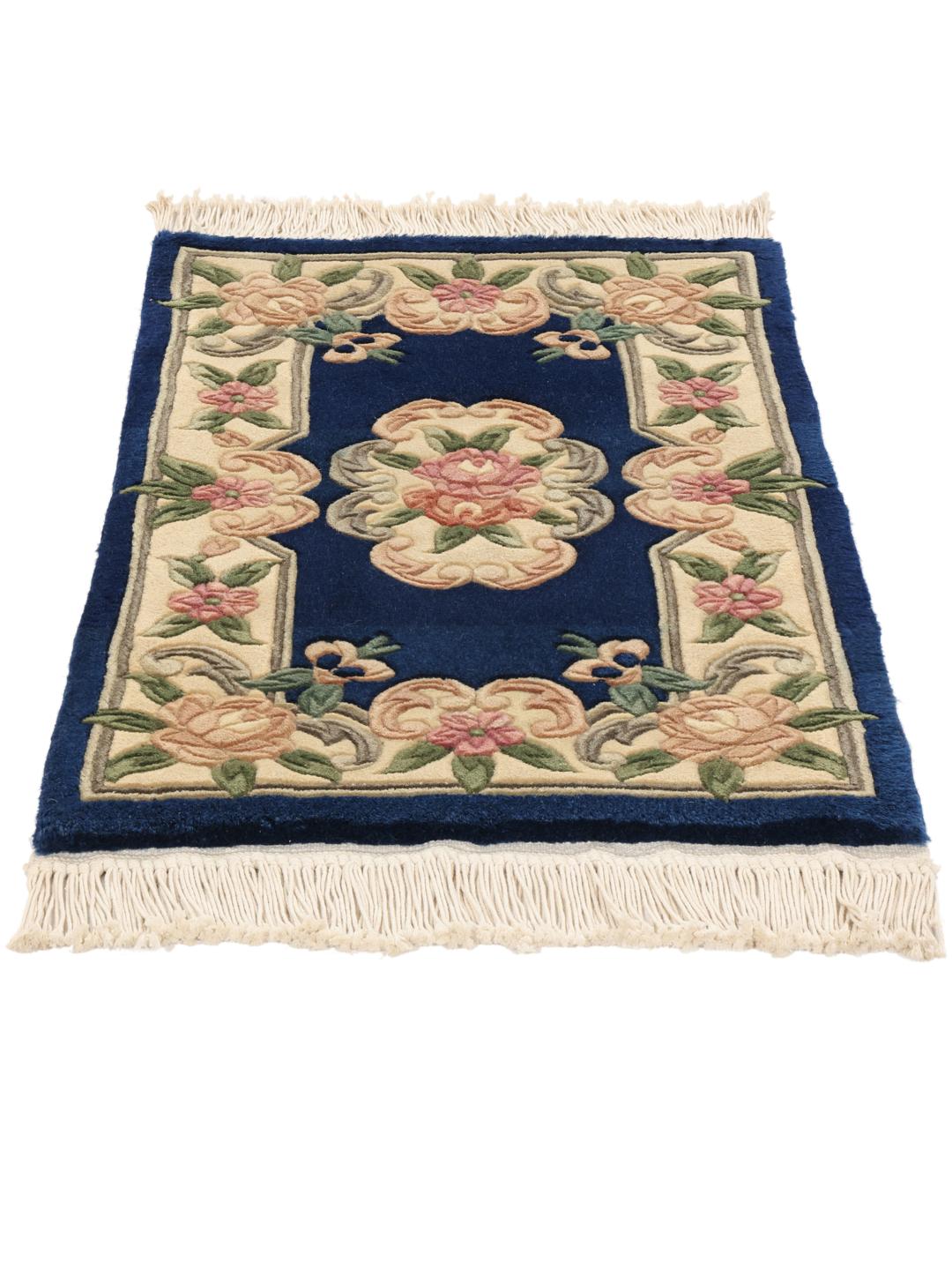
The tradition of Chinese rug weaving is an ancient craft, with a history spanning centuries of cultural evolution. Historically, Chinese rugs were often designed for temples or imperial palaces, utilising a distinct visual language that focused on harmony, balance, and symbolism, a legacy that continues to influence the fine textiles produced in the region today.
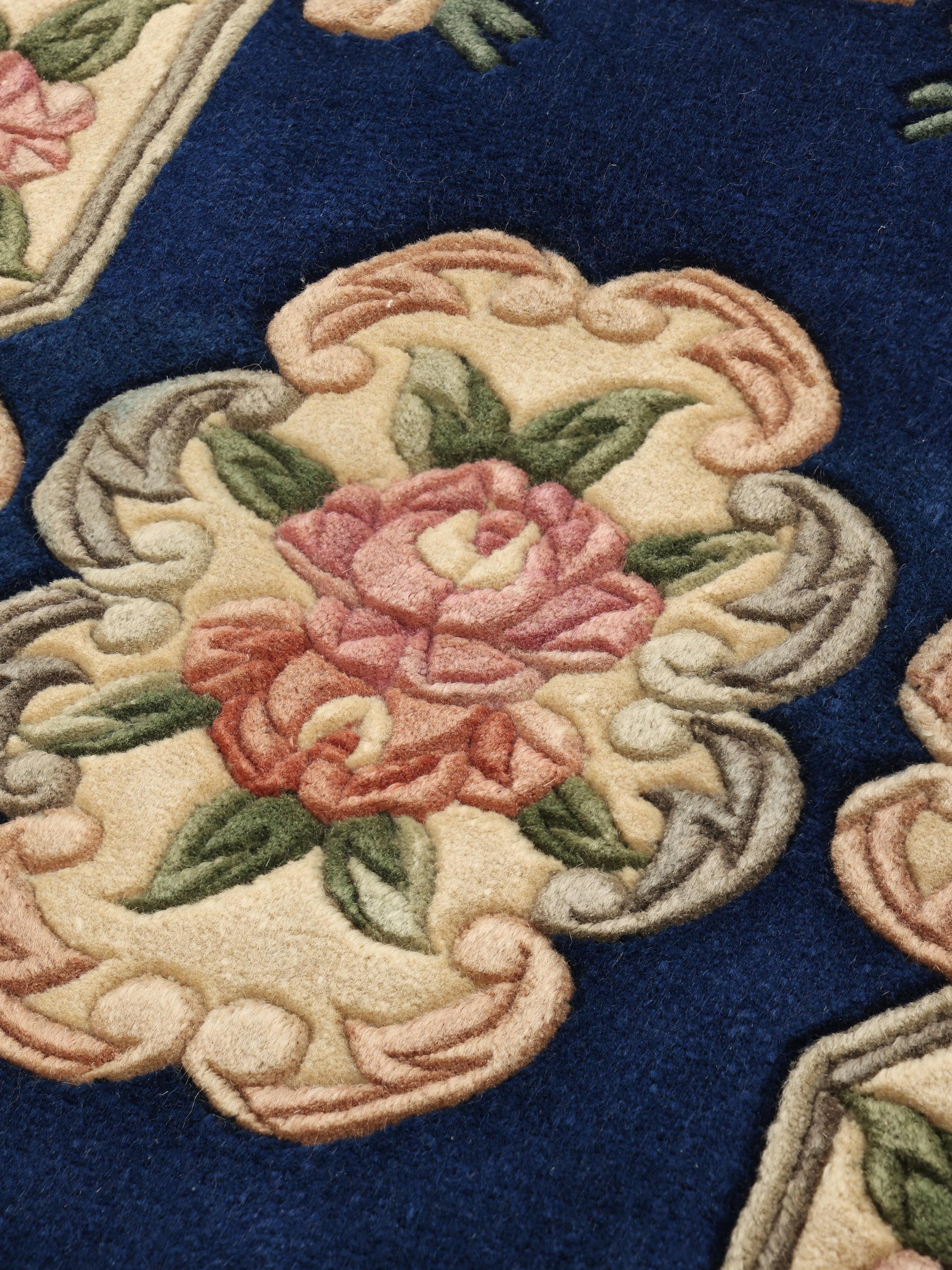
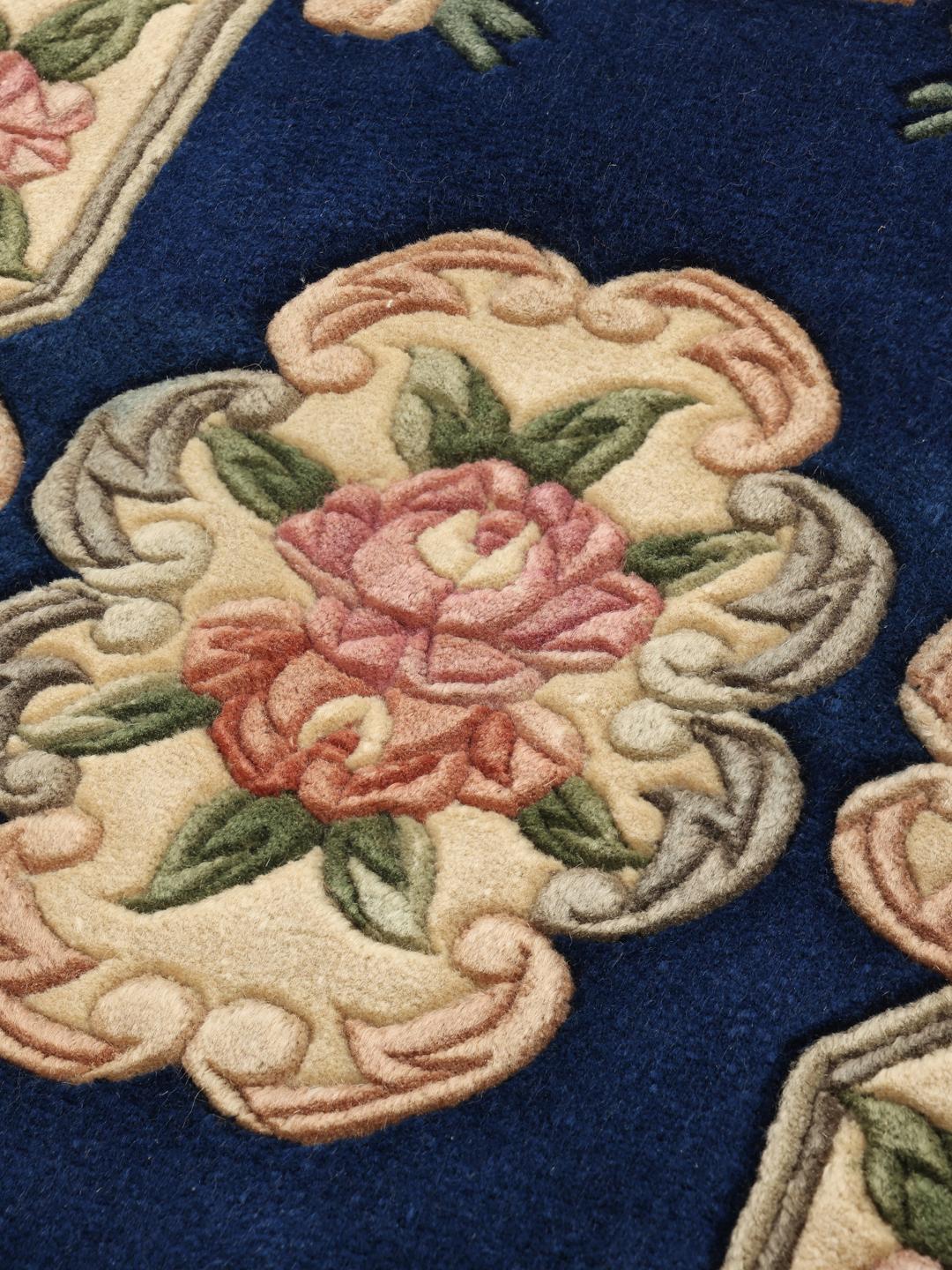
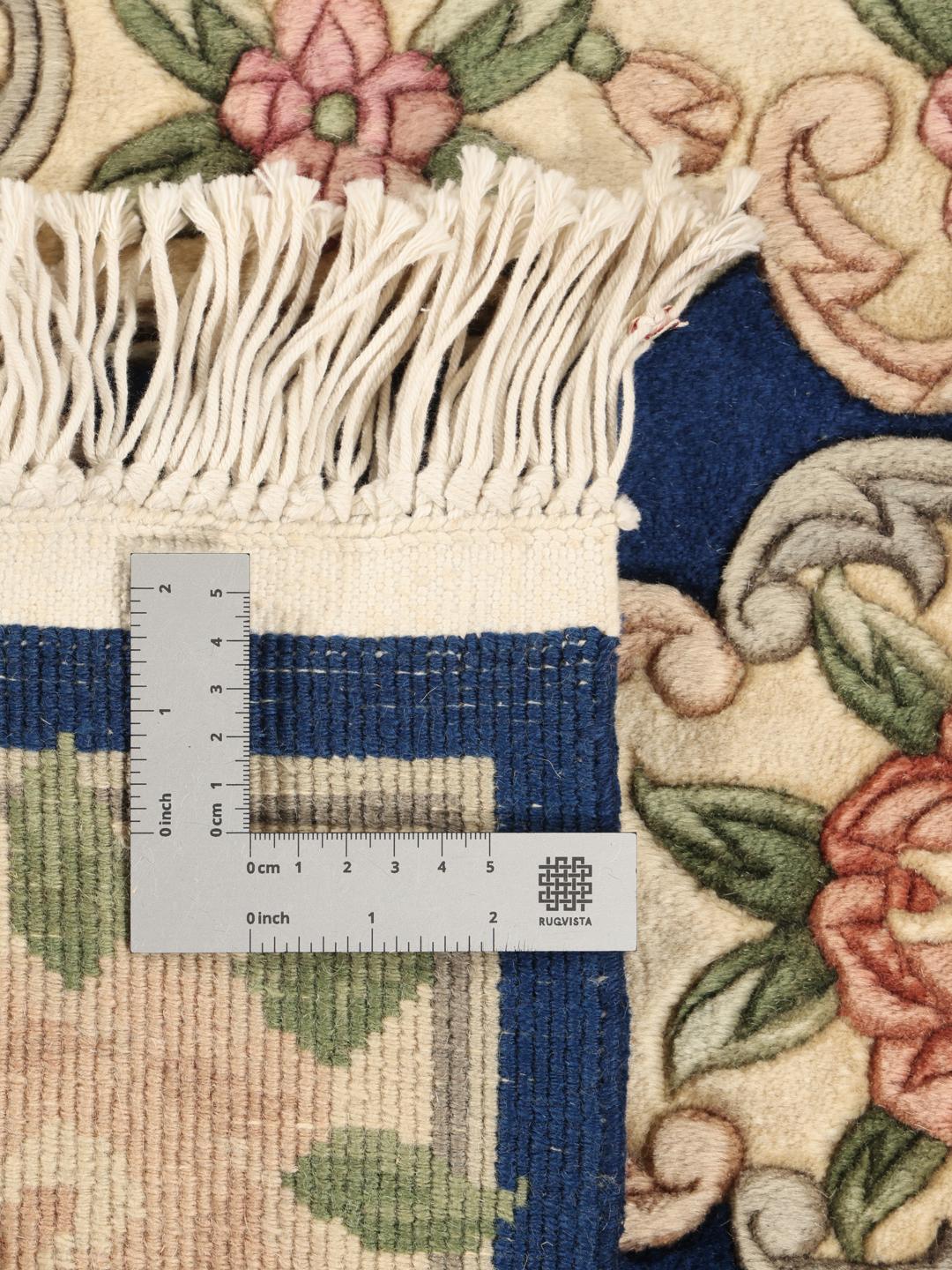
The term 90 Line refers to a classic measurement system used in Chinese rug making, where the number of knots per linear foot determines the fineness of the weave. This technical standard is crucial for maintaining the crispness of the design, ensuring that the intricate curves of floral patterns remain sharp and clear rather than blurred by the construction process.
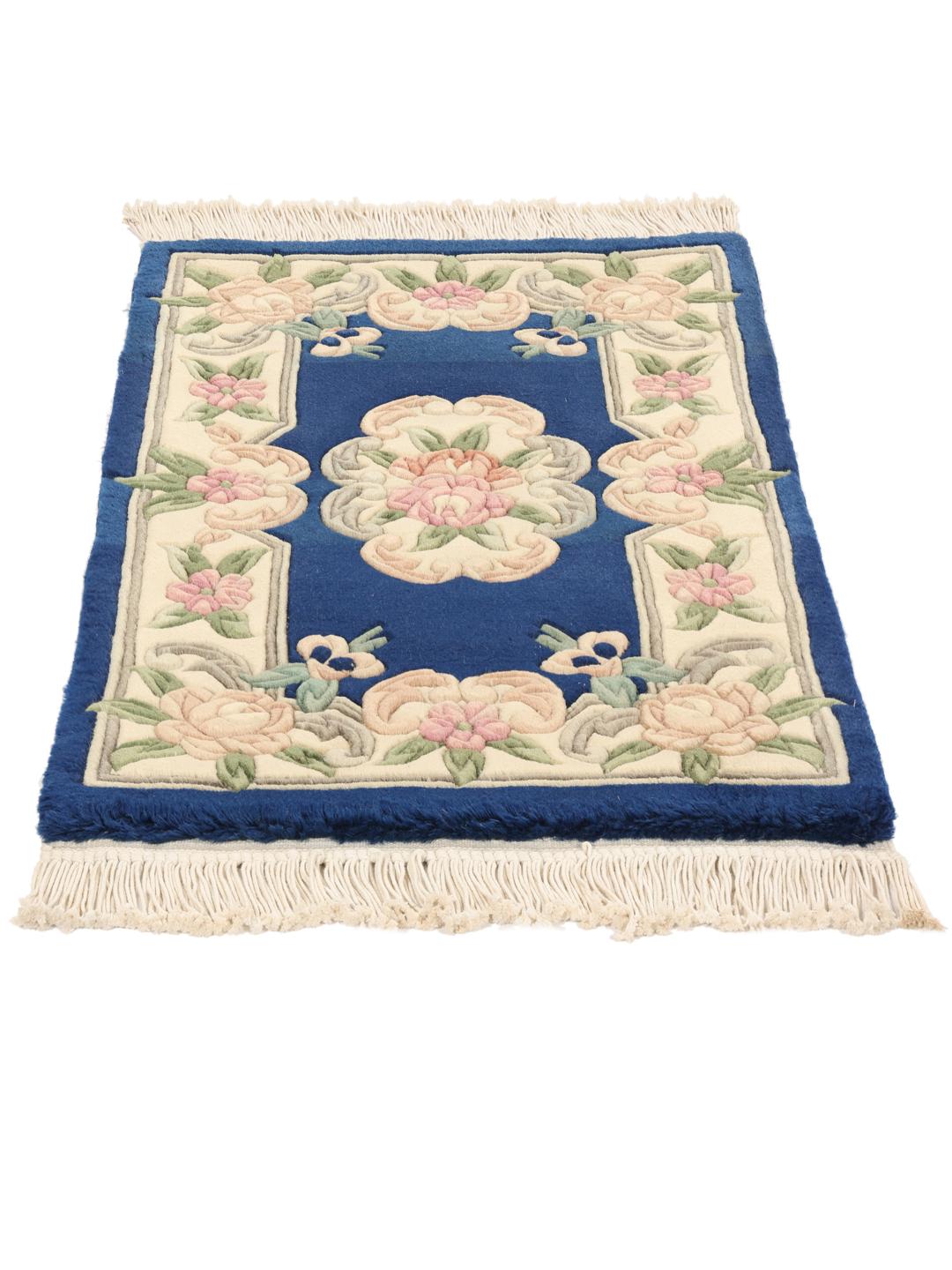
Signature design elements in this tradition often include auspicious symbols, stylised flowers, and open fields that allow the motifs to breathe. The use of a bold blue field contrasted with softer floral tones is a hallmark of this style, drawing on a palette that has been prized for its ability to anchor a room while providing a sense of sophisticated, natural beauty.
Owning a hand-knotted rug from this tradition is an investment in cultural heritage and the enduring value of human skill. These pieces are collected not only for their aesthetic appeal but for the story they tell of a craft passed down through generations, representing a level of artistry that remains distinct in our modern, automated world.