The Gabbeh tradition traces its roots back to the nomadic tribes of the Middle East, who created these rugs primarily for their own domestic use. Historically, these were thick, coarse floor coverings designed for warmth in harsh climates, often woven on simple ground looms by women who drew inspiration directly from their natural surroundings.
The term 'Gabbeh' itself refers to a style that is intentionally raw and minimalist, often focusing on bold colours and simplified shapes. Over time, these rugs have evolved from functional necessities into highly sought-after decorative pieces, prized for their artistic freedom and the lack of rigid adherence to formal, symmetrical patterns found in more traditional urban rugs.
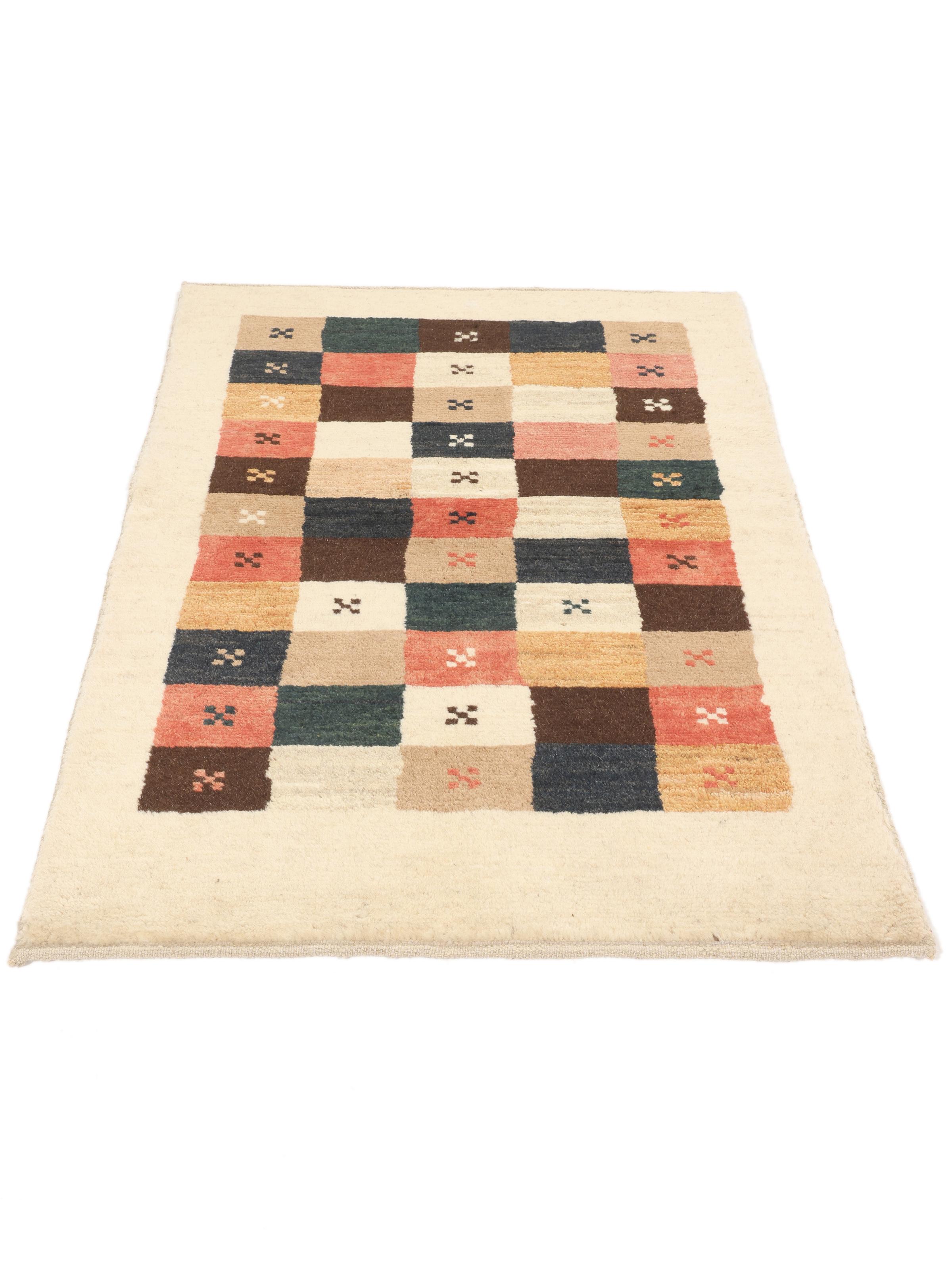
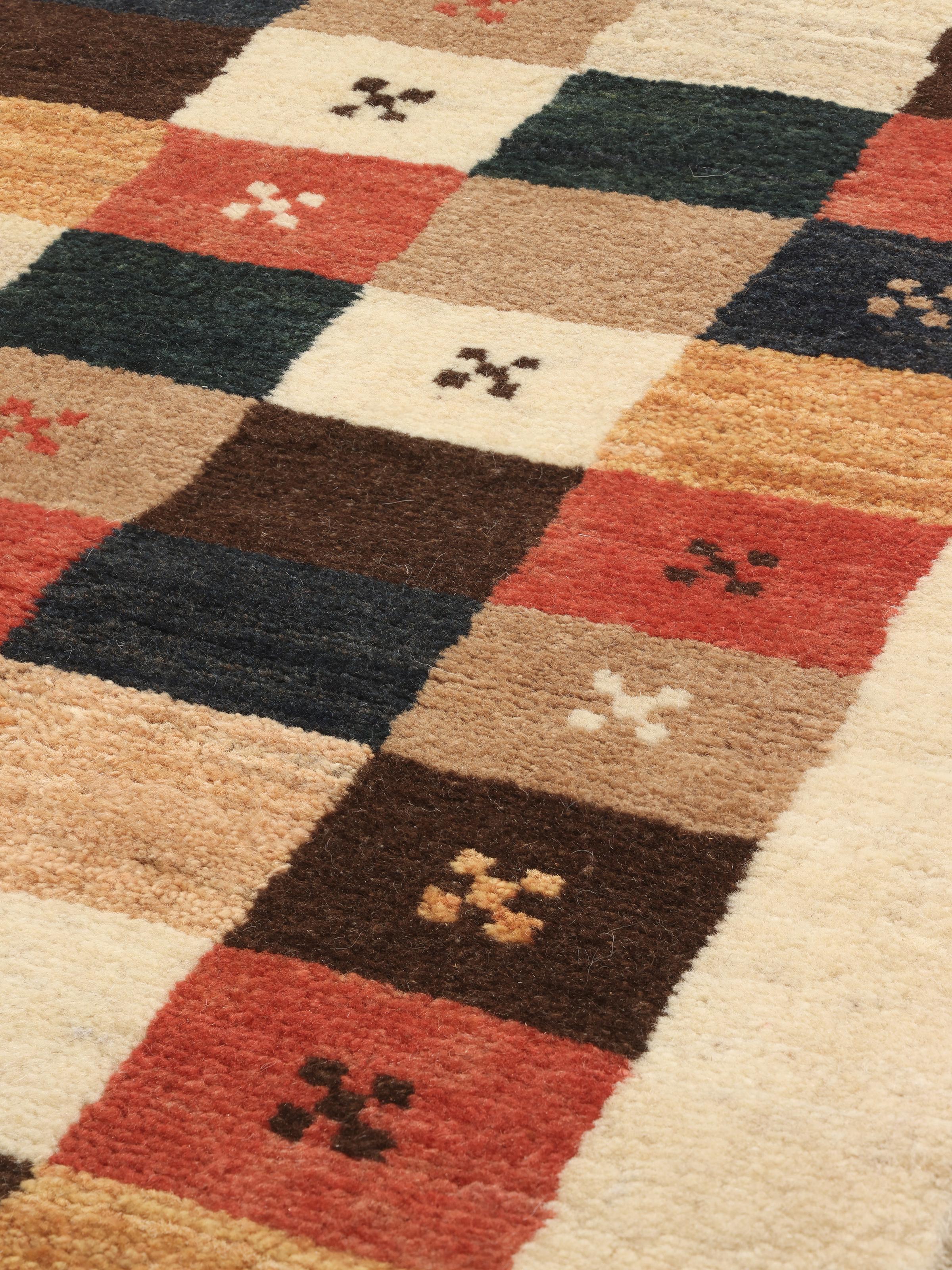
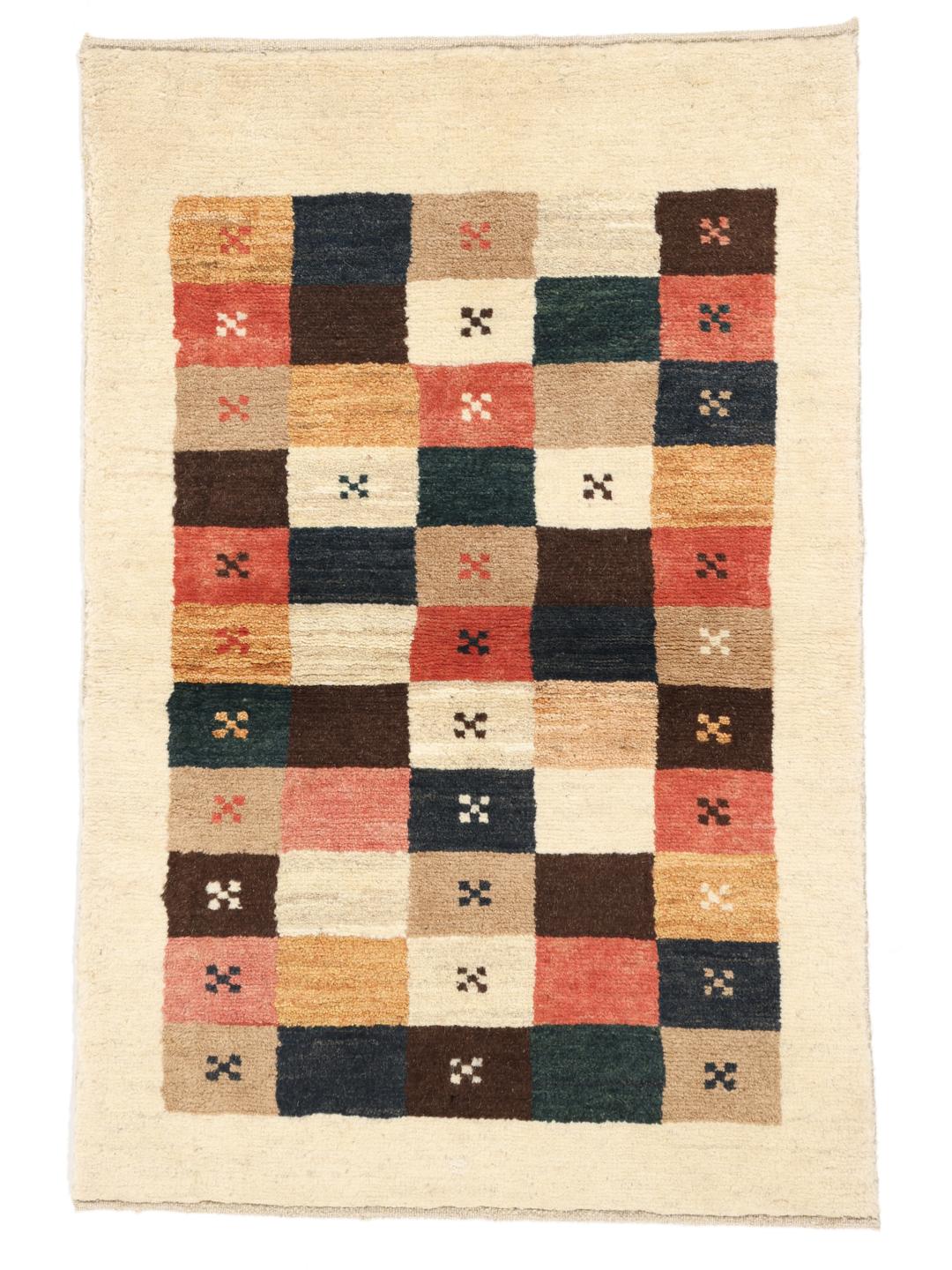
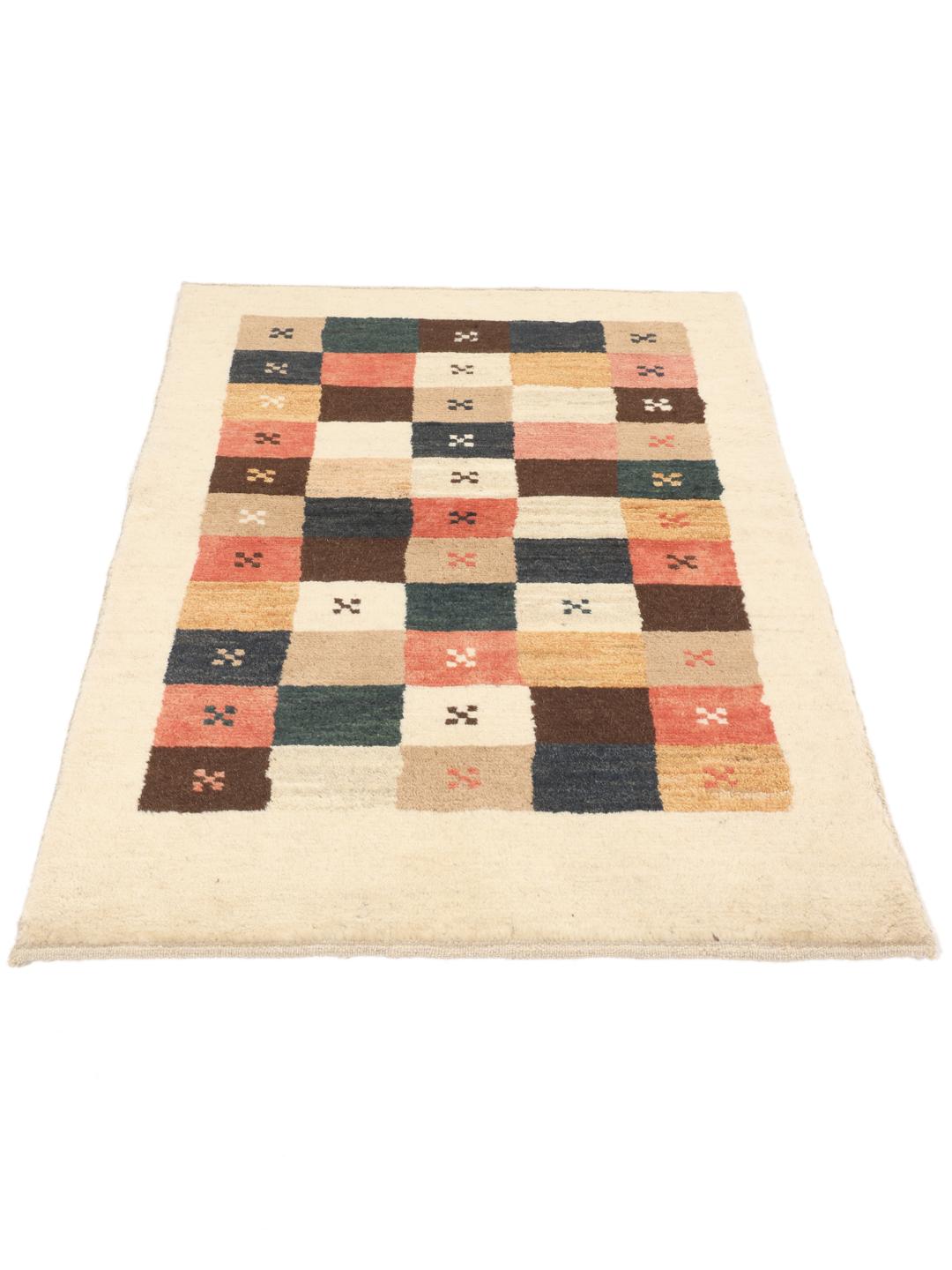
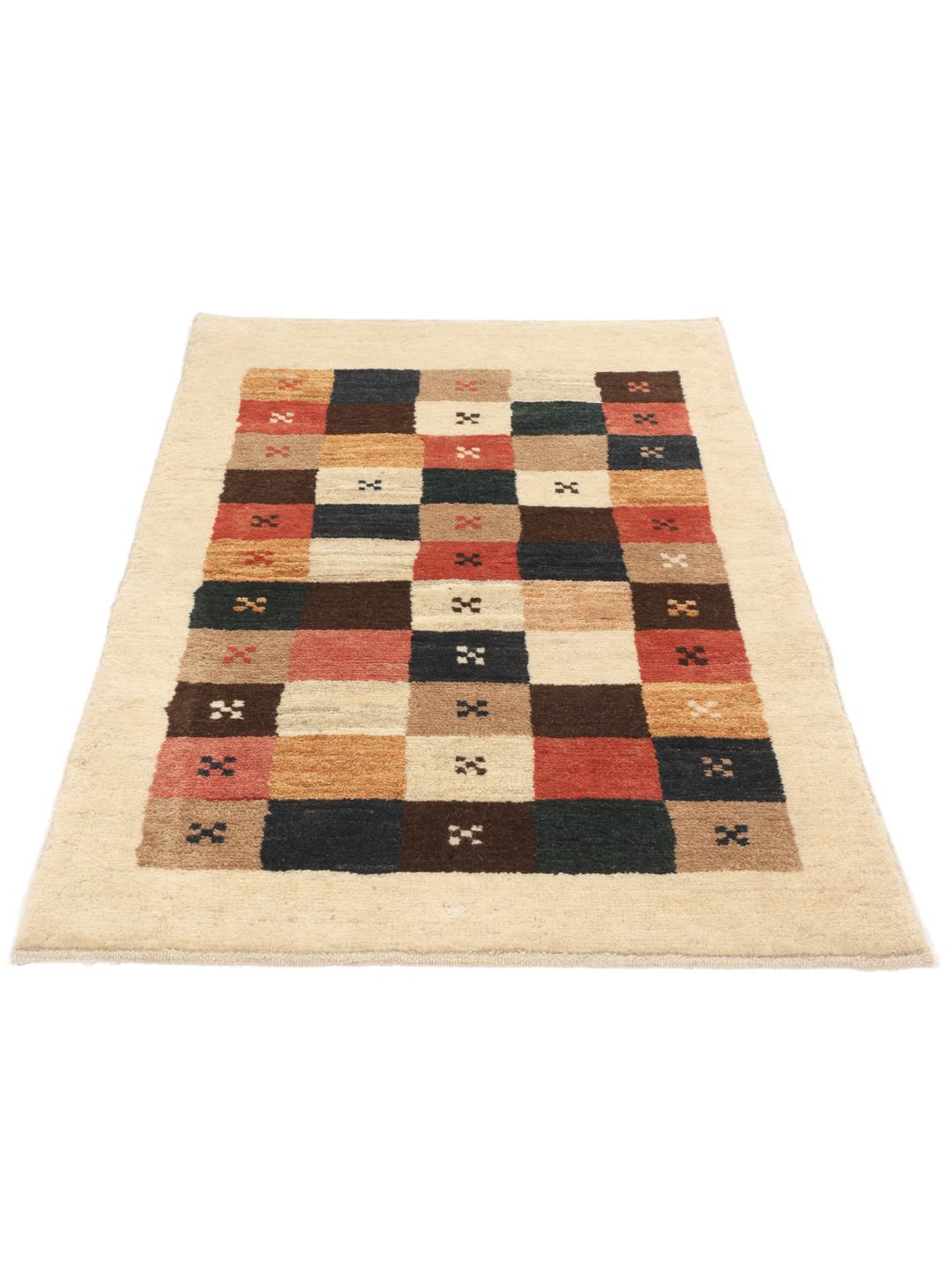
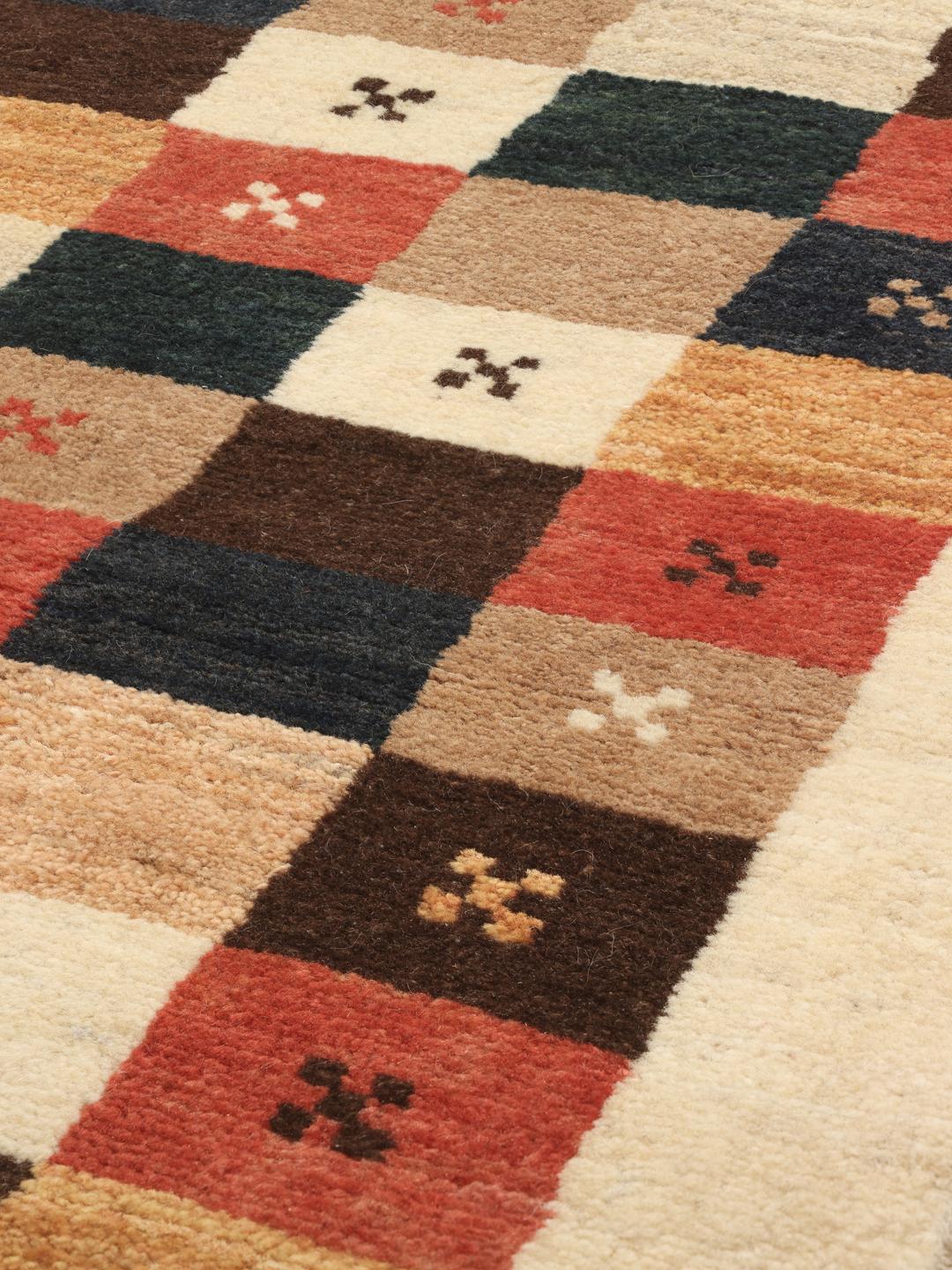
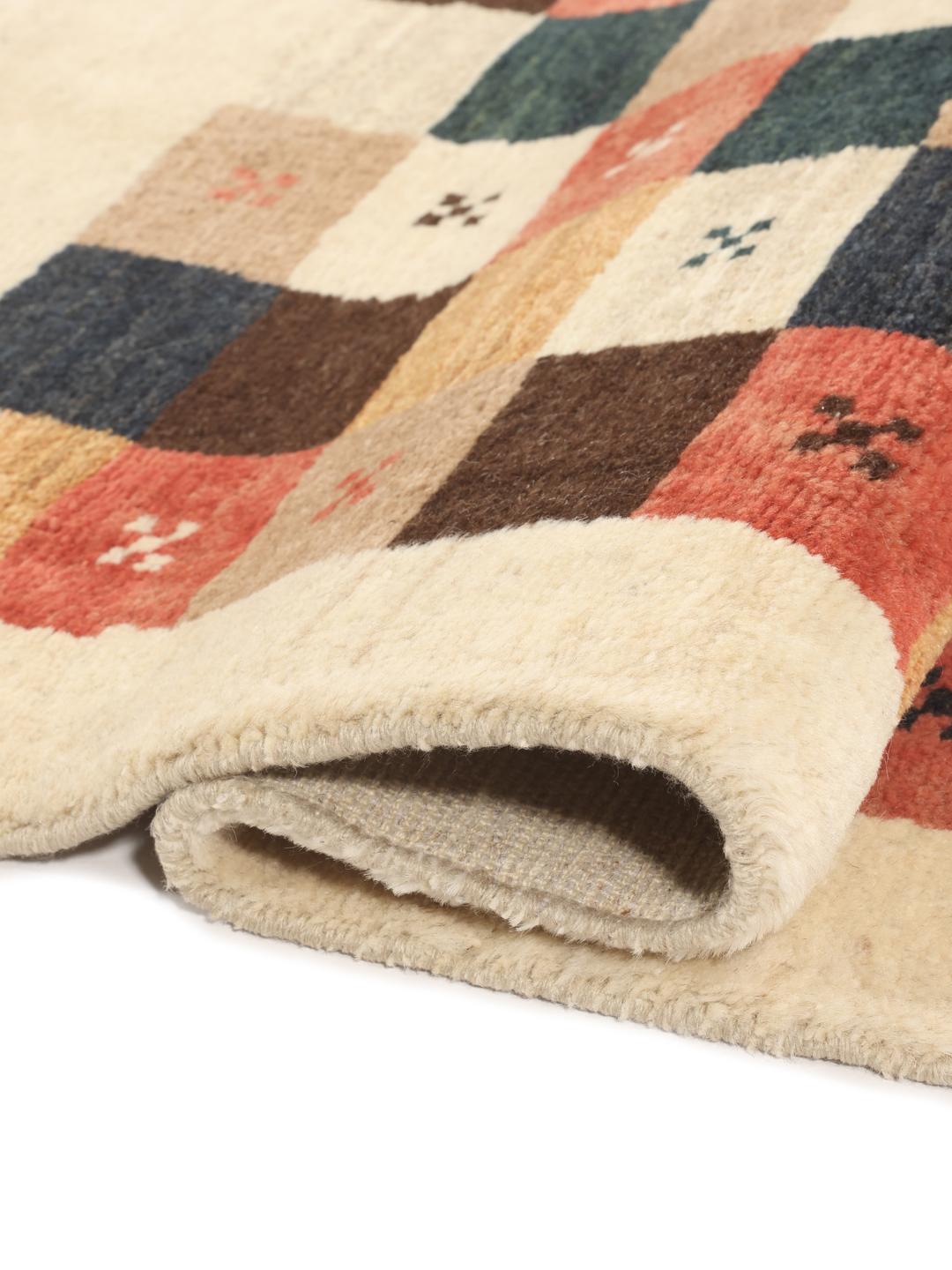
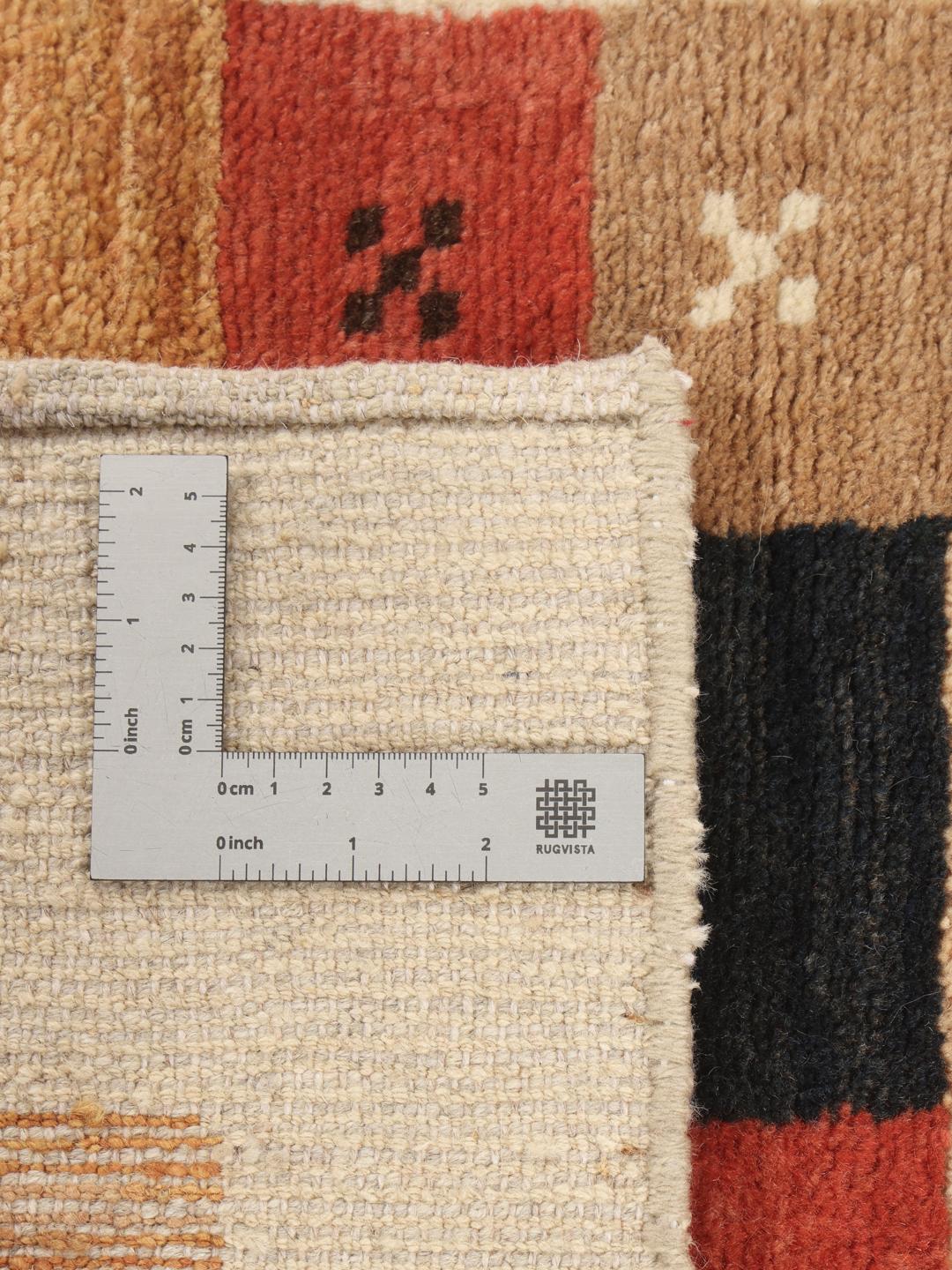
Signature elements of this style include the use of hand-spun, naturally dyed wool, which creates subtle variations in tone known as abrash. This specific rug features a rhythmic grid of squares punctuated by small cross-like motifs, a common way for weavers to introduce subtle narrative elements into an otherwise abstract composition.
Collecting a Gabbeh rug is an investment in a living tradition. These pieces are celebrated for their authentic, unpretentious charm and the skill required to maintain a consistent tension and pattern without the use of complex blueprints. Owning one is a way to connect with a long-standing culture of craft that values individual expression.