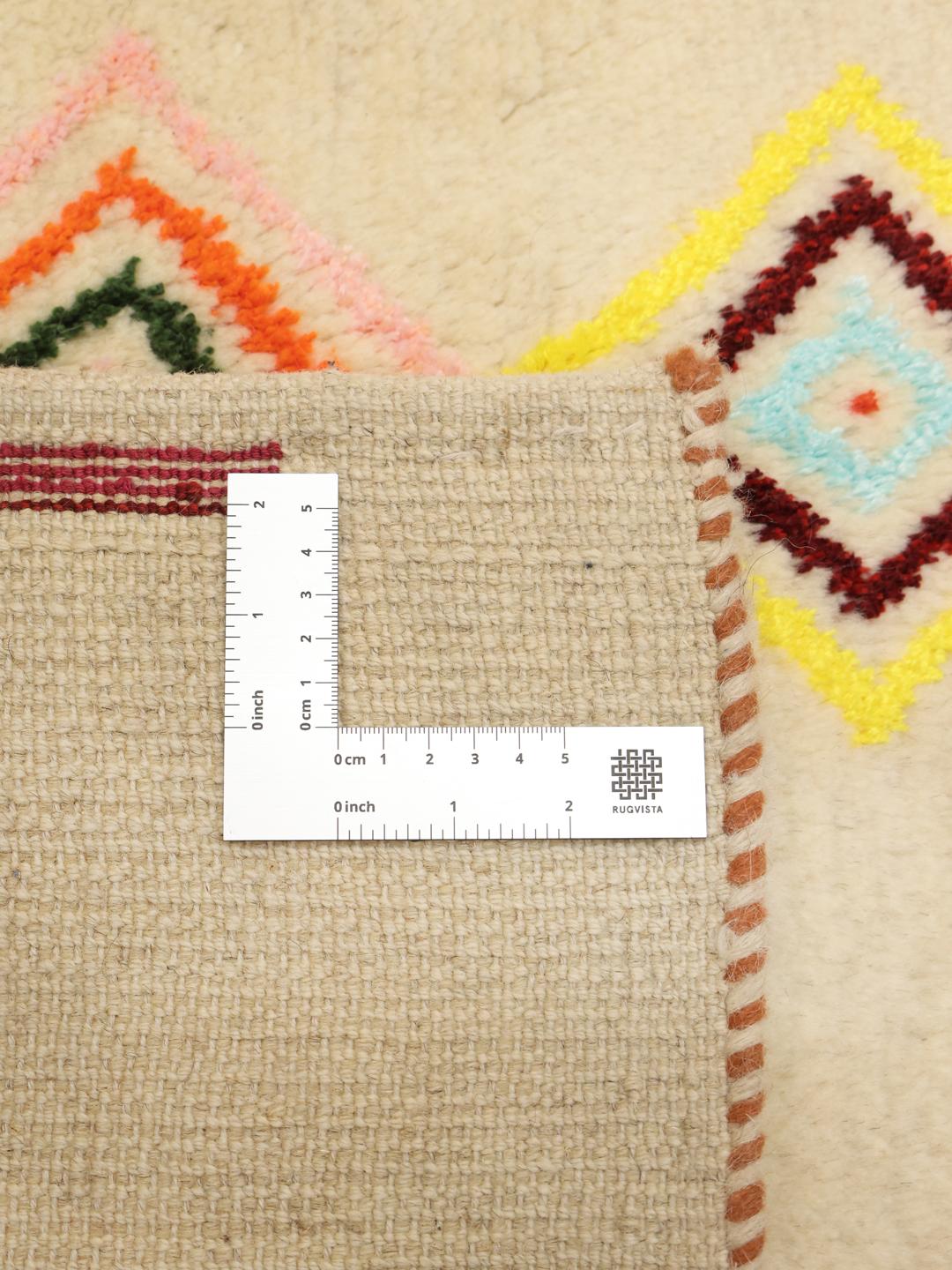
The Gabbeh tradition originates from the nomadic tribes of the Middle East, specifically the Qashqai and Lori people. Traditionally, these rugs were woven by women for their own families, intended for domestic use as bedding or floor coverings within the tent. Unlike more formal, city-made rugs, Gabbeh rugs were born from a culture of improvisation and personal expression, reflecting the weaver's own environment and experiences.
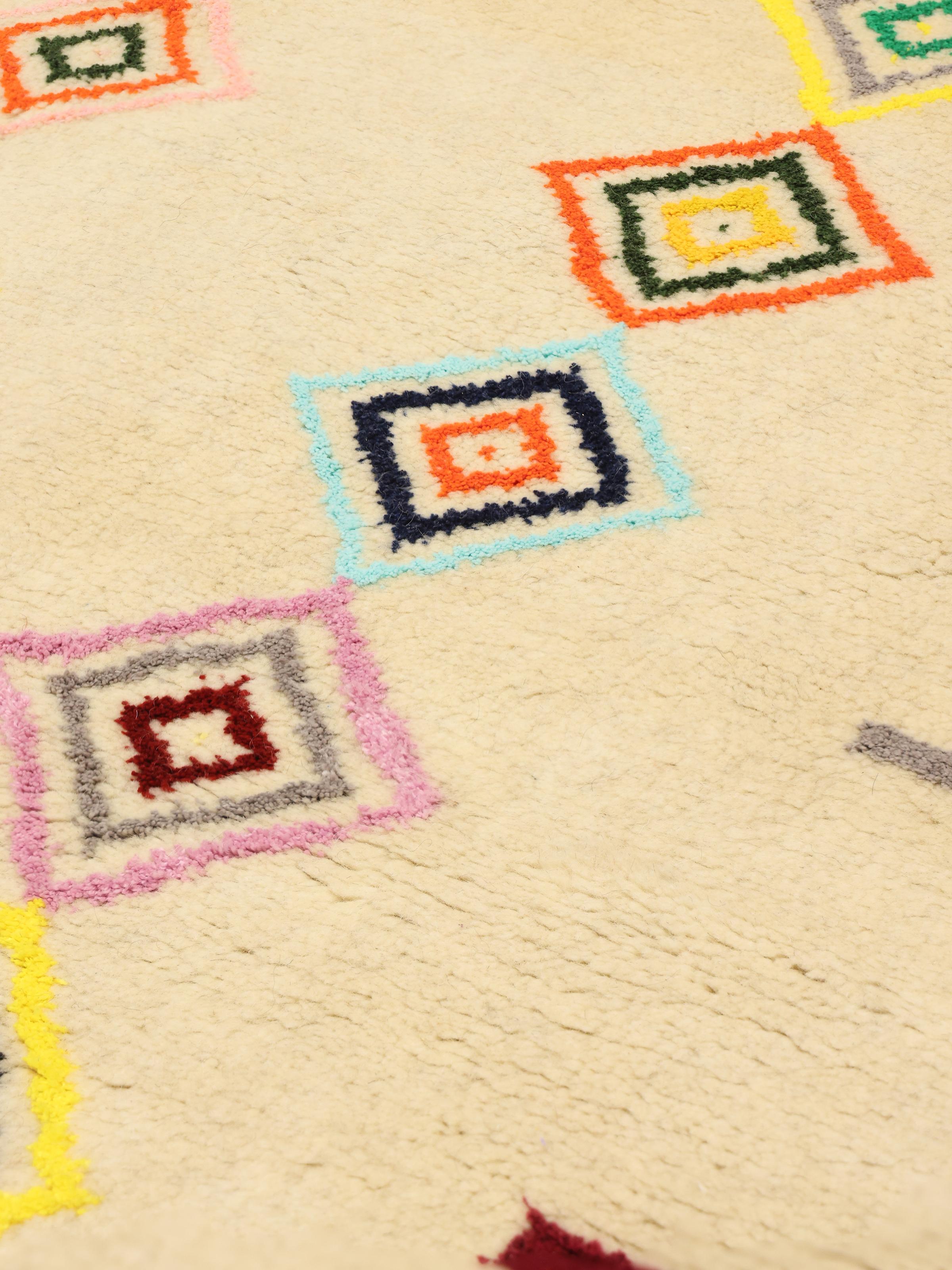
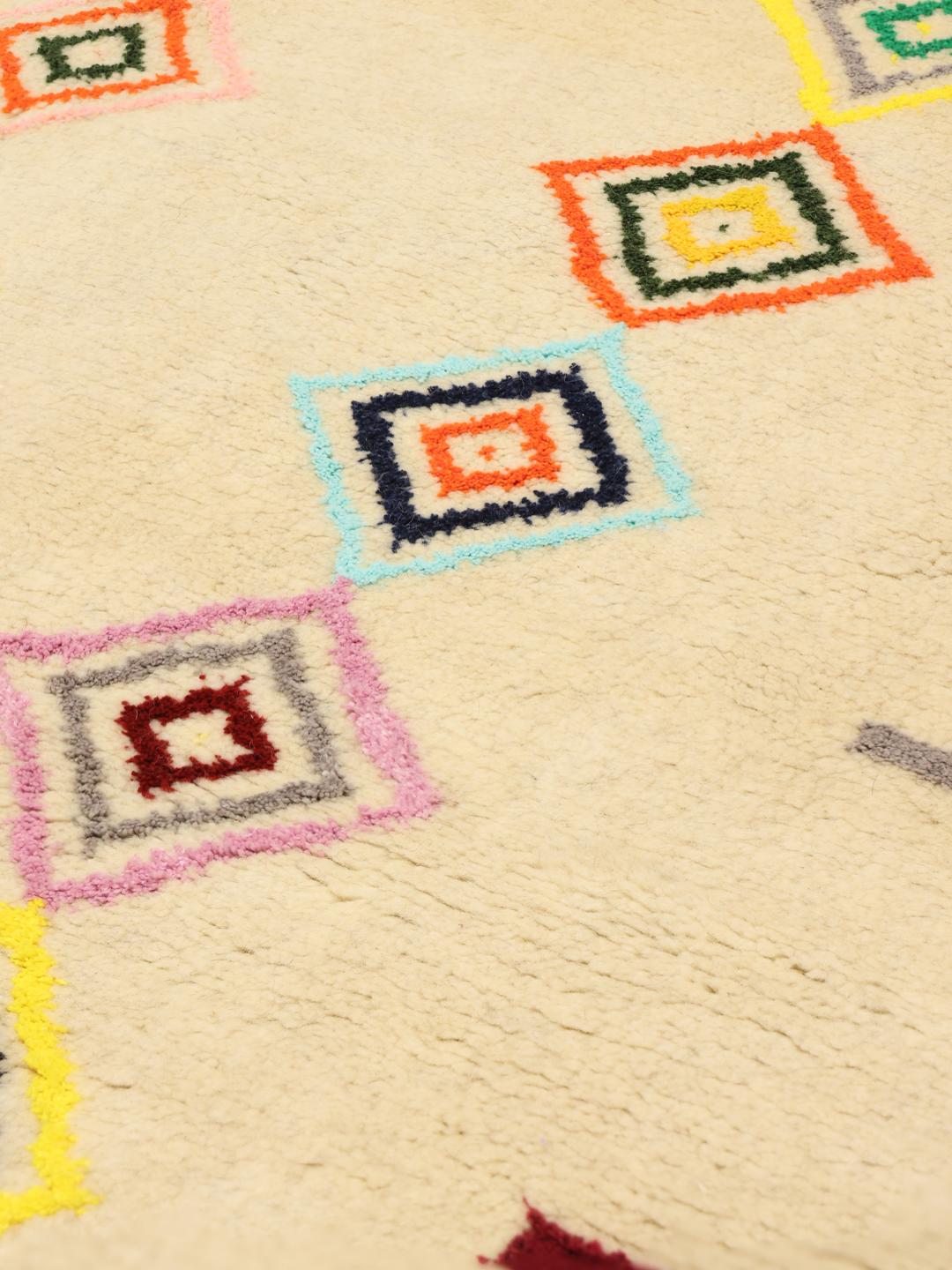
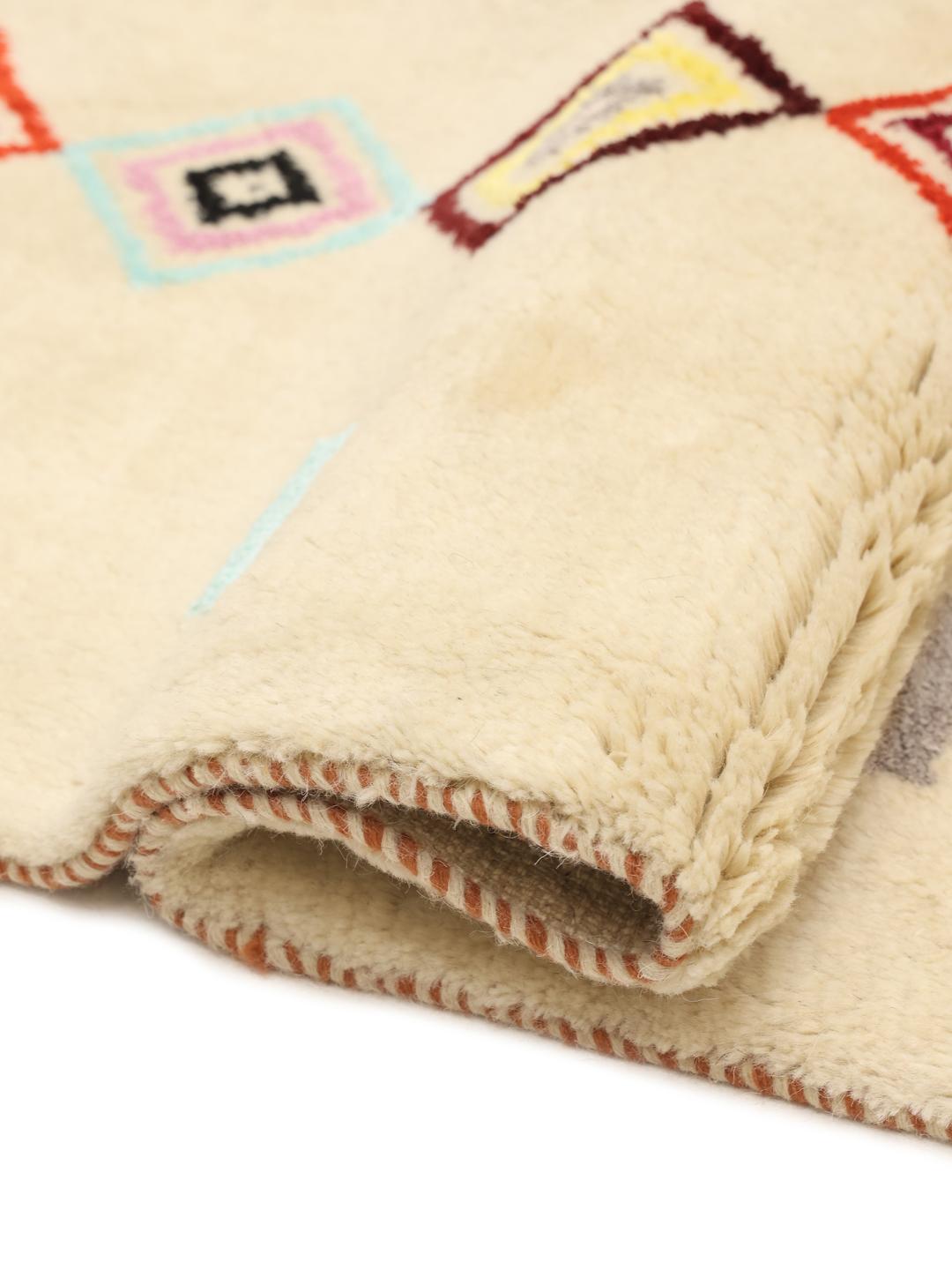
The term 'Gabbeh' itself translates to 'raw' or 'natural' in the local language, referring to the rug's thick, long-pile construction and its departure from the intricate, pre-planned patterns found in more traditional urban weaving centres. This simplicity allows the natural quality of the wool to shine, resulting in a rug that feels remarkably soft and tactile underfoot, a hallmark of the authentic Gabbeh style.
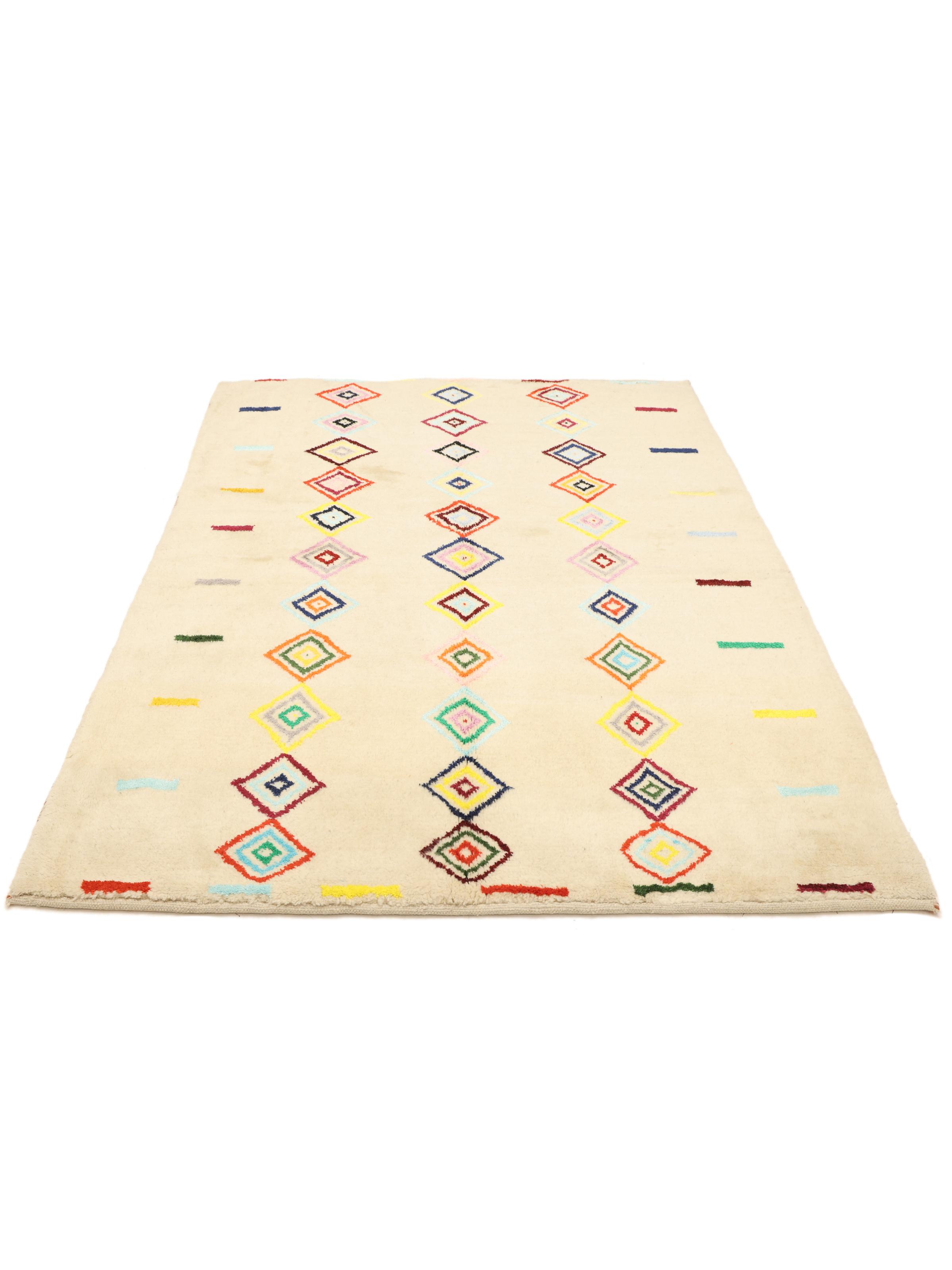
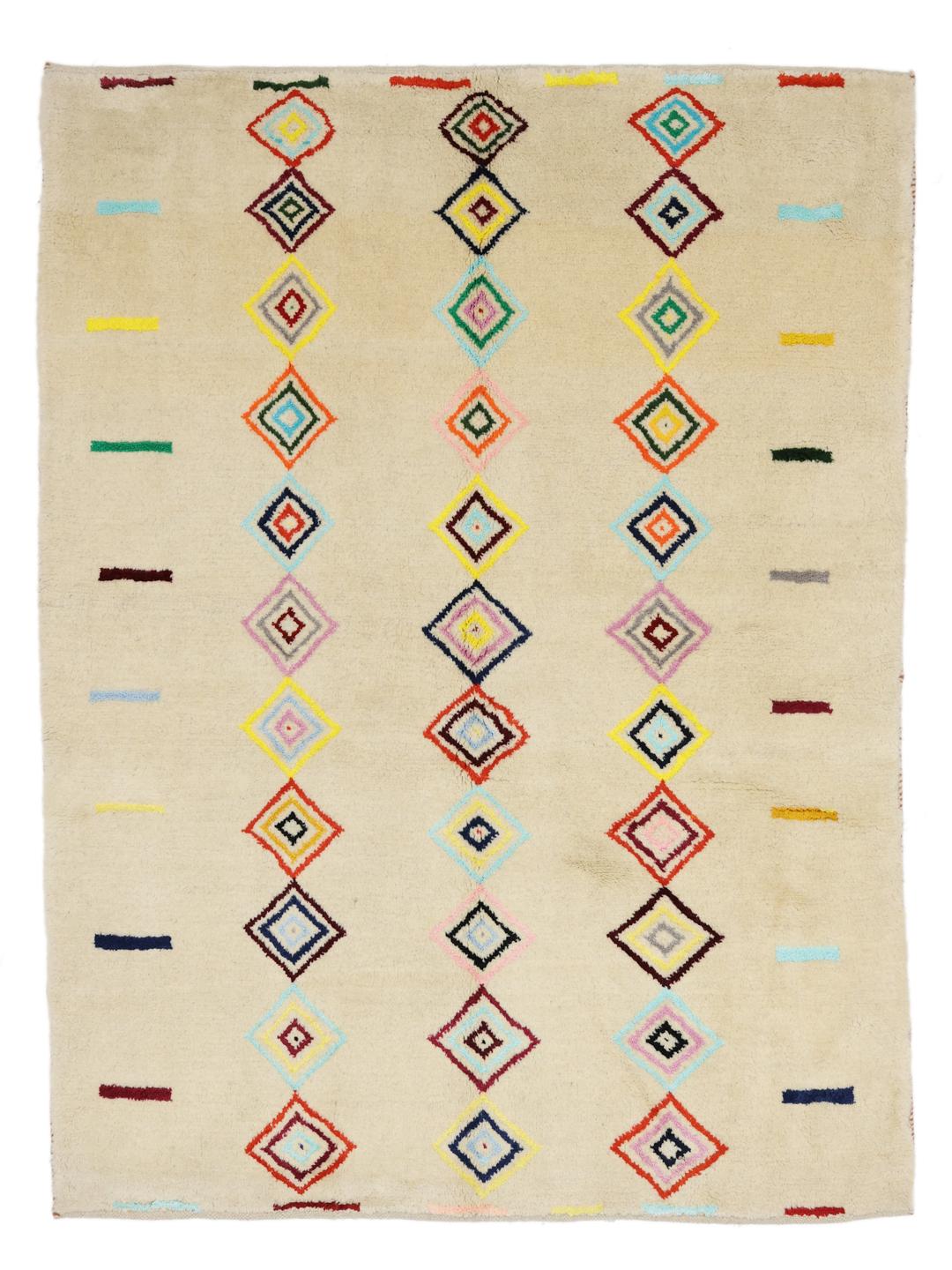
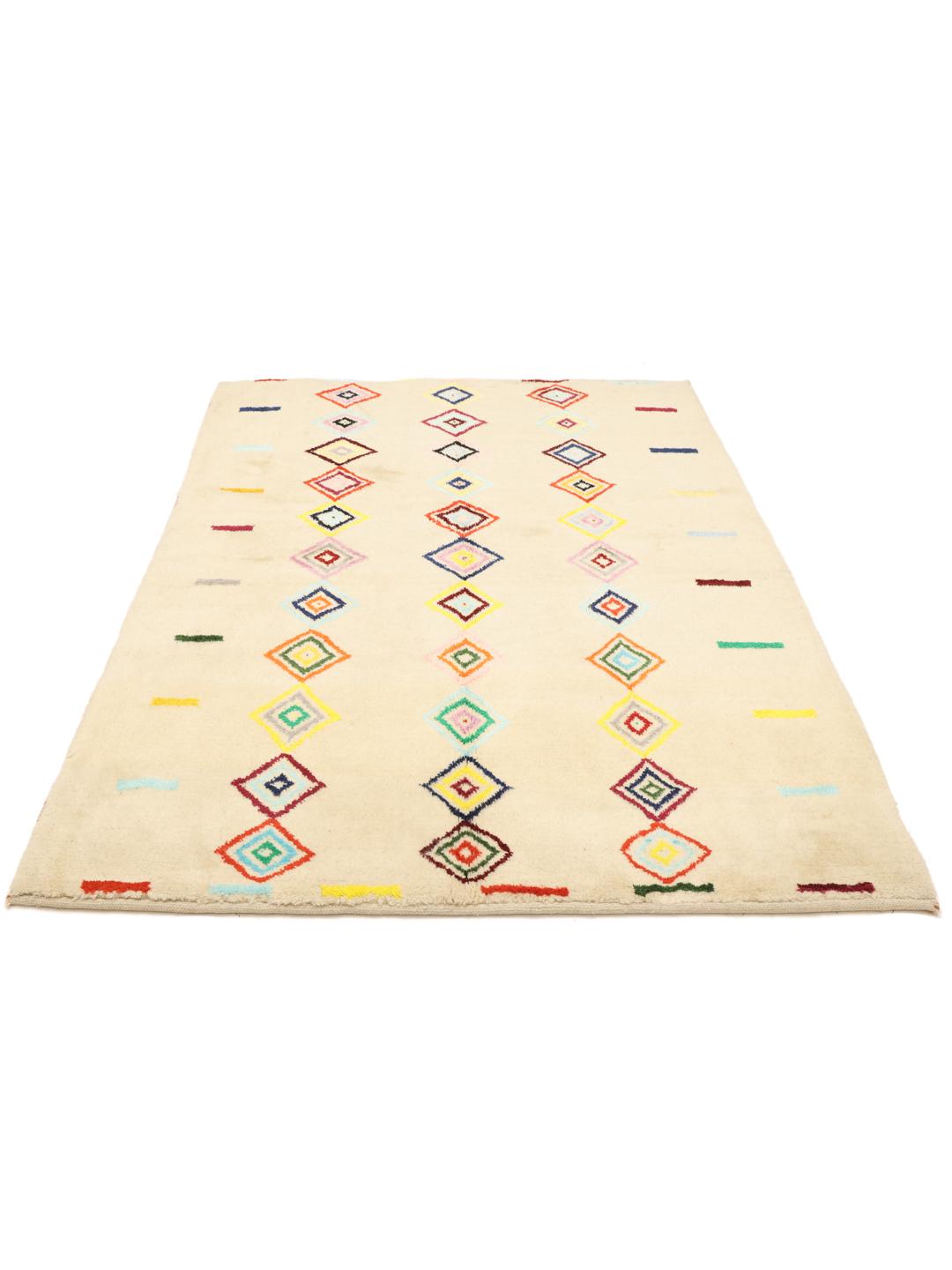
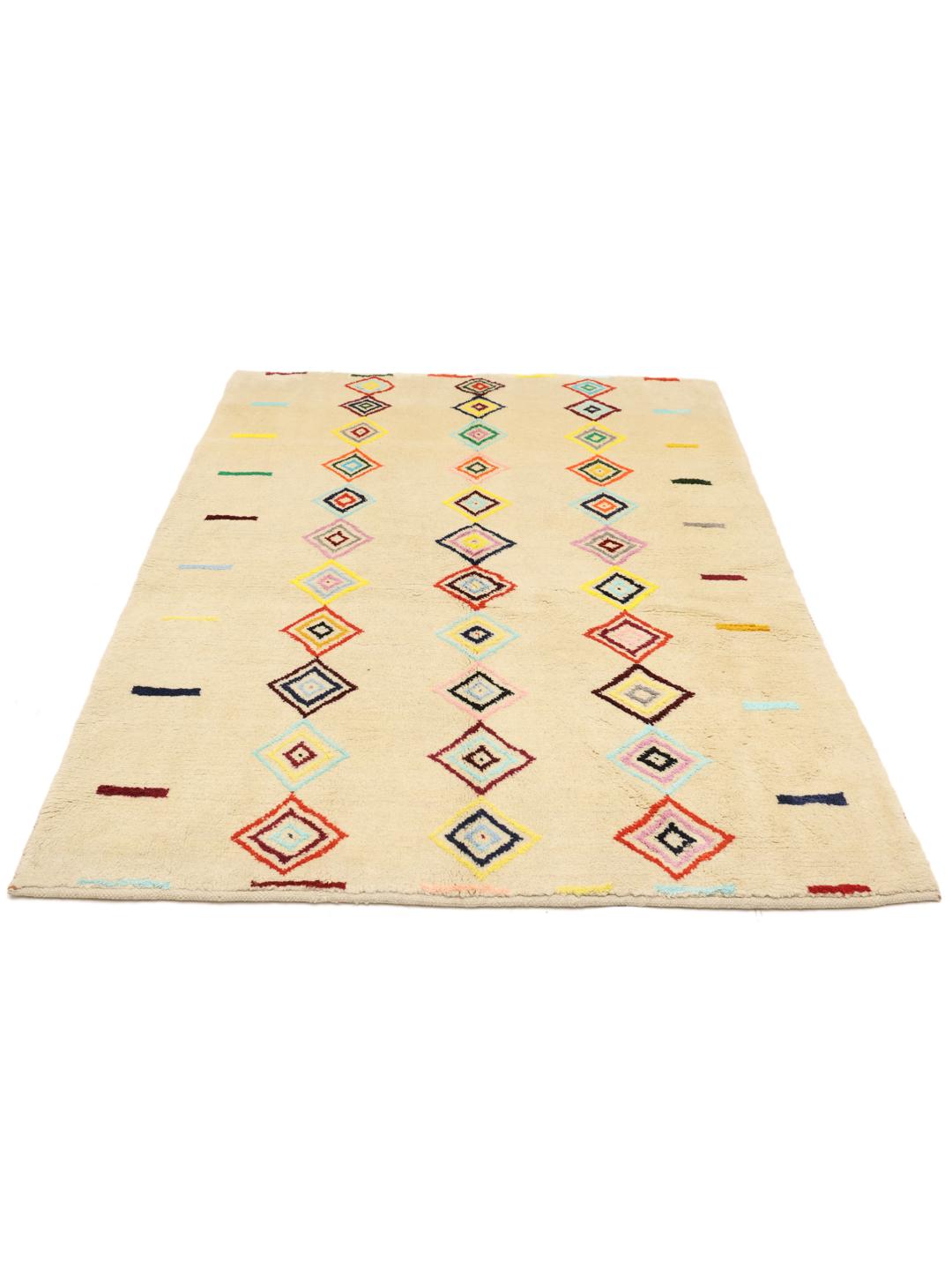
Visually, these rugs are defined by their bold, minimalist approach. While traditional versions often featured sparse, abstract animal or tree motifs, modern interpretations—like this piece—frequently embrace geometric shapes, such as the diamond, to create a sense of order and rhythm. The use of vibrant, often naturally dyed colours against a neutral field creates a striking contrast that is immediately recognisable to those familiar with this regional tradition.
Today, these rugs are highly prized by collectors for their blend of ancient tradition and contemporary aesthetic appeal. Owning a Gabbeh is a way to connect with a long-standing history of nomadic craft, where each rug serves as a canvas for the weaver's creativity. Because they are not mass-produced, they carry a sense of cultural weight and authenticity that brings a unique, storied character to any modern living space.