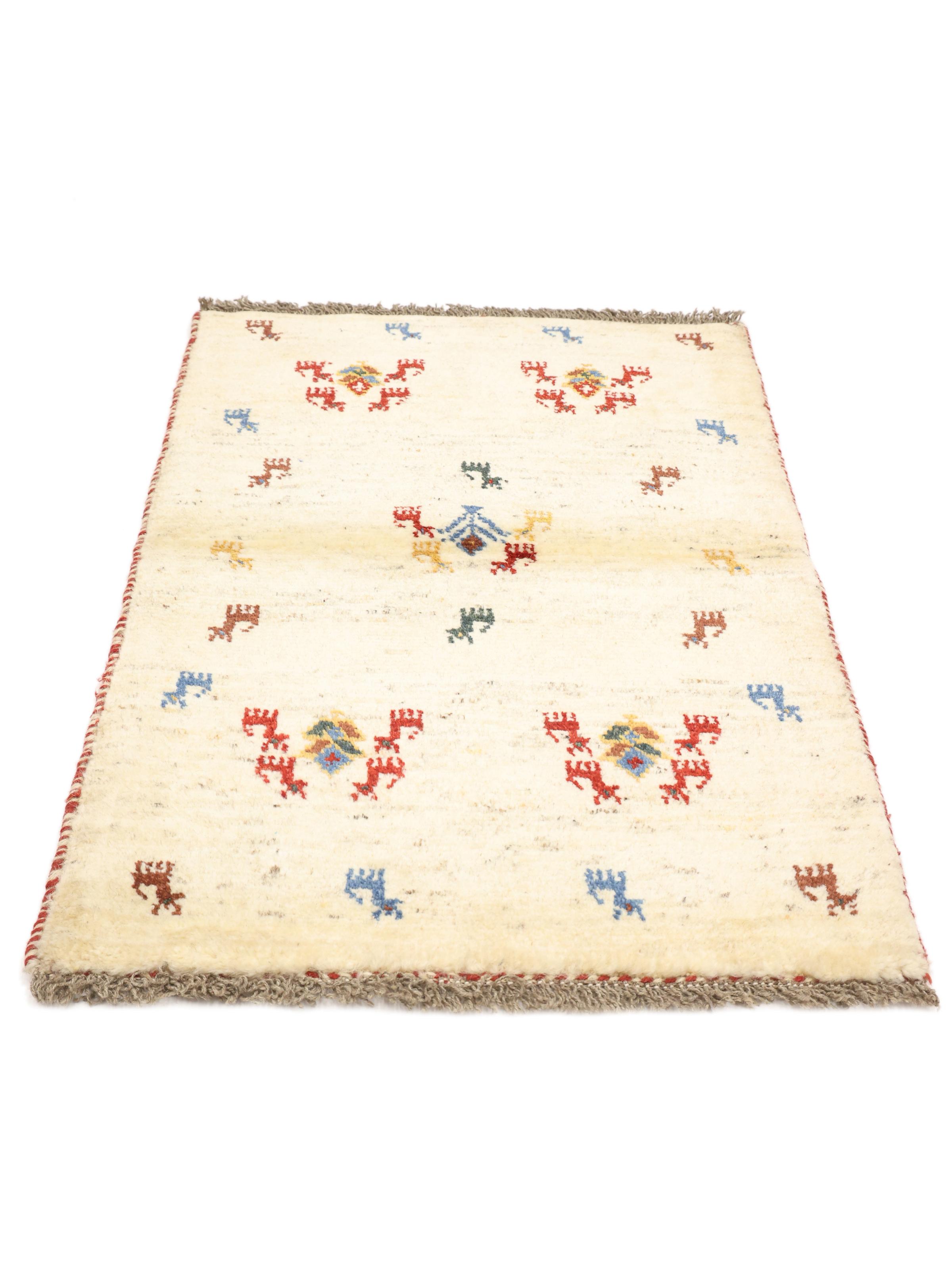
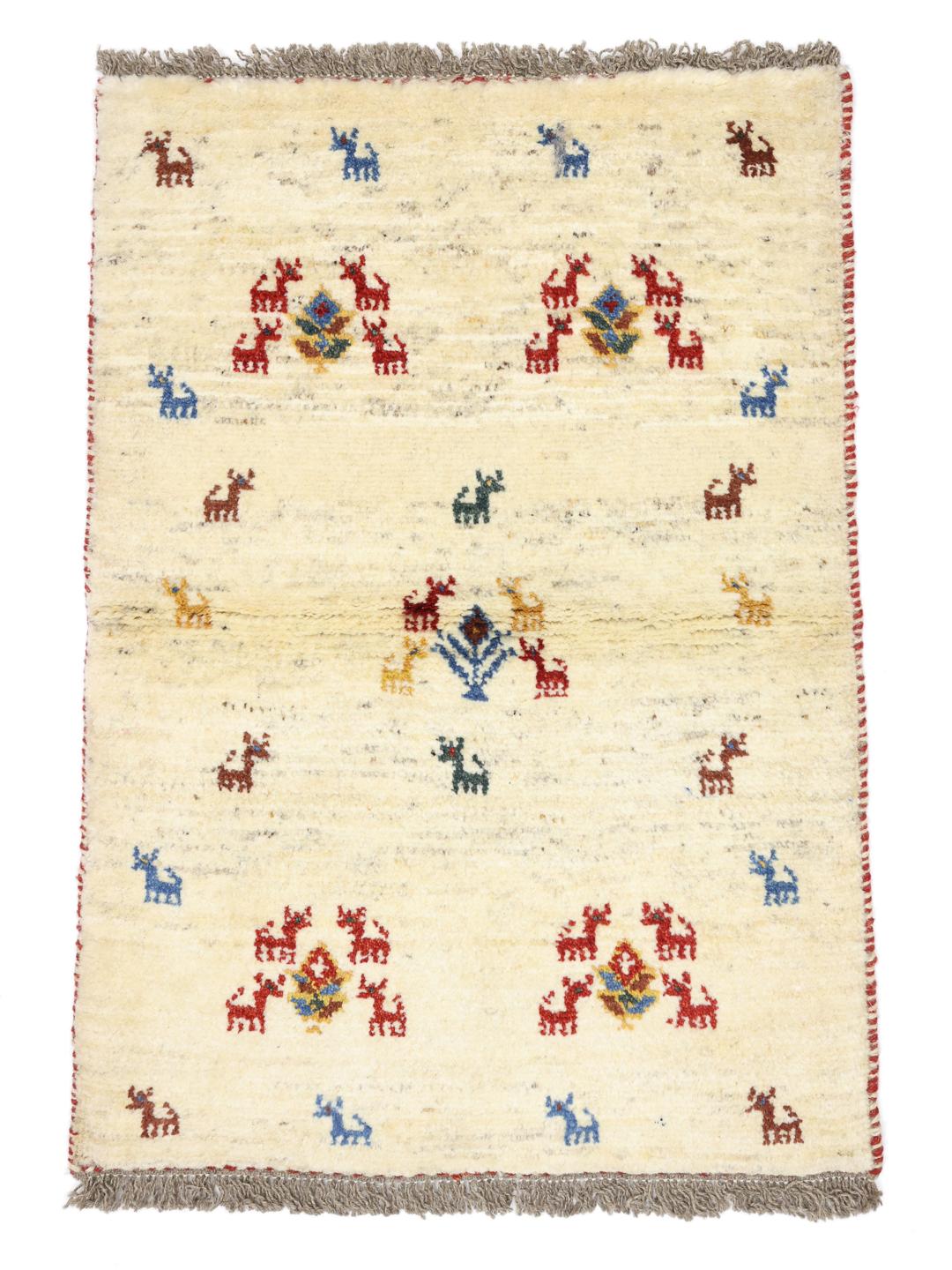
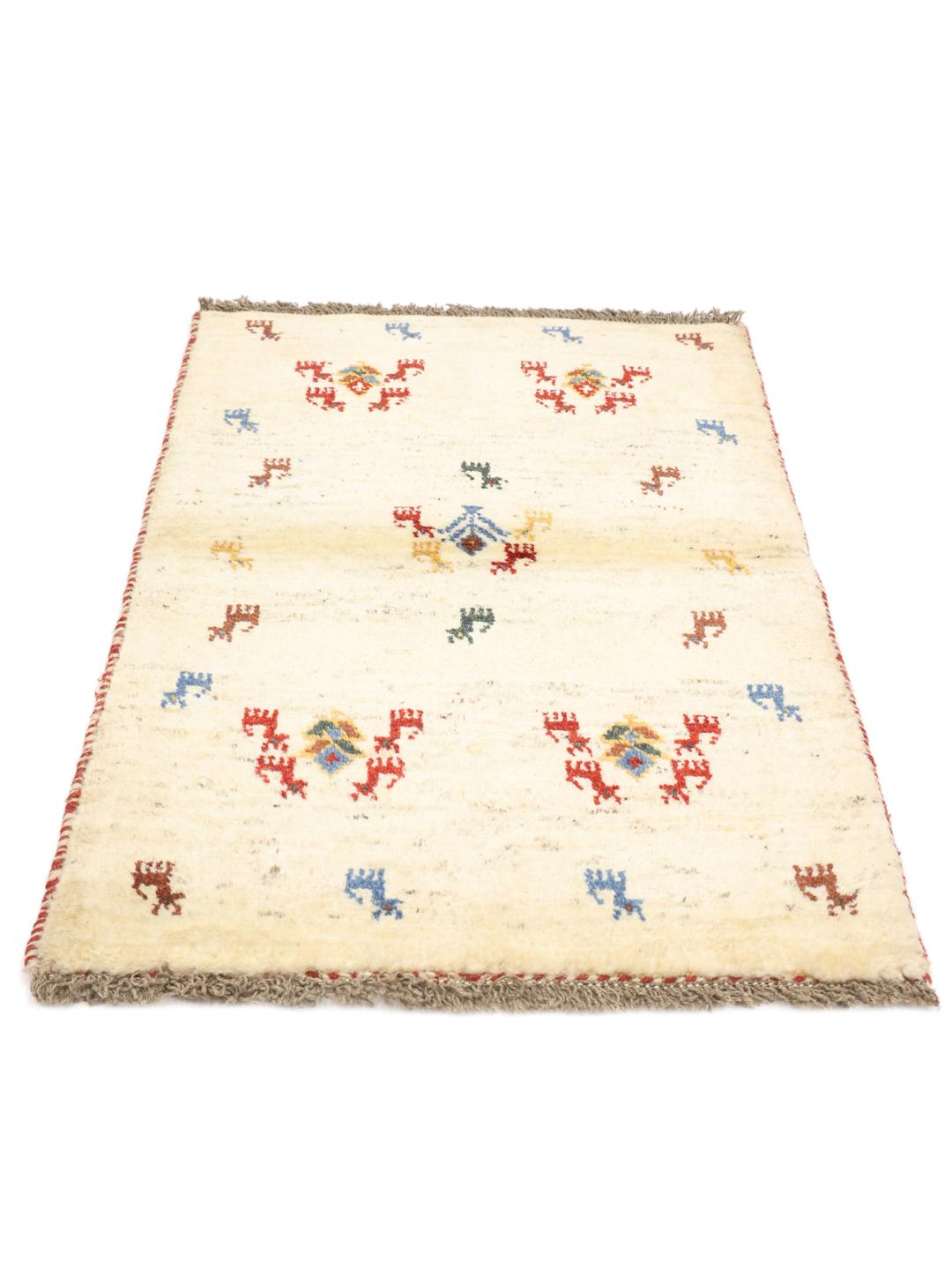
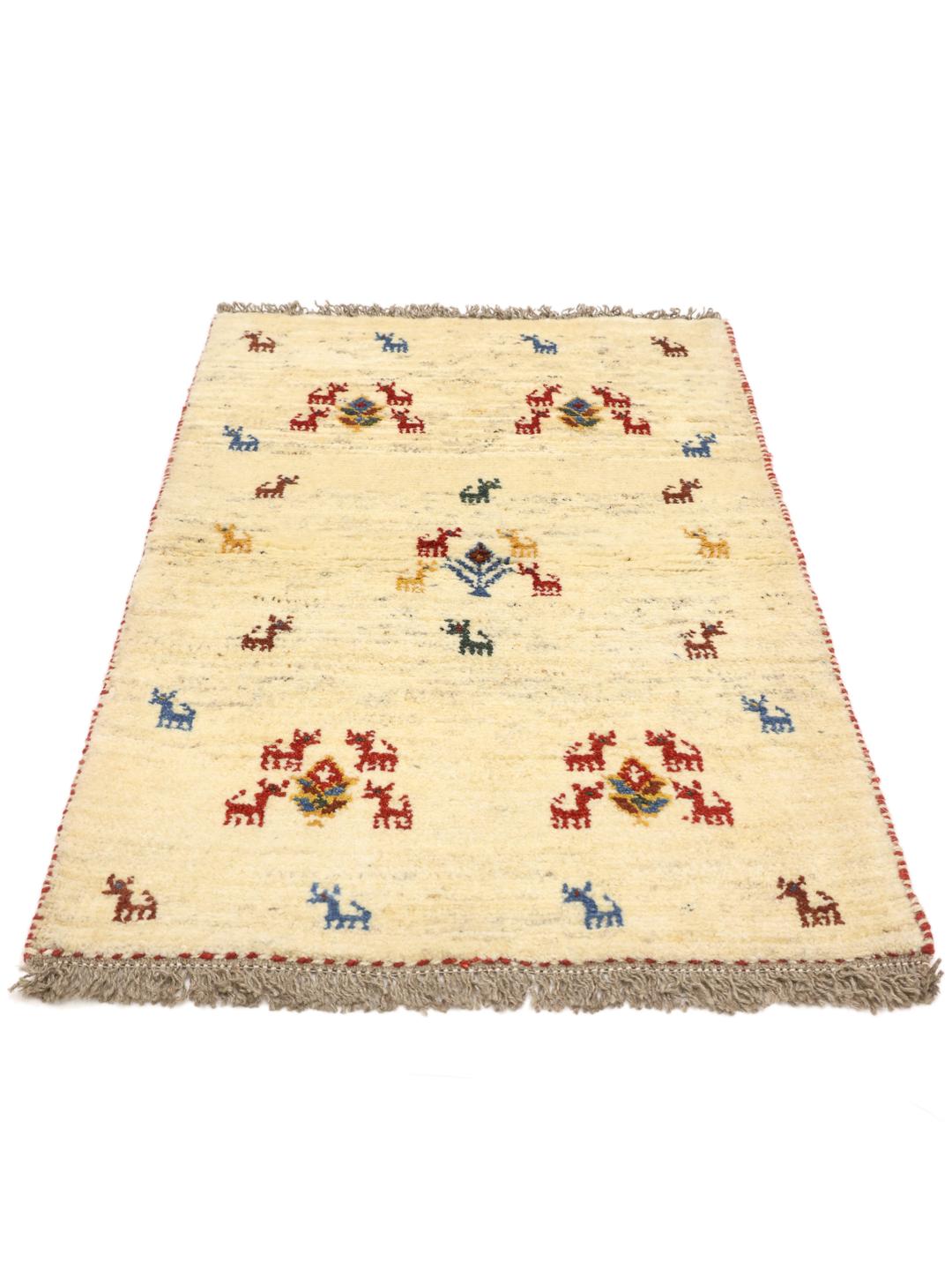
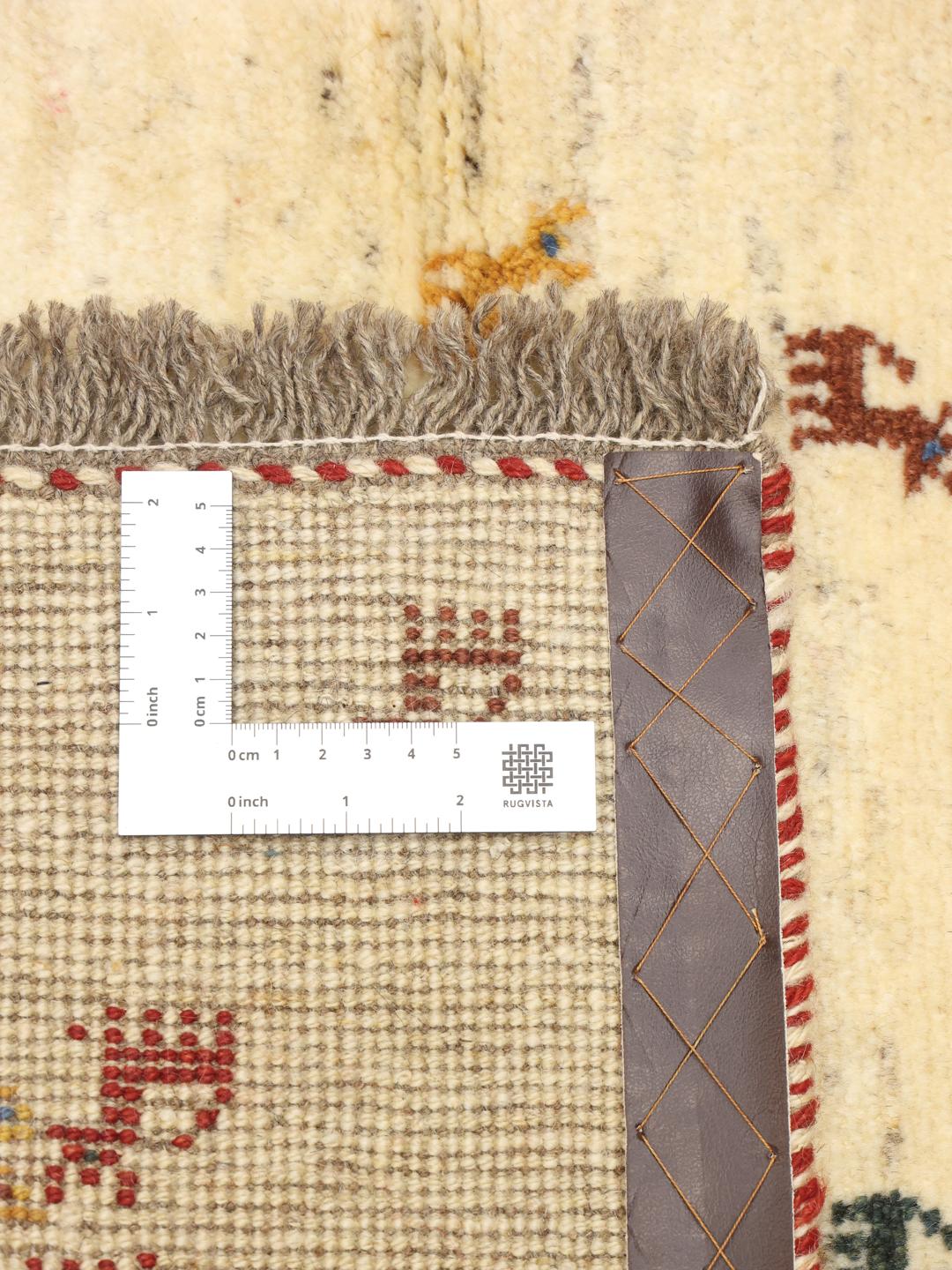
The Gabbeh rug tradition originates from the nomadic tribes of the Middle East, particularly those living in the rugged landscapes of the Zagros Mountains. Traditionally, these rugs were woven by tribal women for personal, practical use within their tents, intended to provide insulation against the cold ground and comfort for family life.
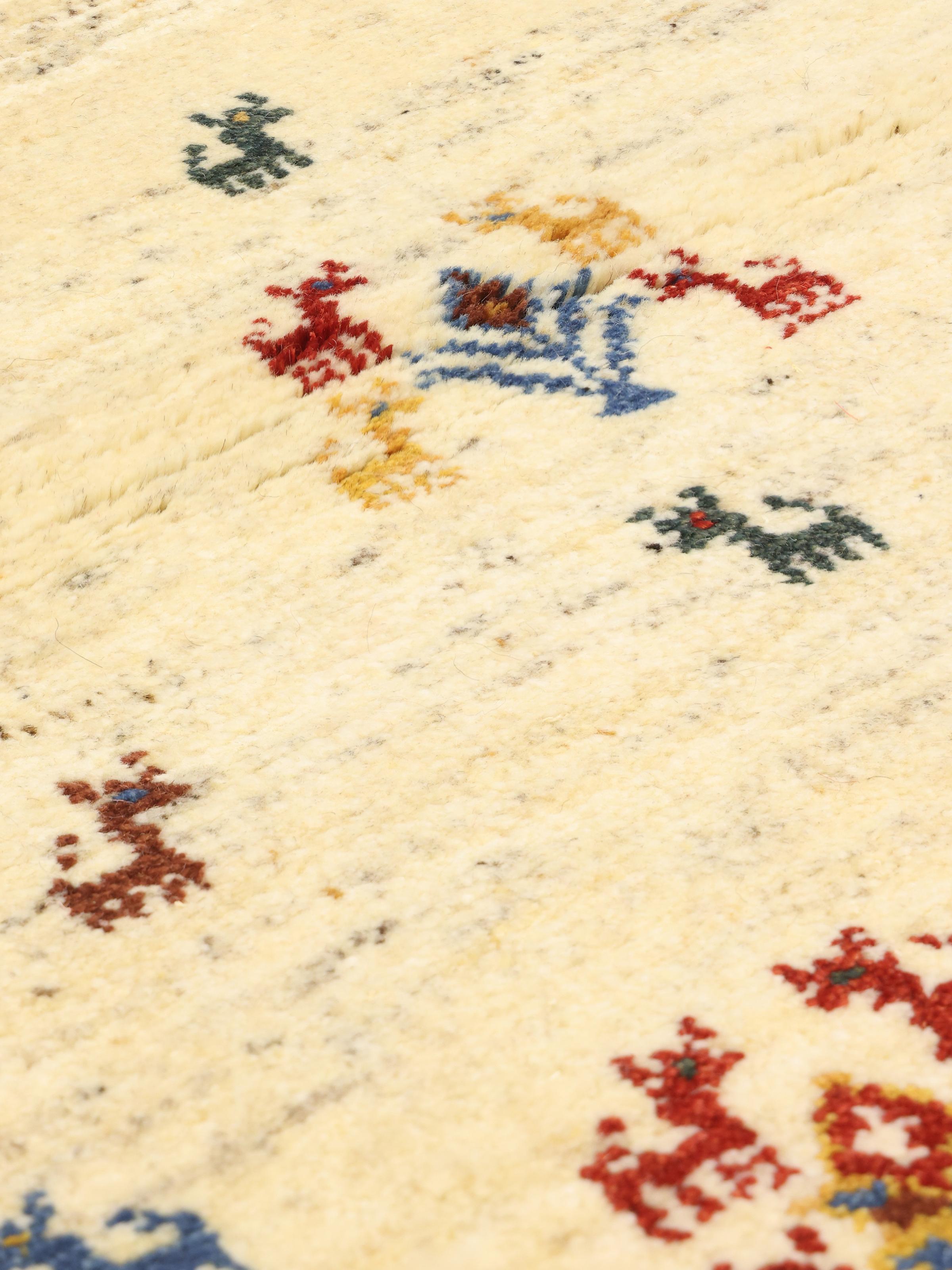
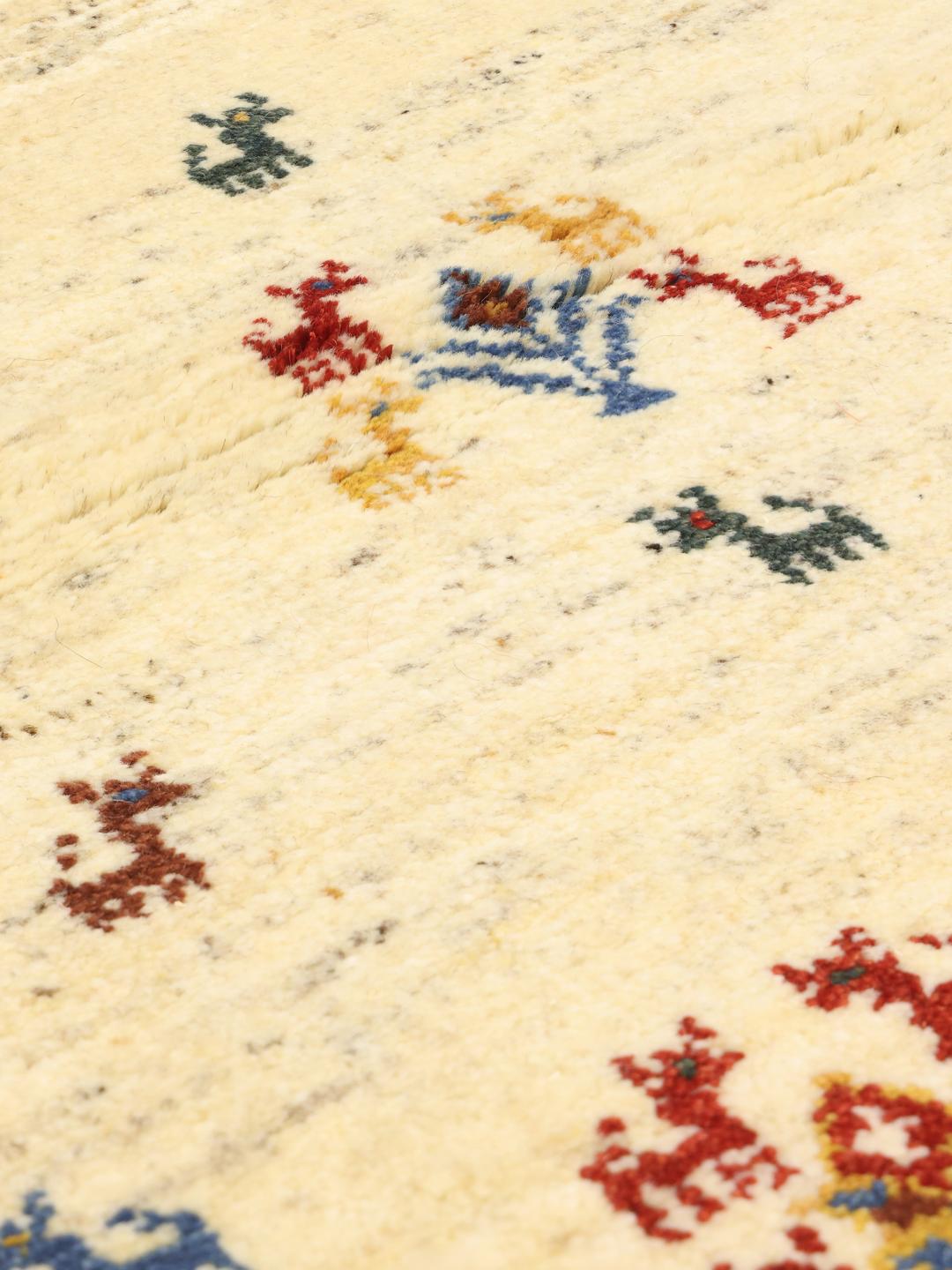
The word 'Gabbeh' itself translates to 'raw' or 'natural', reflecting the unrefined, spontaneous nature of these pieces. Unlike formal urban rugs, Gabbehs are defined by their free-form designs and thick, plush piles. The technical quality is rooted in the use of hand-spun wool, which retains its natural oils, leading to a softer, more lustrous surface that ages beautifully over time.
Visually, these rugs are celebrated for their artistic simplicity. While many Middle Eastern rugs focus on intricate, symmetrical floral patterns, Gabbeh rugs often feature vast, open fields of colour punctuated by abstract, stylized animal motifs, geometric shapes, or representations of the weaver's environment. This rug's charming animal figures are a hallmark of the style, representing the deep connection between the weavers and the natural world surrounding them.
Today, these rugs are highly prized by collectors for their authenticity and the human element present in every thread. They are not merely floor coverings, but records of a way of life that values individual expression and traditional skill. Acquiring a Gabbeh is an investment in cultural heritage, offering a piece of art that brings a grounded, honest beauty into a contemporary home.