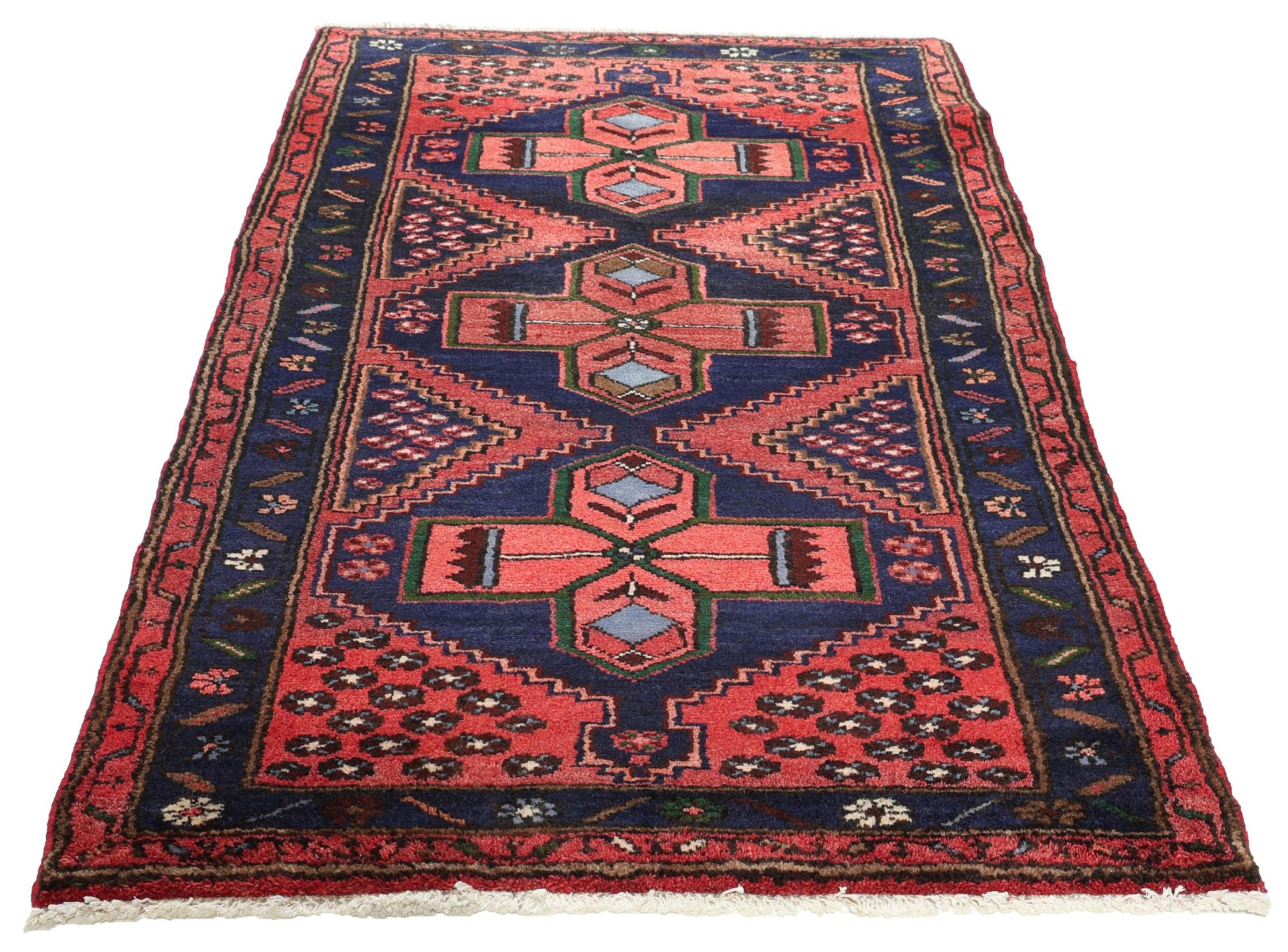
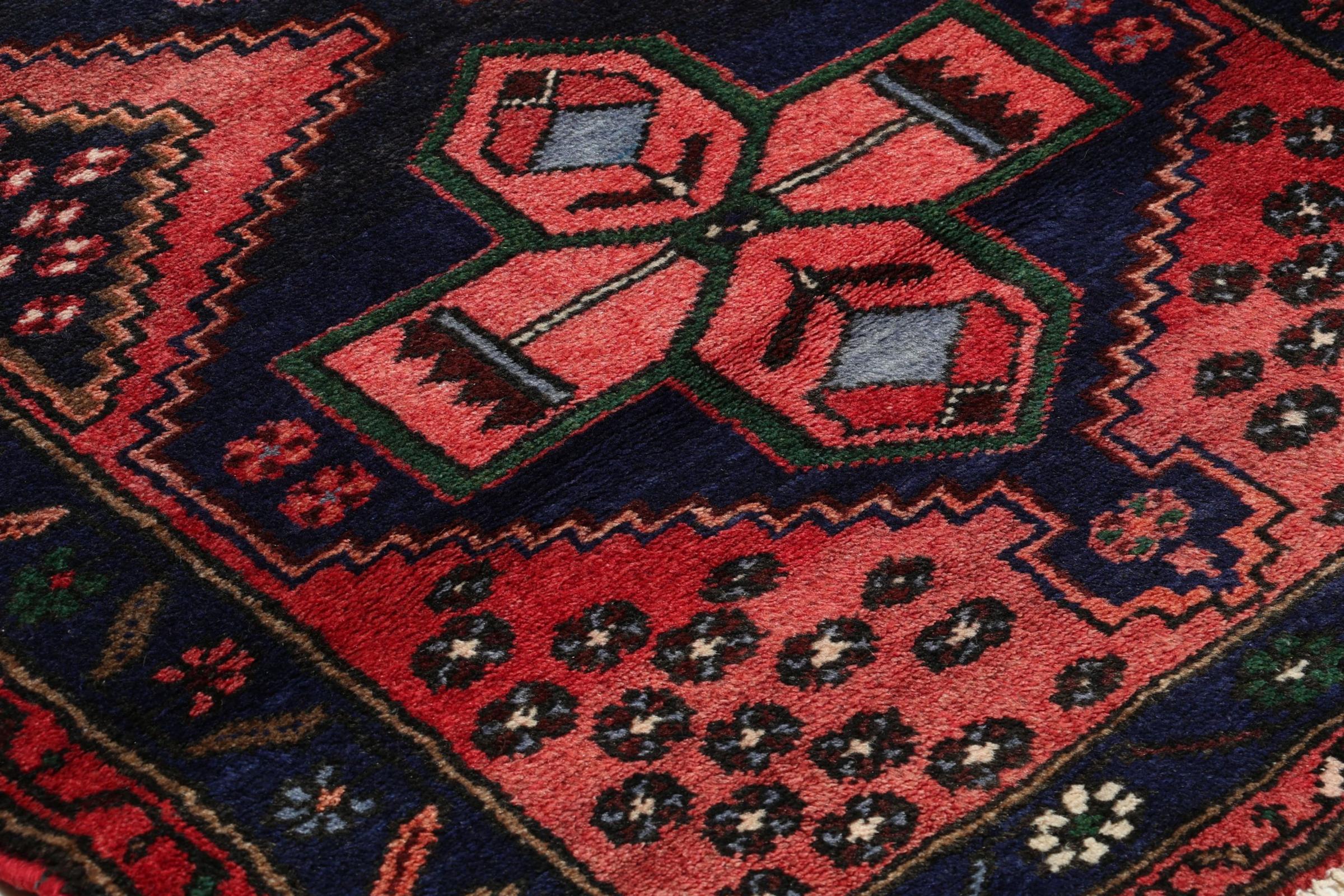
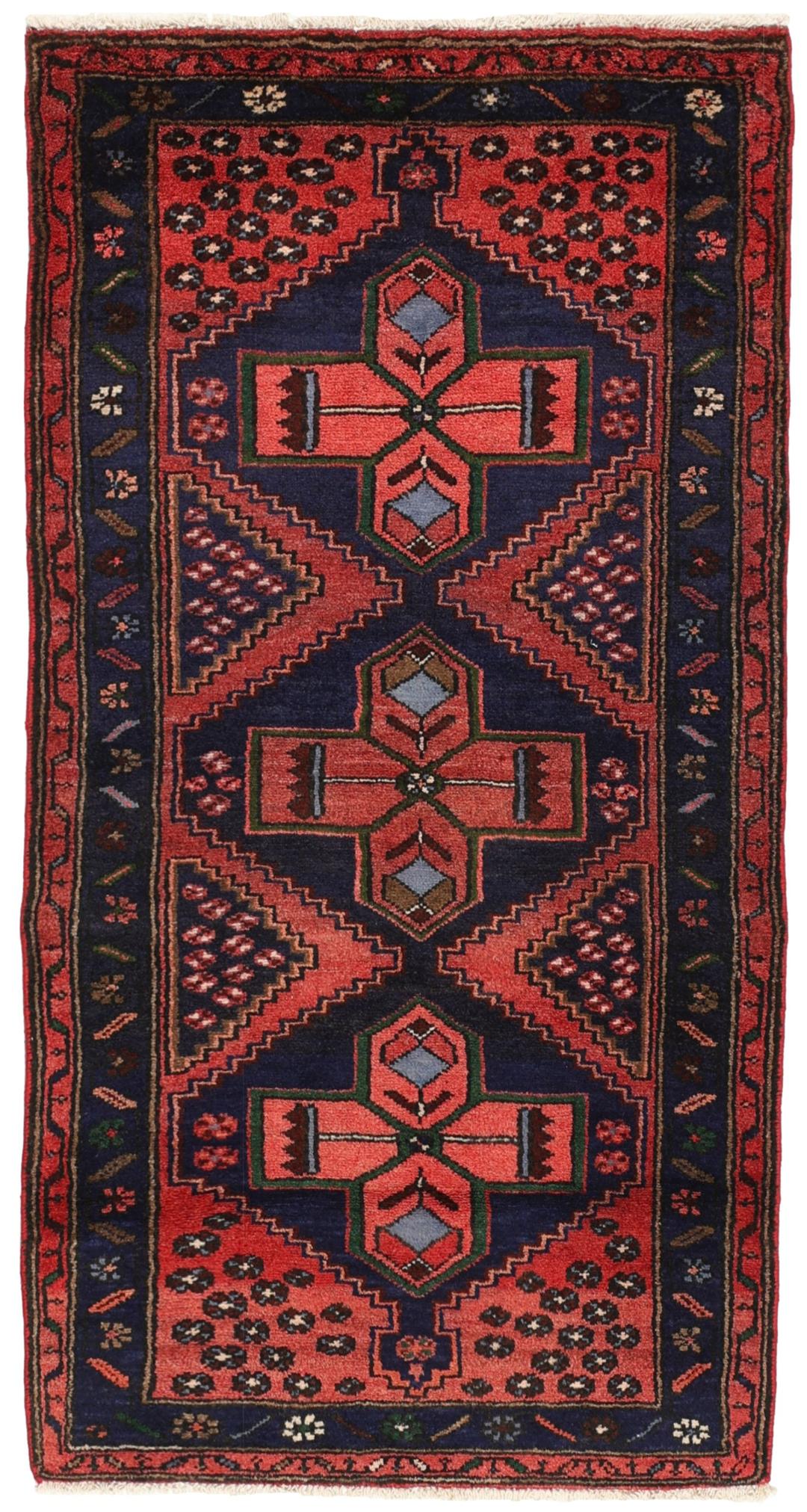
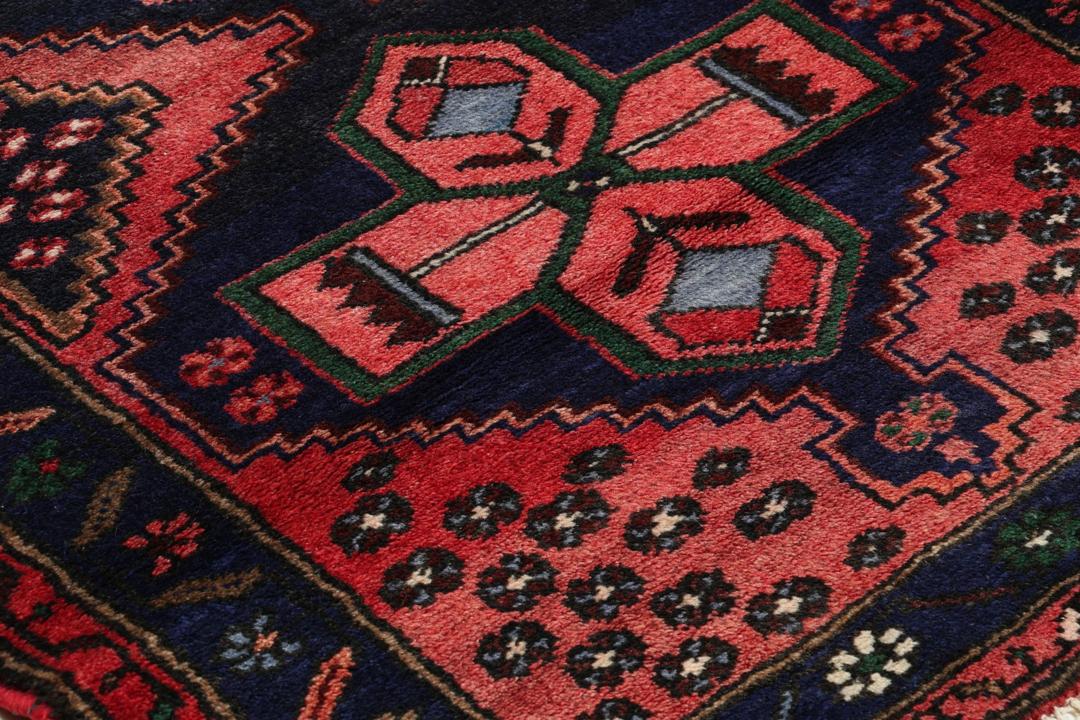
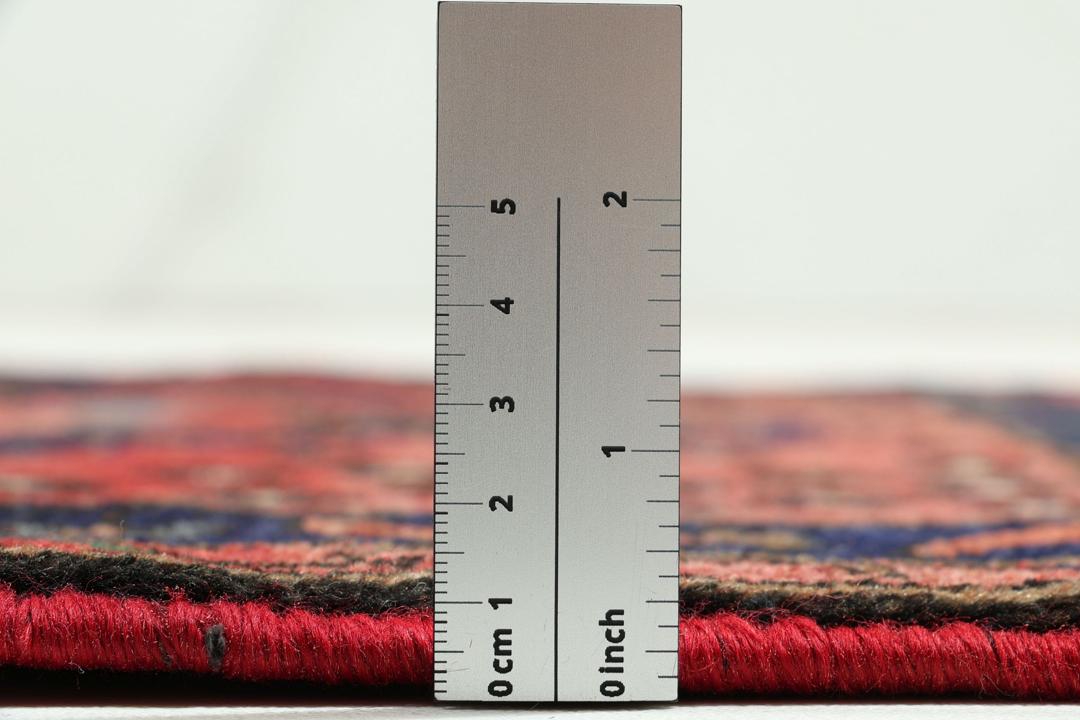
Hamadan rugs take their name from one of the oldest cities in the world, located in the mountainous region of the Middle East. For centuries, this city has served as a vital trading hub, connecting nomadic tribes and village weavers with the wider world. The rugs produced in this area are celebrated for their durability and their ability to reflect the unique cultural identity of the diverse weaving communities that call this region home.
The term Hamadan does not refer to a single, rigid style but rather to a vast category of rugs that share a common origin. These rugs are known for their high-quality wool, which is often sourced from the surrounding highland sheep. This wool is renowned for its natural oils and strength, which contribute to the lustrous finish and long-lasting nature of the pile, ensuring that the rug remains a staple in your home for decades.
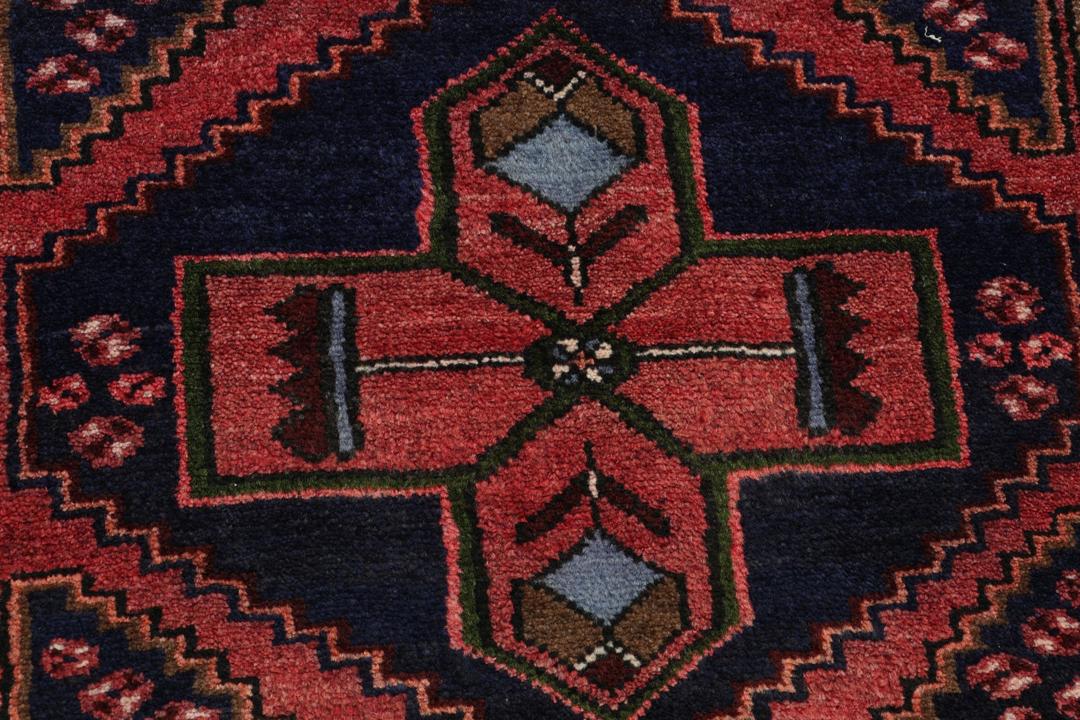
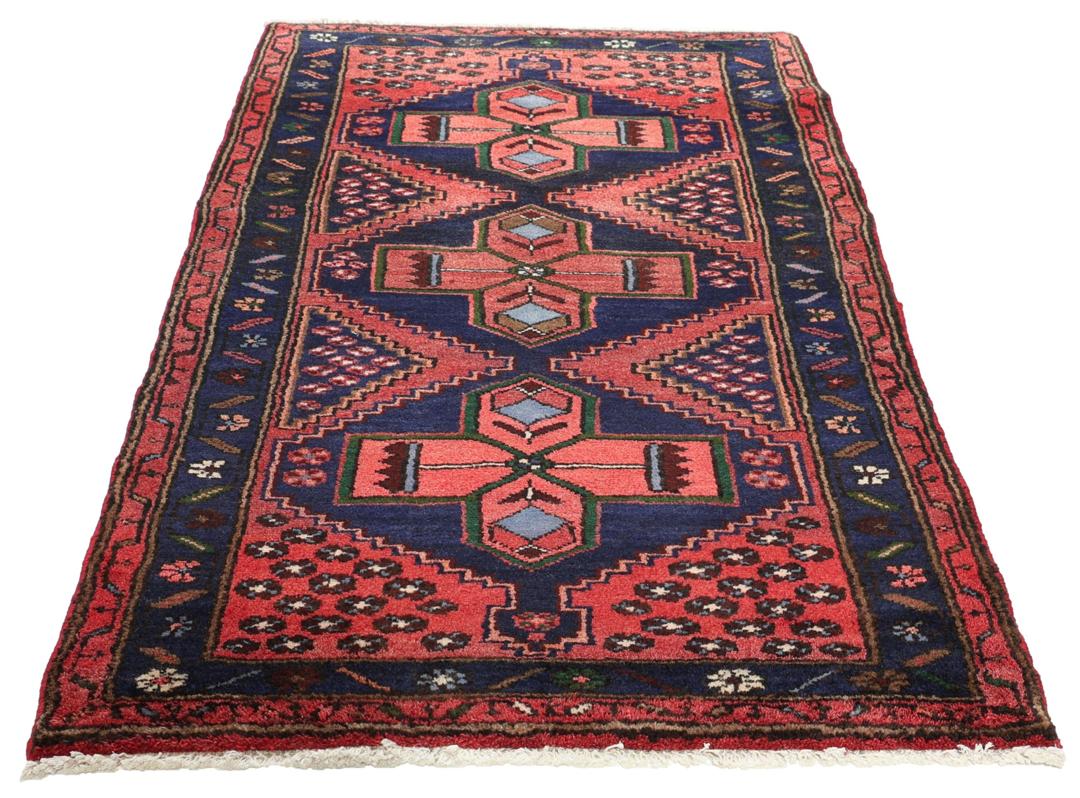
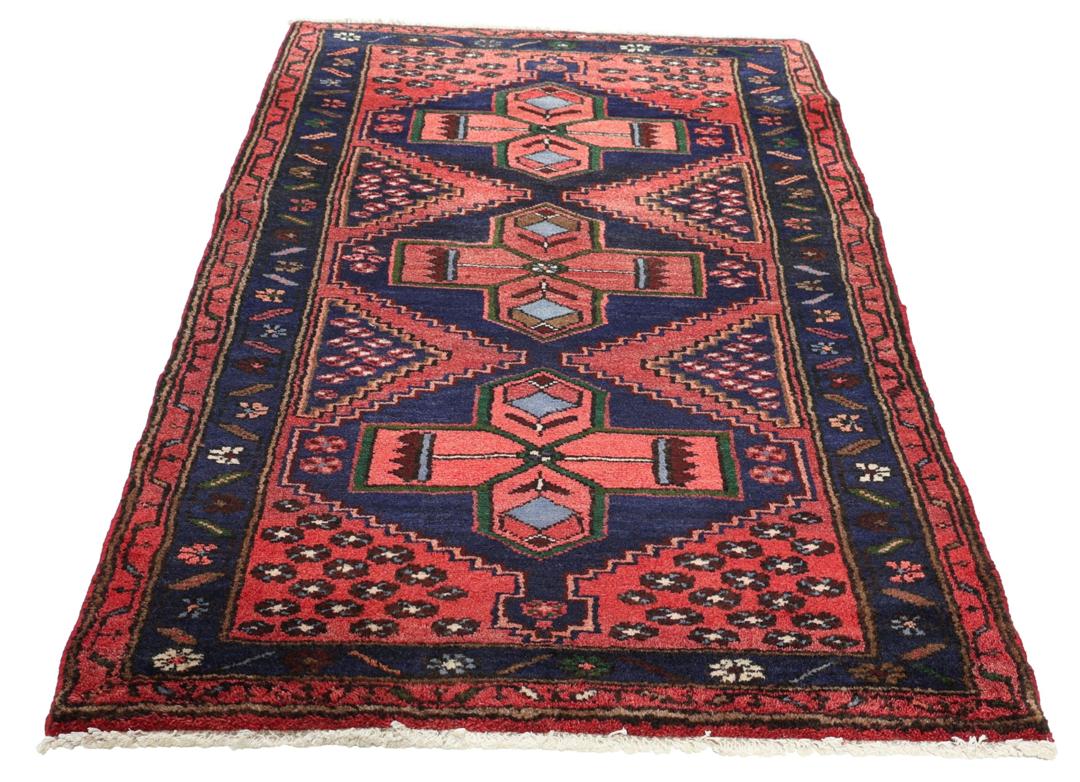
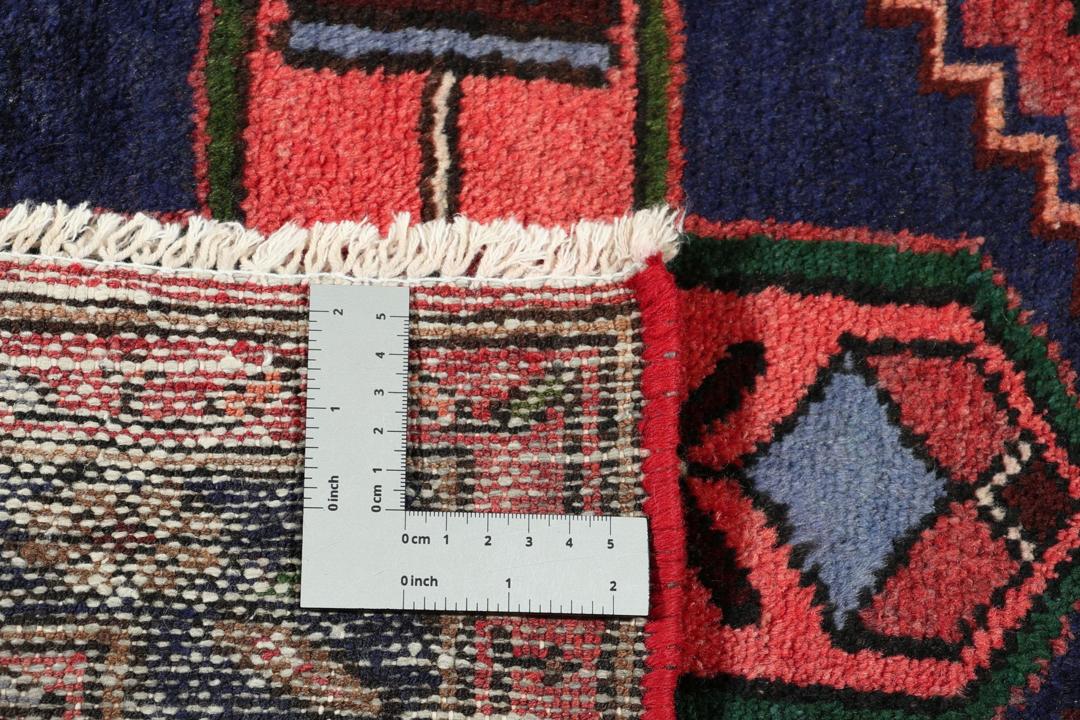
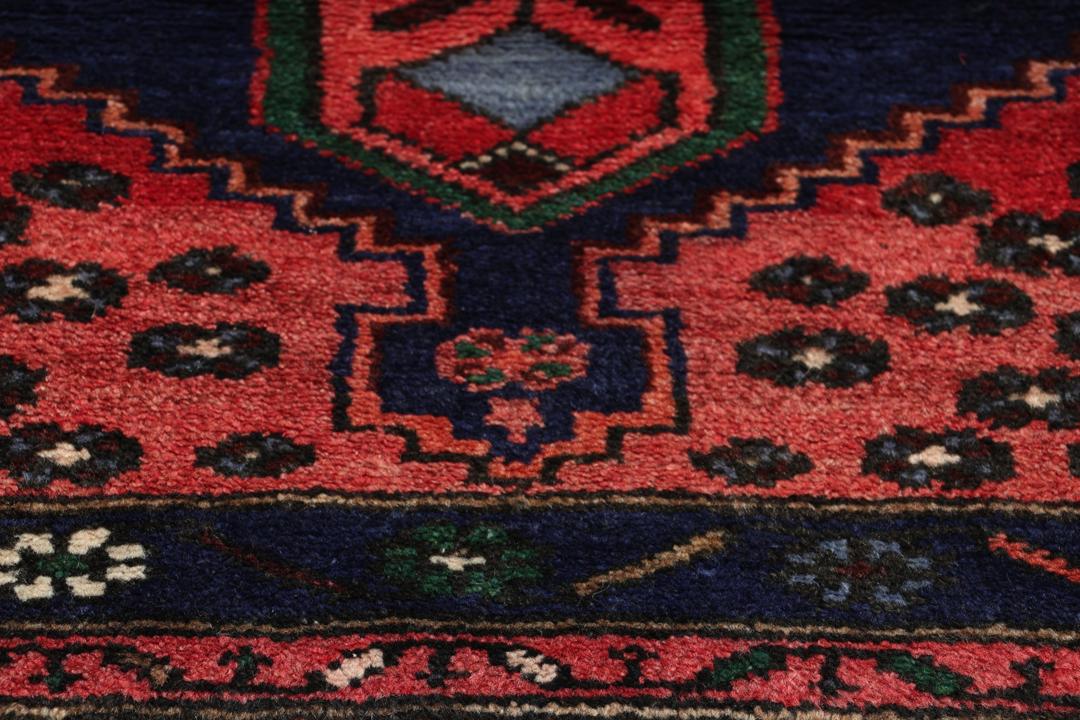
Visually, these rugs are characterised by their bold, often geometric motifs, which frequently include medallions, floral sprays, or repeating patterns. The design language is a blend of tribal spontaneity and formal structure, often featuring a deep, dark-blue field contrasted with vibrant red accents. Every design element tells a story of the local environment, from the stylised flowers that mirror the mountain springs to the geometric borders that frame the composition.
Collecting a Hamadan rug is an investment in a storied tradition that has been passed down through generations. These pieces are valued not only for their striking visual appeal but also for the cultural weight they carry. By bringing this rug into your home, you are preserving a legacy of skill and creativity that bridges the gap between ancient traditions and modern living.