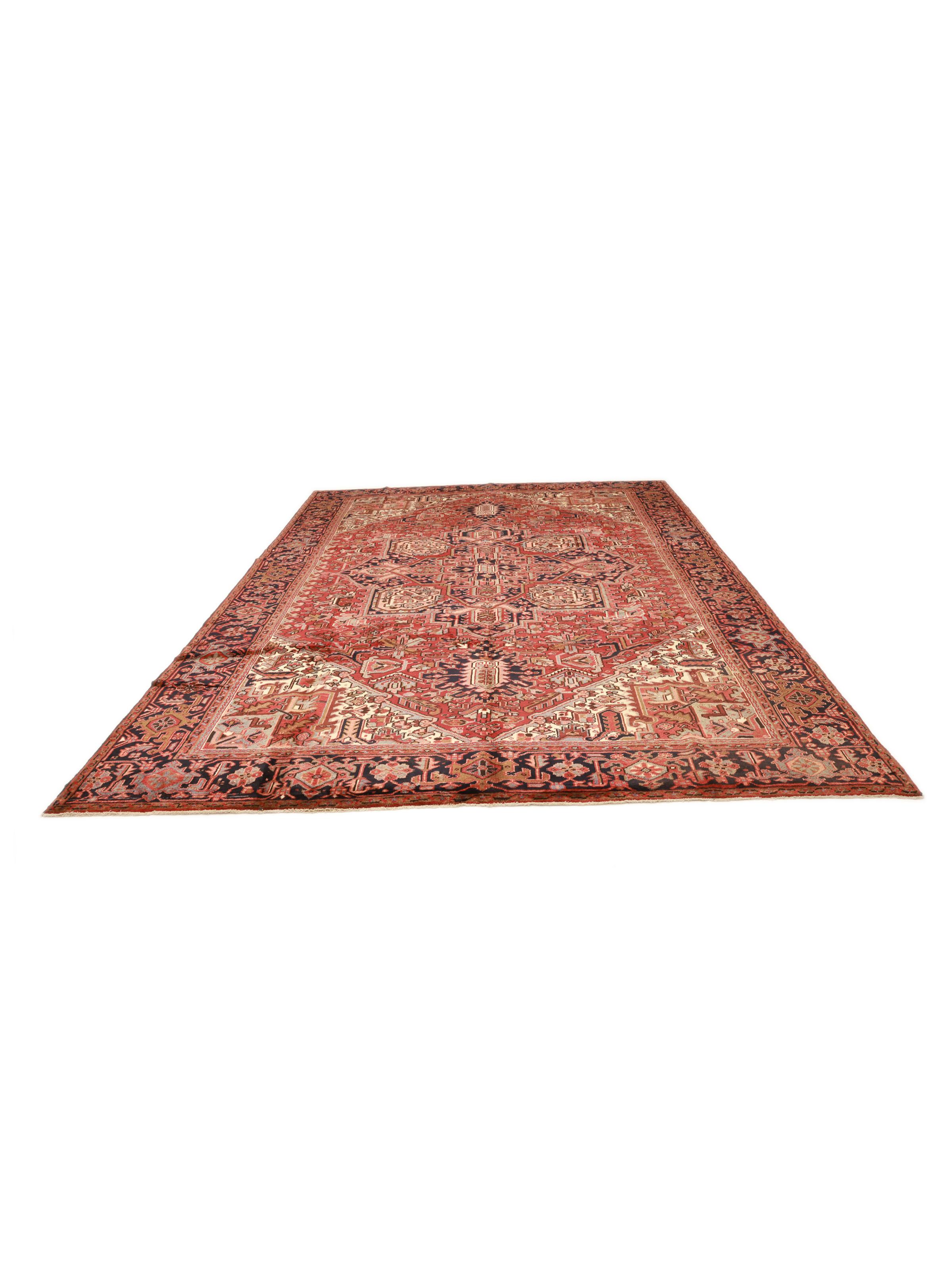
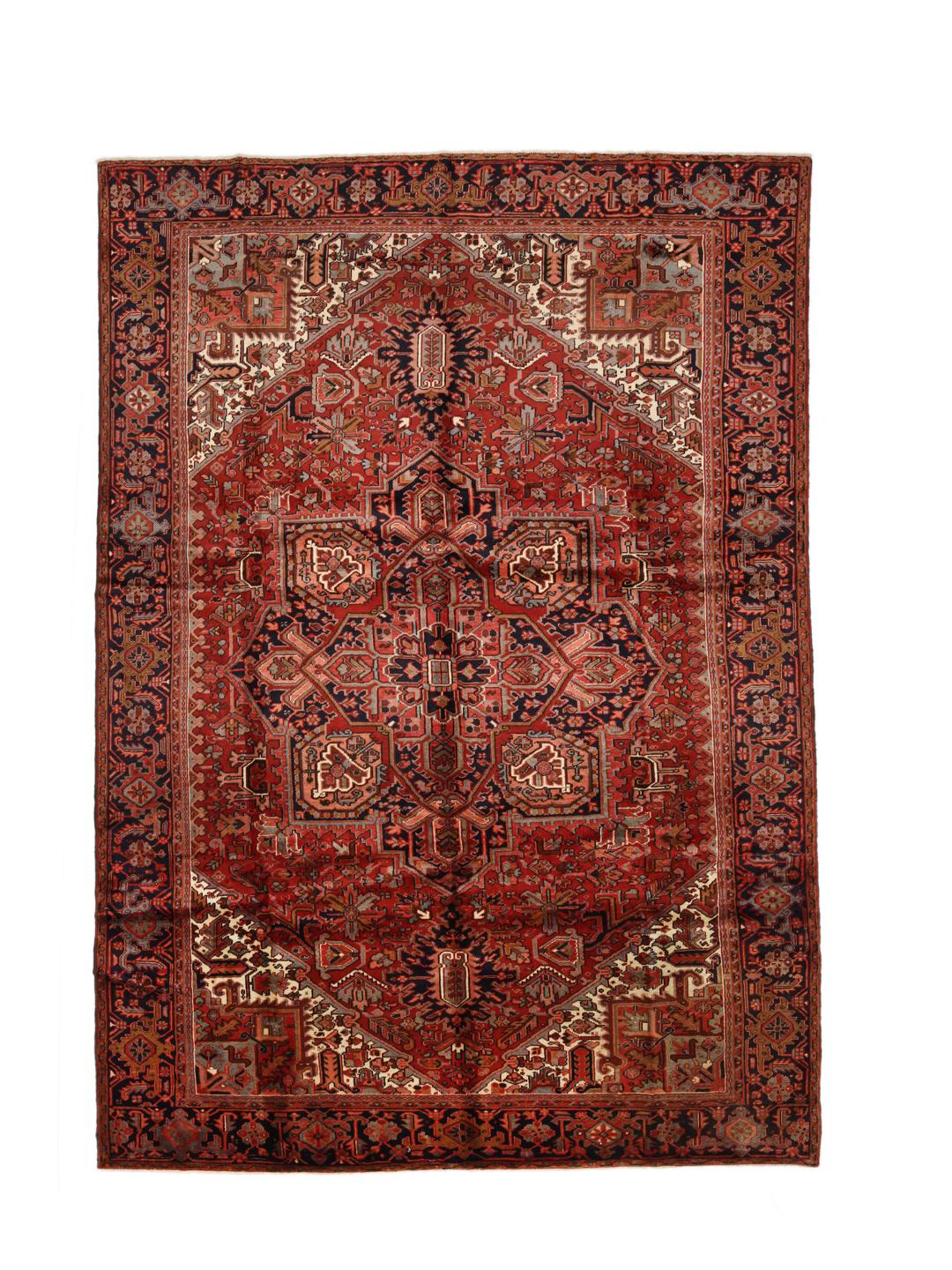
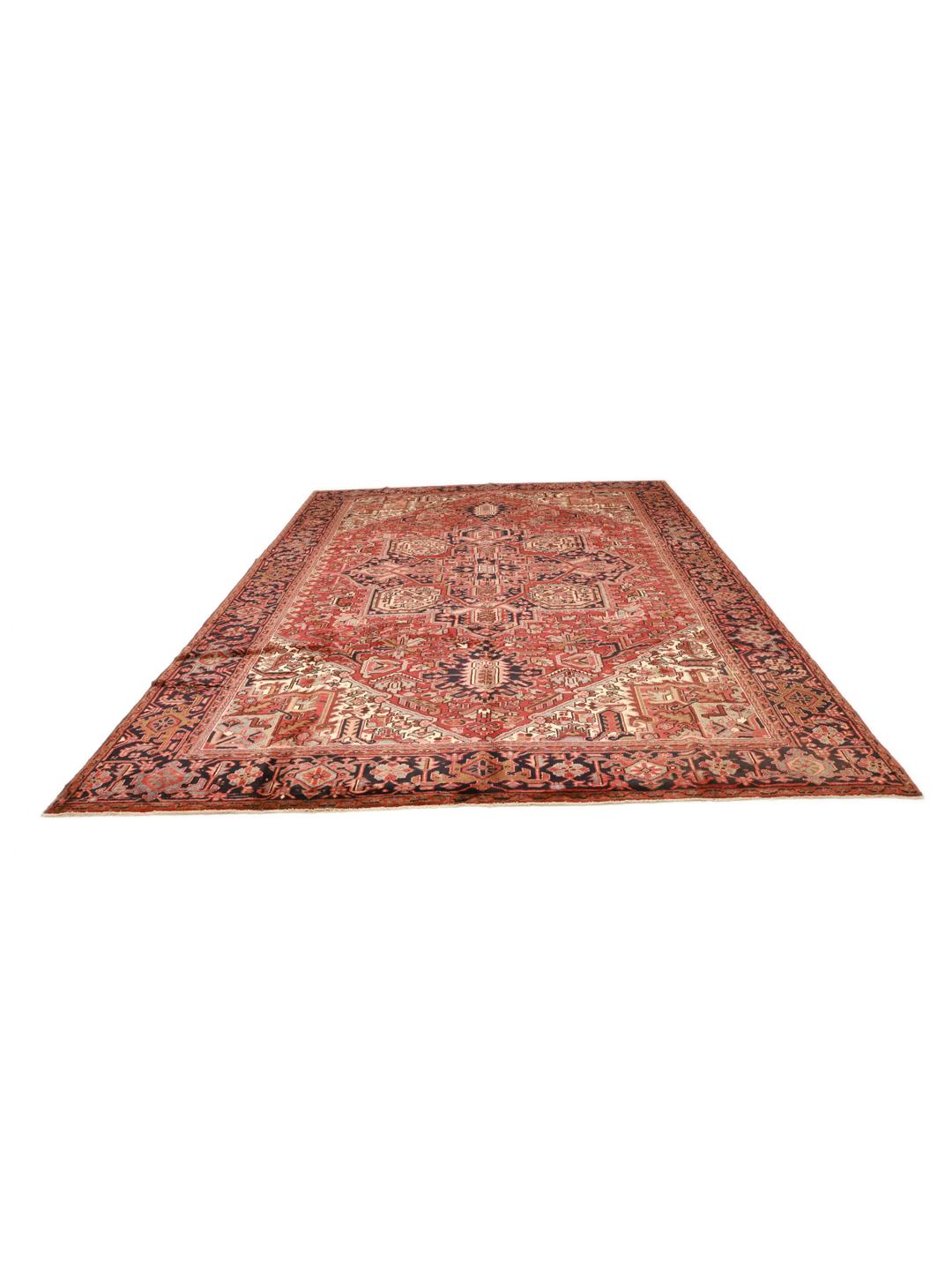
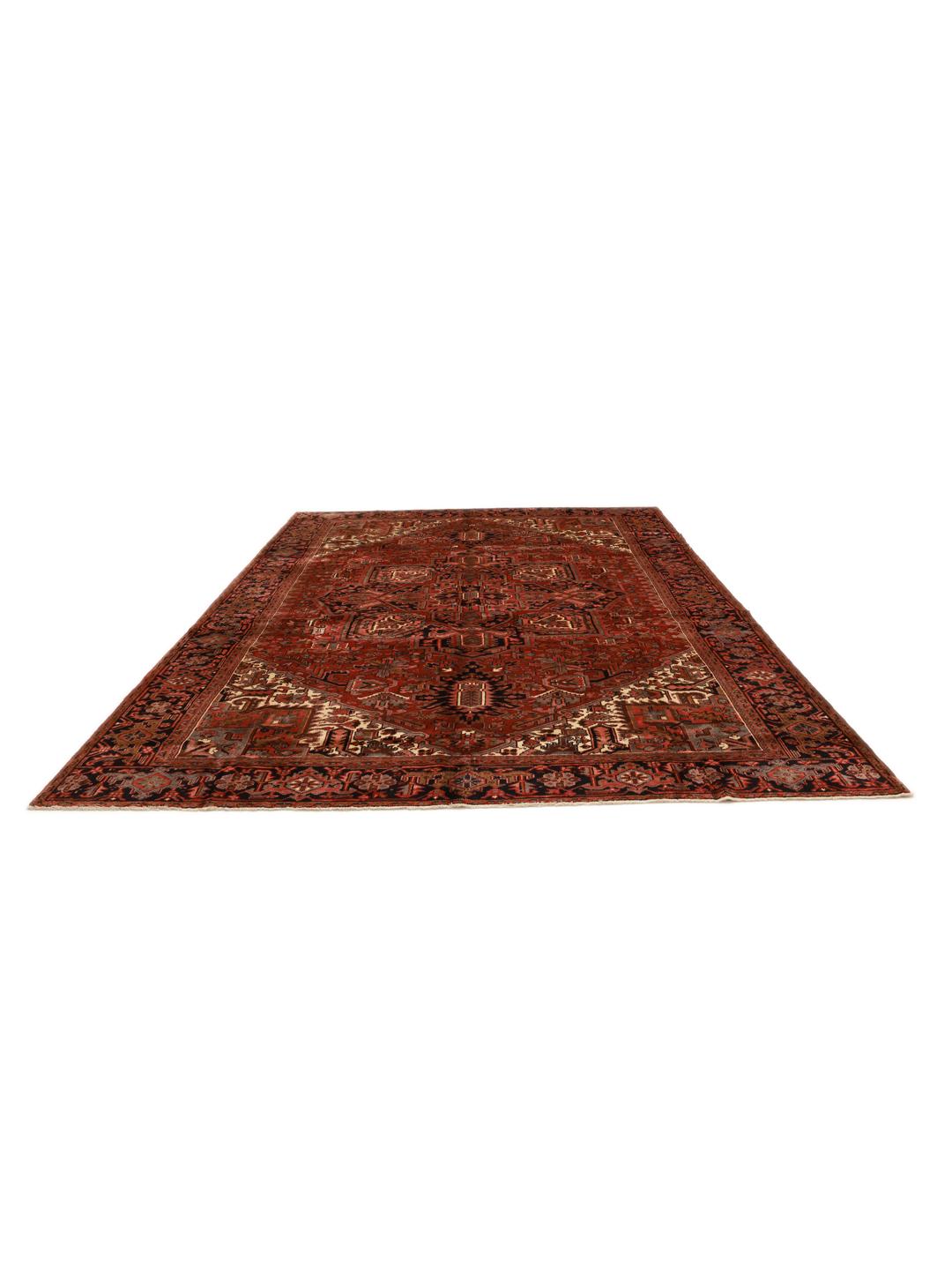
Heriz rugs originate from the mountainous region of East Azerbaijan in the Middle East, specifically around the town of Heriz. This area has a long-standing tradition of weaving that is deeply connected to the rugged landscape and local culture. Unlike the more delicate, curvilinear designs found in urban centres, Heriz rugs are celebrated for their powerful, bold, and highly stylized geometric patterns that mirror the strength of the surrounding high-altitude environment.
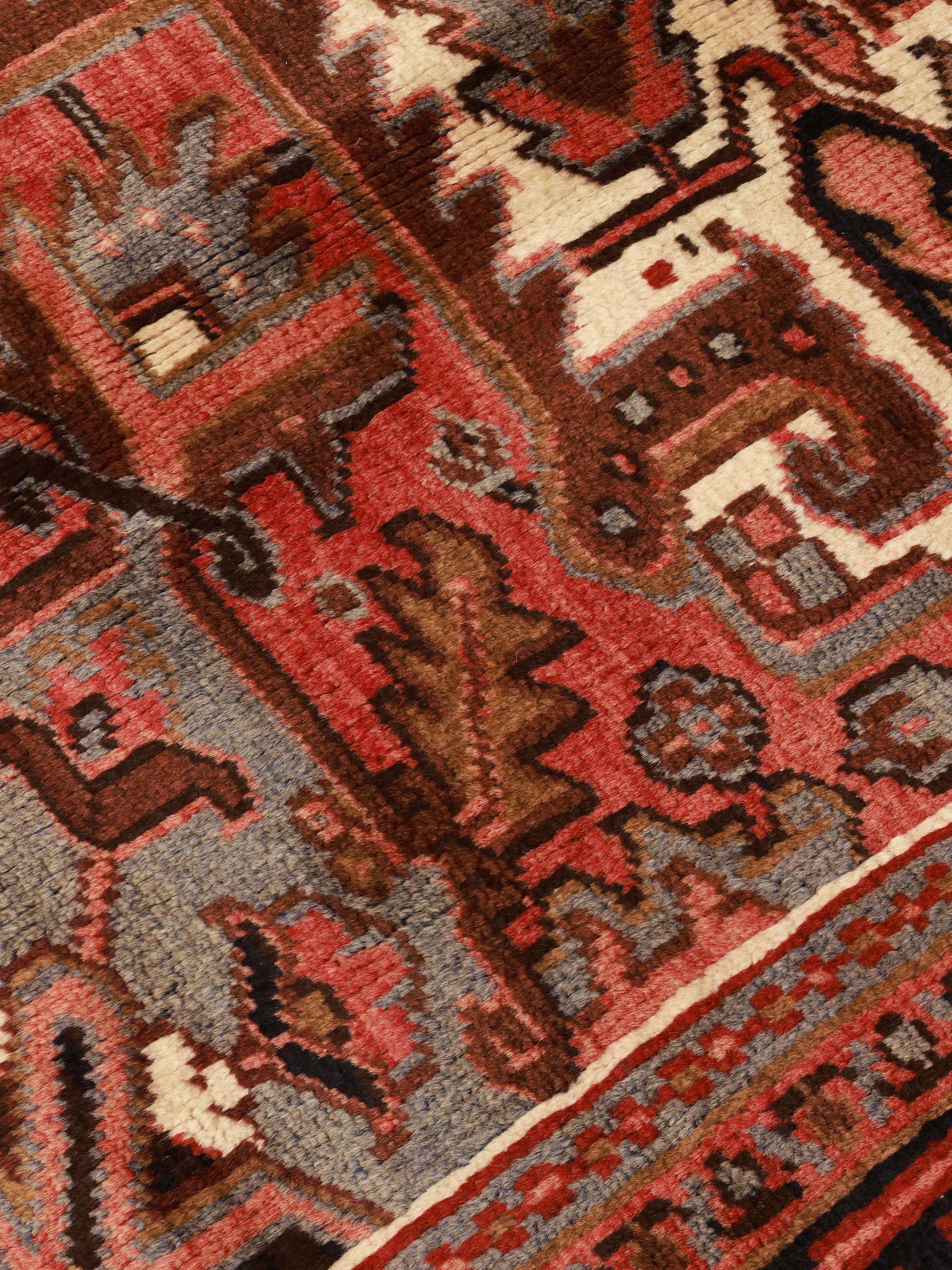
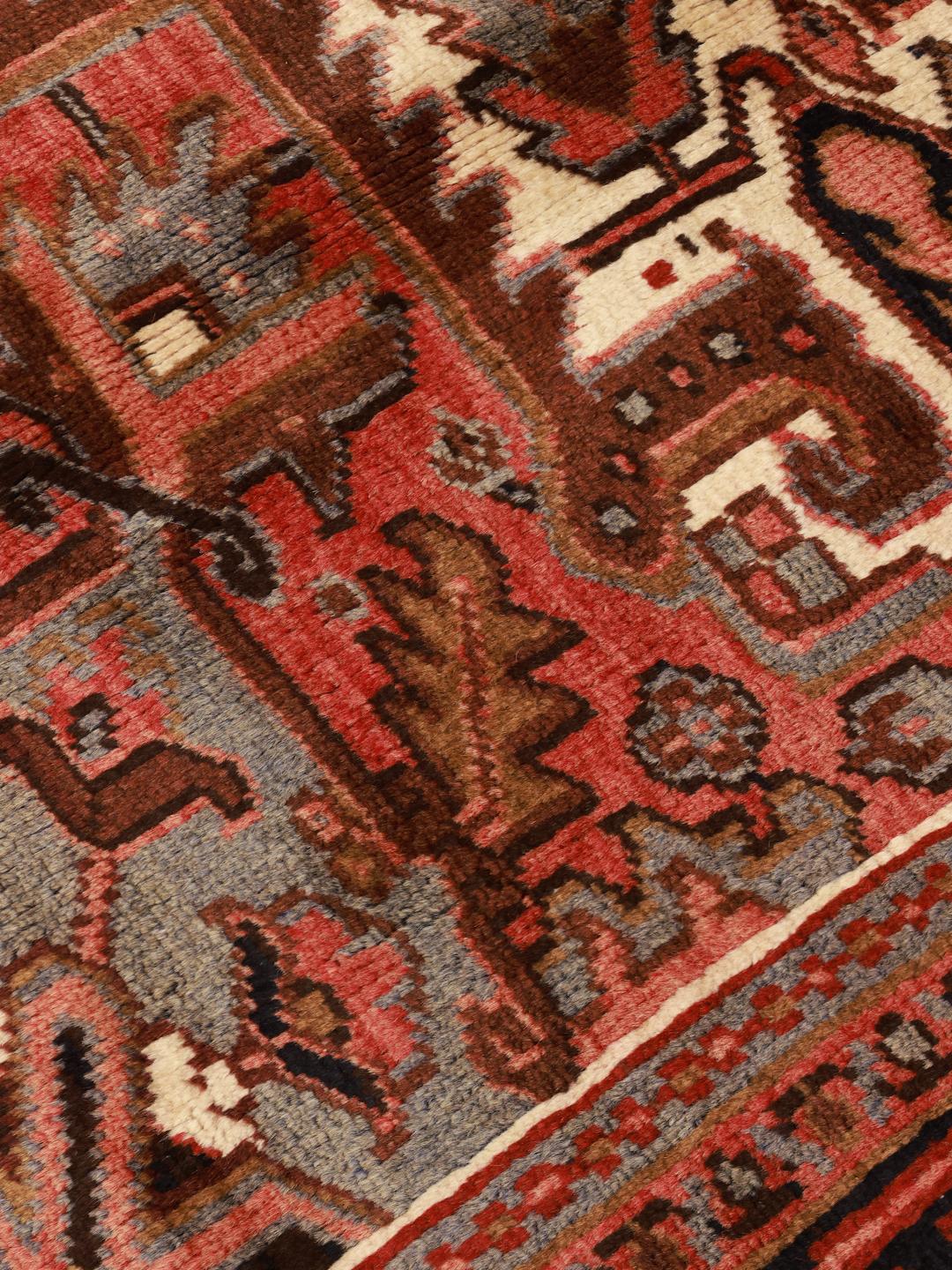
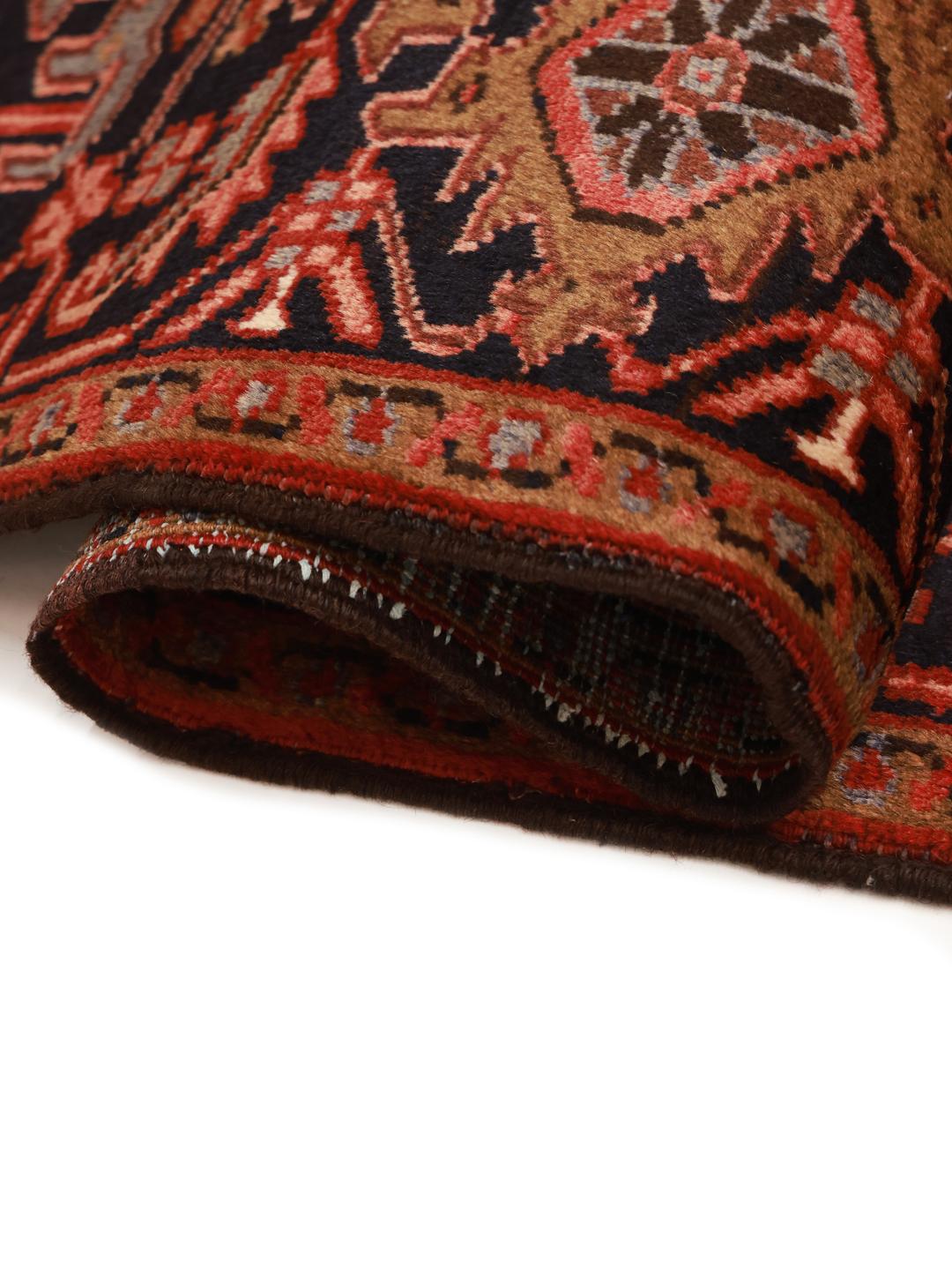
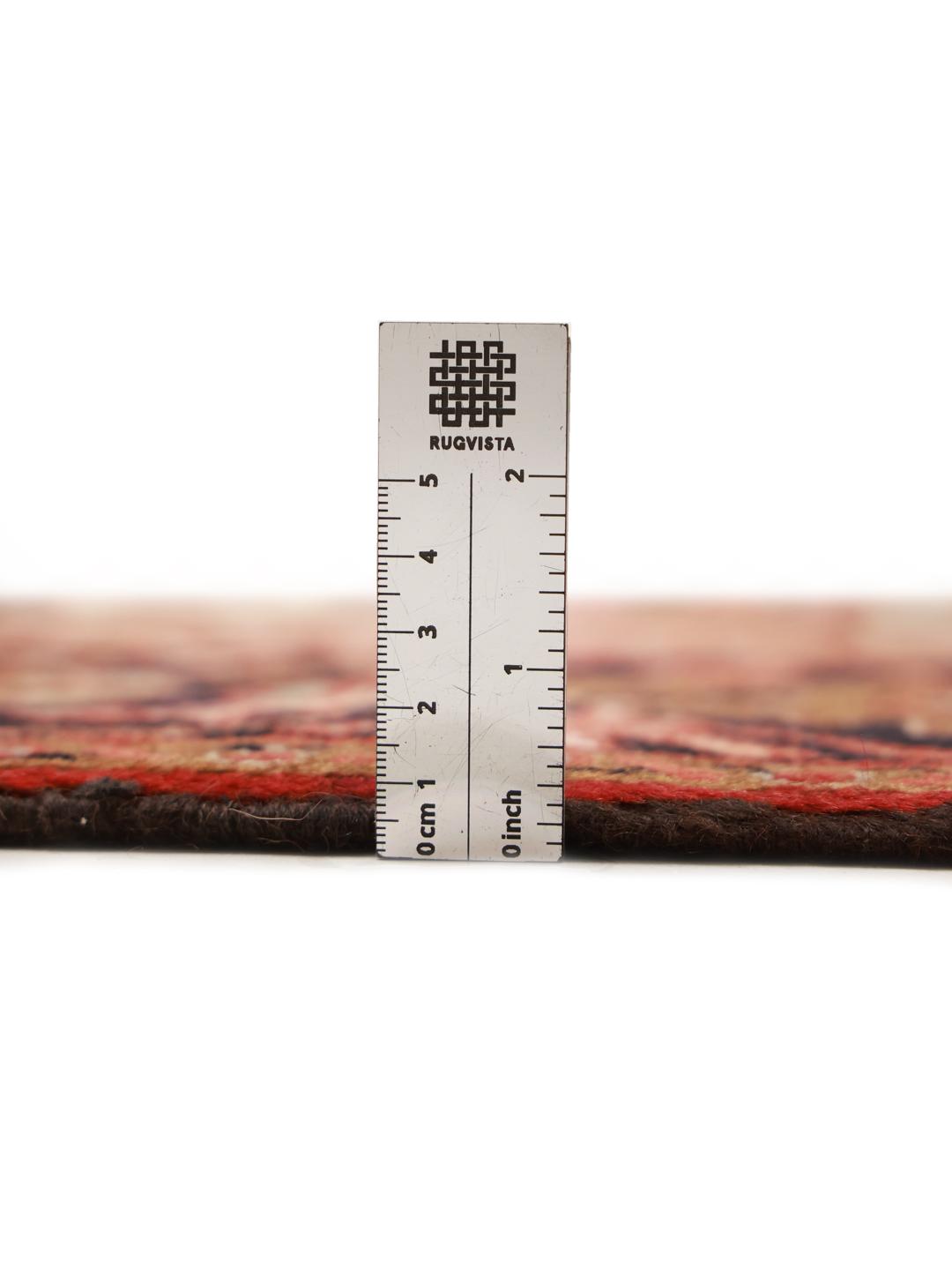
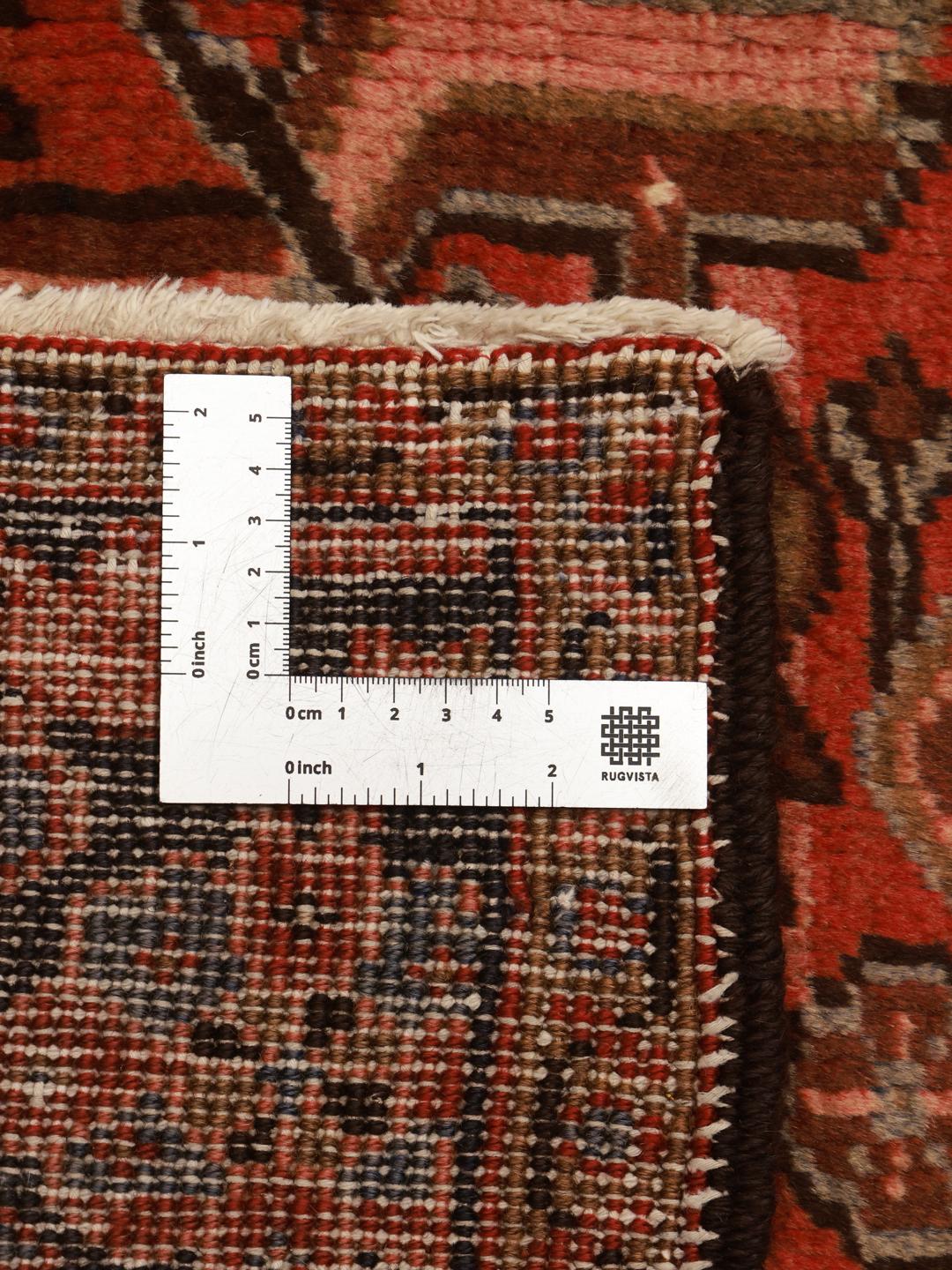
The construction of a Heriz rug is a testament to durability. Artisans in this region traditionally use a sturdy cotton foundation to support the thick, resilient wool pile. This combination is essential for creating the characteristic bold motifs, such as the large central medallion that often dominates the field. The wool used is known for its high lanolin content, which gives the rug a natural sheen and makes it exceptionally resistant to wear.
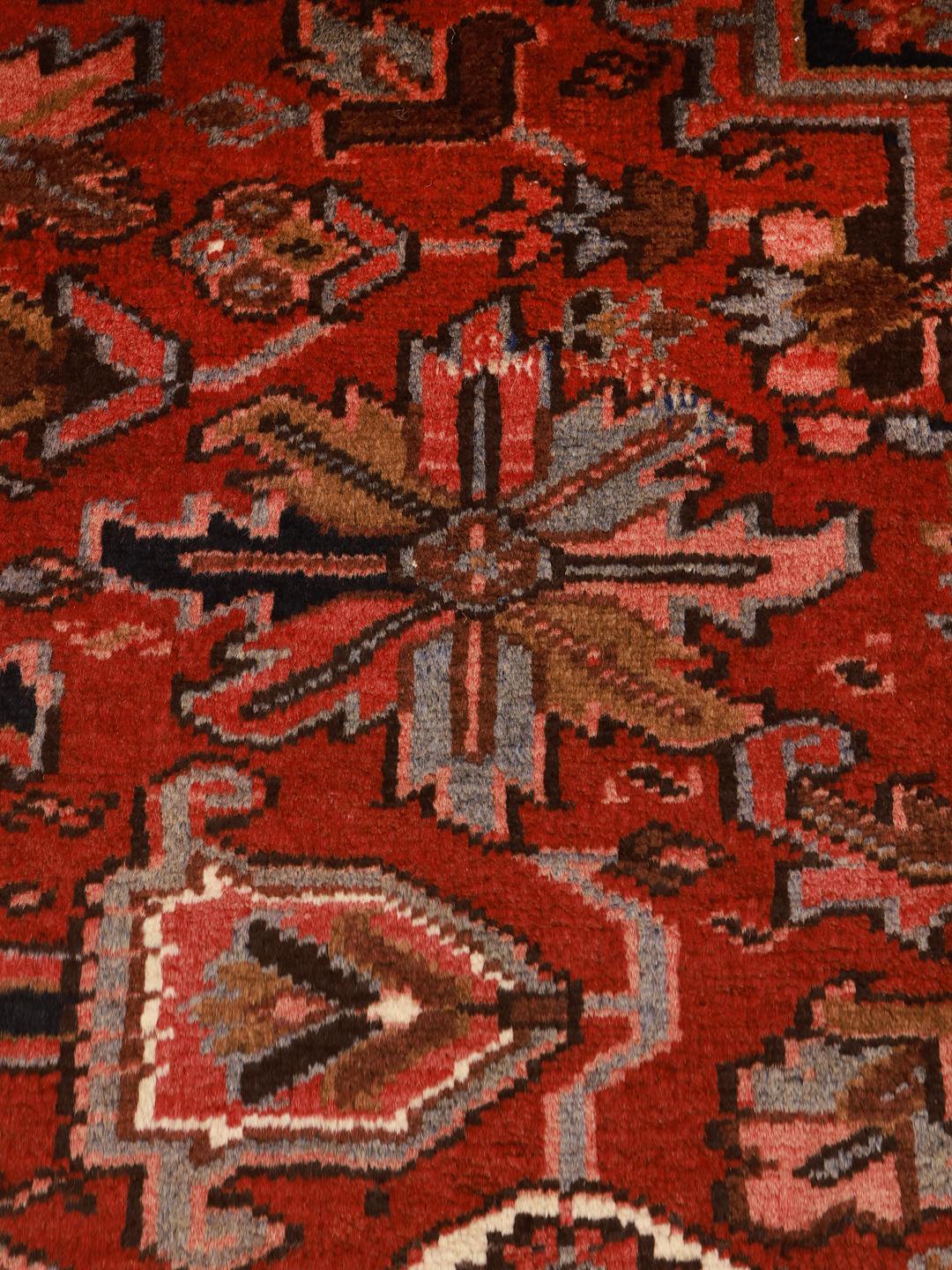
The visual language of the Heriz is unmistakable. The designs often feature a large, star-shaped or angular medallion, framed by expansive, simplified floral motifs and strong, serrated leaves. The borders are typically wide and complex, providing a formal frame to the vibrant central field. While red is a traditional and highly prized colour for these rugs, the use of deep blues and earthy accents adds a sophisticated layer to the overall composition.
Collecting a Heriz rug is an investment in a storied tradition of Middle Eastern craftsmanship. These rugs are valued not only for their striking aesthetic but also for their ability to serve as family heirlooms. Their unique combination of bold design and heavy-duty construction means they are as practical as they are decorative. Owning one is a way to connect with a centuries-old lineage of weavers who have perfected the art of creating rugs that remain vibrant and relevant for generations.