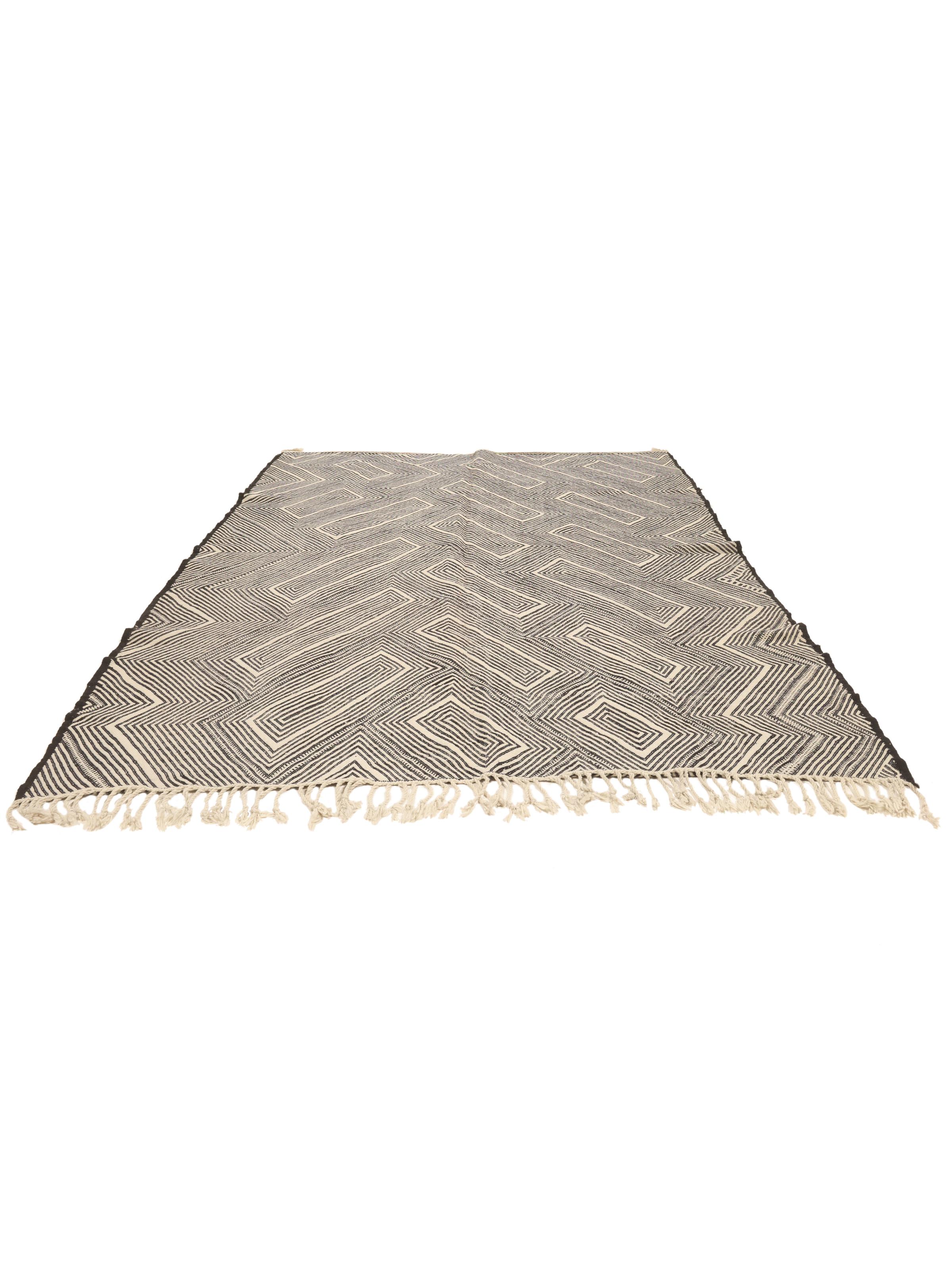
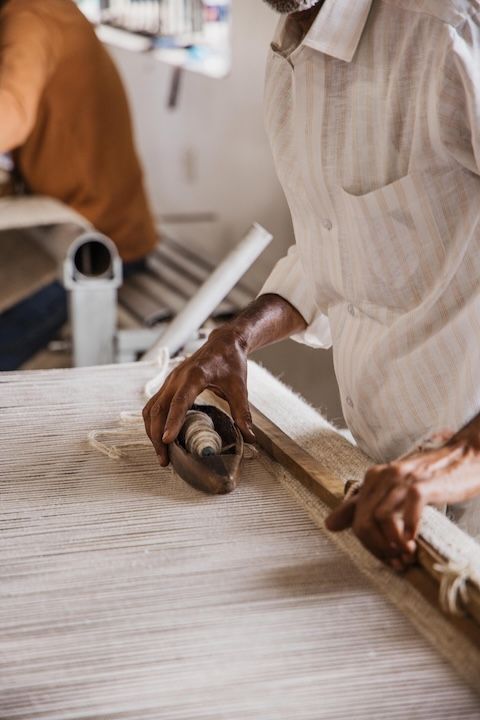
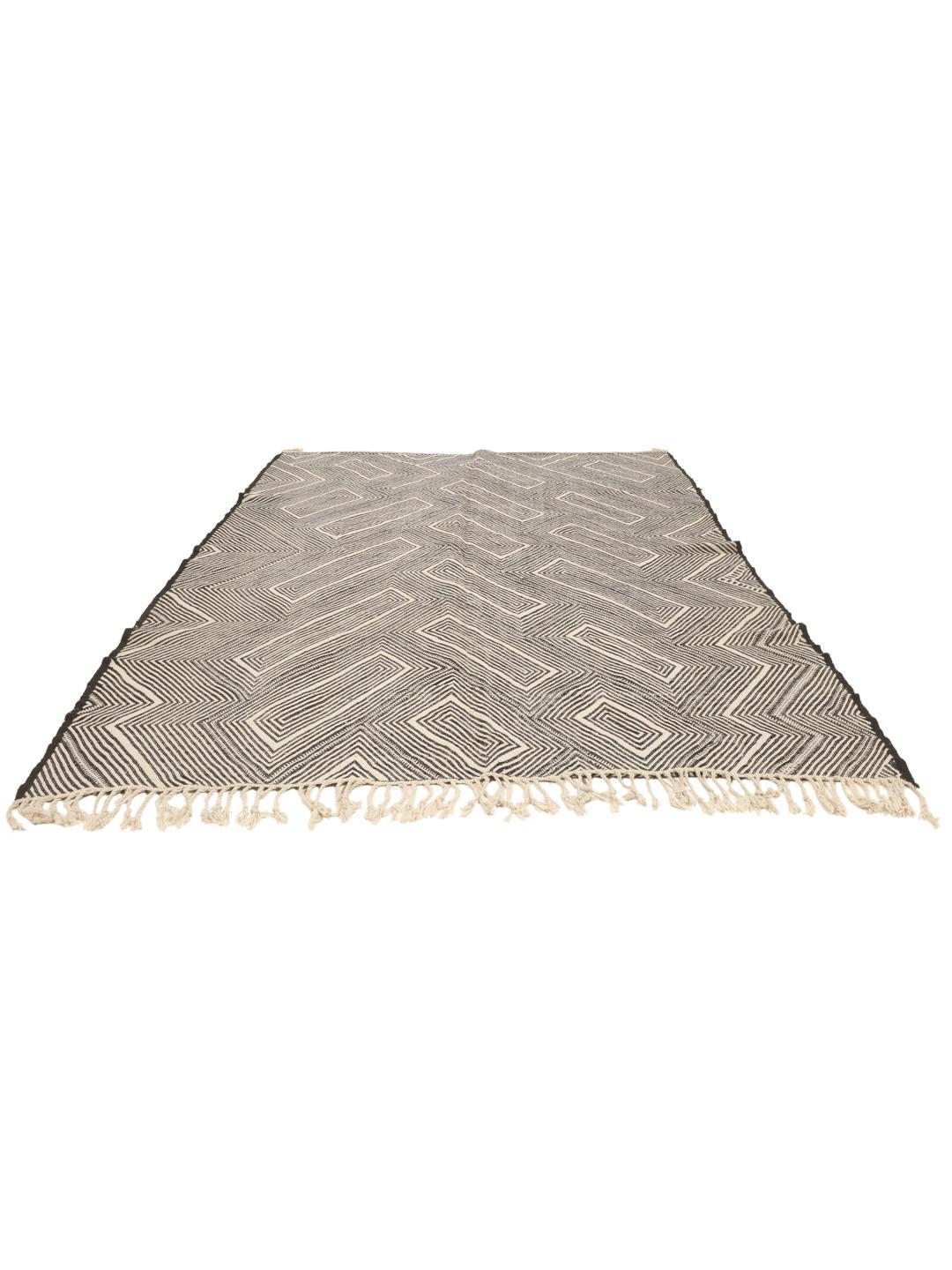
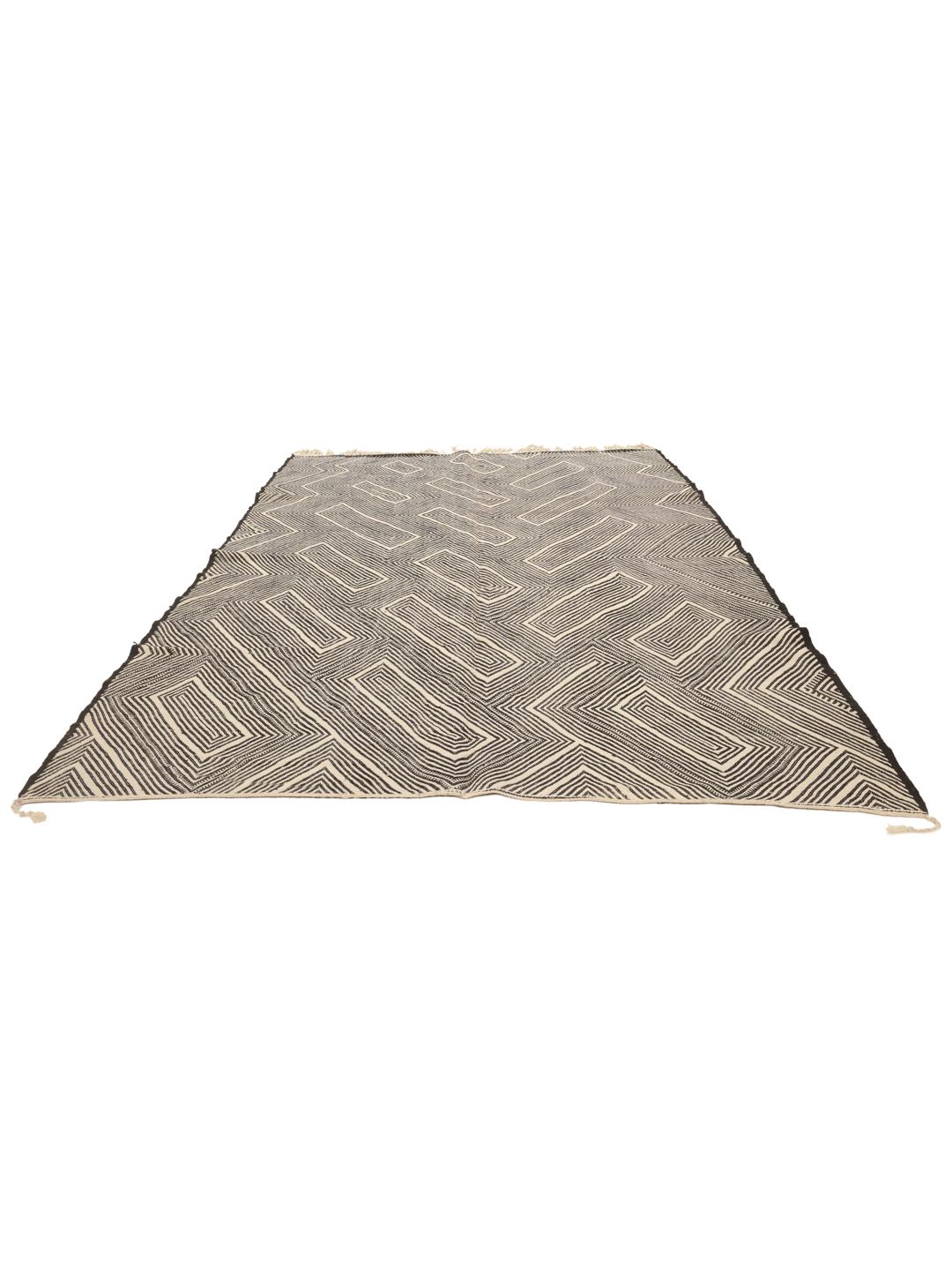
The High Atlas Kelim rugs originate from the remote, mountainous regions of Morocco, where the art of weaving is deeply woven into the fabric of daily life. For the Berber tribes, these rugs are not merely floor coverings but are essential components of the home, traditionally crafted to provide insulation against the harsh mountain climate. The knowledge of these techniques has been protected and passed down through generations, maintaining a link between the people and their ancestral lands.
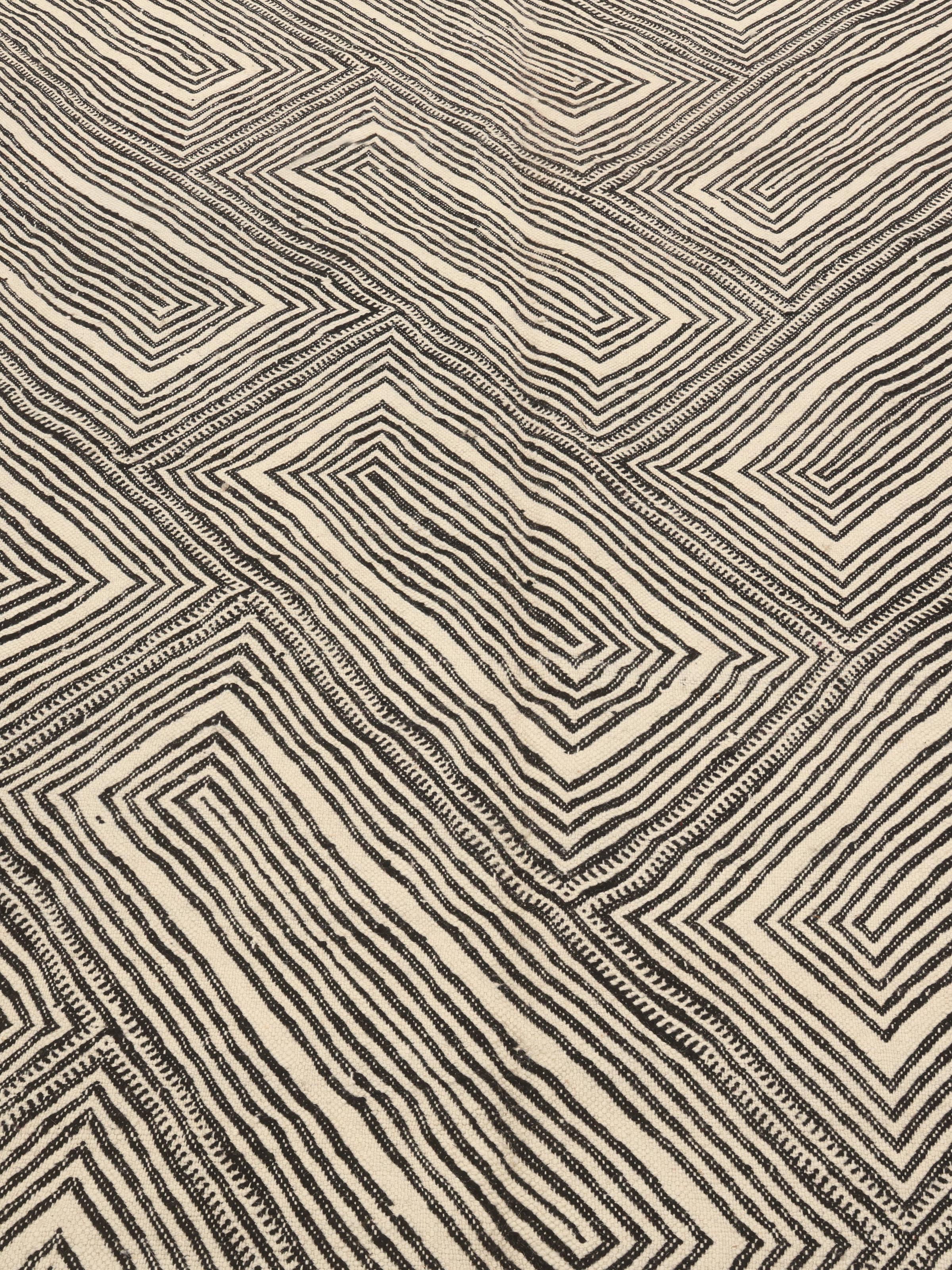
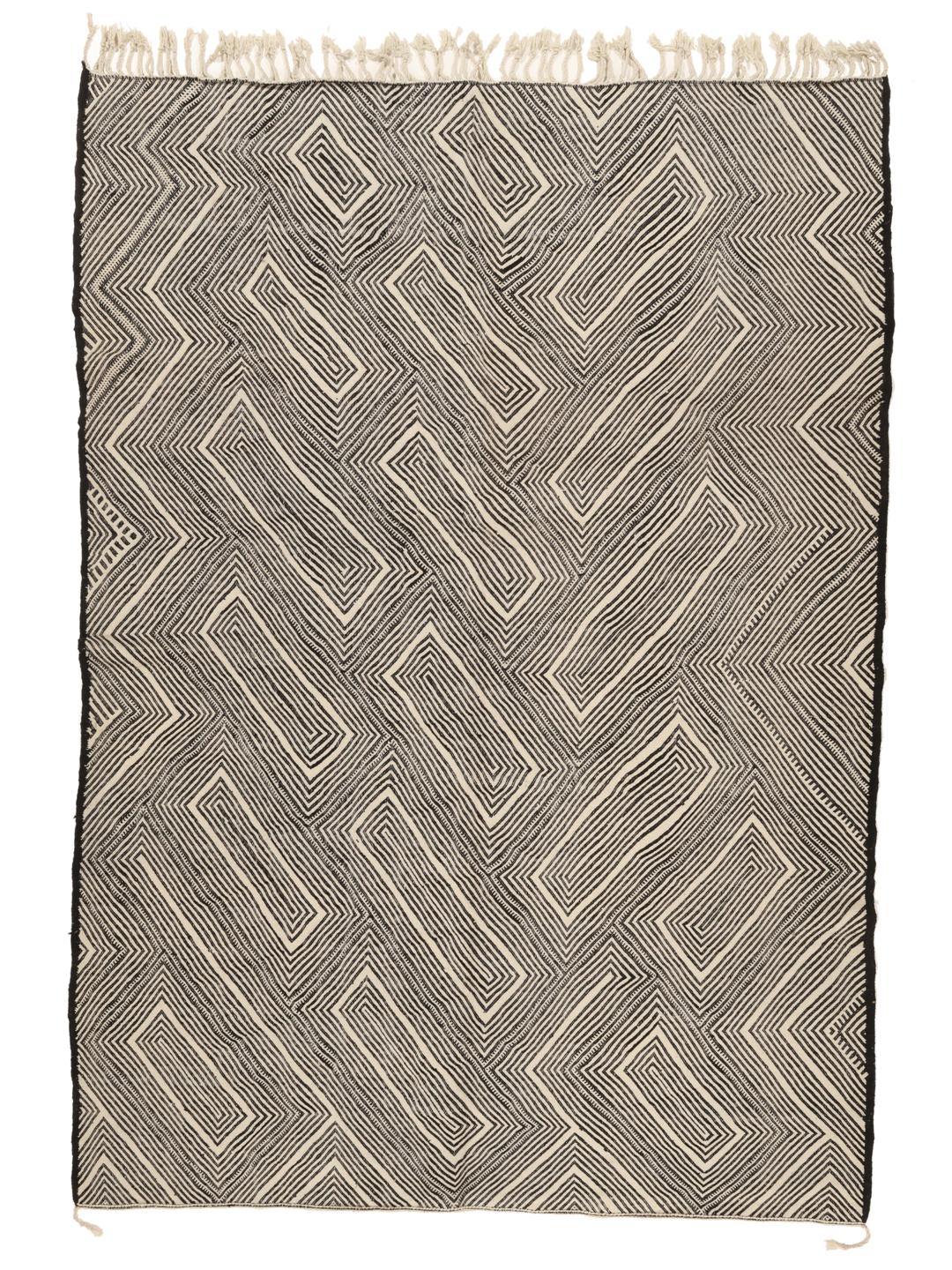
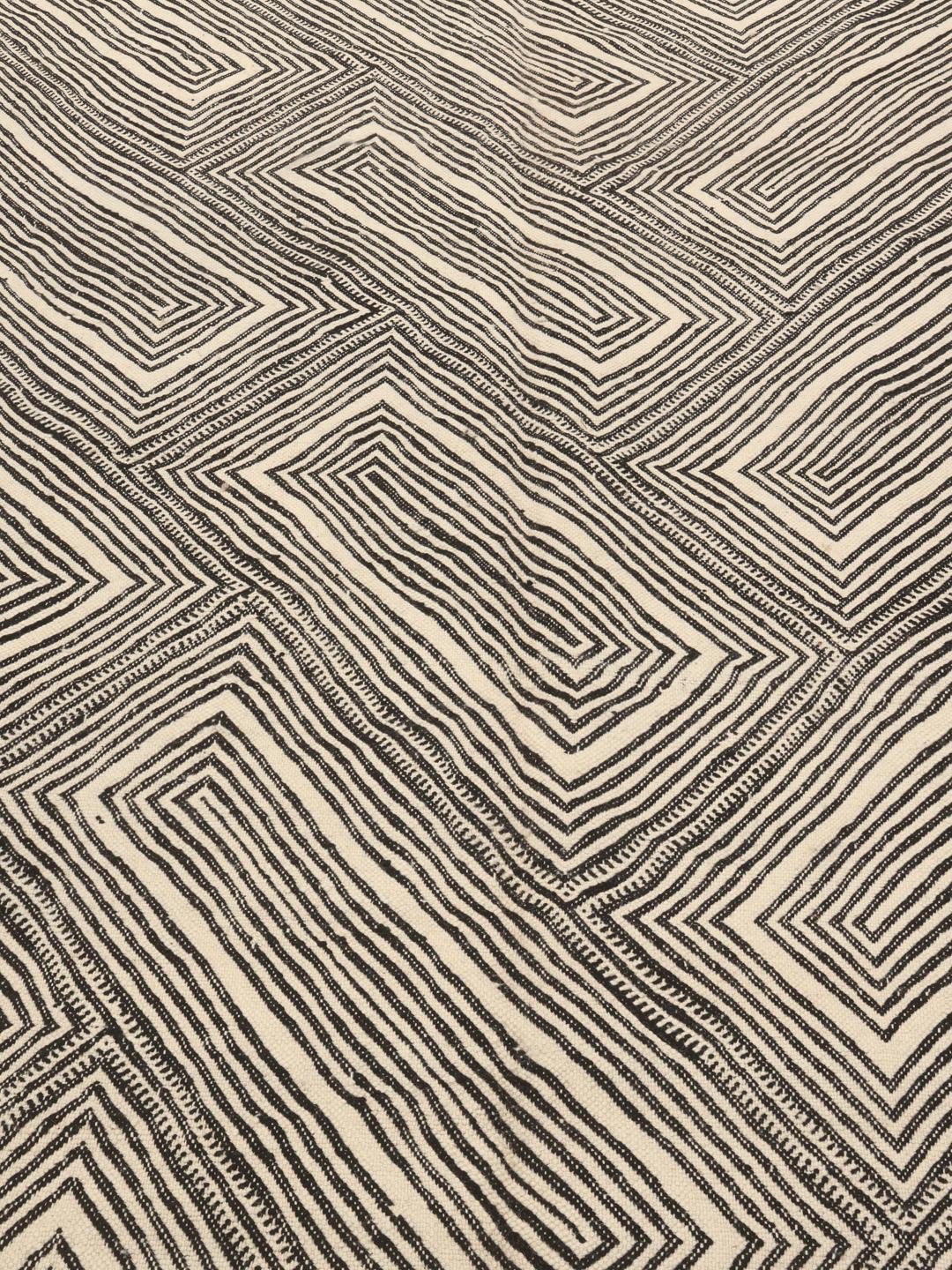
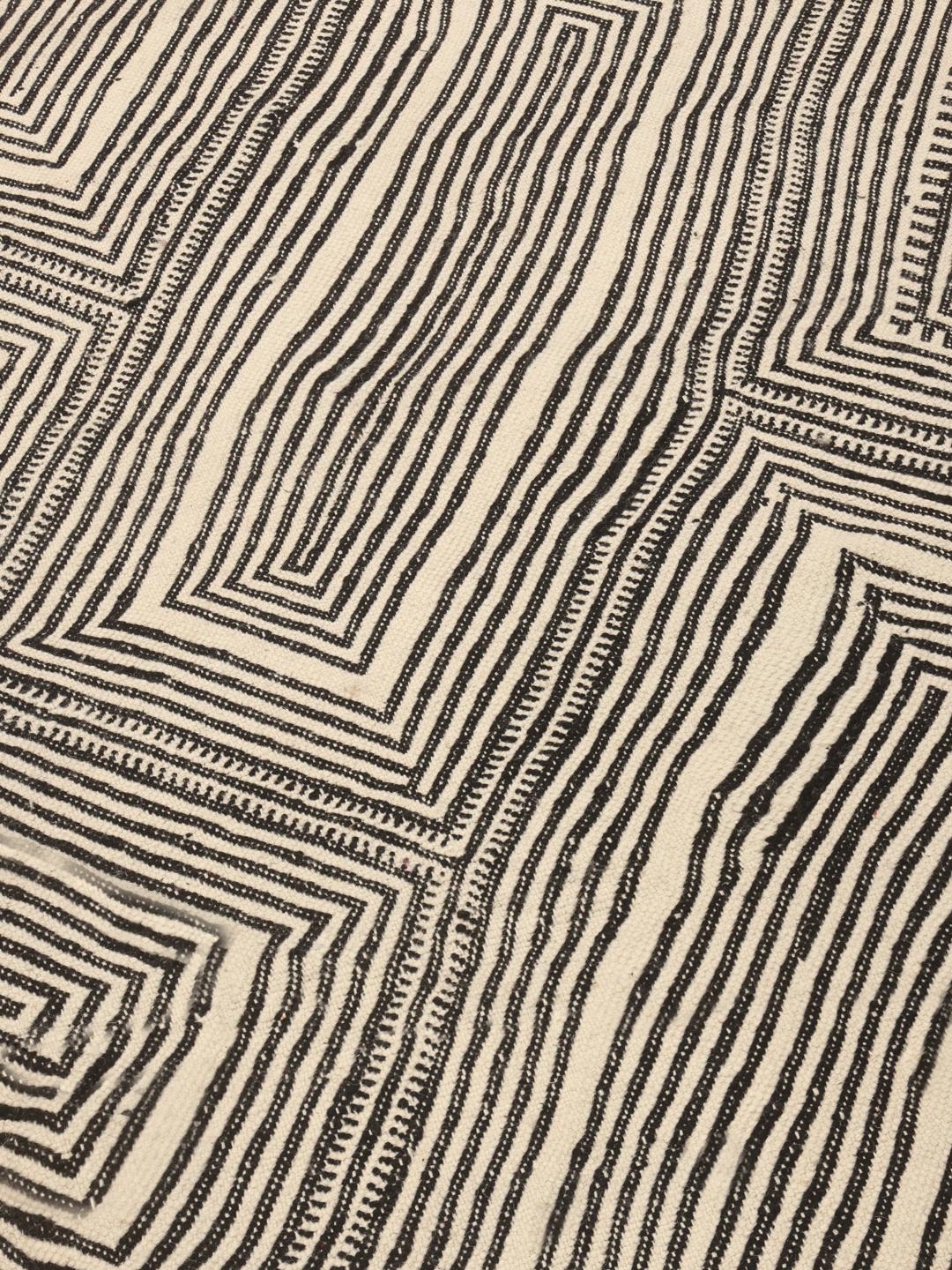
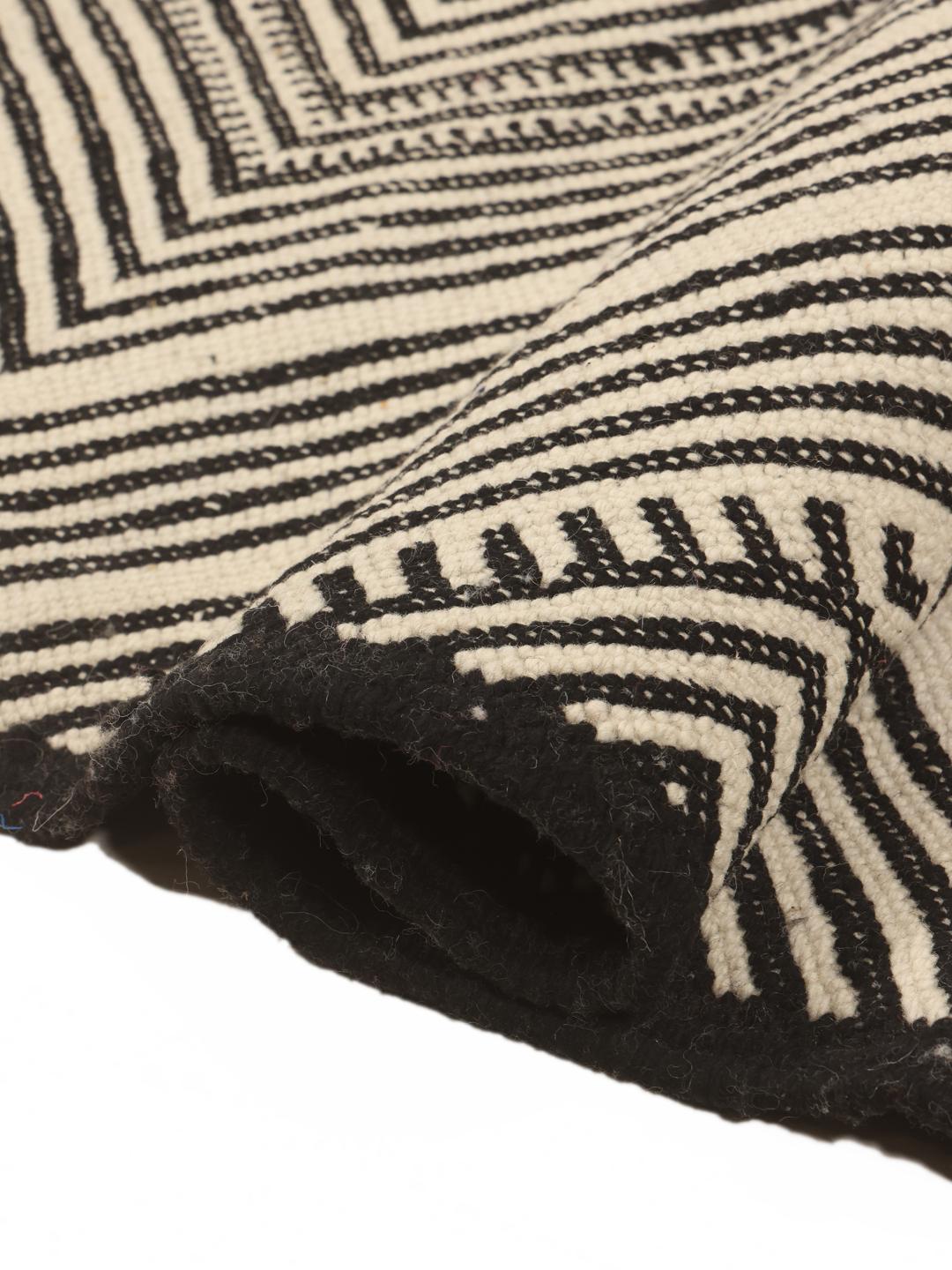
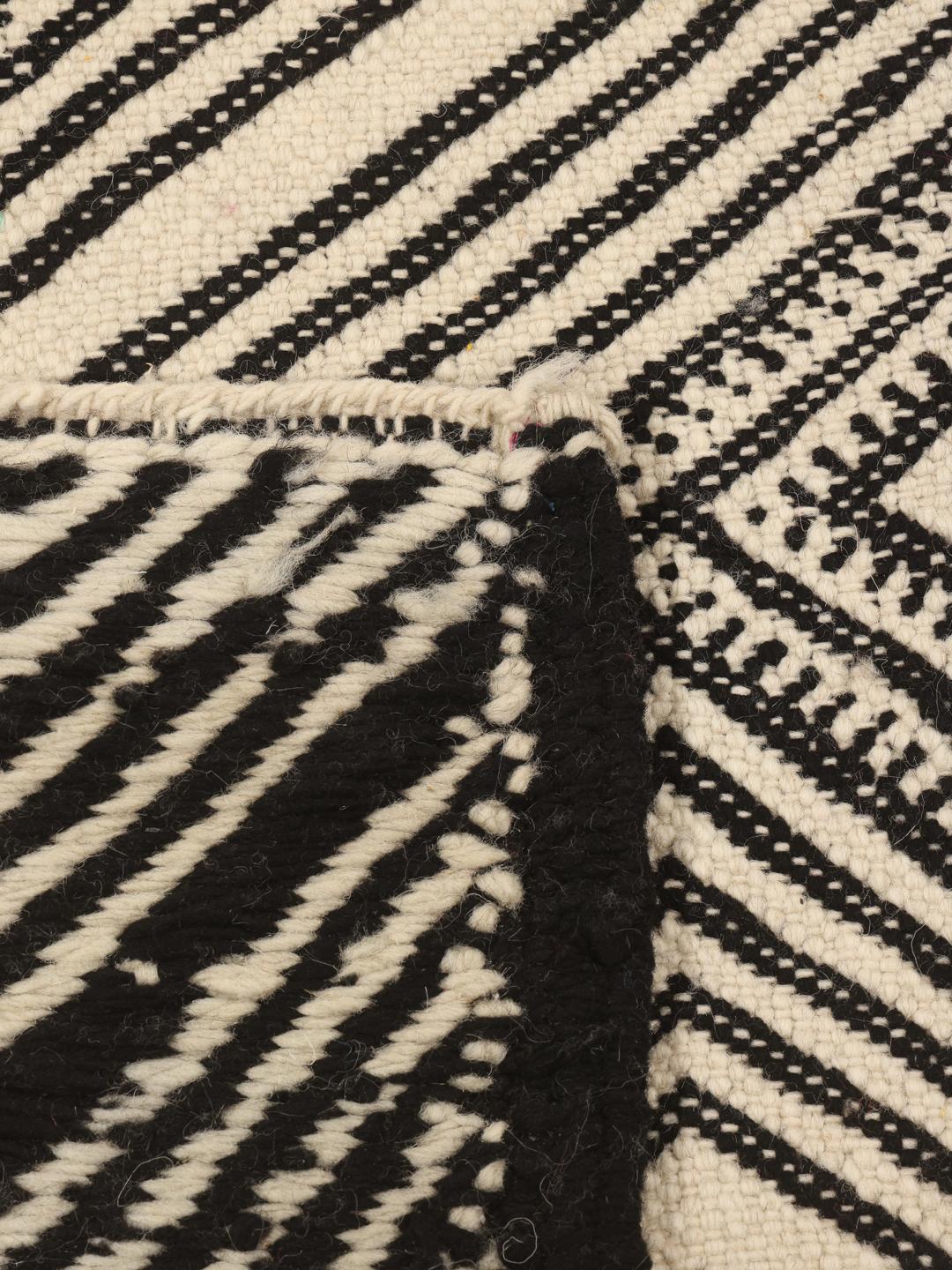
The term 'Kelim' refers to the flat-weaving technique used to create these pieces, which distinguishes them from pile rugs. In this style, the weaver creates the pattern by interlacing the warp and weft threads, resulting in a thin, durable, and reversible fabric. This technique is highly valued for its ability to produce crisp, clear geometric designs that are impossible to replicate with pile-based methods, allowing for the intricate, sharp lines seen in this specific design.
Visually, these rugs are defined by a language of symbols and geometric forms that often tell stories of the weaver's life, environment, and beliefs. While traditional Berber designs are often deeply expressive, the use of stark, linear, and maze-like patterns is a hallmark of the High Atlas aesthetic. This specific rug uses bold, rhythmic lines to create a modern graphic effect that feels both ancestral and contemporary, showing how these traditions continue to evolve while remaining rooted in their origins.
Collecting a rug from the High Atlas is a way of preserving a piece of cultural heritage that is increasingly rare in a world of industrial manufacturing. These rugs are highly prized for their authenticity, the skill required to produce them, and the fact that they represent a living tradition rather than a commercial trend. To own one is to participate in a long history of human artistry, bringing a piece of the Moroccan mountains into your personal space.