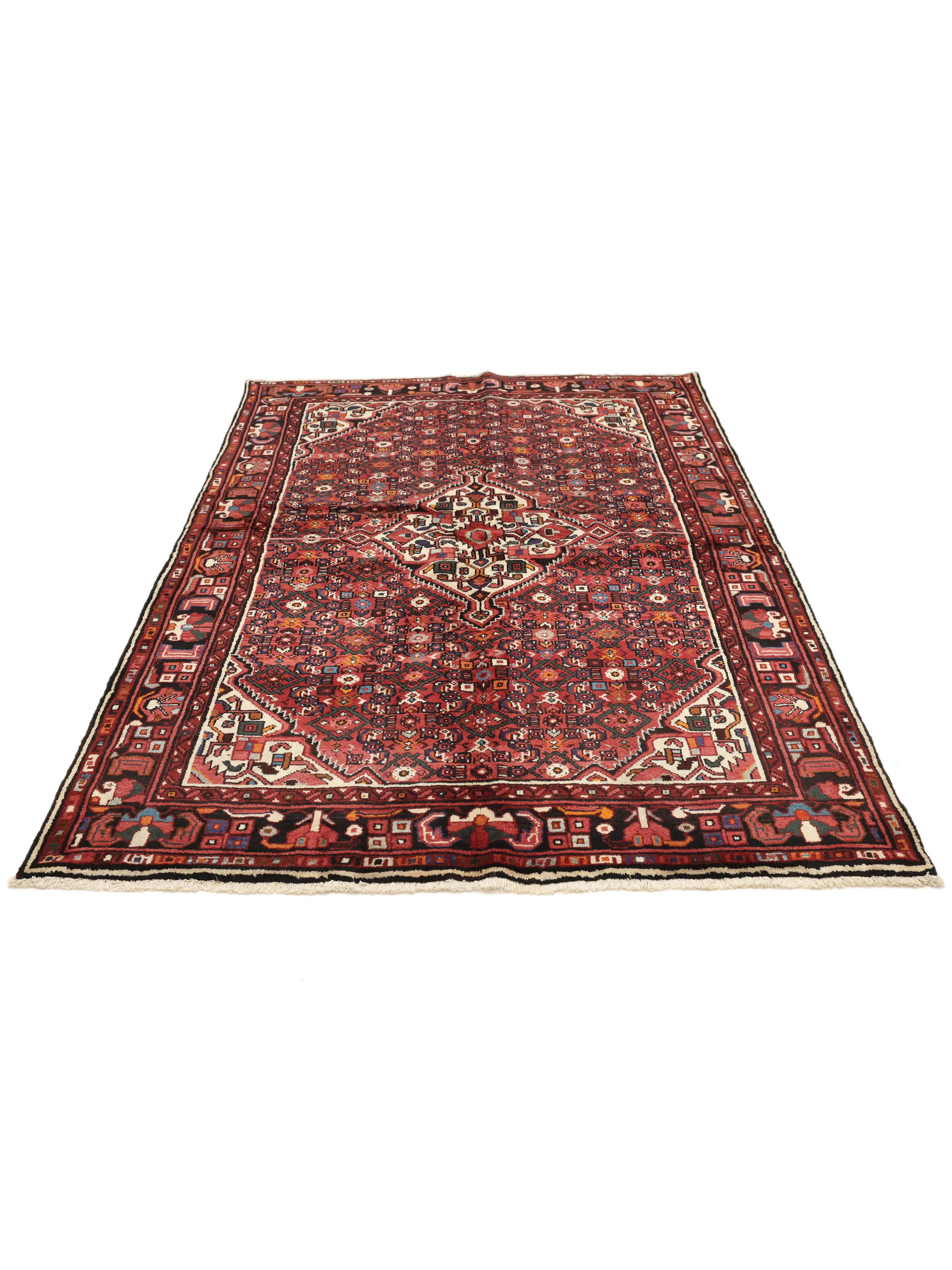
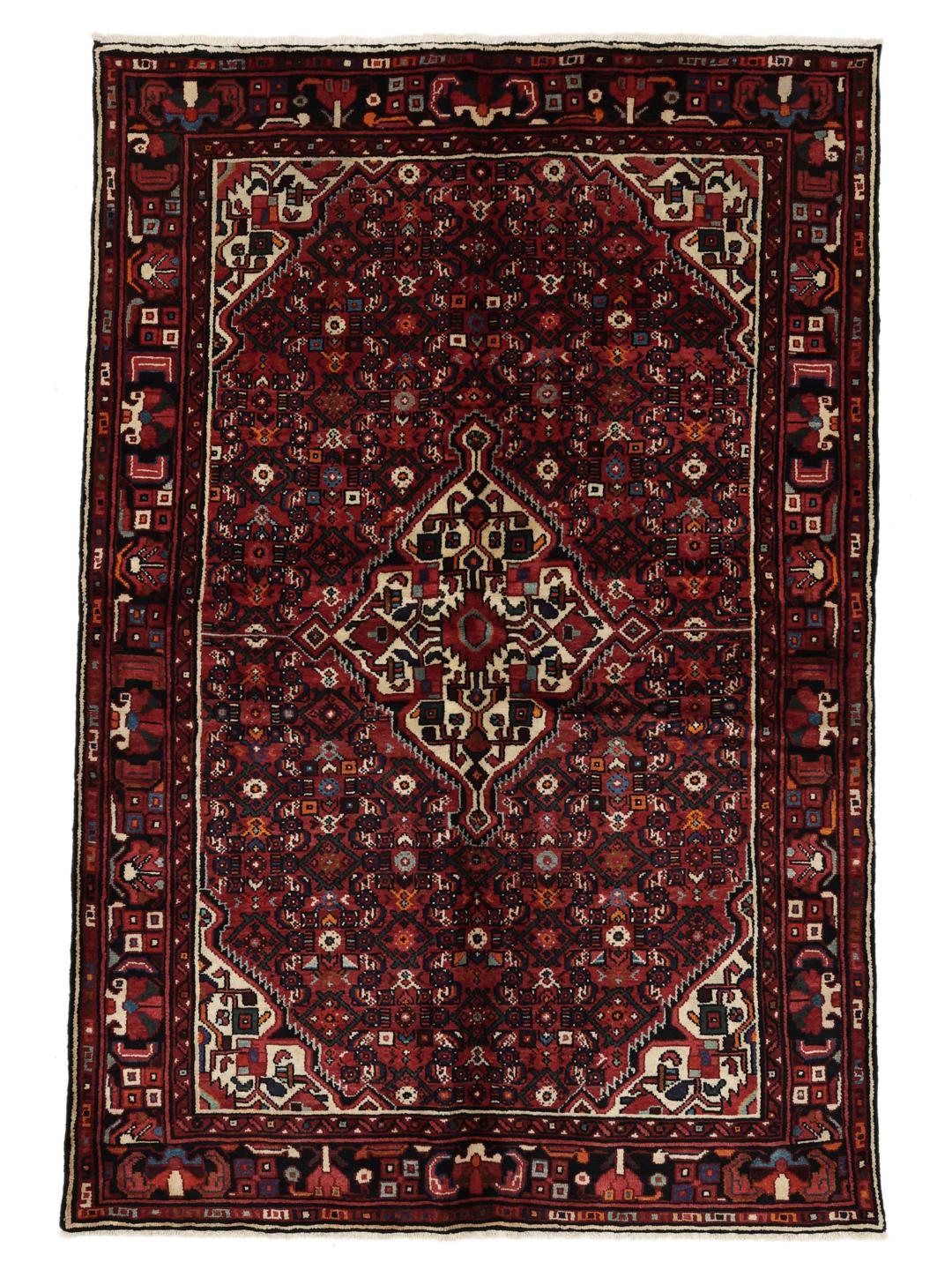
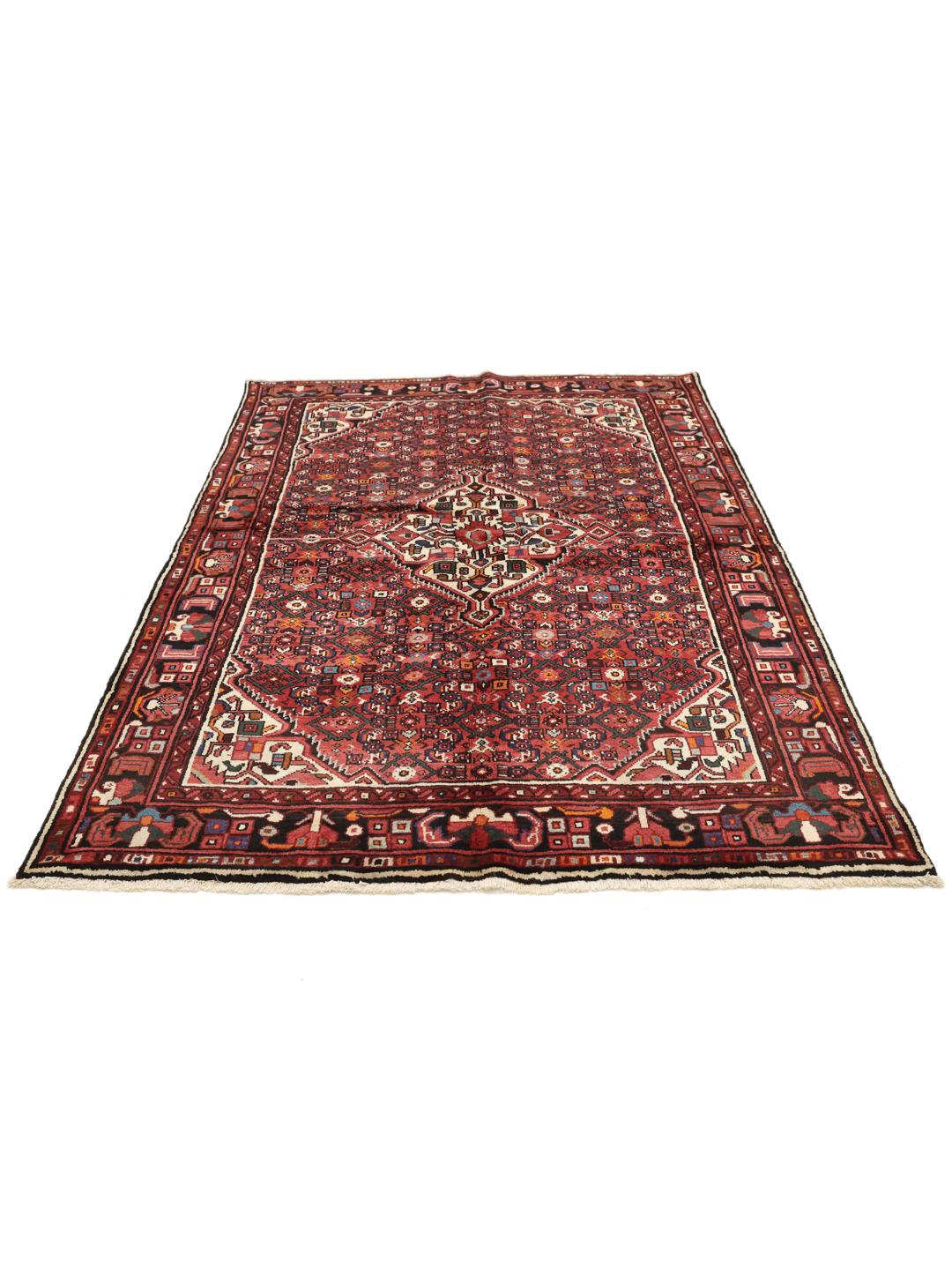
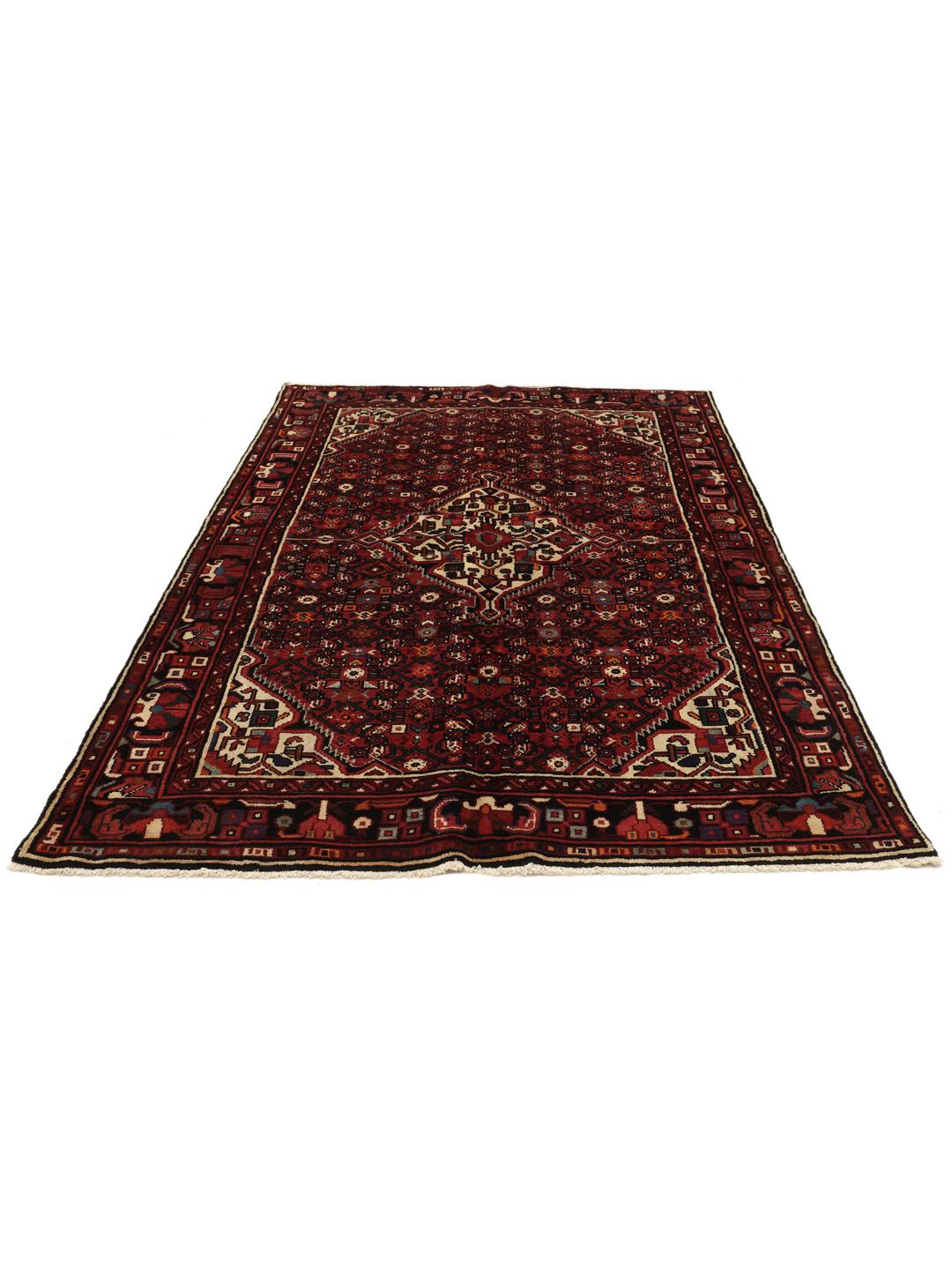
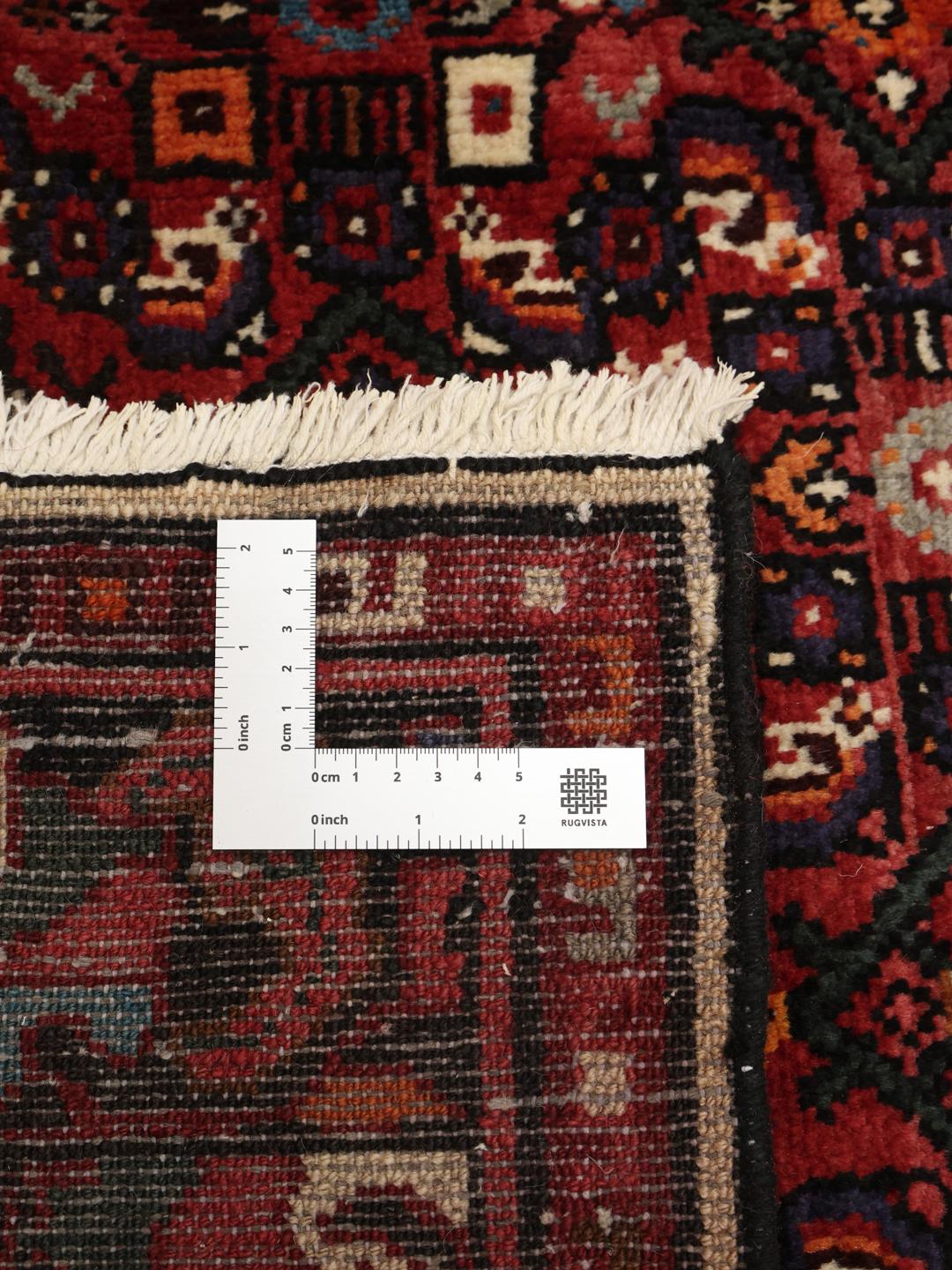
Hosseinabad rugs originate from the Hamadan region of the Middle East, an area long celebrated for its deep-rooted weaving traditions. These rugs are typically produced in small village workshops where techniques have been passed down through generations, maintaining a link to the nomadic and settled tribal histories of the surrounding landscape.
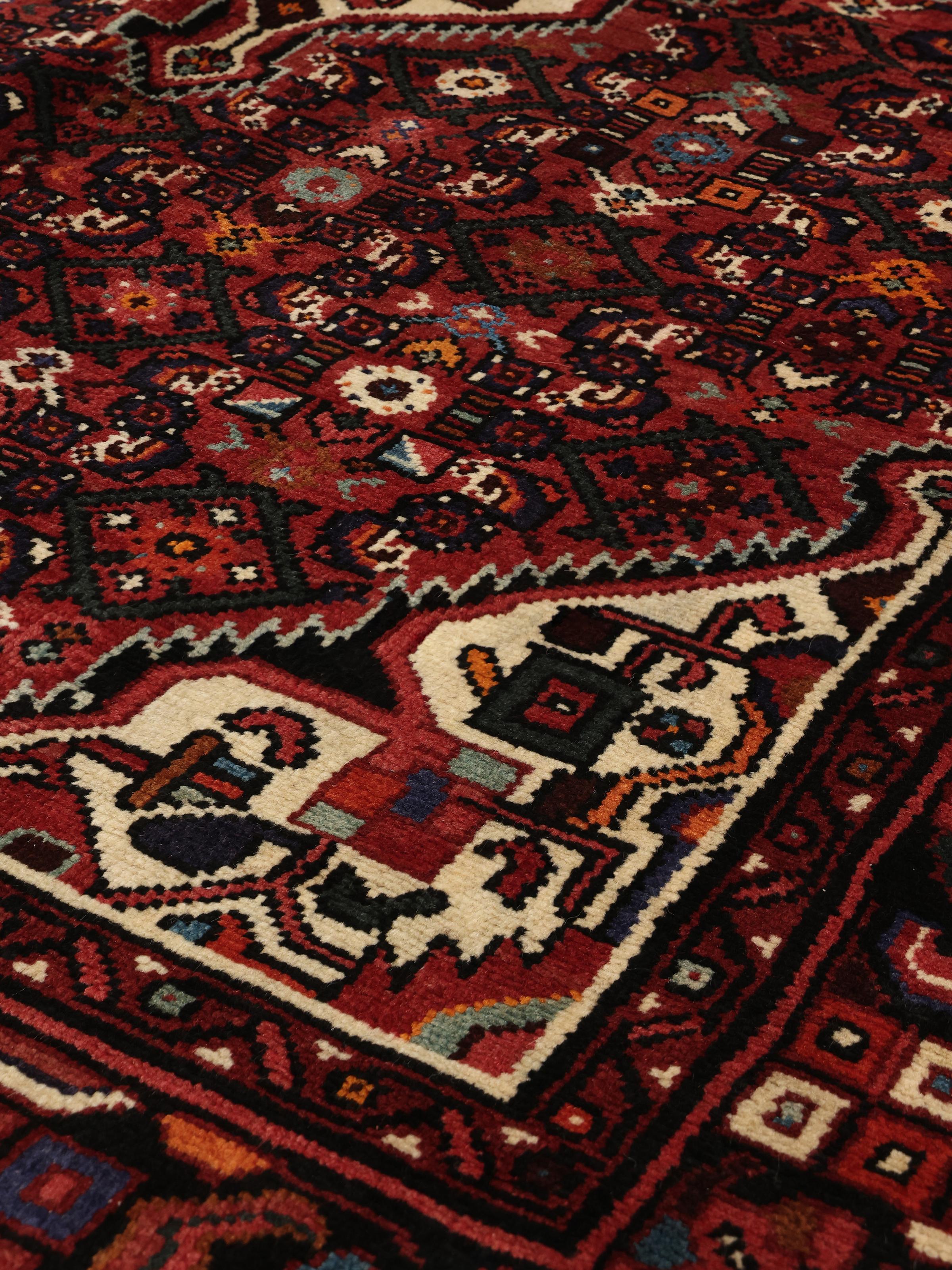
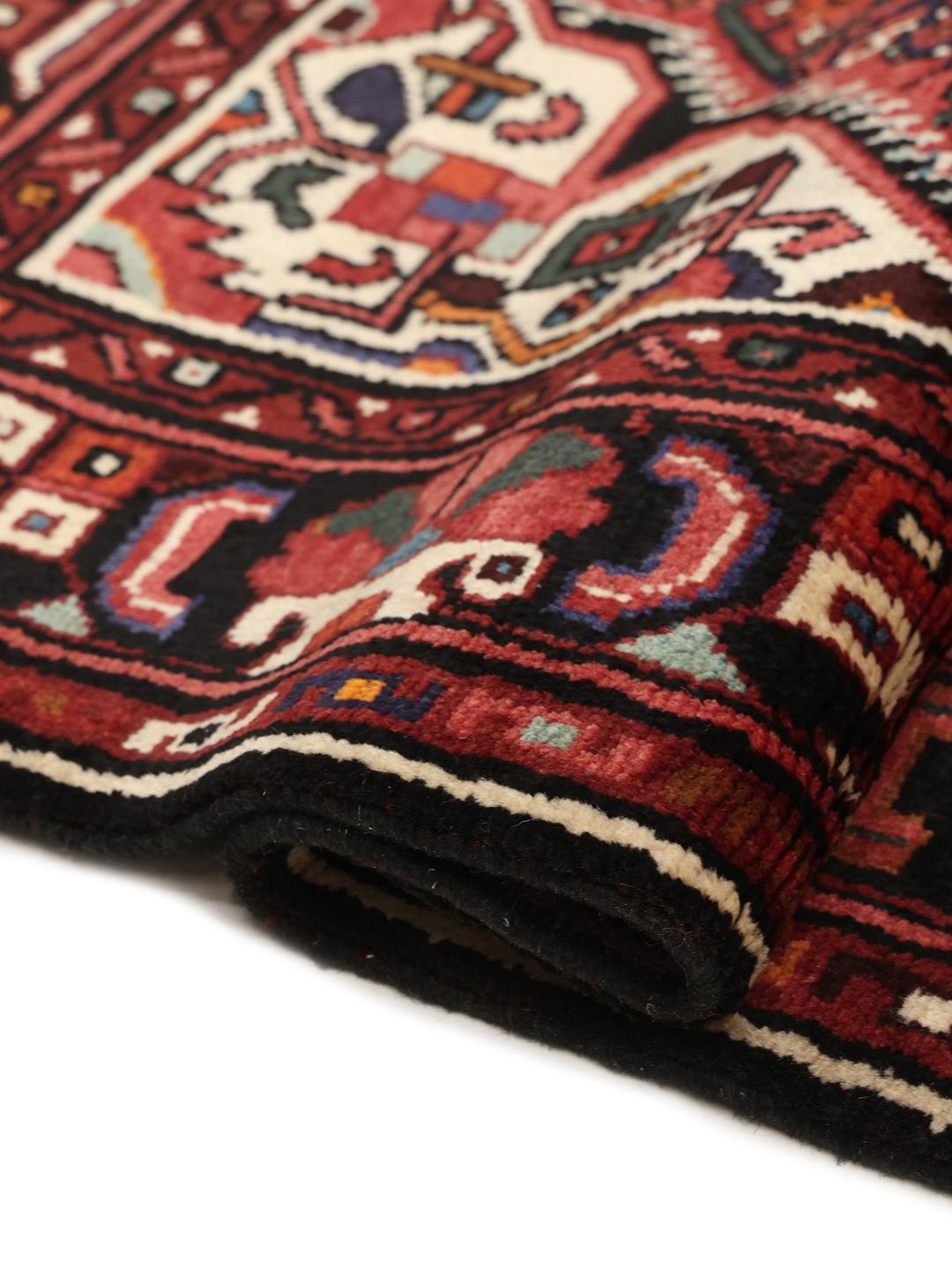
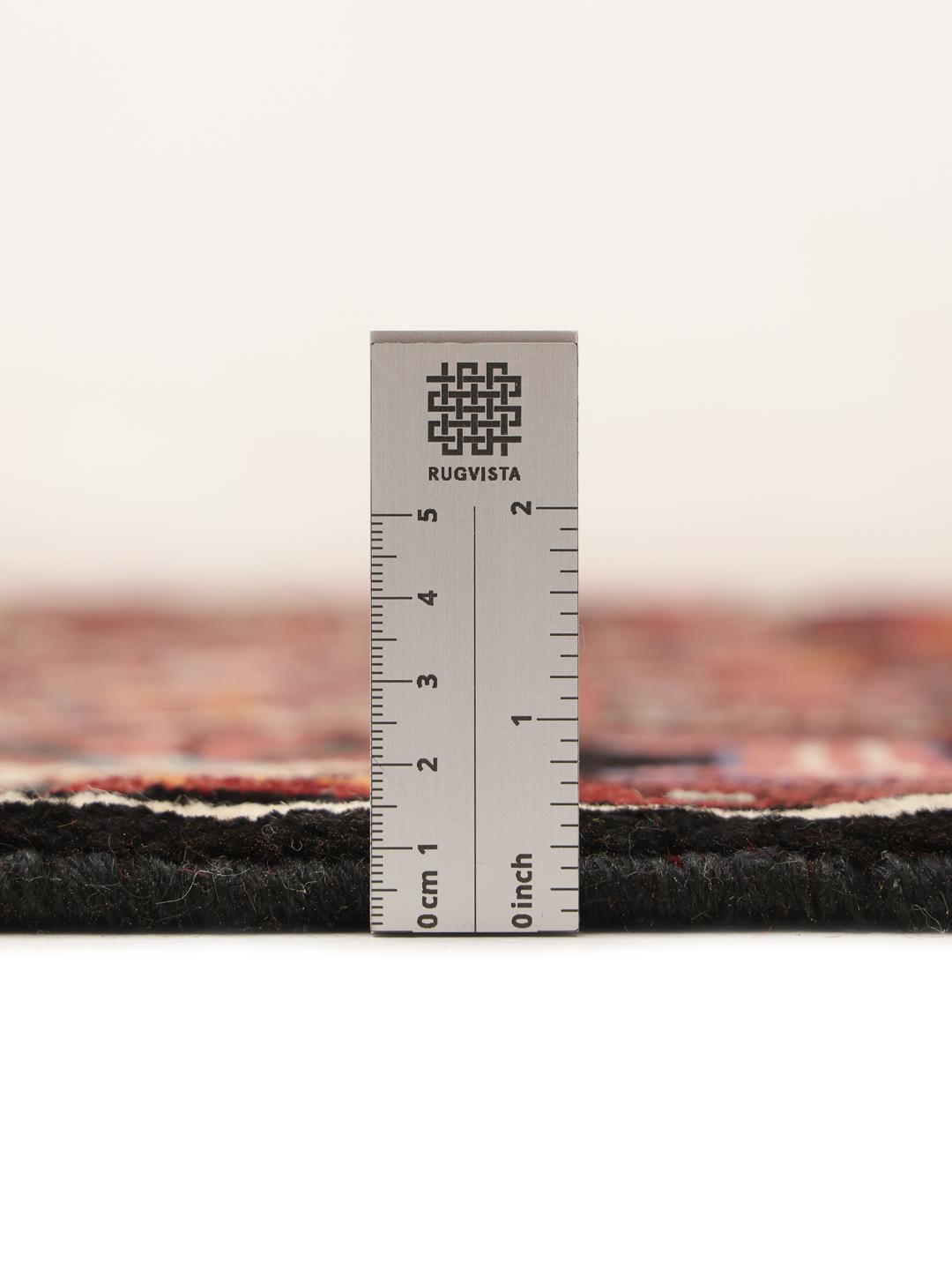
The construction of a Hosseinabad rug is defined by its robust foundation, designed to provide a sturdy base for the thick, resilient Wool pile. This traditional approach ensures that the rugs are not merely decorative but are built to handle the rigours of daily life, which is a hallmark of the craft in this specific region.
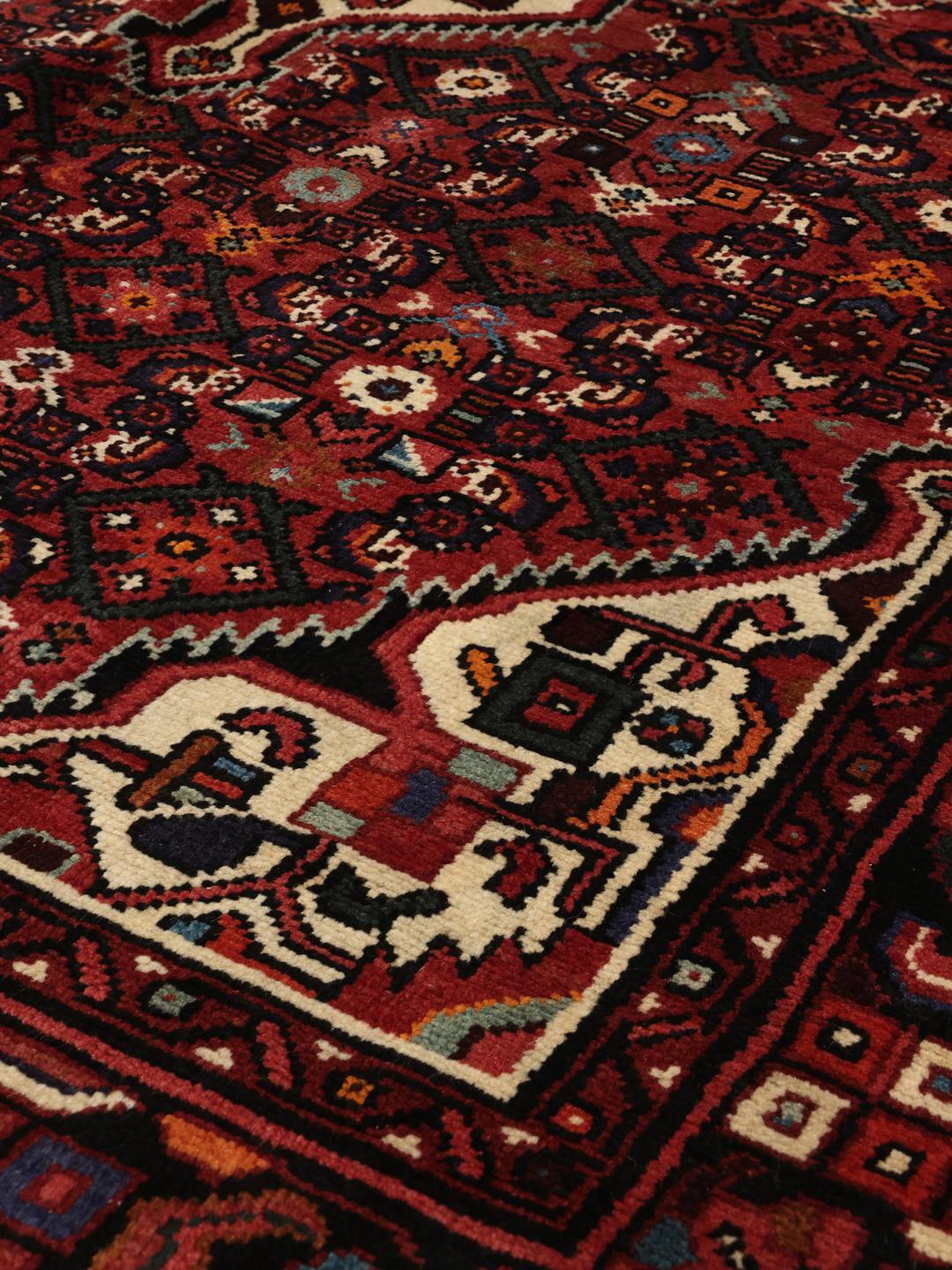
Visually, these rugs are known for their bold, geometric language. They often feature a central medallion surrounded by repeating floral or geometric motifs, framed by distinctive borders. The use of deep, earthy tones is standard, though each weaver leaves their own mark, often introducing subtle variations in colour or motif that make every individual piece a unique reflection of their local environment.
Collecting a Hosseinabad rug is an investment in cultural heritage. Because they are still produced using methods that have remained largely unchanged for decades, they offer a connection to a slower, more deliberate way of life. They are highly valued by those who appreciate the skill required to translate complex traditional patterns into a tangible, lasting object.