Kashmir silk rugs are celebrated globally as some of the finest examples of textile art, with a tradition that traces its roots back to the 15th century. Originating in the lush valleys of northern India, these rugs were heavily influenced by Middle Eastern weaving techniques brought by travellers along the Silk Road. Over centuries, local artisans refined these methods, infusing them with distinct Indian botanical motifs and a mastery of silk that remains unmatched to this day.
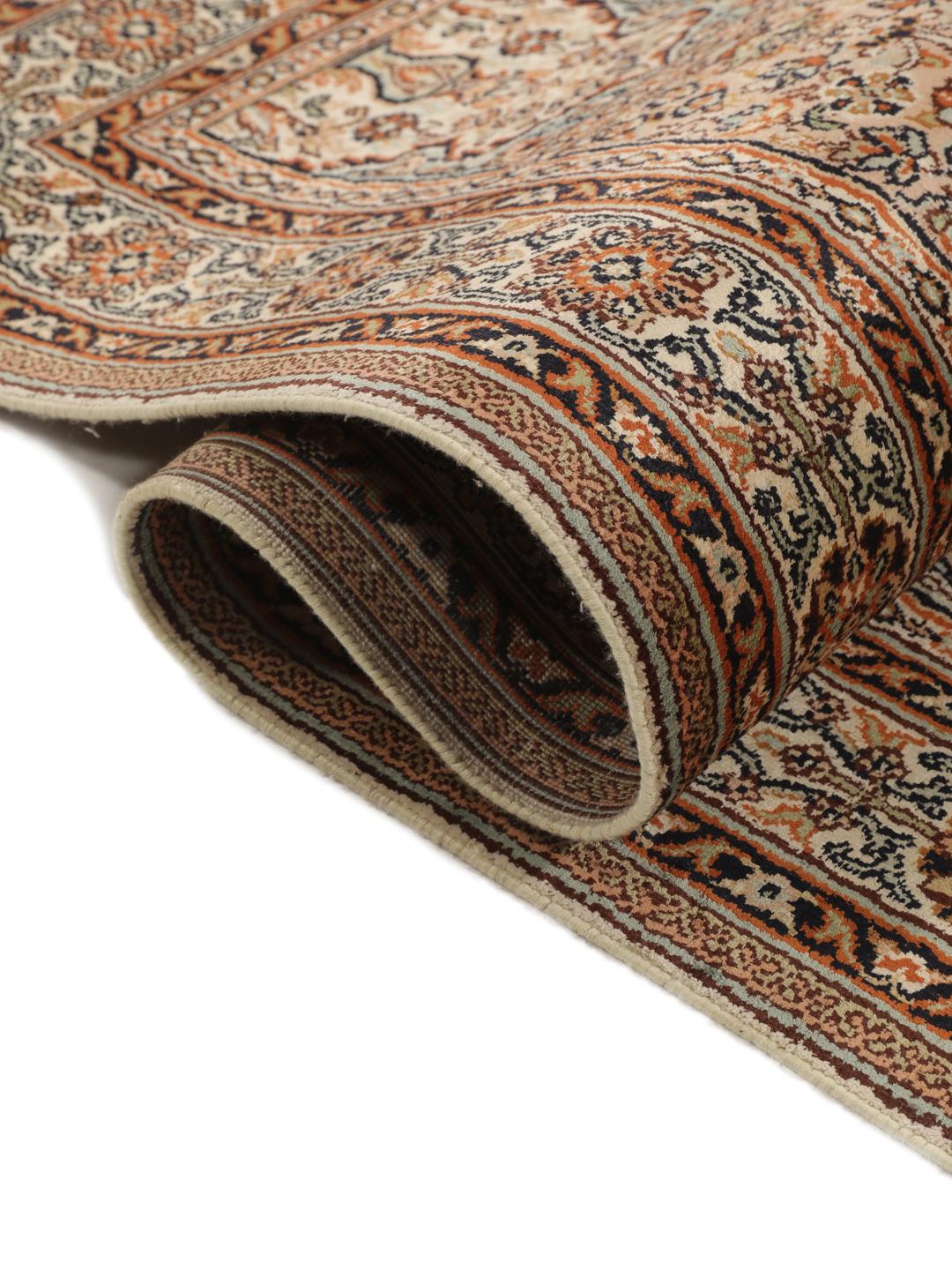
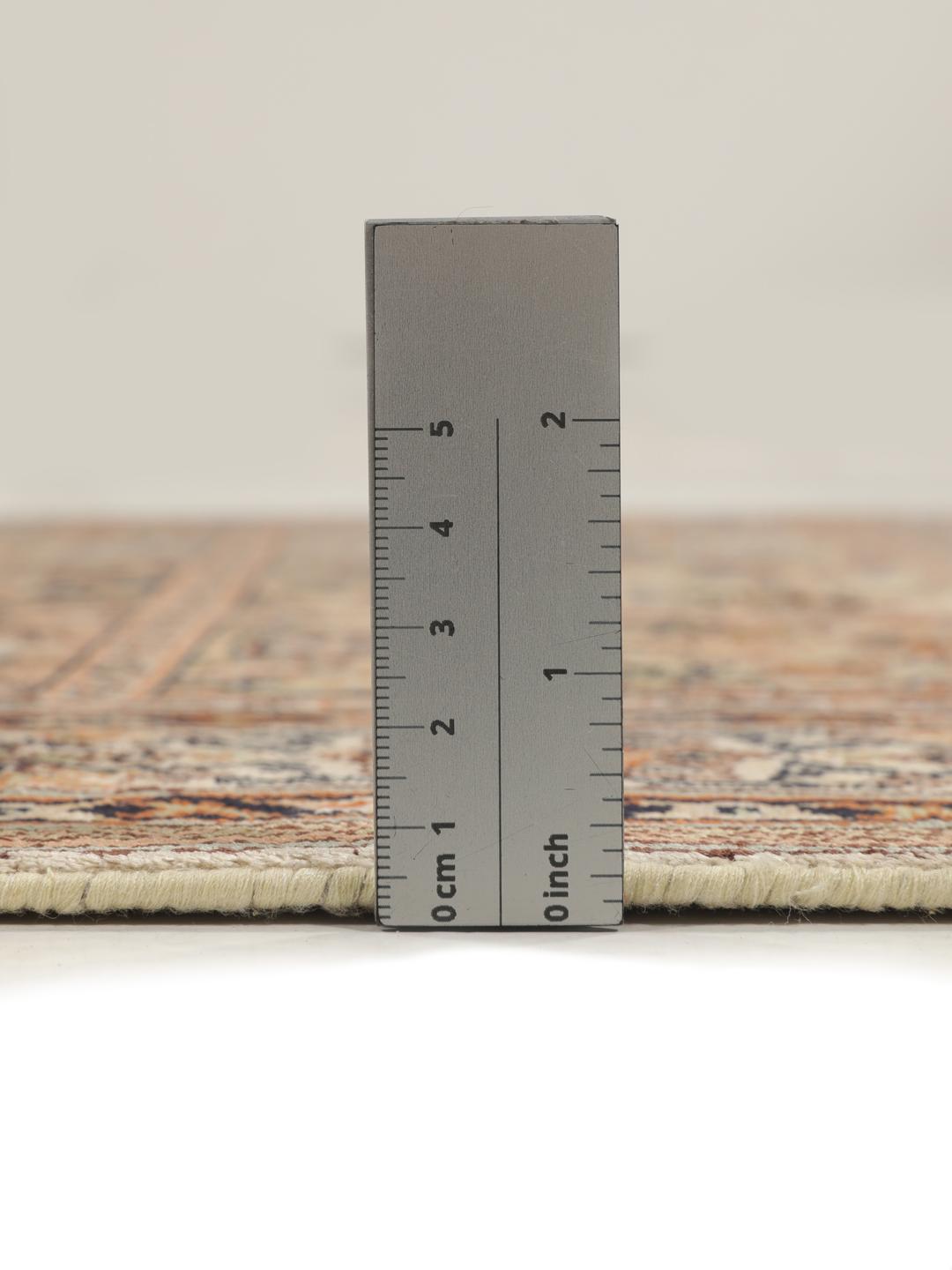
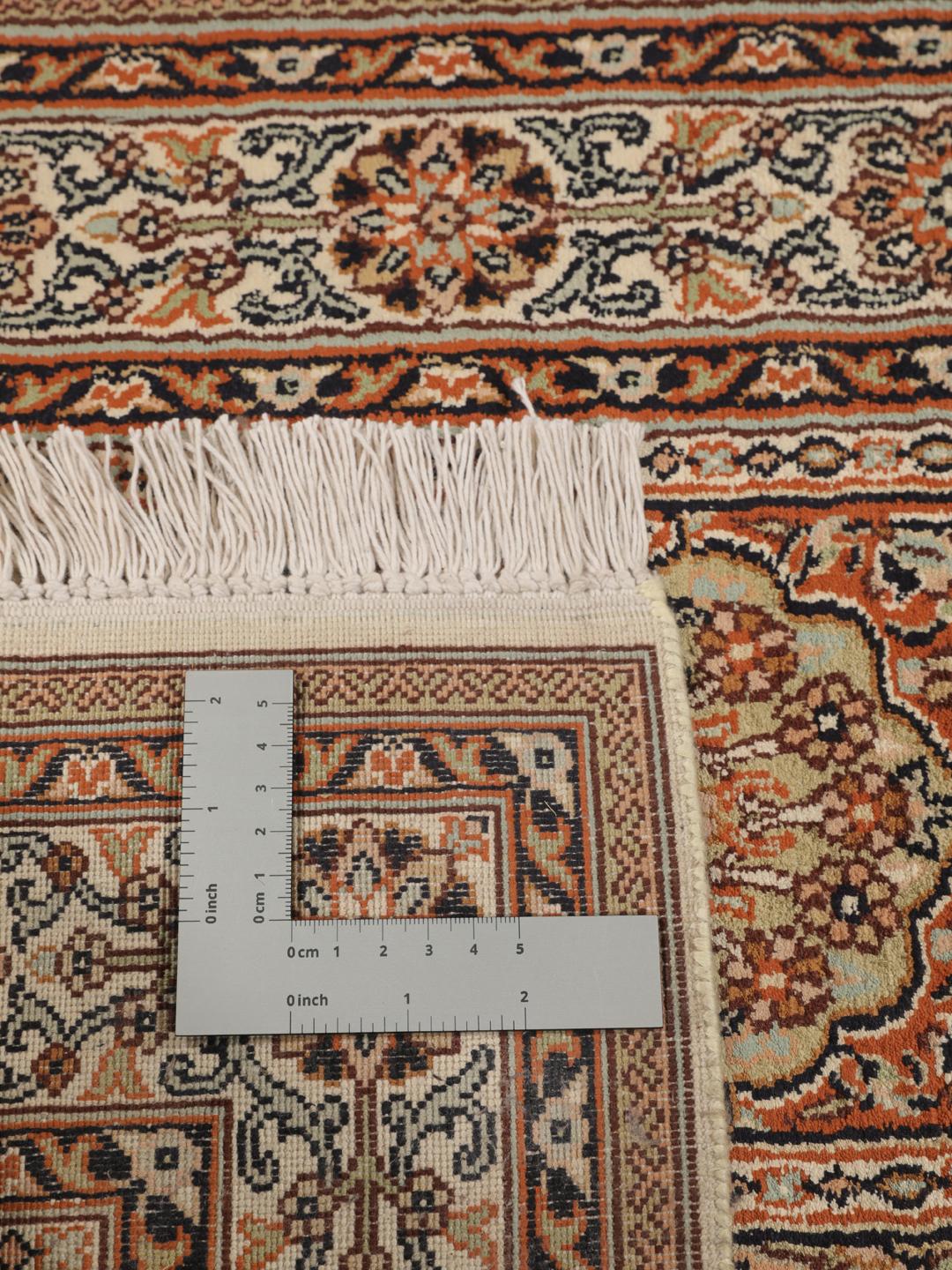
The term 'Kashmir silk' refers not just to the material but to a specific, high-standard weaving tradition. The silk used is chosen for its strength and its ability to take complex, vibrant dyes, which allows for the creation of incredibly detailed, tapestry-like designs. In this tradition, the weave is kept exceptionally tight, which is what gives these rugs their signature durability and smooth, cooling texture.
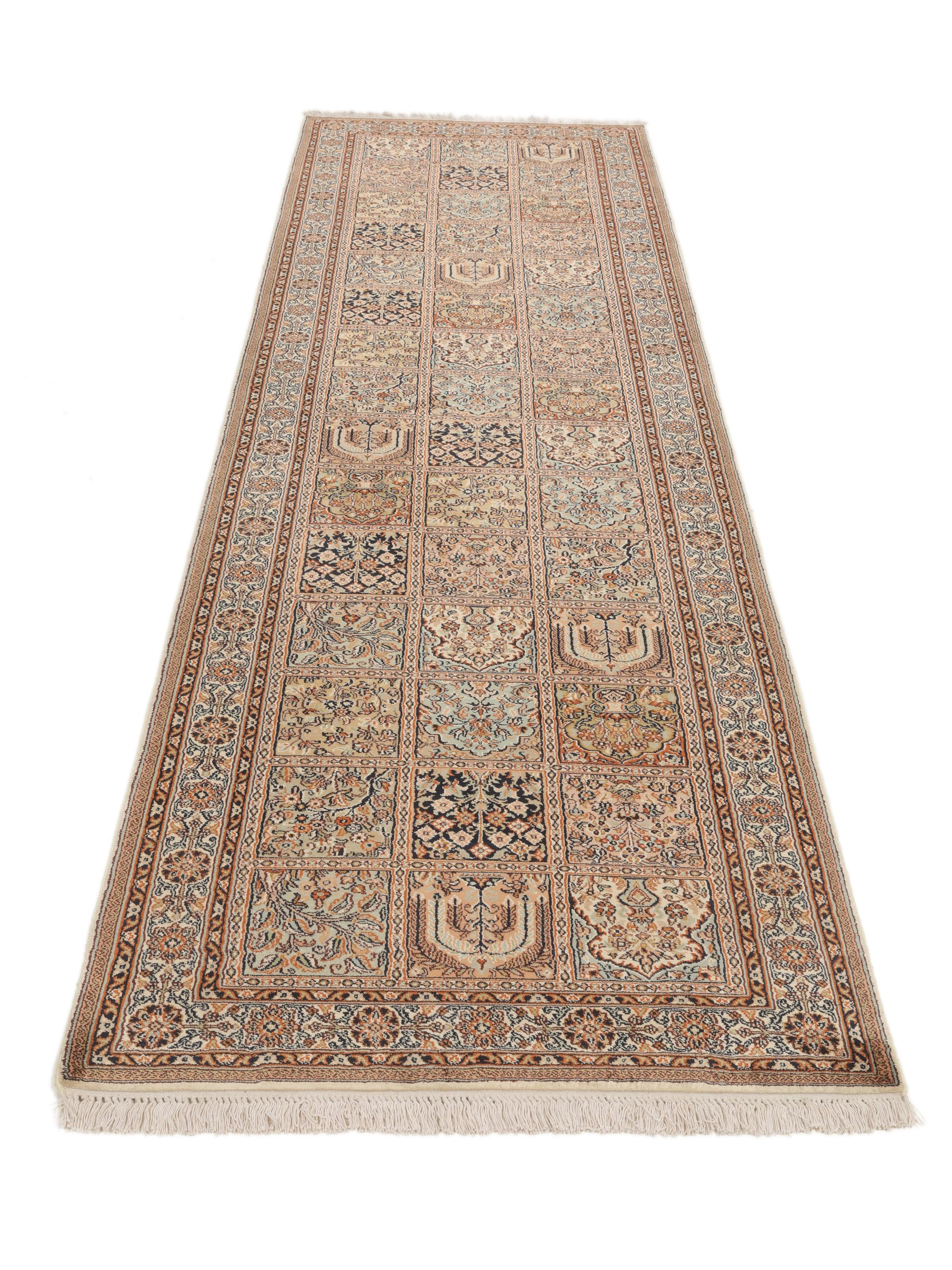
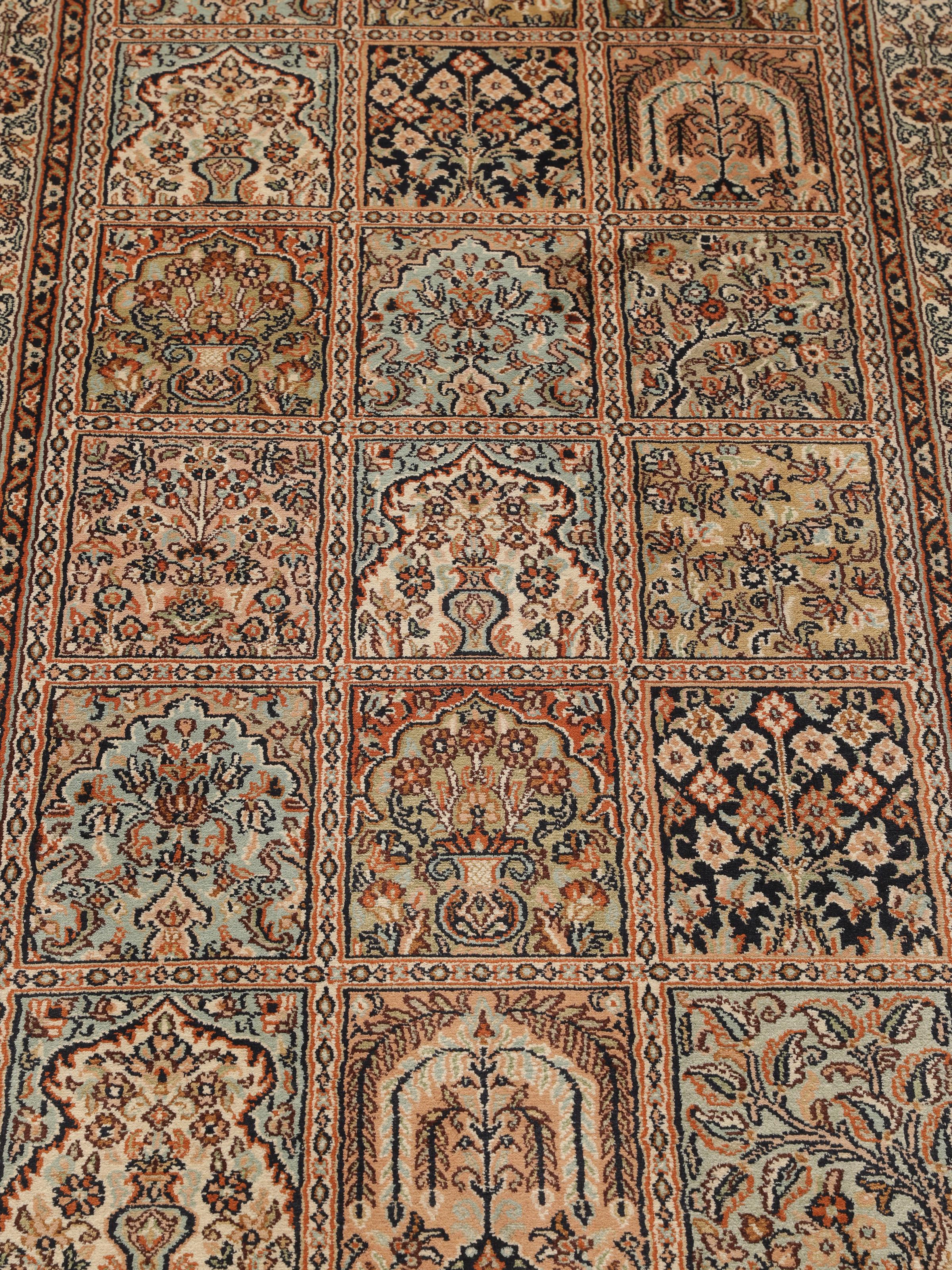
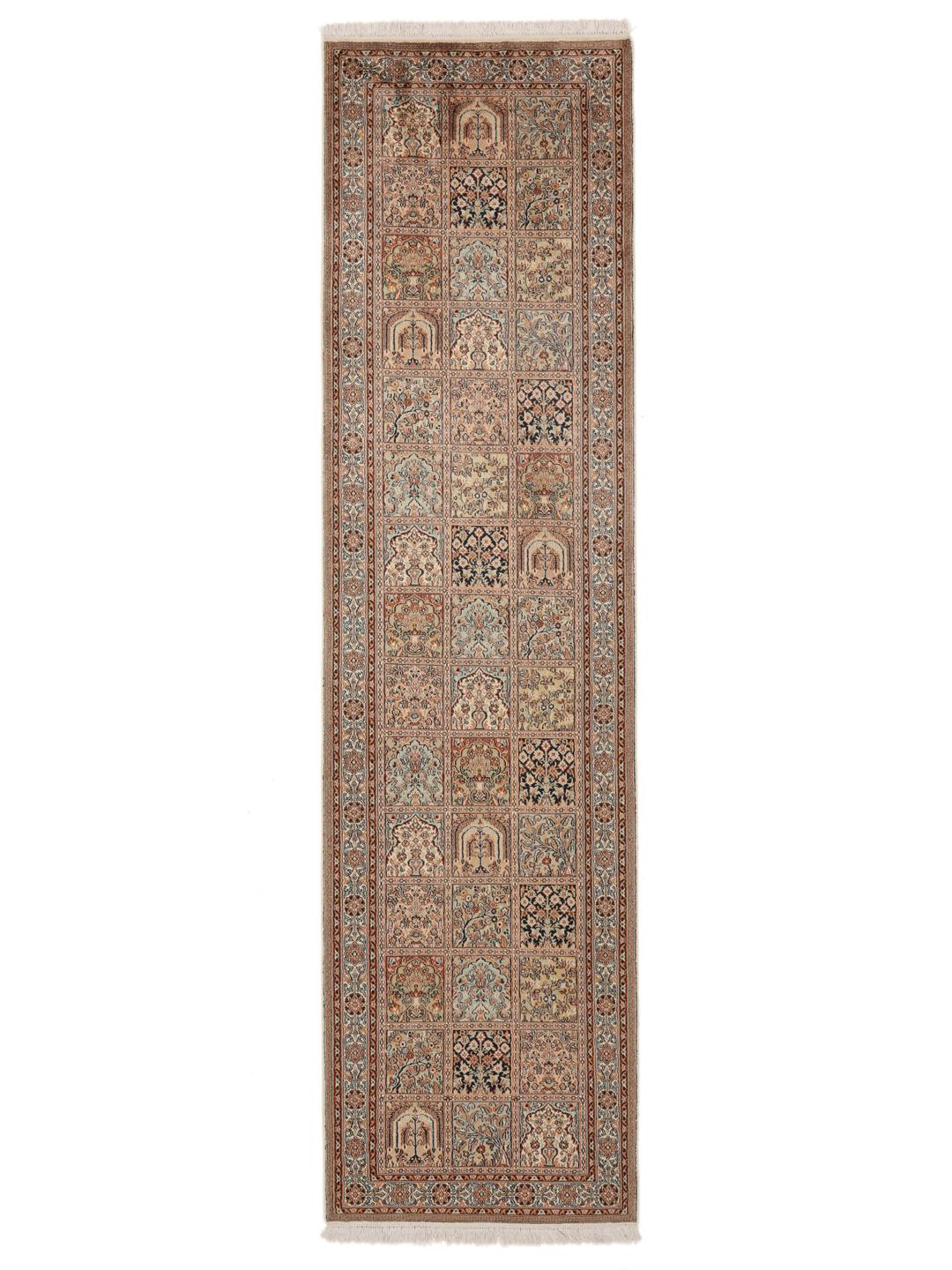
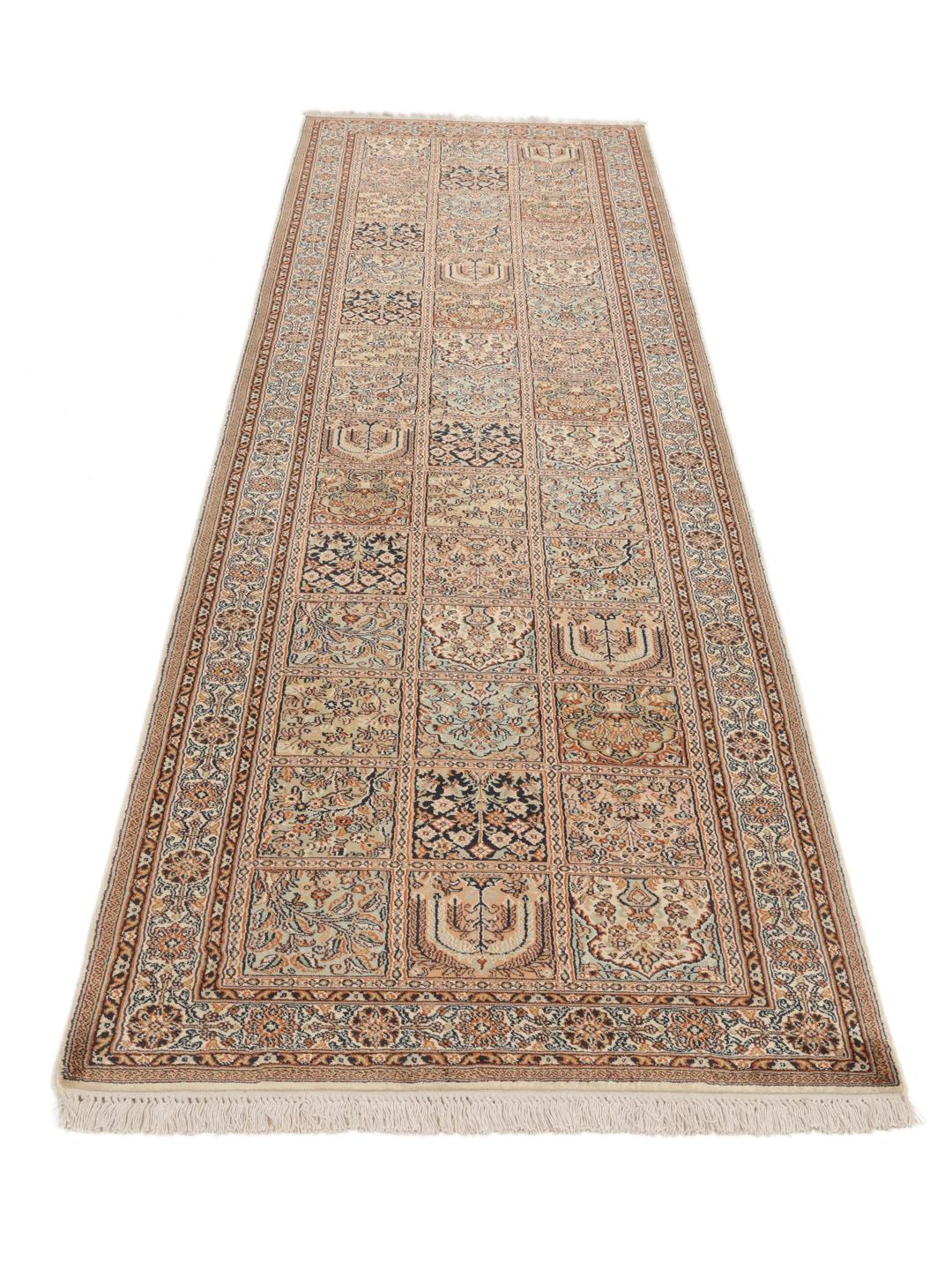
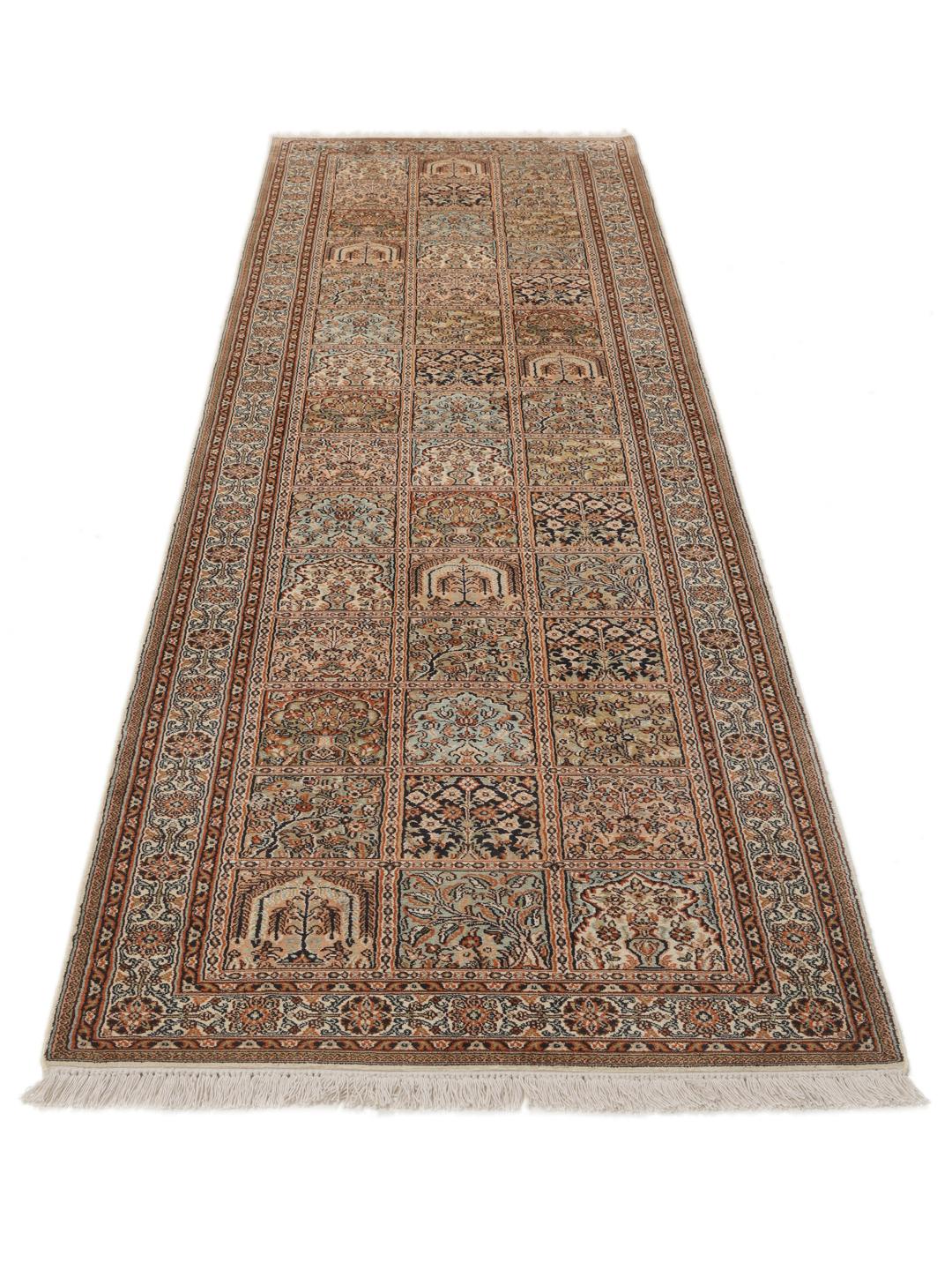
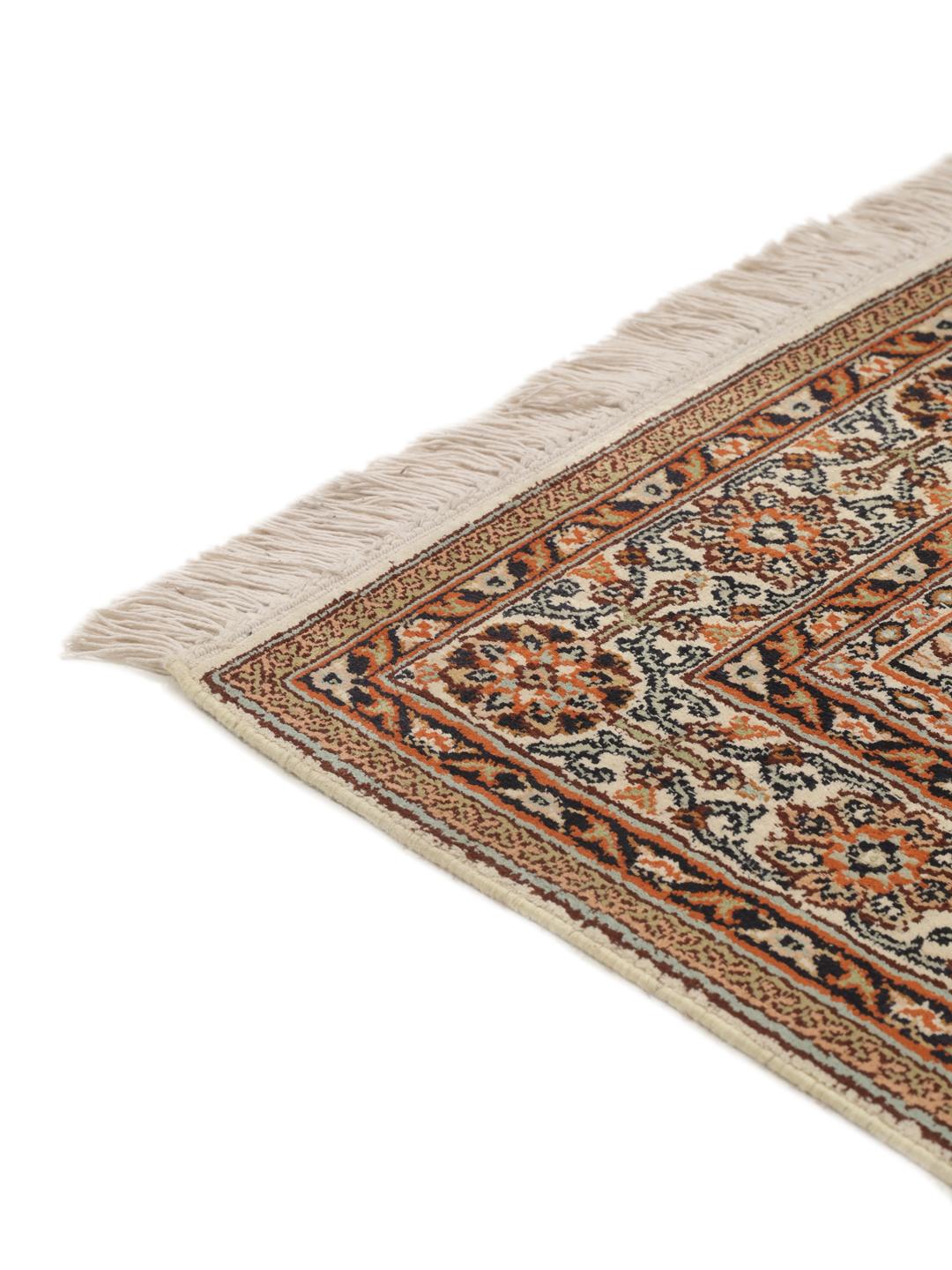
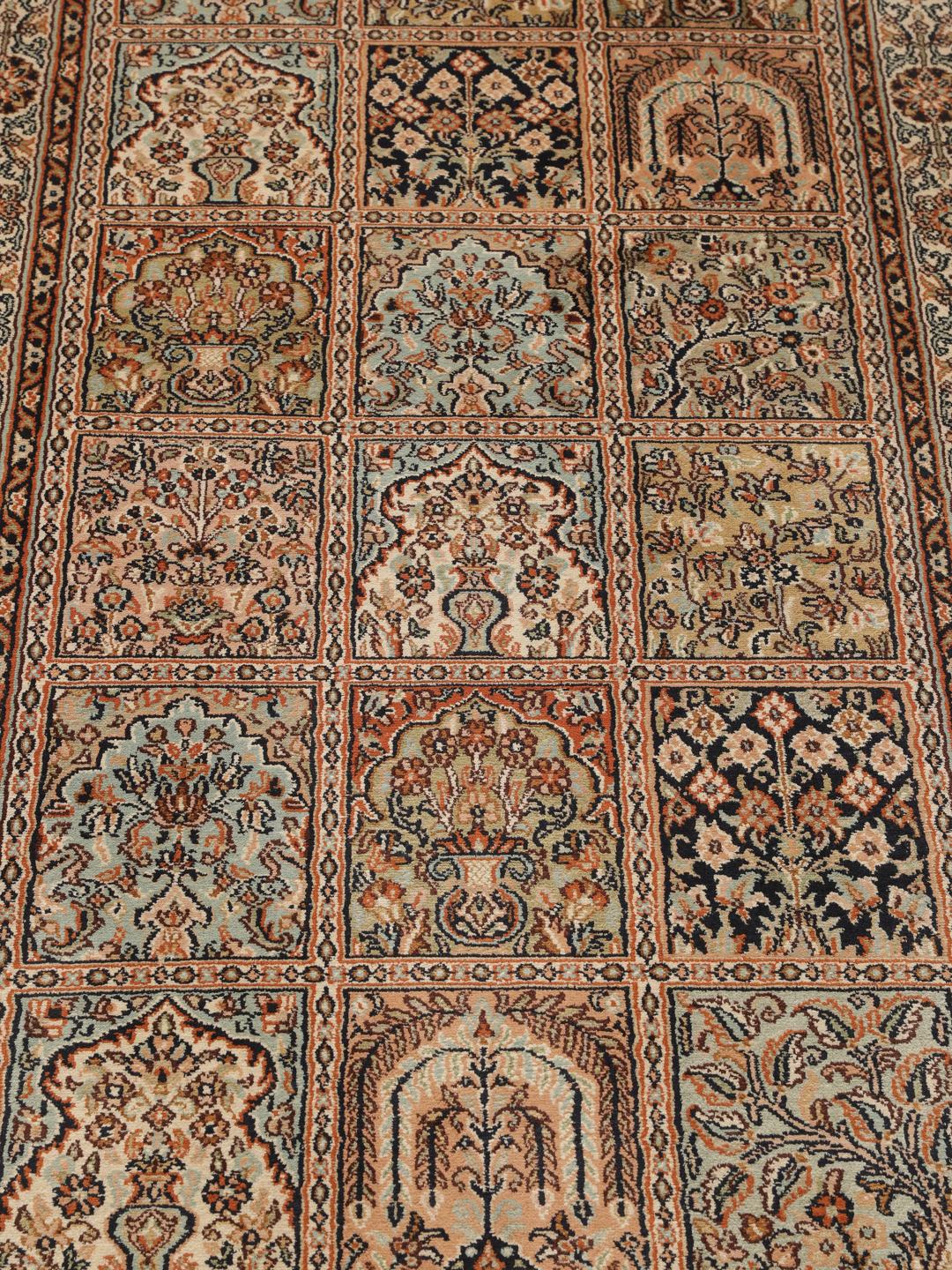
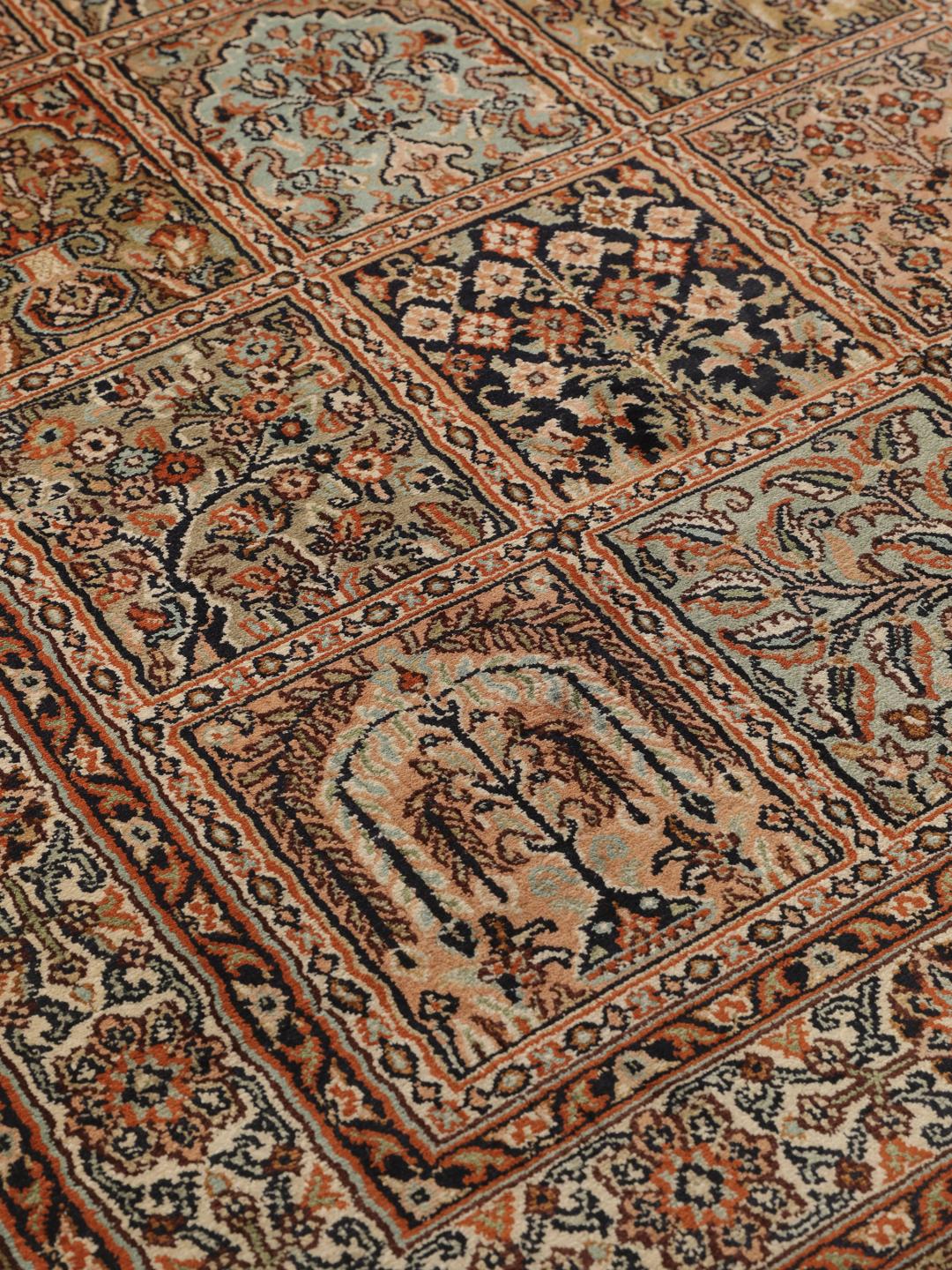
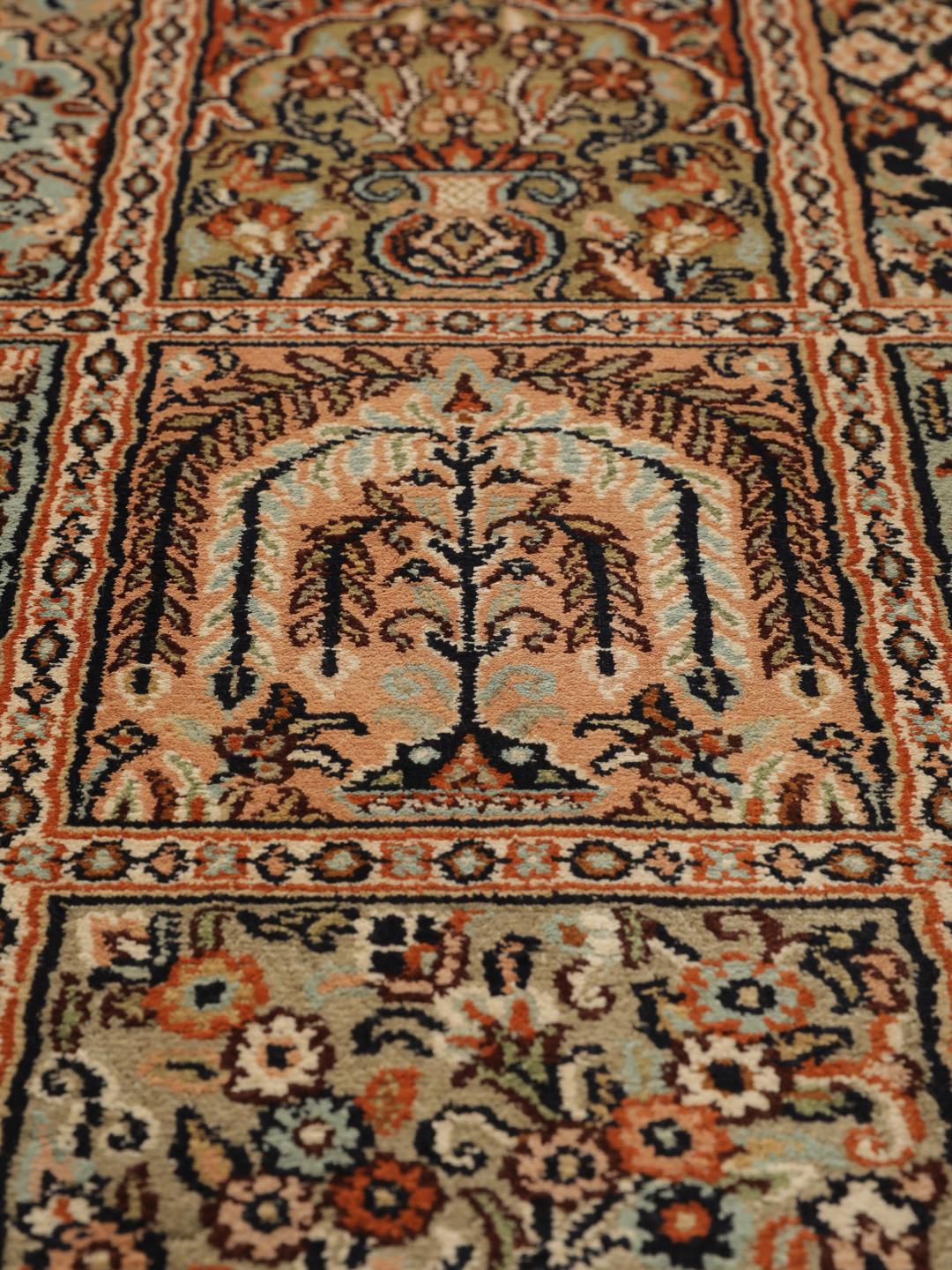
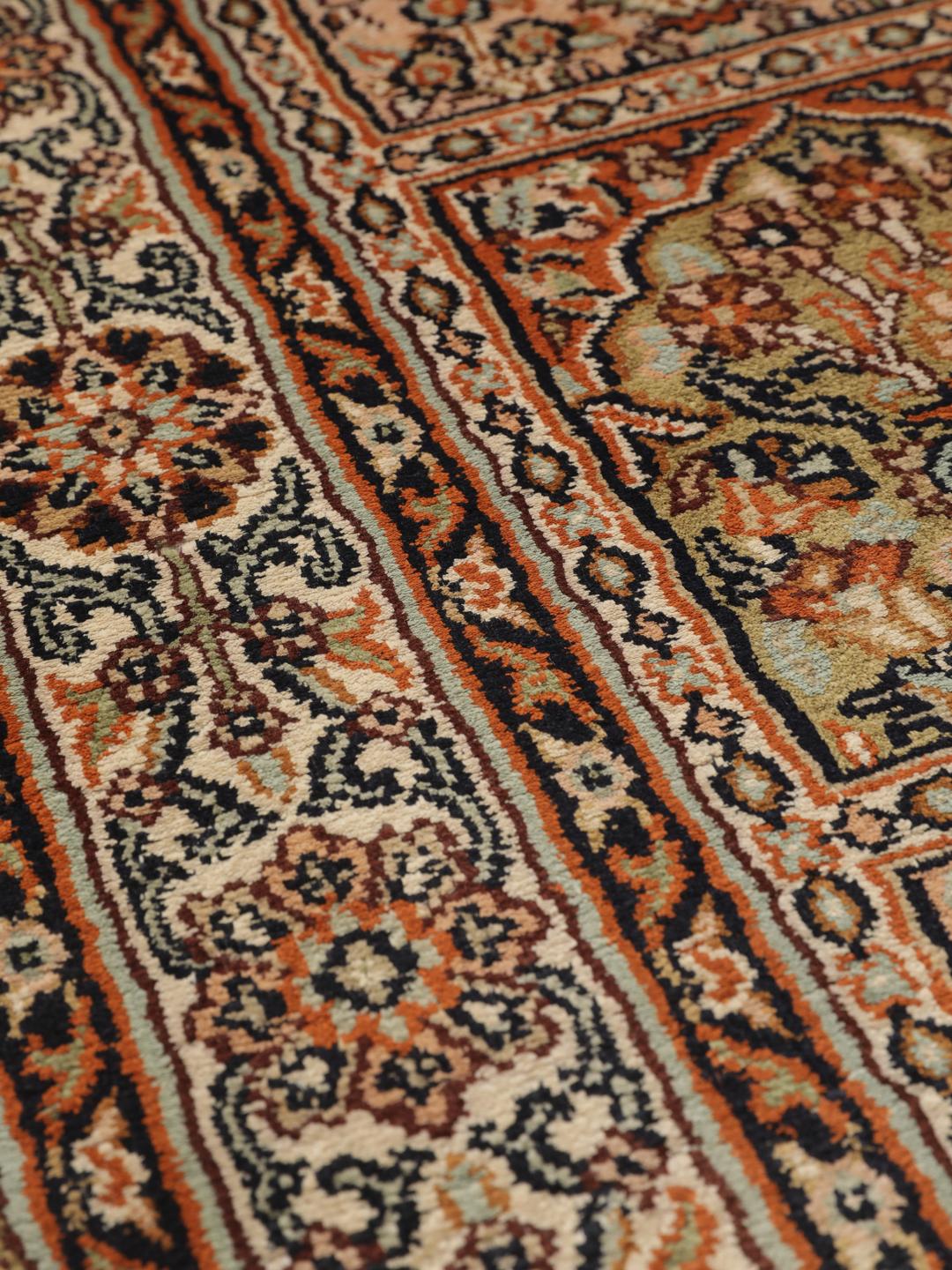
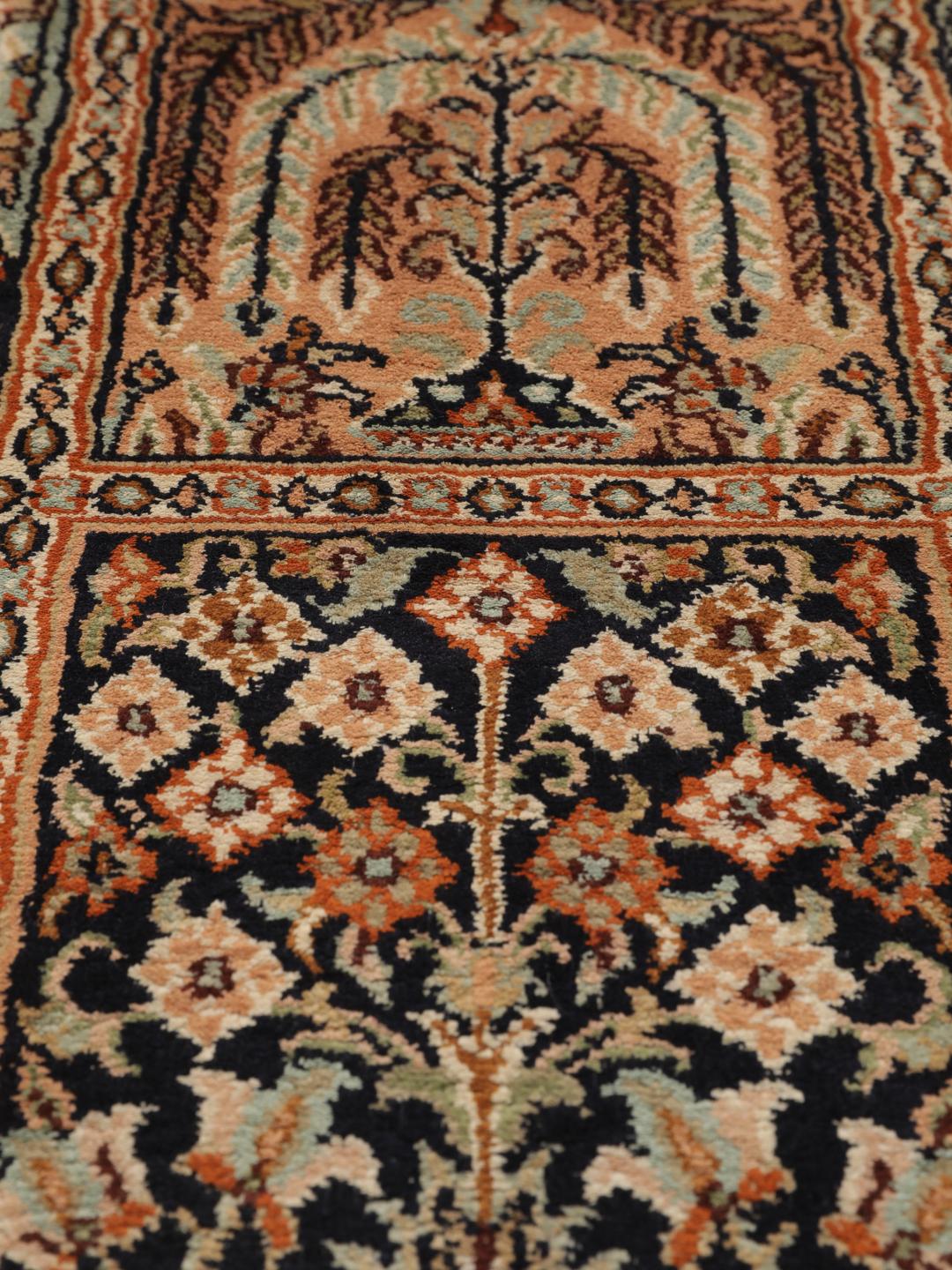
Visually, these rugs are famous for their 'garden' or 'compartment' layouts. You will often see repeating floral motifs, chinar leaves, or intricate medallions arranged in structured, geometric grids. This specific runner features a series of panels, each housing delicate, ornate floral designs that draw the eye from one end to the other. The border work is equally significant, often serving to frame the field with a steady, rhythmic pattern that provides balance.
Collecting a piece from this tradition is an investment in cultural heritage. These rugs are highly valued for their ability to bridge the gap between functional floor covering and fine art. Because each rug is the result of a singular creative process, they are sought after by those who appreciate the intersection of historical technique and individual expression. Owning one is a way to preserve a centuries-old craft that continues to be a hallmark of luxury and skill.