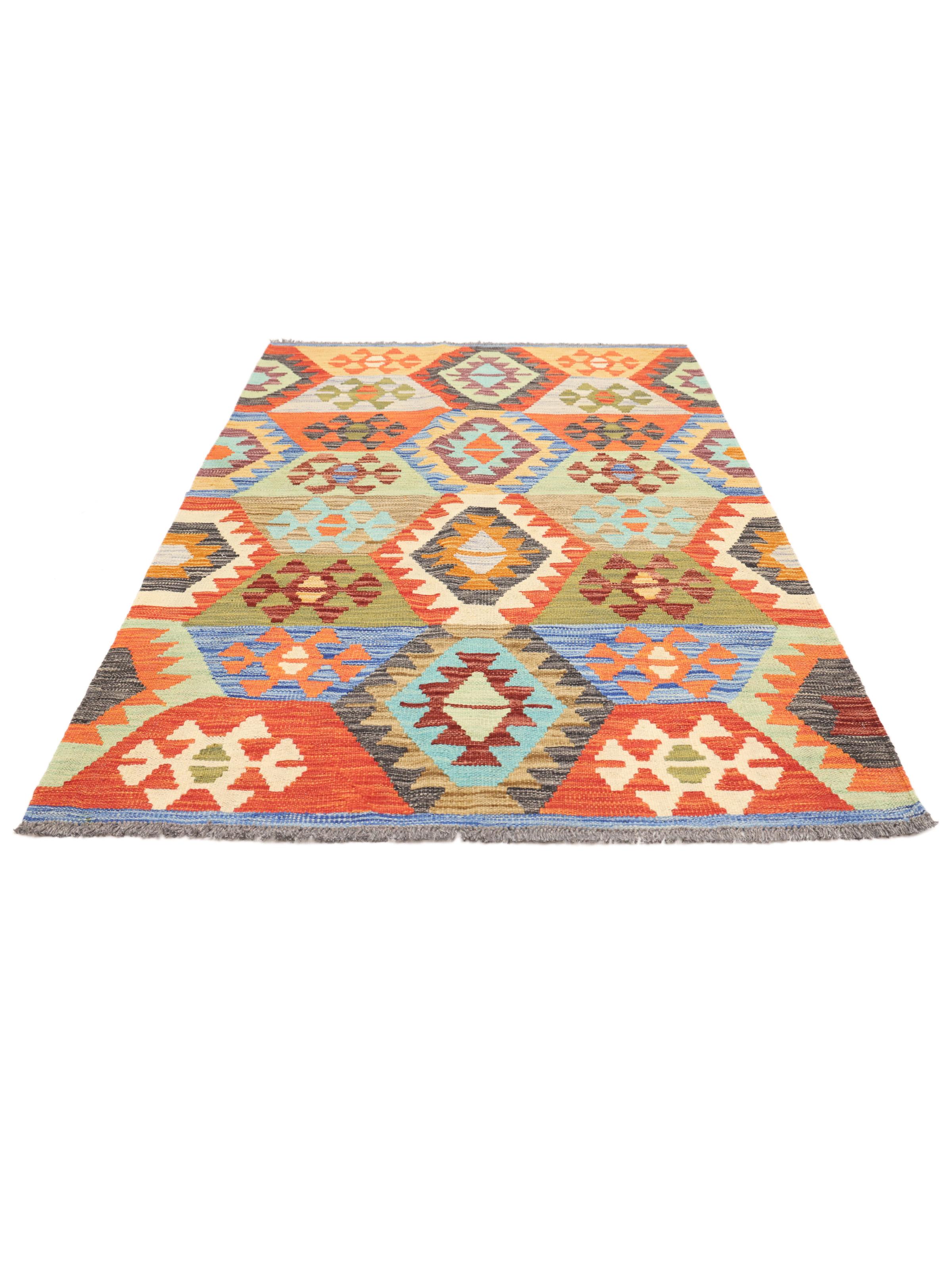
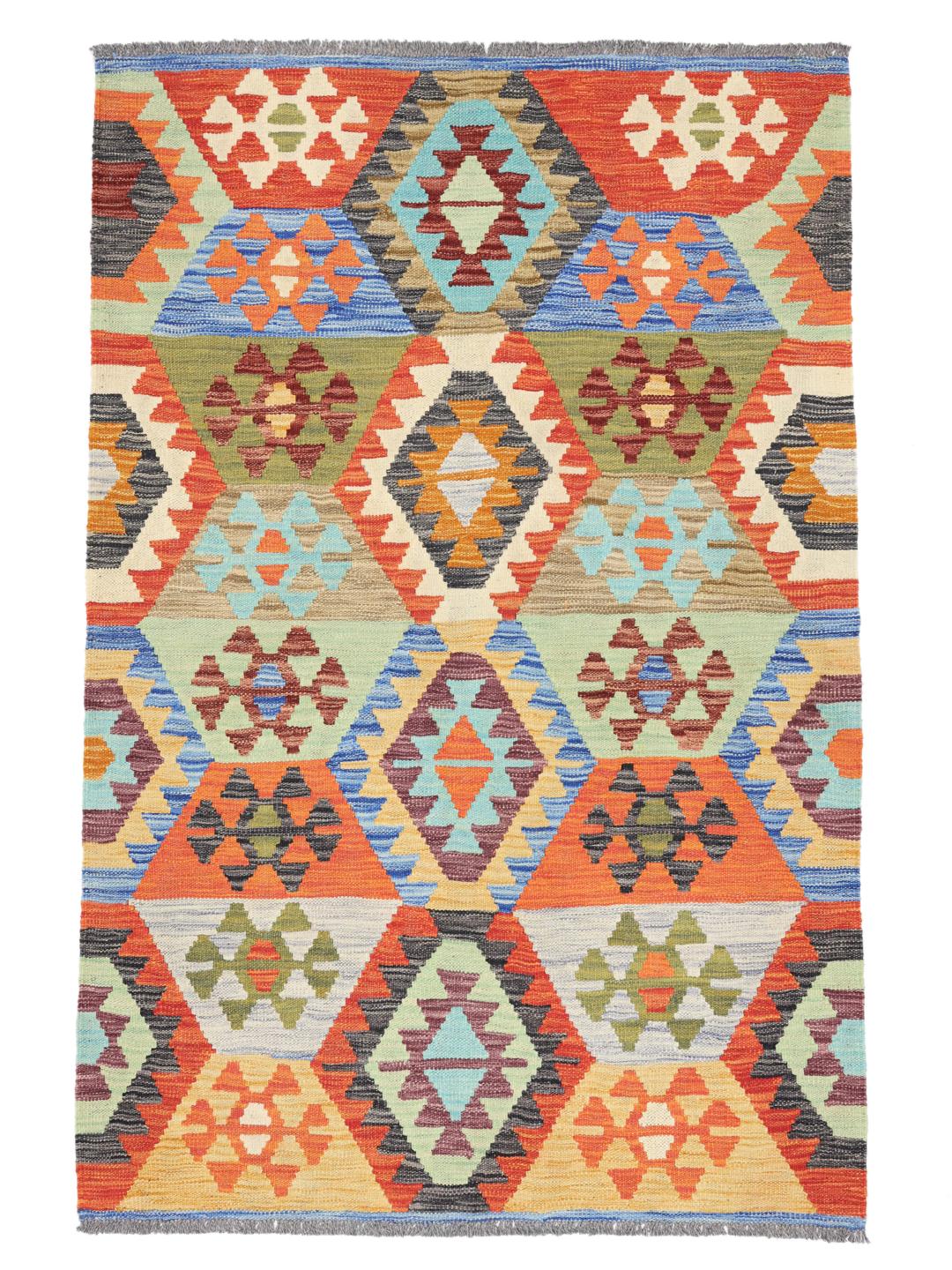
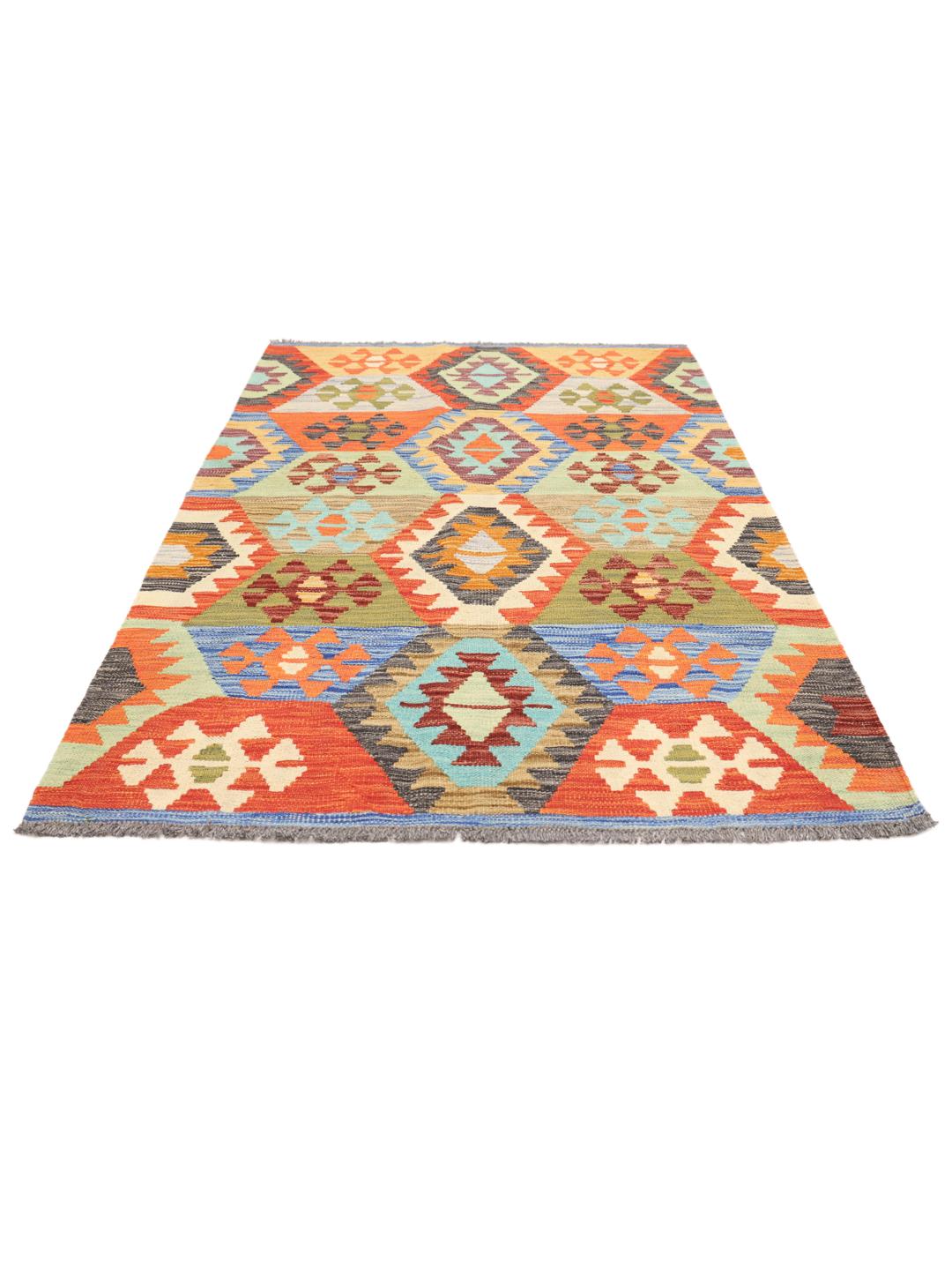
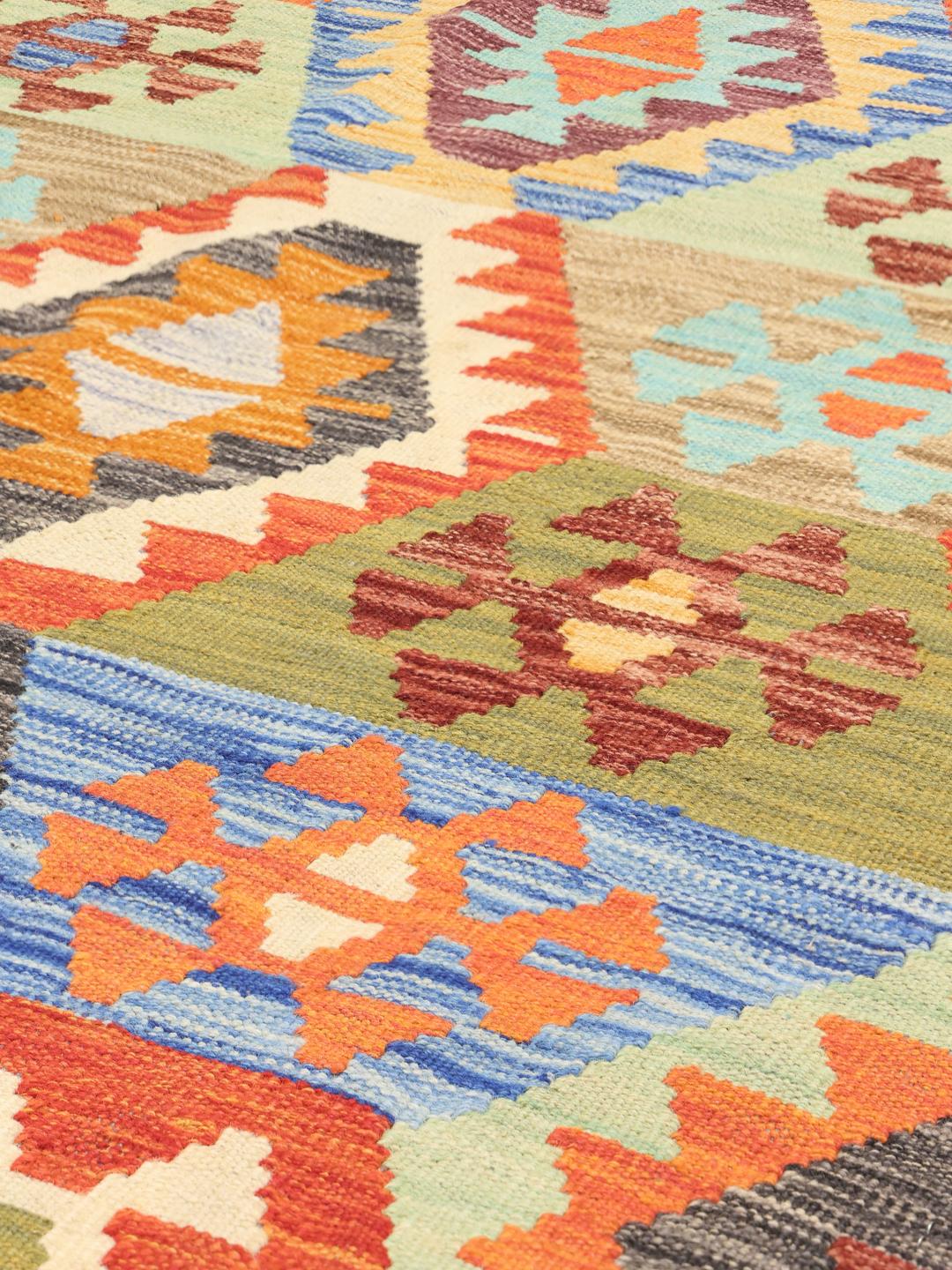
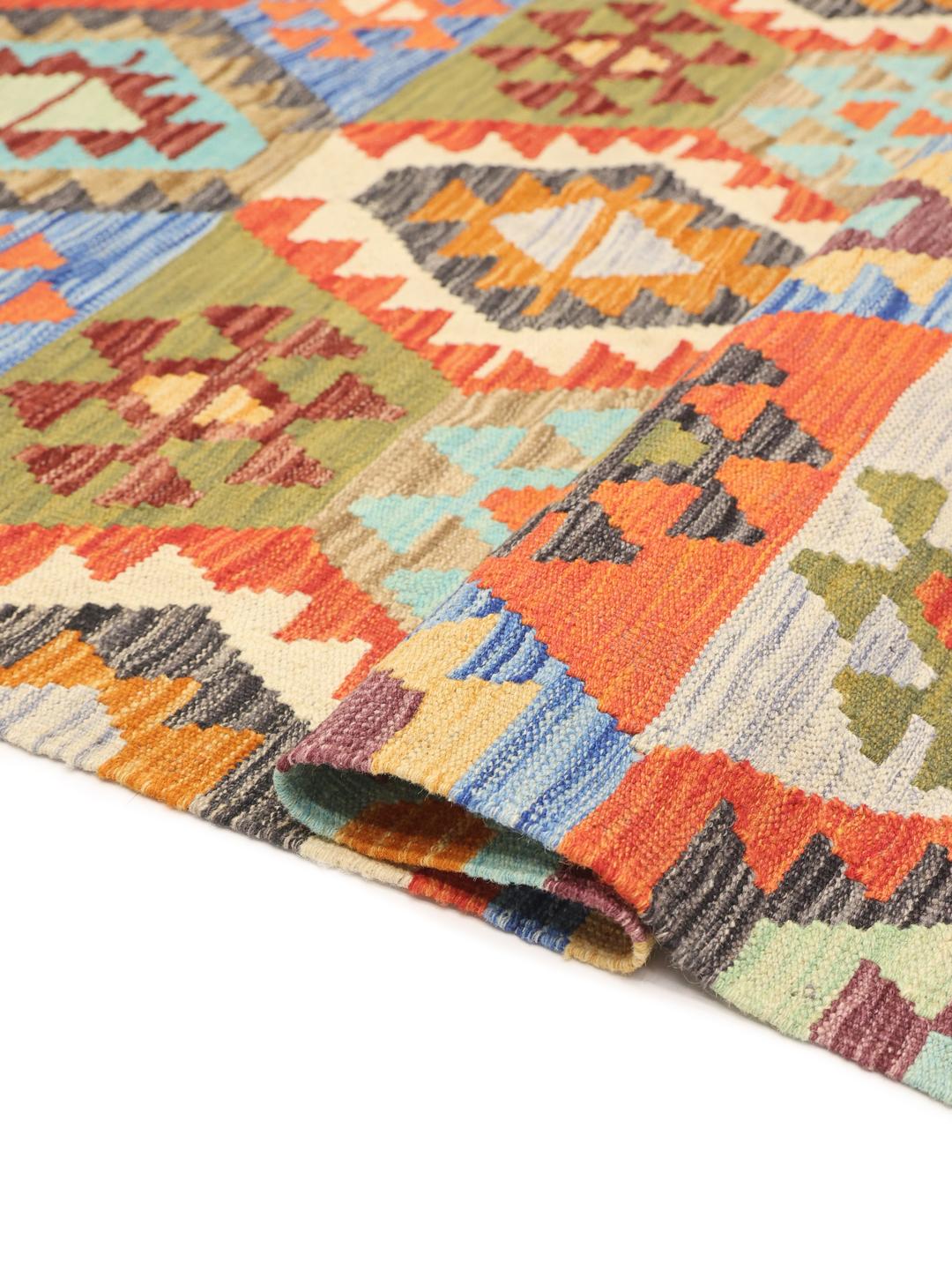
Kelim rugs have a rich heritage deeply rooted in the nomadic and village traditions of Persia and Central Asia.
Originally created by tribal weavers for practical household use such as floor coverings, blankets, and storage sacks, these flatwoven textiles served as essential items for daily life while showcasing the distinct artistic identity of each weaving community.
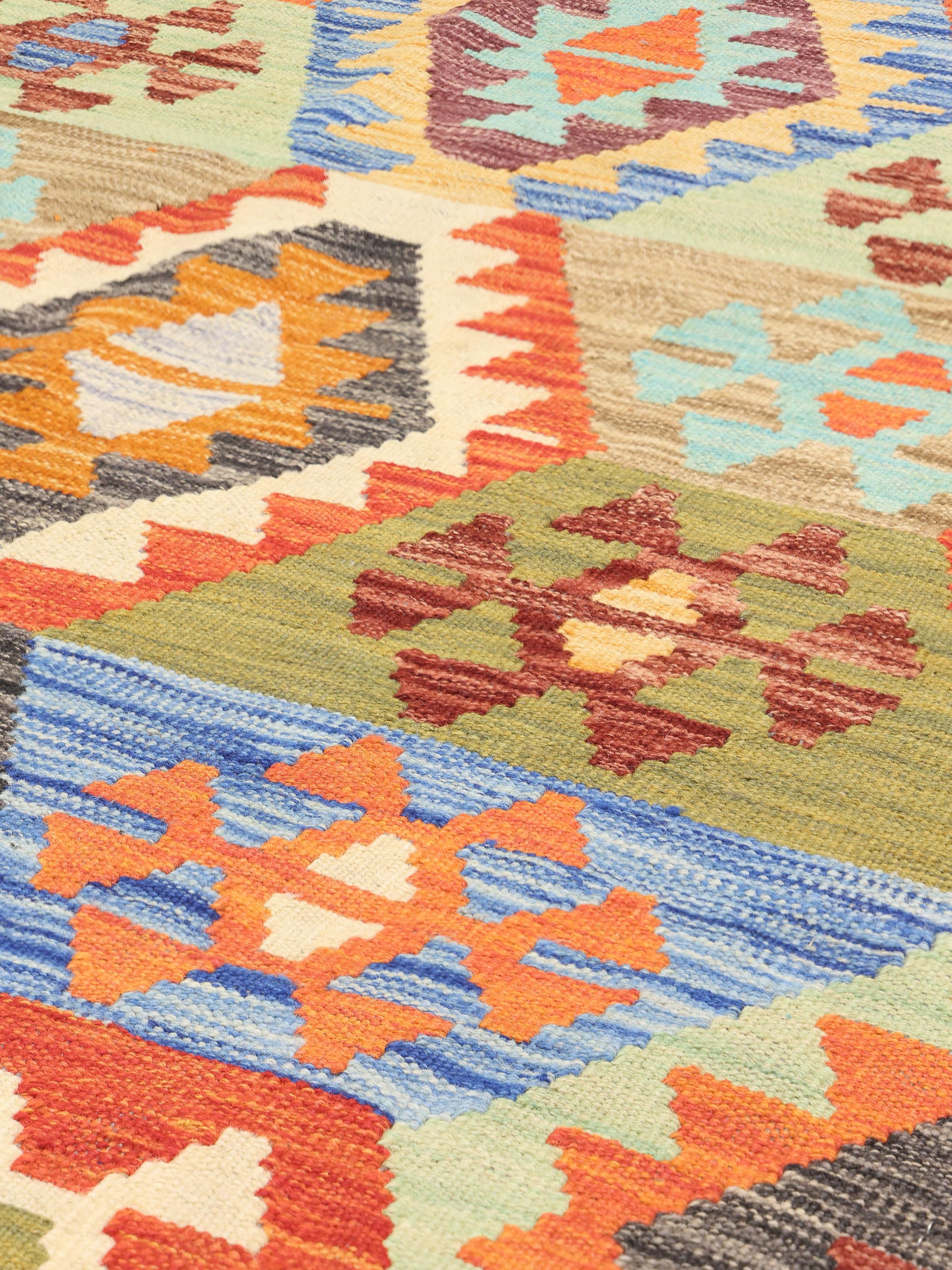
The flatweave technique used to create Kelims involves interlocking the weft threads tightly over the warp threads, producing a smooth surface with no raised pile.
This ancient construction method allows intricate geometric designs to appear equally crisp on both sides of the textile, representing a high level of technical mastery passed down through generations.
Traditional Kelim design language relies heavily on repeating geometric motifs, diamond symbols, and tribal markers filled with symbolic meaning.
The colour palettes historically relied on natural dyes extracted from local plants and minerals, resulting in rich, earthy tones that harmonise beautifully in modern homes.
Collecting vintage and old-style Kelims connects owners to a vast lineage of skilled craftspeople.
Owning such a piece means preserving traditional skills and bringing a tangible sense of cultural heritage and human history into your living environment.