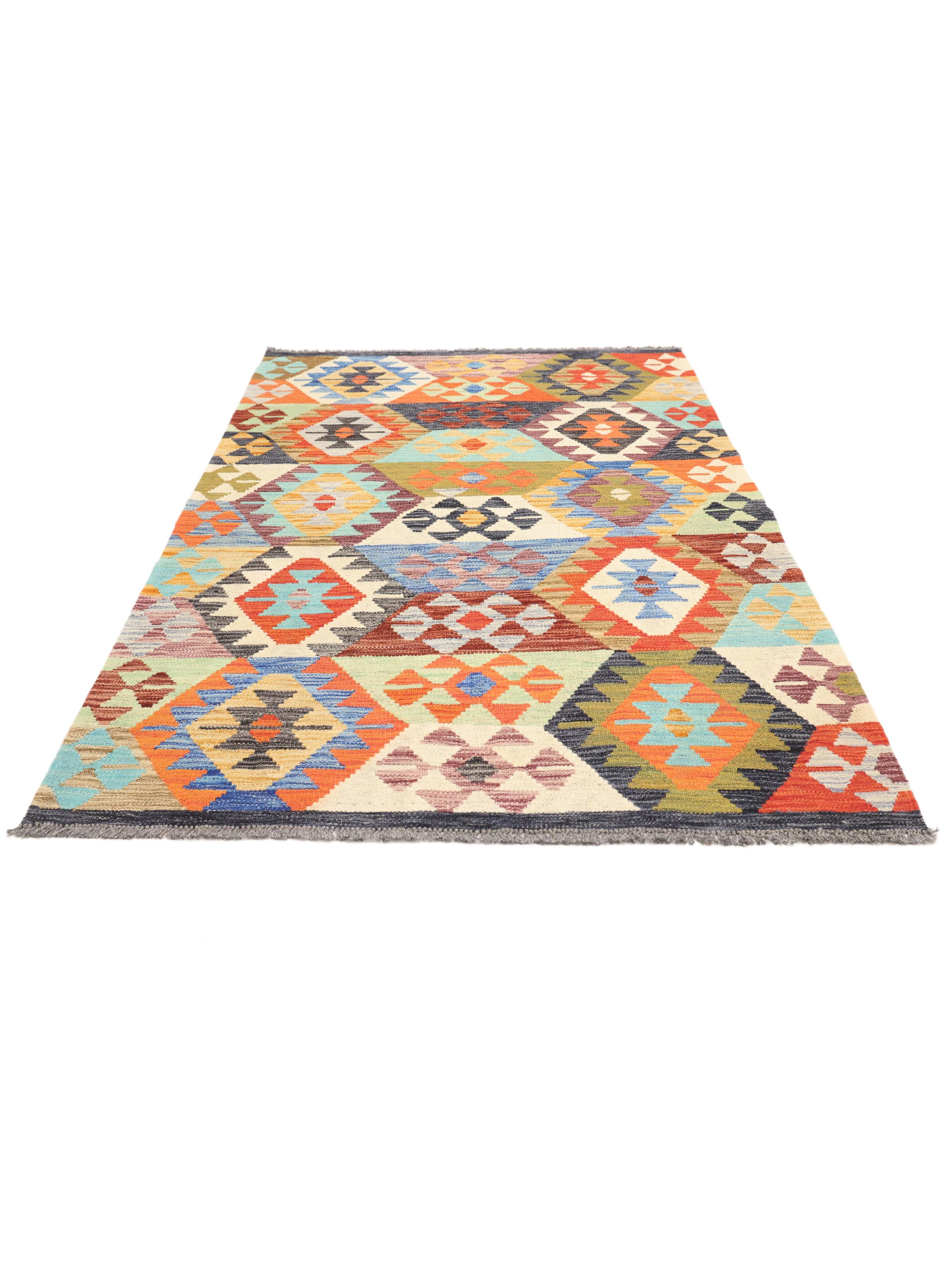
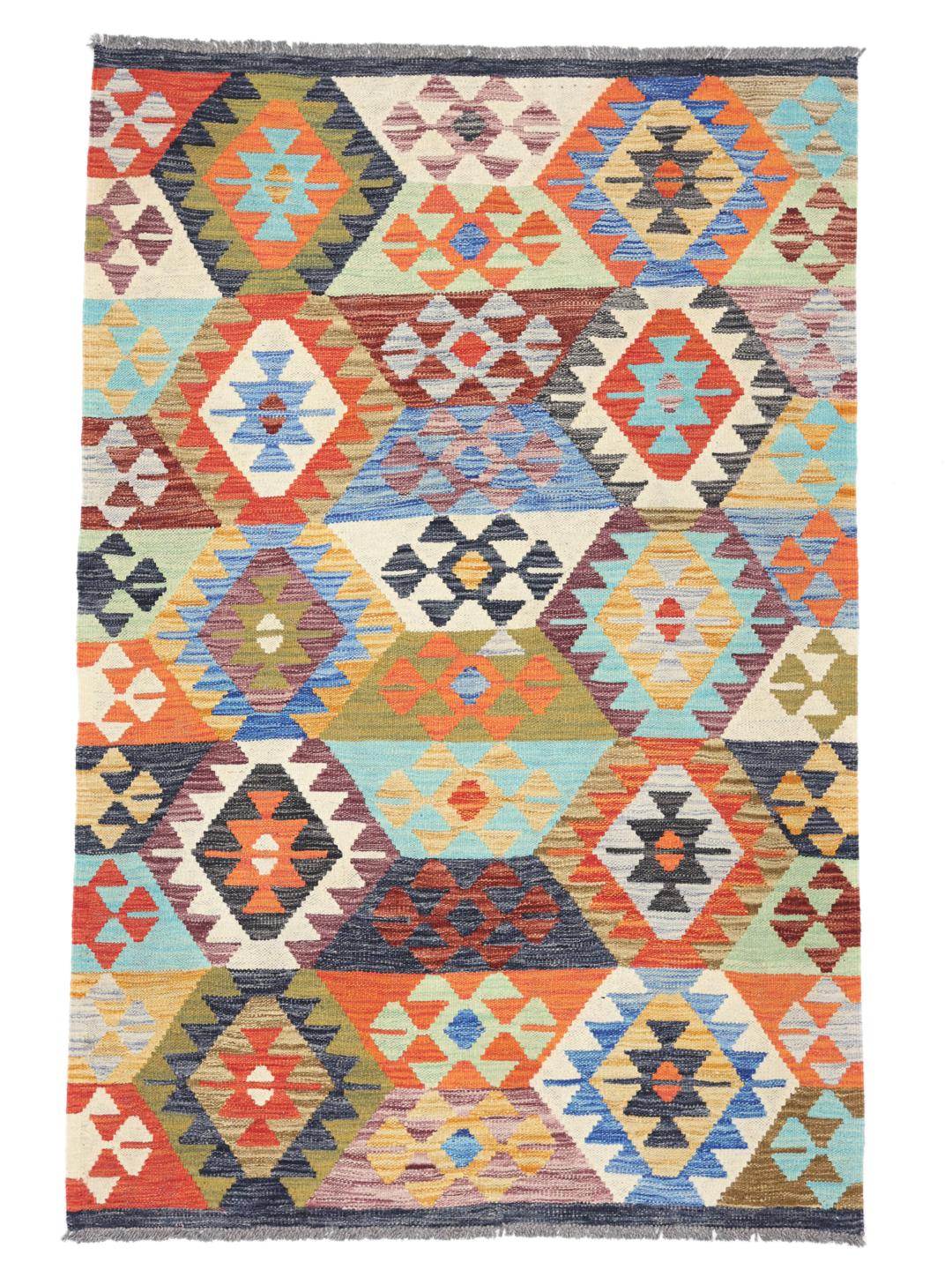
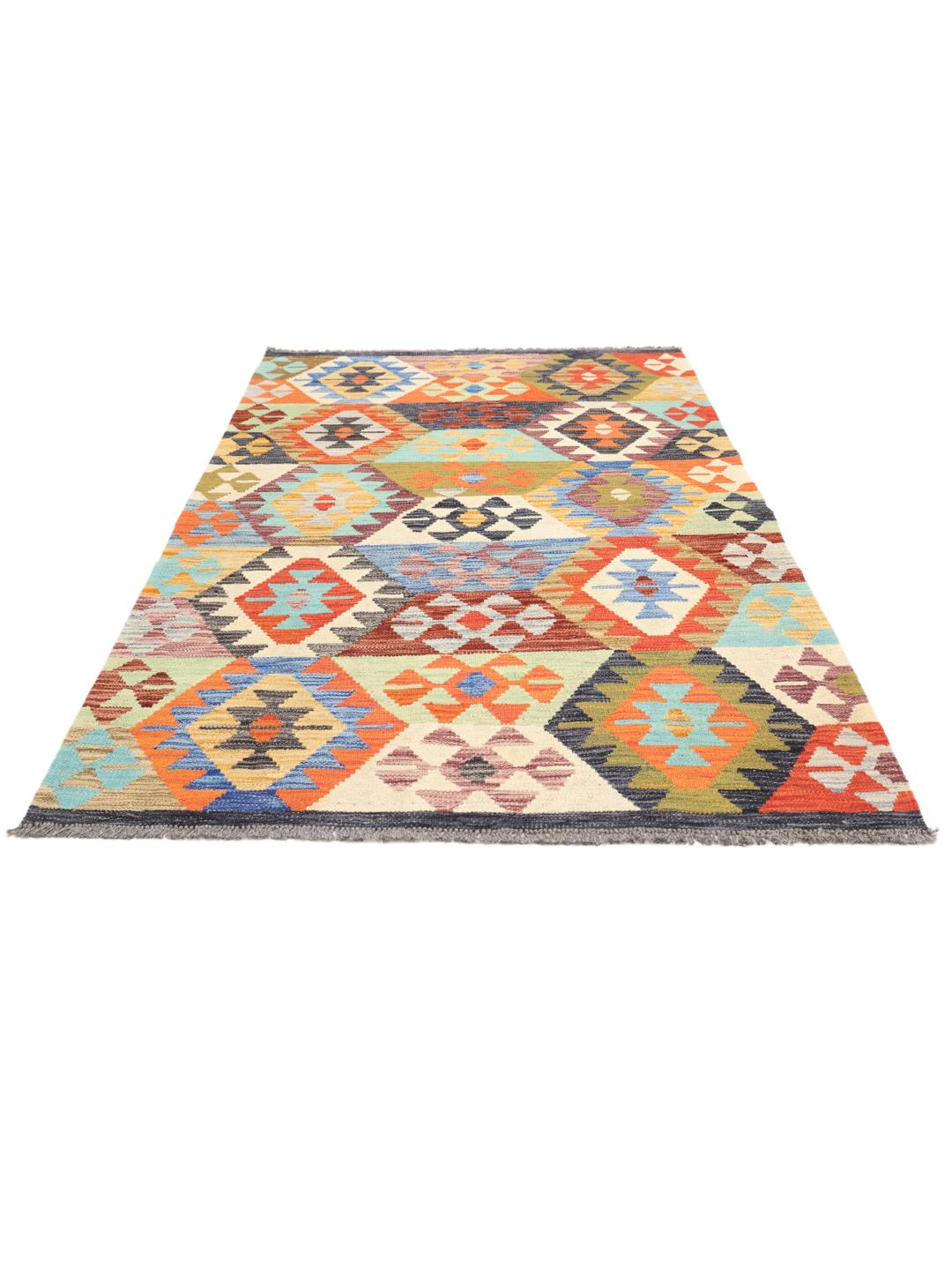
Kelim rugs from Afghanistan are deeply rooted in the nomadic traditions of the region, where weaving was both a necessity for daily life and a primary medium for artistic expression. These flat-woven textiles were historically created by tribal groups to provide warmth, insulation, and decoration for tents, evolving over centuries into the sophisticated pieces we see today.
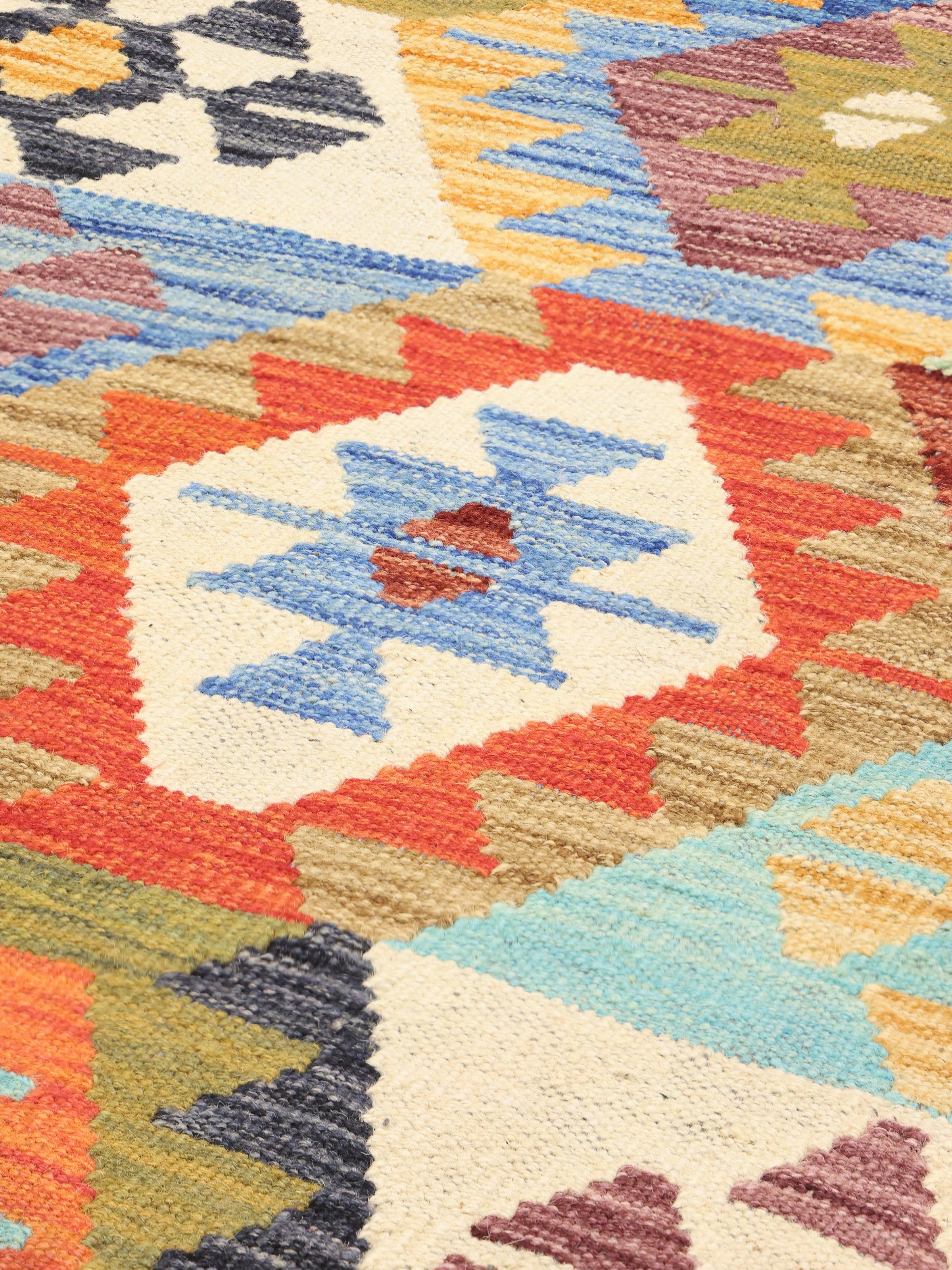
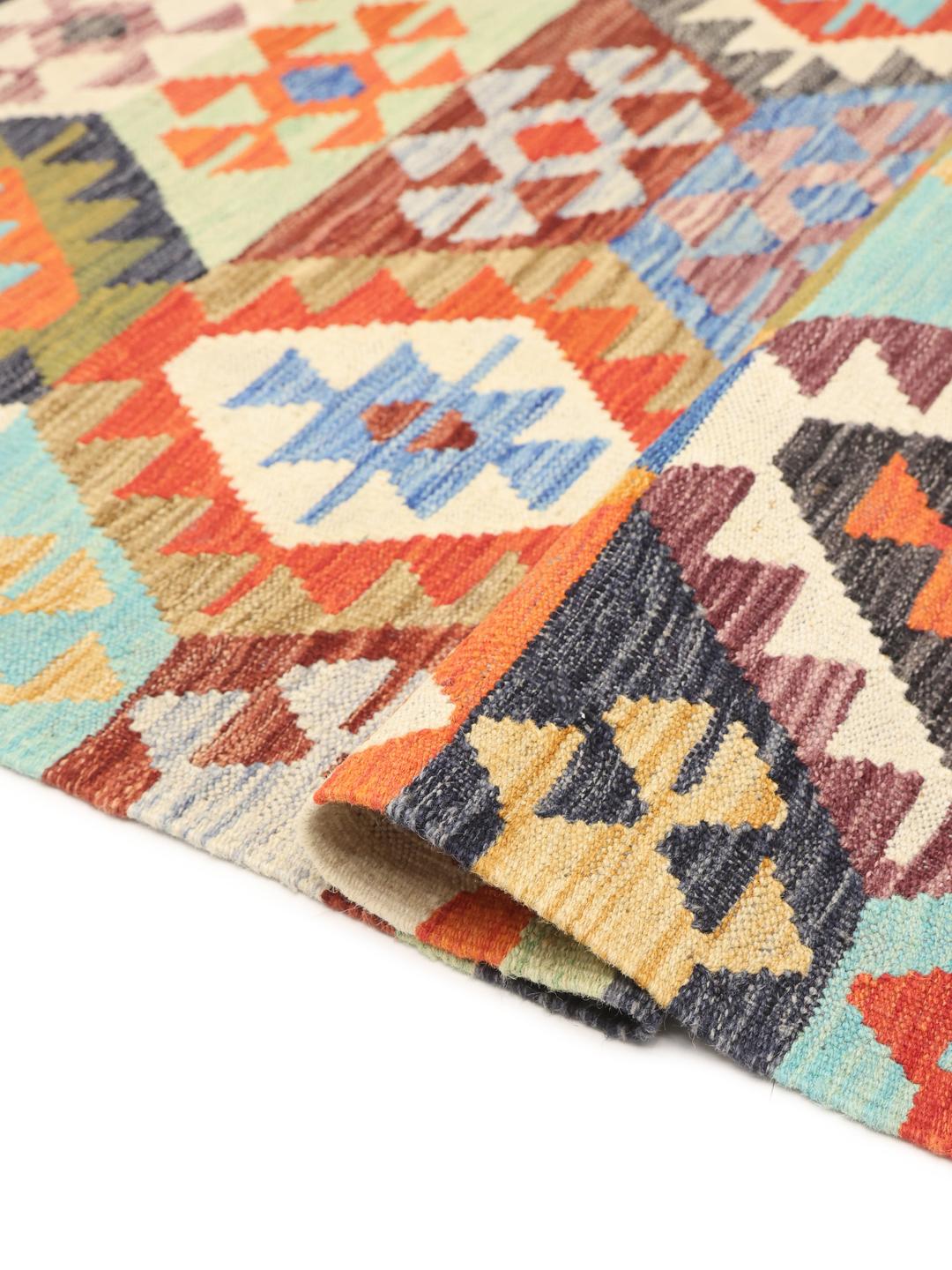
The term 'Kelim' refers to the specific flat-weaving technique where the weft threads are pulled tightly over the warp threads, leaving no pile. This method results in a lightweight, reversible rug that is incredibly versatile. The 'Old Style' designation refers to the preservation of traditional motifs and dyeing techniques that have been passed down through generations of Afghan weavers.
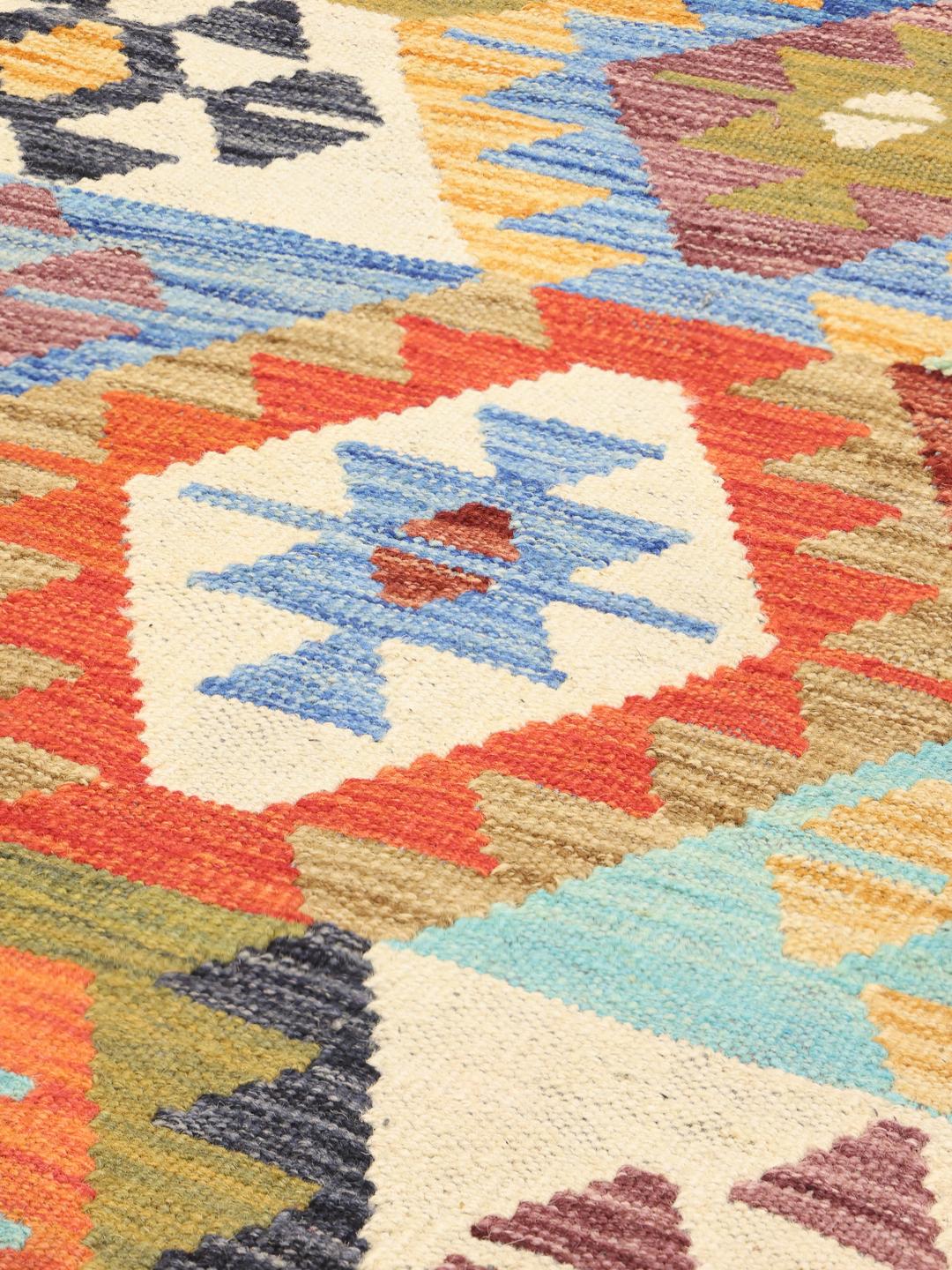
The visual language of these rugs is defined by bold geometric patterns, often incorporating repeating diamonds, triangles, and stylised floral motifs. These shapes are not merely decorative but are deeply symbolic, often representing protection, prosperity, or the weaver's environment. The use of vibrant, natural-looking colours is a hallmark of the Afghan style, giving each piece a distinct, energetic personality.
Collecting an Afghan Kelim is an investment in human skill and cultural heritage. These rugs are valued for their authenticity and the labour-intensive nature of their creation. By choosing a one-of-a-kind piece, you are not just purchasing a floor covering, but a tangible piece of history that reflects the enduring creativity of Central Asian artisan communities.