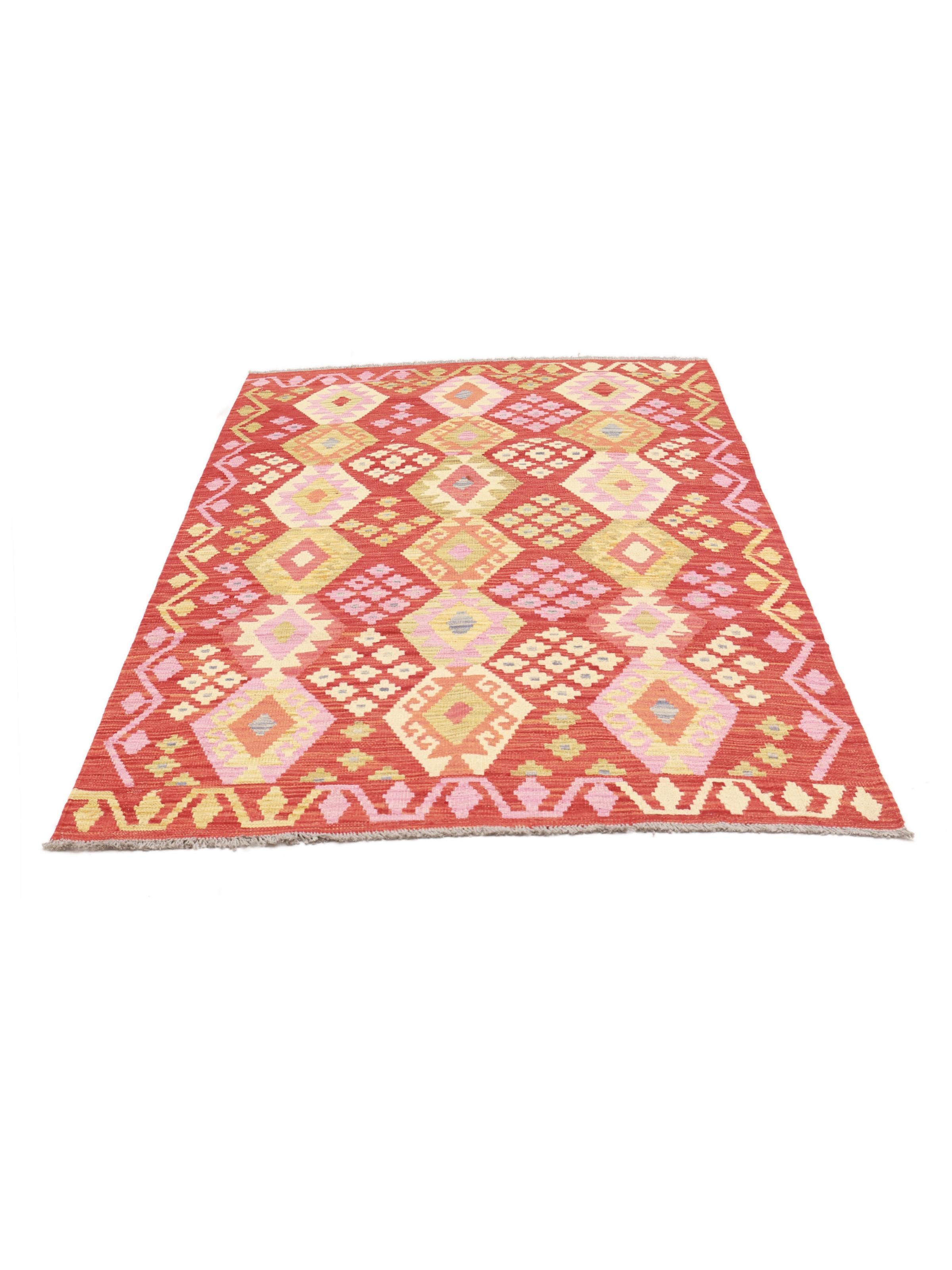
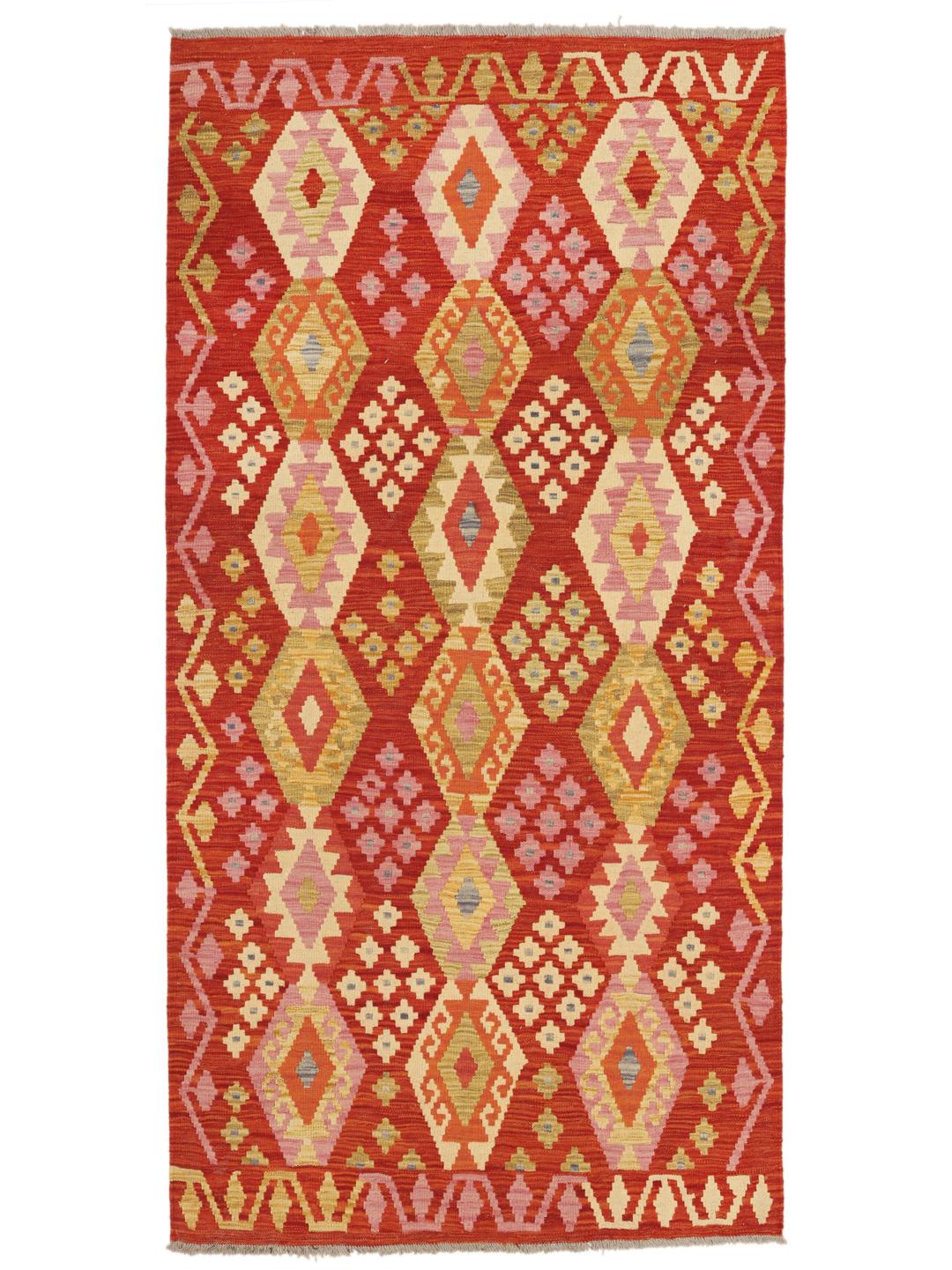
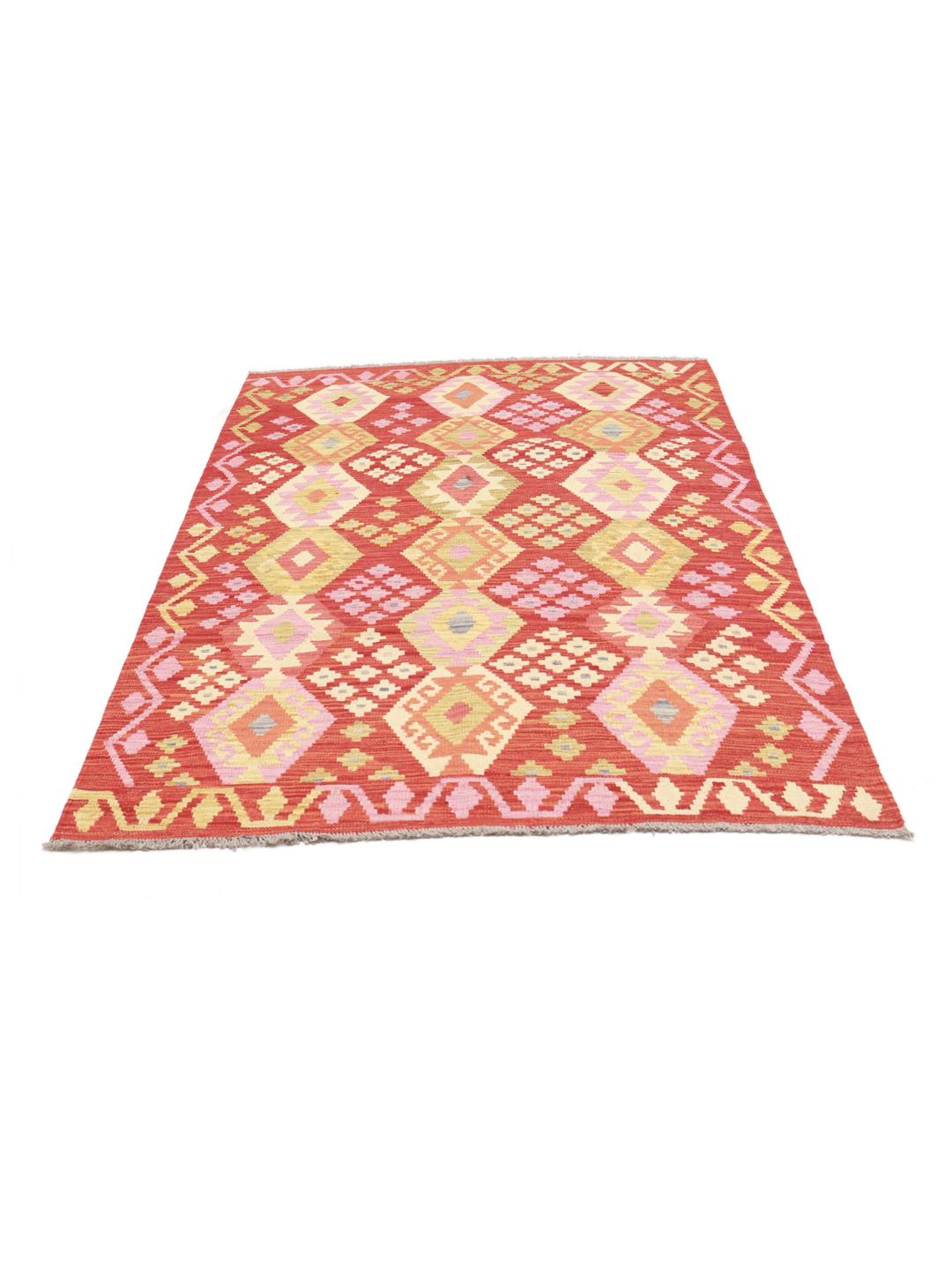
The Afghan Kelim is a celebrated textile tradition that finds its roots in the nomadic cultures of Central Asia. These rugs have historically served as essential components of daily life, used as floor coverings, wall hangings, and storage bags by tribes traversing the rugged landscapes of the region. Their evolution reflects the migration of design influences along ancient trade routes, blending local aesthetics with broader regional motifs.
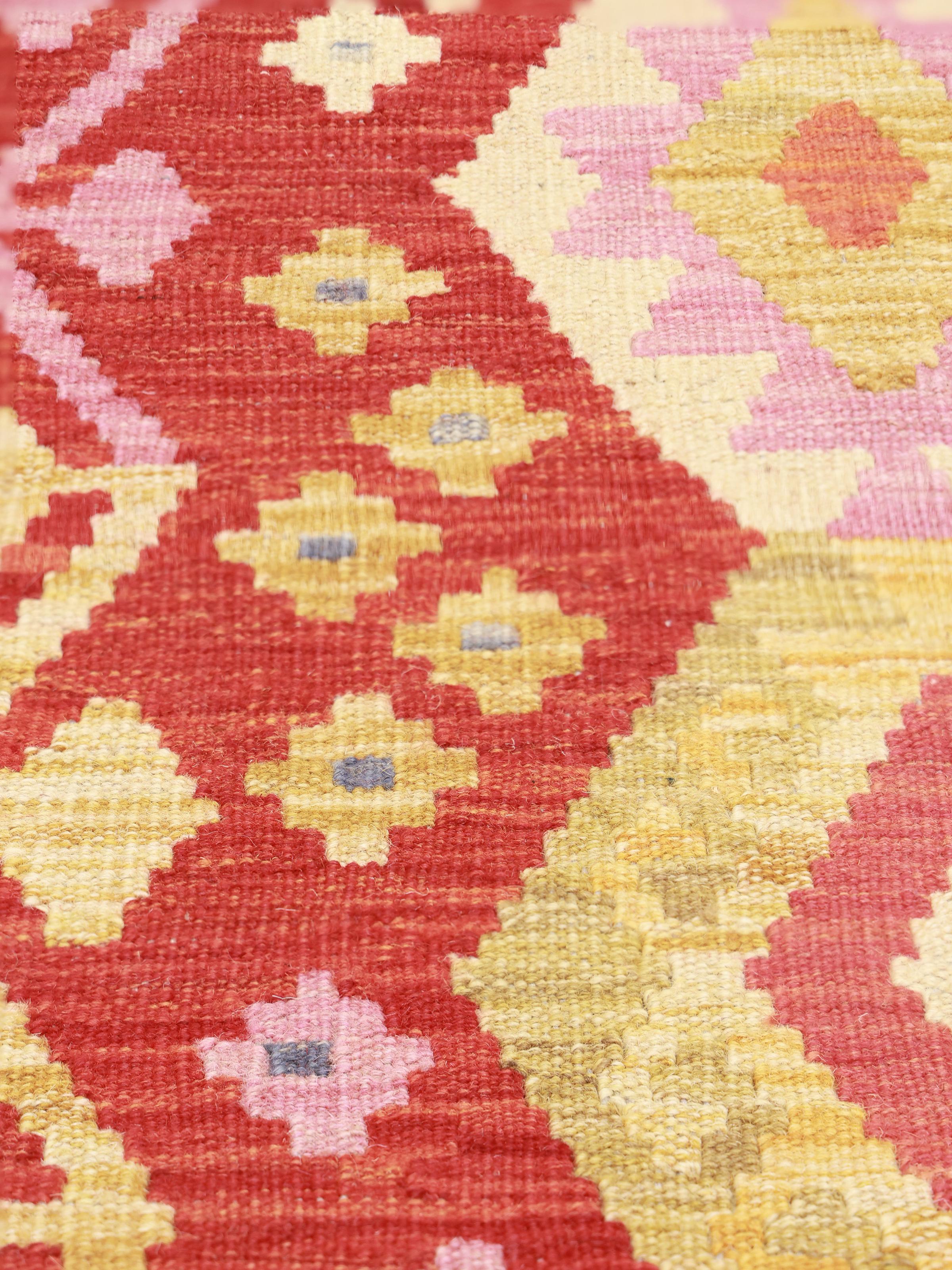
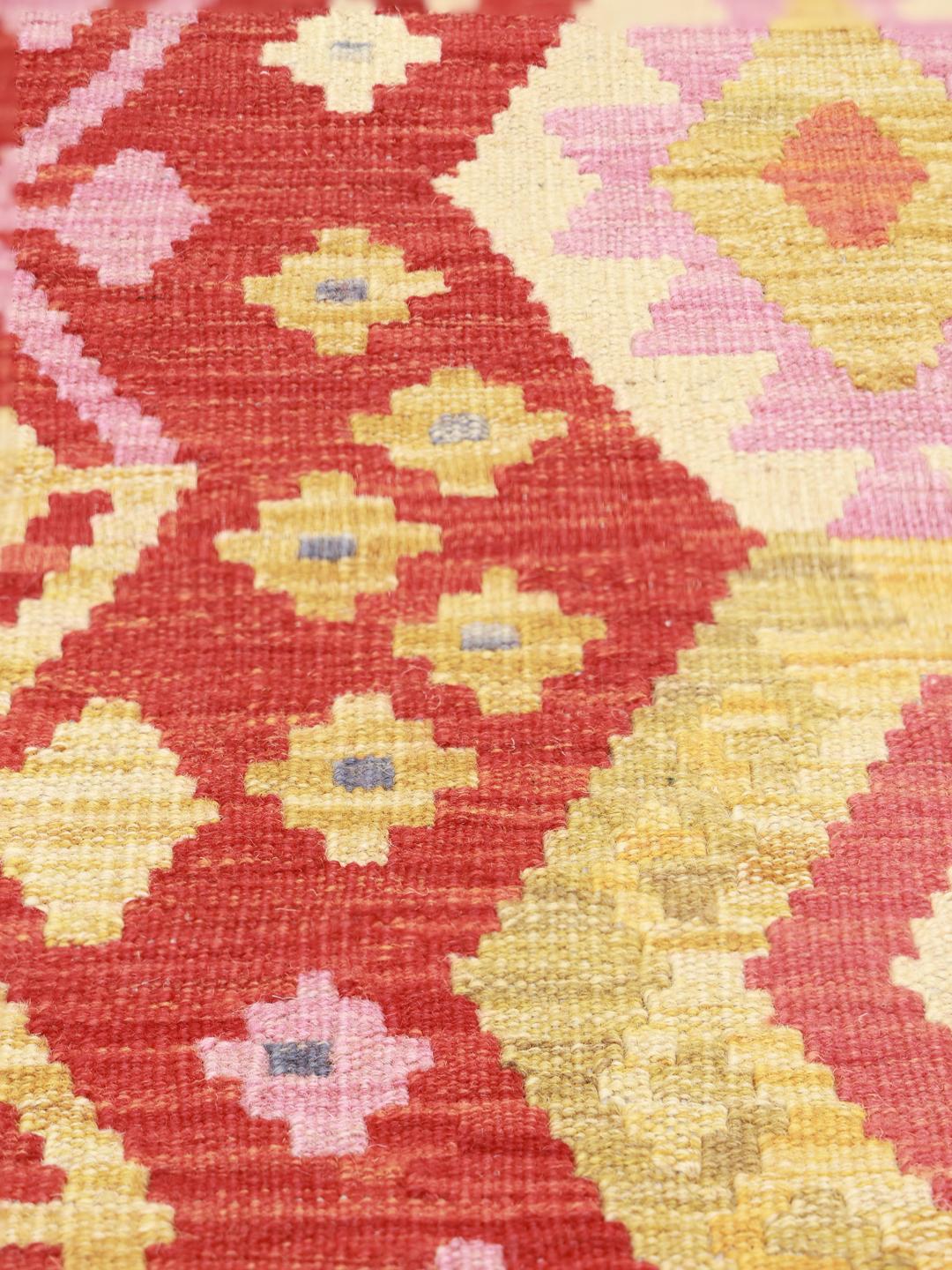
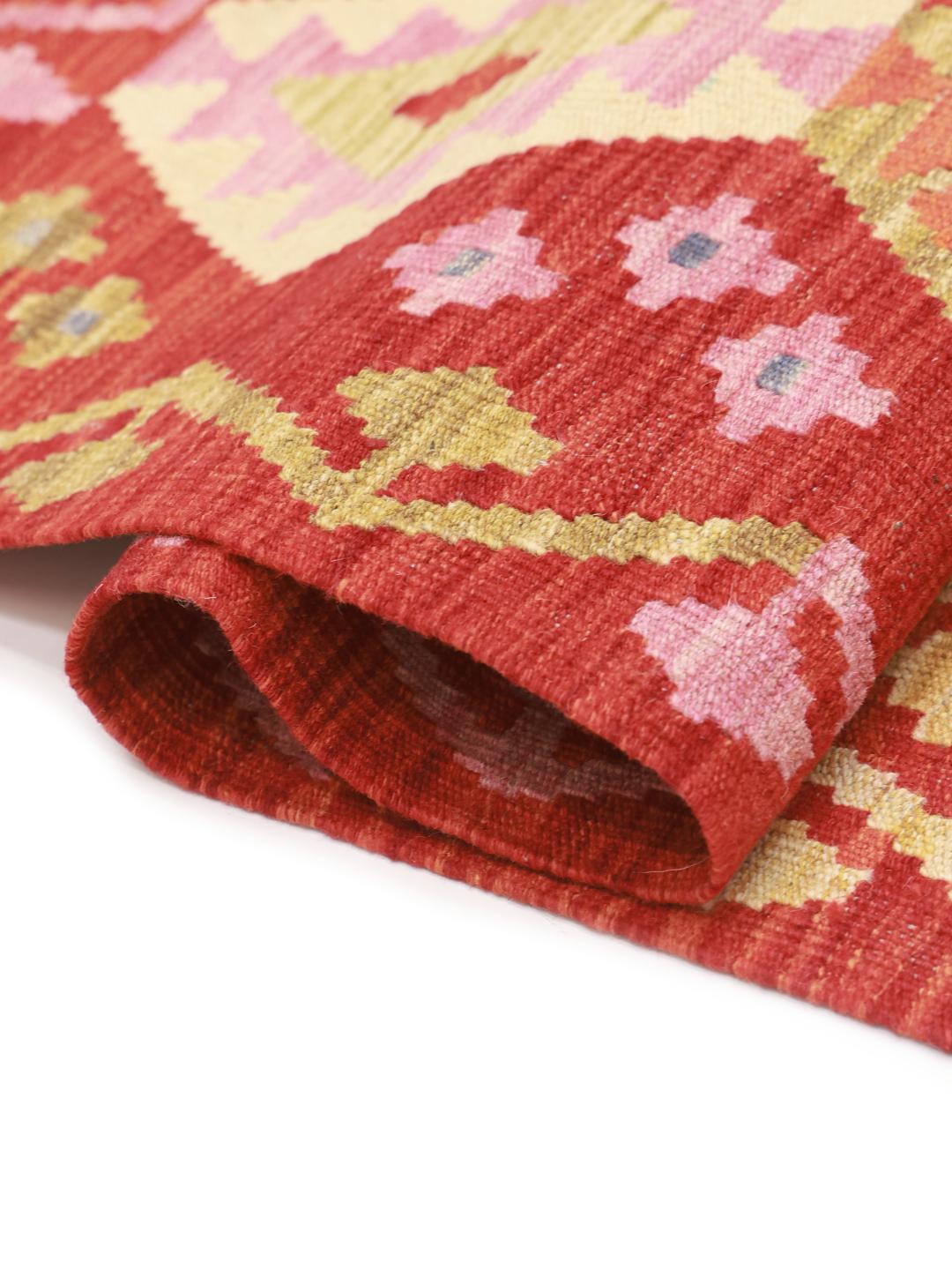
The term 'Kelim' refers specifically to flat-woven rugs, which are created without a knotted pile. This technique produces a lightweight, reversible, and highly durable textile that is prized for its versatility. The absence of pile allows the complex geometric patterns to stand out with remarkable clarity, making them a favourite for those who appreciate the intersection of mathematical precision and artistic expression.
Signature design elements of the Afghan Kelim often include bold, repeating geometric shapes like the diamond, which is prominently featured in this piece. These symbols are not merely decorative but often carry deep cultural significance, representing protection, fertility, or the natural environment. The vibrant red tones are traditional to the region, achieved through time-honoured dyeing processes that provide a rich, enduring colour foundation.
Today, these rugs are highly sought after by collectors and interior enthusiasts alike for their cultural weight and authentic craftsmanship. Owning a Kelim is a way to connect with a centuries-old heritage of skill and storytelling. Each piece remains a testament to the weaver's ability to transform raw materials into a functional work of art that retains its value and relevance across generations.