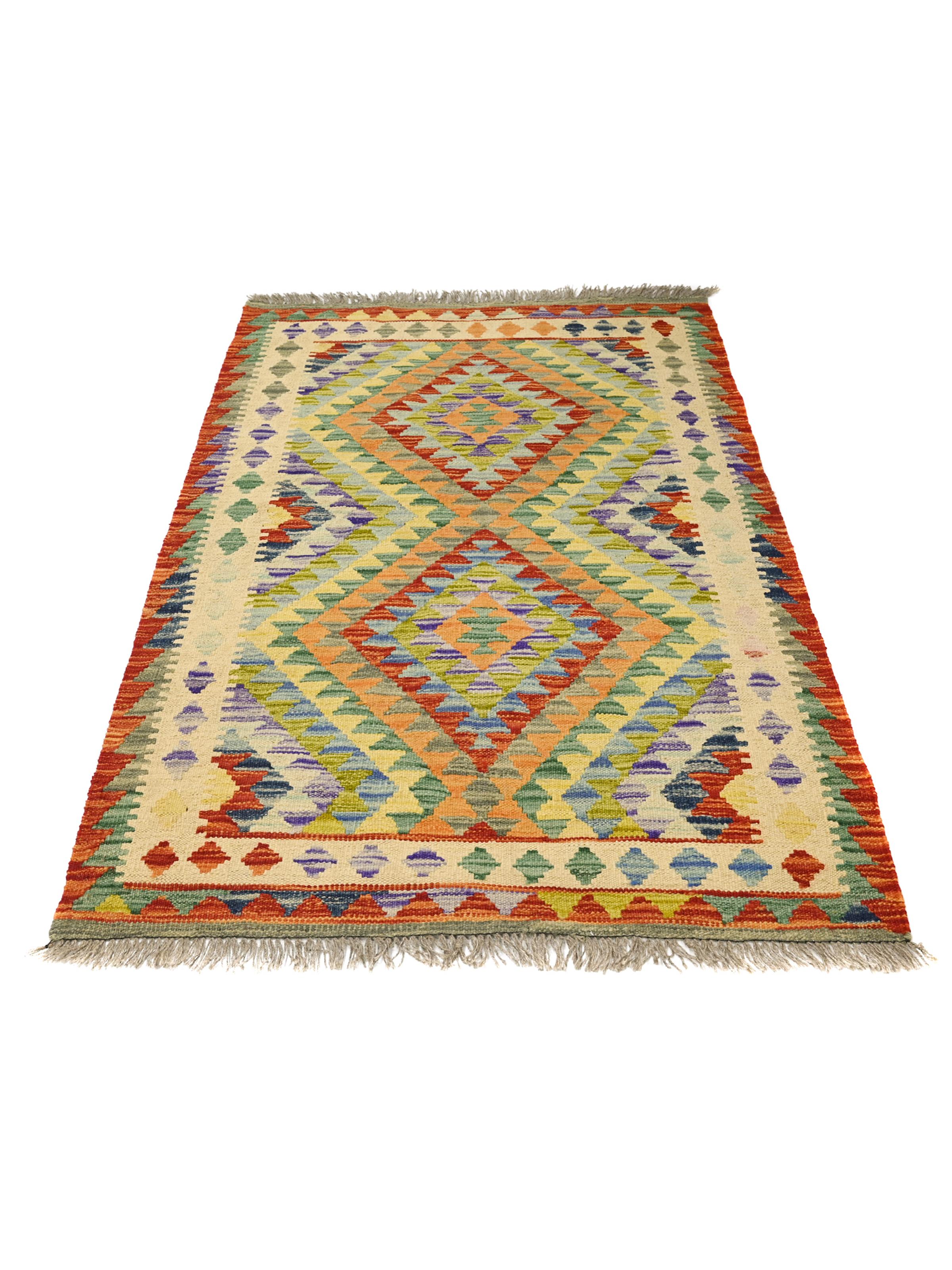
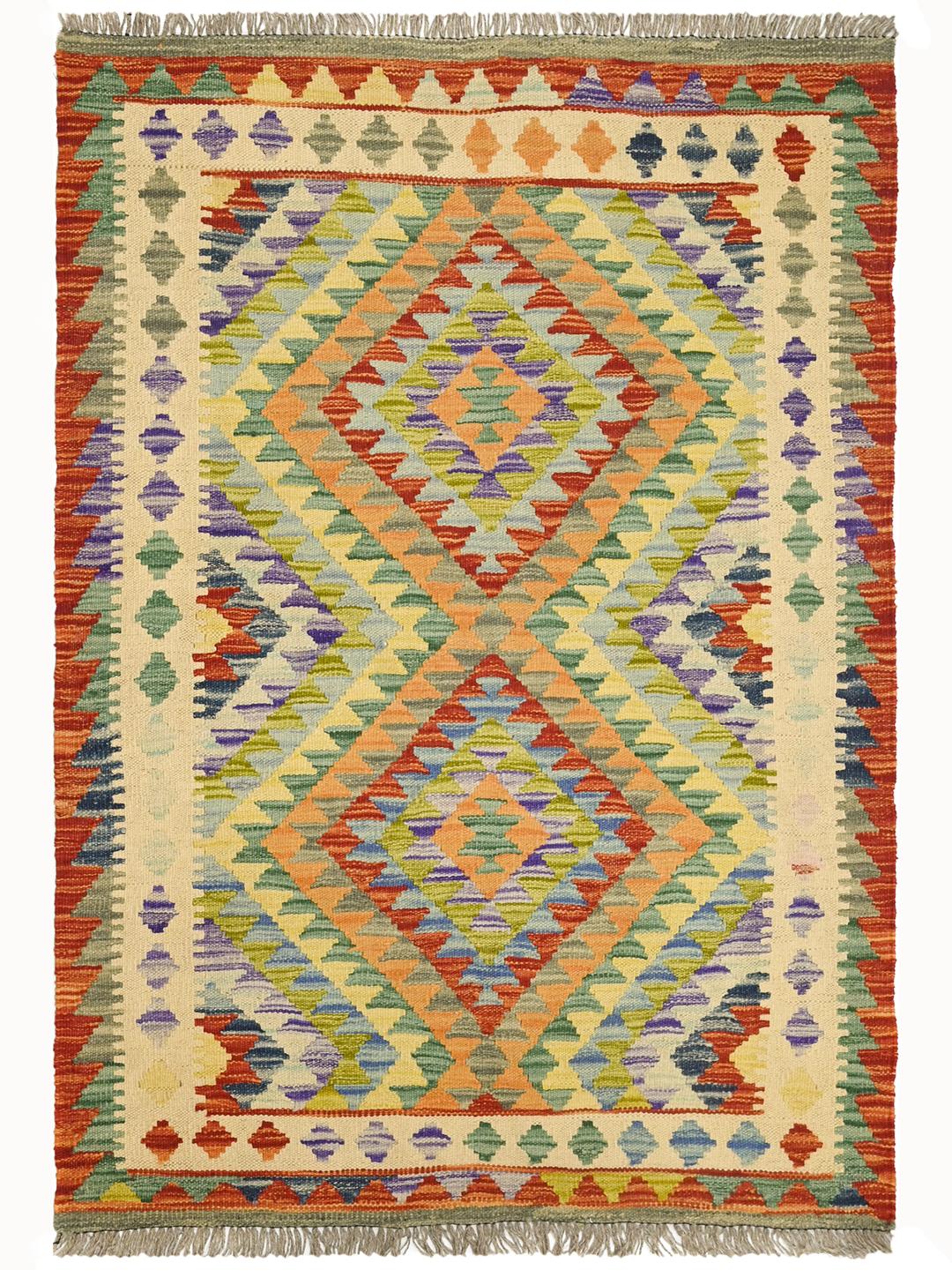
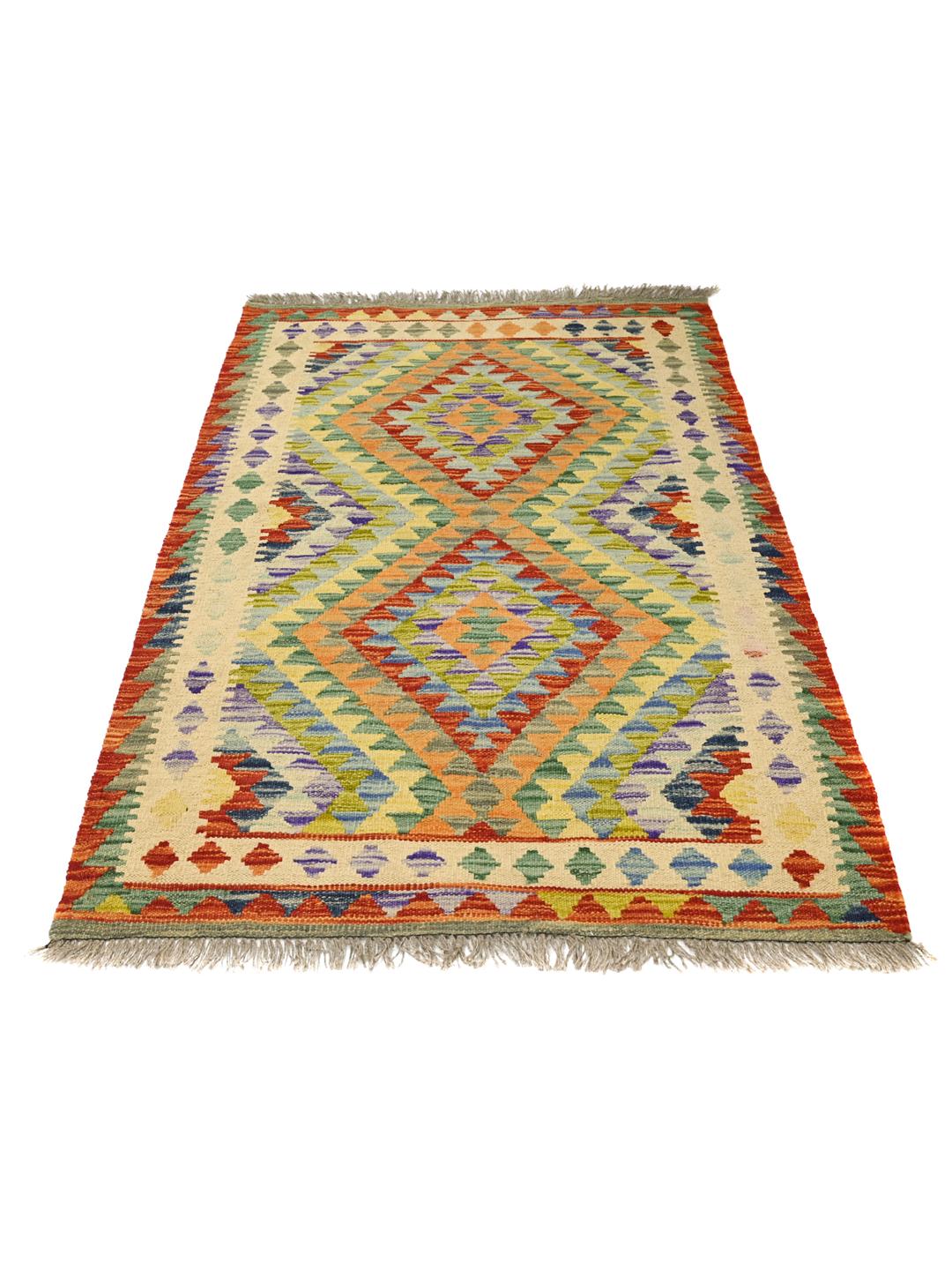
The tradition of weaving Kelim rugs in Afghanistan is deeply rooted in nomadic and village life, where these flatwoven textiles served both functional and decorative purposes. Historically, they were used as floor coverings, blankets, and bags, crafted to withstand the demands of daily life while expressing the cultural identity of the weavers.
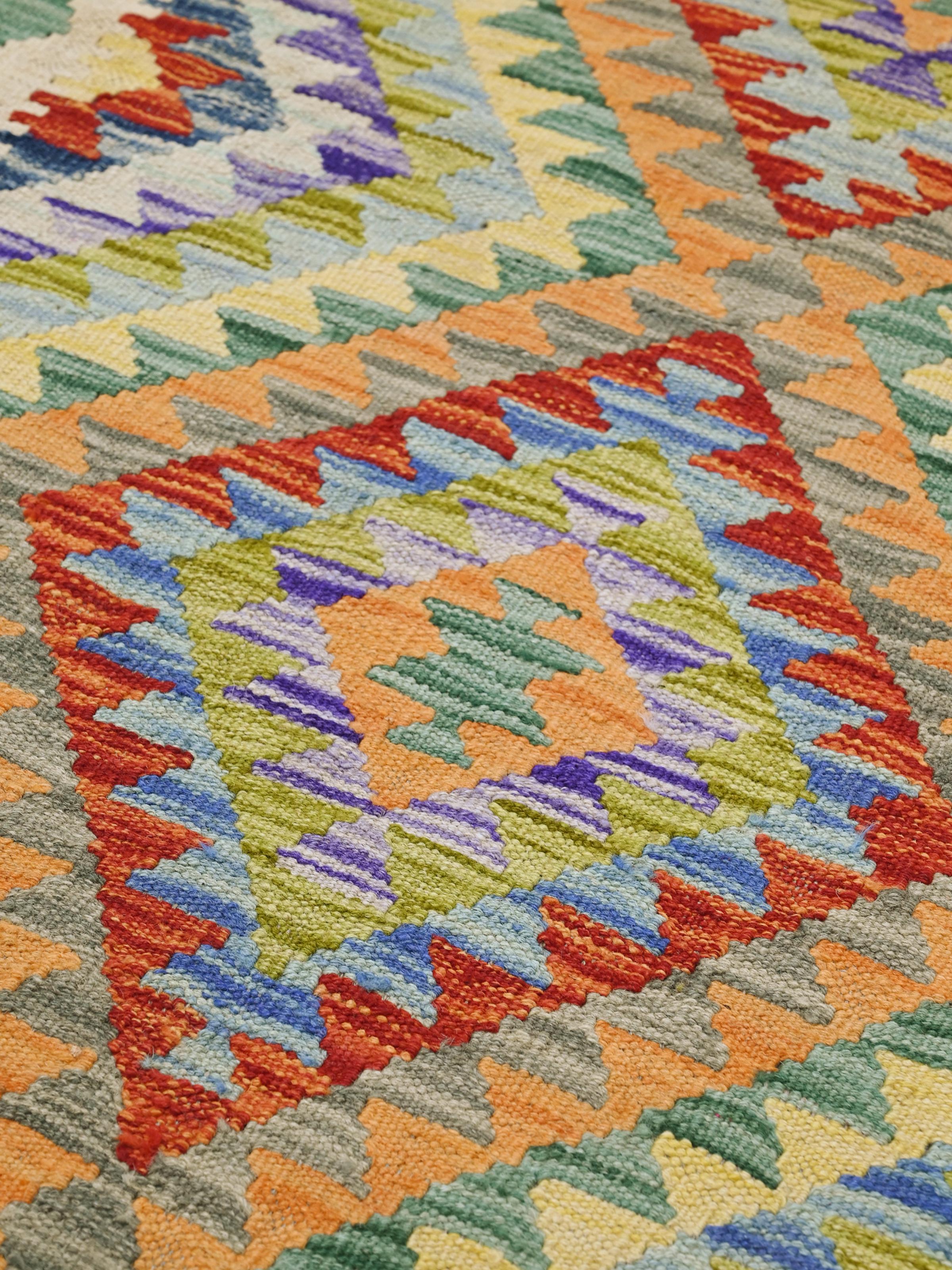
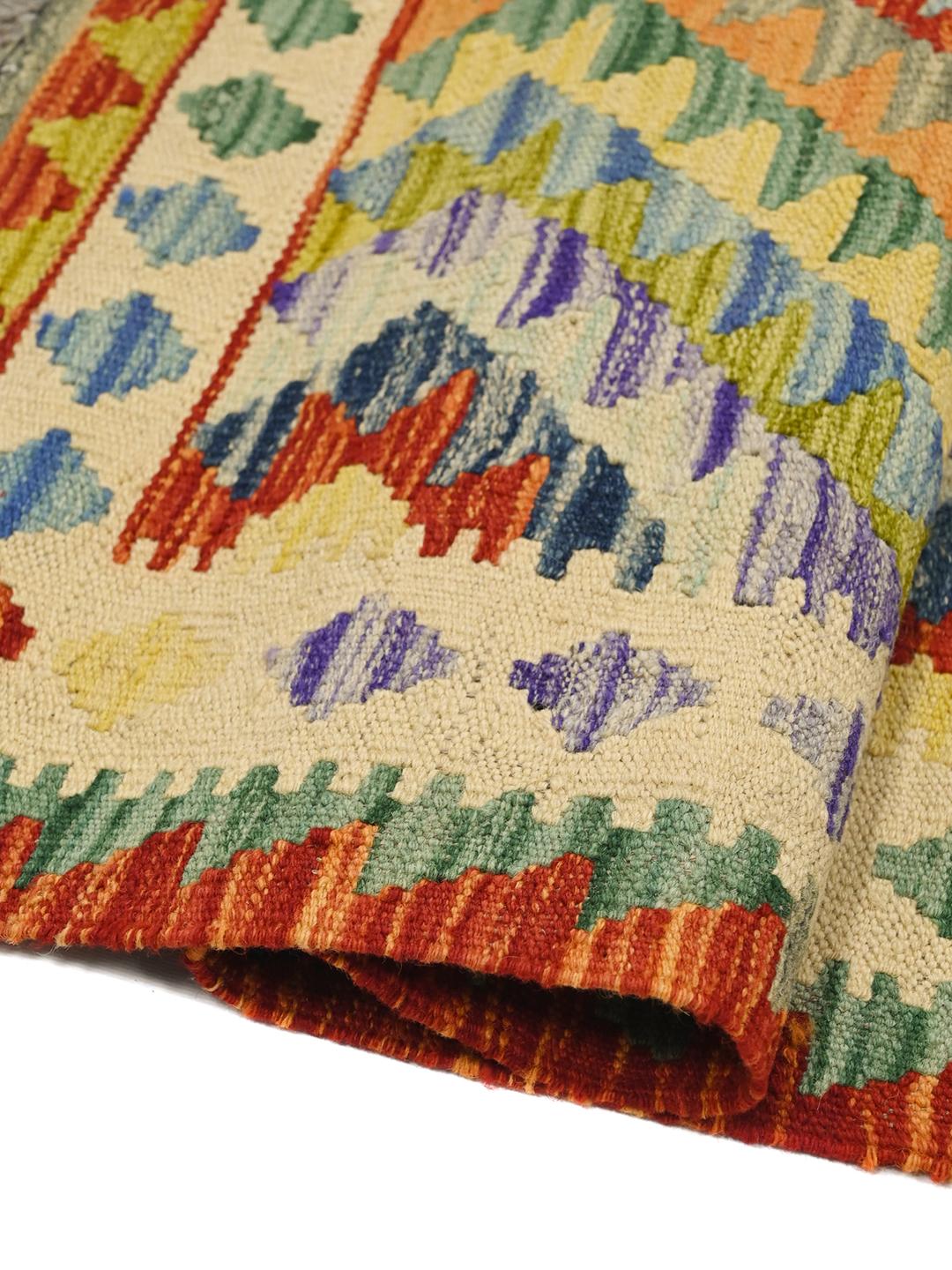
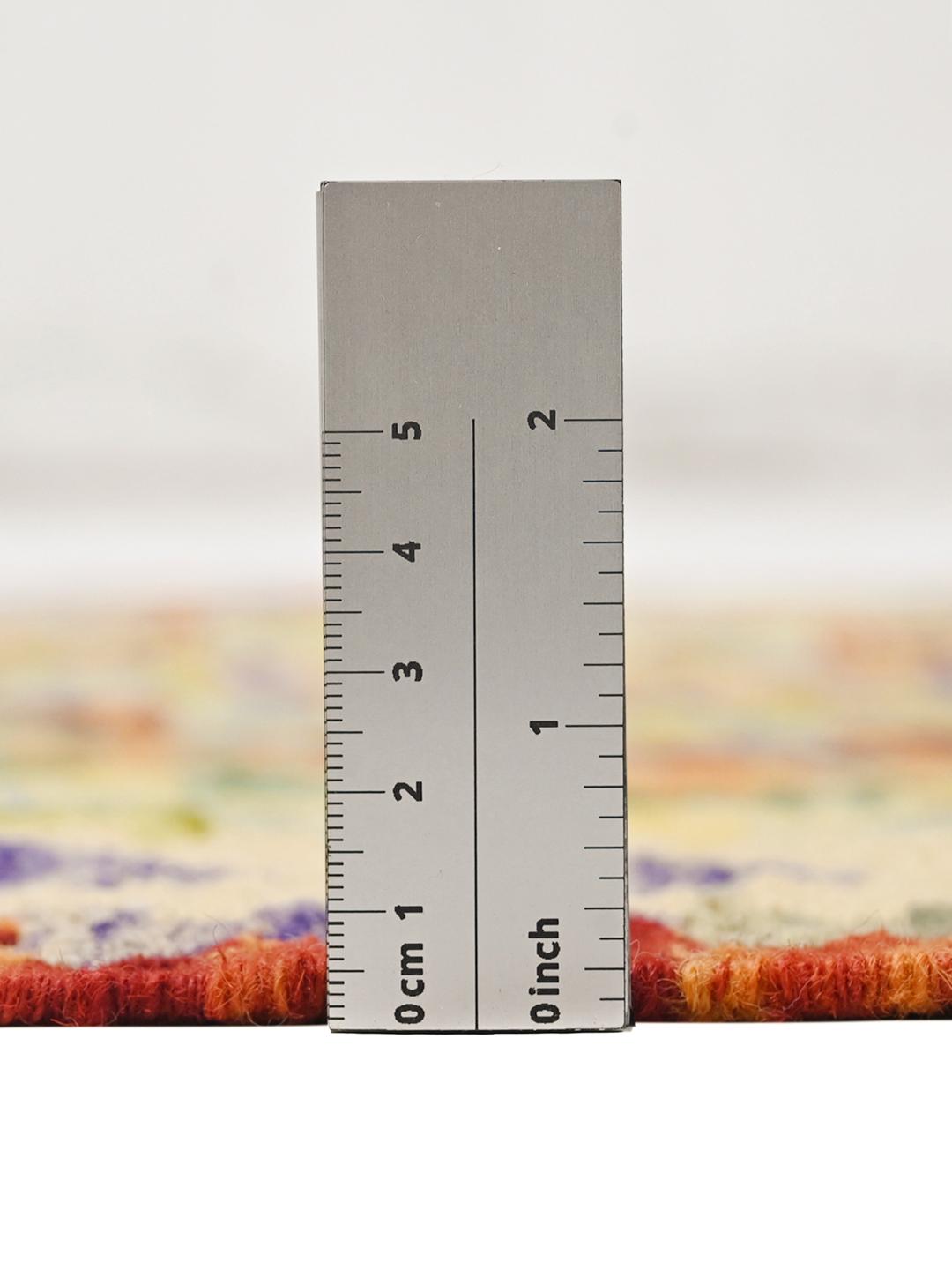
The term Kelim refers to a specific flatweave technique where the weft strands are tightly woven through the warp without a pile, resulting in a lightweight yet highly durable textile. This traditional method produces a reversible rug with a clean, crisp surface, making it exceptionally versatile and easy to integrate into modern homes.
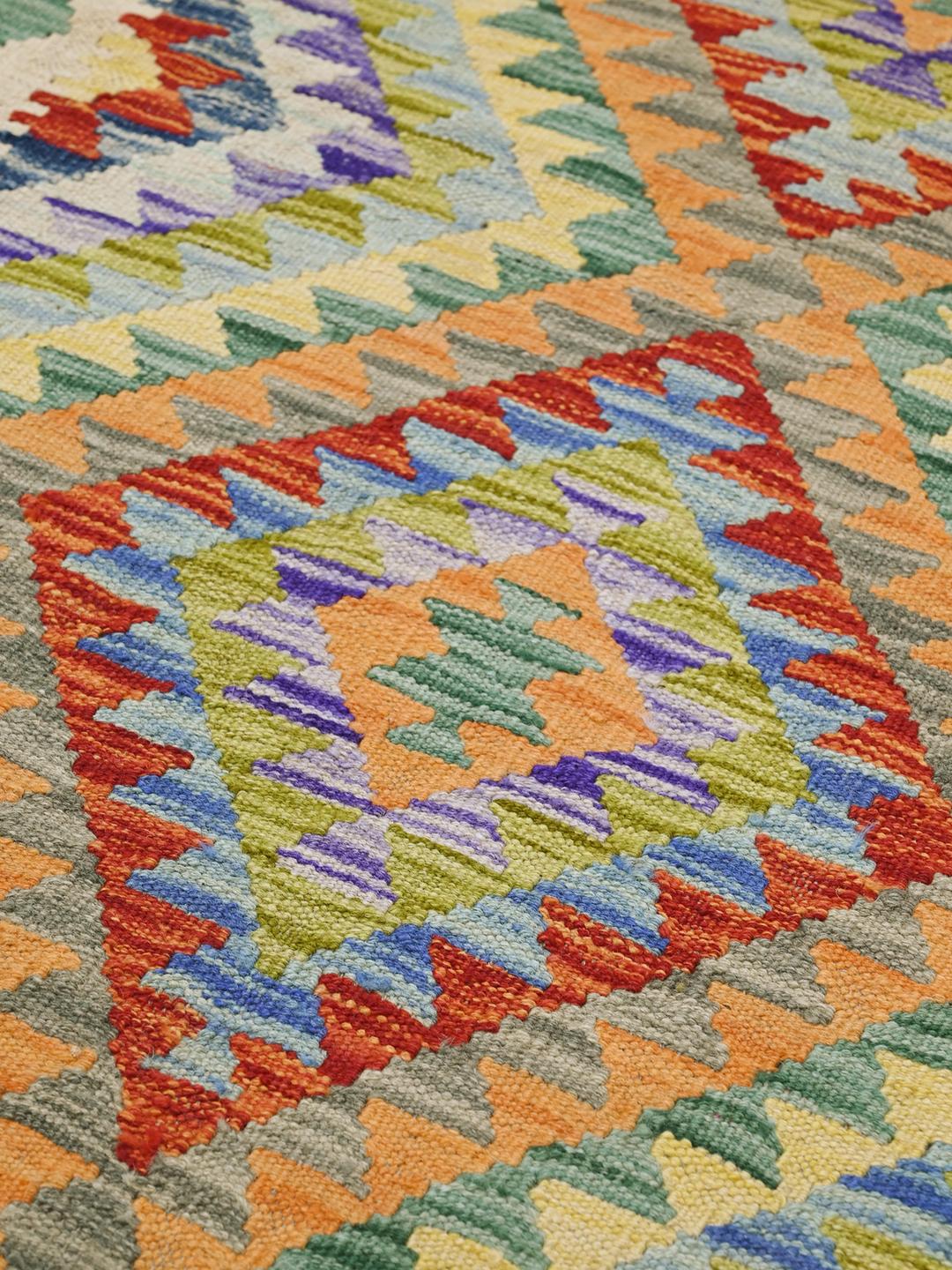
Signature design elements of Afghan Kelims include bold geometric motifs, particularly the repeating diamond and serrated shapes seen in this piece. These patterns are framed by structured decorative borders that tell stories of tribal heritage, with each weaver introducing subtle variations that make every rug a distinct work of art.
Today, these contemporary Afghan Kelims are highly valued by collectors and homeowners alike for their authentic craftsmanship and vibrant cultural presence. Acquiring a piece from this tradition means bringing a living art form into your home, supporting a legacy of hand-weaving that has been passed down through generations.