Kelim rugs have a storied history rooted in the nomadic cultures of the Middle East and Central Asia. Originally created by tribal weavers for practical use as floor coverings, tent hangings, and storage bags, these rugs were essential to nomadic life, providing both insulation and artistic expression.
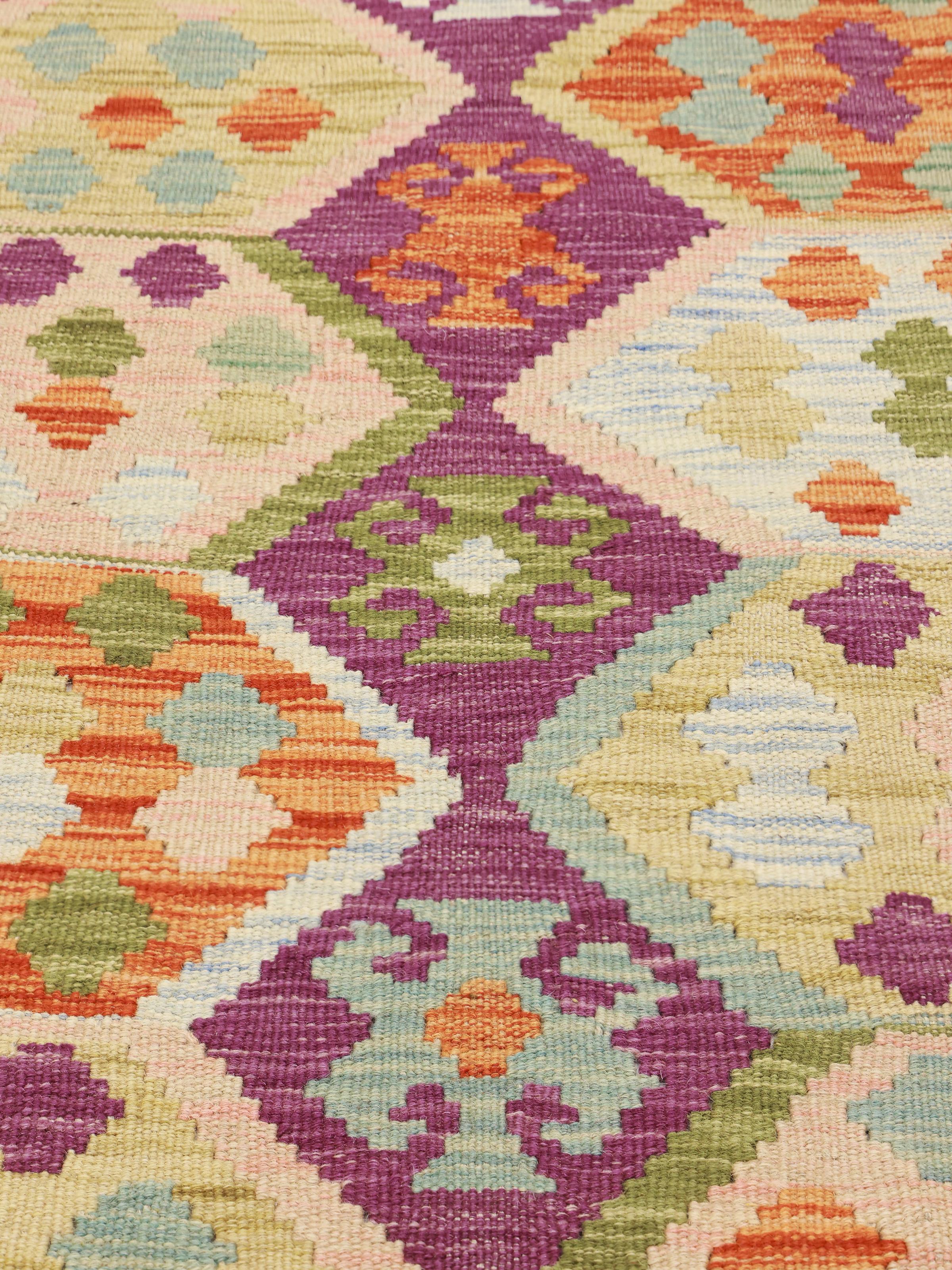
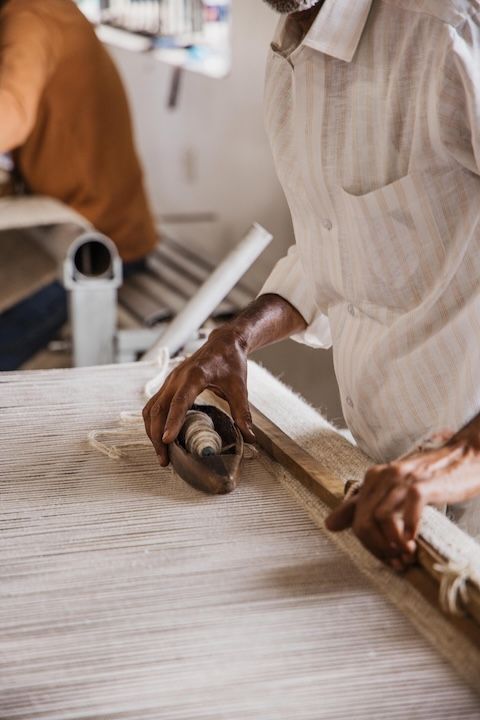
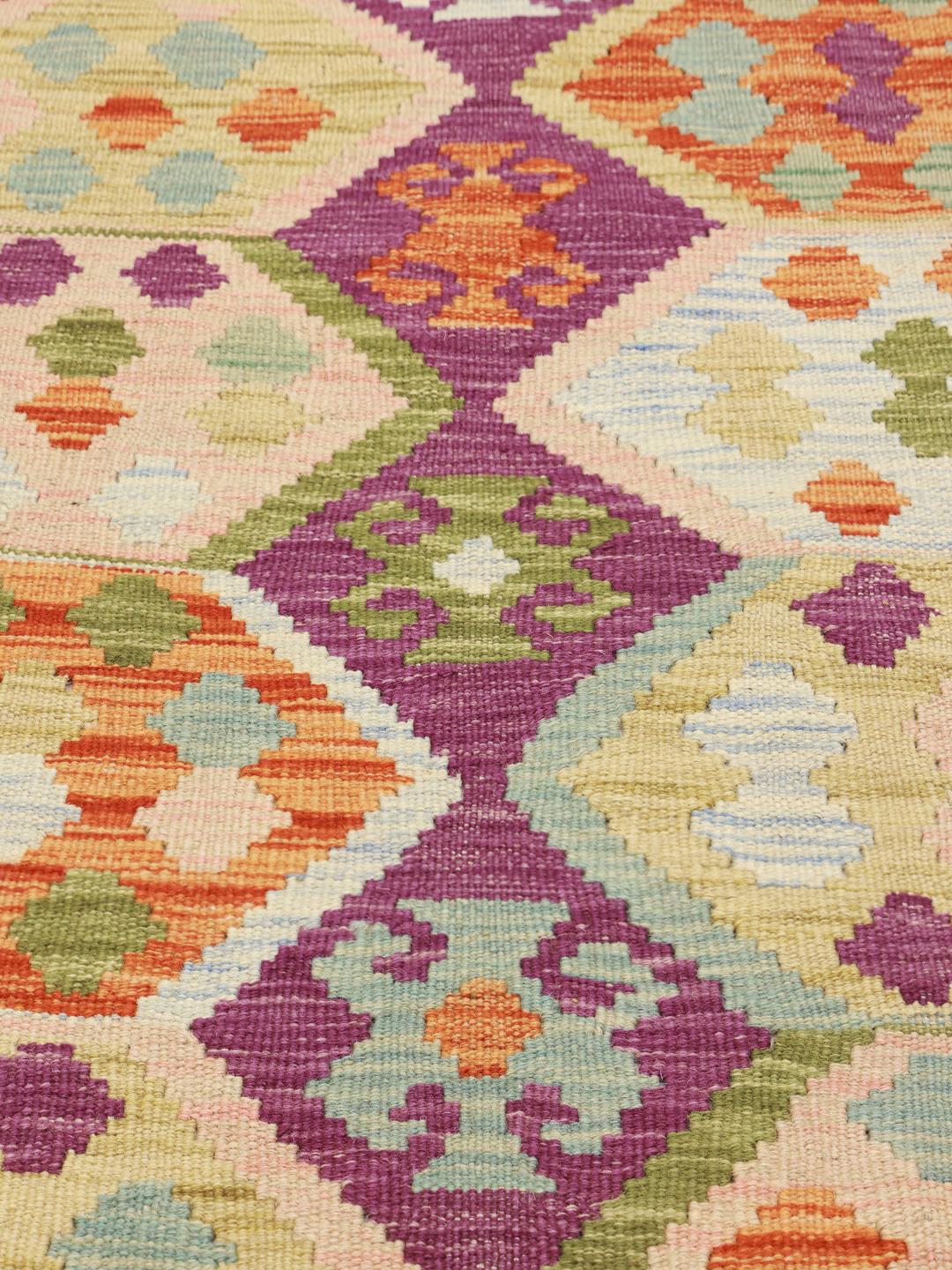
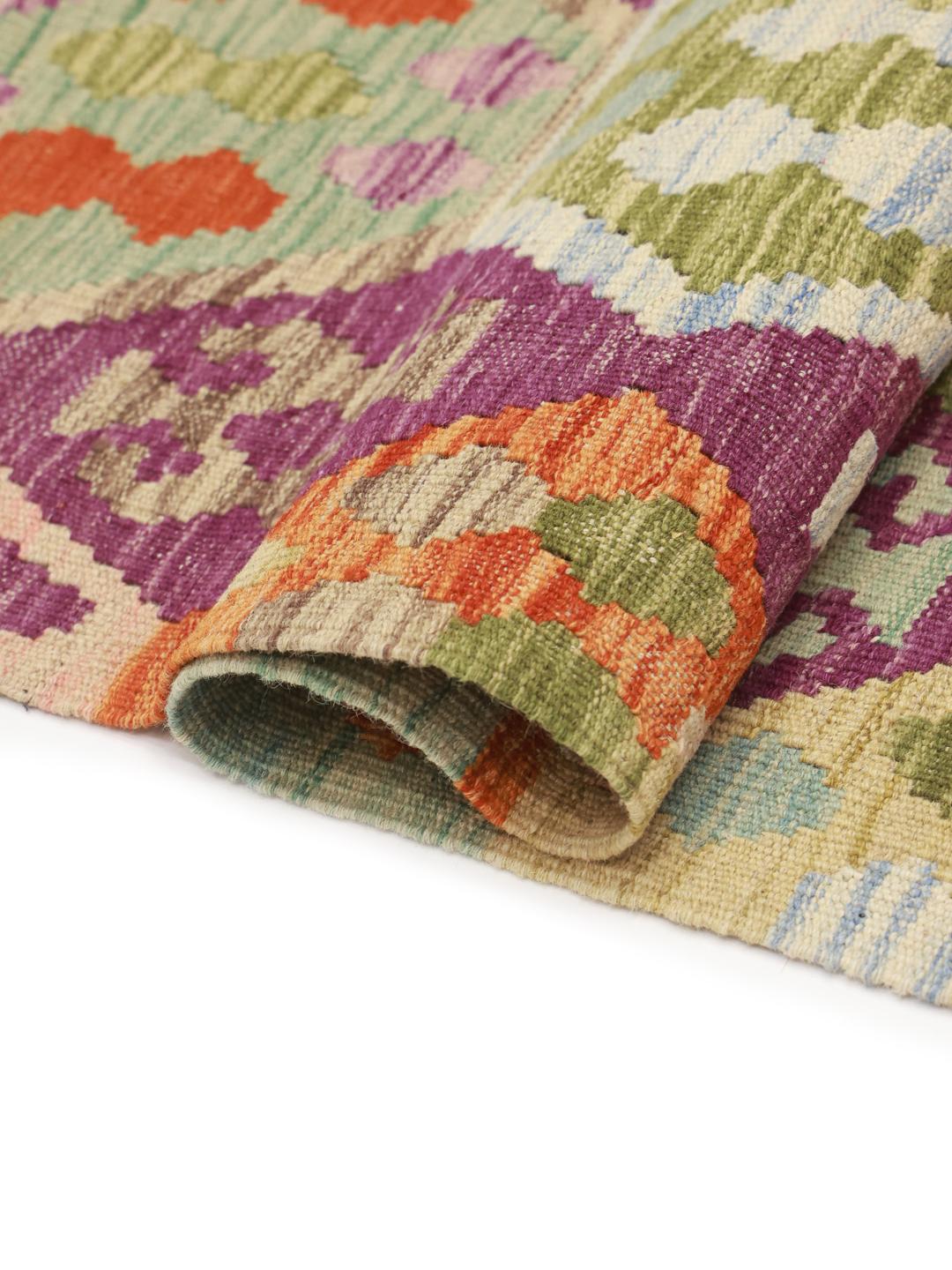
The term 'Kelim' refers specifically to the flat-weave technique, which lacks the pile found in traditional knotted rugs. This method involves interlacing the warp and weft threads to create a smooth, tapestry-like surface. This construction is highly valued for its versatility, allowing for crisp, intricate designs that have defined the aesthetic of the region for centuries.
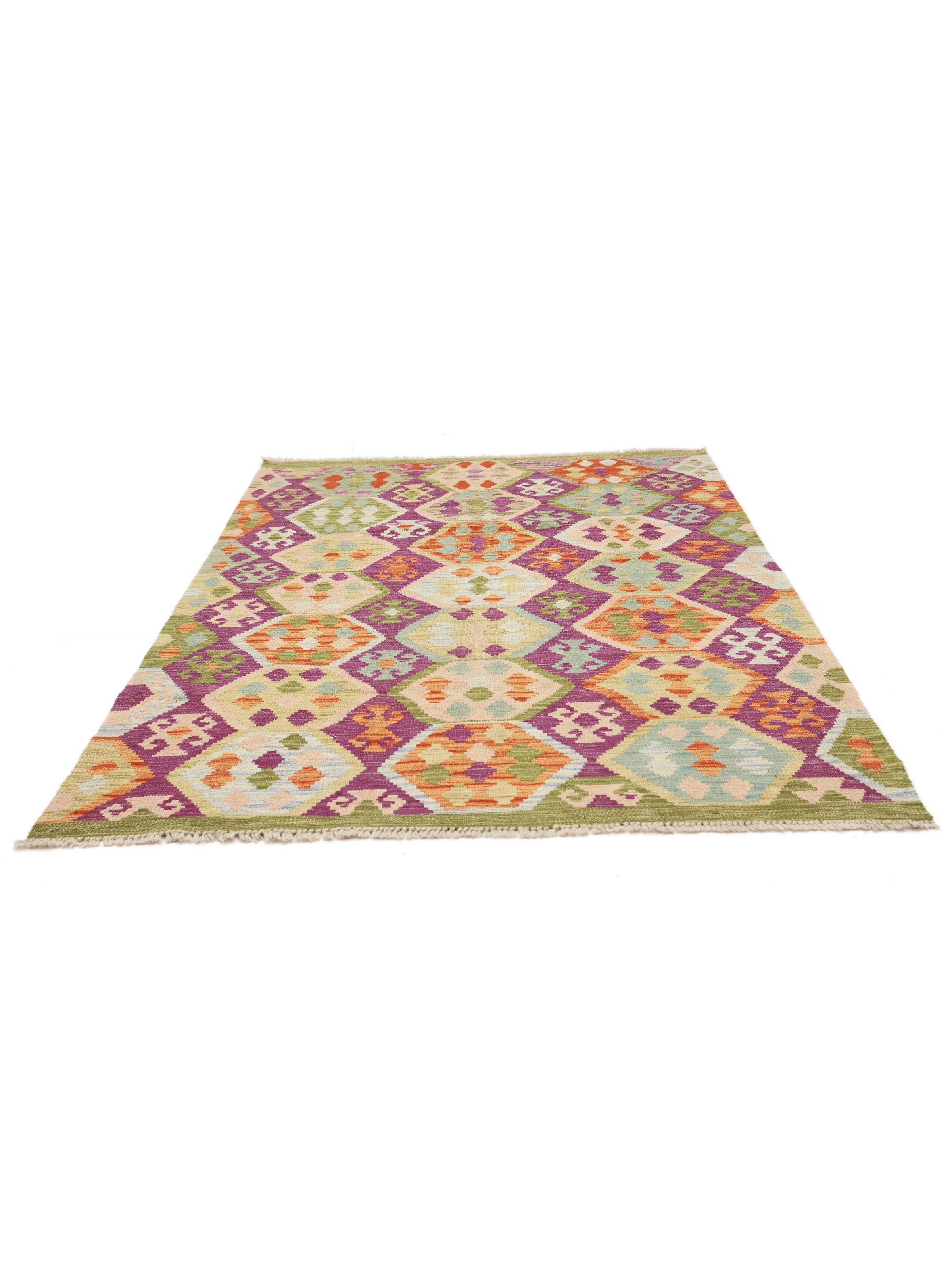
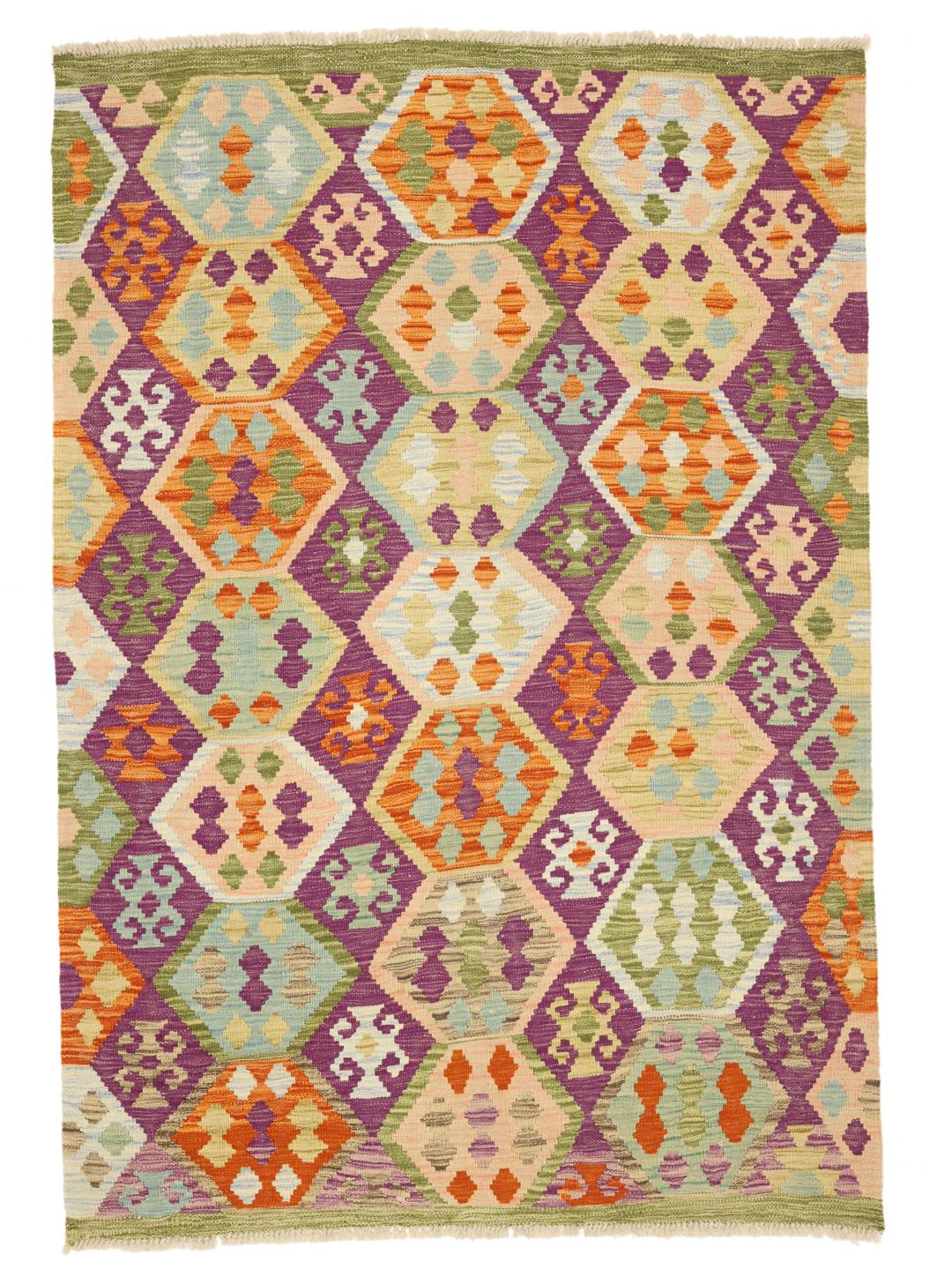
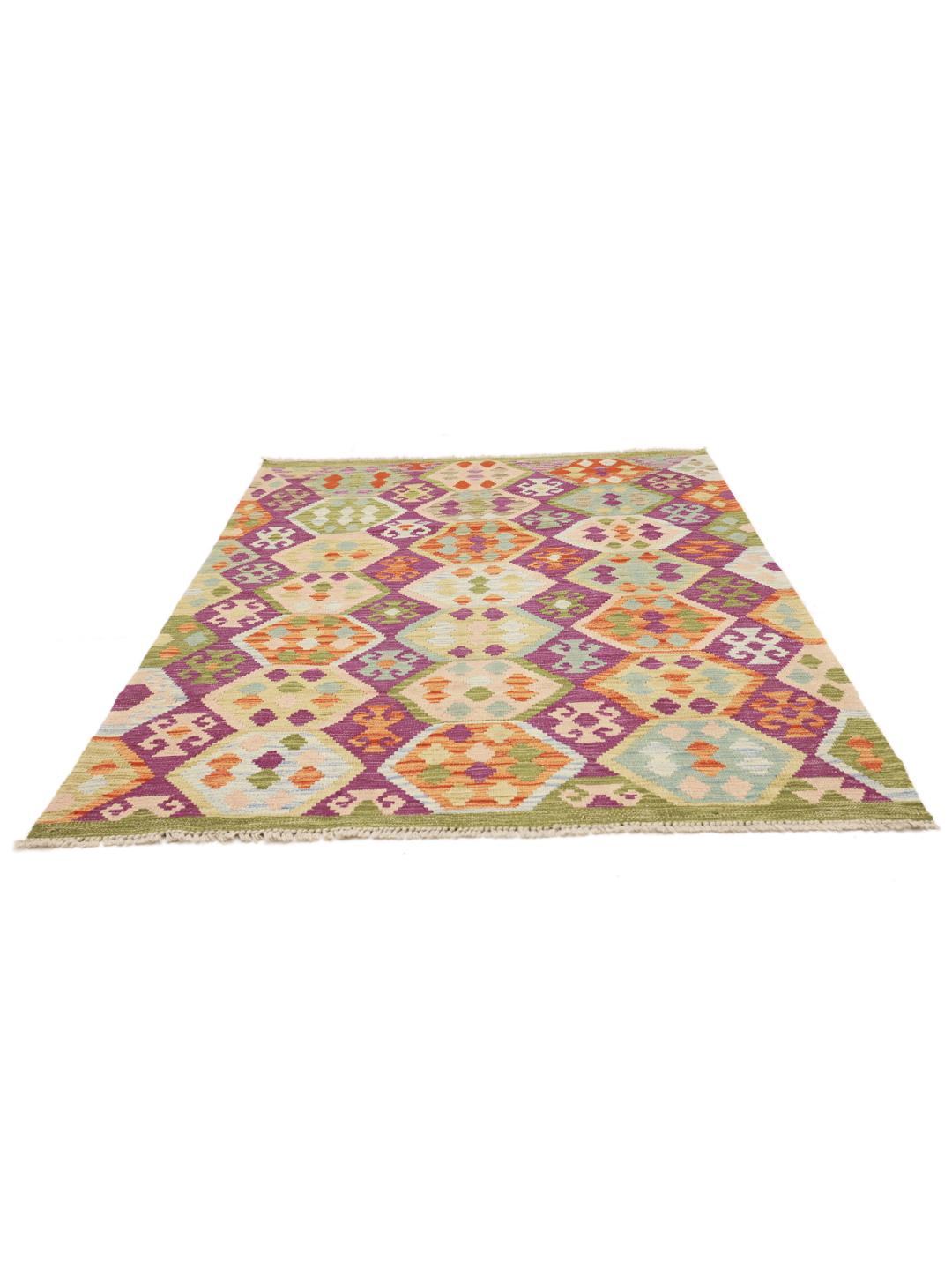
The design of this particular Kelim features an array of geometric motifs that reflect the cultural language of Afghan weaving. These patterns often hold symbolic meanings related to protection, fertility, and tribal identity. The use of repeating shapes and bold, harmonious colours is a hallmark of the traditional style, showcasing a sophisticated understanding of symmetry and balance.
Today, these rugs are celebrated by collectors for their authentic connection to ancient traditions and their enduring artistic value. Owning a Kelim from this tradition is a way to appreciate the skill of generations of weavers and to bring a piece of living history into your own home, ensuring that the legacy of this craft continues to be cherished.