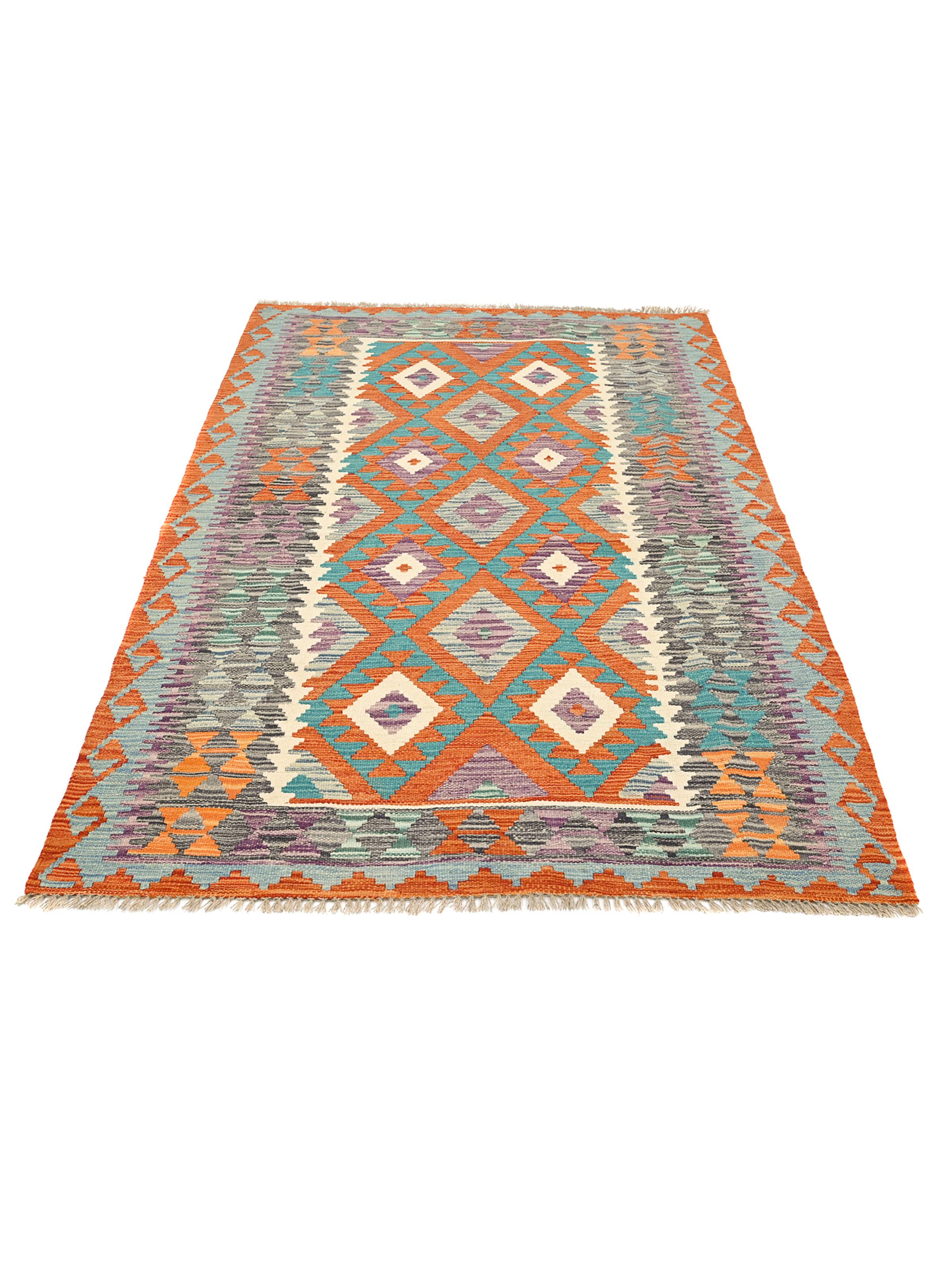
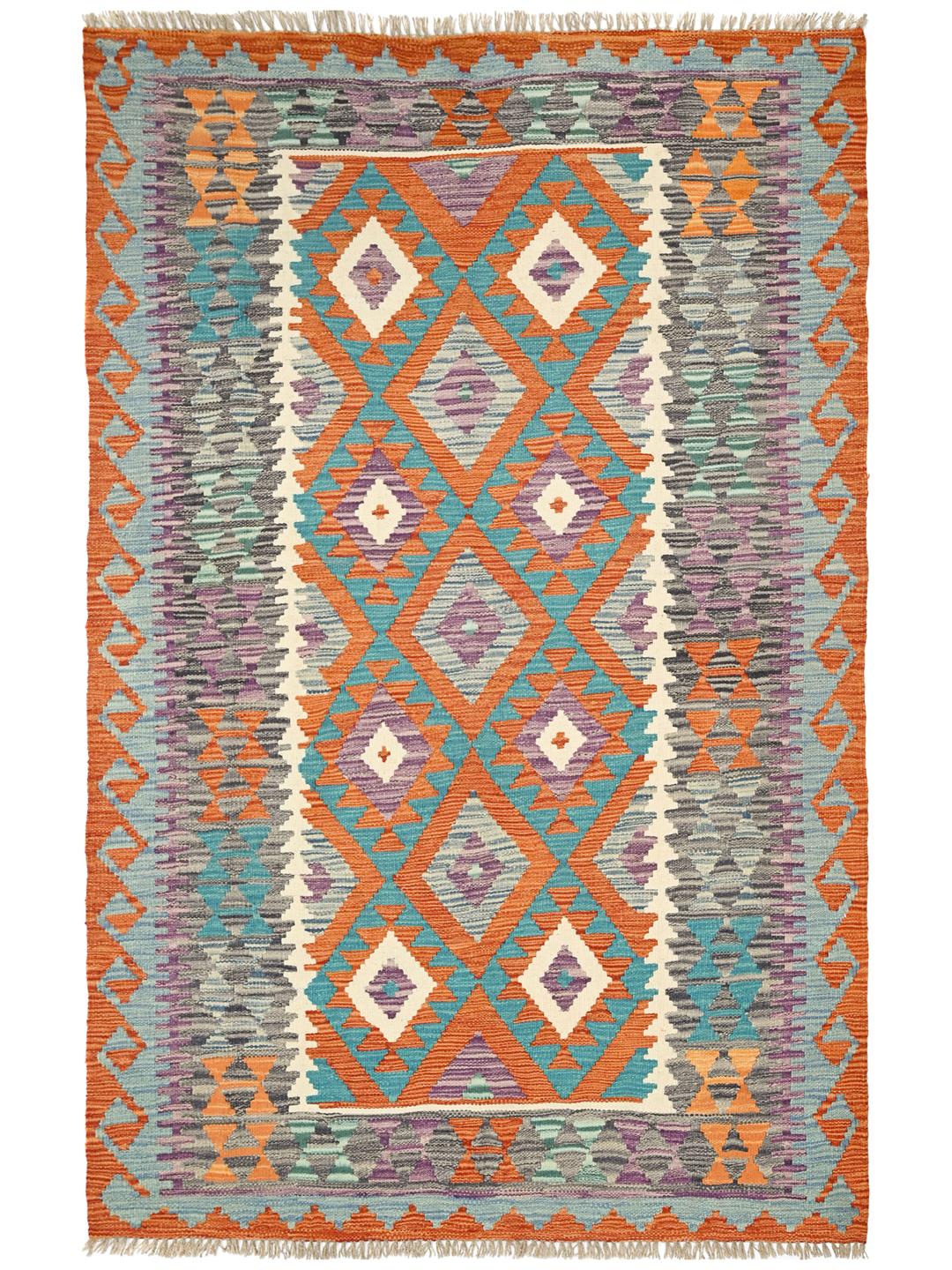
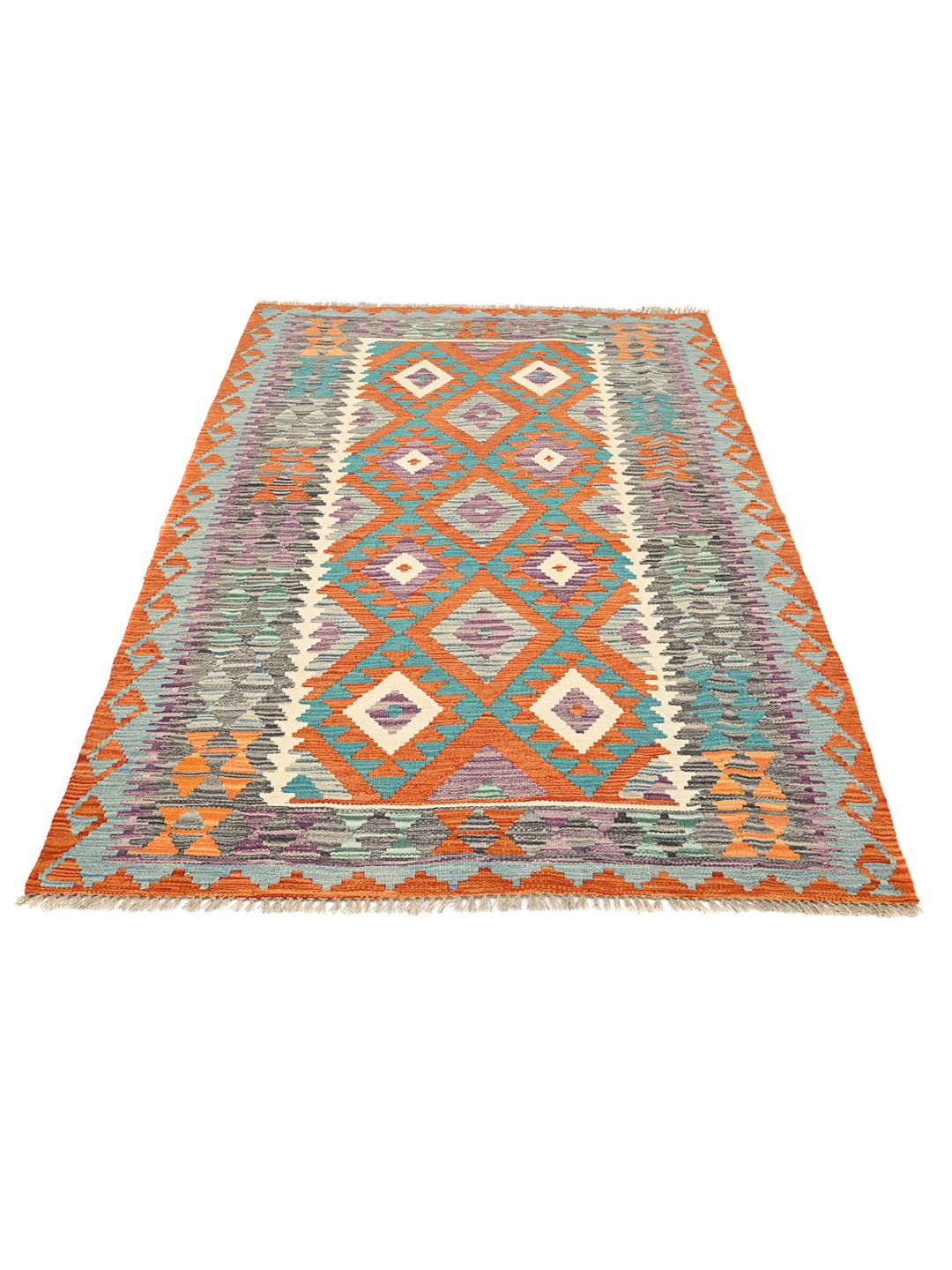
The Kelim tradition in Afghanistan is deeply rooted in the nomadic history of the region. These flat-woven rugs have been produced for centuries by tribal groups, serving as both essential household items and expressions of cultural identity. The knowledge of these weaving techniques is passed down through generations, with each family or tribe developing its own unique approach to colour selection and motif placement.
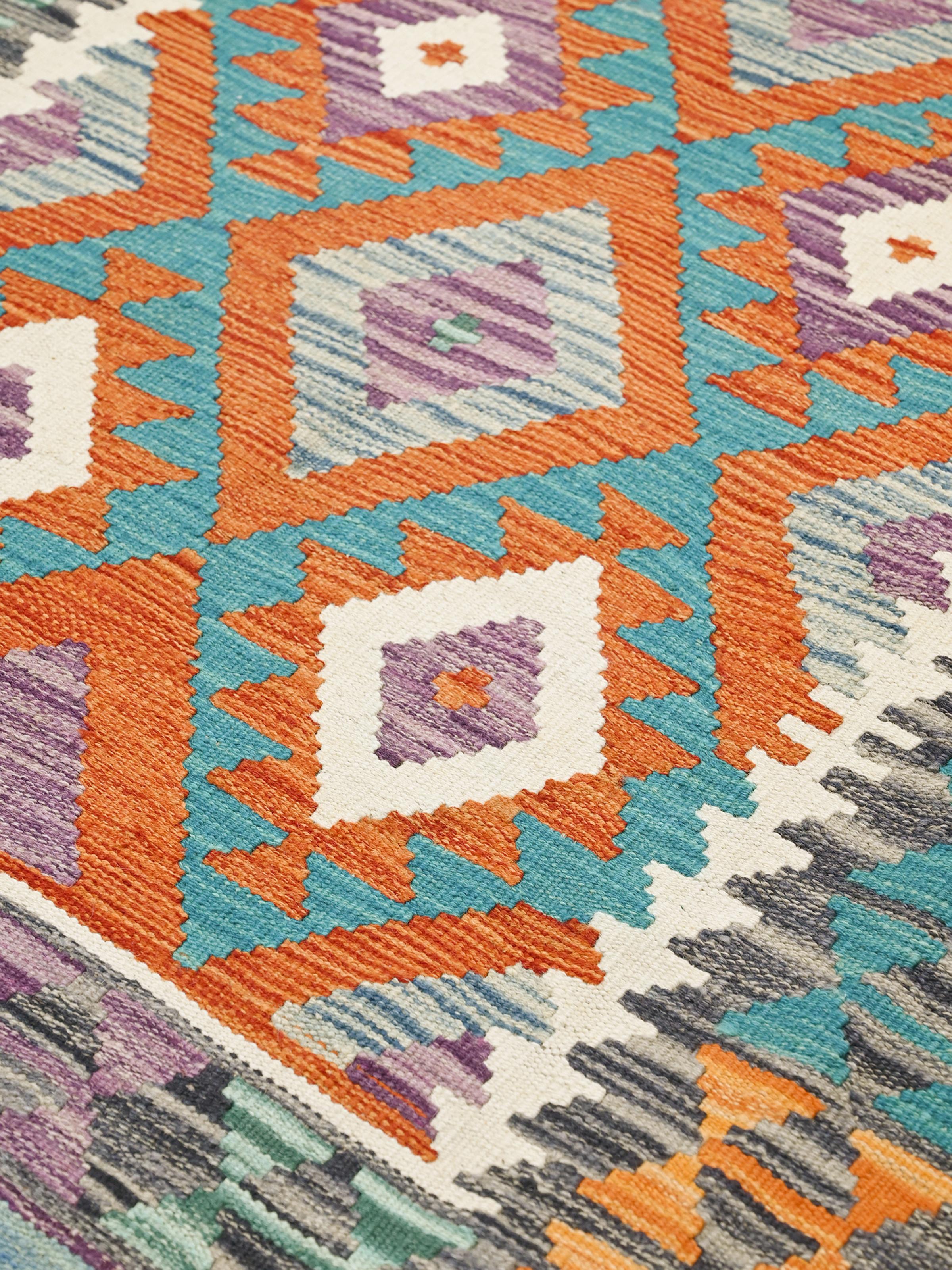
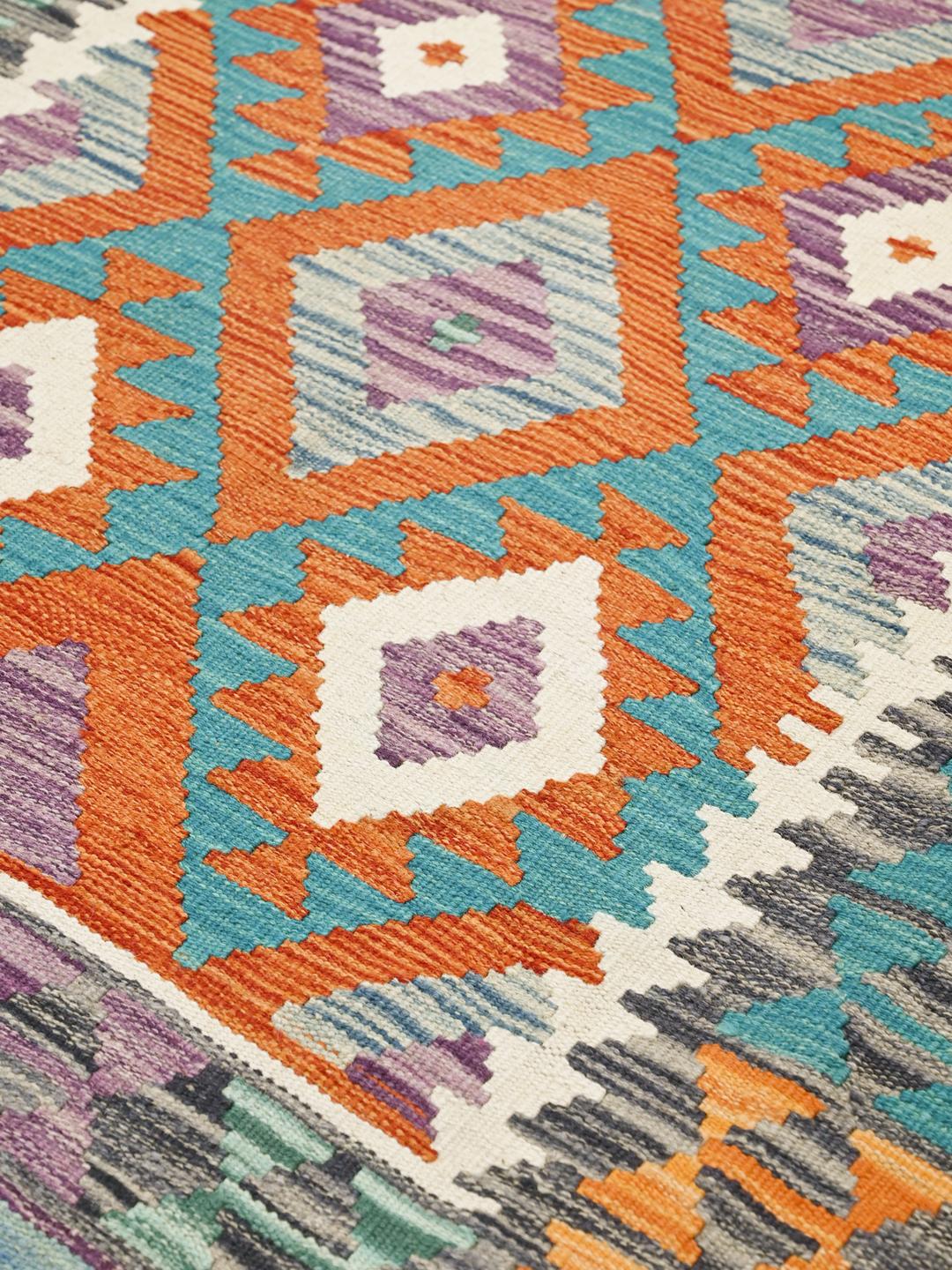
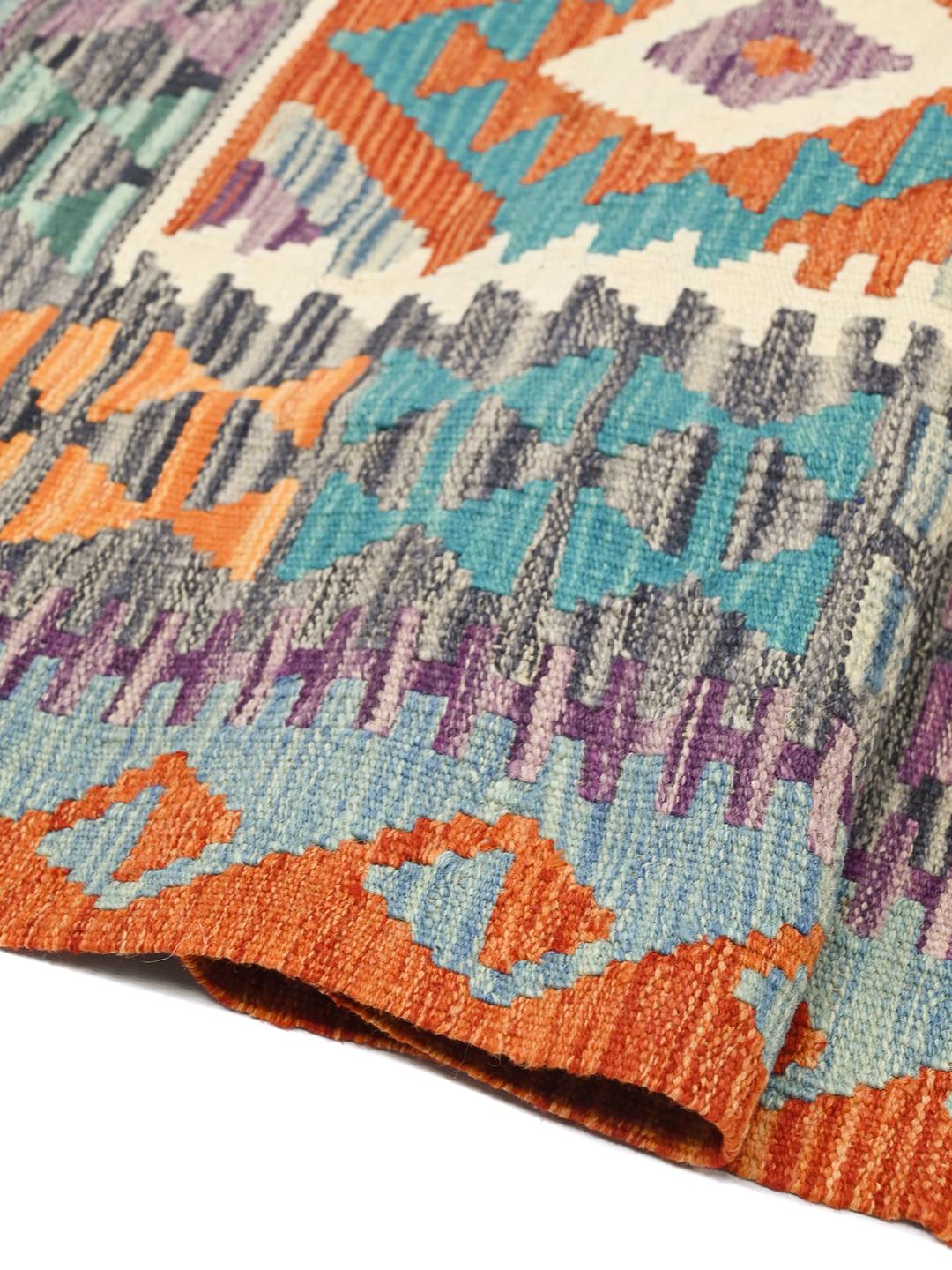
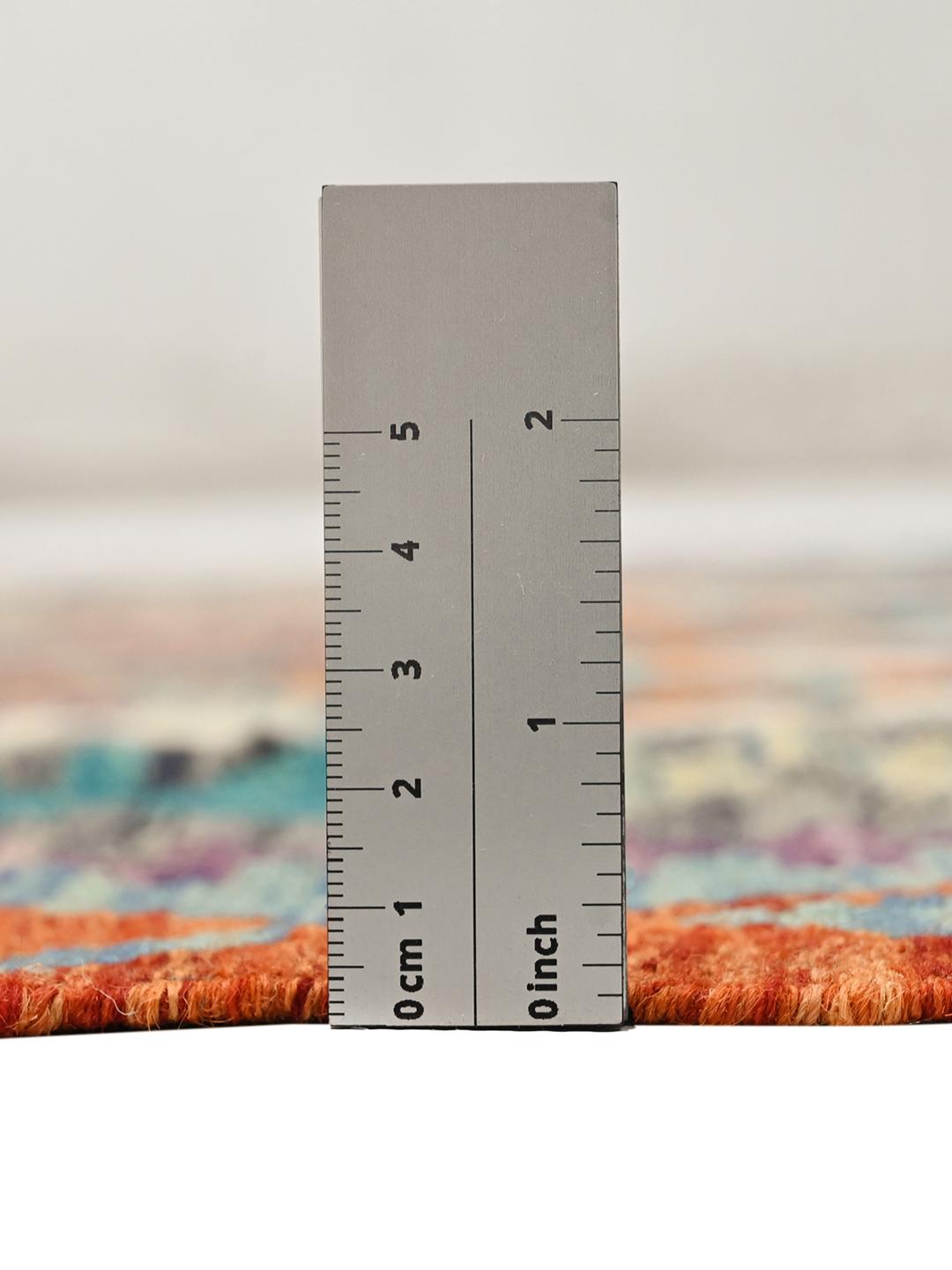
A defining characteristic of the Kelim is its flat-weave construction, which omits the pile found in traditional knotted carpets. This technique requires the weaver to create the pattern by interweaving different coloured threads, resulting in a rug that is equally beautiful on both sides. This method allows for the creation of sharp, crisp geometric designs that have become a hallmark of the Afghan style.
The visual language of these pieces is dominated by geometric motifs, most notably the diamond and the tribal medallion. These shapes are not merely decorative but often carry symbolic meaning, representing protection, fertility, or the natural world. The use of vibrant, saturated colours is a nod to the traditional natural dyes once used, which were derived from local plants and minerals to create the iconic earthy palette seen here.
Collectors value these rugs for their authenticity and the human story behind every thread. Owning a Kelim is a way to preserve a living heritage, as these pieces represent a bridge between ancient nomadic lifestyles and contemporary home decor. They are cherished for their versatility, their ability to age gracefully, and the undeniable sense of craft that they bring into a modern space.