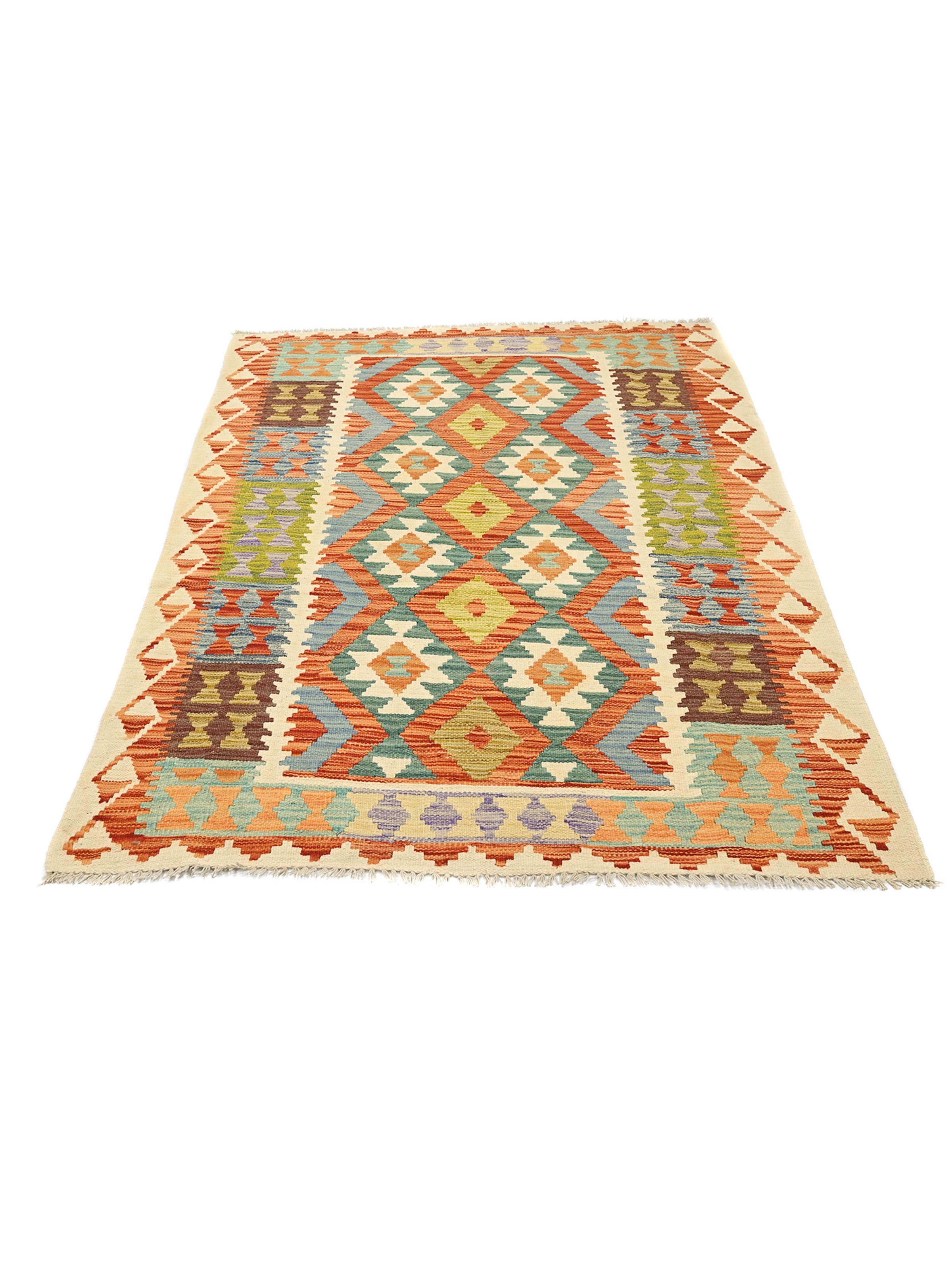
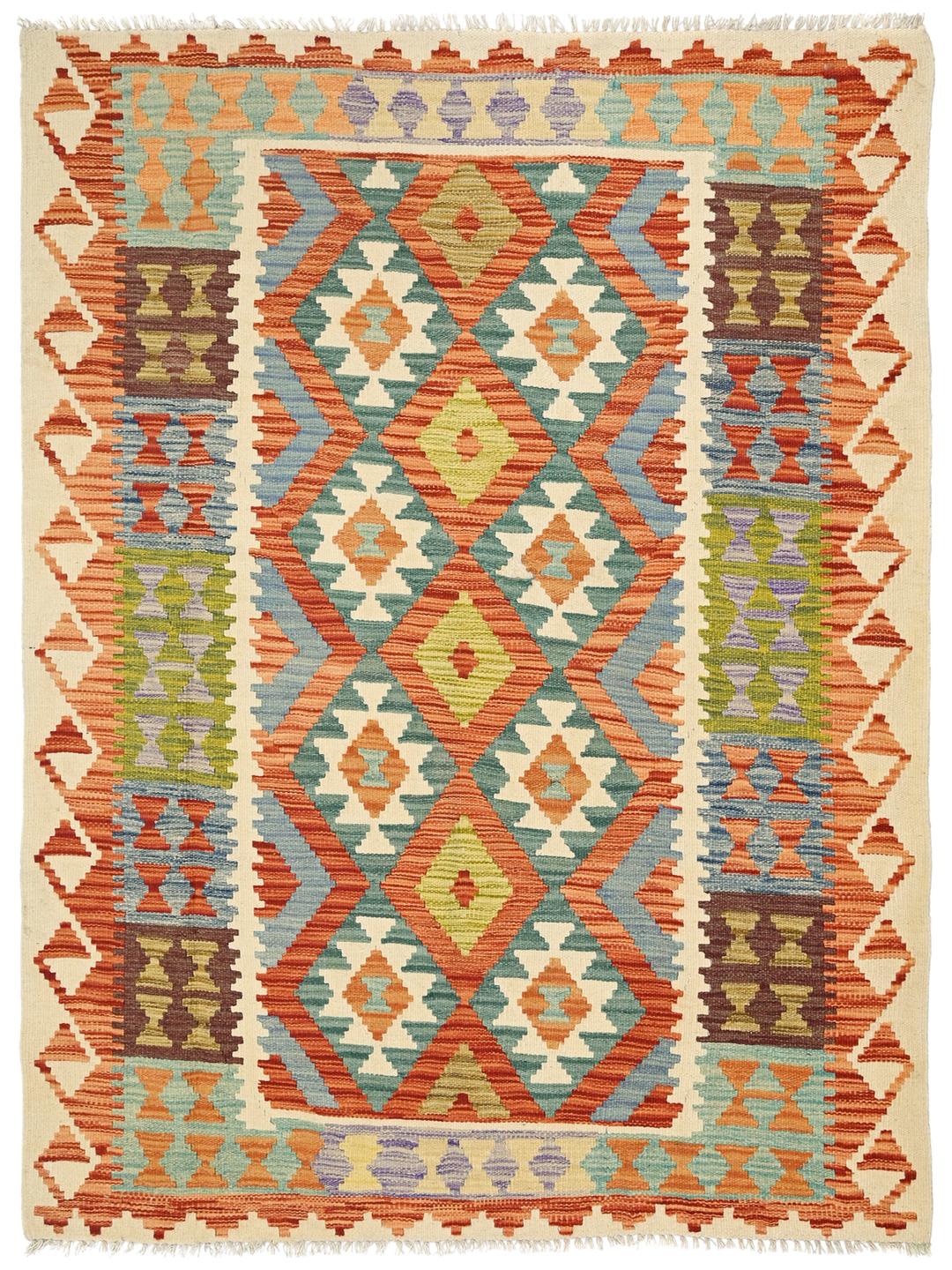
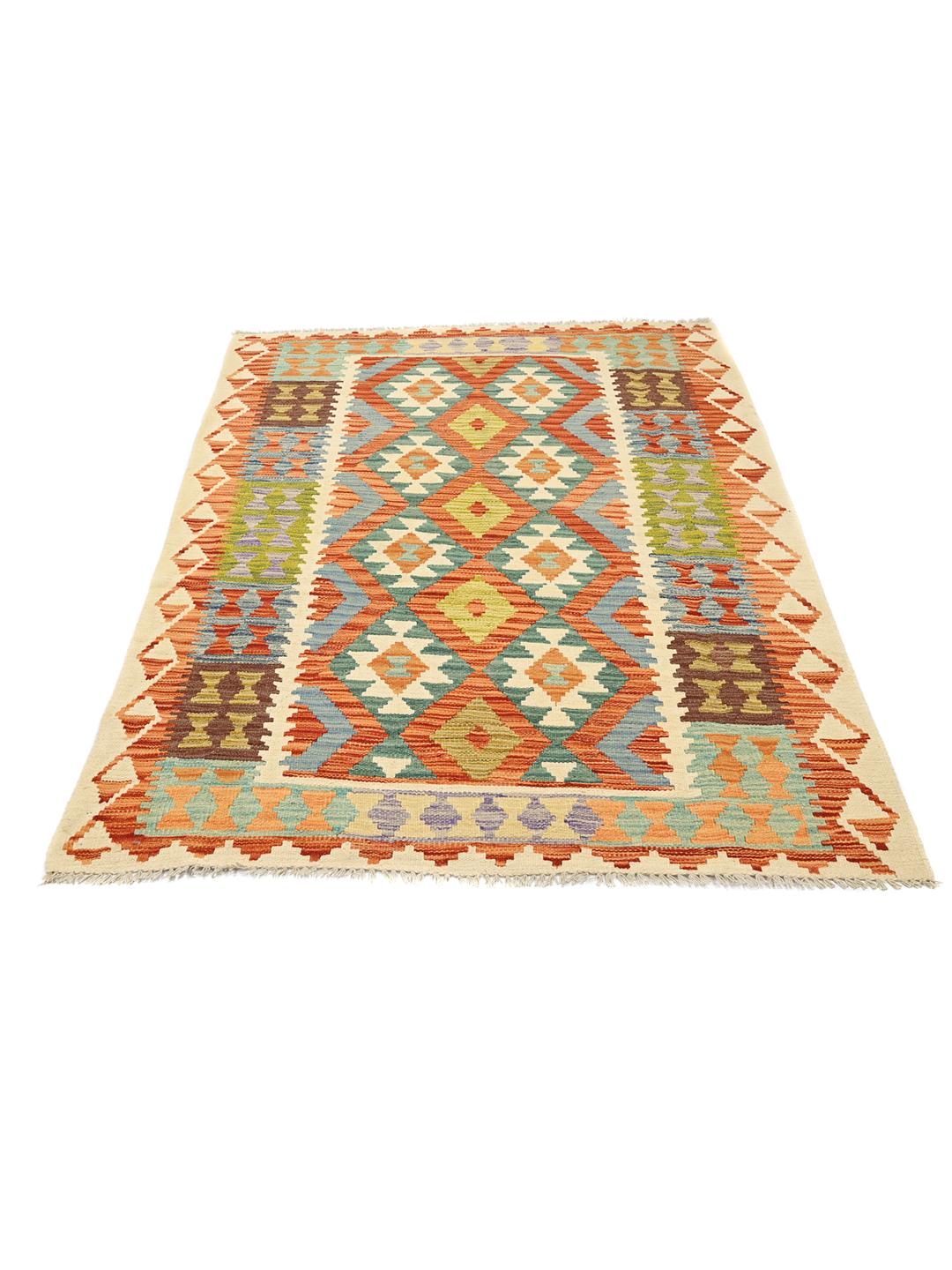
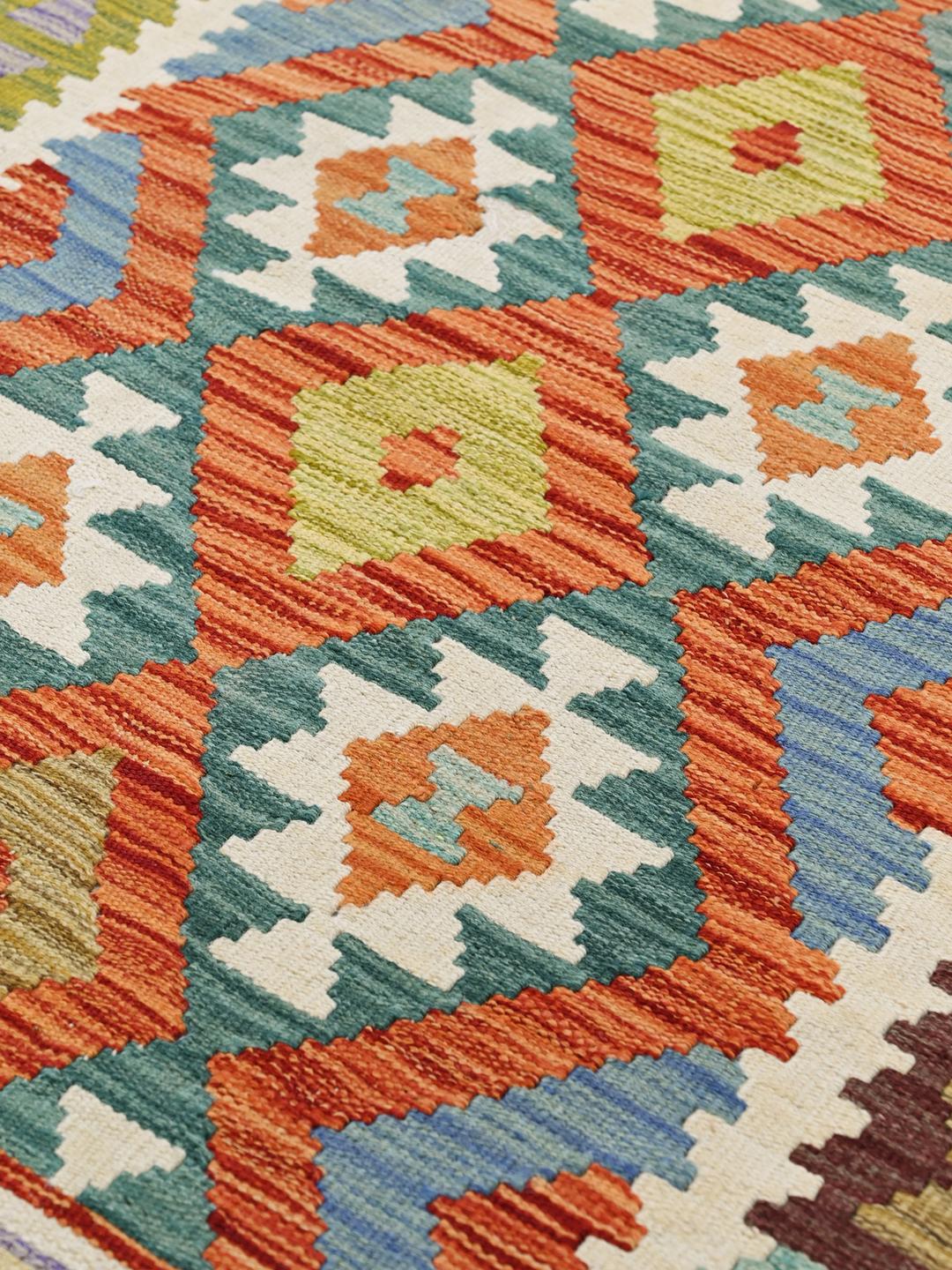
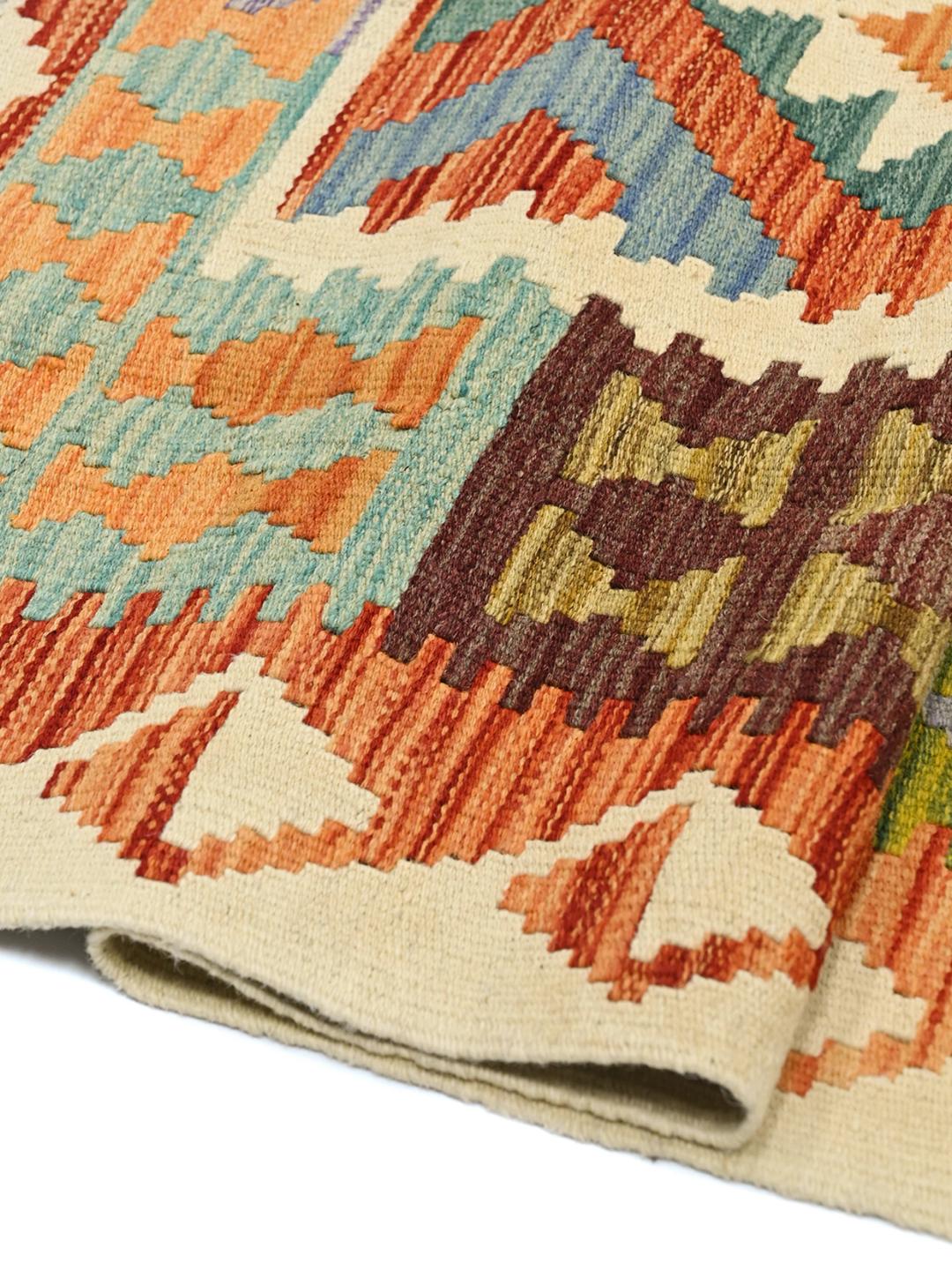
Kelim rugs from Afghanistan are rooted in a deep tradition of nomadic artistry, where woven textiles served as essential components of daily life. These pieces were historically used as floor coverings, blankets, and storage bags, designed to be durable enough for travel yet beautiful enough to serve as expressions of tribal identity and storytelling.
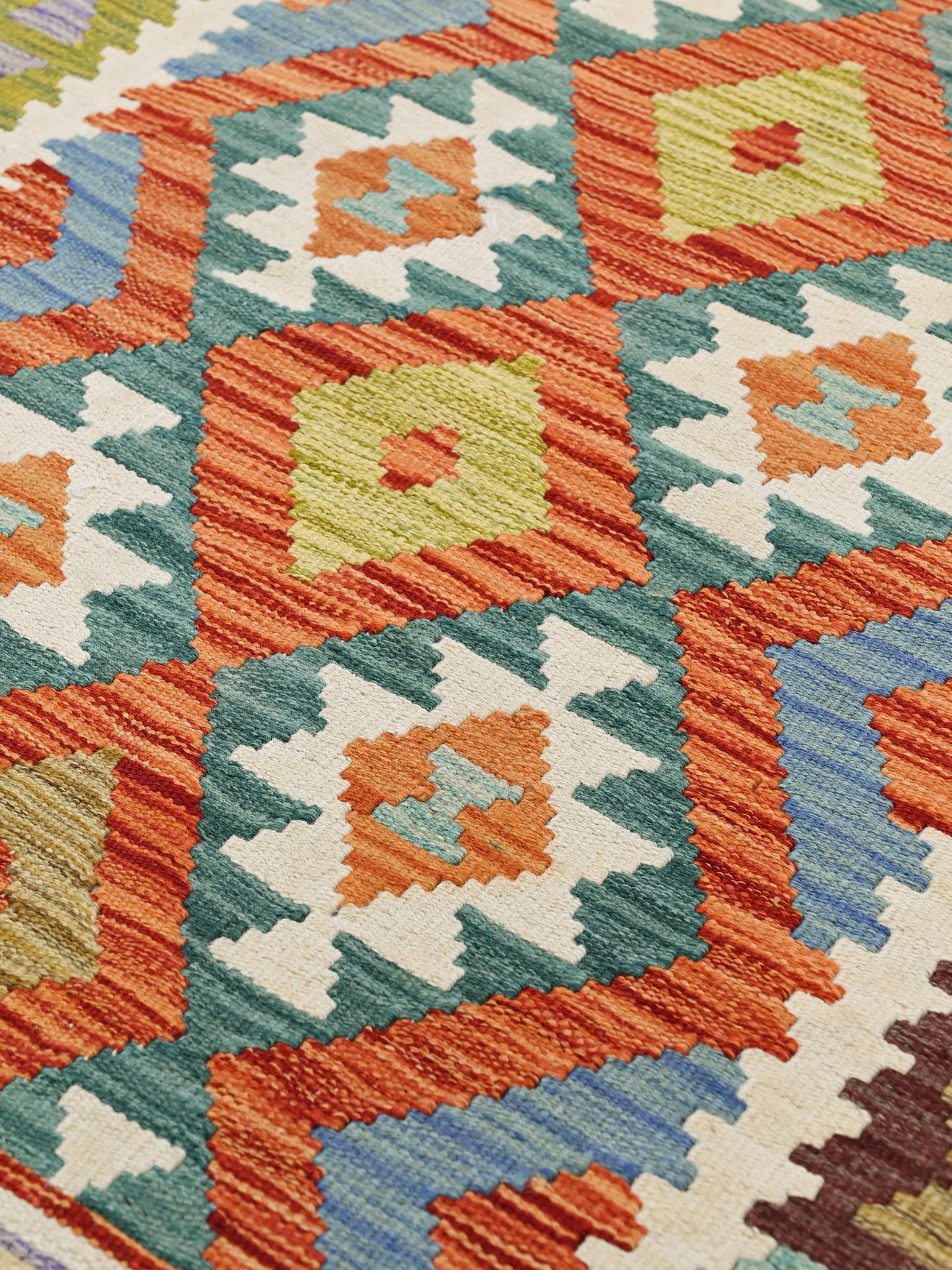
The term 'Kelim' refers to the specific flat-weave technique used to create these rugs. Unlike pile rugs, which are knotted, a Kelim is created by interweaving the warp and weft threads to create a smooth, tapestry-like surface. This method creates a reversible rug that is lightweight yet remarkably strong, showcasing the mastery of the weaver in managing tension and pattern across the entire loom.
Visually, this tradition is defined by bold geometric shapes, such as the diamonds and medallions featured here, often rendered in a rich, earthy palette. These motifs are not merely decorative; they often carry symbolic meanings rooted in the weaver's environment and tribal heritage, with borders that frame the composition to provide a sense of balance and harmony.
Collecting Afghan Kelims is an invitation to preserve a living craft. These rugs are highly valued for their authenticity and the way they bridge the gap between ancient nomadic utility and contemporary interior design. By owning one, you are participating in a storied lineage of craftsmanship that continues to influence modern aesthetics worldwide.