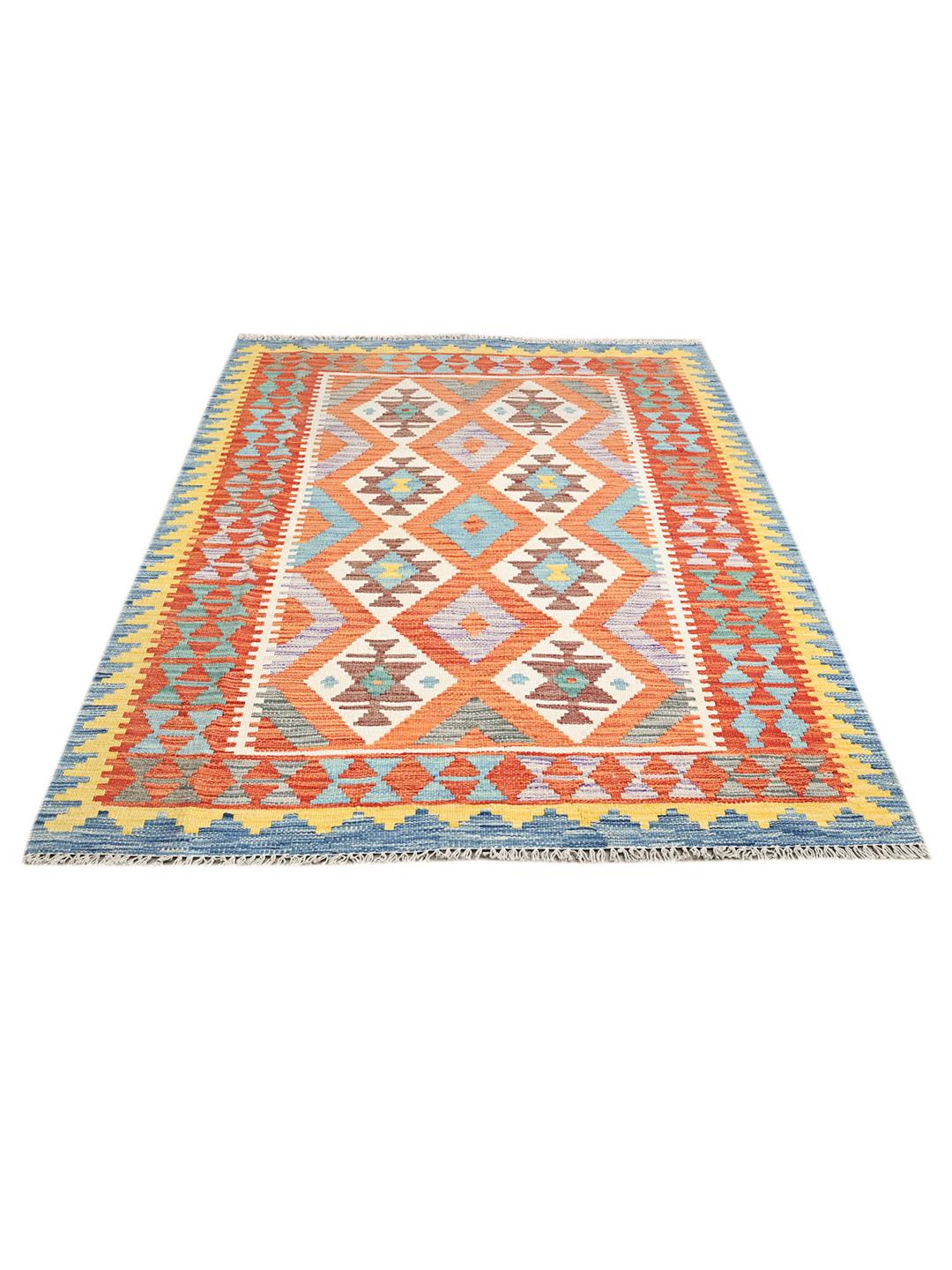
The Kelim tradition in Afghanistan is deeply rooted in the nomadic history of the region. These rugs have served as essential, multi-functional textiles for generations, used as floor coverings, wall hangings, and even storage bags. The migration of weaving techniques across the Middle East has allowed these traditions to evolve, blending tribal influences with the sophisticated geometric sensibilities that characterise the Afghan style.
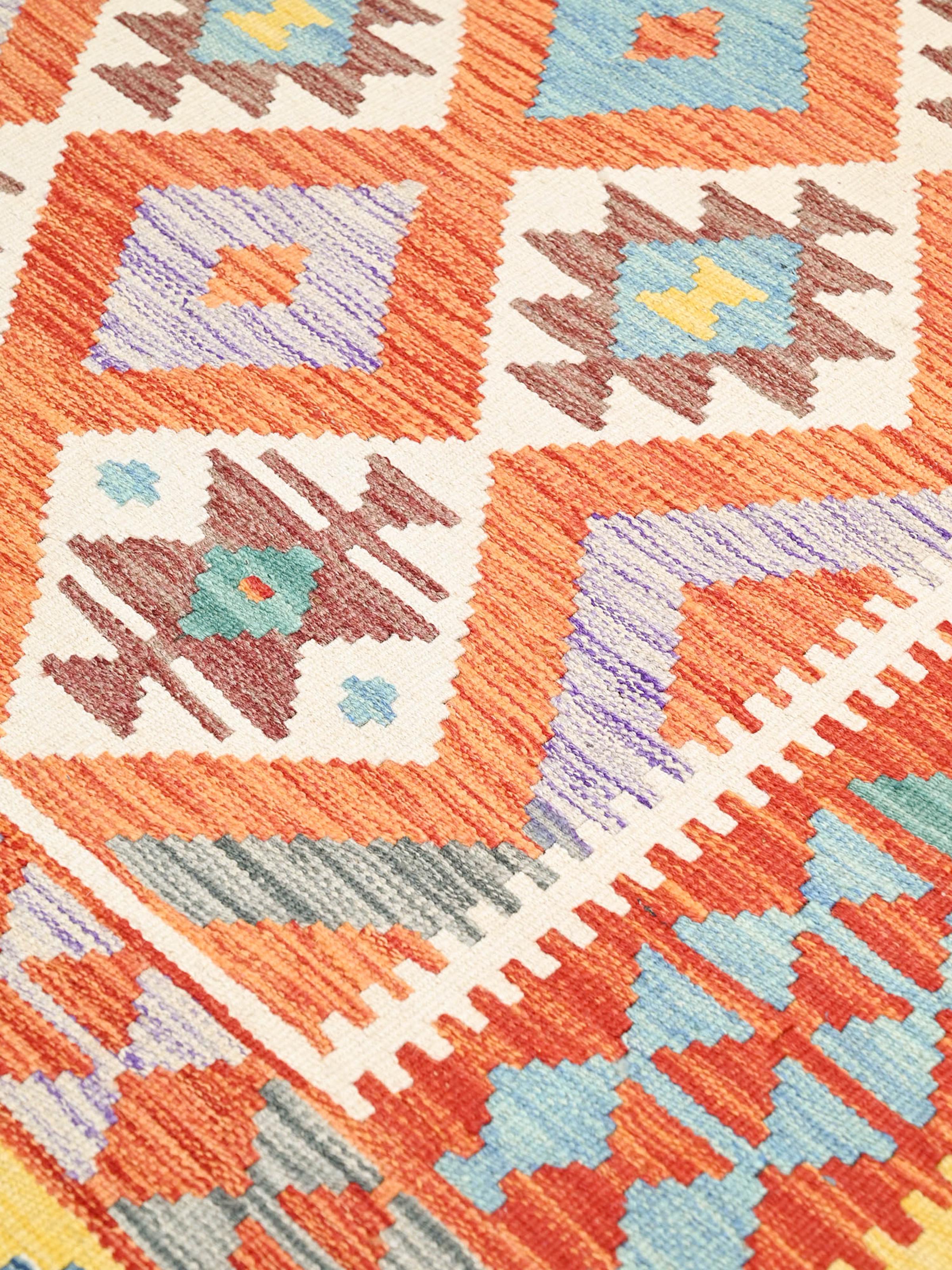
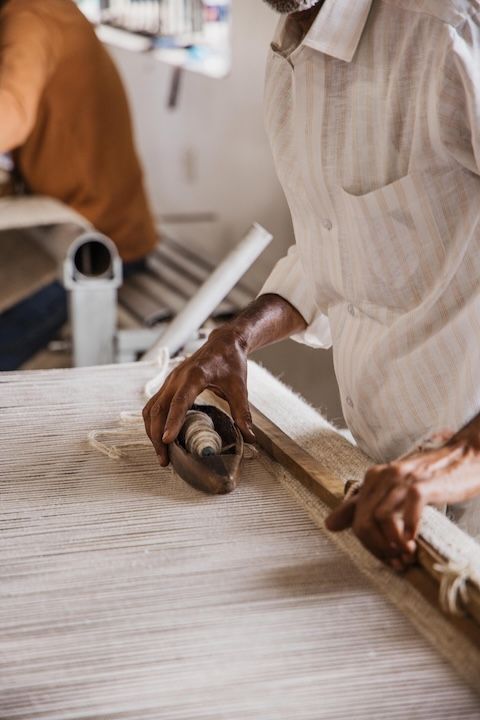
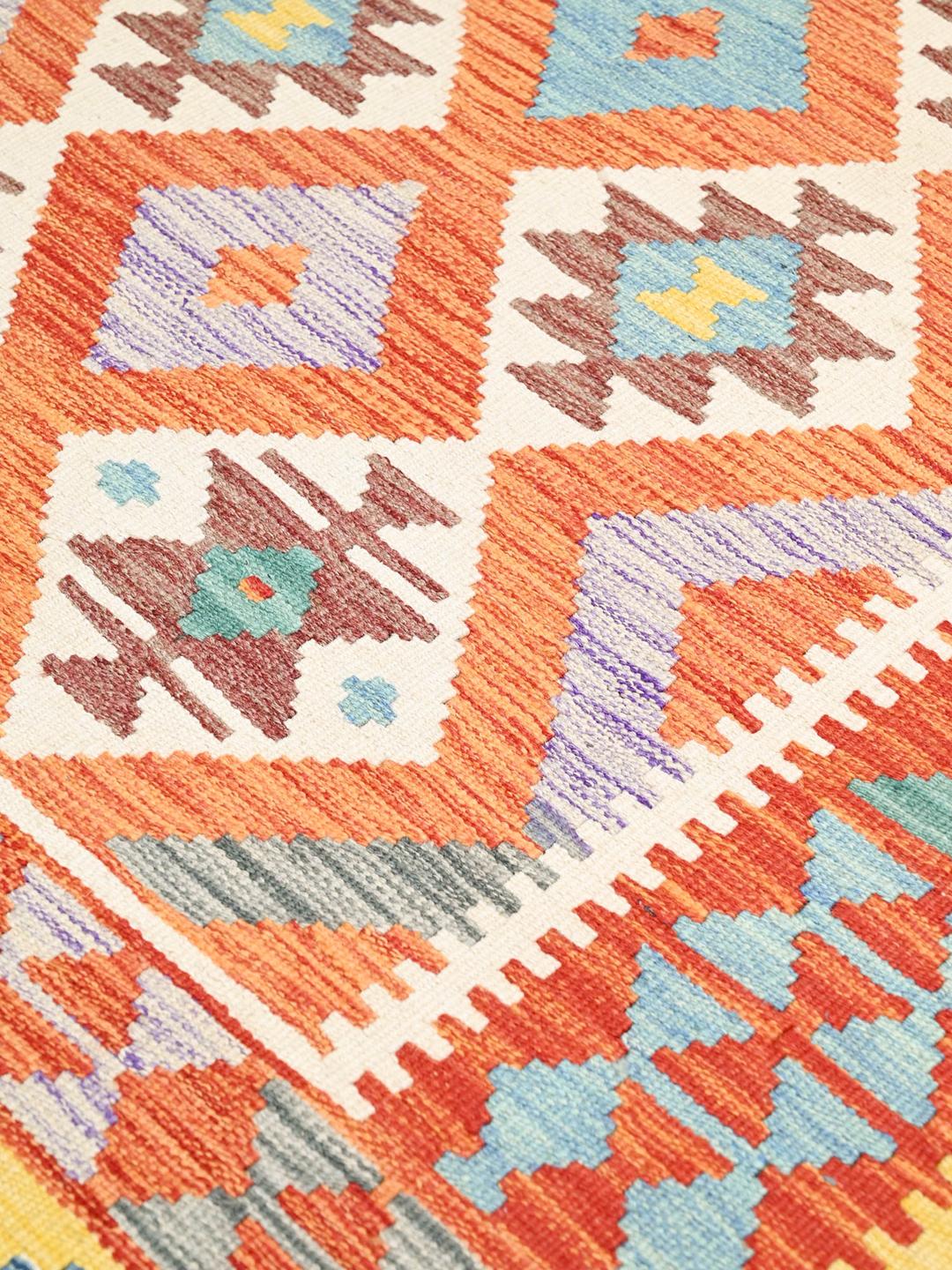
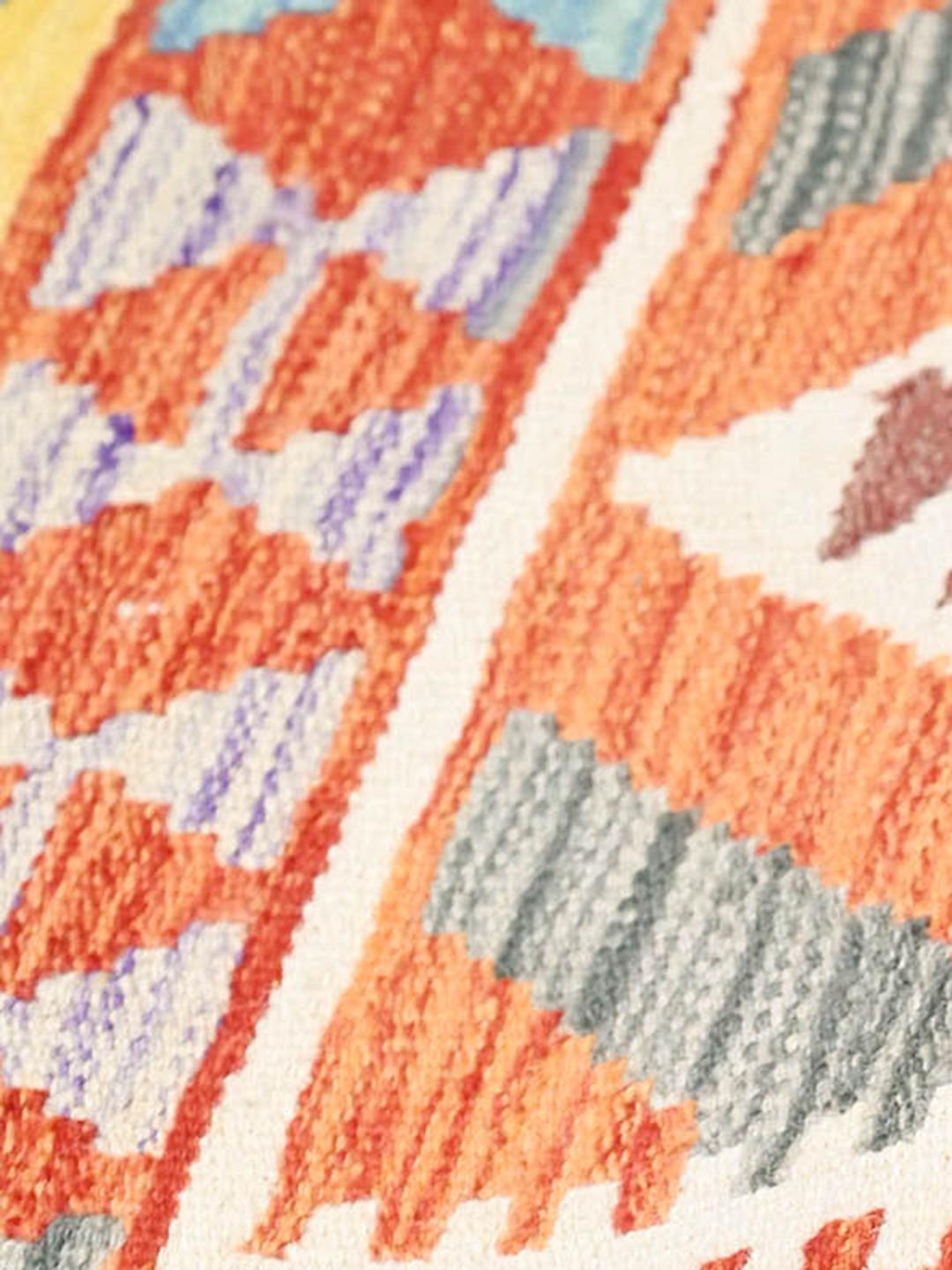
The term Kelim refers to a flat-woven textile produced by interlocking warp and weft threads. Unlike knotted rugs, the absence of pile creates a clean, graphic aesthetic that highlights the intricacy of the weave. This technique is highly valued for its durability and portability, reflecting the lifestyle of the weavers who created these pieces to be both functional and beautiful additions to their homes.
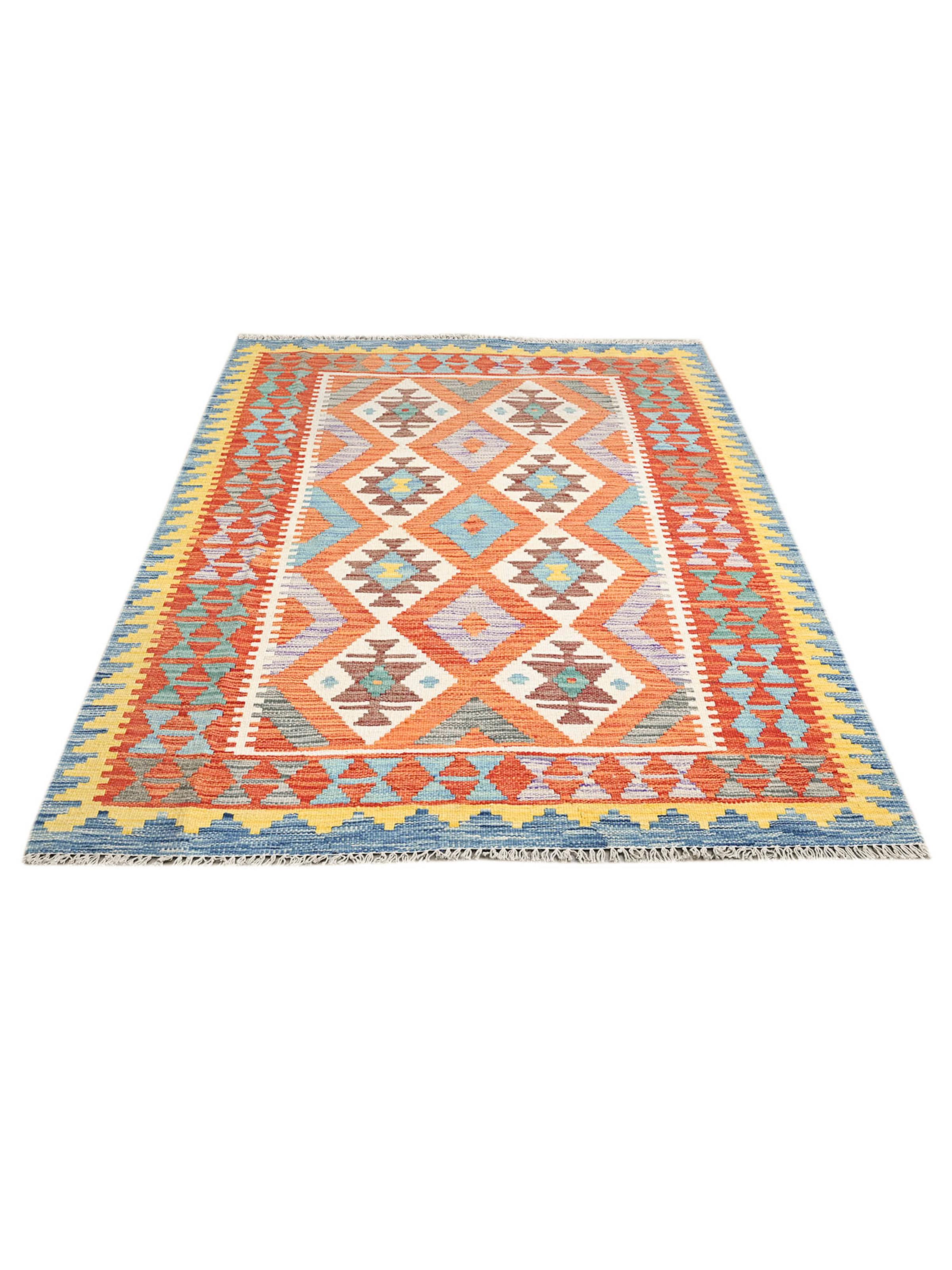
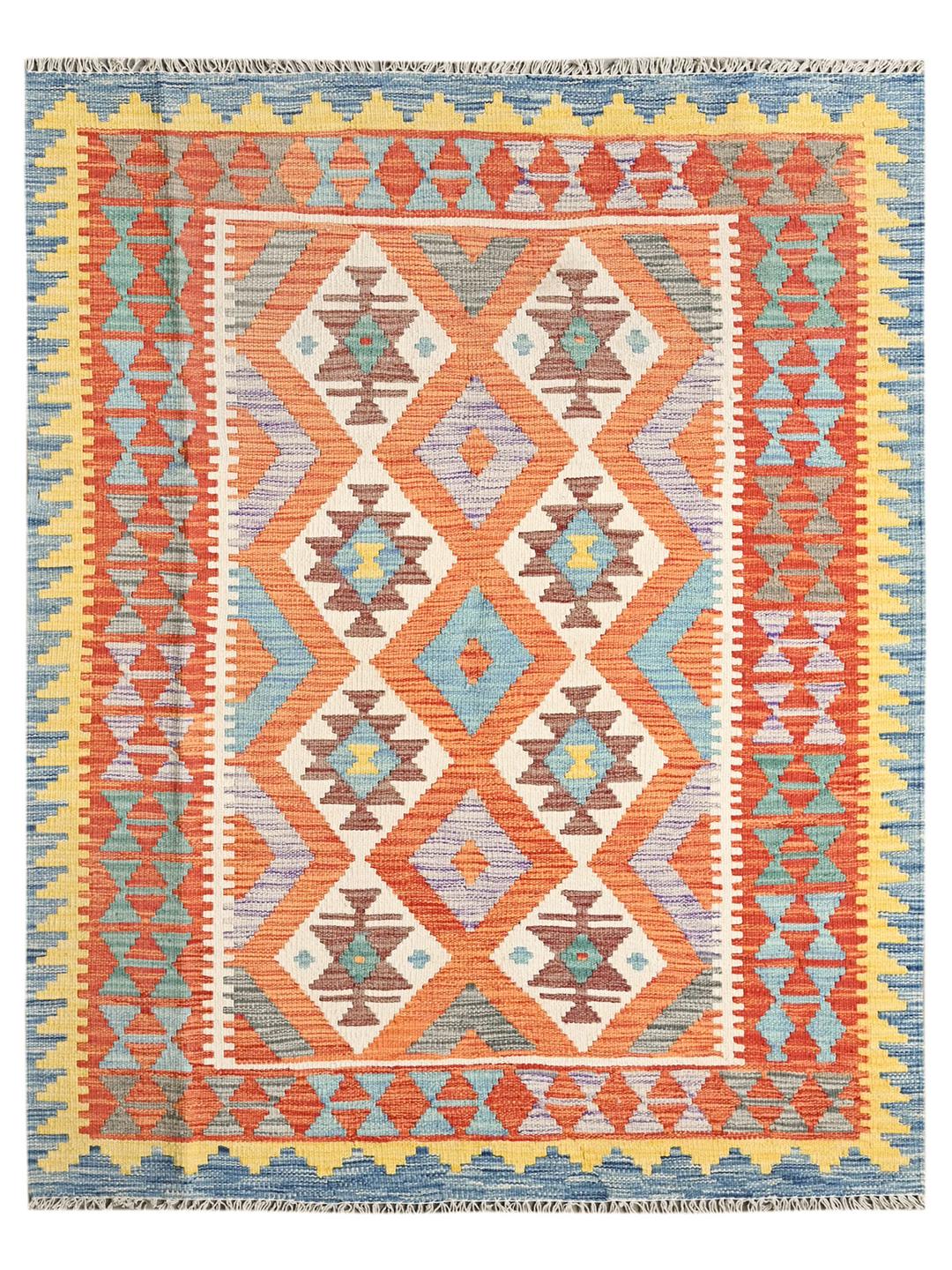
Signature design elements of the Afghan Kelim include bold geometric shapes, most notably diamonds, triangles, and stylised floral motifs. These patterns are often arranged in repeating sequences or large-scale medallions, framed by decorative borders that ground the composition. The use of vibrant, naturally-inspired colours is a hallmark of this tradition, reflecting the landscape and the natural dyes historically available to the weavers.
Collecting Afghan Kelims is an appreciation of a craft that has survived through centuries of change. Owning a piece like this is an investment in cultural heritage and a celebration of human skill. These rugs are not merely decorative but are artefacts of a living tradition, cherished for their ability to bring warmth, history, and a human touch to modern living environments.