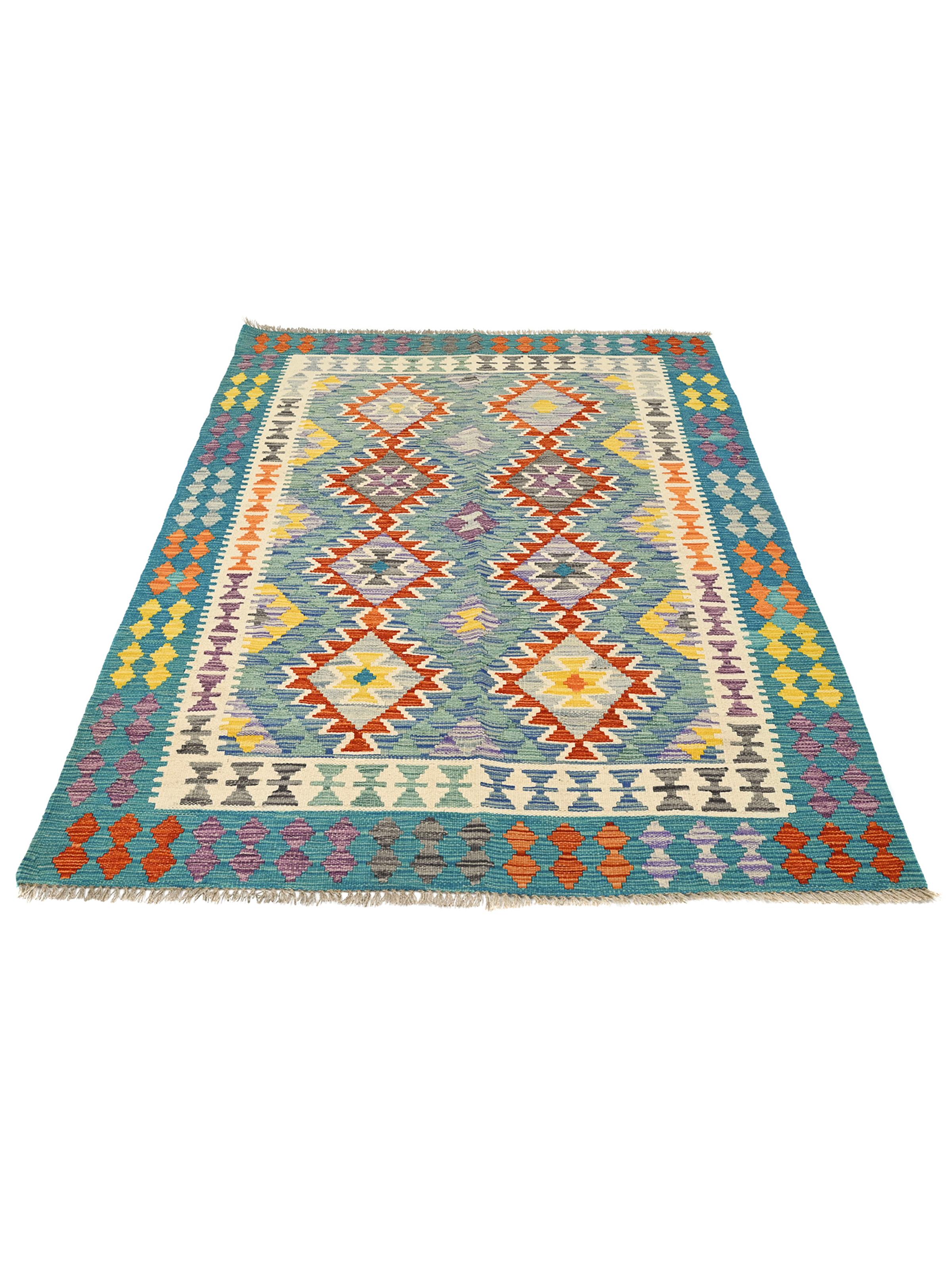
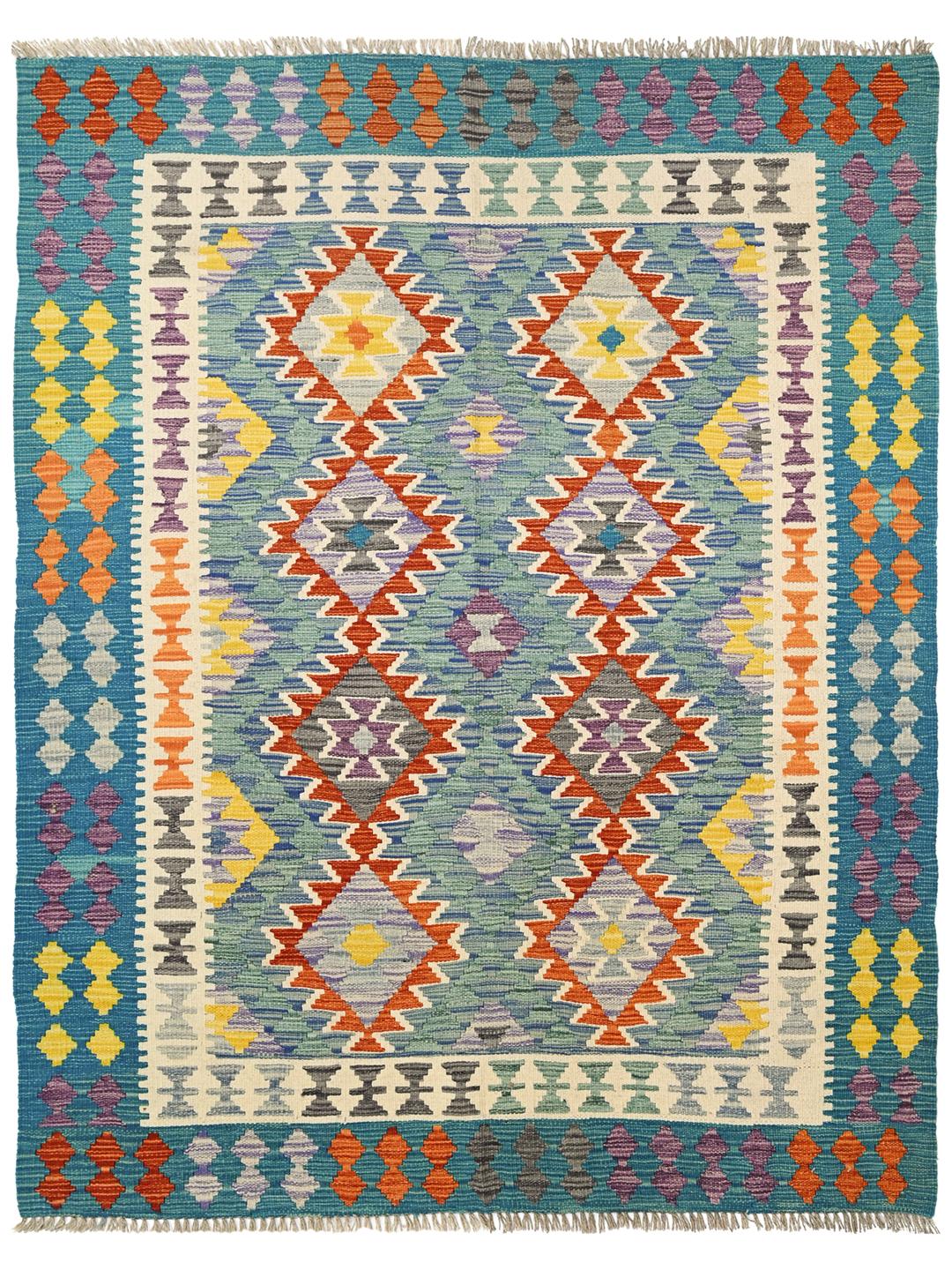
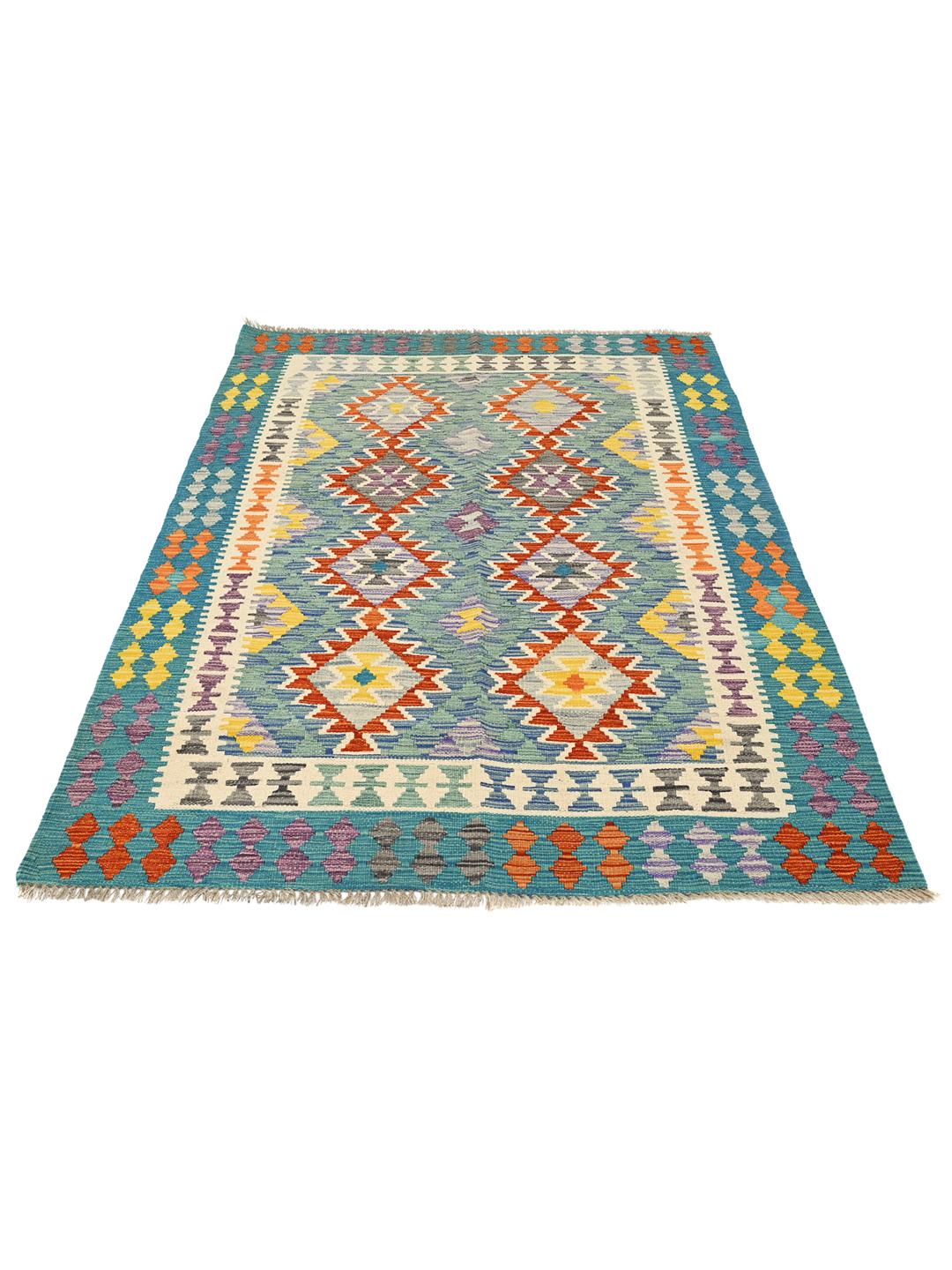
Kelim rugs have a storied history rooted in the nomadic traditions of the Middle East and Central Asia. Originally created by tribal groups for their practical utility as floor coverings, wall hangings, and storage bags, these flat-weave rugs were essential to the mobile lifestyle of these communities.
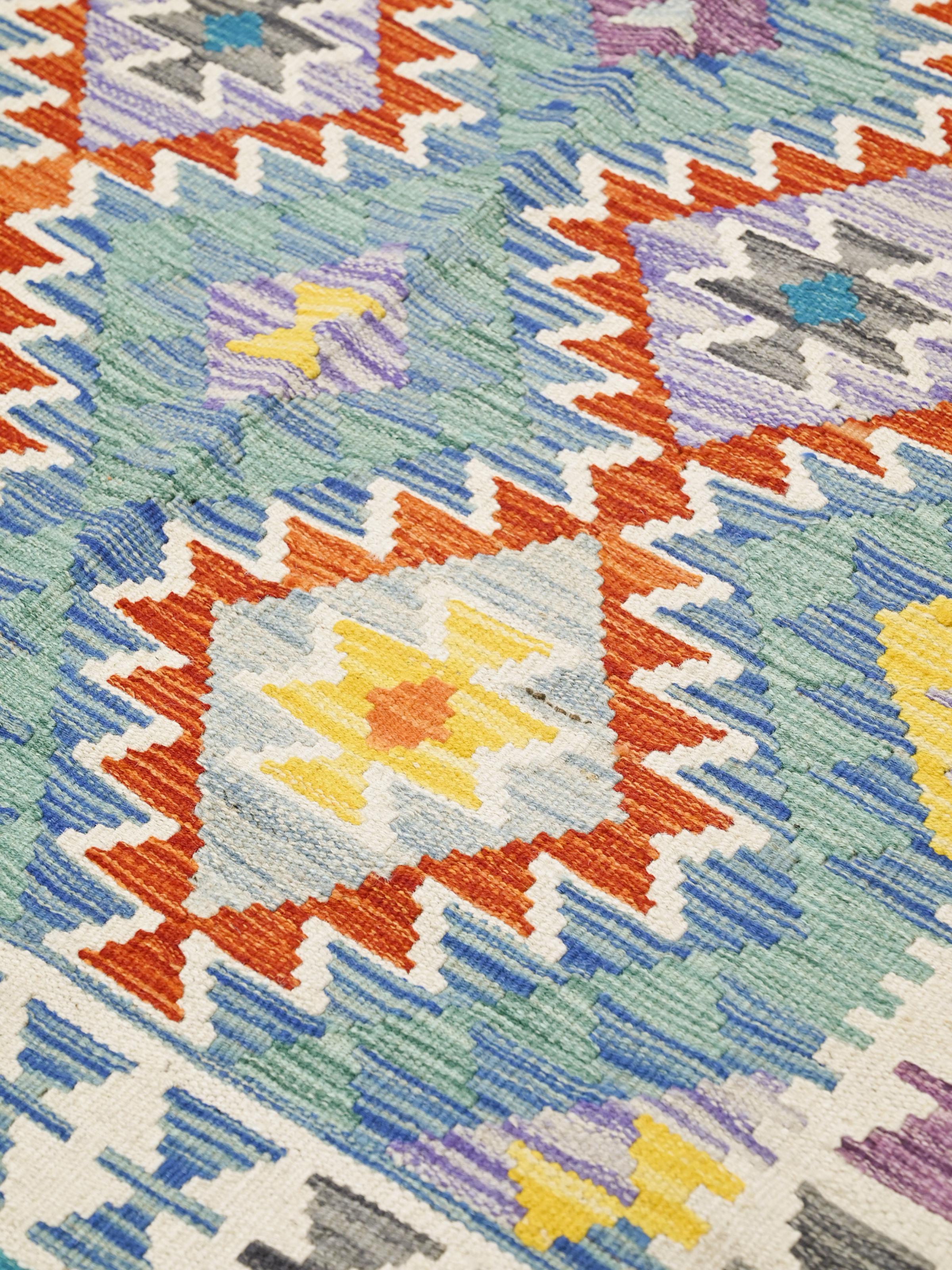
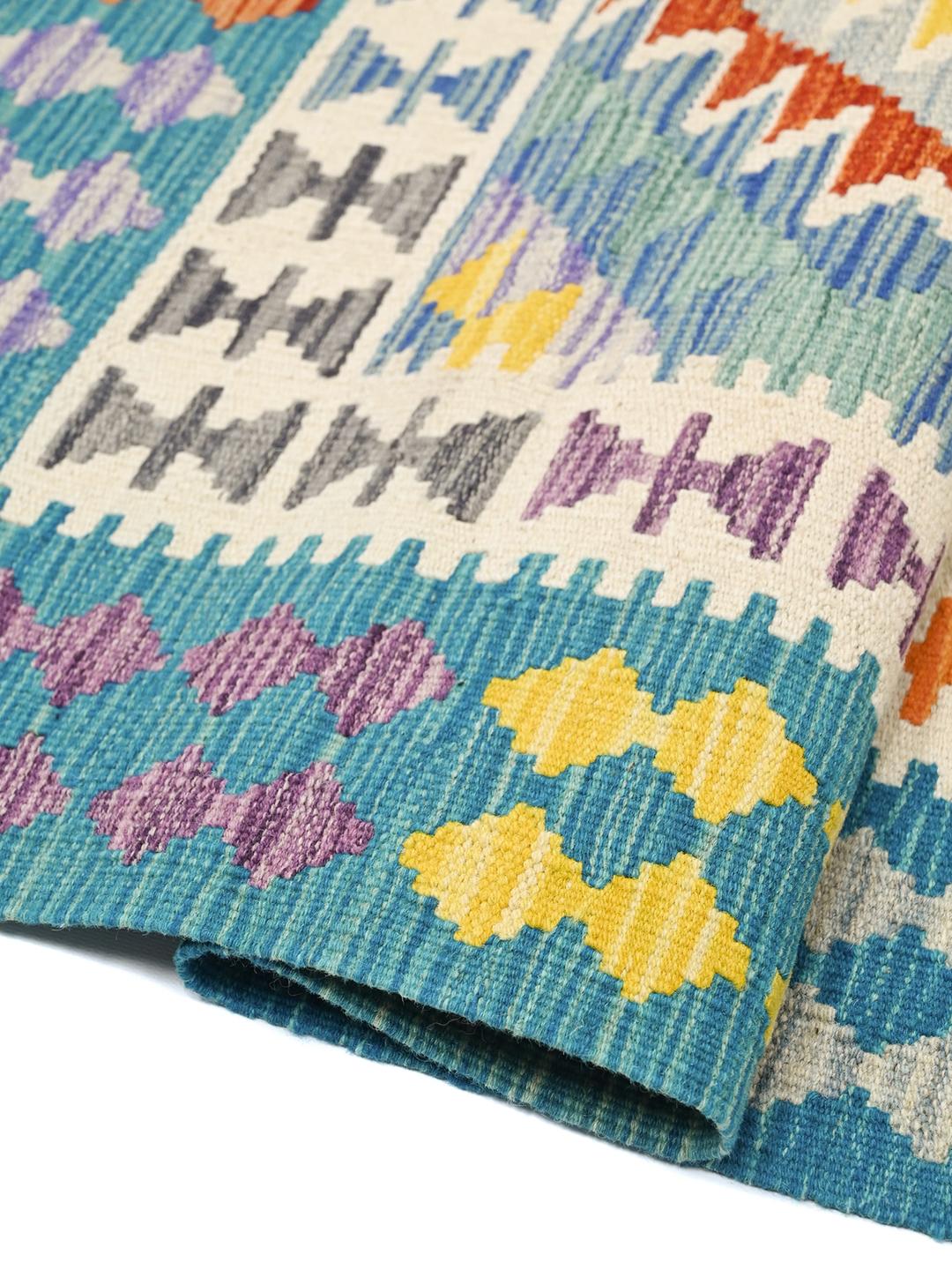
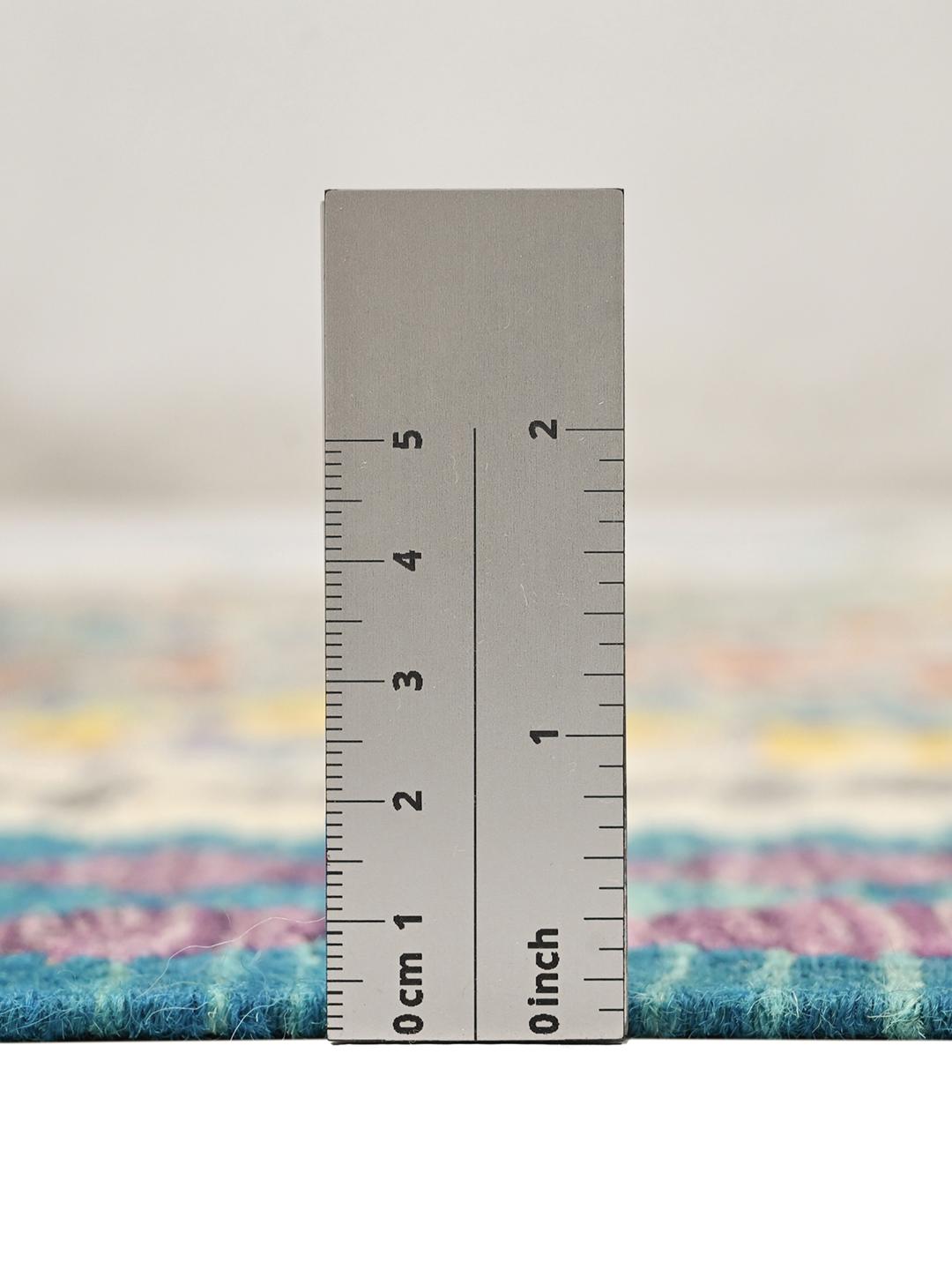
The term 'Kelim' refers to the specific flat-weaving technique where the warp and weft threads are interlaced to create a smooth, pileless surface. This method is distinct because it does not involve knotting, resulting in a lightweight yet strong textile that is prized for its versatility and intricate, reversible designs.
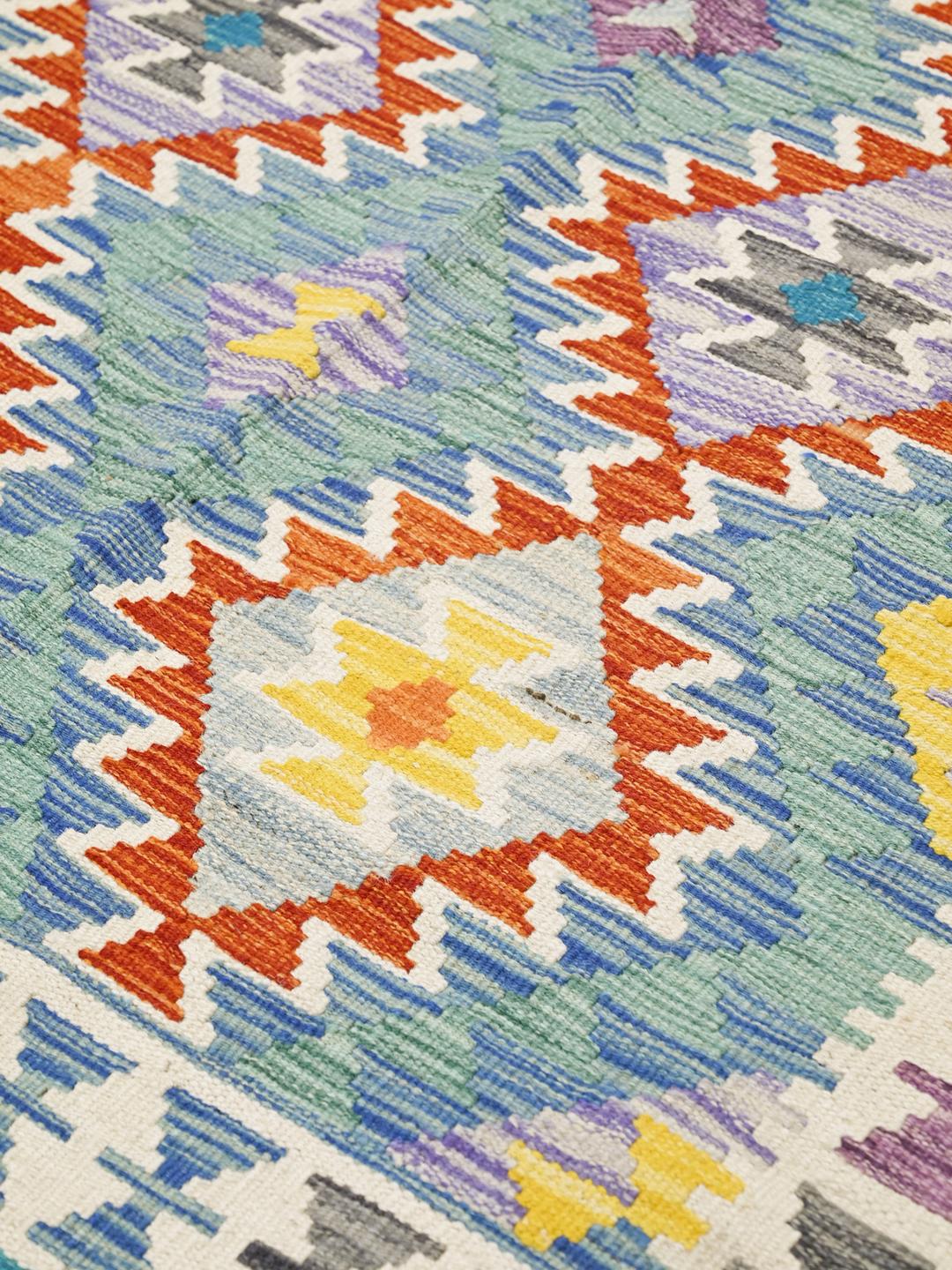
The design language of these rugs is defined by bold geometric patterns, such as the diamonds and repeating motifs seen here. These symbols often carry cultural significance, representing protection, fertility, or the natural landscape of the region. The use of vibrant, natural dyes has long been a hallmark of this tradition, allowing each region to express its unique identity.
Today, these rugs are highly sought after by collectors who appreciate the blend of heritage and artistry. Owning a Kelim is more than just a decor choice; it is an acknowledgment of the skill passed down through generations. These pieces remain a testament to the enduring beauty of traditional craft in an increasingly modern world.