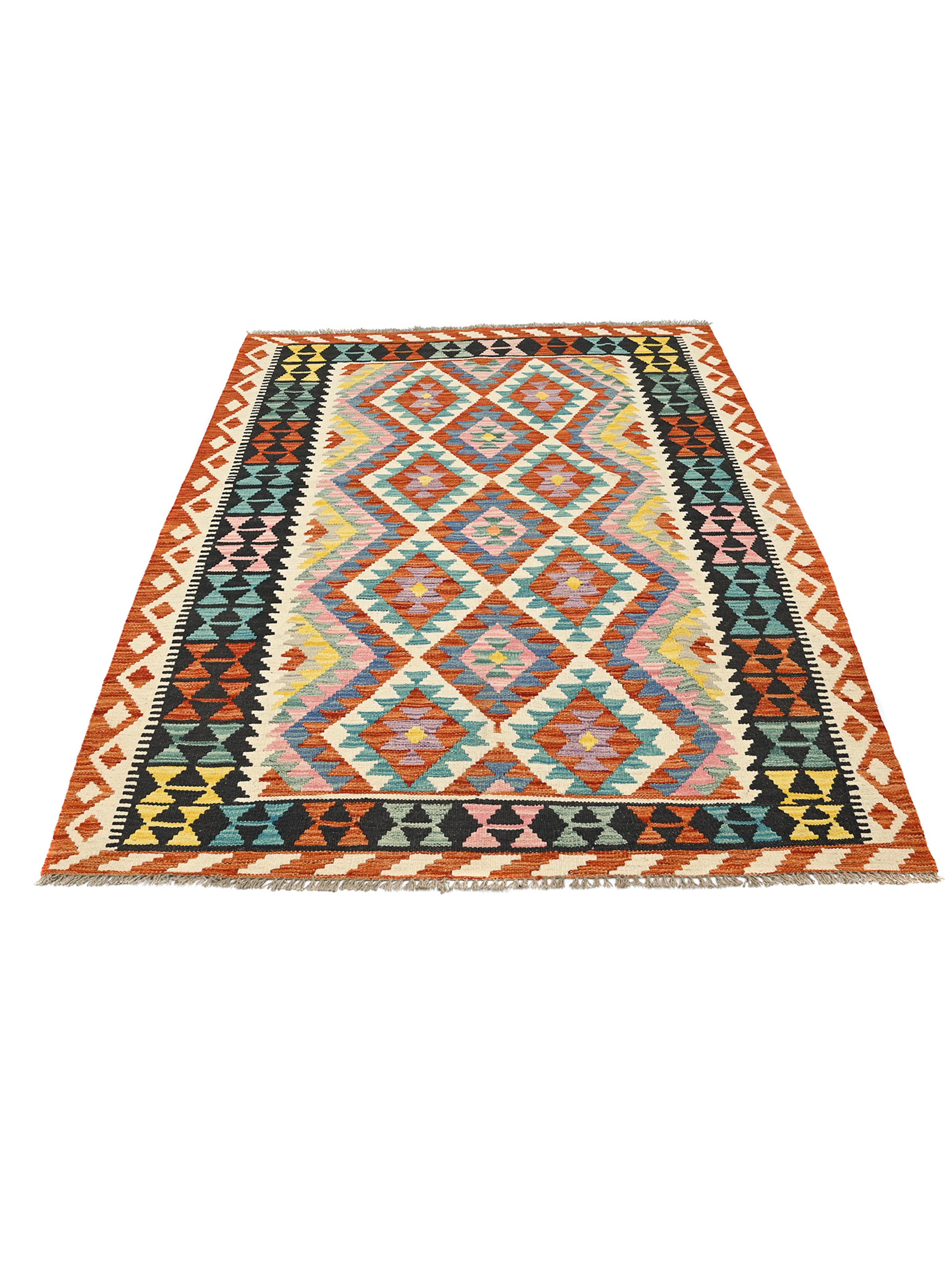
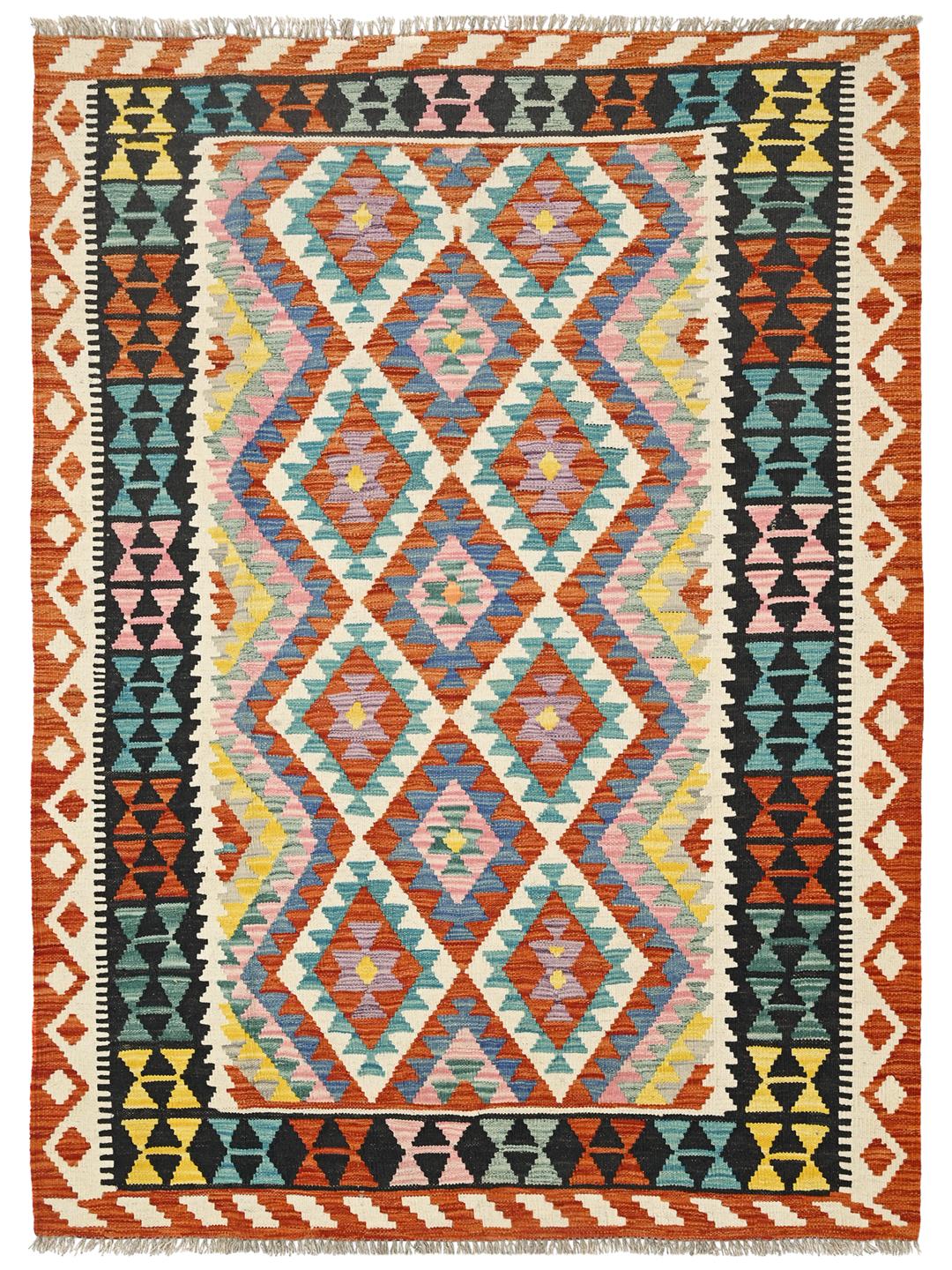
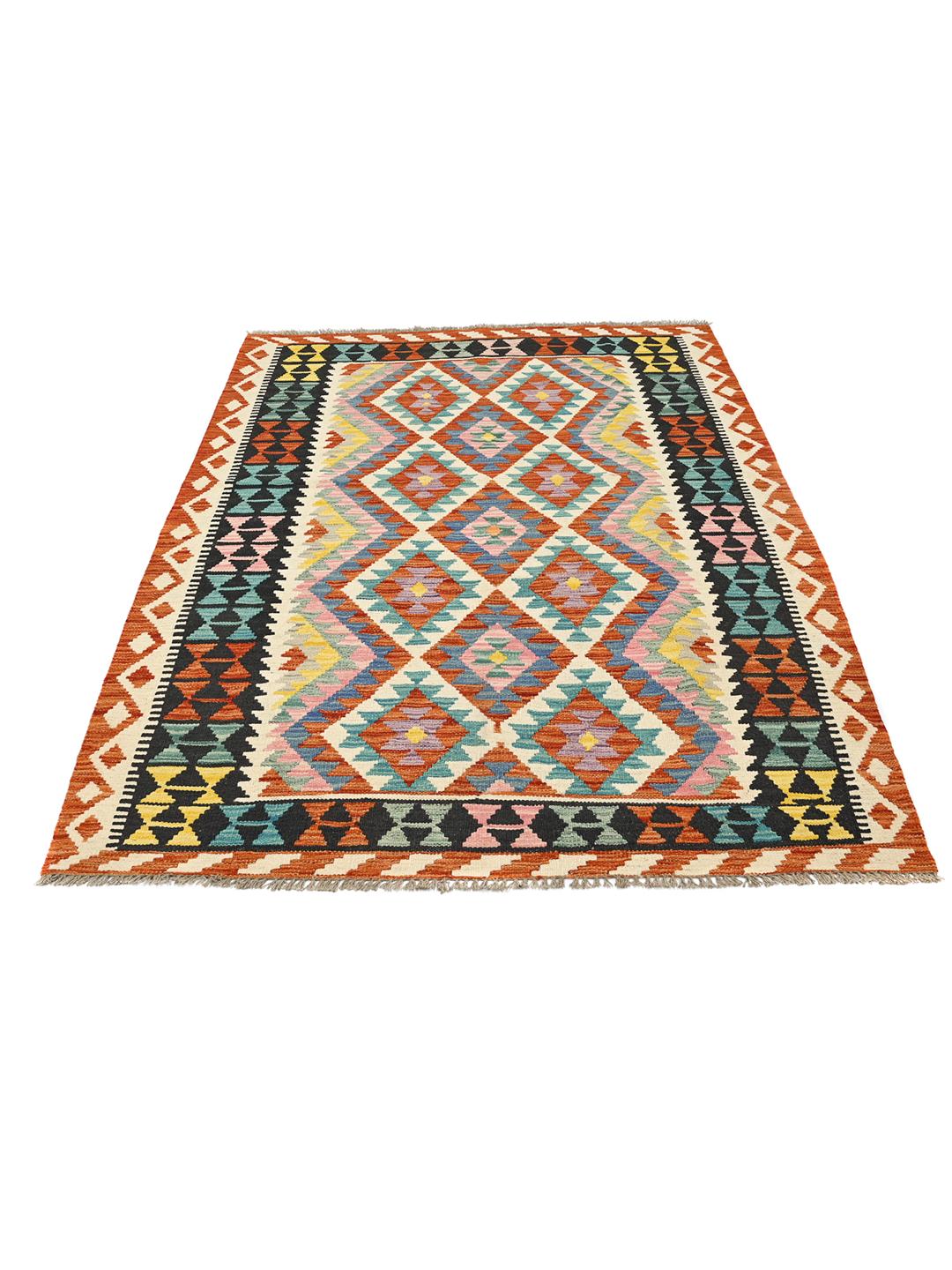
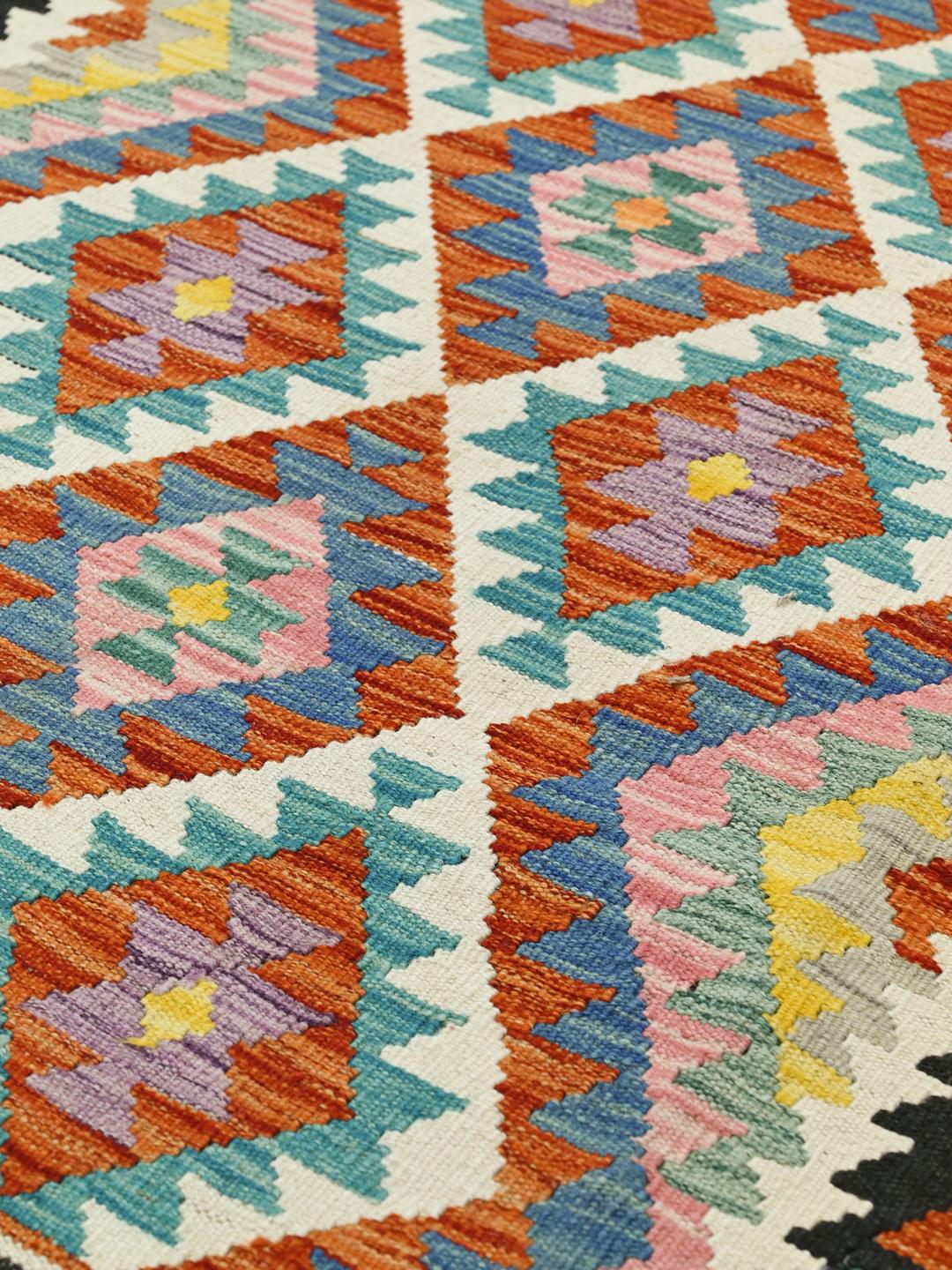
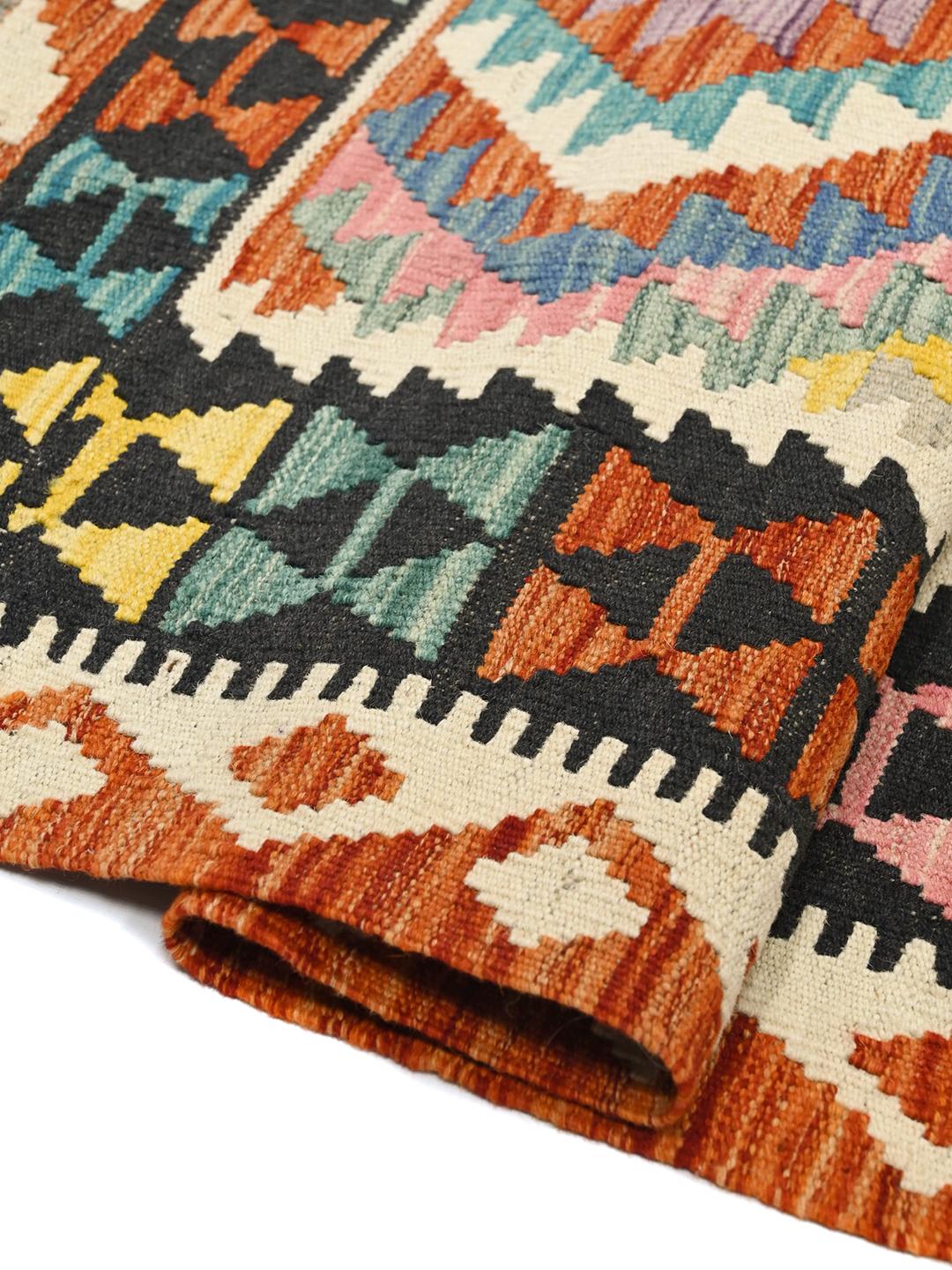
The Kelim tradition in Afghanistan is deeply rooted in the nomadic history of the region, where these flat-woven textiles were essential for both utility and artistic expression. These rugs were traditionally crafted by tribal communities to serve as floor coverings, wall hangings, and functional storage bags, reflecting the lifestyle and values of the people who created them.
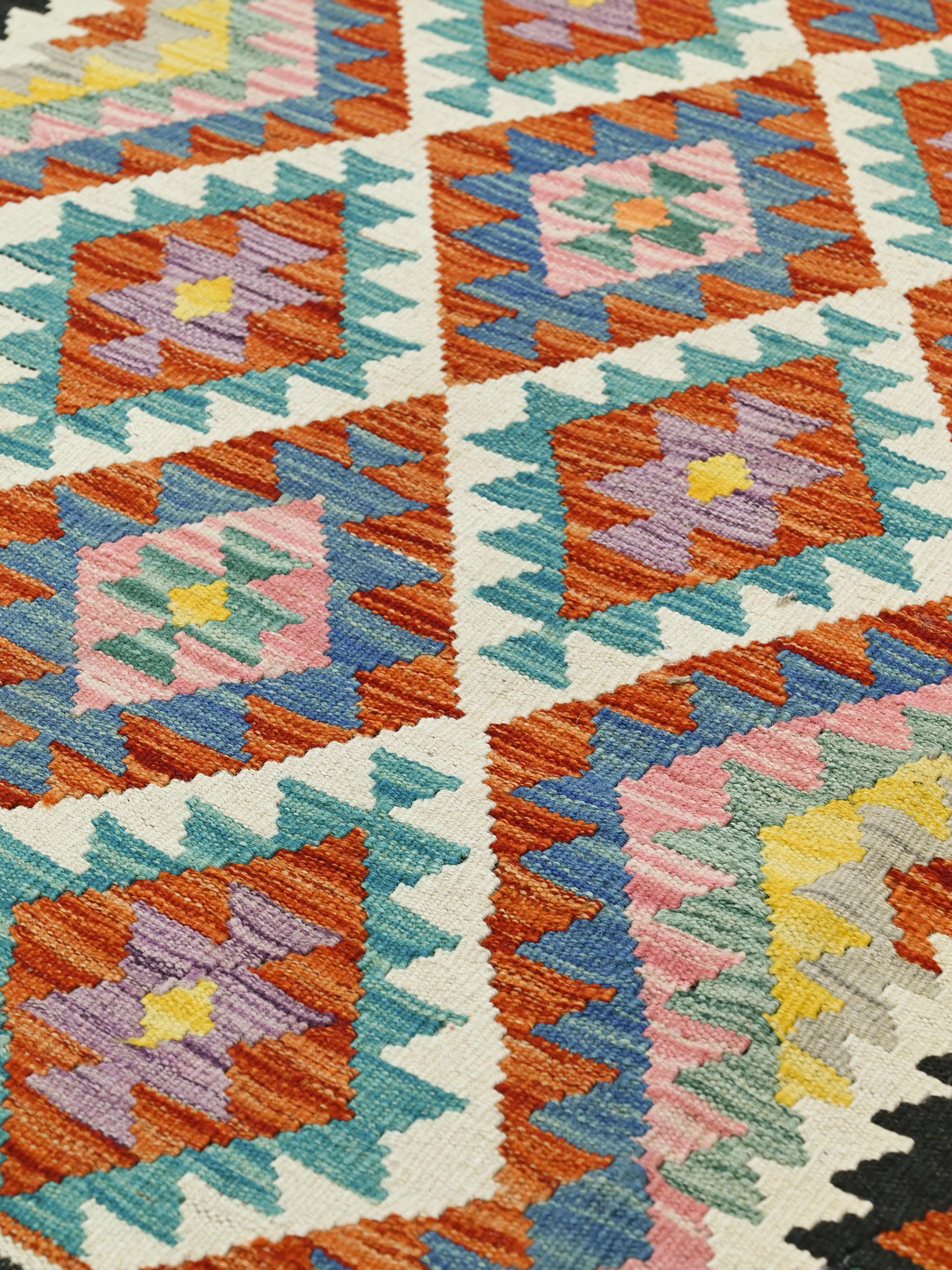
The term 'Kelim' refers to the specific slit-weave technique employed, which results in a tapestry-like rug without a pile. This method allows for sharp, clear geometric designs, as the colours are woven directly into the foundation. This structure is highly prized for its versatility and the way it highlights the intricate skill required to manage multiple coloured threads simultaneously.
The design language of these rugs is defined by bold geometric shapes, often featuring large diamonds, triangles, and symbolic motifs that have been passed down through generations. These patterns are not merely decorative but often carry cultural significance, representing protection, fertility, or the natural landscape of the Afghan highlands.
Owning an Afghan Kelim is an opportunity to connect with a rich, enduring heritage. These rugs are highly sought after by collectors and interior enthusiasts alike for their authenticity and the way they bridge the gap between ancient craft and modern living. Each piece stands as a testament to the skill of the weaver and the cultural history of the Middle East.