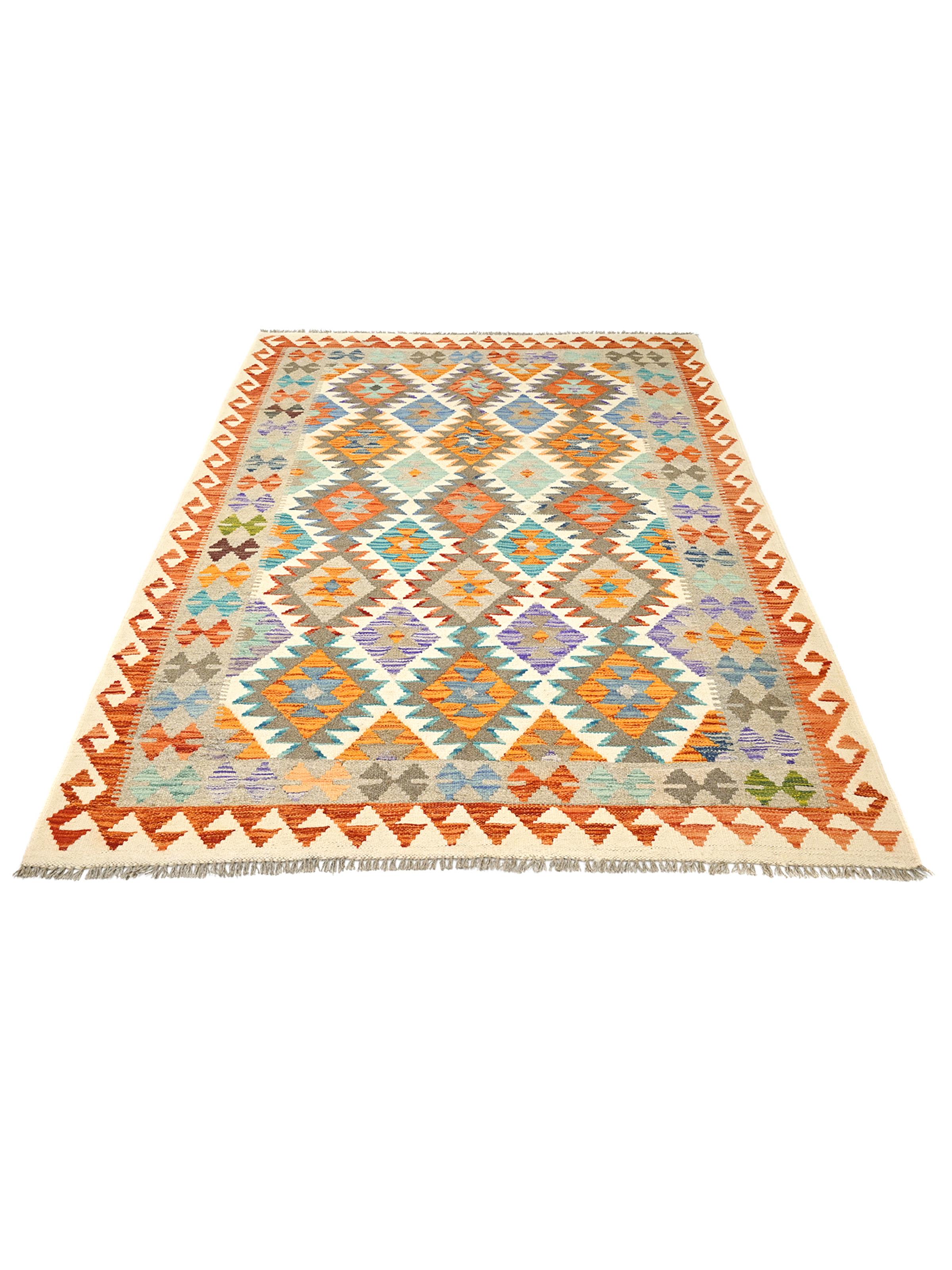
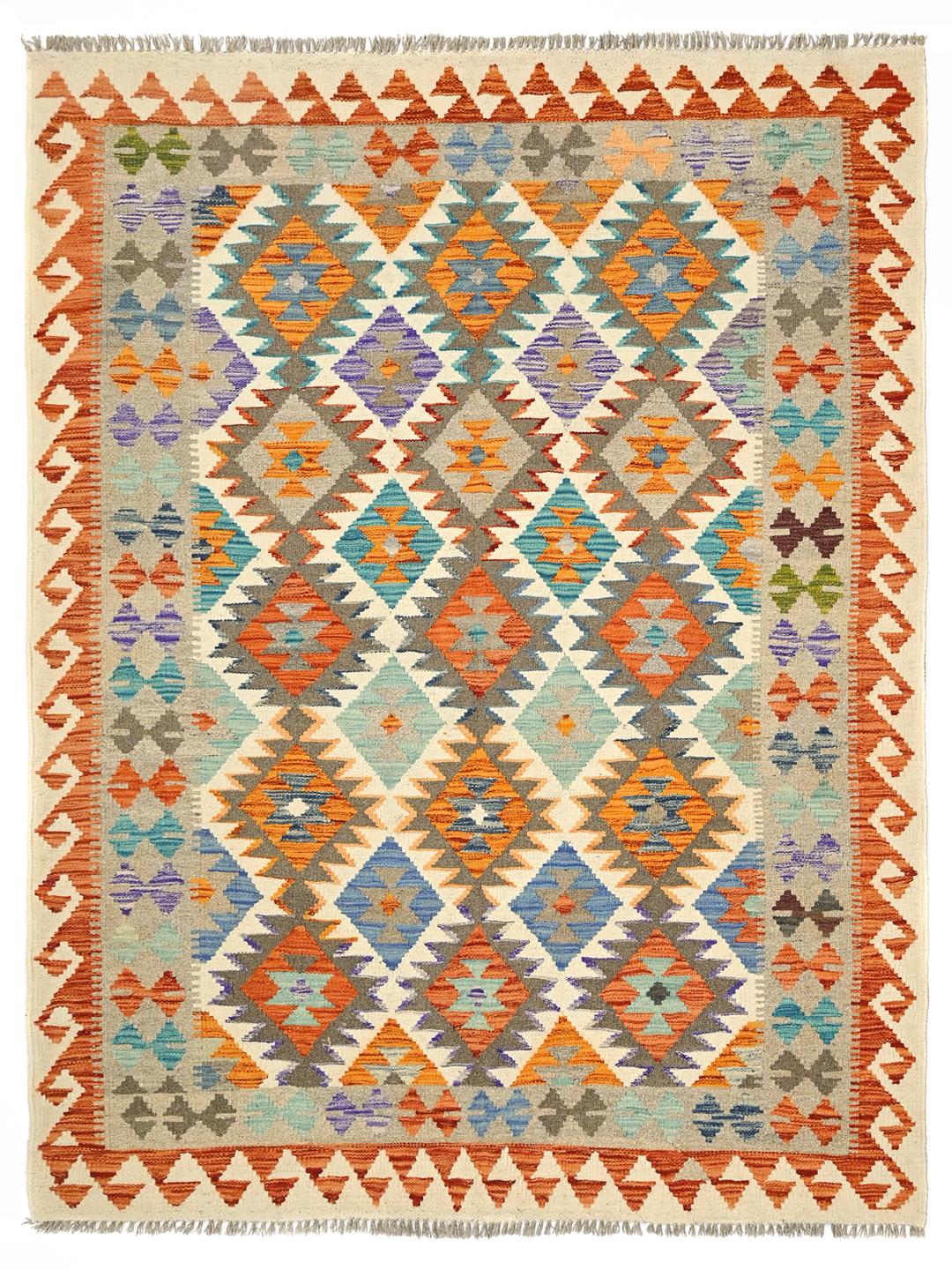
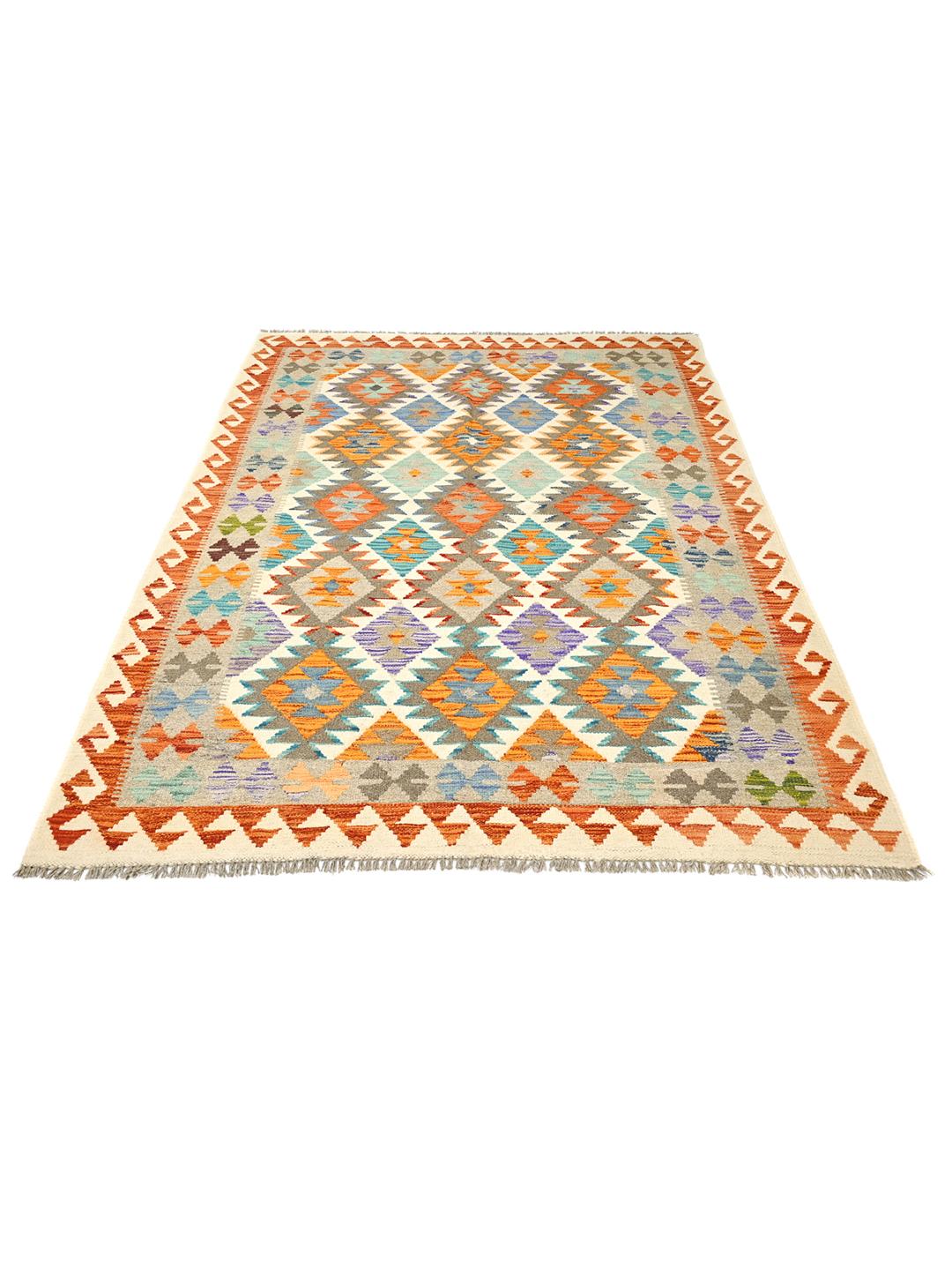
Kelim rugs have been a cornerstone of life in the Middle East for centuries, serving as both essential household items and expressions of cultural identity. These flat-woven textiles are traditionally created by nomadic and semi-nomadic tribes, who developed techniques to produce durable, portable, and highly decorative coverings that could withstand the rigours of travel and daily use in a tented environment.
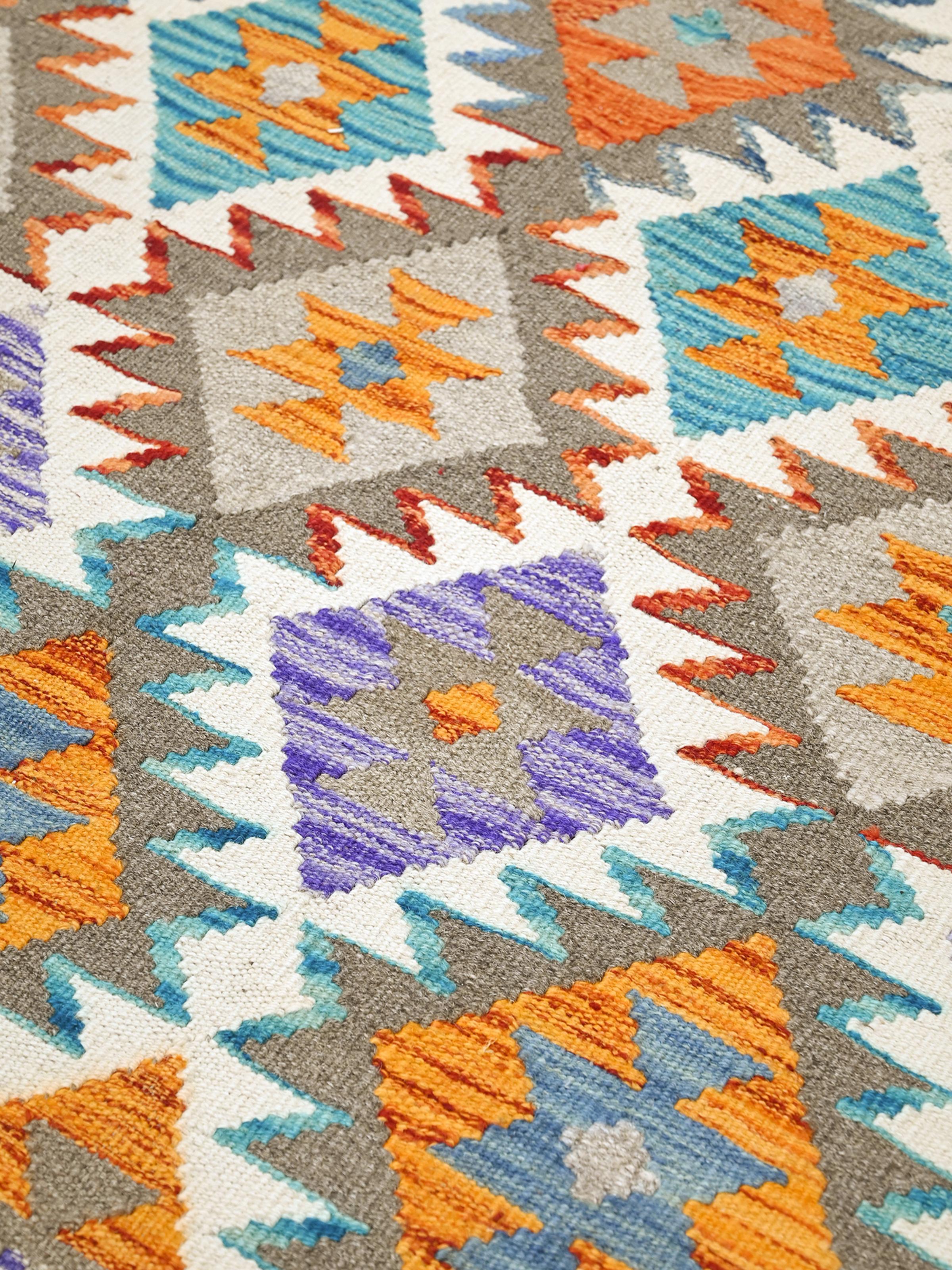
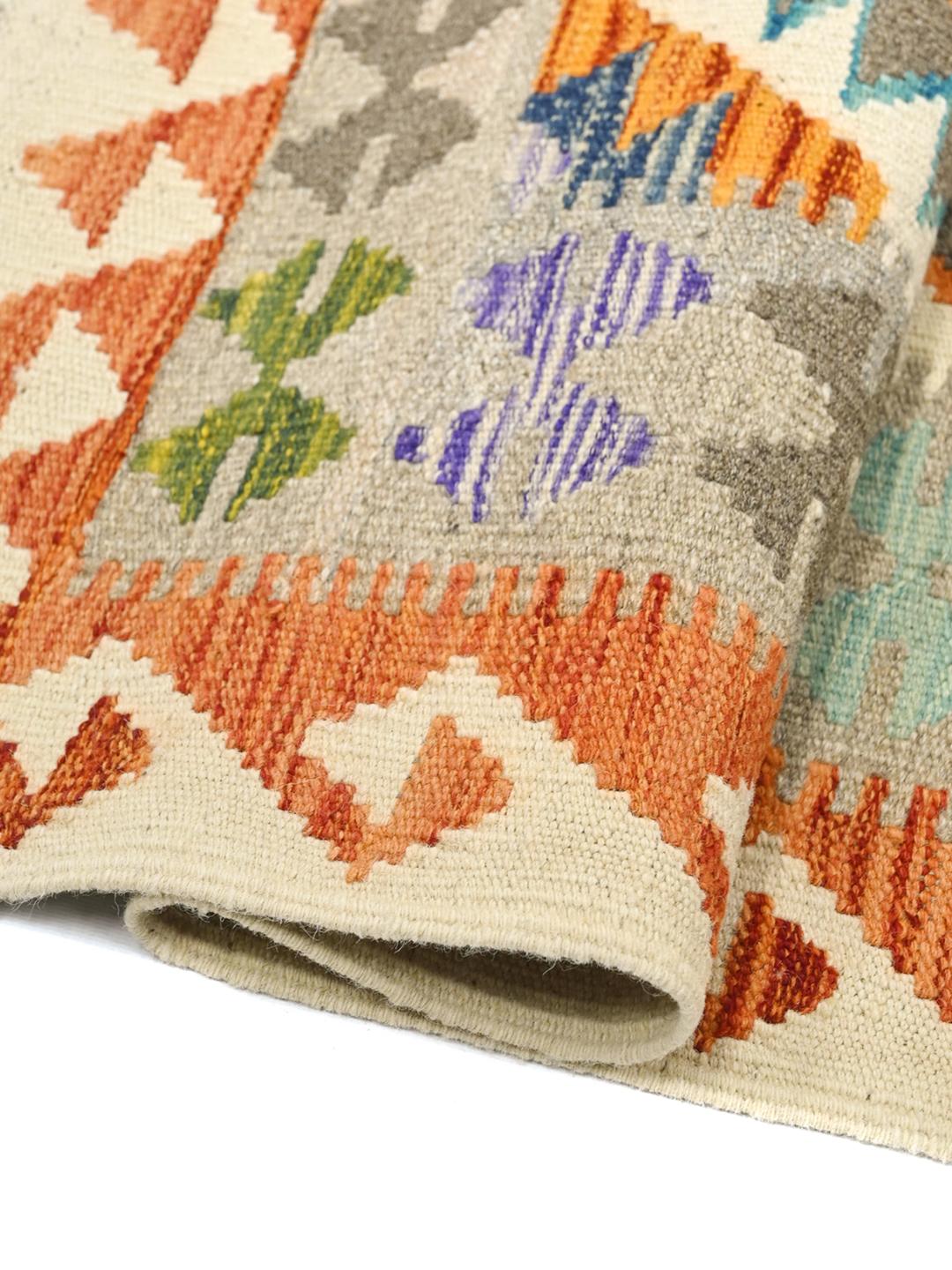
The term 'Kelim' refers specifically to the slit-weave technique used to create the pattern. By weaving the weft threads back and forth around the warp threads, the artisan creates a structure where the design is fully reversible and remarkably strong. This method is what gives the rug its signature flat, pile-less surface, which is highly prized for its versatility and clear, graphic aesthetic.
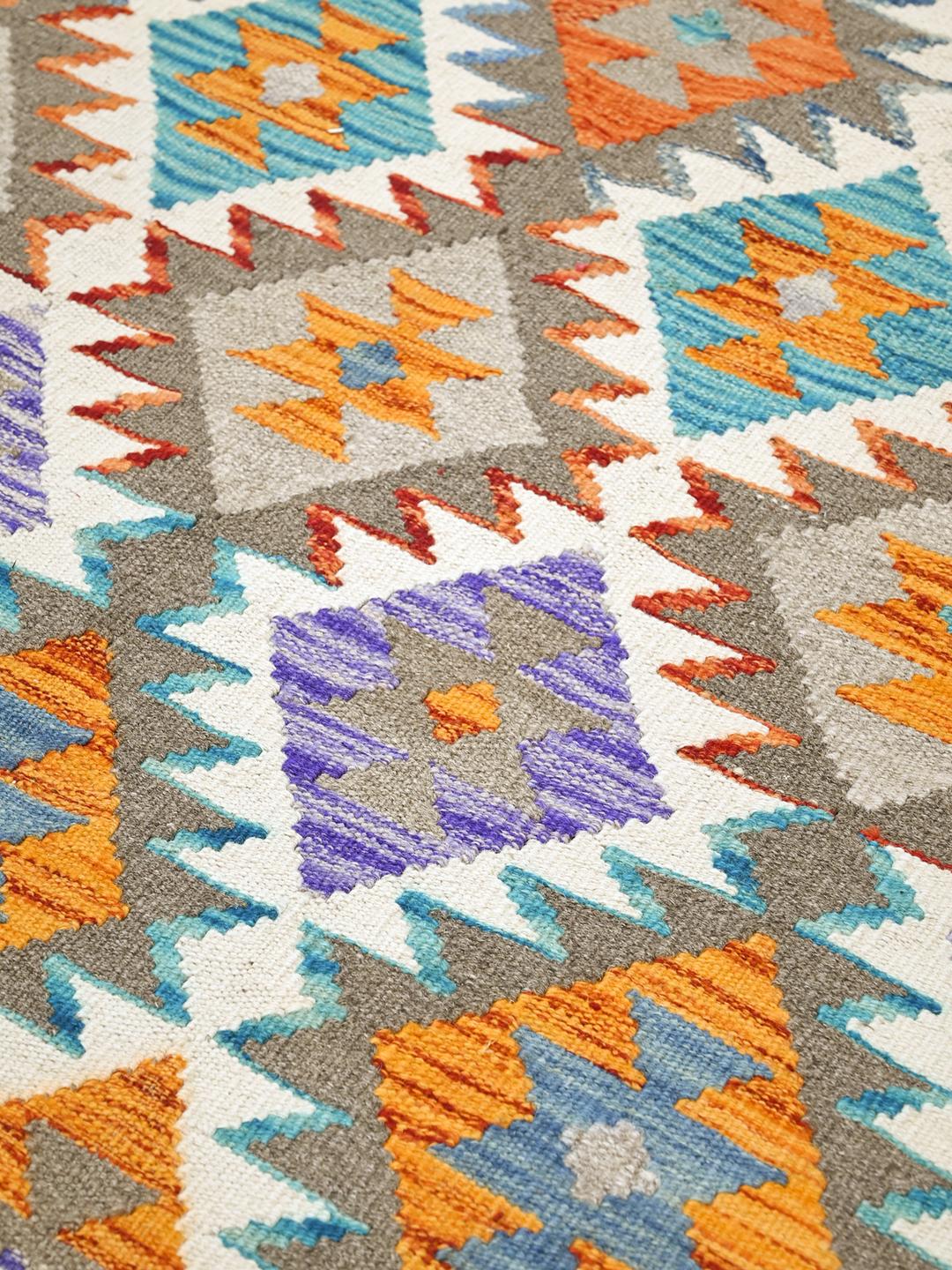
The design of this particular rug is defined by the bold, repeating diamond motifs that are central to the visual language of Afghan weaving. These shapes are often symbolic, representing protection or prosperity within the tribe, and are framed by decorative borders that anchor the composition. The use of vibrant, natural-looking colours is a hallmark of the Afghan style, reflecting a long-standing tradition of using local wool and traditional dye practices to achieve deep, lasting hues.
Collecting a Kelim rug is an opportunity to own a tangible piece of history that continues the legacy of ancient craft. These rugs are valued not only for their aesthetic beauty but for the immense skill required to produce them, with each piece serving as a record of the weaver's personal style and technical mastery. Owning one is a way to celebrate human ingenuity and to keep alive a tradition of artistry that remains as relevant today as it was centuries ago.