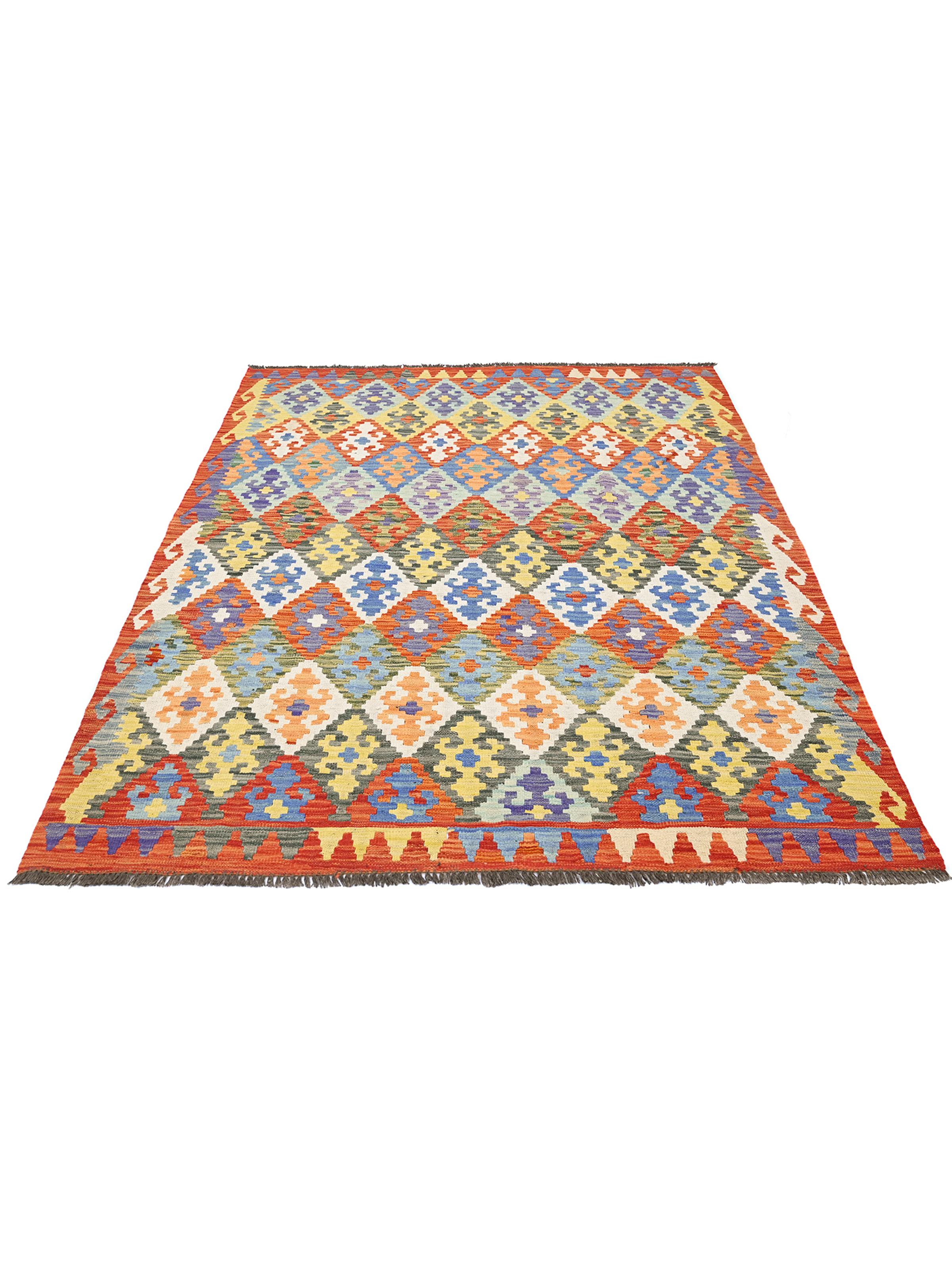
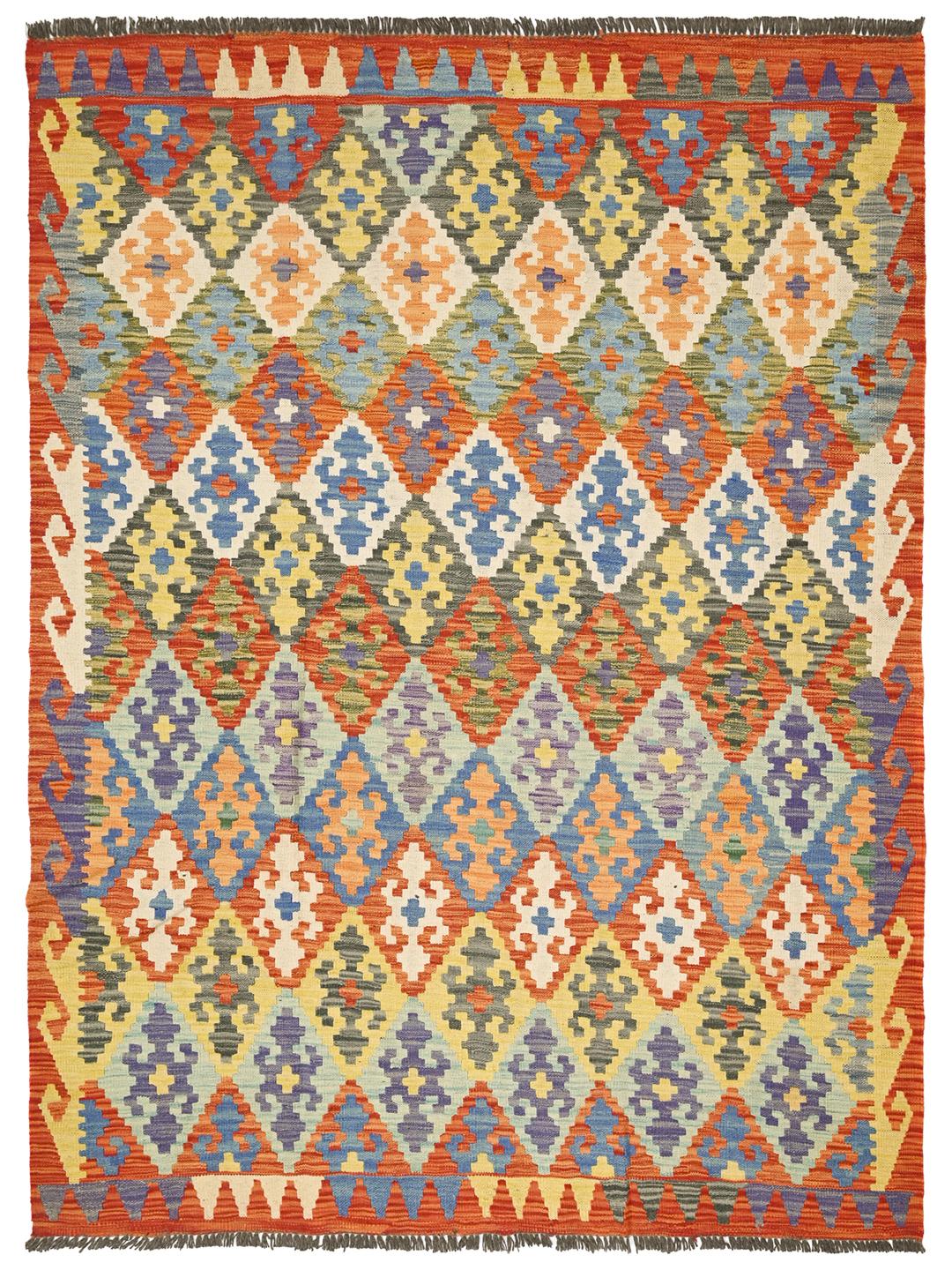
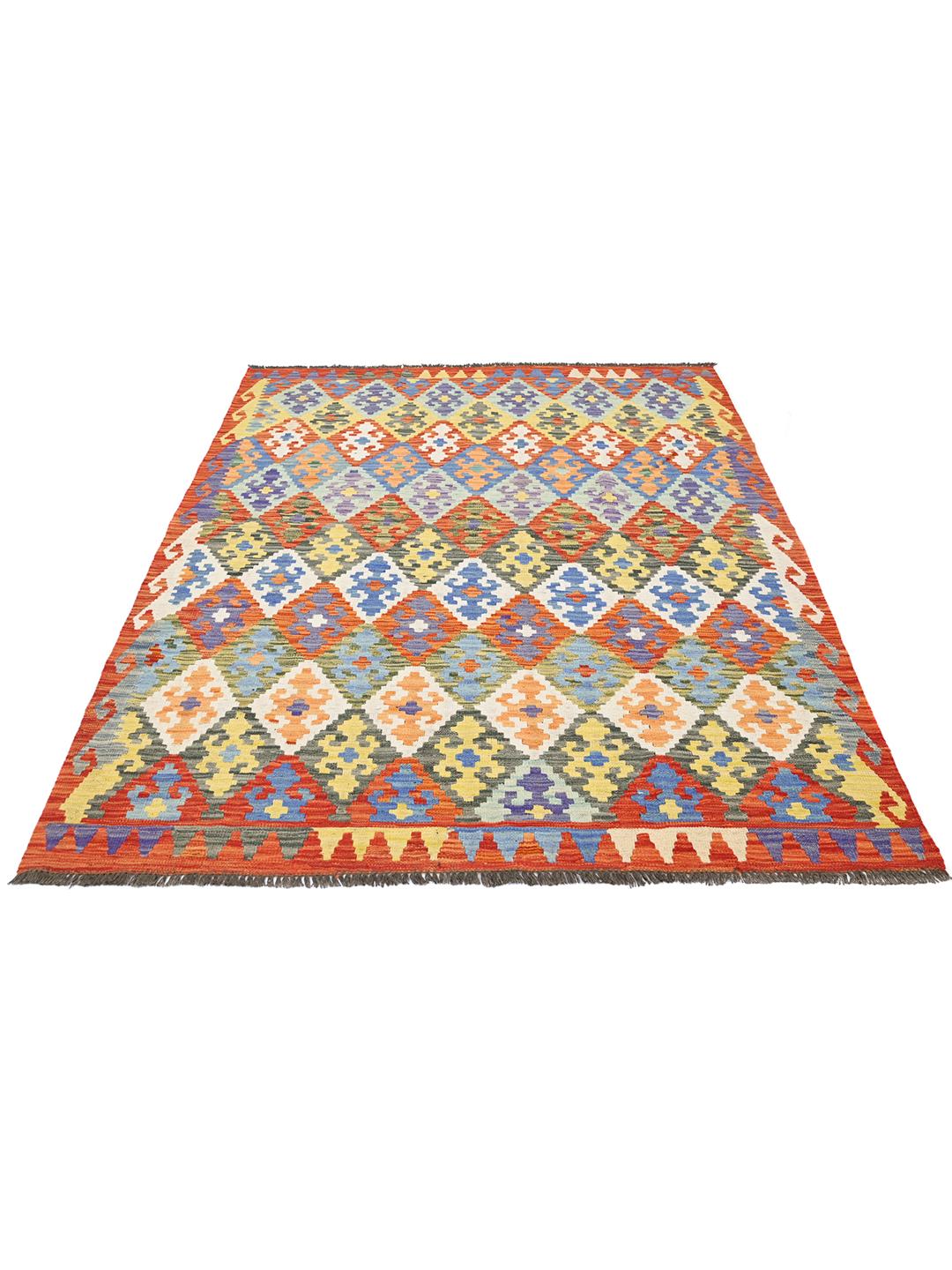
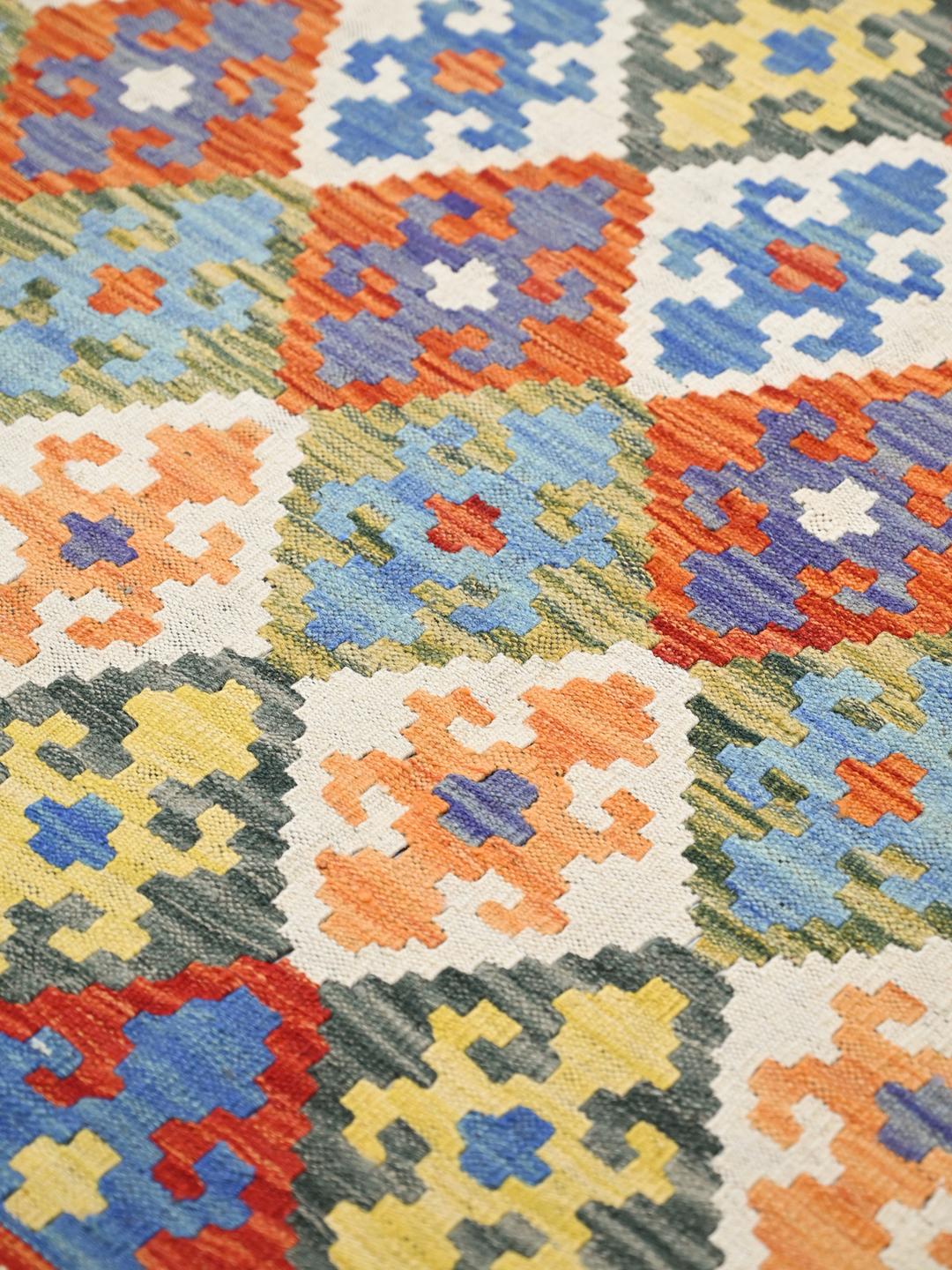
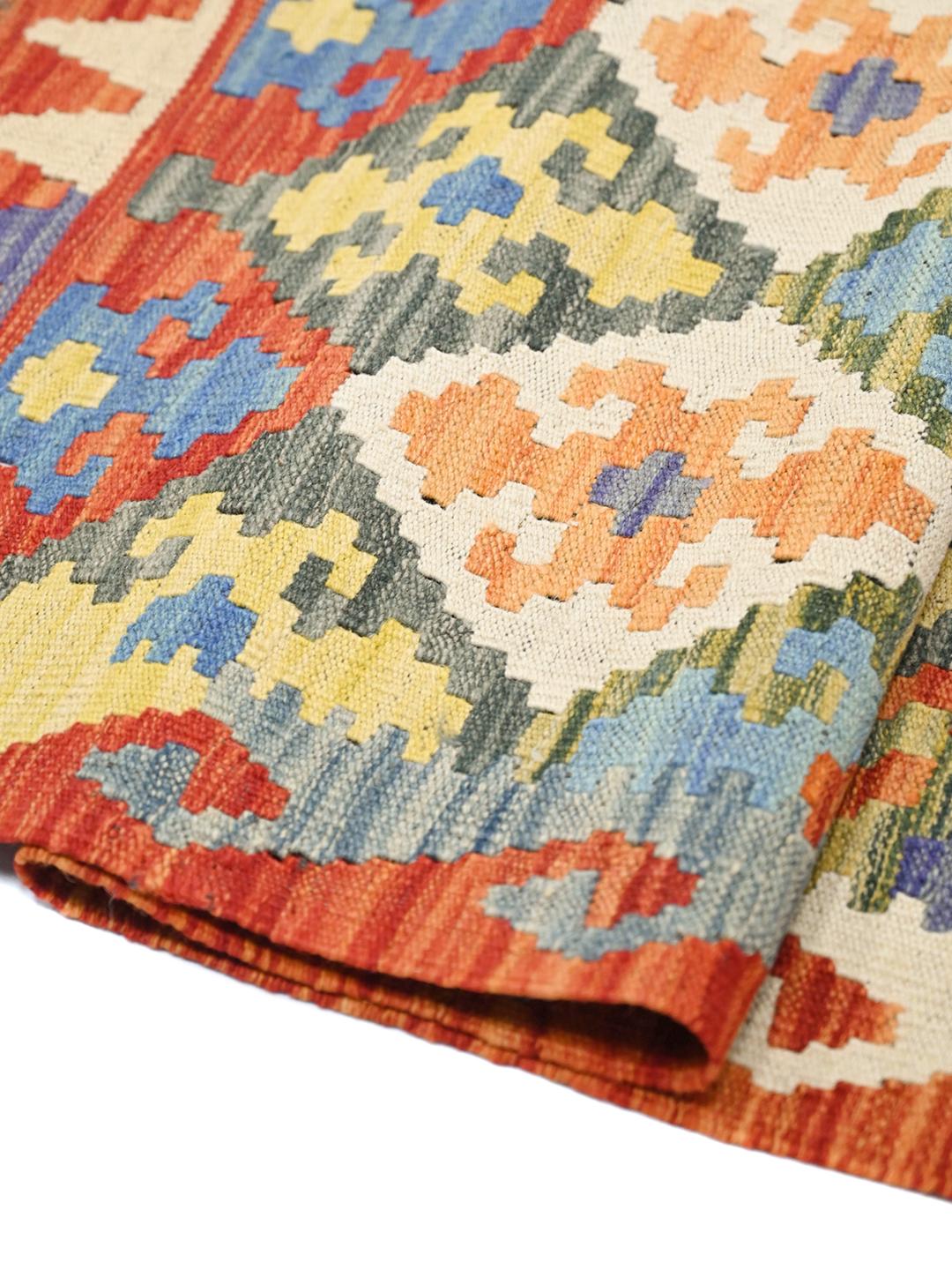
Kelim rugs have a long and storied history across the Middle East, originating from nomadic tribes who needed durable yet portable textiles for their daily lives. The term Kelim refers to a flat-weaving technique that eschews a traditional pile, resulting in a lightweight, reversible rug that has remained a staple of regional interior design for centuries.
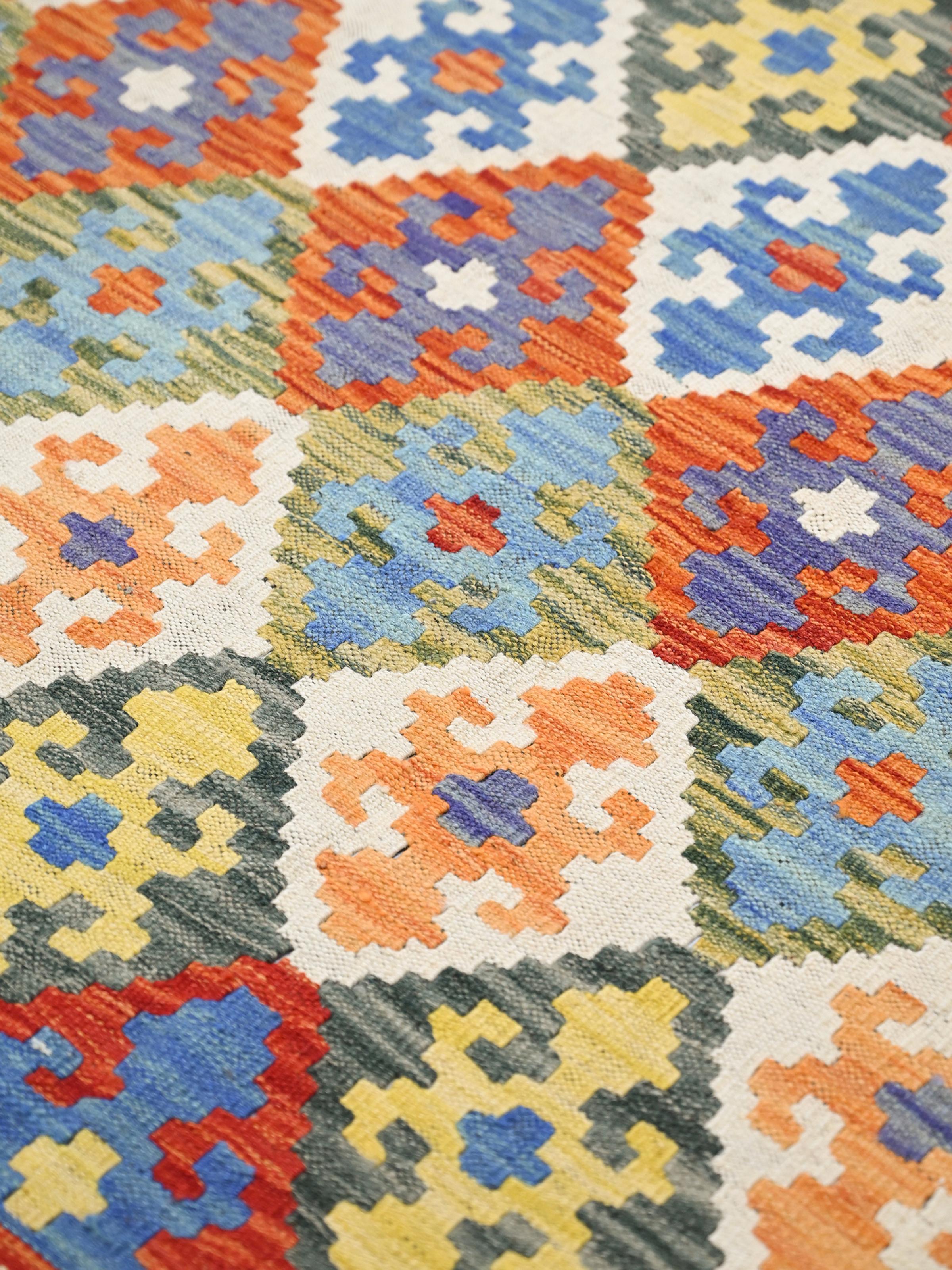
The craftsmanship behind these rugs is defined by the way the warp and weft are interwoven. Unlike knotted rugs, the design is created by the actual structural threads, which requires immense foresight and planning from the weaver. This technique produces a distinct, clean aesthetic where the pattern is mirrored on both sides, a hallmark of traditional, high-quality flat-weave production.
The visual language of this tradition is rooted in geometric symbolism, with each motif often representing protective charms, local flora, or tribal identity. The use of vibrant, contrasting colours is a nod to the natural dyes historically used by nomadic weavers, who sourced materials from local plants and minerals to create the rich, earthy tones that make these rugs so visually compelling.
Collecting a Kelim is an opportunity to preserve a living craft that connects the modern home to ancient nomadic roots. Each rug acts as a chronicle of the weaver's skill, offering a sense of heritage and authenticity that mass-produced items simply cannot replicate. By choosing this piece, you are supporting a tradition that values human ingenuity and the enduring beauty of natural materials.