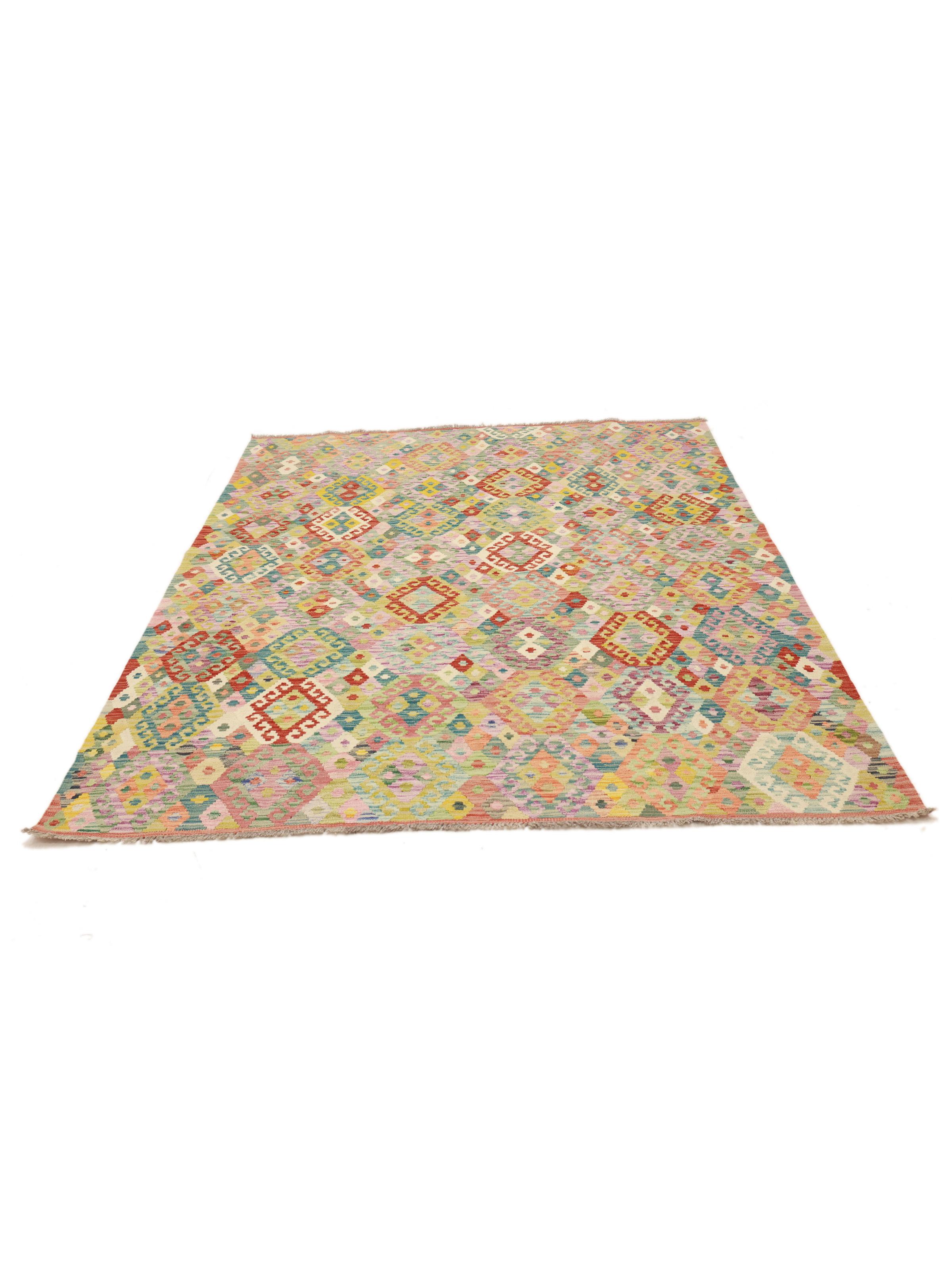
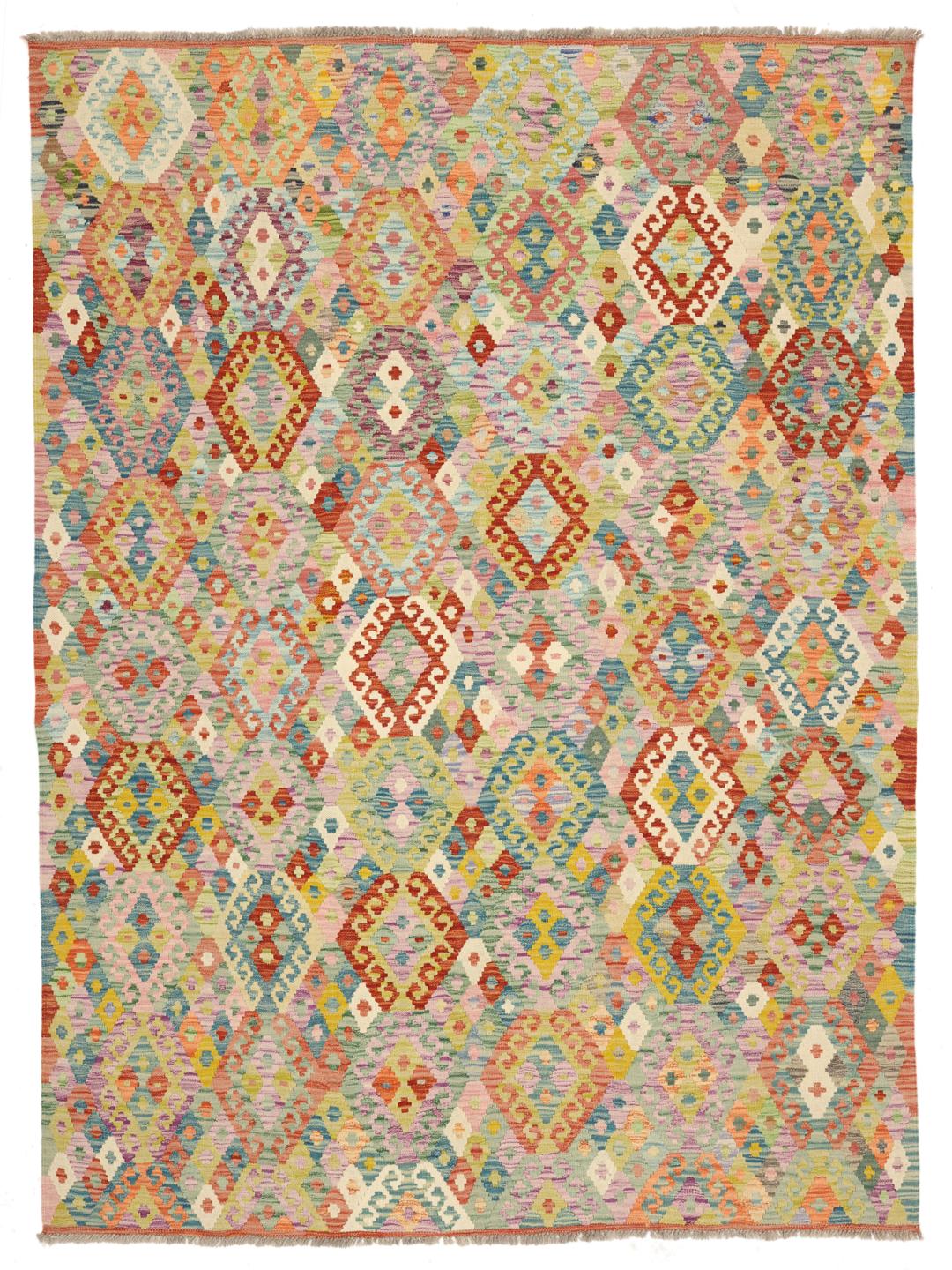
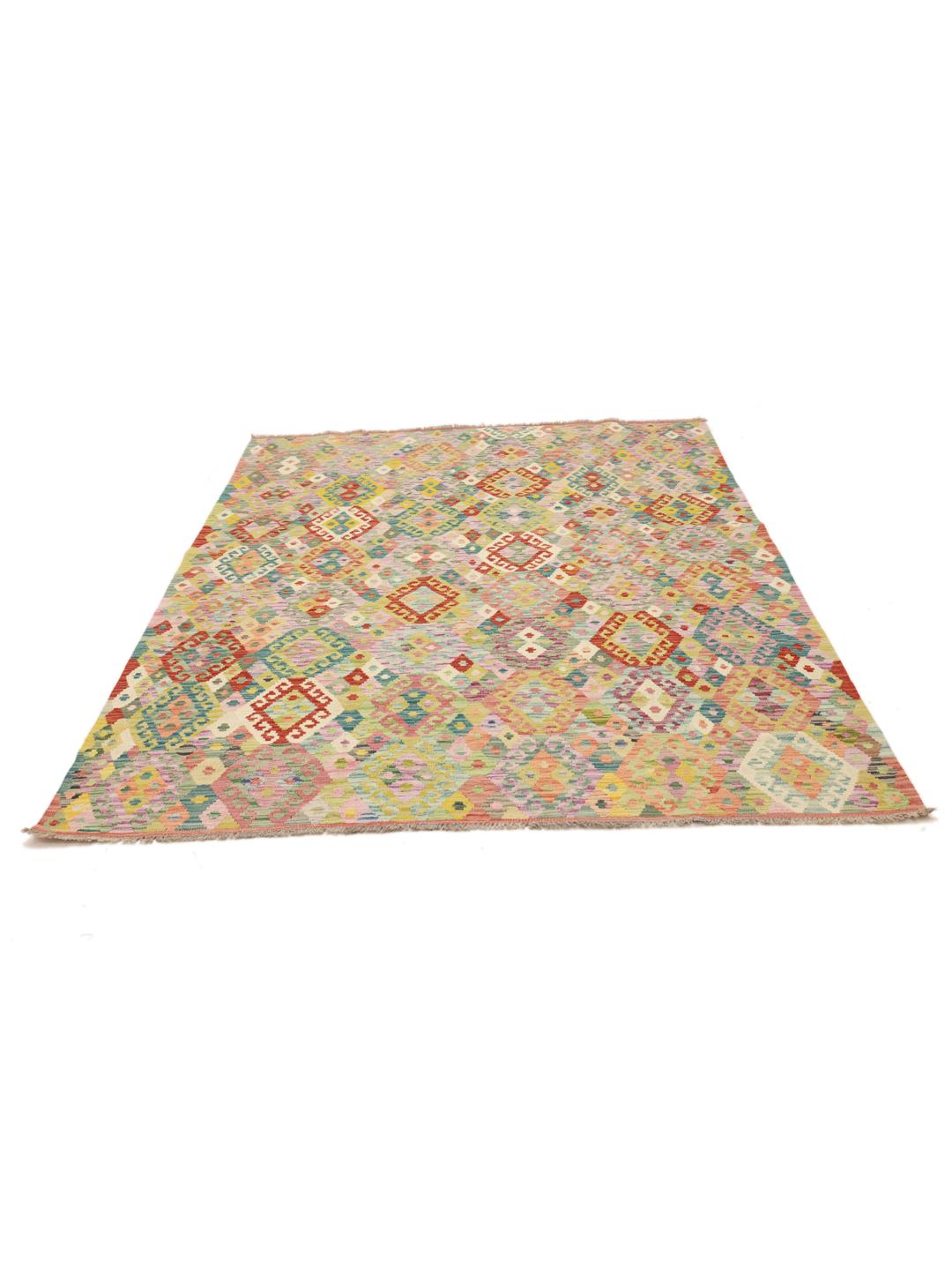
The Kelim tradition in Afghanistan is deeply rooted in the nomadic lifestyle of the region, where rugs served as essential, portable items for daily survival and comfort. These flat-weave rugs were traditionally crafted by tribal artisans who used local Wool to create functional masterpieces that could serve as floor coverings, blankets, or even storage sacks. Over generations, these designs have evolved to reflect the cultural identity and environmental surroundings of the weaving communities.
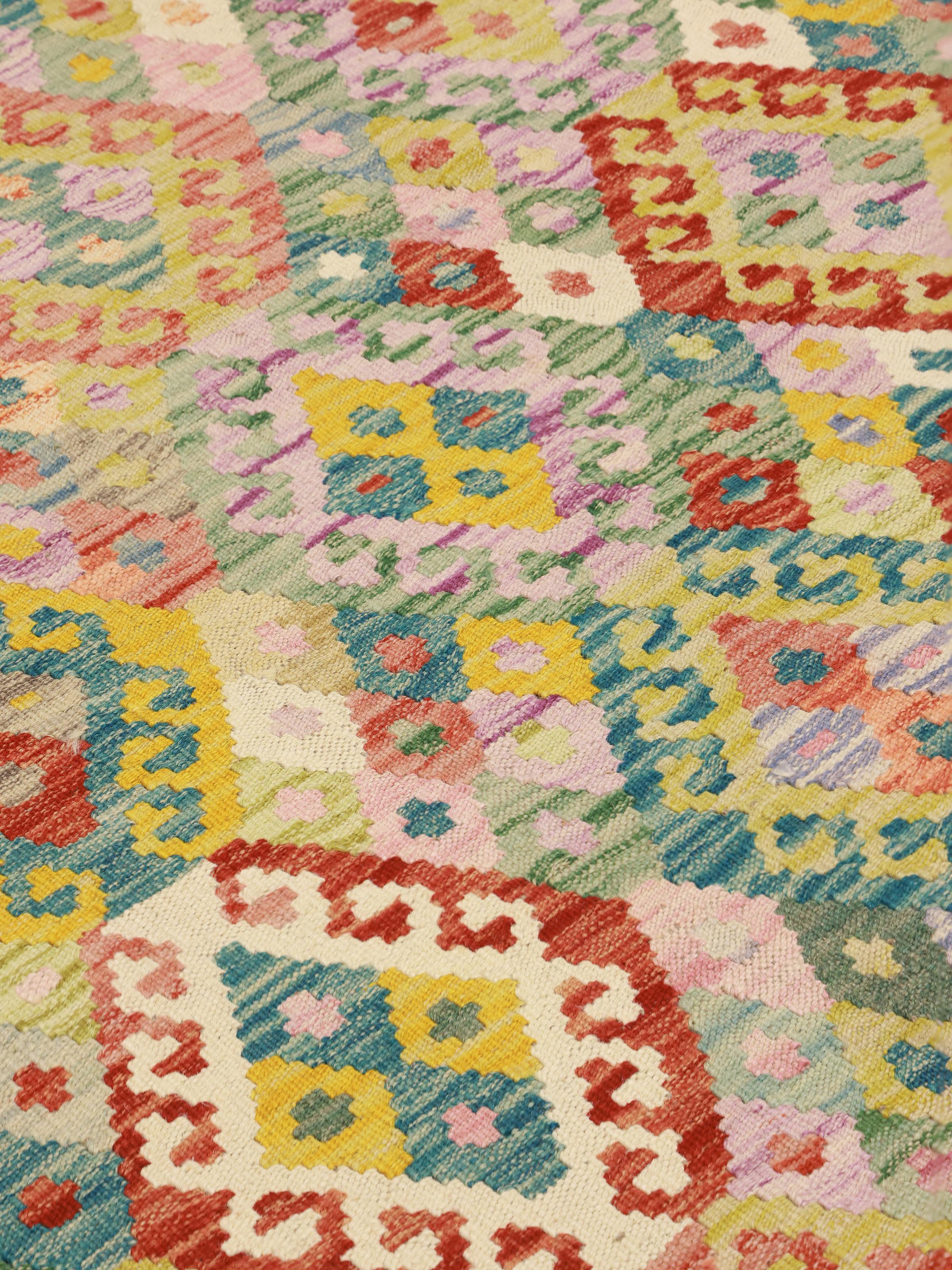
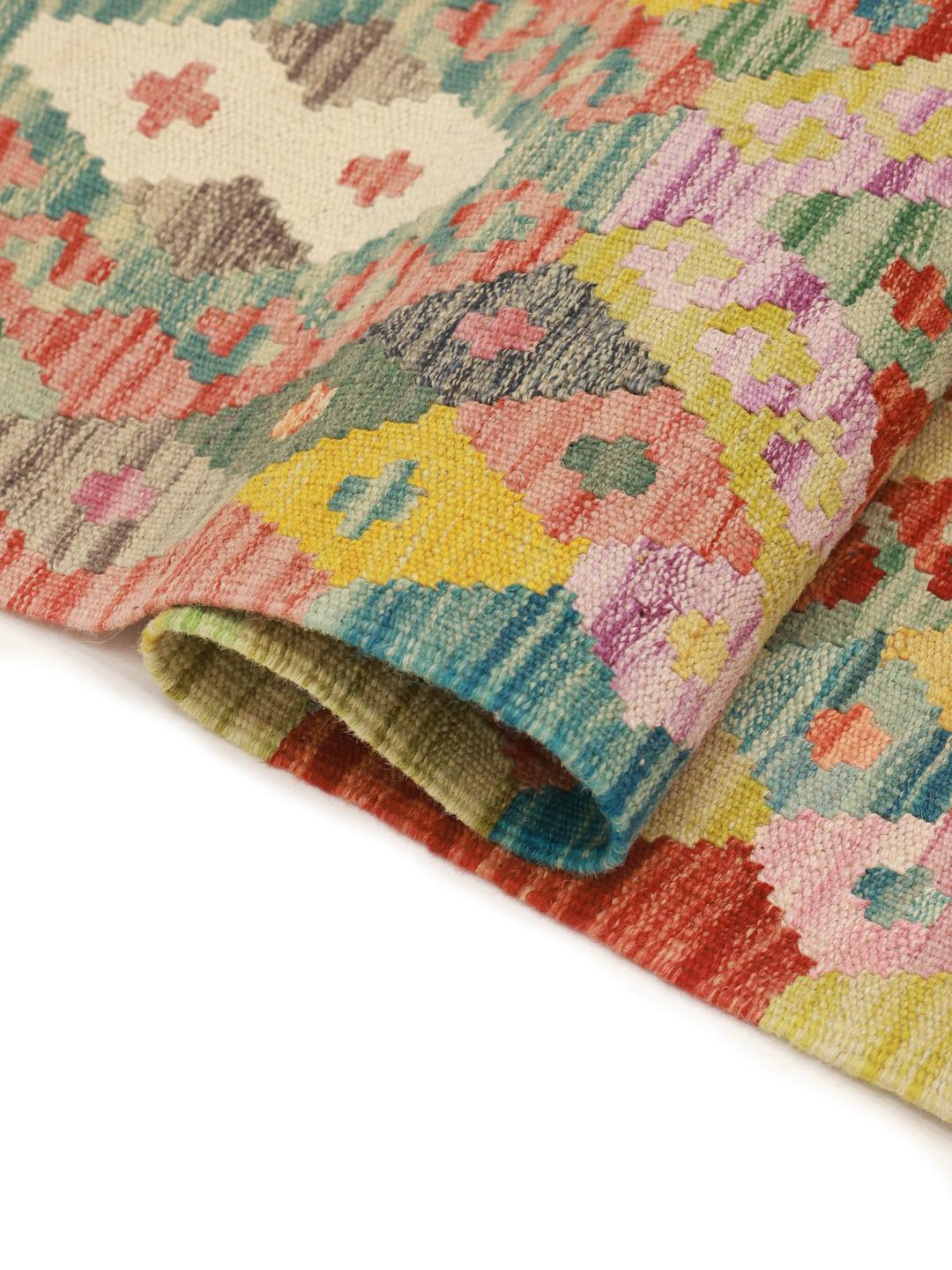
The term 'Kelim' refers specifically to the tapestry-weave technique, which lacks a pile. This construction method involves weaving the coloured weft strands through the warp, creating a smooth, durable surface on both sides. This technique is highly prized for its versatility and the clarity it brings to geometric motifs, as the lack of pile allows for sharp, crisp lines that are difficult to achieve with other weaving styles.
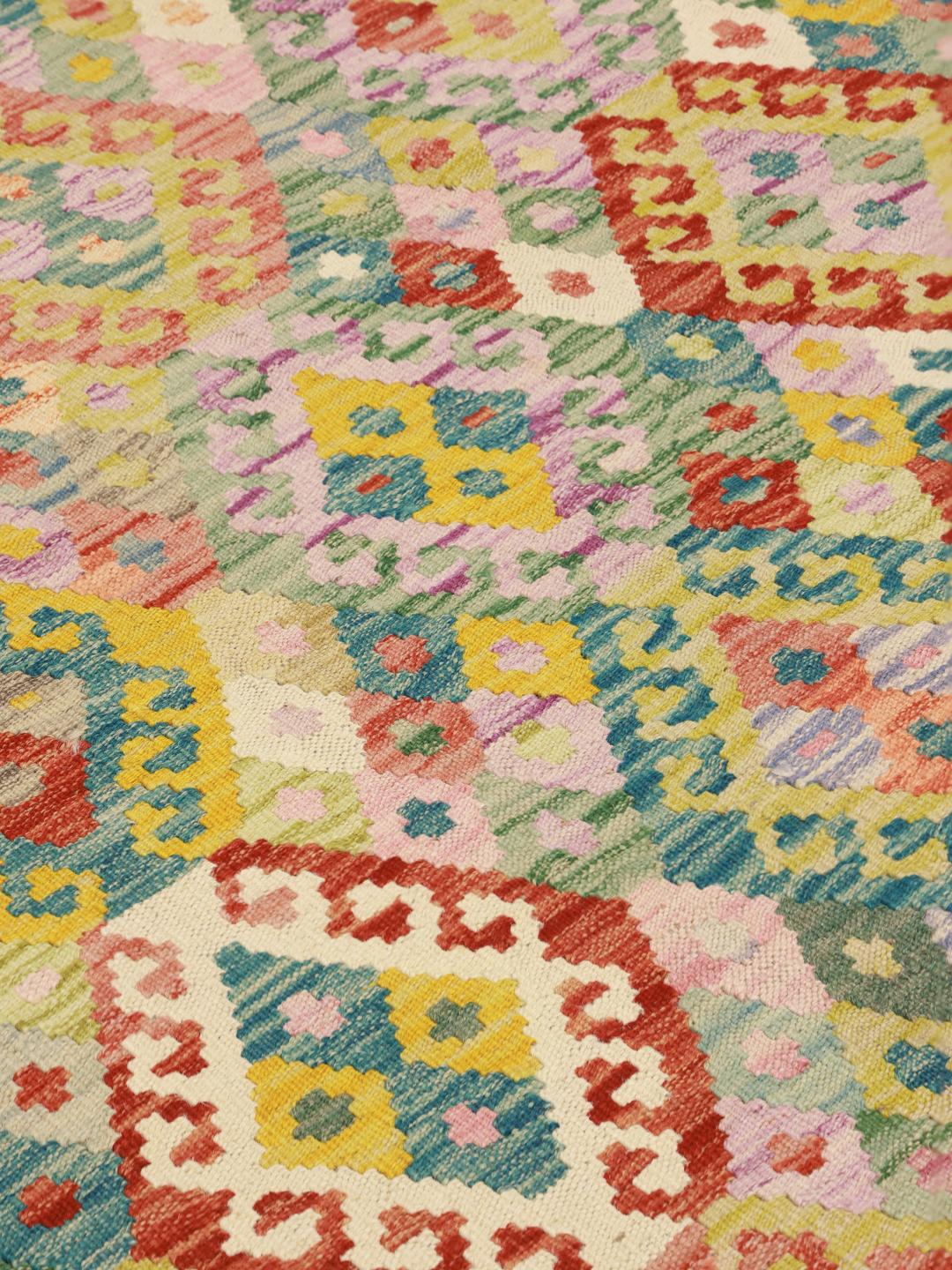
Visually, these rugs are defined by their bold geometric language. The recurring diamond and medallion motifs seen here are classic elements of the Afghan tradition, often representing protection, fertility, or the natural world. The use of vibrant, contrasting colours is a hallmark of the Old Style, reflecting the rich, natural dyes historically sourced from local plants and minerals found in the rugged Afghan landscape.
Collecting an Afghan Kelim is more than just a decor choice; it is an act of preserving a dying art form. These rugs are valued not only for their beauty but for the stories they carry from the remote villages where they are produced. Owning one allows you to participate in a global tradition that celebrates human skill, cultural heritage, and the enduring quality of natural materials.