Kelim rugs have long been a cornerstone of nomadic and village life across the Middle East and Central Asia. Originally designed as functional items for tents and homes, these flat-woven textiles were prized for their portability, durability, and versatility. The Afghan Kelim tradition specifically carries forward centuries of knowledge, with styles evolving to incorporate local aesthetic preferences while maintaining the foundational techniques passed down through generations of weavers.
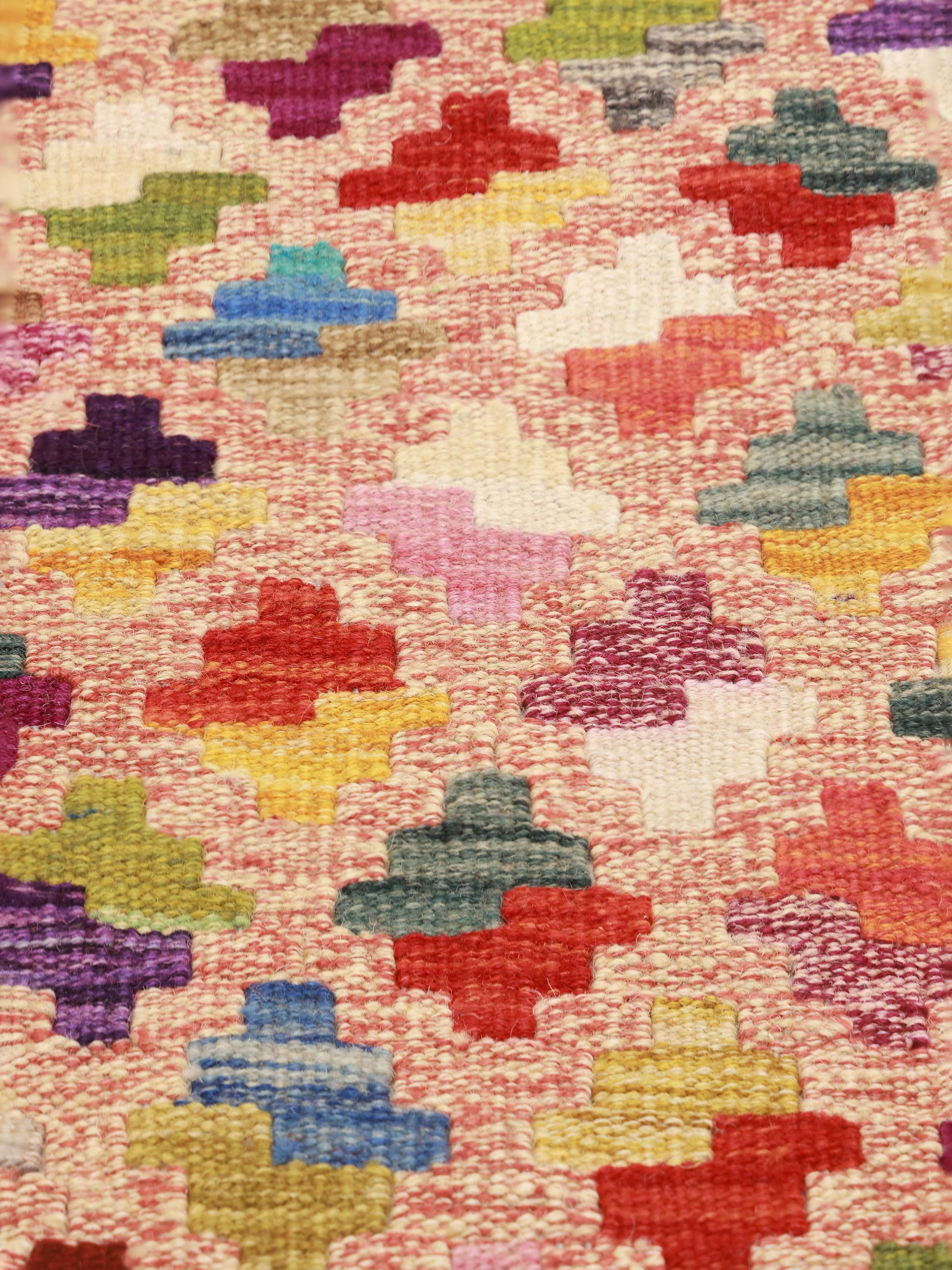
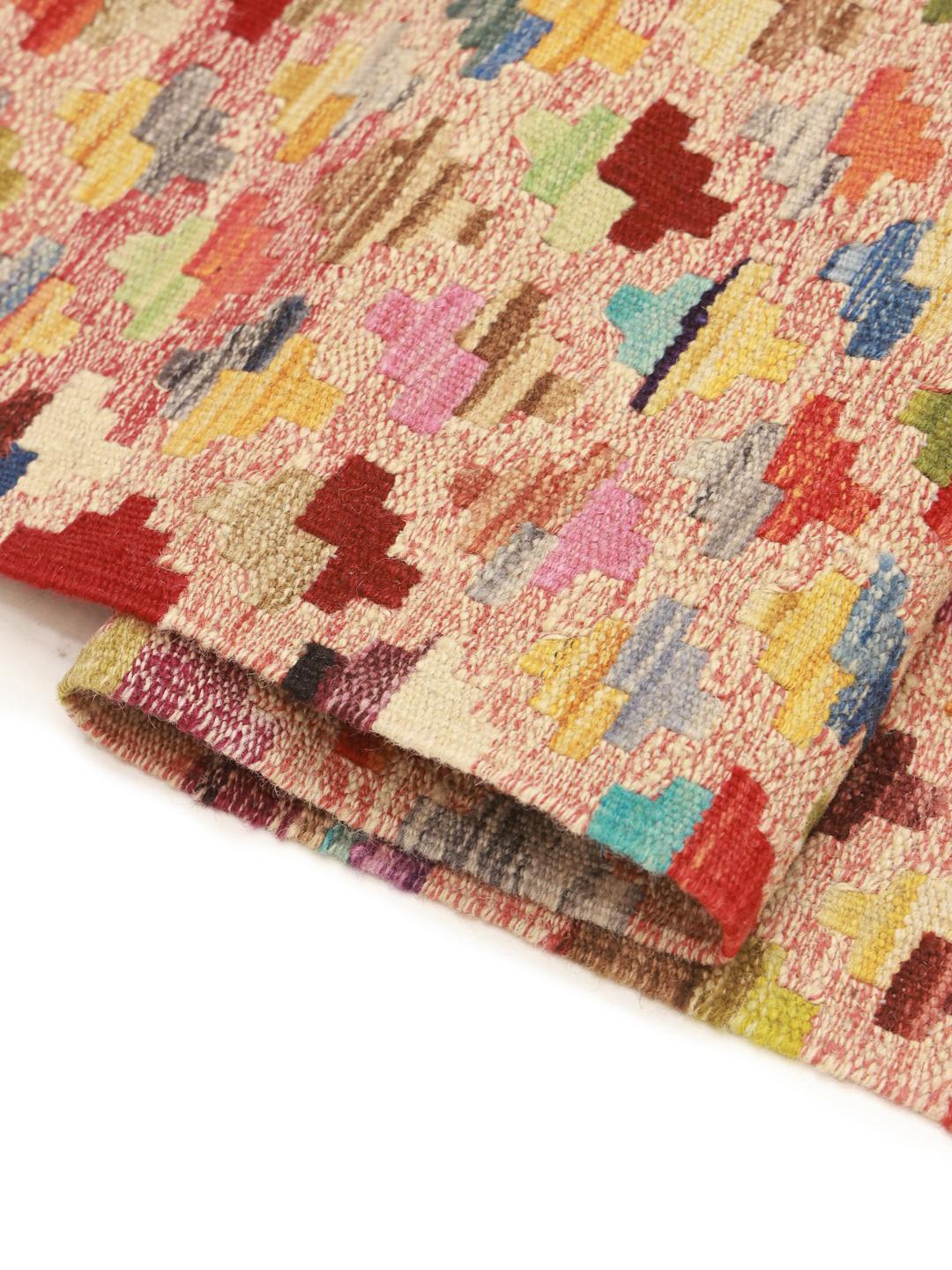
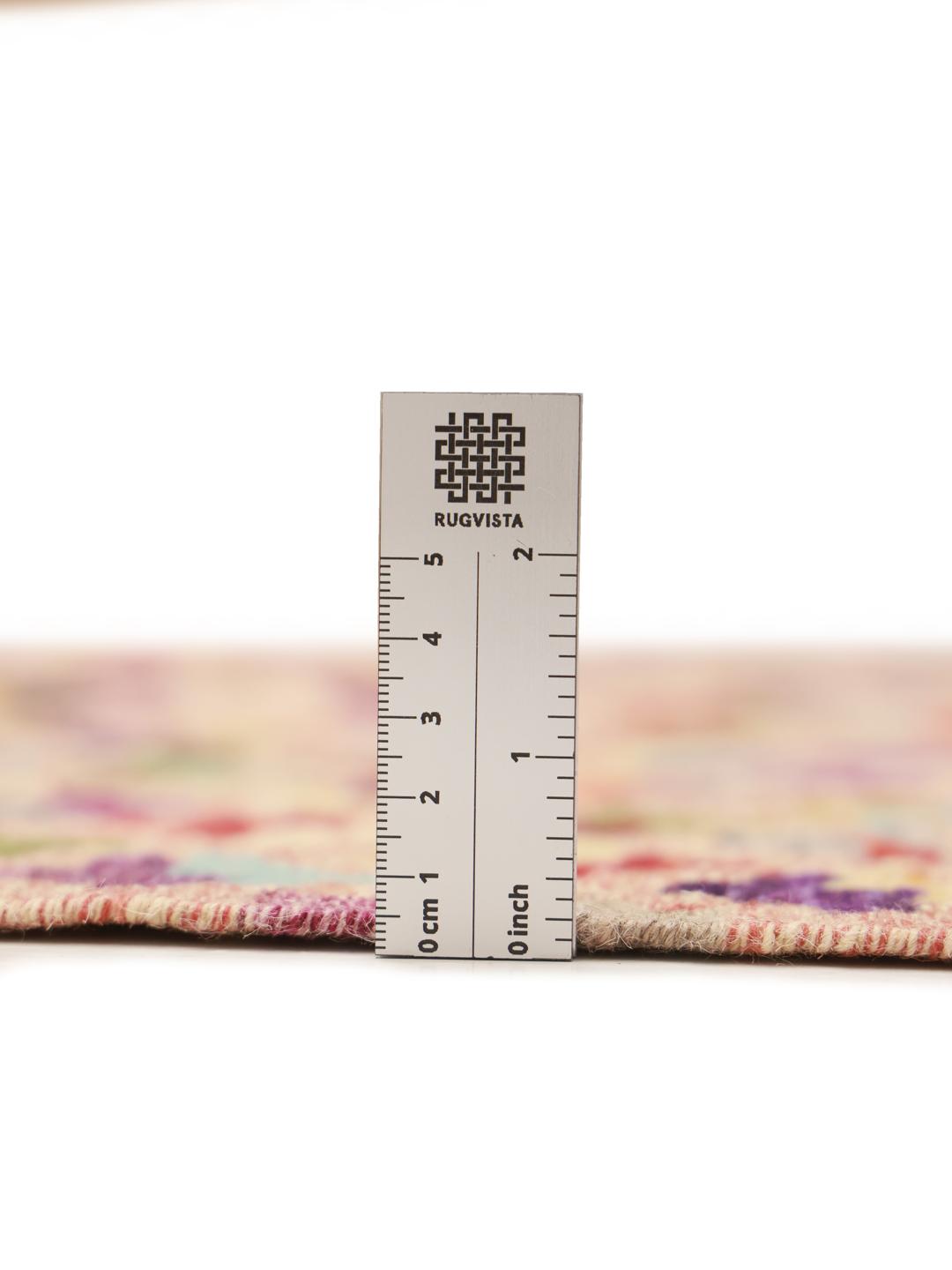
The term Kelim refers to the specific flat-weaving technique where the weft threads are passed through the warp threads to create the pattern, leaving no pile. This method is technically demanding because the weaver must manage each colour change with precision to avoid gaps or weak points in the fabric. This results in a rug that is not only thinner than a traditional knotted pile rug but also exceptionally resilient, as the lack of pile means there is nothing to shed or wear down over time.
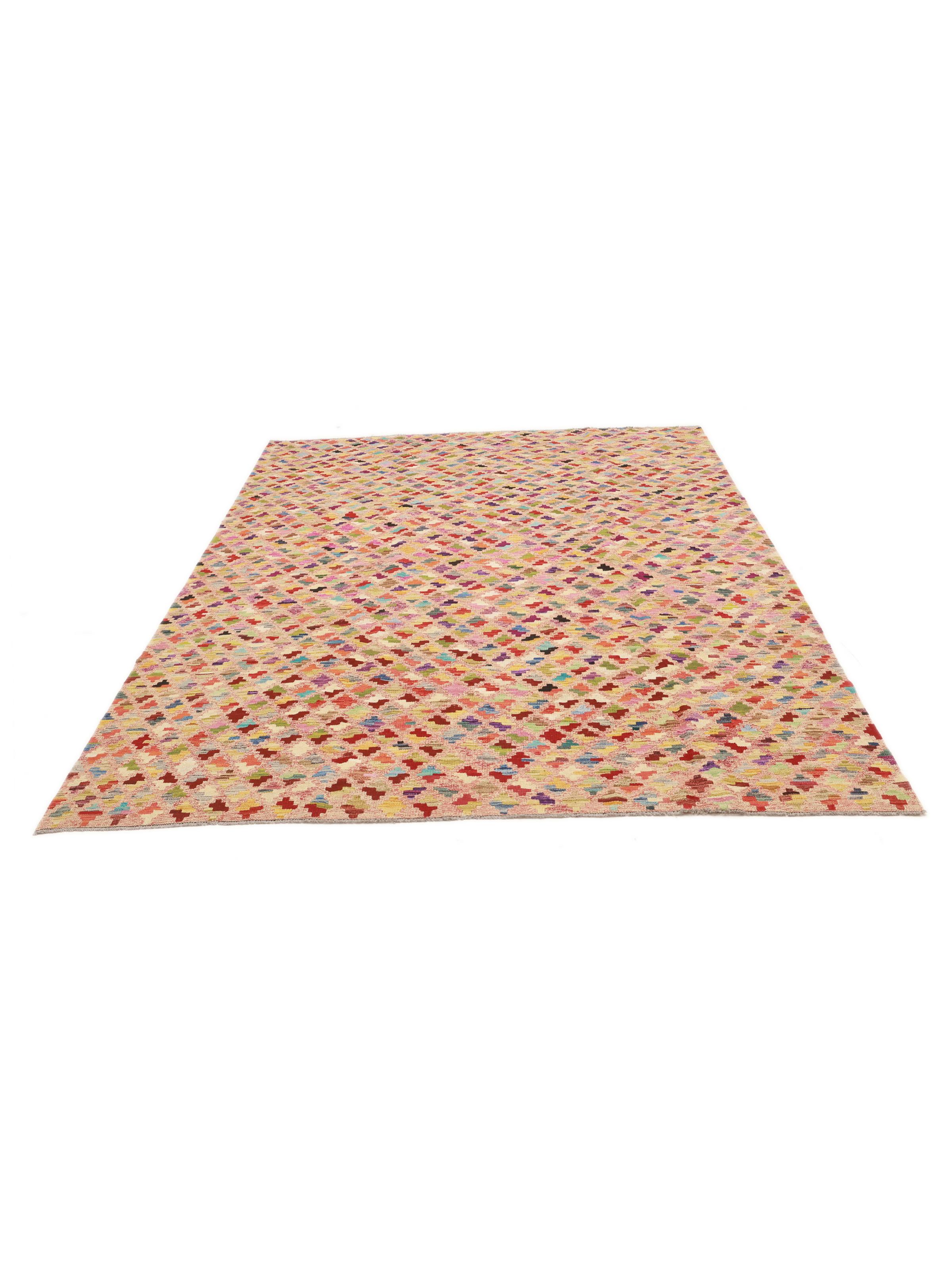
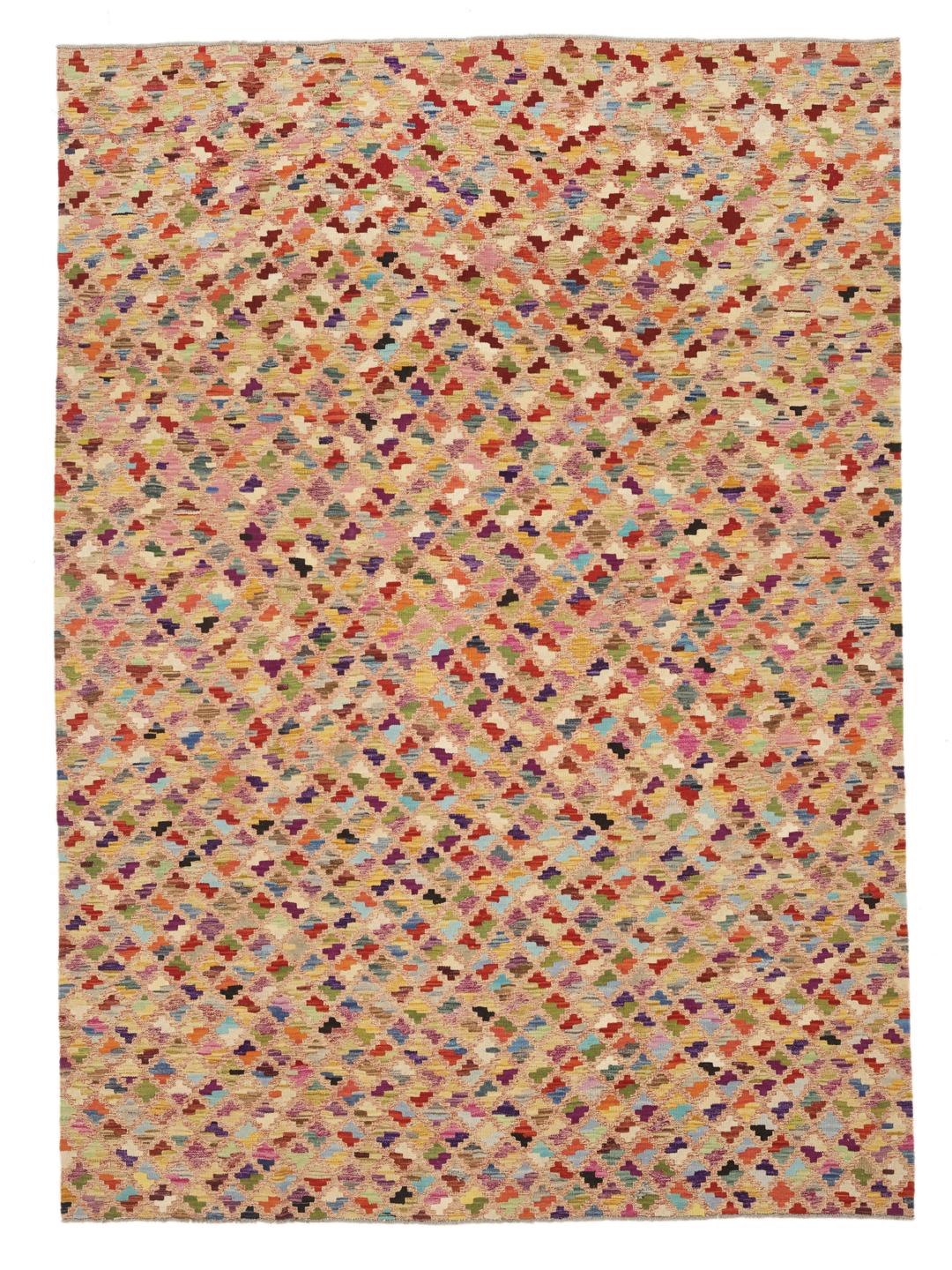
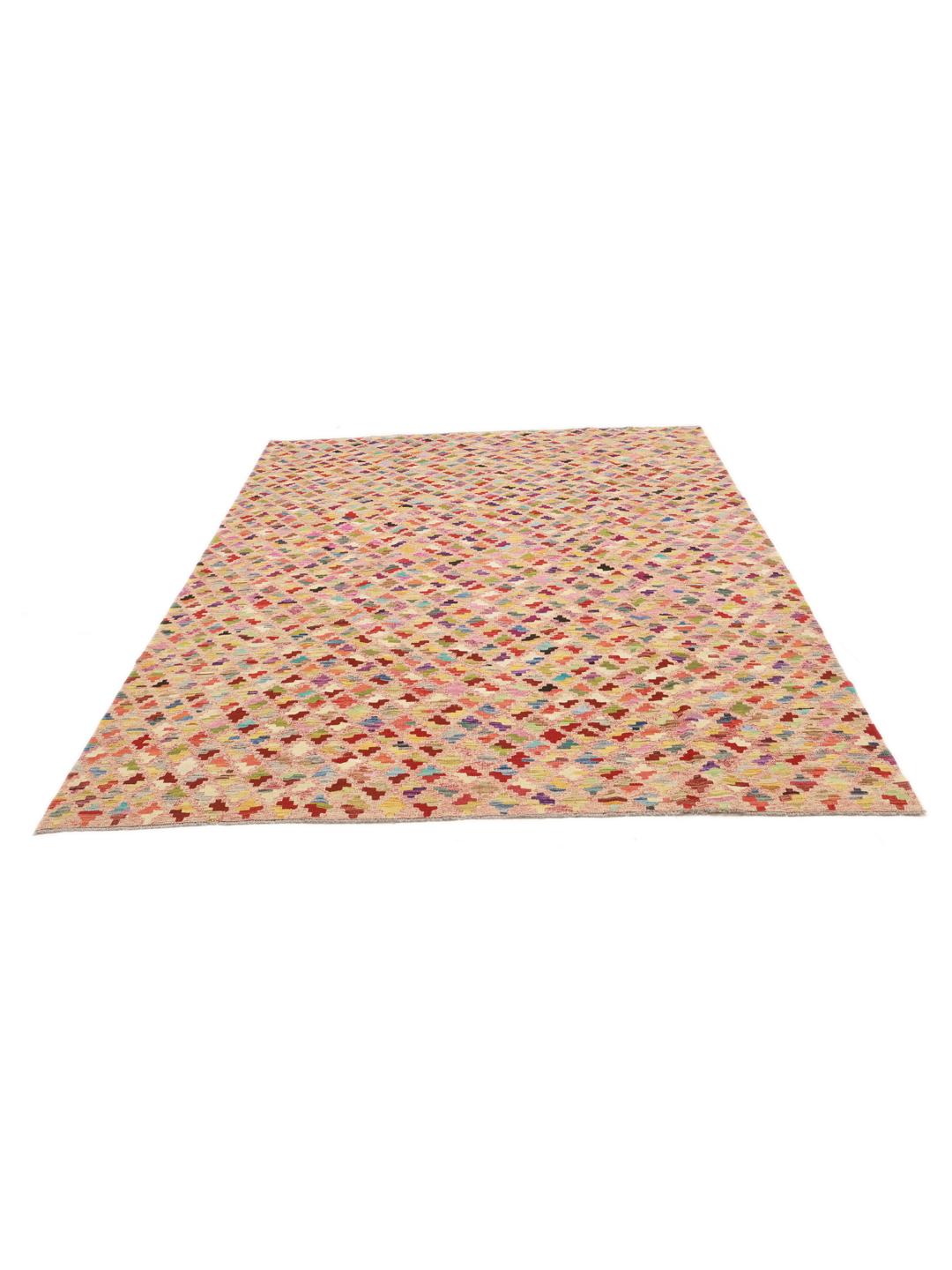
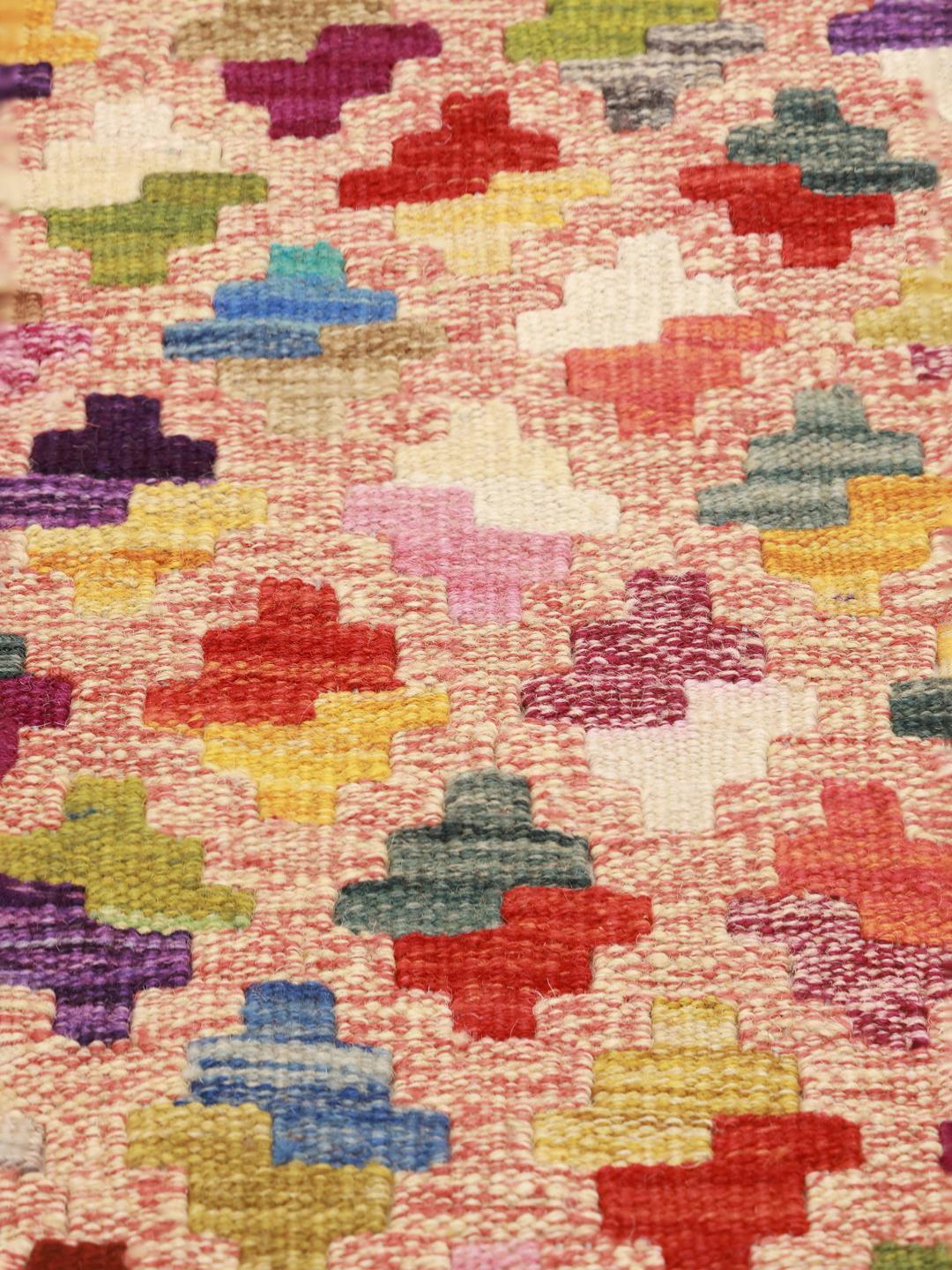
The visual language of these rugs is defined by geometric motifs and a bold use of colour. In this particular piece, the repeating shapes create a rhythmic pattern that draws the eye and provides a sense of order and balance. These motifs are often symbolic, representing the weaver's environment, their family heritage, or the surrounding landscape. The use of a light, neutral base interspersed with vibrant, contrasting colours is a hallmark of the Old Style tradition, emphasizing clarity and artistic expression.
Collecting a Kelim is an investment in human skill and cultural heritage. Because they are woven by hand without the aid of machines, each rug serves as a document of the weaver's life and the specific traditions of their region. Owning such a piece connects you to a long lineage of craft, offering a level of authenticity and character that mass-produced items simply cannot replicate. It is a functional piece of art that enriches a home with its depth and history.