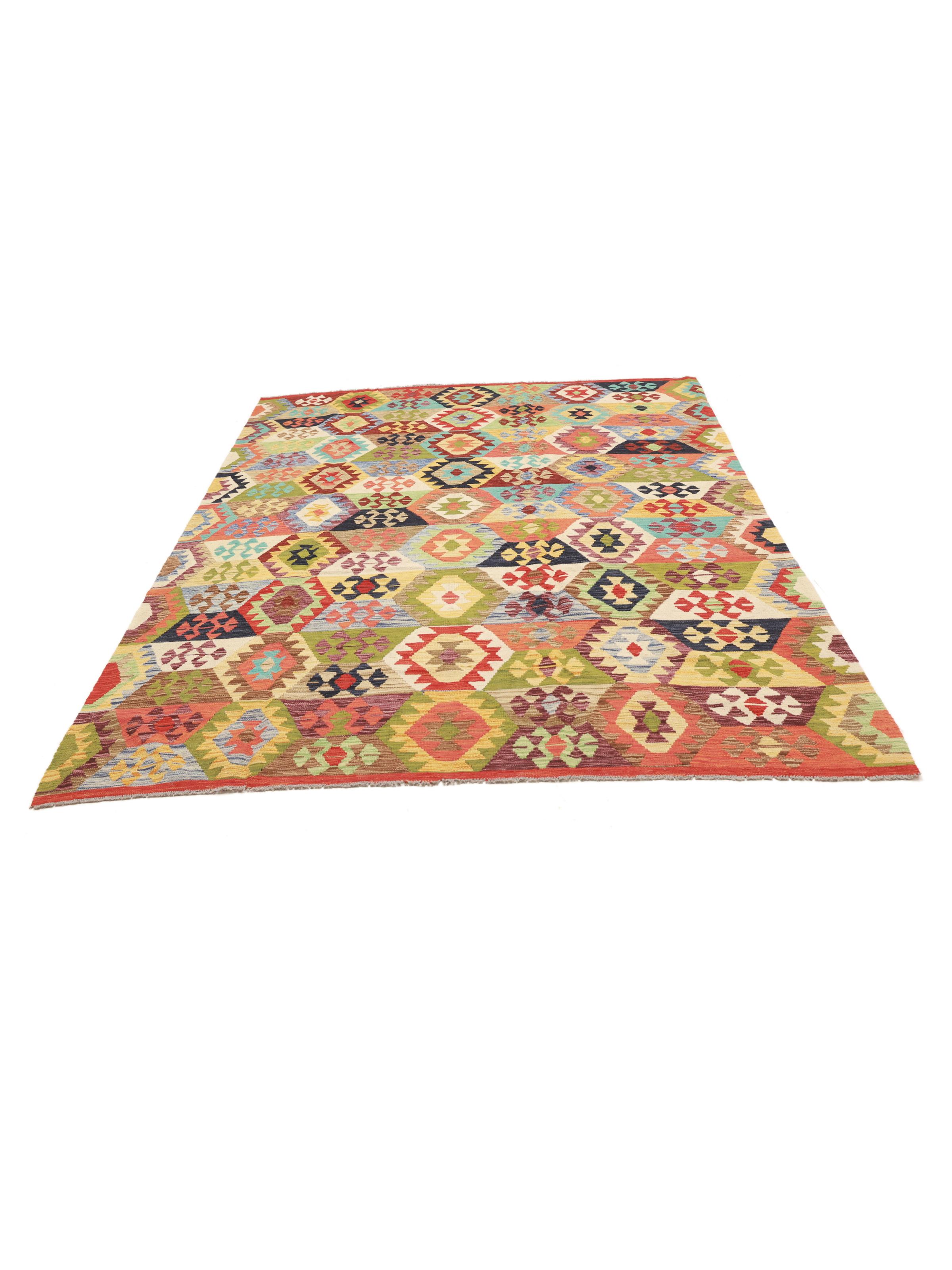
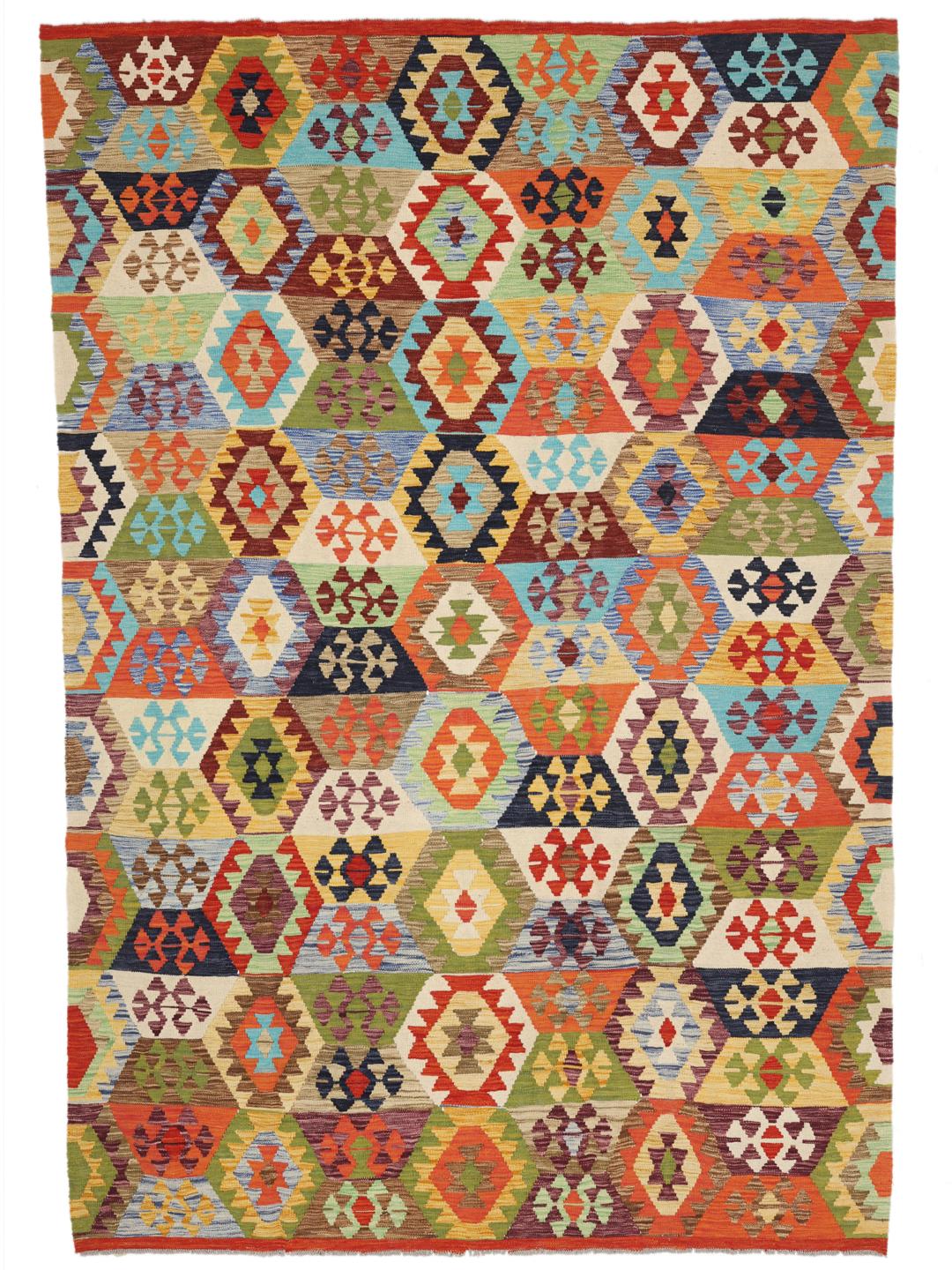
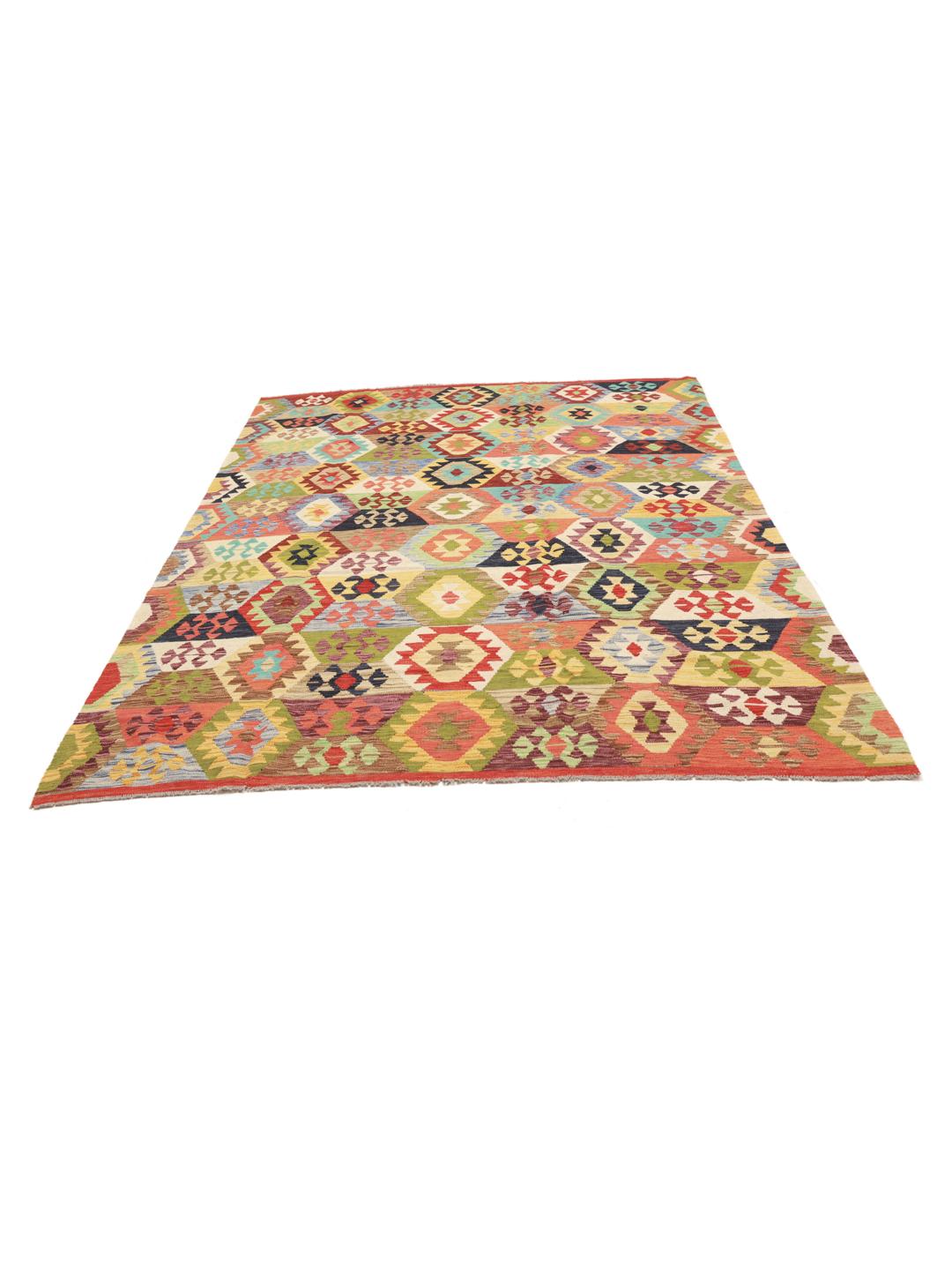
The tradition of the Afghan Kelim is deeply rooted in the nomadic lifestyle of the region, where weavers historically created portable, functional textiles for use as floor coverings, blankets, and storage sacks. These flat-woven rugs are a hallmark of Central Asian craft, reflecting the cultural heritage of tribes who have passed down their weaving techniques through generations.
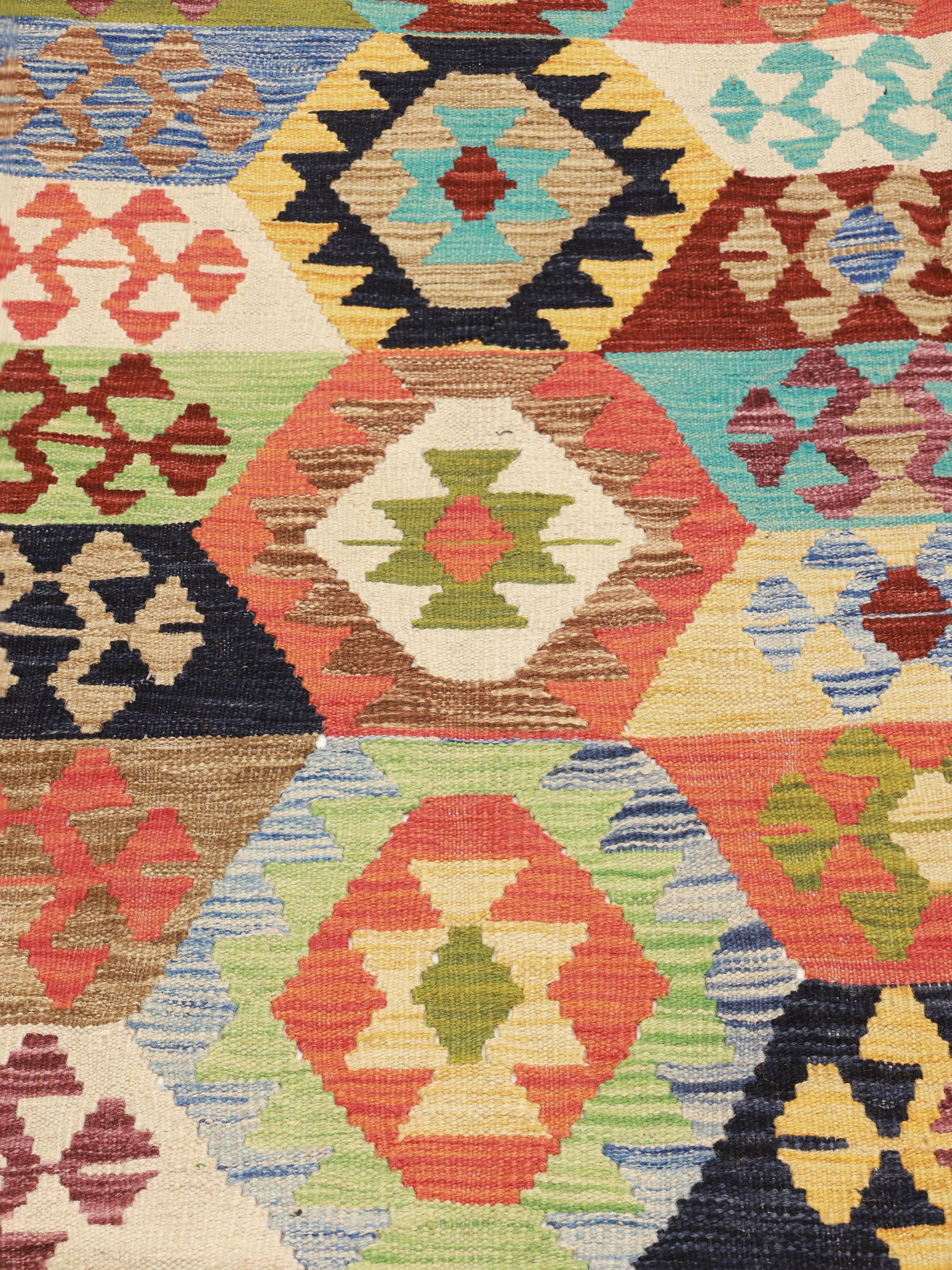
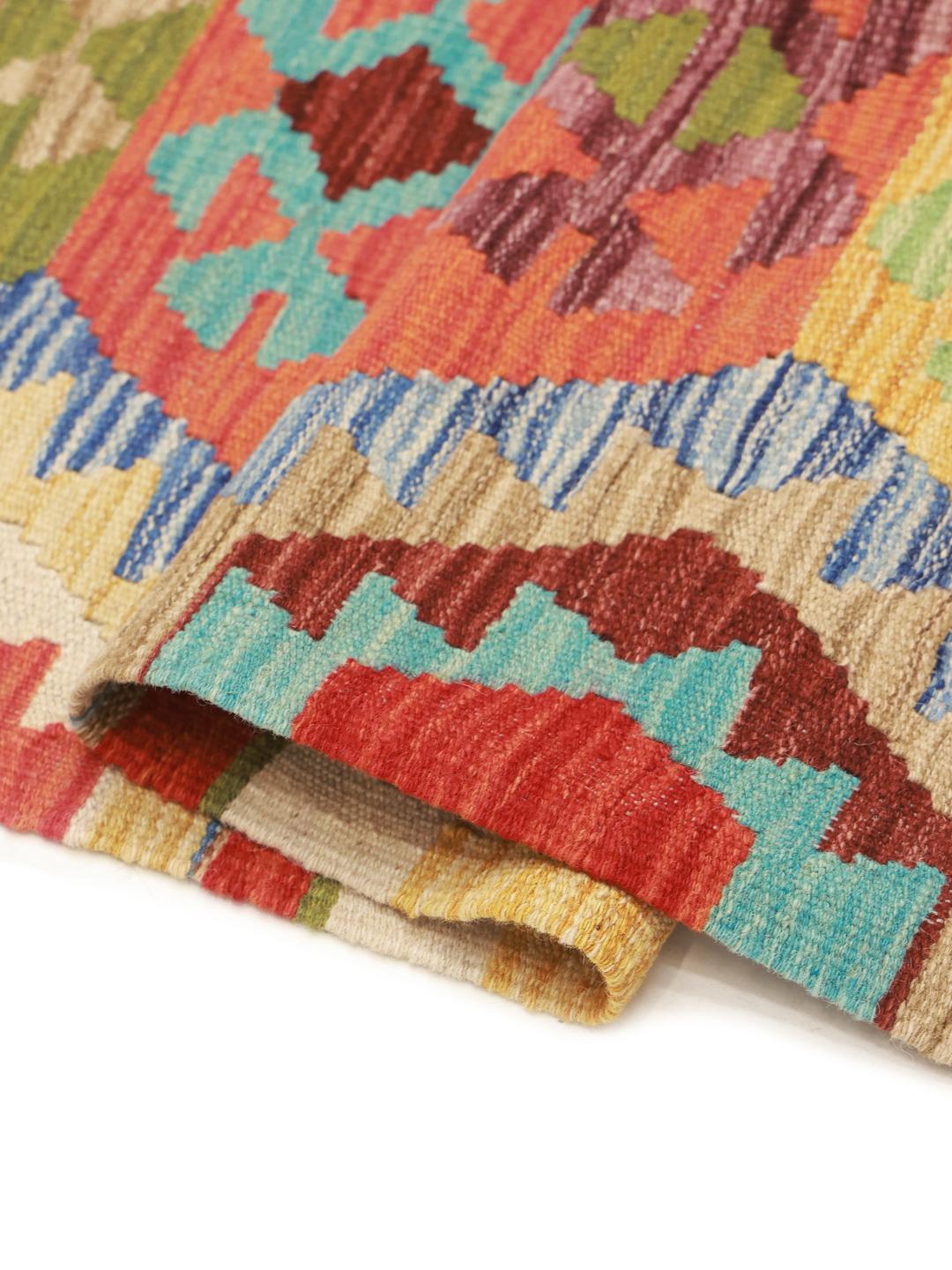
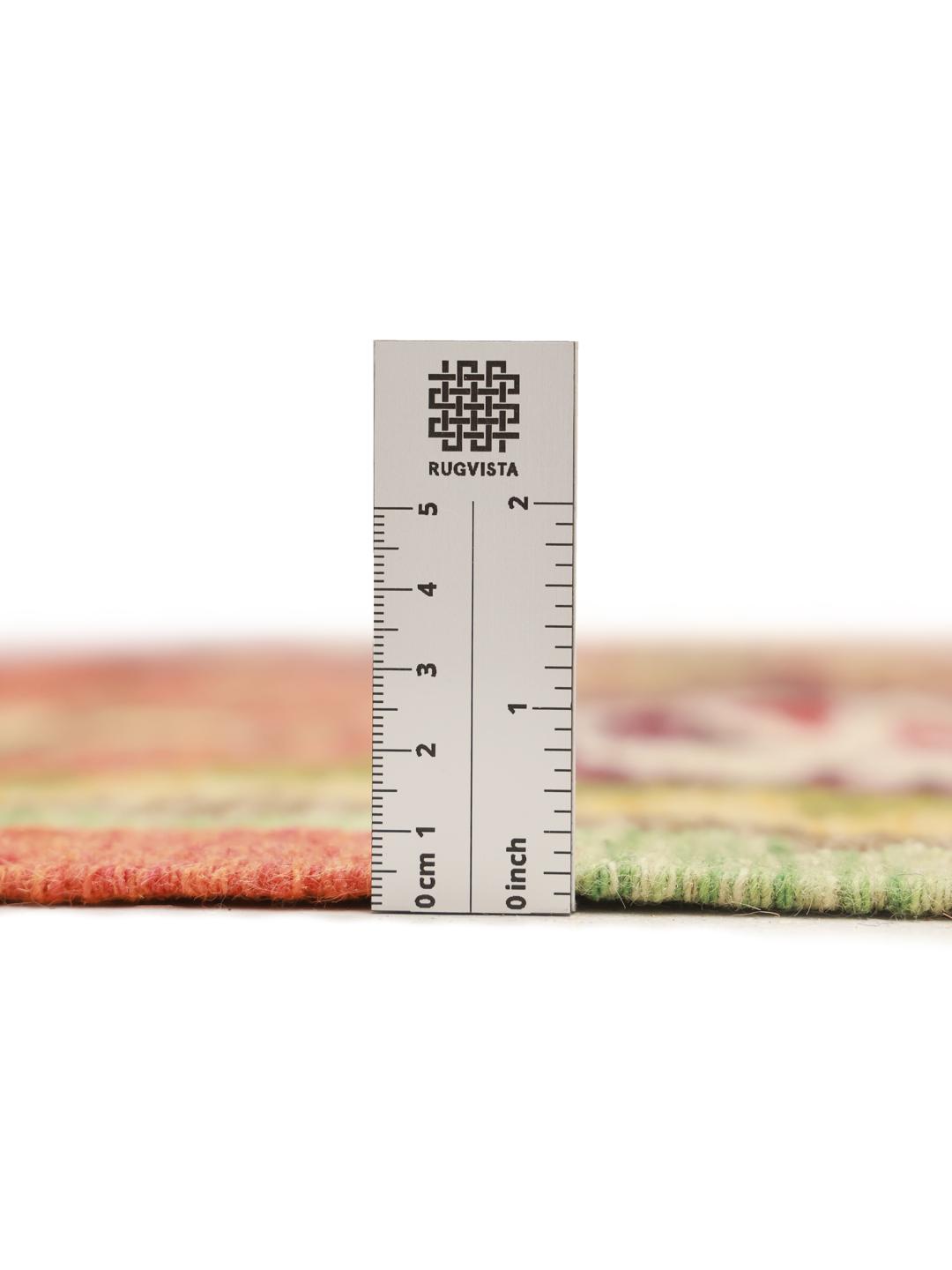
The term 'Kelim' refers to the specific flat-weave technique where the weft and warp threads are interlaced to create a pattern, resulting in a rug without a pile. This construction is highly prized for its durability and the crisp, clean definition it allows for geometric designs. Because the pattern is created by the weave itself rather than being knotted into a foundation, the resulting rug is thinner and more flexible than traditional pile rugs.
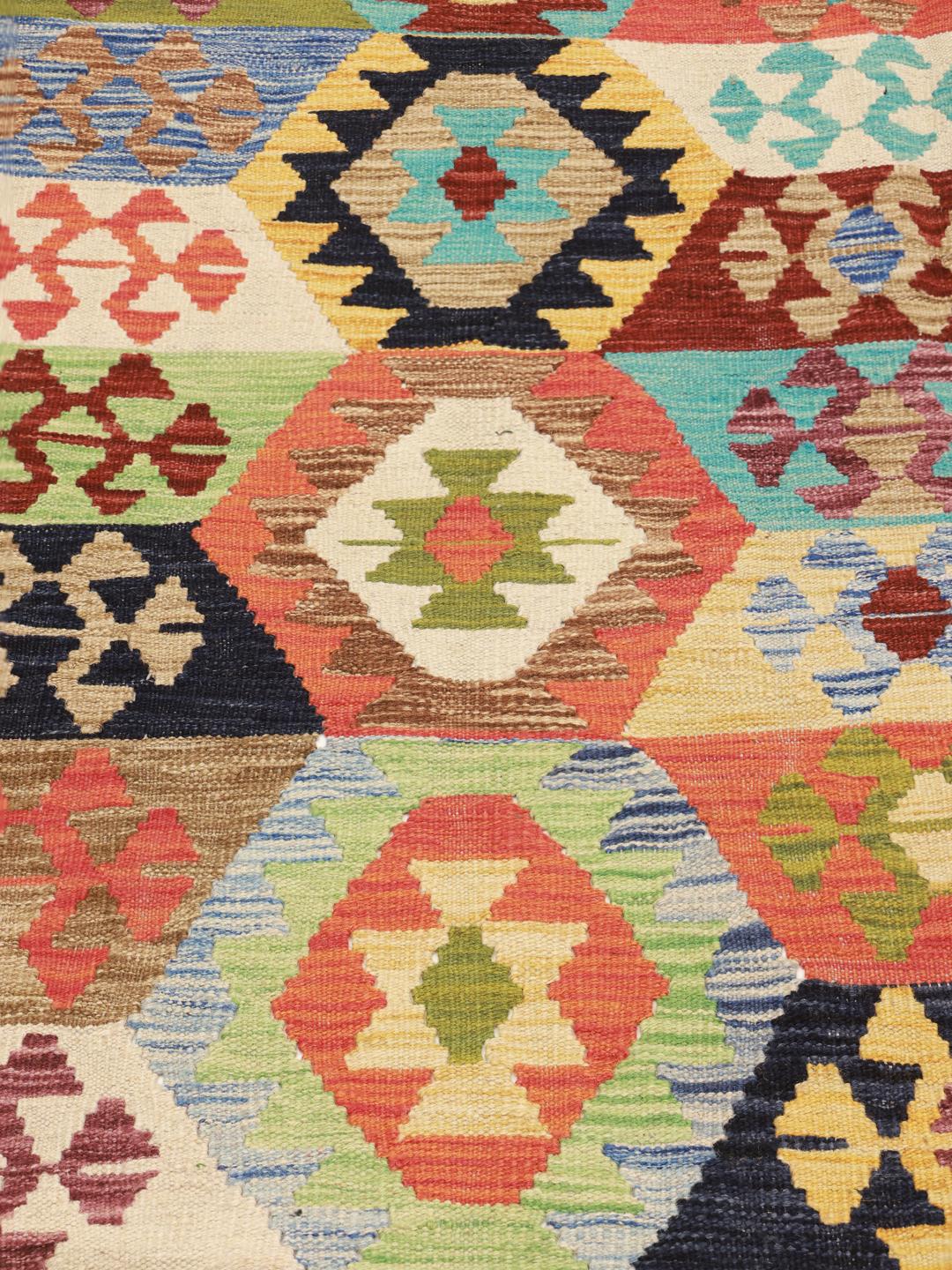
Visually, these rugs are defined by their bold geometric language and a rich, earthy colour palette. The recurring motifs are often symbolic, representing protection, fertility, or the natural landscape of the Afghan mountains. The use of vibrant, contrasting colours is a signature feature of the Afghan style, often achieved through natural dyes that soften beautifully over time.
Collecting an Afghan Kelim is an opportunity to own a piece of living history. These rugs are valued not just for their aesthetic appeal, but for the immense skill and cultural narrative embedded in every thread. They represent a connection to a slow, deliberate way of life, making them treasured additions to any home that values heritage, authenticity, and the human touch.