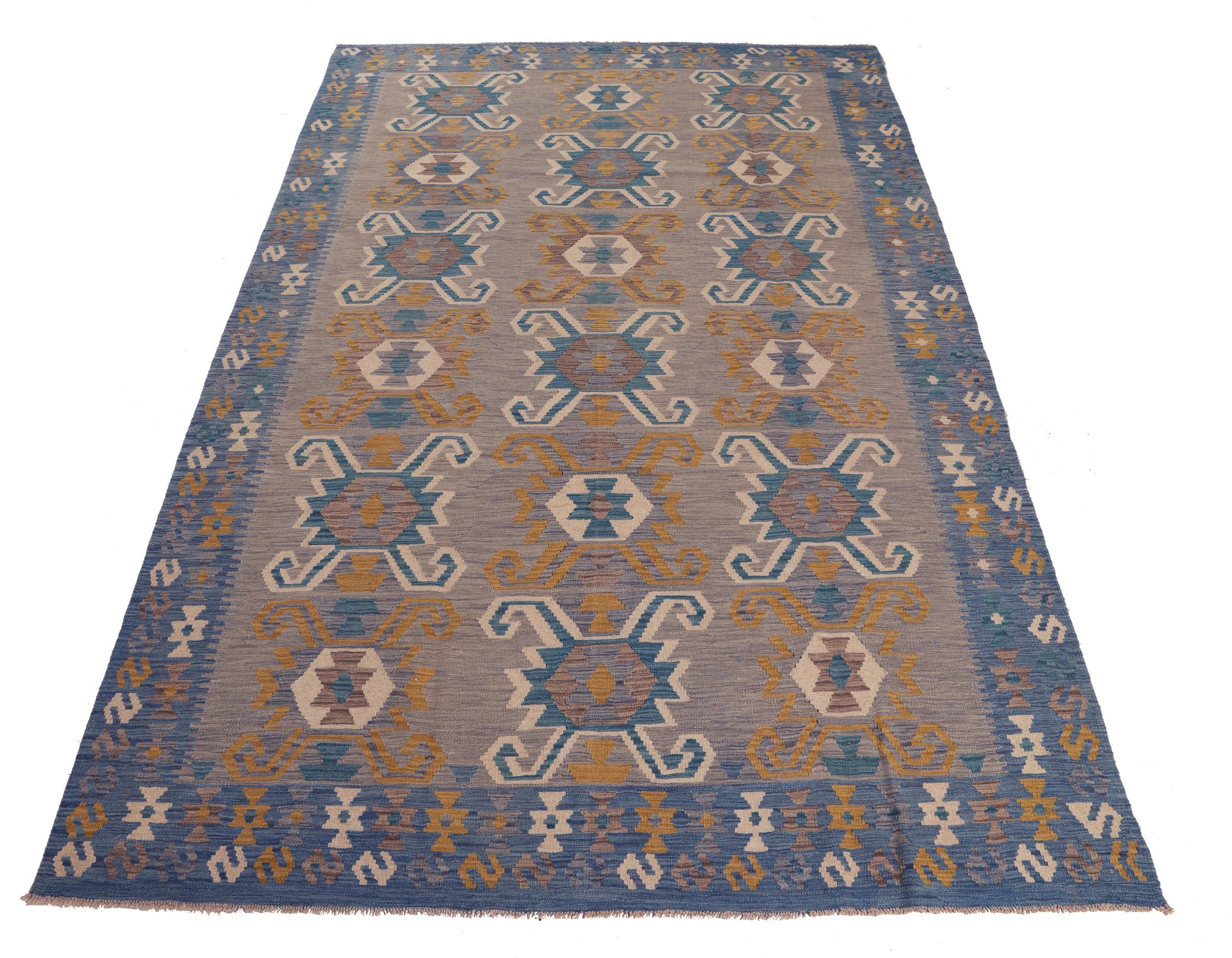
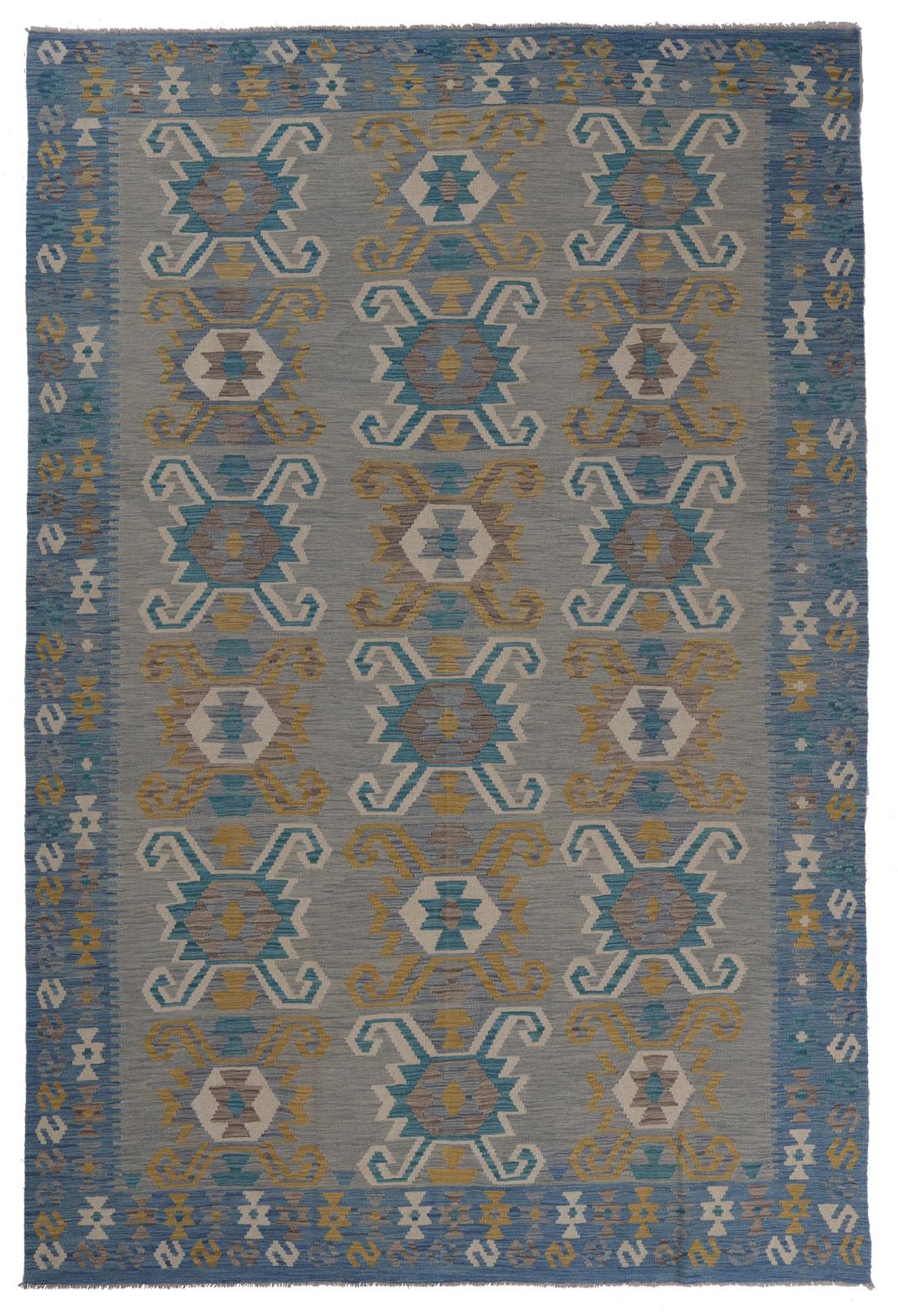
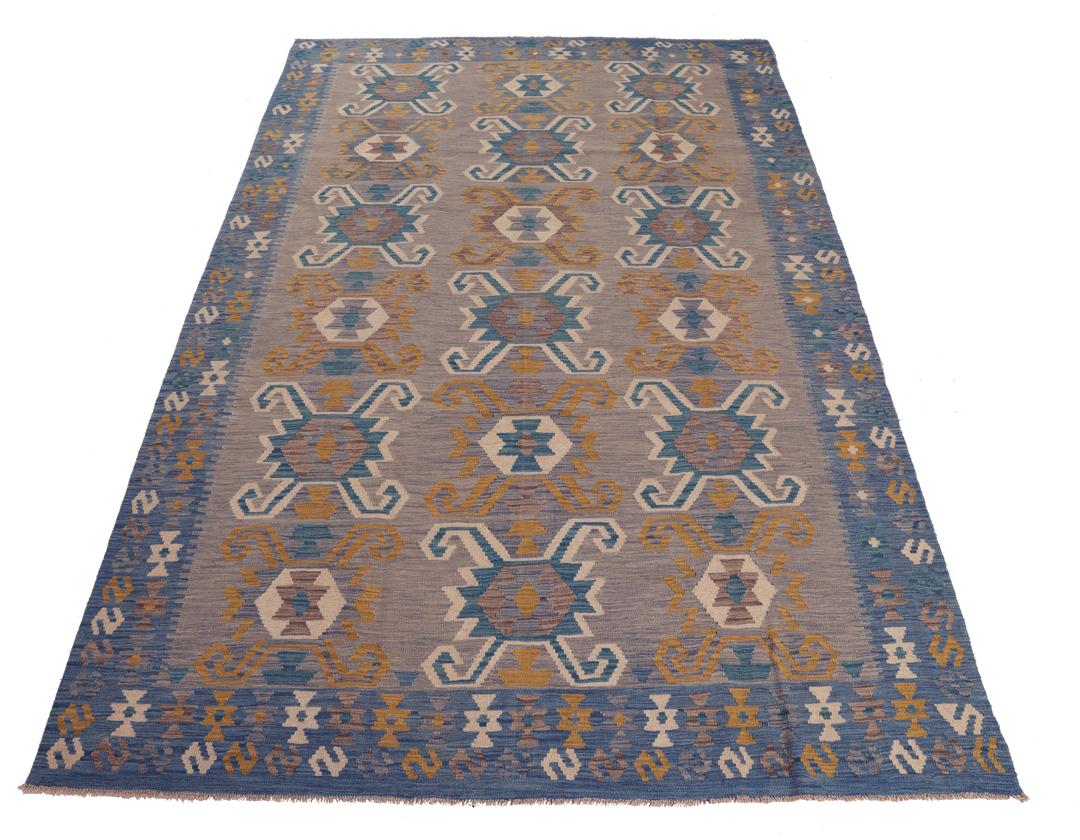
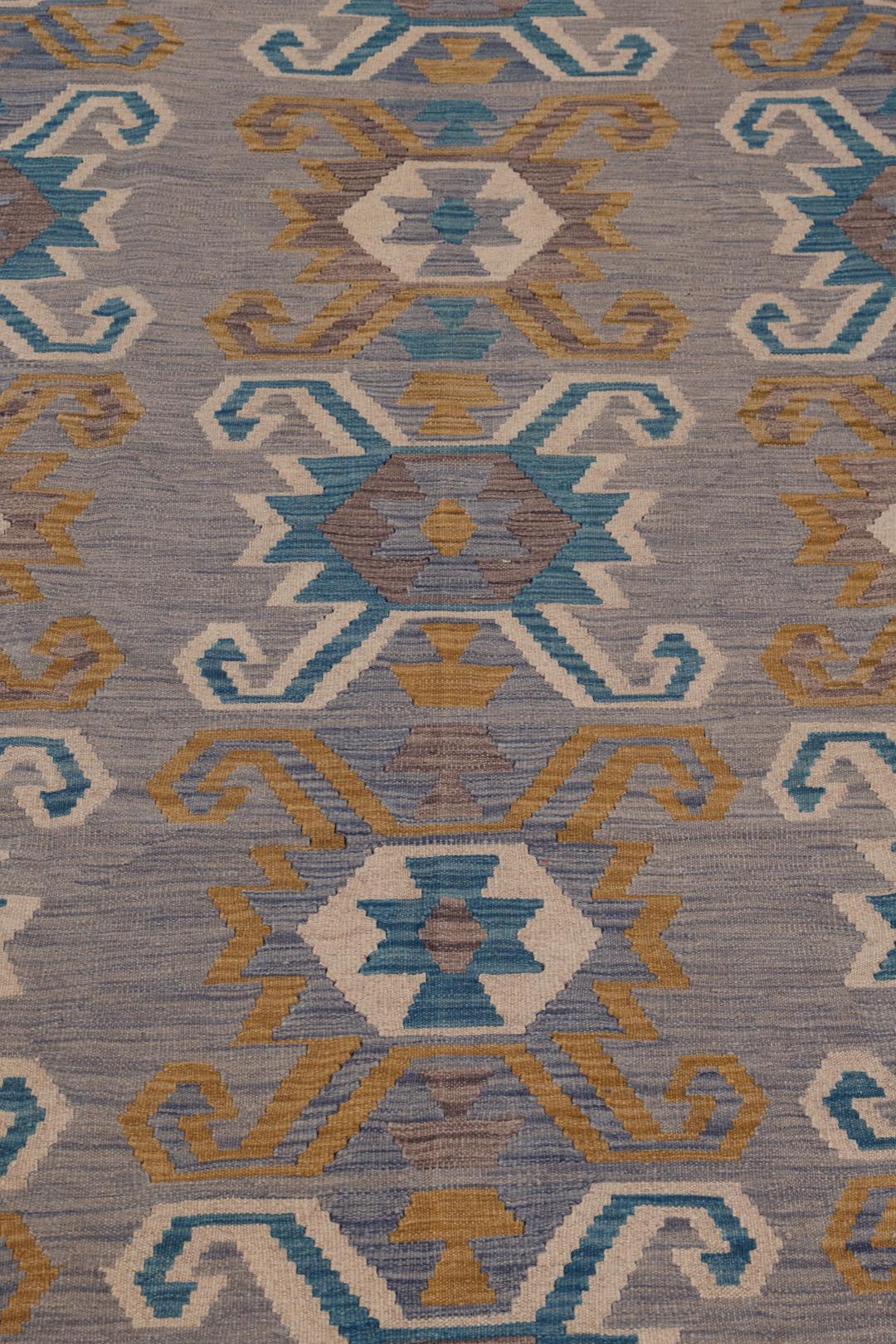
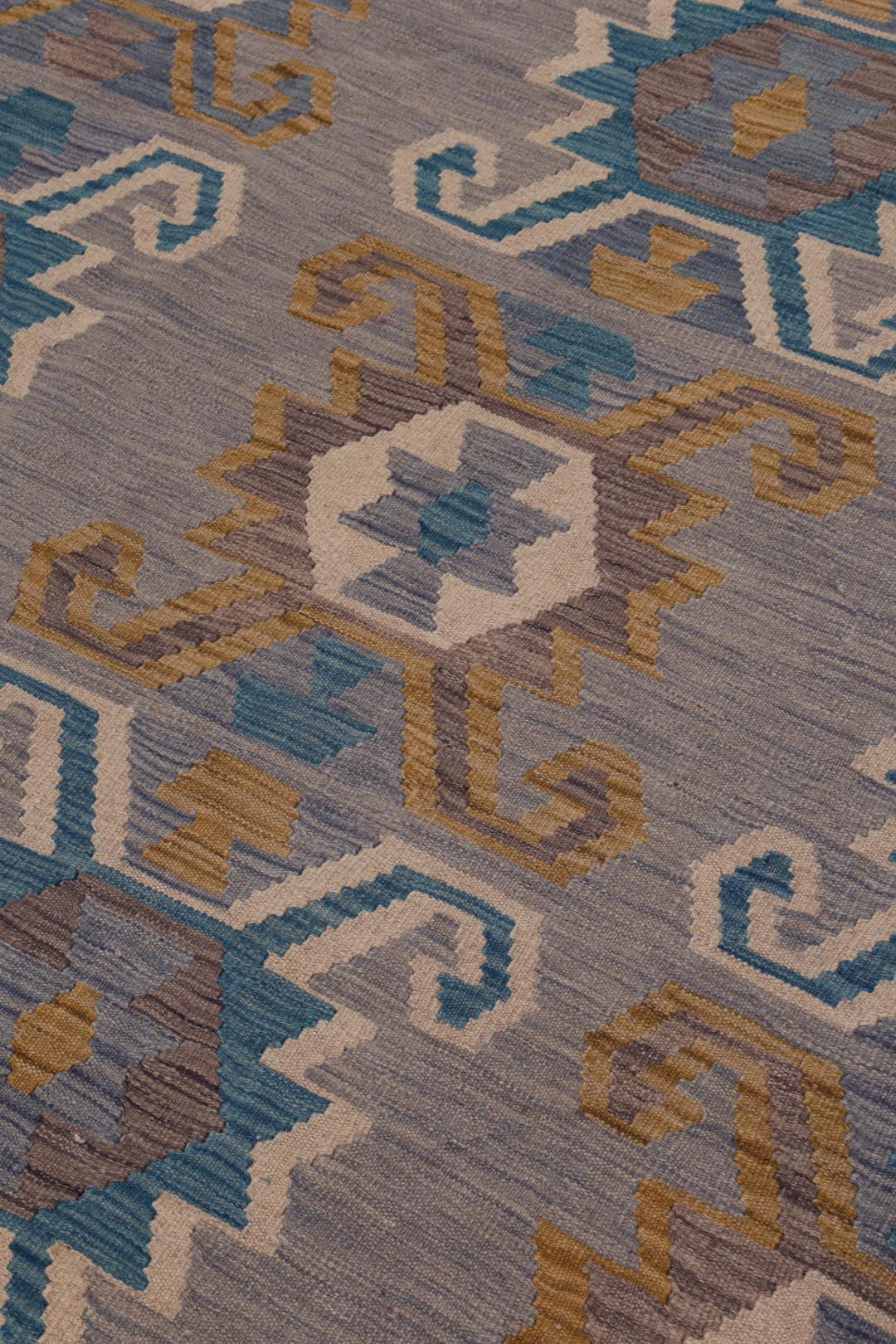
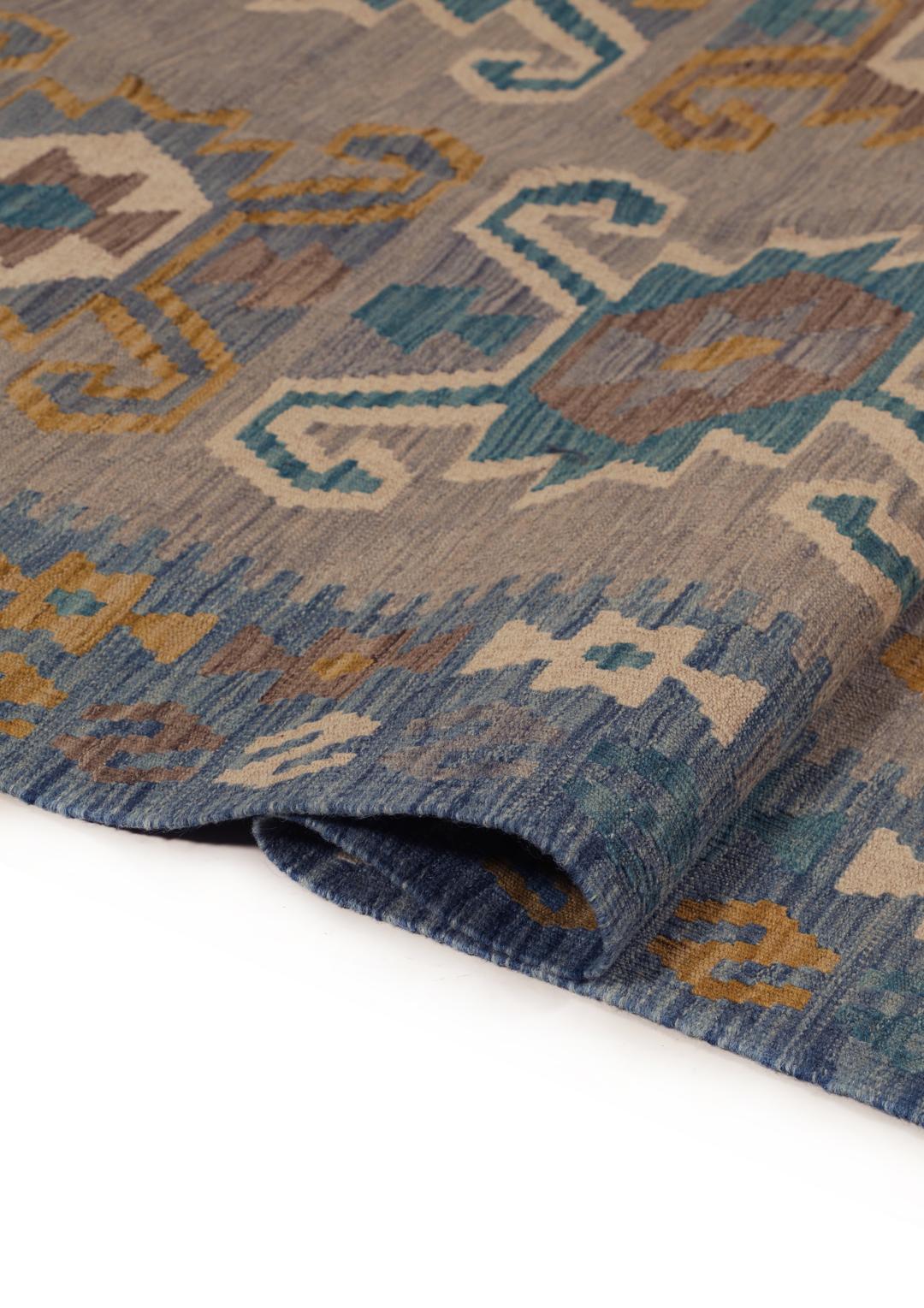
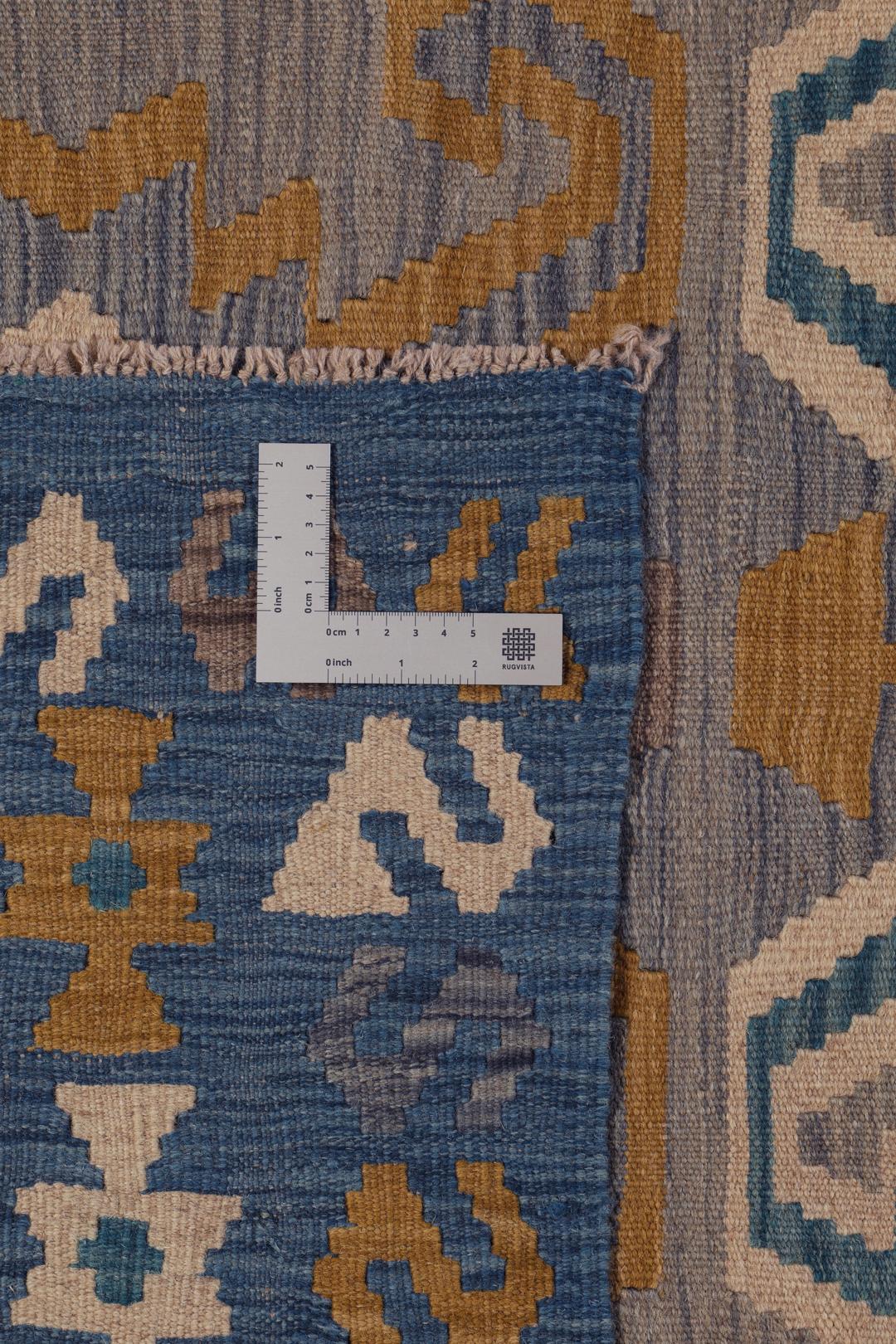
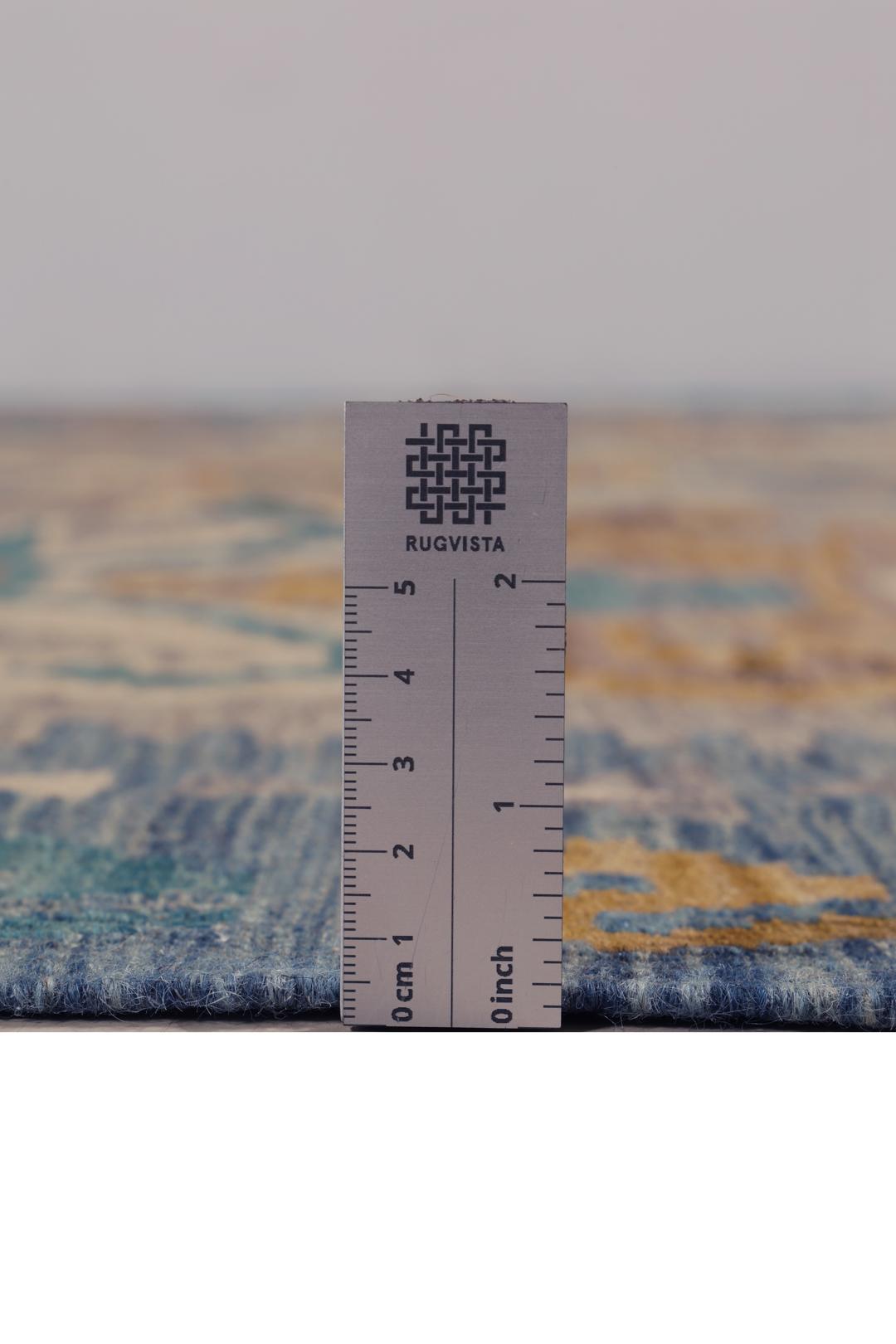
The tradition of weaving Kelims in Afghanistan is deeply rooted in the nomadic and village cultures of the region. Historically, these flat-woven rugs were essential household items, used as floor coverings, blankets, and storage bags, reflecting a lifestyle where utility and beauty were seamlessly integrated. Today, Afghan weavers continue to honour these ancient techniques, maintaining a link to a craft that has sustained families for centuries.
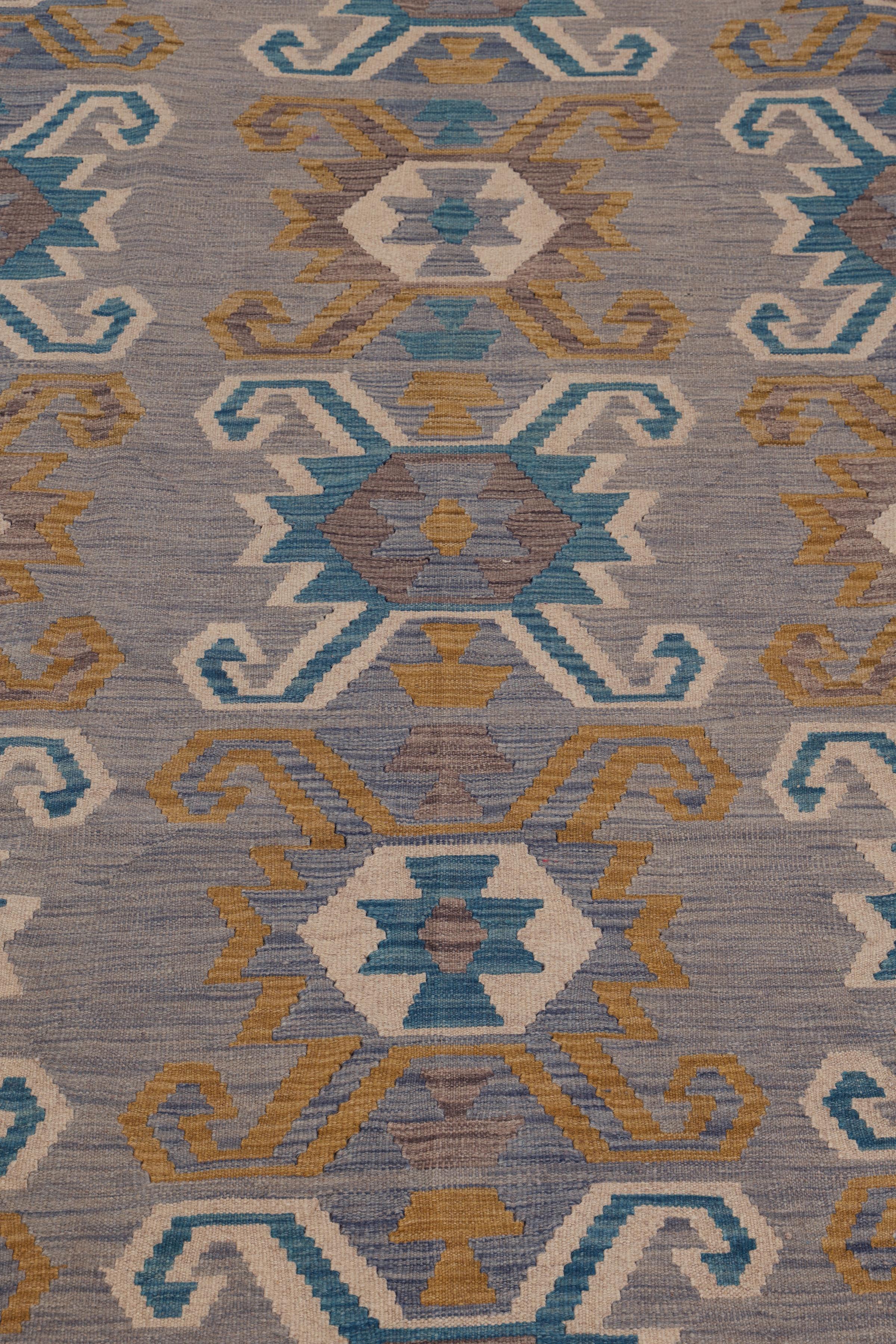
The term 'Kelim' refers specifically to the tapestry-weave technique where the warp and weft threads are tightly interlaced to form the pattern. Because there is no pile, the resulting rug is reversible and incredibly durable. This construction requires a high degree of technical mastery, as the weaver must manage both the tension of the loom and the intricate placement of colour to achieve the final design.
The signature design elements of Afghan Kelims often include bold, geometric motifs inspired by tribal symbols, landscapes, and the natural environment. These patterns are typically arranged in symmetrical or repeating compositions, framed by decorative borders that anchor the design. The use of vibrant yet earthy tones is a hallmark of the region, utilising natural dyes that develop a rich, storied patina over time.
Owning an Afghan Kelim is an investment in cultural heritage and artisanal skill. These rugs are highly valued by collectors not just for their visual impact, but for the story of human endurance and artistic expression they represent. By bringing such a piece into your home, you are preserving a tradition of creativity and craftsmanship that remains as relevant today as it was in the past.