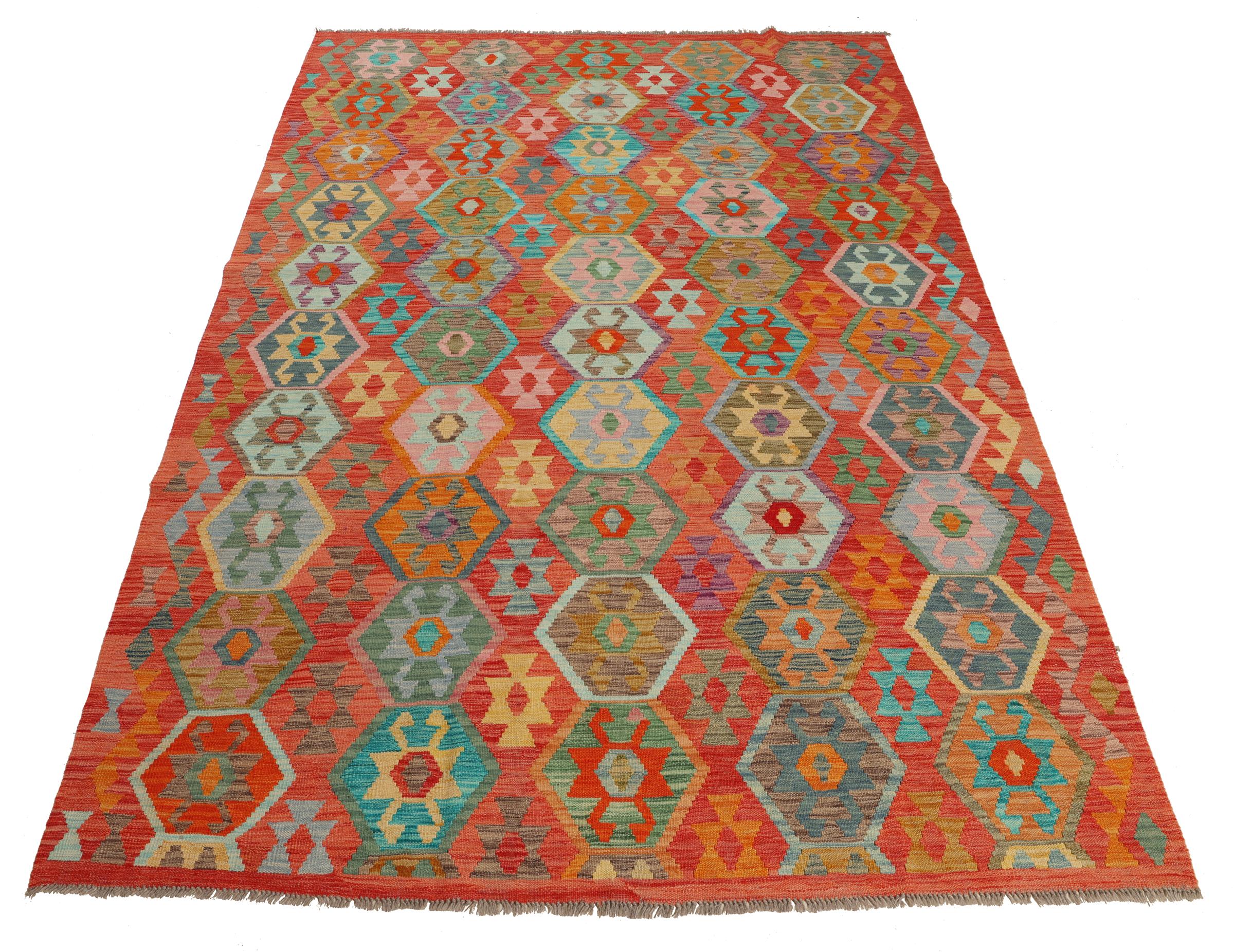
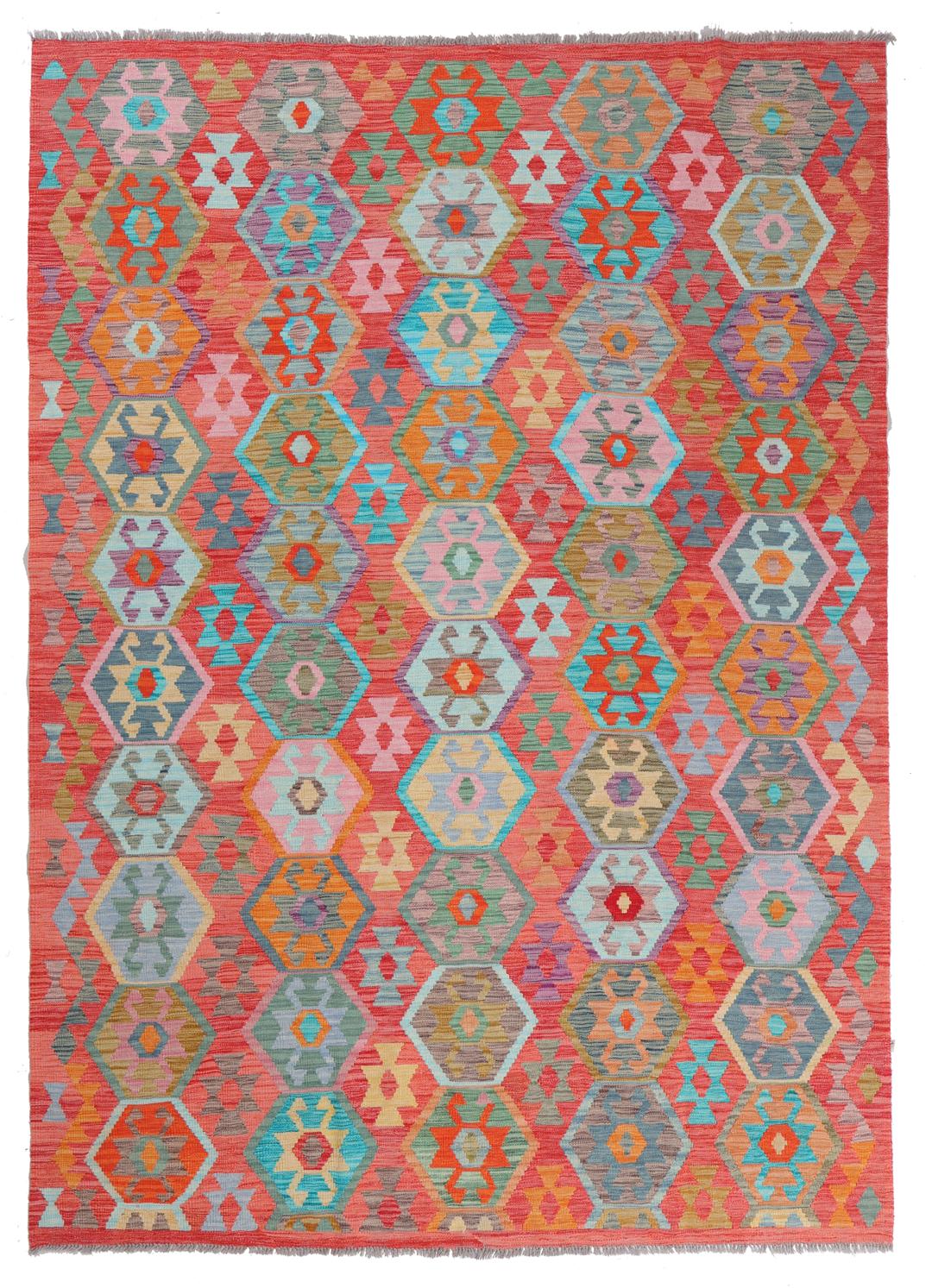
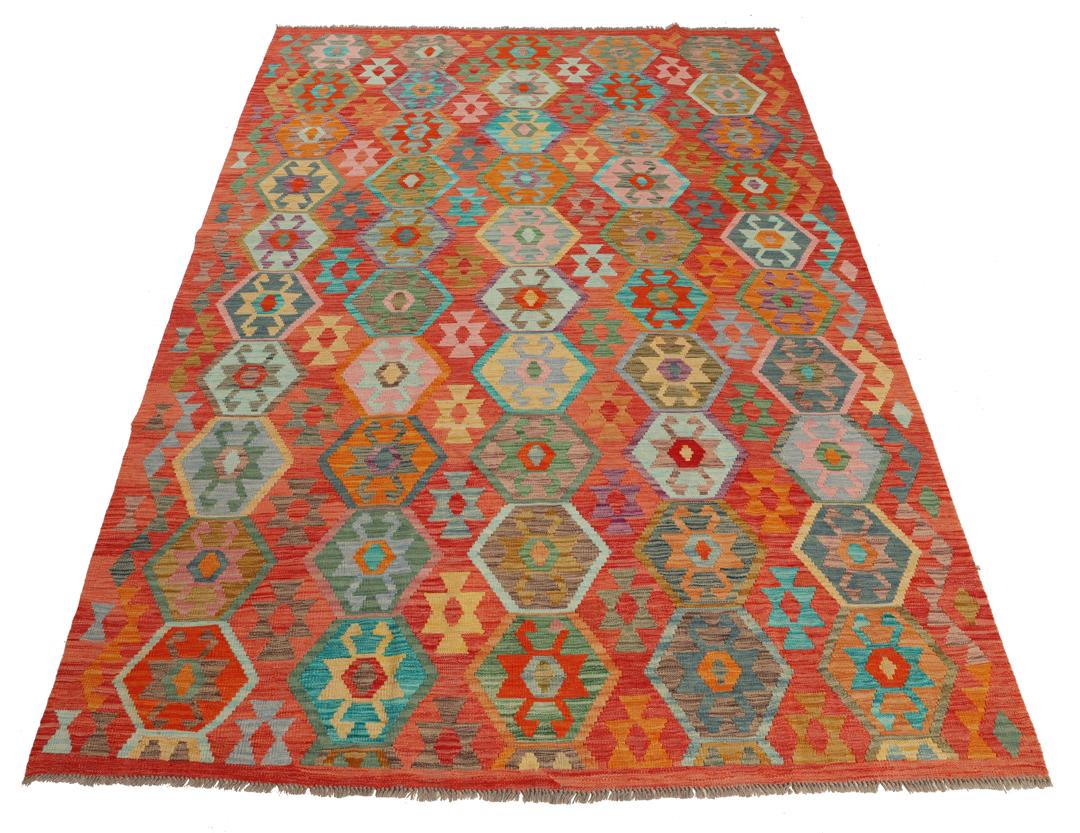
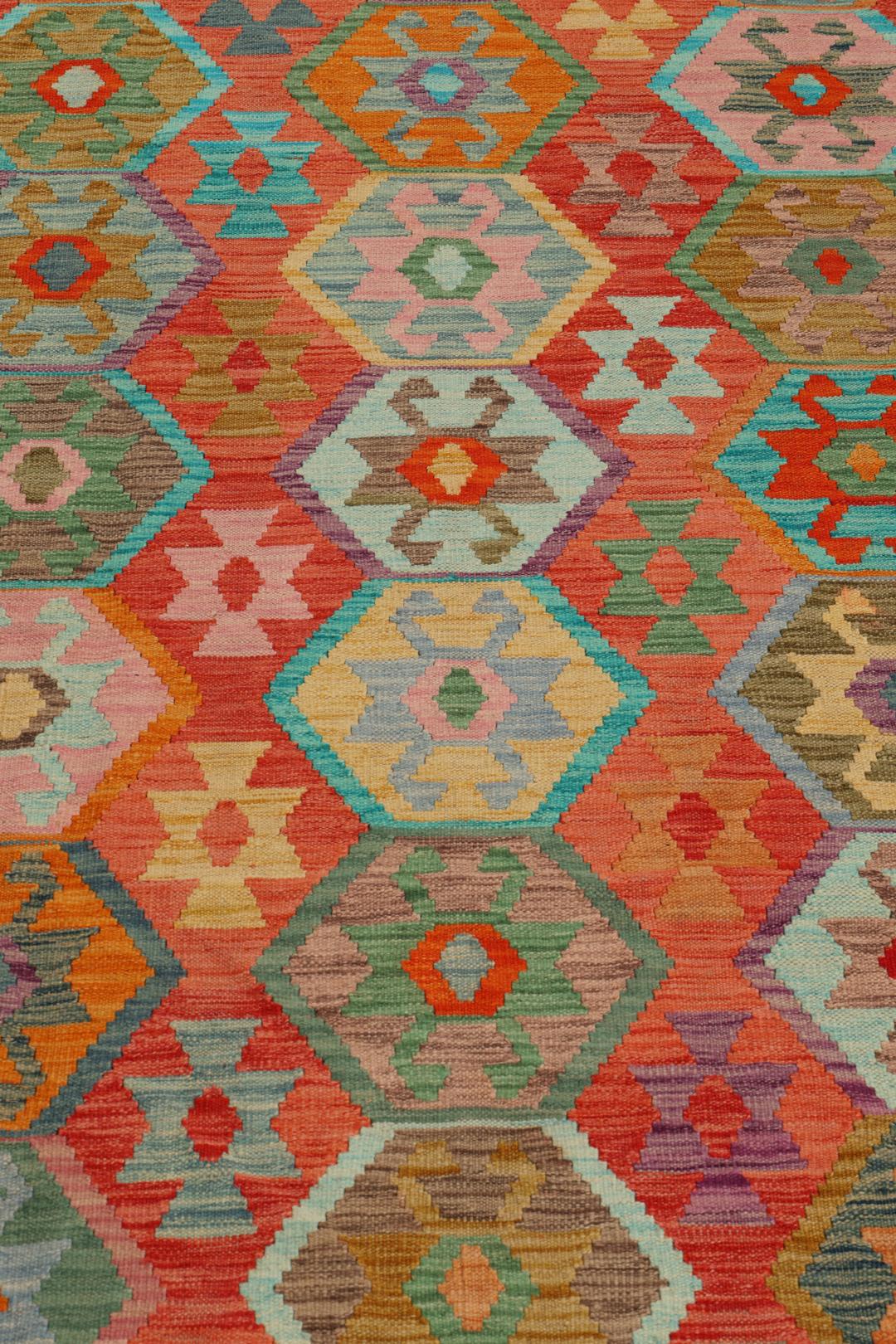
The Kelim tradition in Afghanistan is deeply rooted in the nomadic and semi-nomadic cultures of the region. These flat-woven rugs have served as practical, portable, and essential items for generations, used as floor coverings, blankets, or wall hangings within the home.
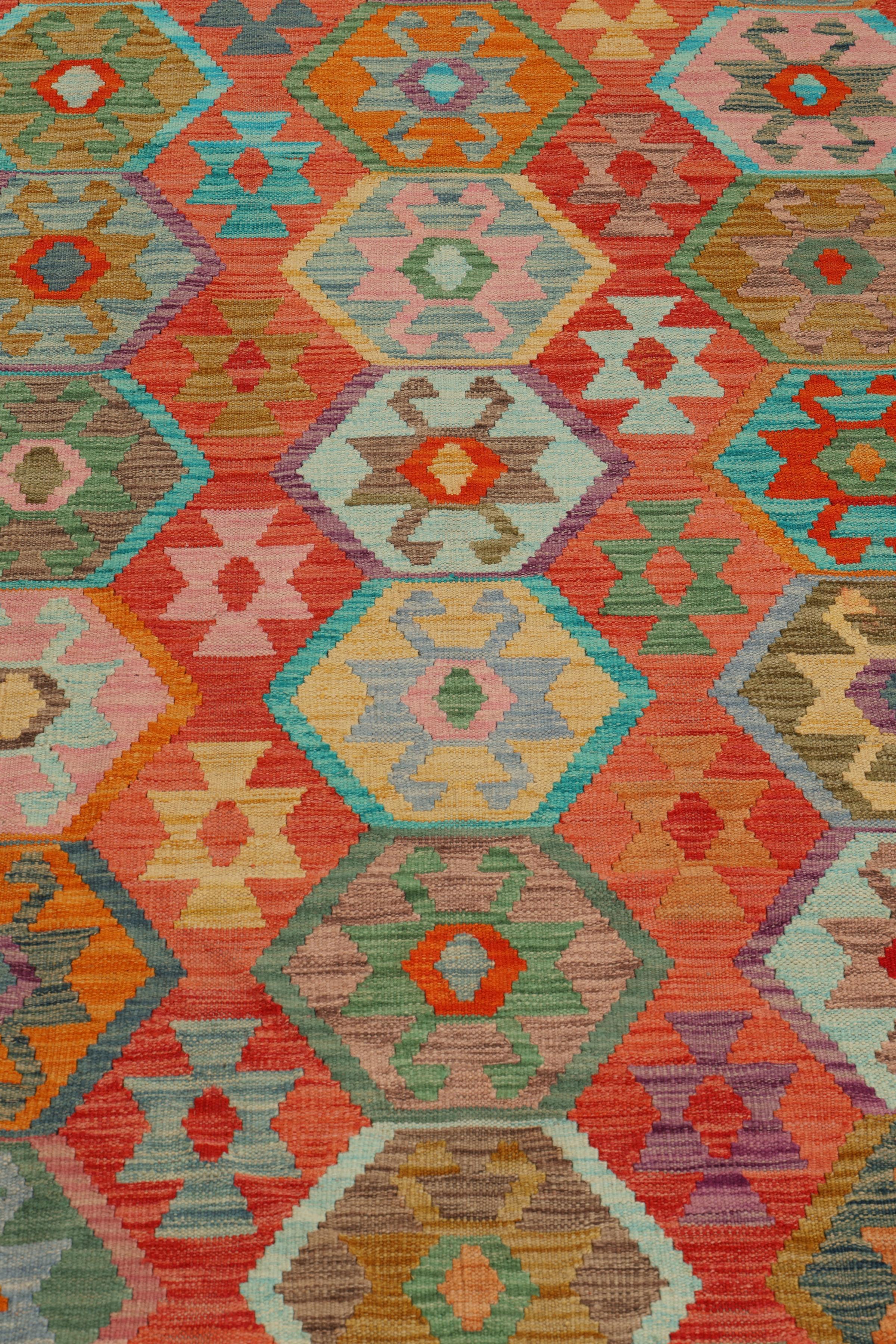
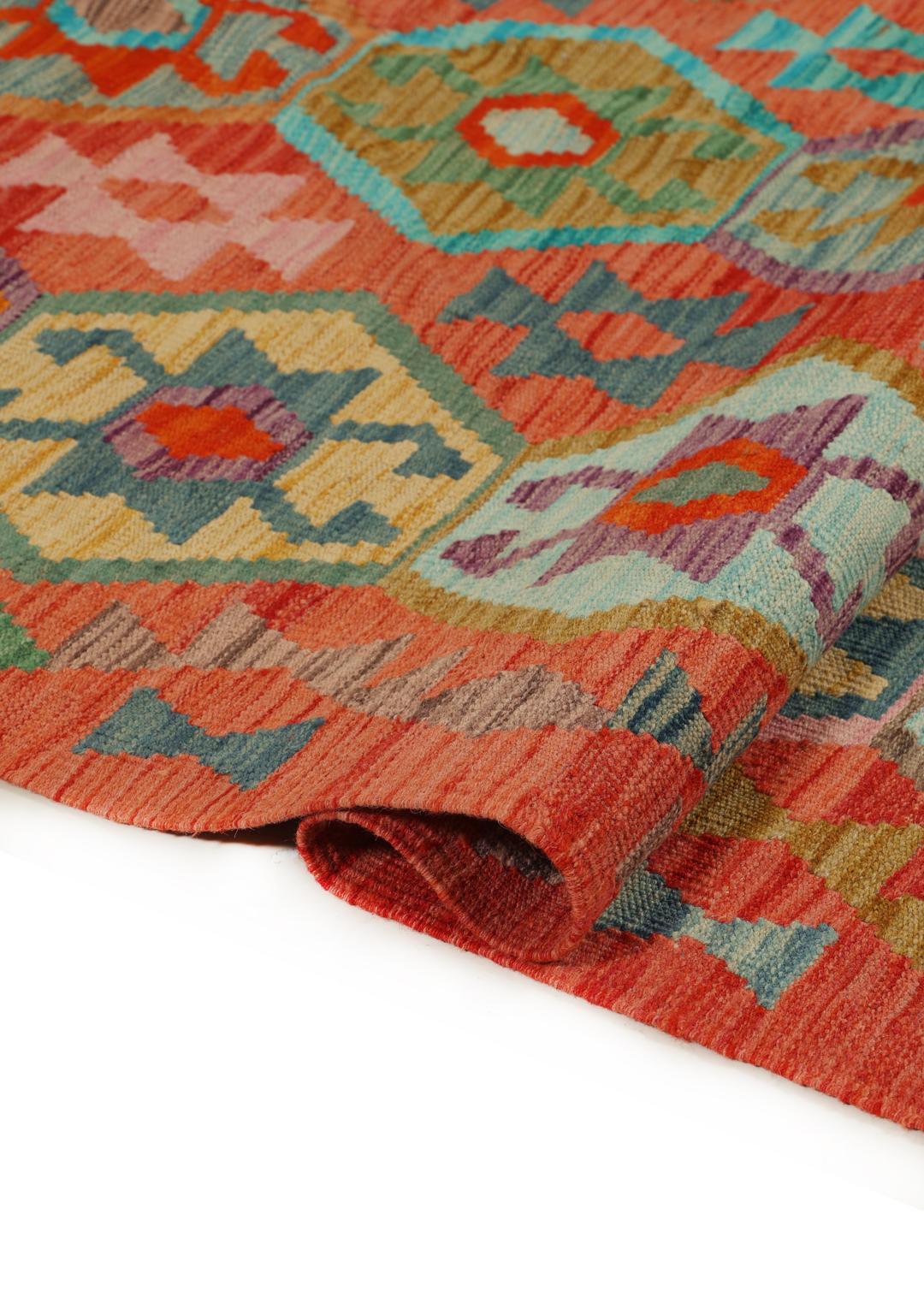
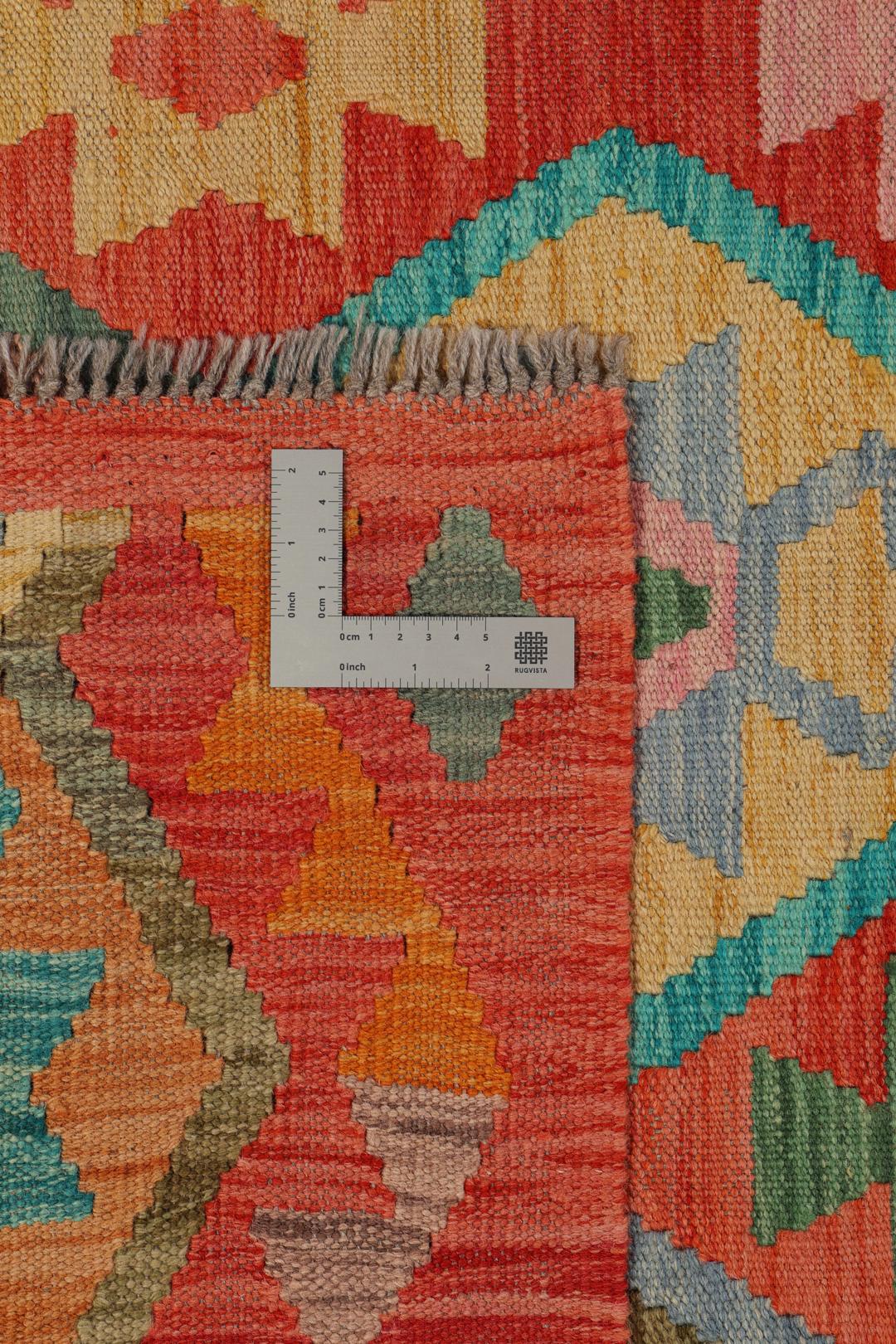
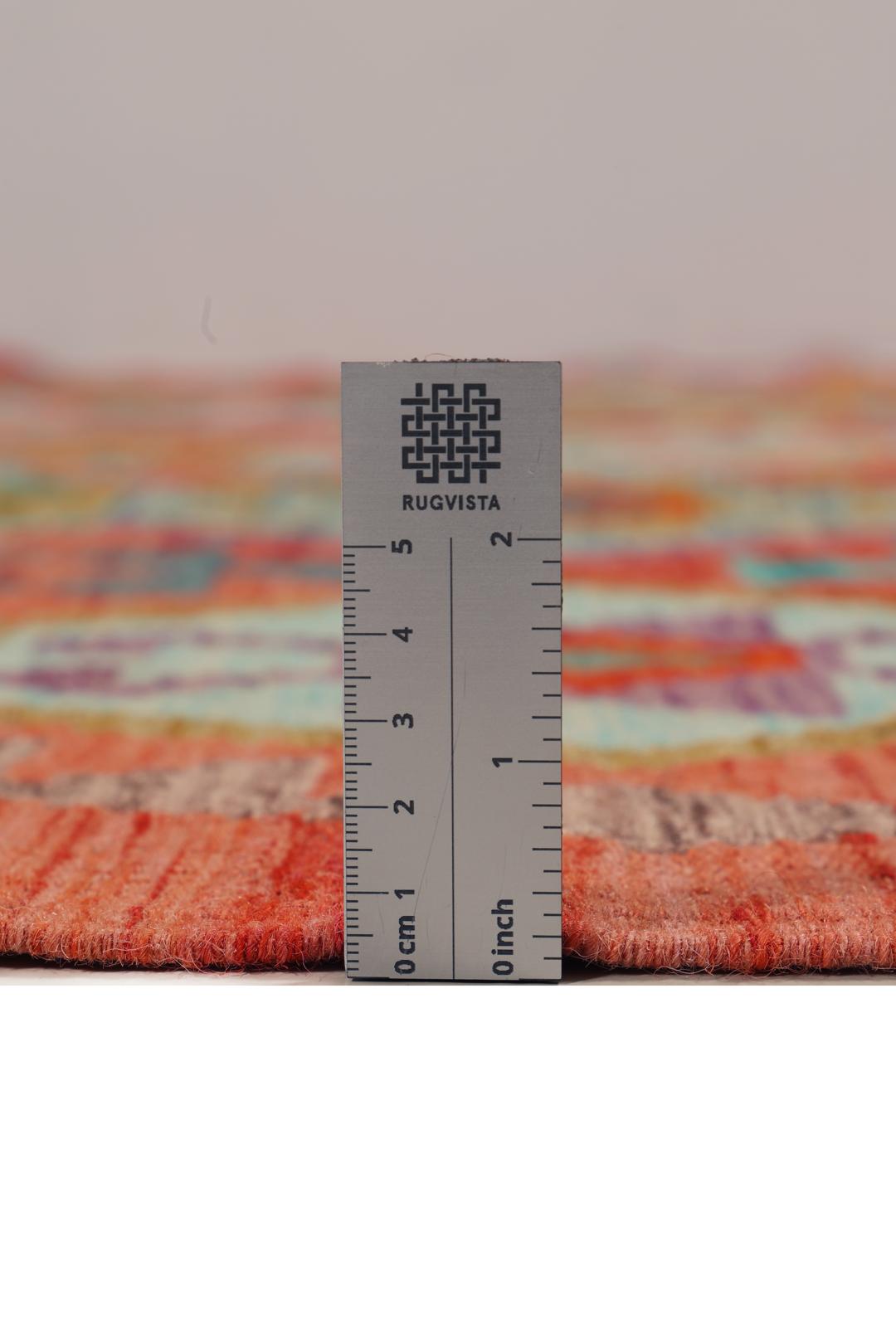
The term 'Kelim' refers specifically to the tapestry-weave technique, which lacks a pile. This construction method results in a light, reversible, and highly portable rug that is prized for its clean lines and graphic potential. The durability of these rugs is a direct result of the tight, interlaced weave, which creates a robust fabric capable of withstanding years of use.
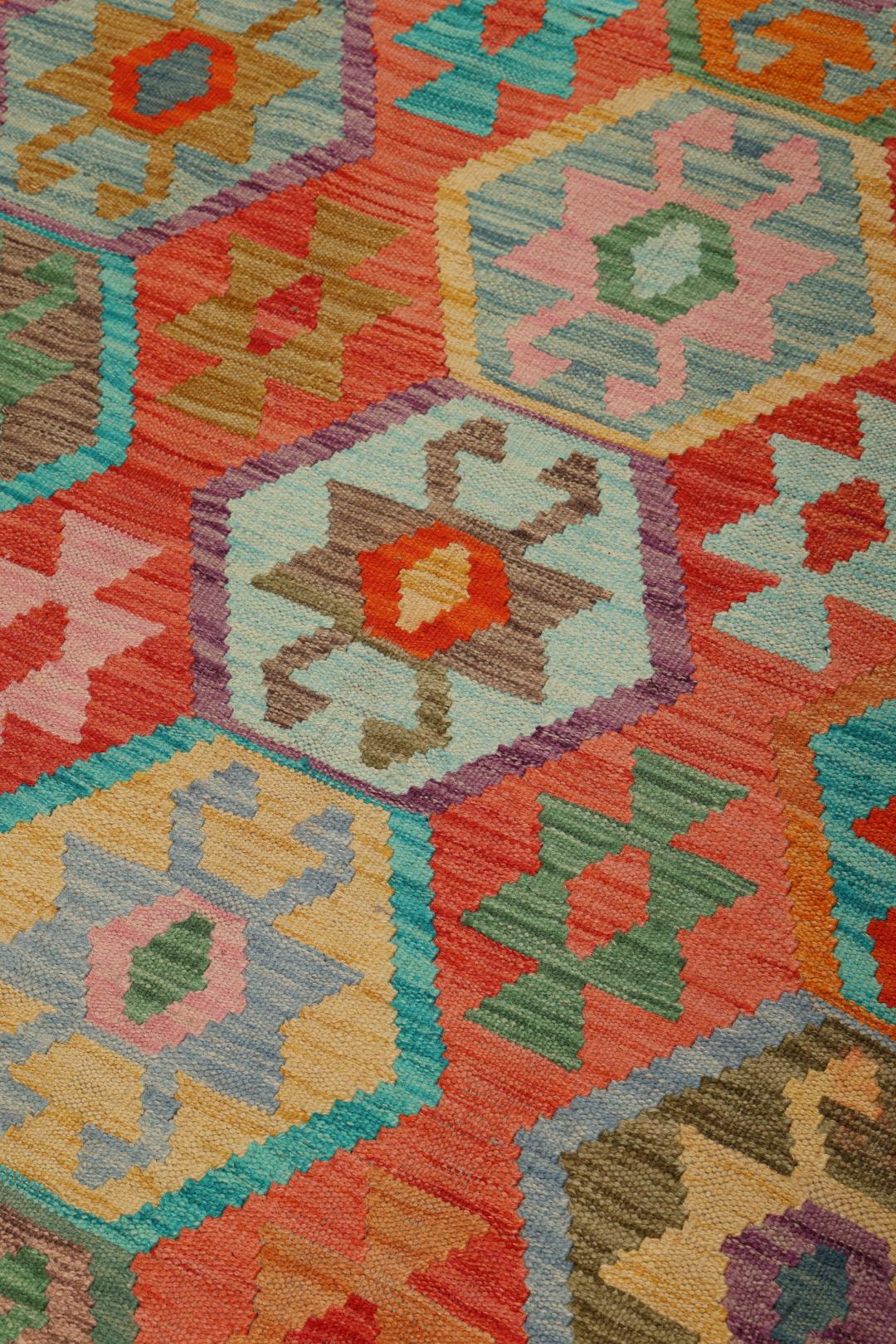
Visually, these rugs are defined by their bold geometric language. The honeycomb pattern seen here is a classic motif, often used to symbolise unity and the interconnectedness of tribal life. The vibrant colour palette is traditionally derived from natural dyes, reflecting the landscape and the rich material culture of the Middle Eastern region.
Collectors value these pieces for their authenticity and the human story woven into every thread. Owning a Kelim is an act of preserving a cultural legacy, as each rug serves as a document of the weaver's creative choices and the specific design lexicon of their community. It is a functional piece of art that bridges the gap between ancient history and modern interior design.