The tradition of Kelim weaving in Afghanistan is deeply rooted in the nomadic history of the region. These flat-woven rugs were historically created by tribal groups for practical use in tents, serving as floor coverings, blankets, and storage bags. Over generations, the craft evolved from essential survival gear into a sophisticated art form, with Afghan weavers becoming renowned for their ability to balance durability with complex geometric storytelling.
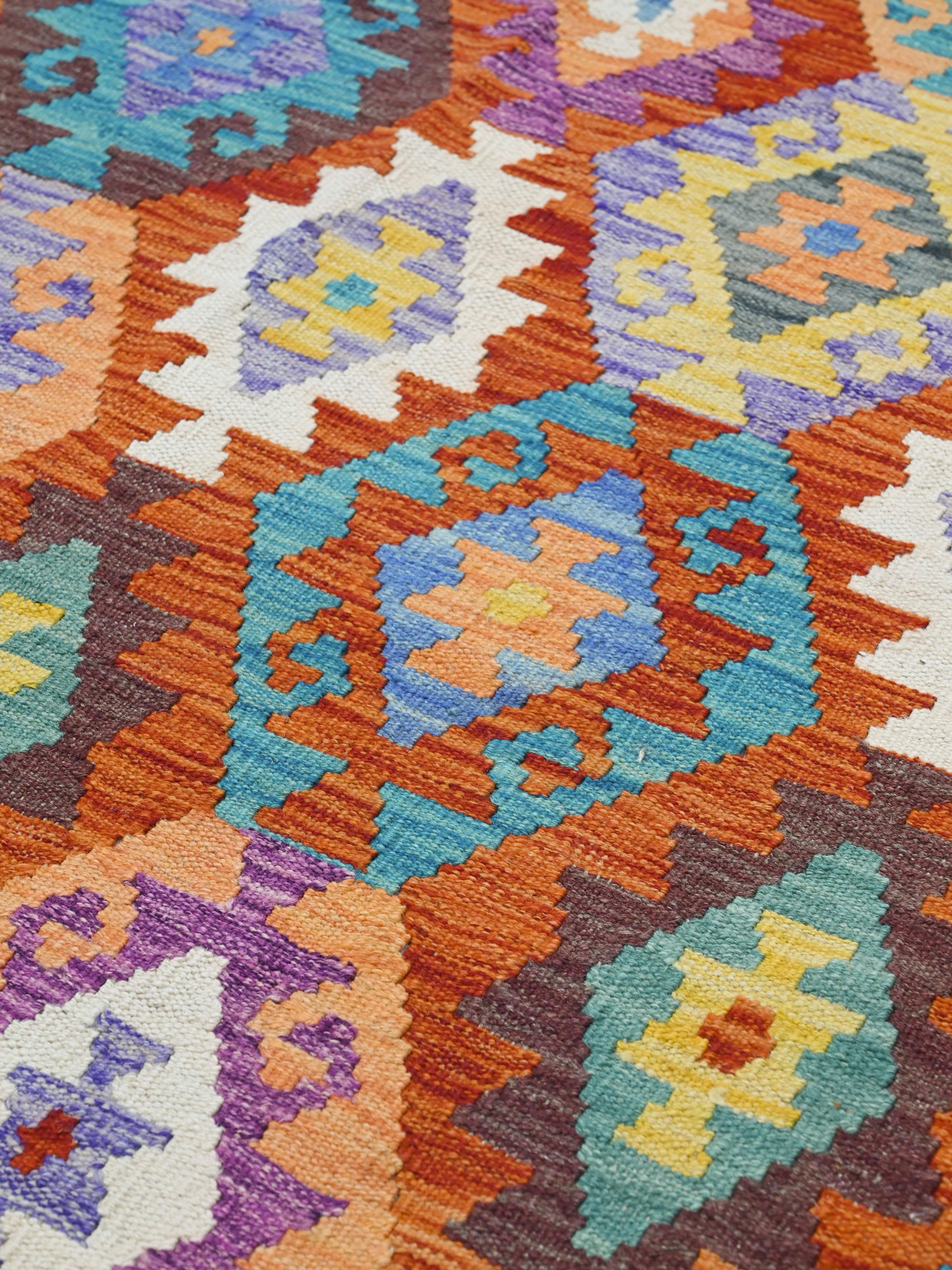
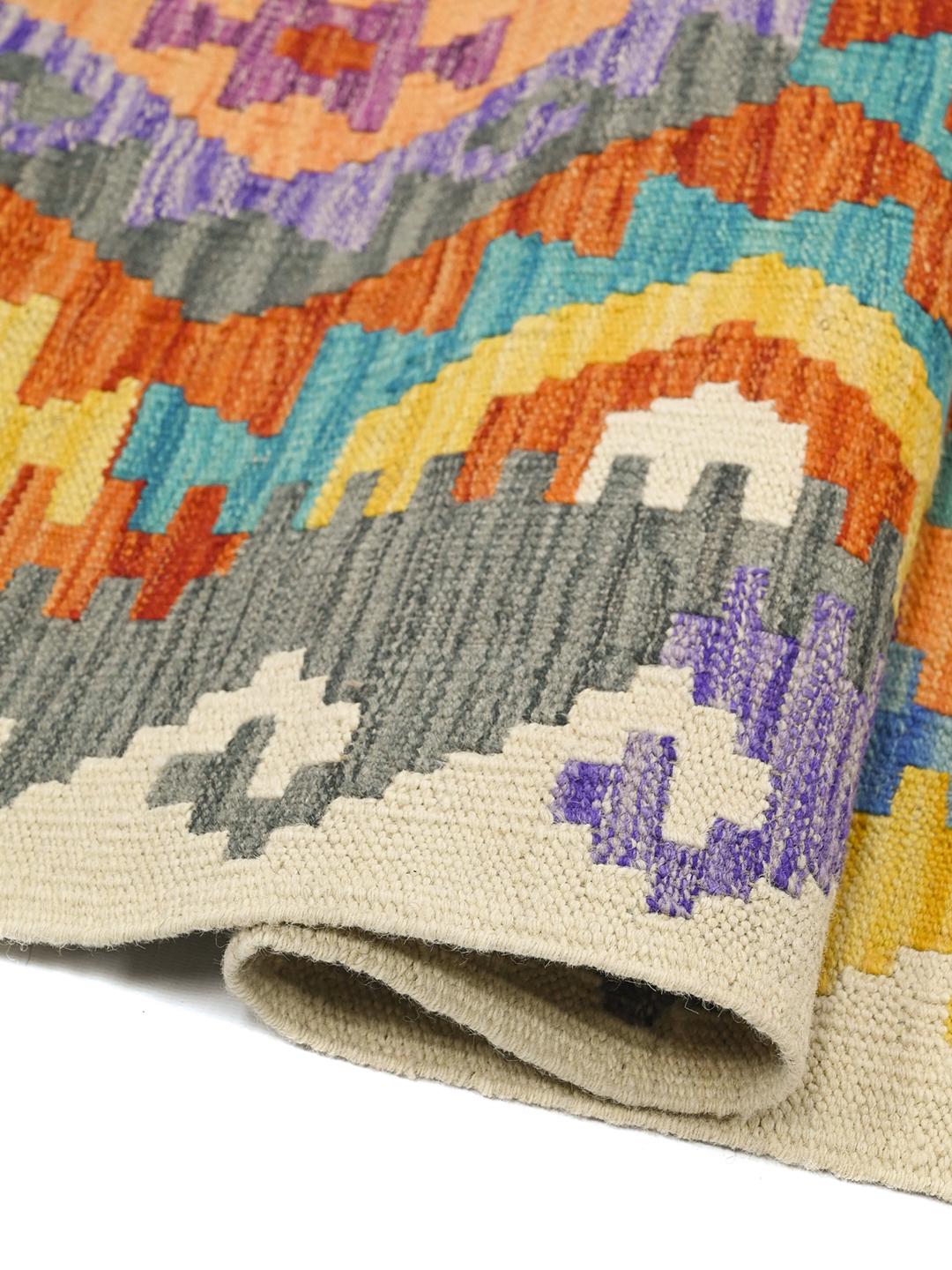
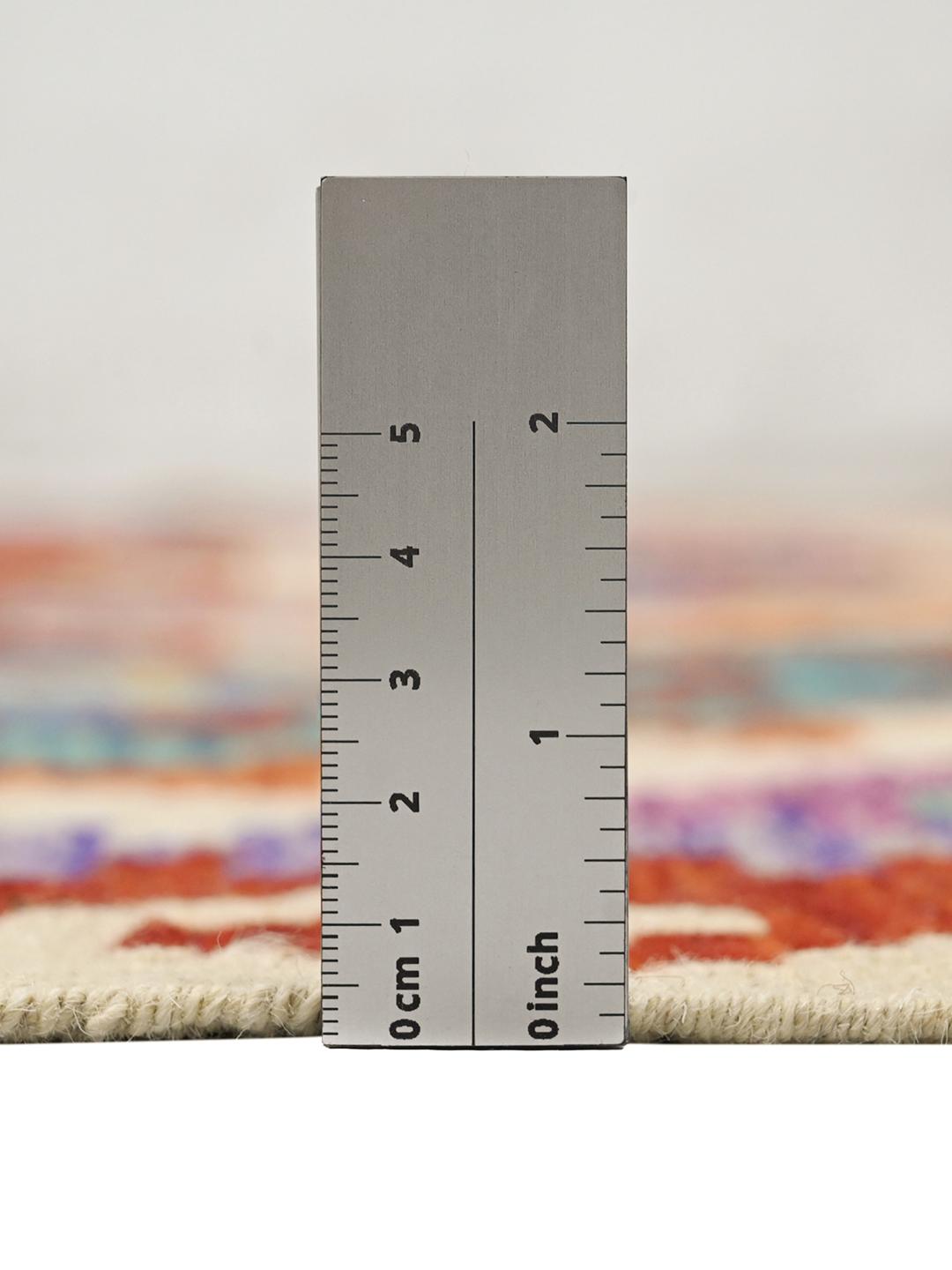
The term Kelim refers to a specific tapestry-weave technique where the weft threads are passed over and under the warp threads to create the pattern. Unlike knotted rugs, this process does not include a pile, resulting in a lighter and more versatile rug that is reversible. This technique allows for remarkably crisp lines and sharp geometric motifs, which are the hallmarks of authentic, high-quality Kelims.
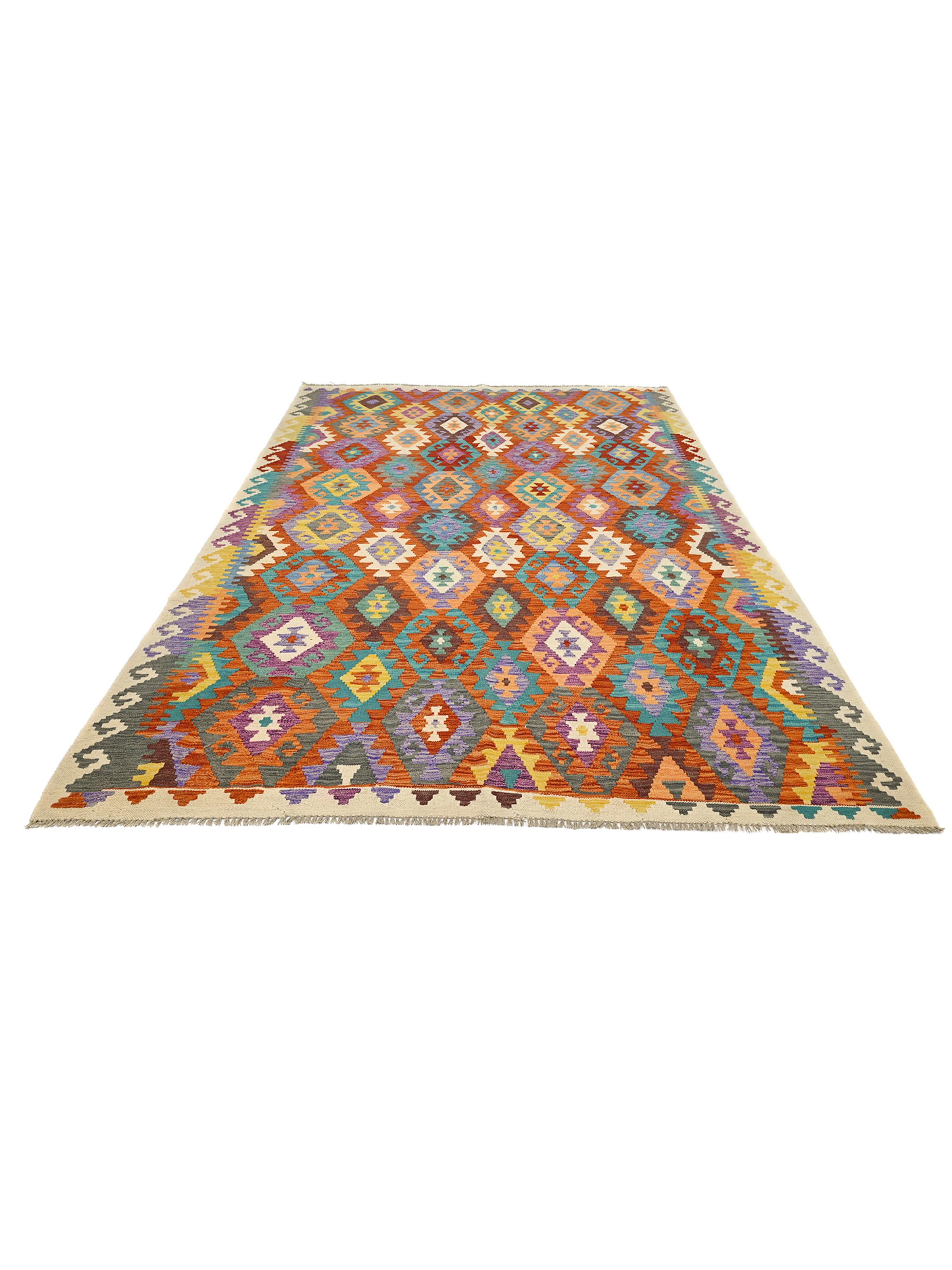
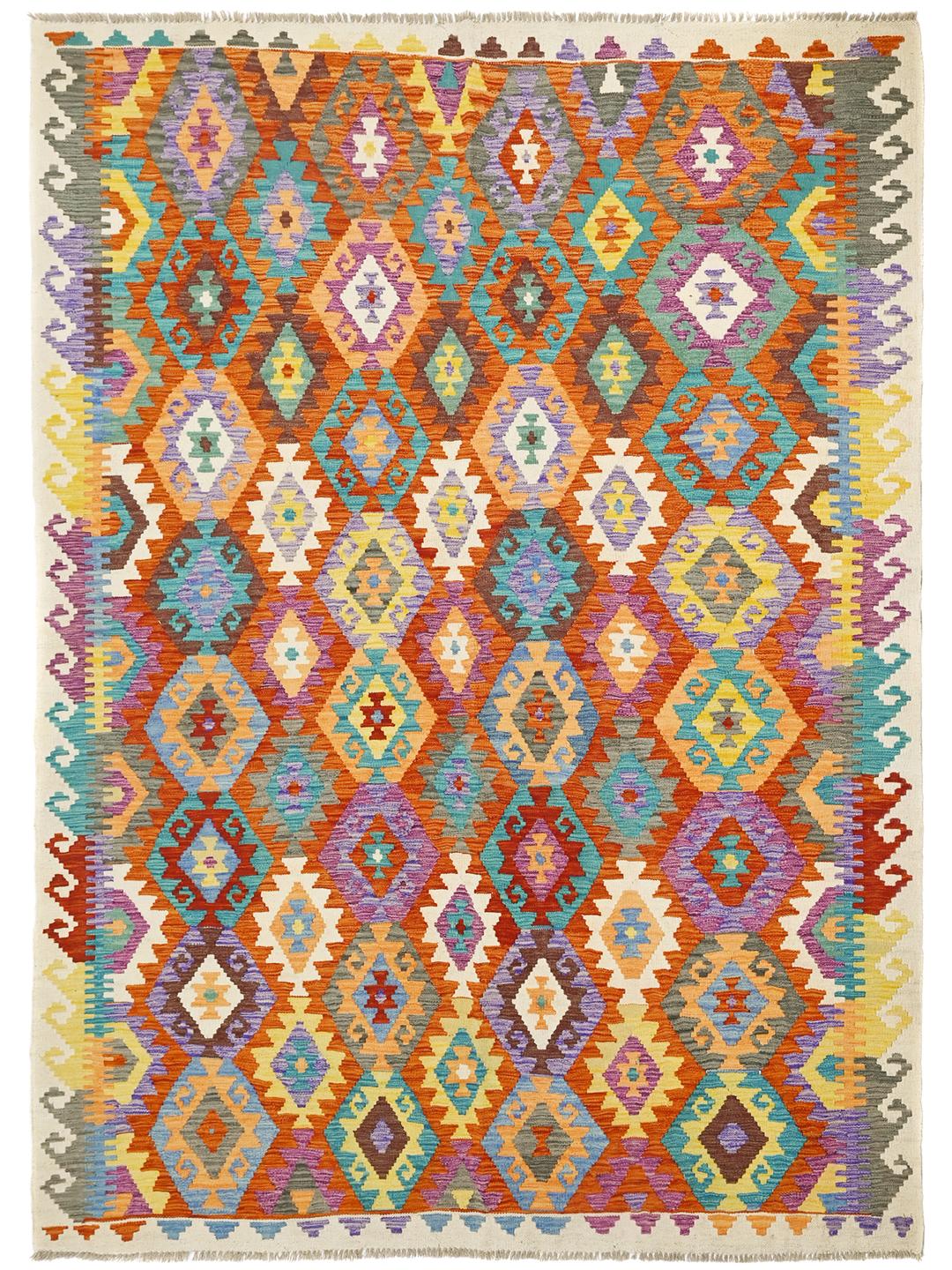
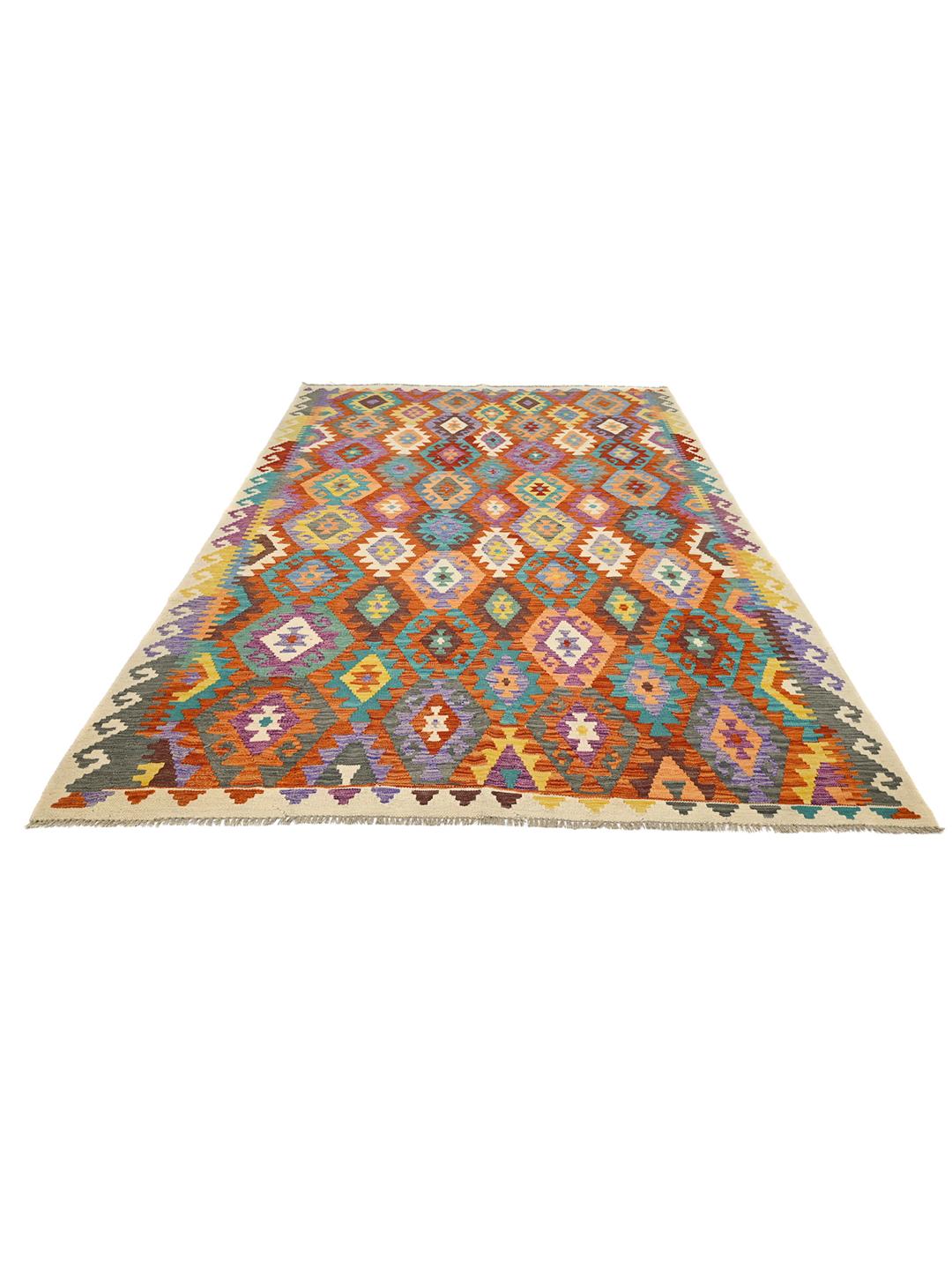
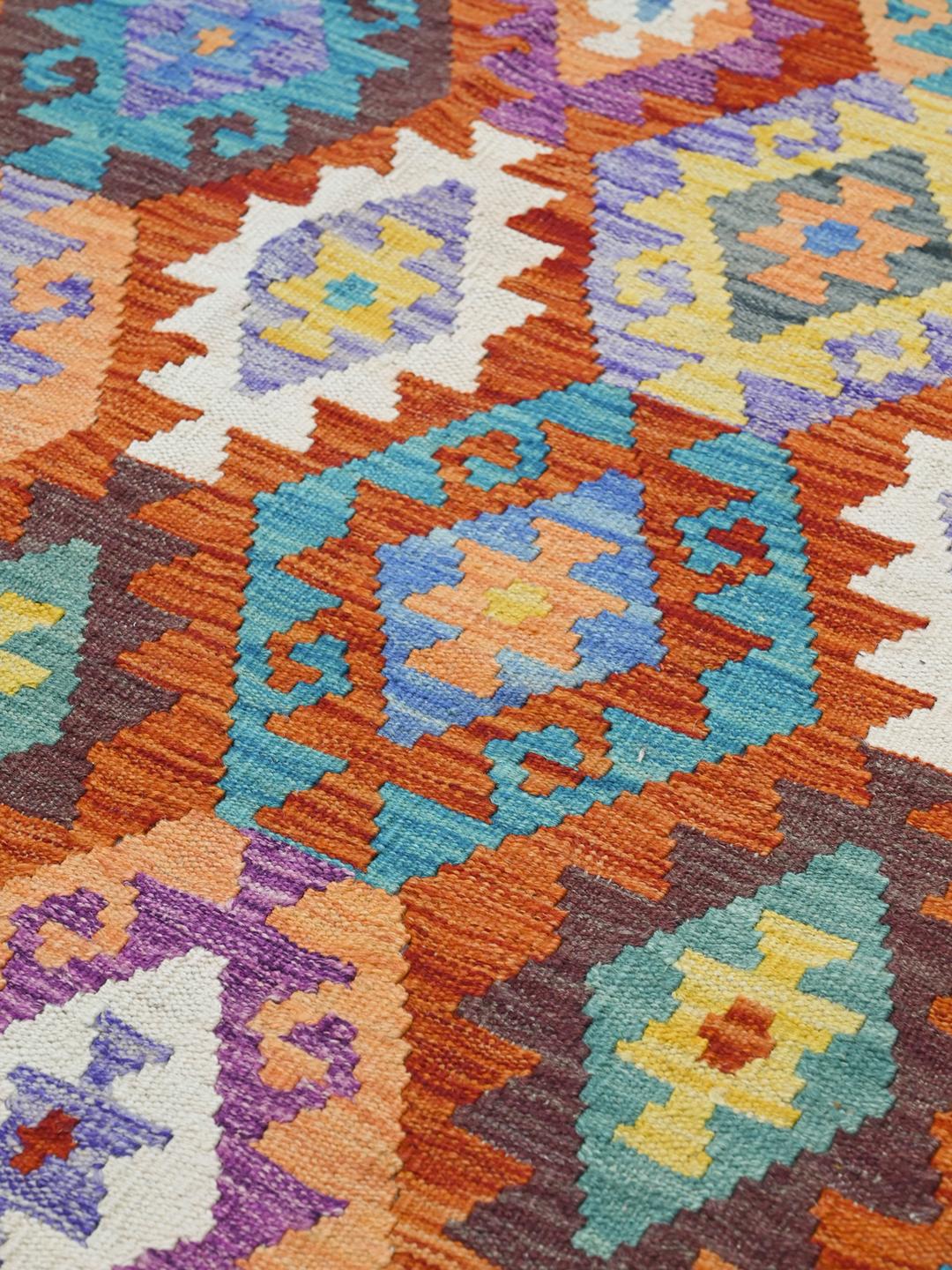
The design of this rug is dominated by the classic diamond motif, a symbol often associated with protection and fertility in local weaving traditions. These repeating shapes are carefully laid out to create a sense of movement and harmony. The use of a bold, multi-coloured palette is a signature of Afghan looms, where weavers historically used natural dyes to create vibrant reds, blues, and yellows that have become synonymous with the region's aesthetic legacy.
Today, these rugs are highly sought after by collectors who value the preservation of traditional skills and the unique character of handmade items. Owning an Afghan Kelim is more than just a decor choice; it is an act of supporting a craft that has survived for centuries. It represents a connection to the skilled weavers who pass down these complex patterns through generations, ensuring that this cultural heritage remains vibrant and relevant in homes across the world.