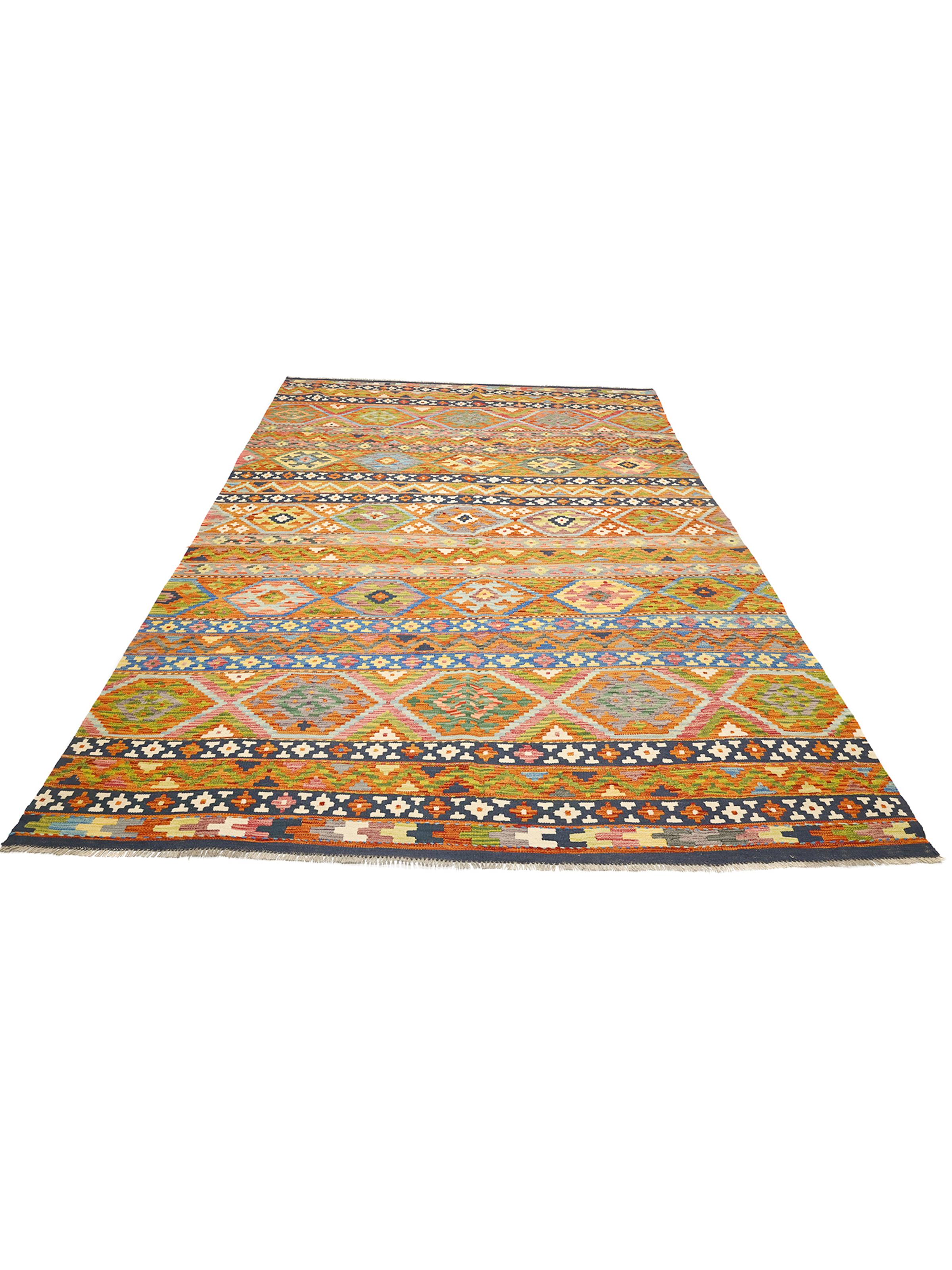
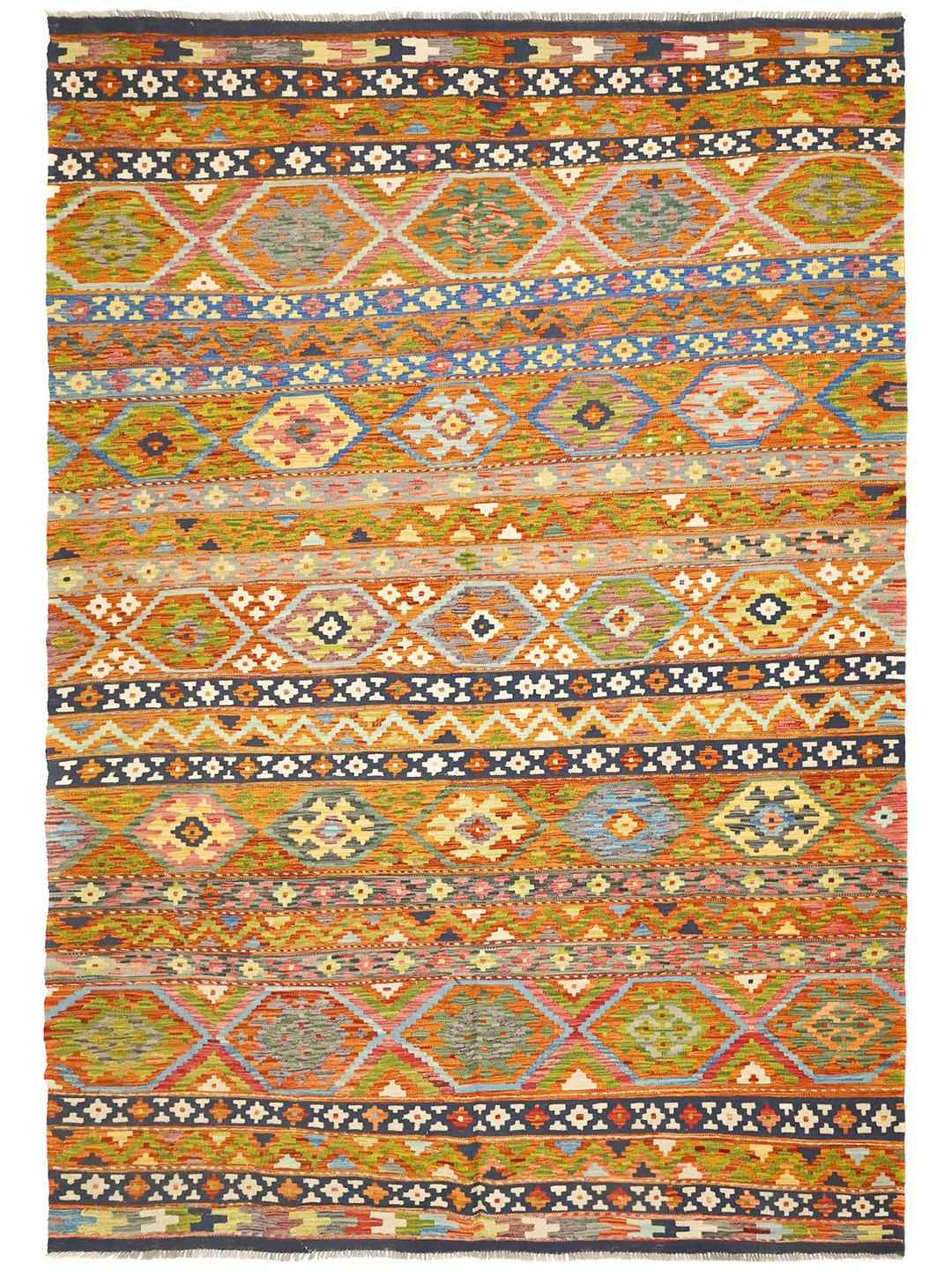
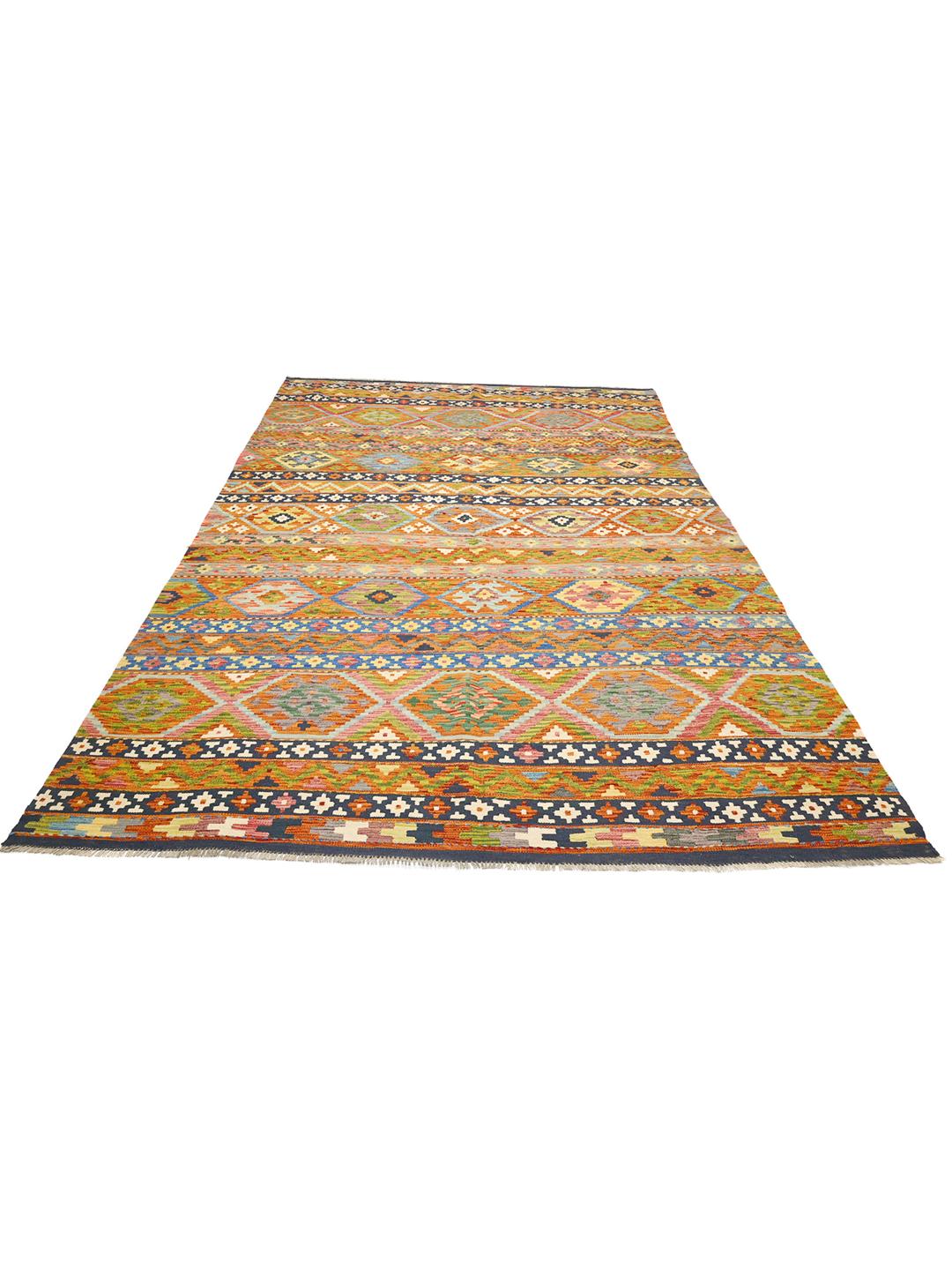
Kelim rugs from the Middle East represent a deep-rooted tradition of nomadic and village weaving that has survived for centuries. These rugs are traditionally created by weavers who pass their knowledge down through generations, utilising techniques that prioritise both utility and beauty. The history of these pieces is tied to the nomadic lifestyles of the region, where the flat-weave construction allowed for rugs to be easily rolled, transported, and repurposed as both floor coverings and functional storage bags.
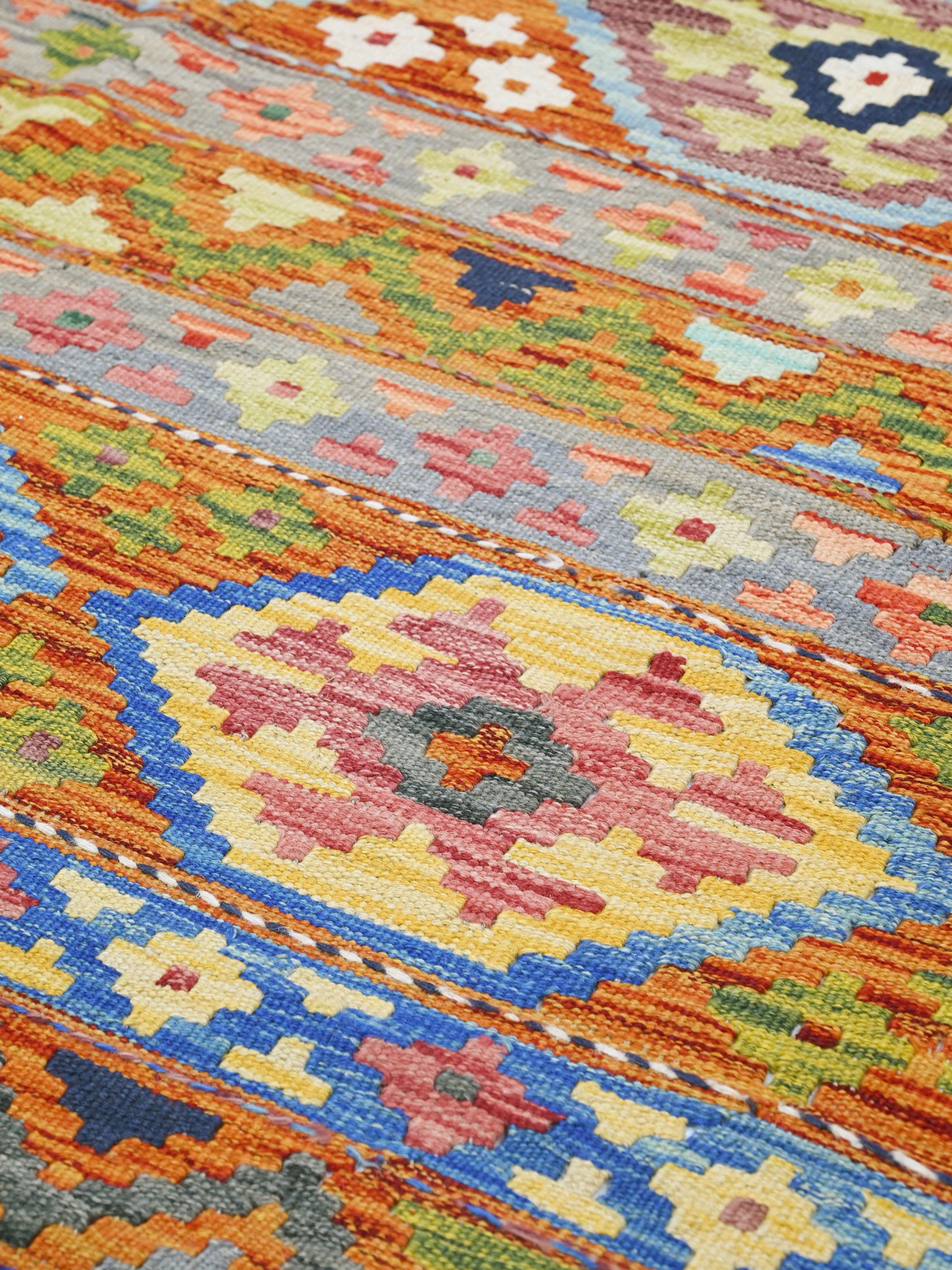
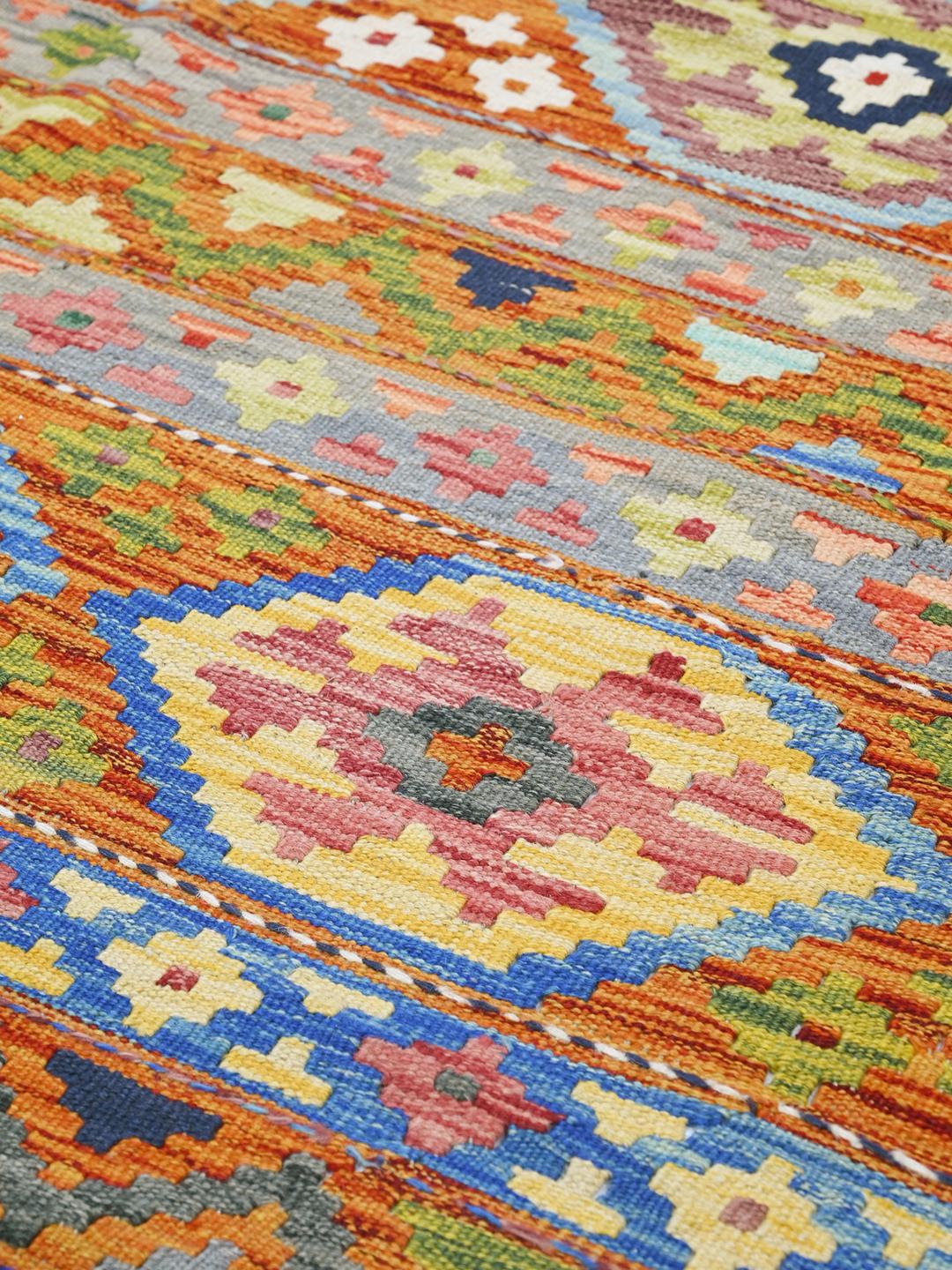
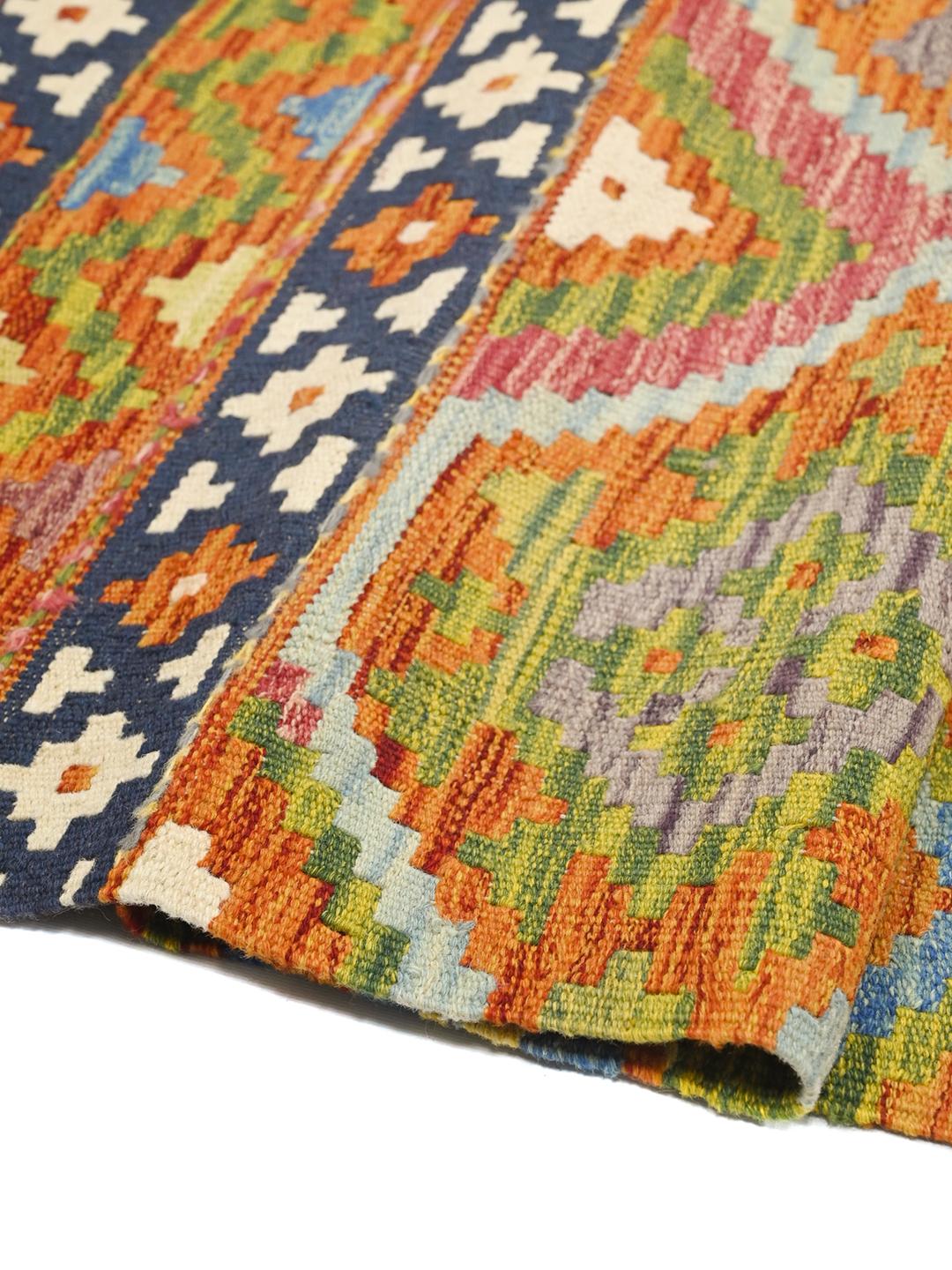
The term Kelim refers to a specific tapestry-weave technique where the weft threads are passed through the warp threads to create the design, resulting in a rug without a pile. This method is highly valued for its ability to produce sharp, clear geometric patterns and a lightweight, reversible finish. For the collector, the quality of a Kelim is judged by the tightness of this weave and the precision with which the weaver manages colour changes, ensuring that the finished product is both visually striking and structurally sound.
The visual language of Middle Eastern Kelims is dominated by geometric abstraction, with diamonds, triangles, and intricate border motifs serving as the primary vocabulary. These patterns are often symbolic, reflecting the environment and cultural history of the weaver. The use of vibrant, earthy dyes gives these rugs their characteristic warm look, making them highly sought after for their ability to add a sense of history and vibrant colour to a modern interior.
Owning a Middle Eastern Kelim is an invitation to connect with a legacy of skill and heritage. These rugs are valued not only for their aesthetic beauty but for the narrative they carry, representing the resilience and creativity of the people who make them. By preserving these traditional weaving methods, each piece serves as a bridge between the ancient traditions of Central Asia and the contemporary home, offering a level of cultural weight and authenticity that is increasingly rare in today's market.