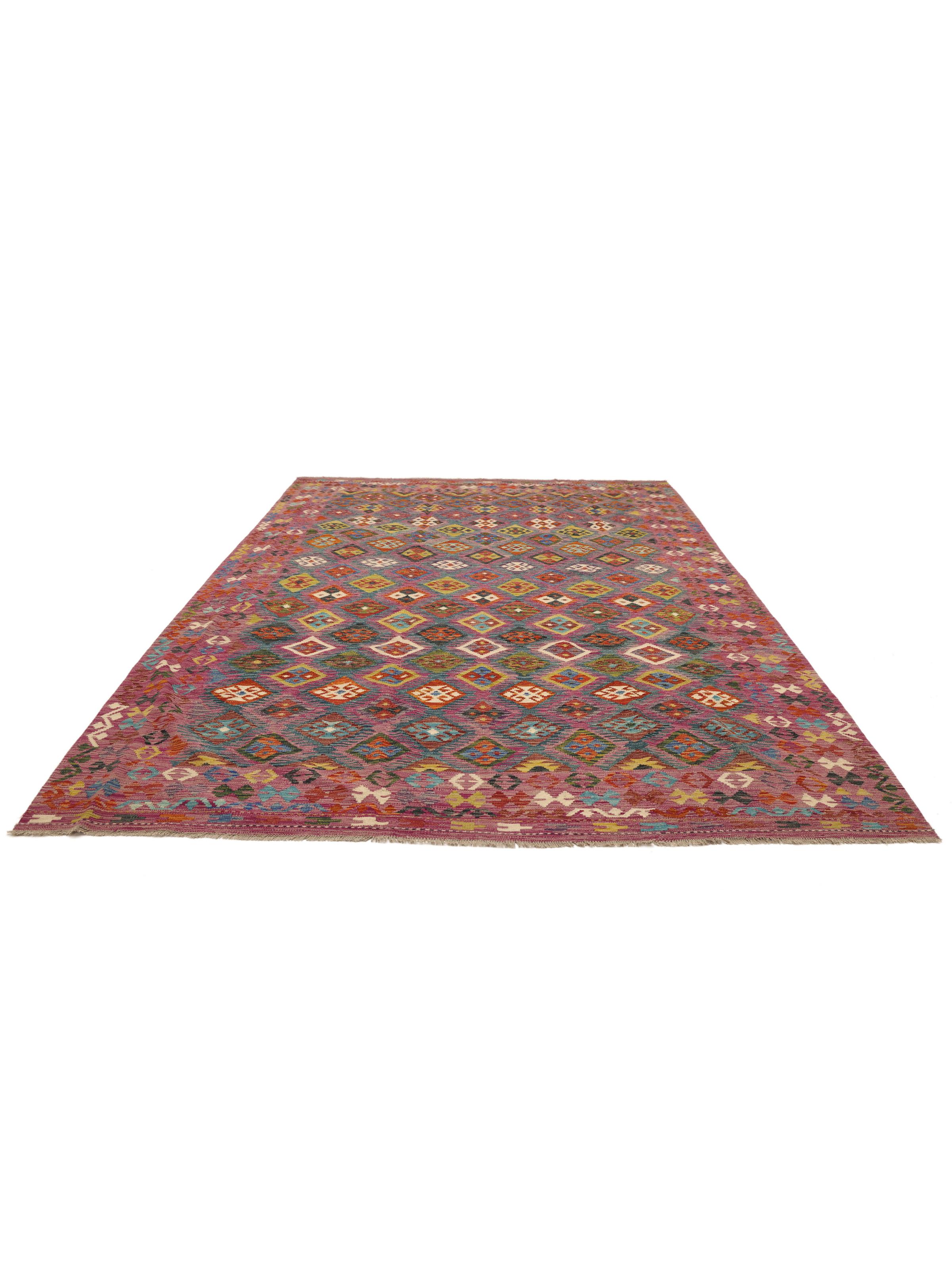
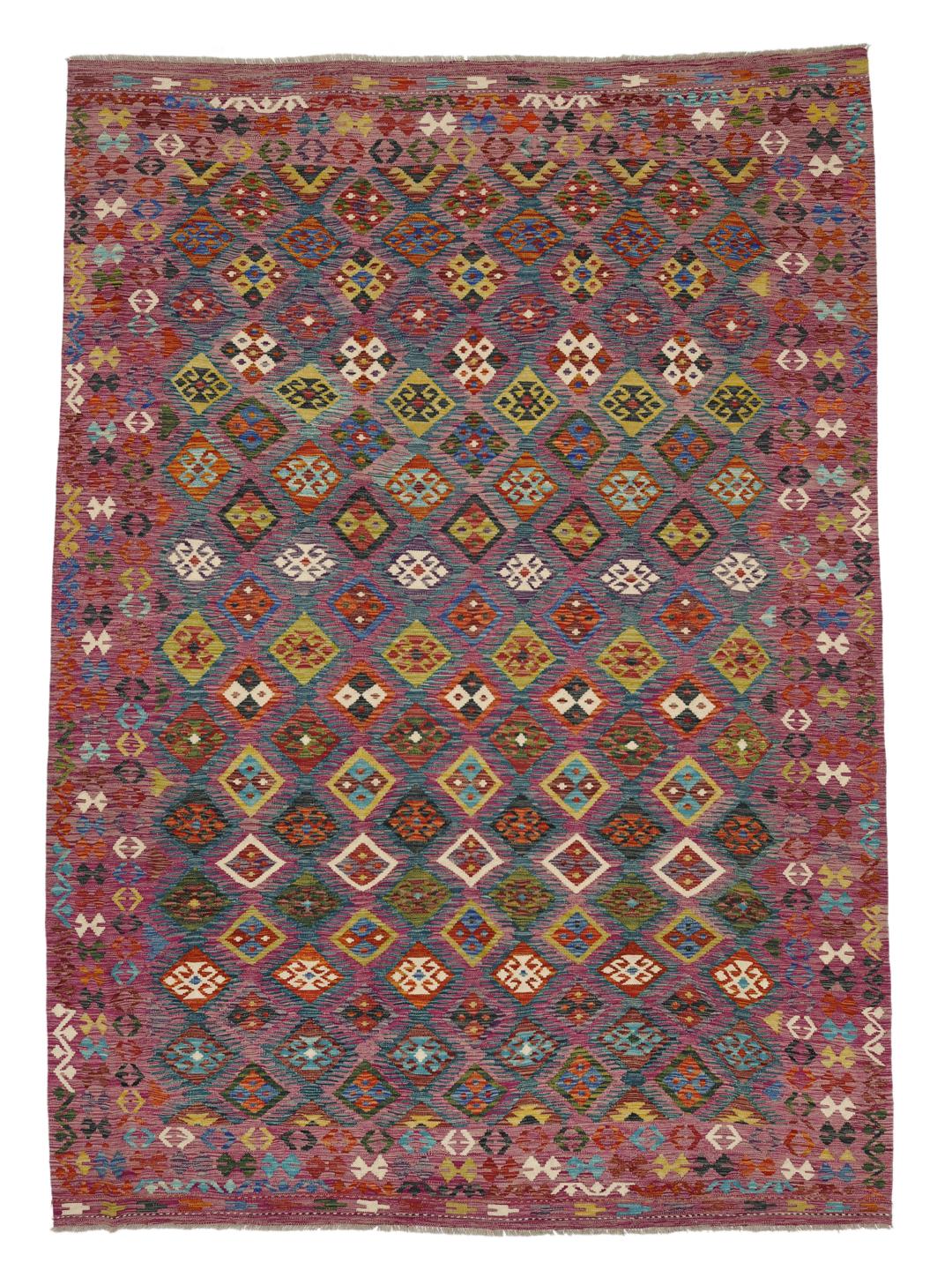
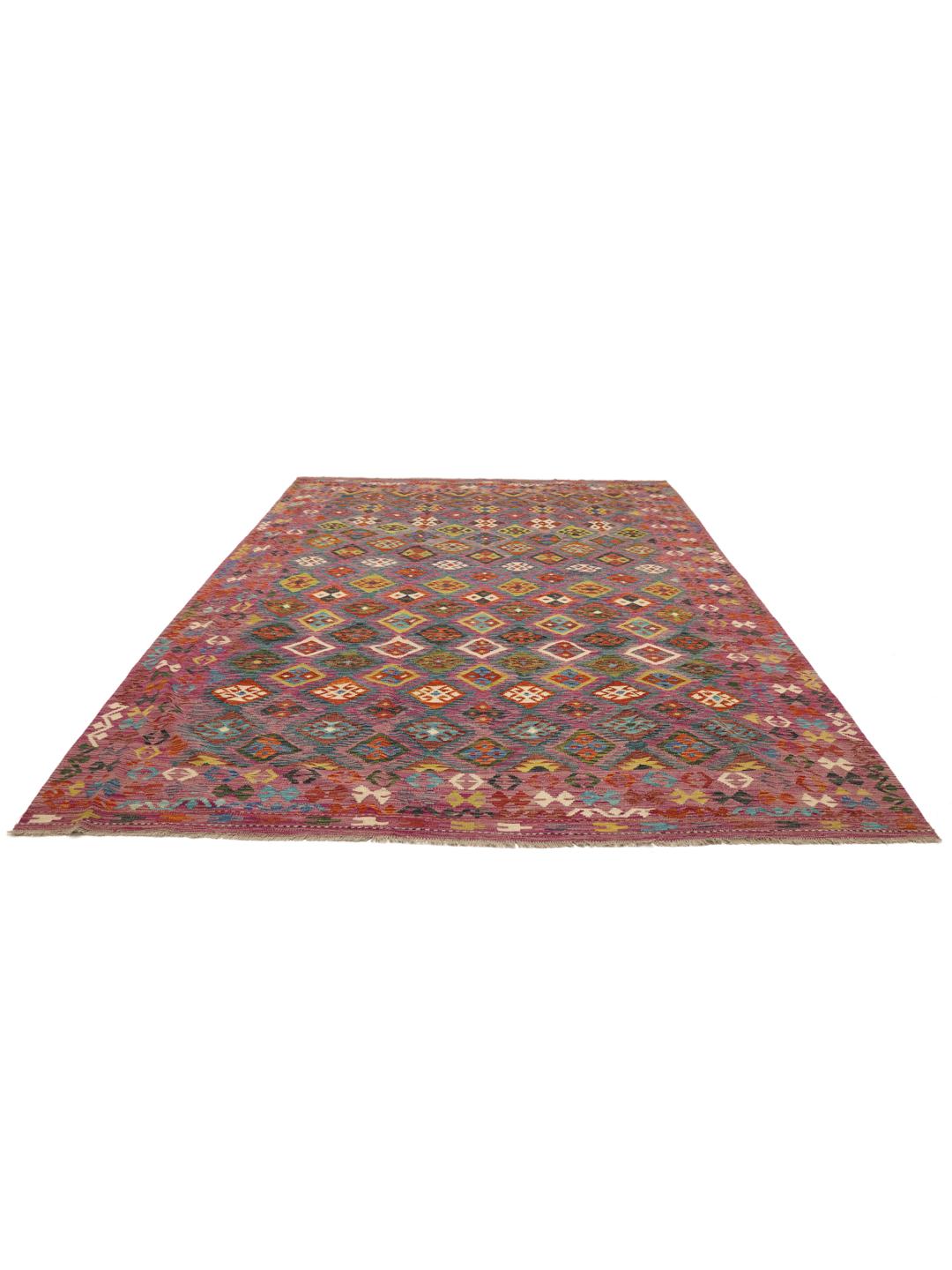
The art of kelim weaving in Afghanistan is rooted in a centuries-old tradition that spans the vast landscapes of Central Asia. These rugs were historically created by nomadic and semi-nomadic tribes, serving essential roles as floor coverings, wall hangings, and protective blankets. The evolution of these designs reflects the merging of diverse cultural influences along ancient trade routes, resulting in the distinct, bold aesthetic seen in this piece.
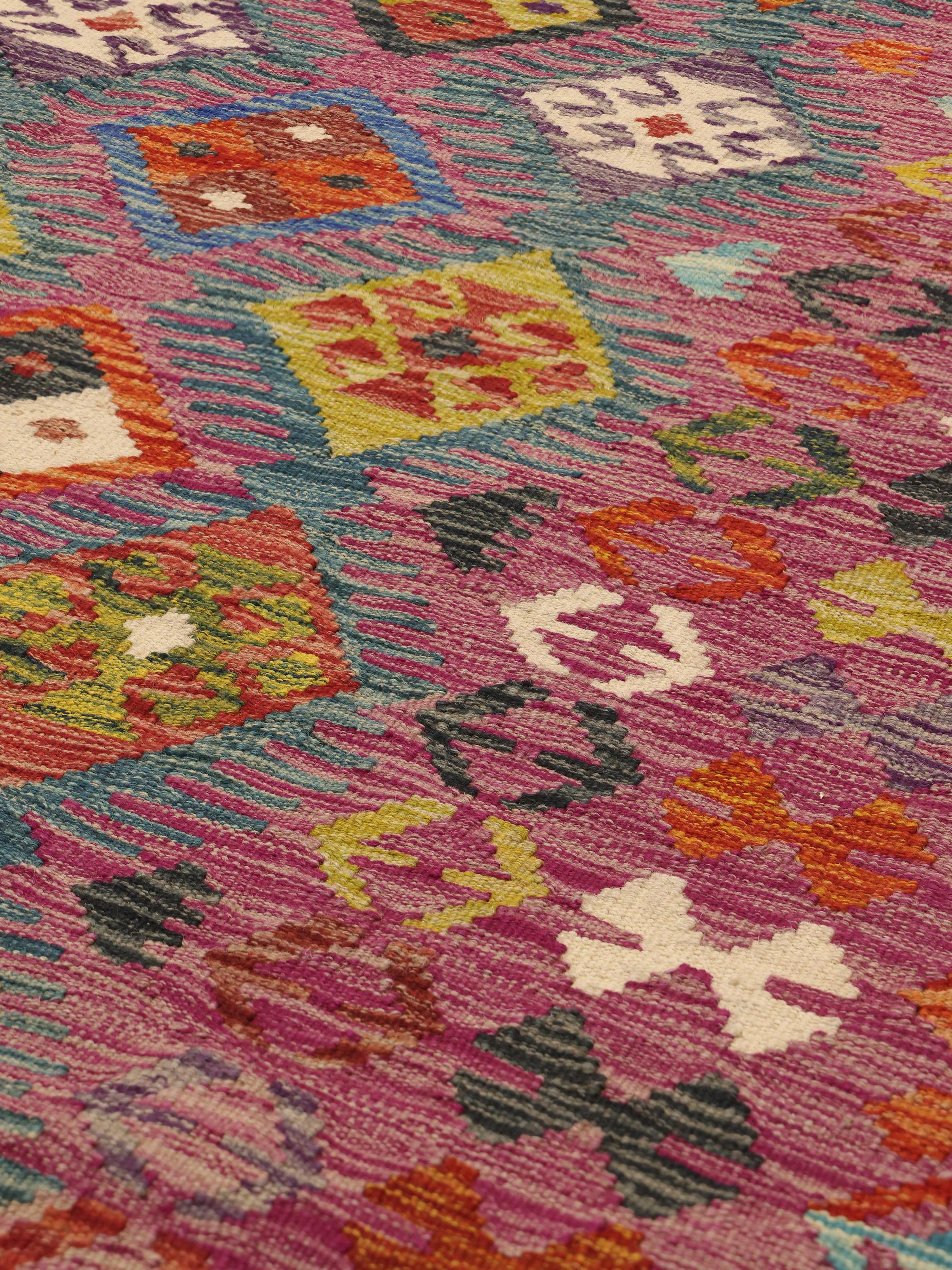
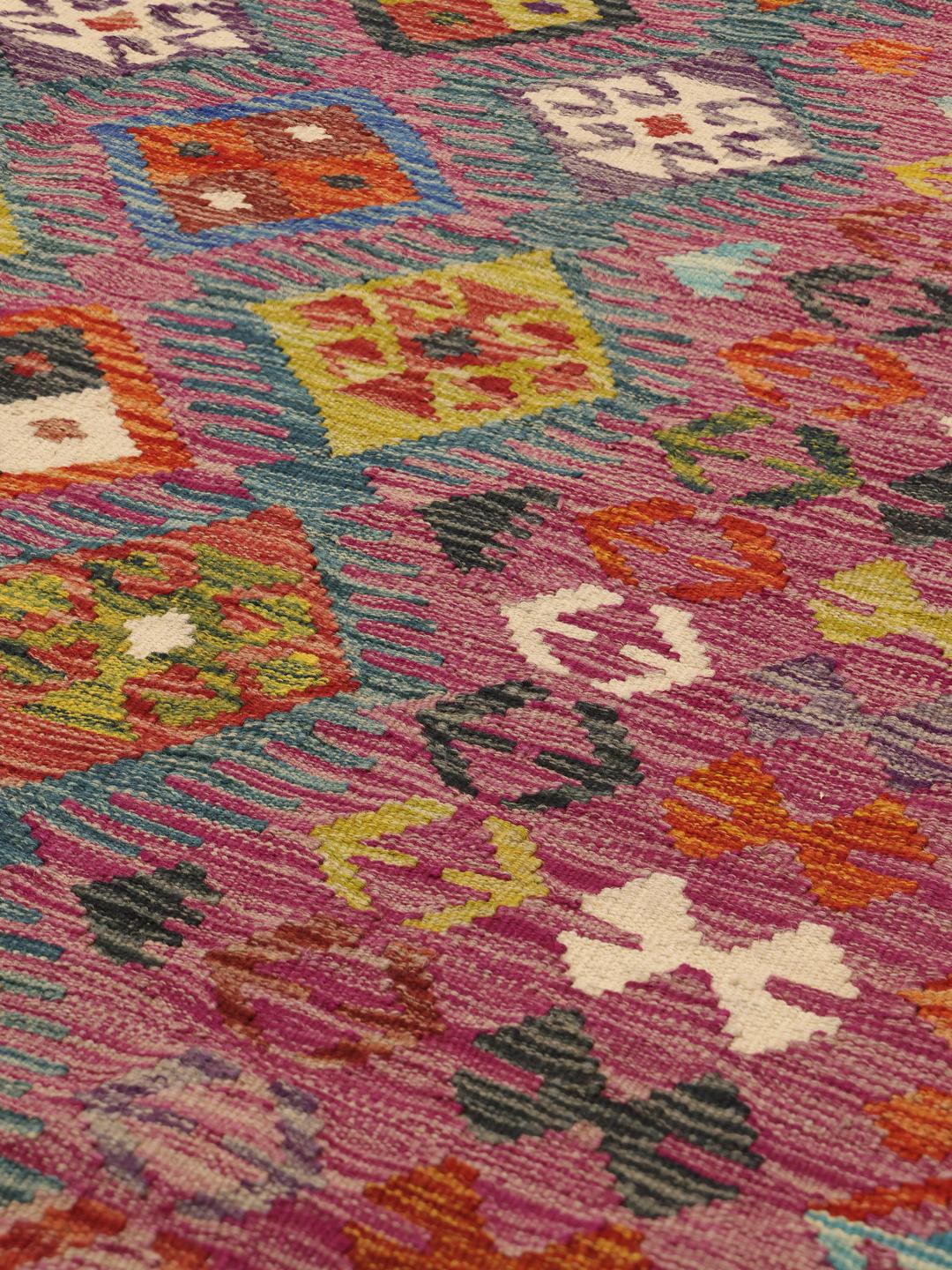
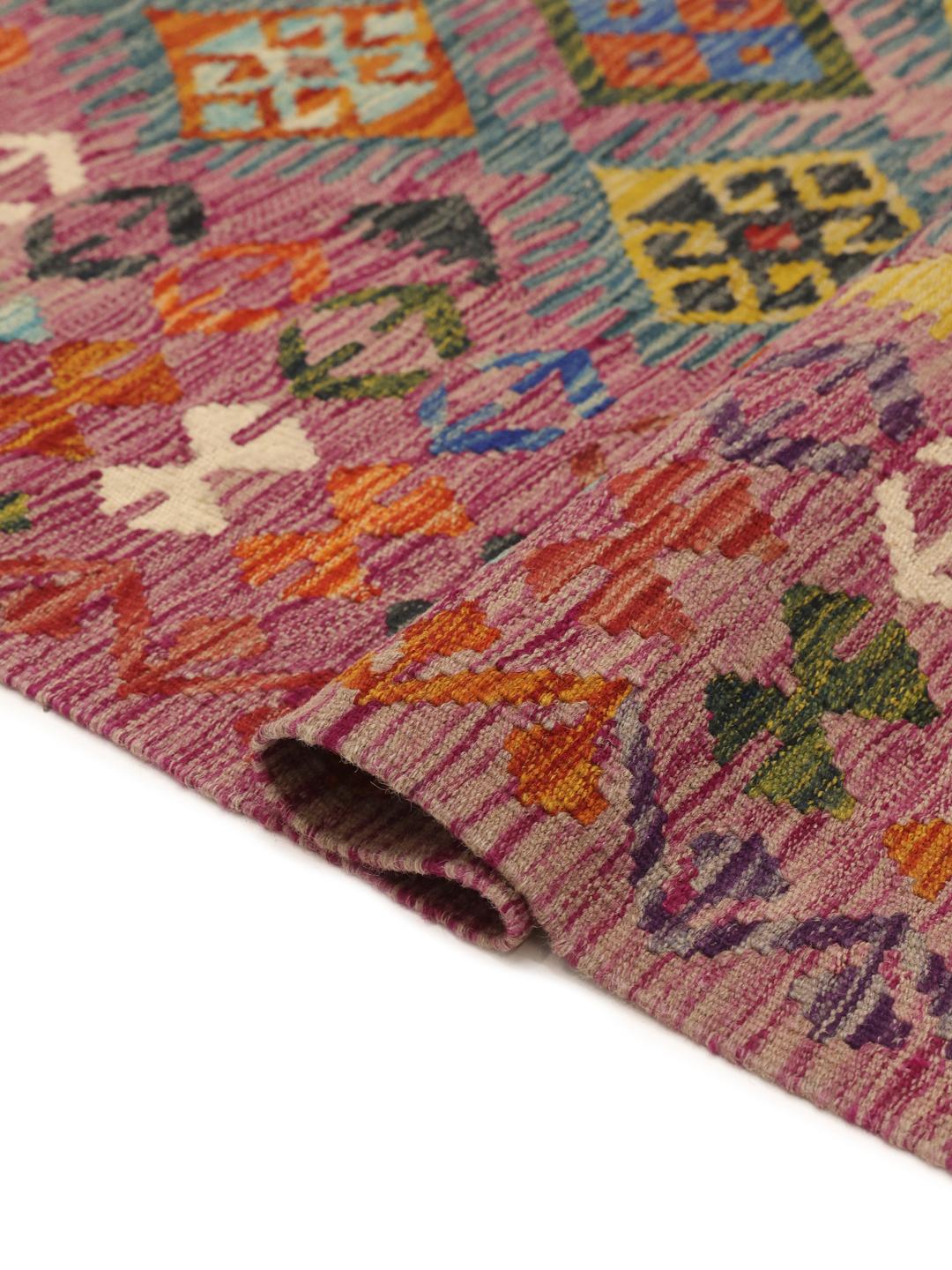
A kelim is characterised by its flat-weave construction, which distinguishes it from pile-based rugs. This technique involves interlacing the warp and weft strands tightly to create a smooth, durable fabric without a raised pile. This method is highly prized for its clarity of design, as the geometric motifs are rendered with exceptional sharpness, allowing the intricate patterns to stand out with remarkable precision.
The signature design language of the Afghan kelim often features repeating geometric motifs, such as diamonds and tribal emblems, arranged in rhythmic, orderly rows. These patterns are not merely decorative but often carry symbolic meanings related to tribal identity and protection. The use of vibrant, natural dyes creates a rich visual depth, ensuring that the rug remains a captivating piece that draws the eye and anchors a room.
Collecting a kelim of this calibre is an act of preserving a tangible piece of history. These rugs are valued not only for their aesthetic appeal but for the immense skill and cultural narrative embedded in every thread. To own such a rug is to become a custodian of a long-standing craft, celebrating the endurance of human creativity and the timeless appeal of traditional, artisan-made goods.