Kelim rugs have a storied history that stretches across the vast landscapes of the Middle East and Central Asia. Traditionally created by nomadic and semi-nomadic tribes, these flat-woven textiles were designed to be versatile, portable, and durable, serving as floor coverings, blankets, and storage bags during long migrations along ancient trade routes.
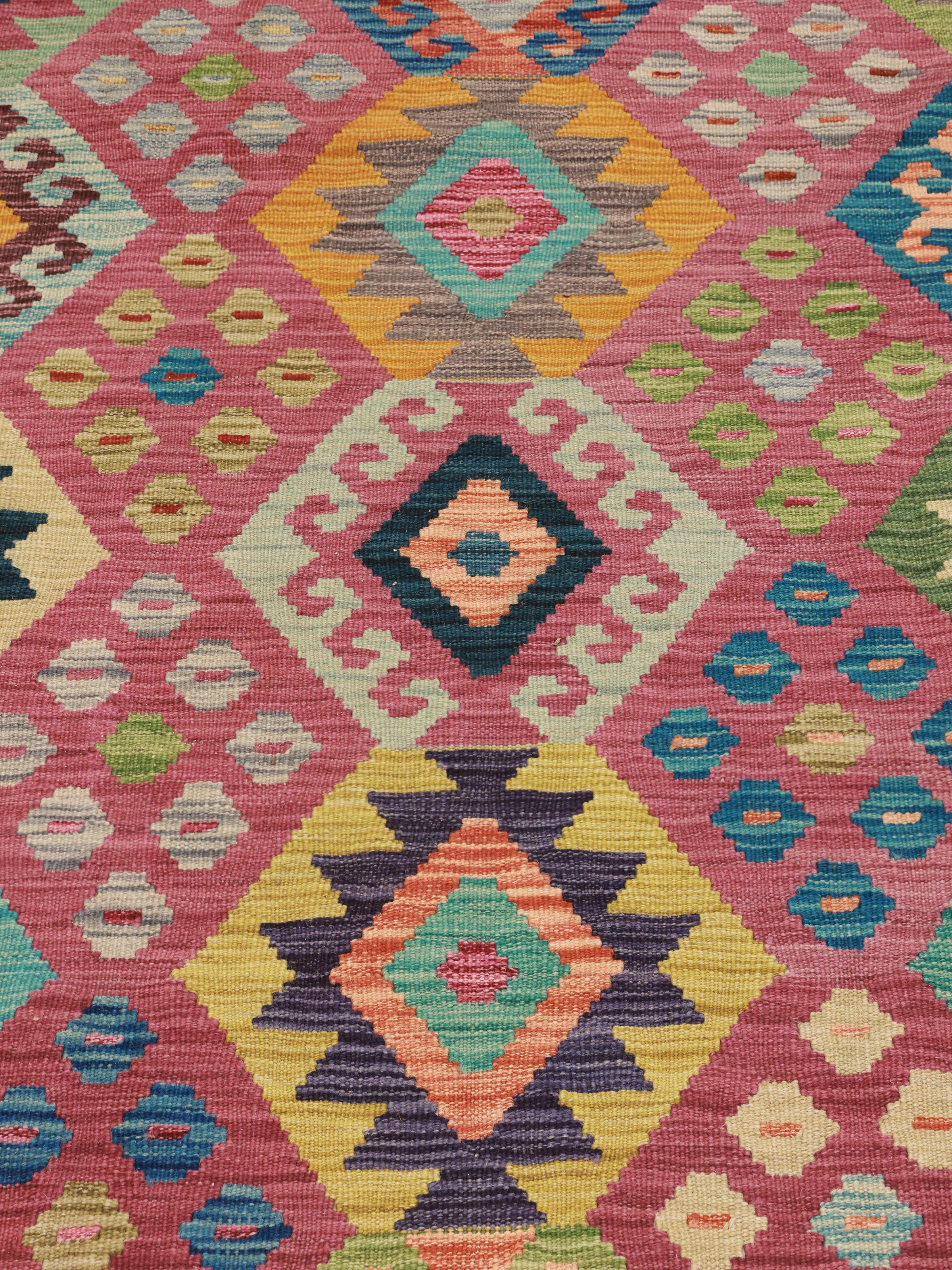
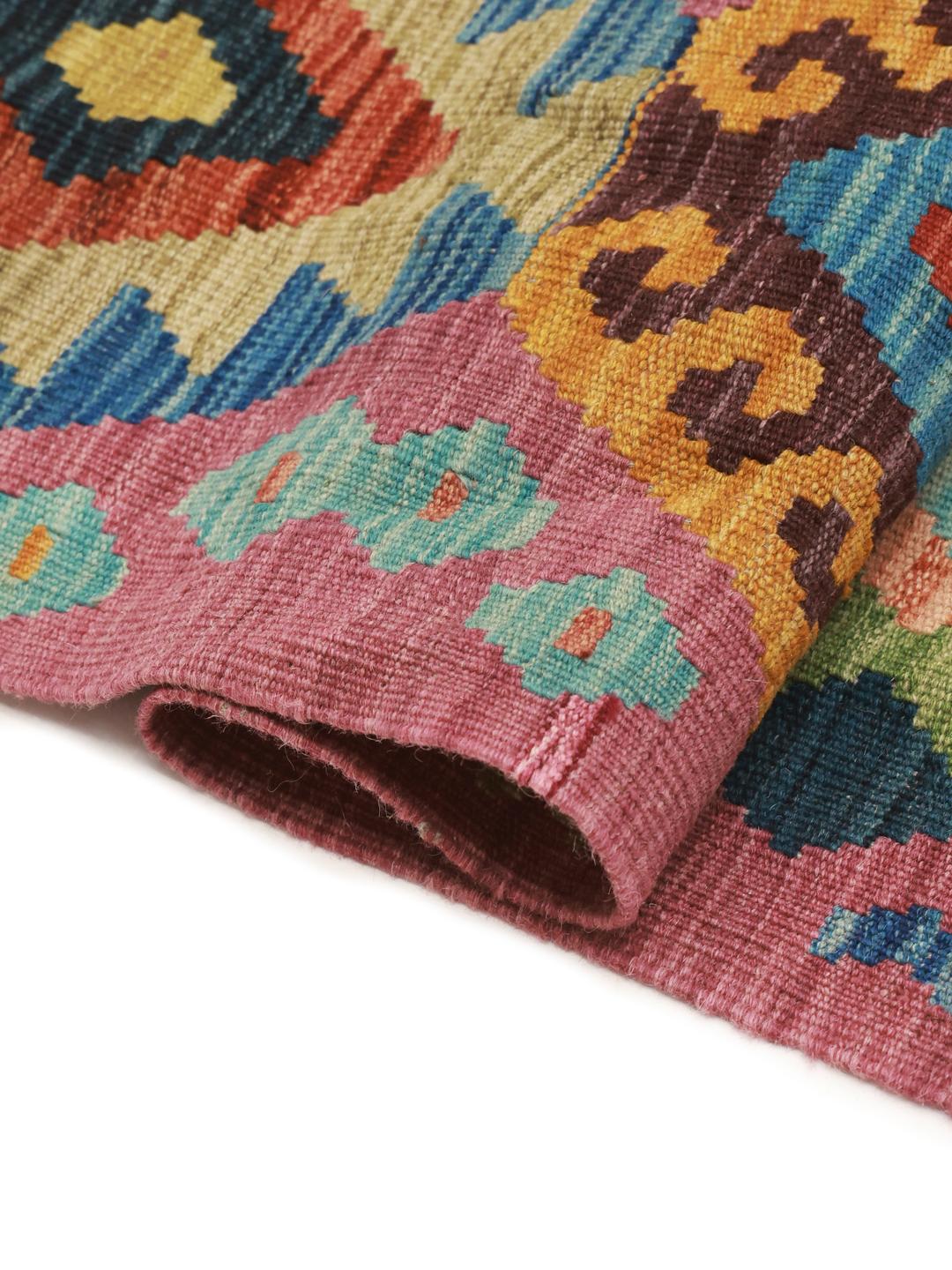
The term Kelim refers to the specific flat-weaving technique used, where the design is formed by weaving the coloured weft threads through the warp. Unlike pile rugs, which are knotted, Kelims are created by interlocking the coloured threads to produce a smooth, reversible surface. This technique allows for the creation of sharp, clean geometric patterns that are characteristic of the regional style.
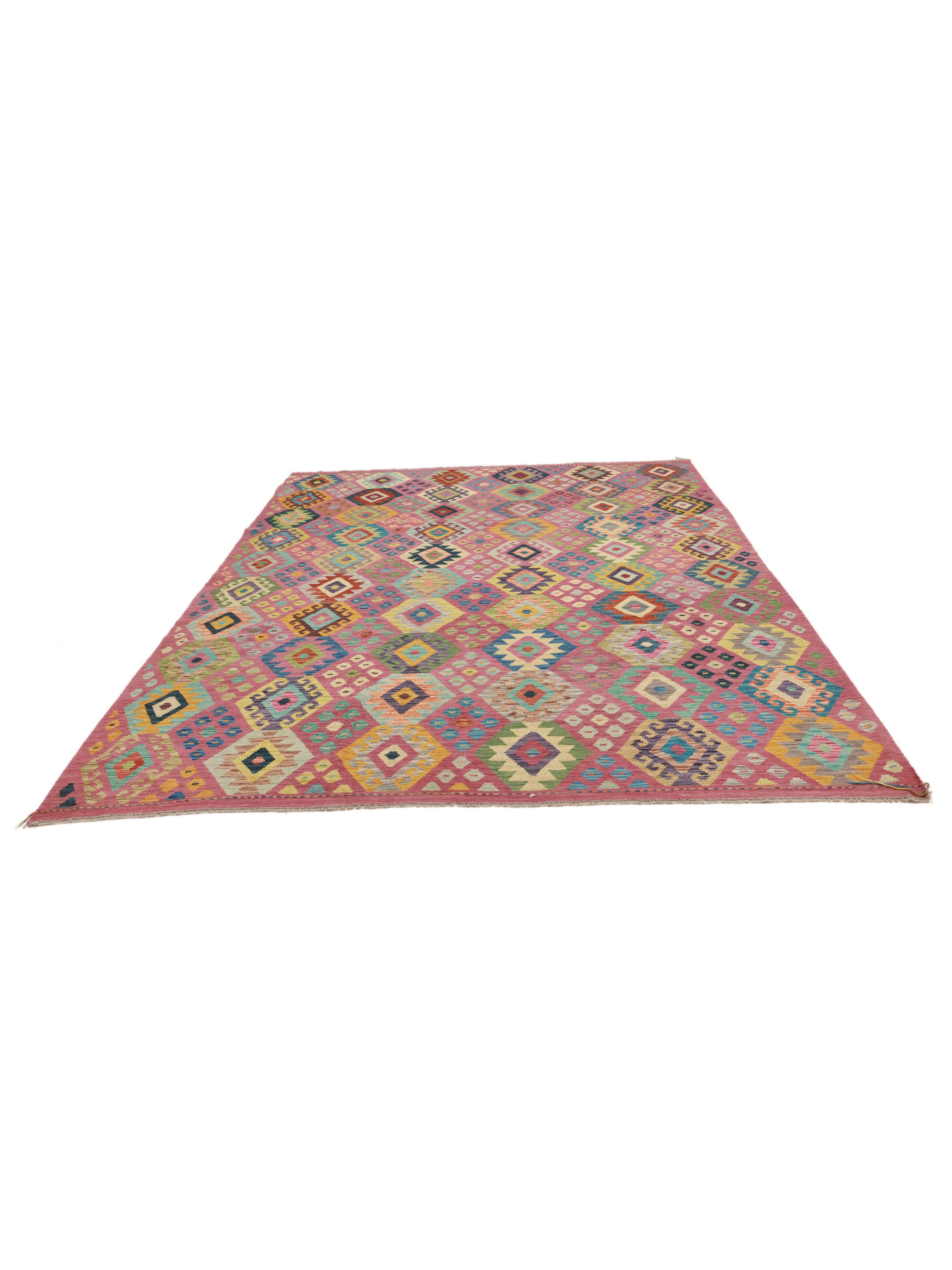
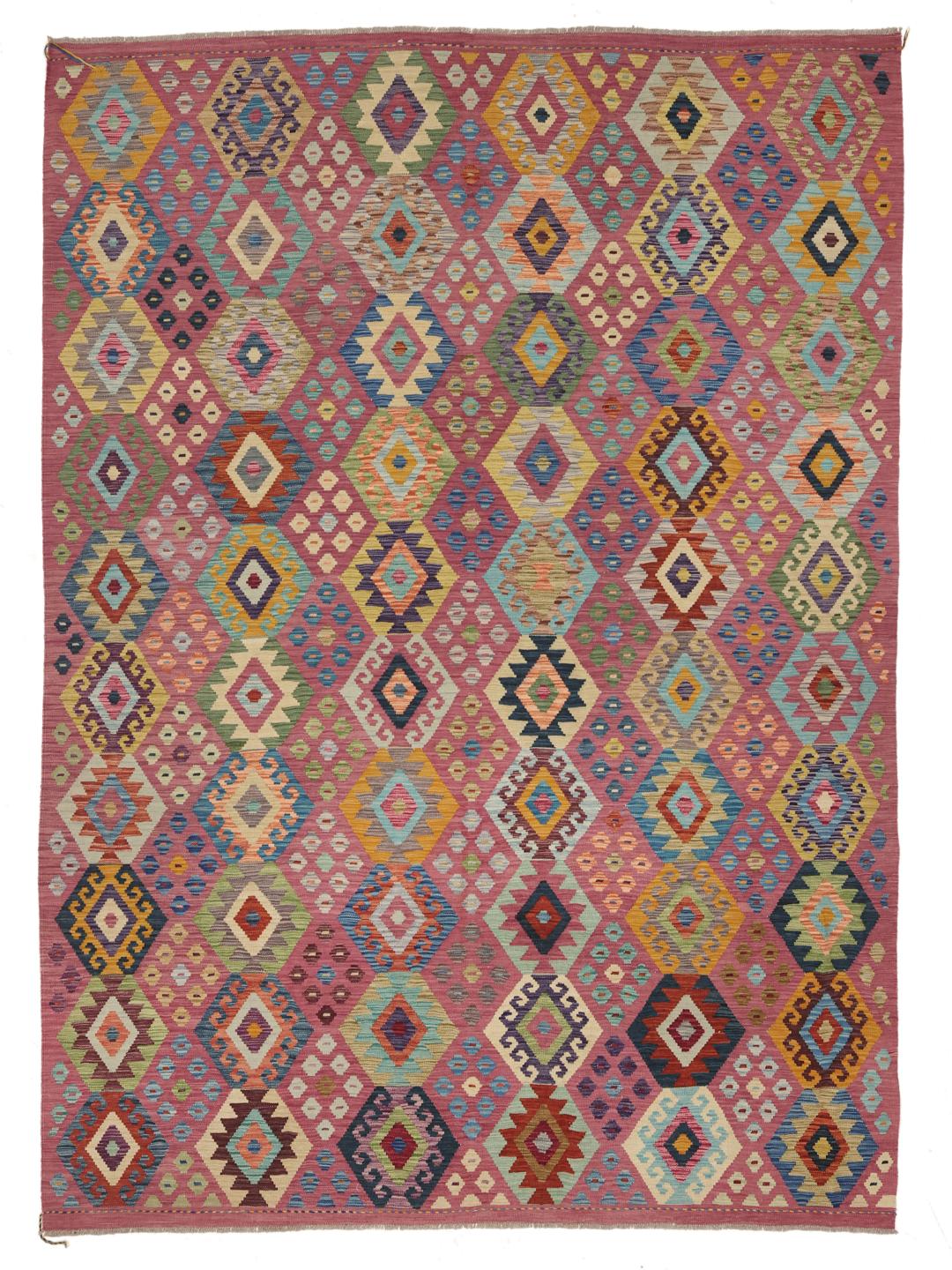
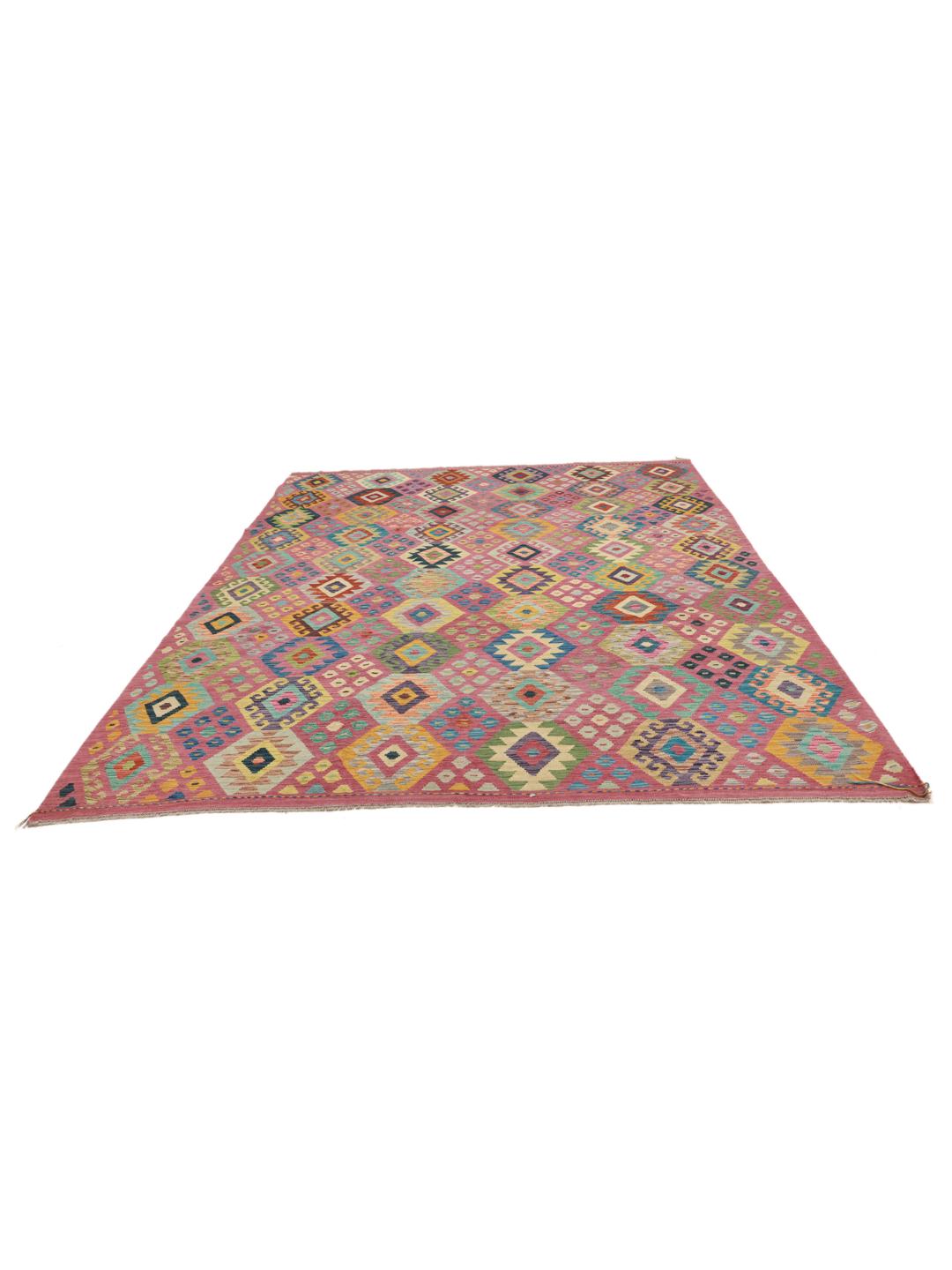
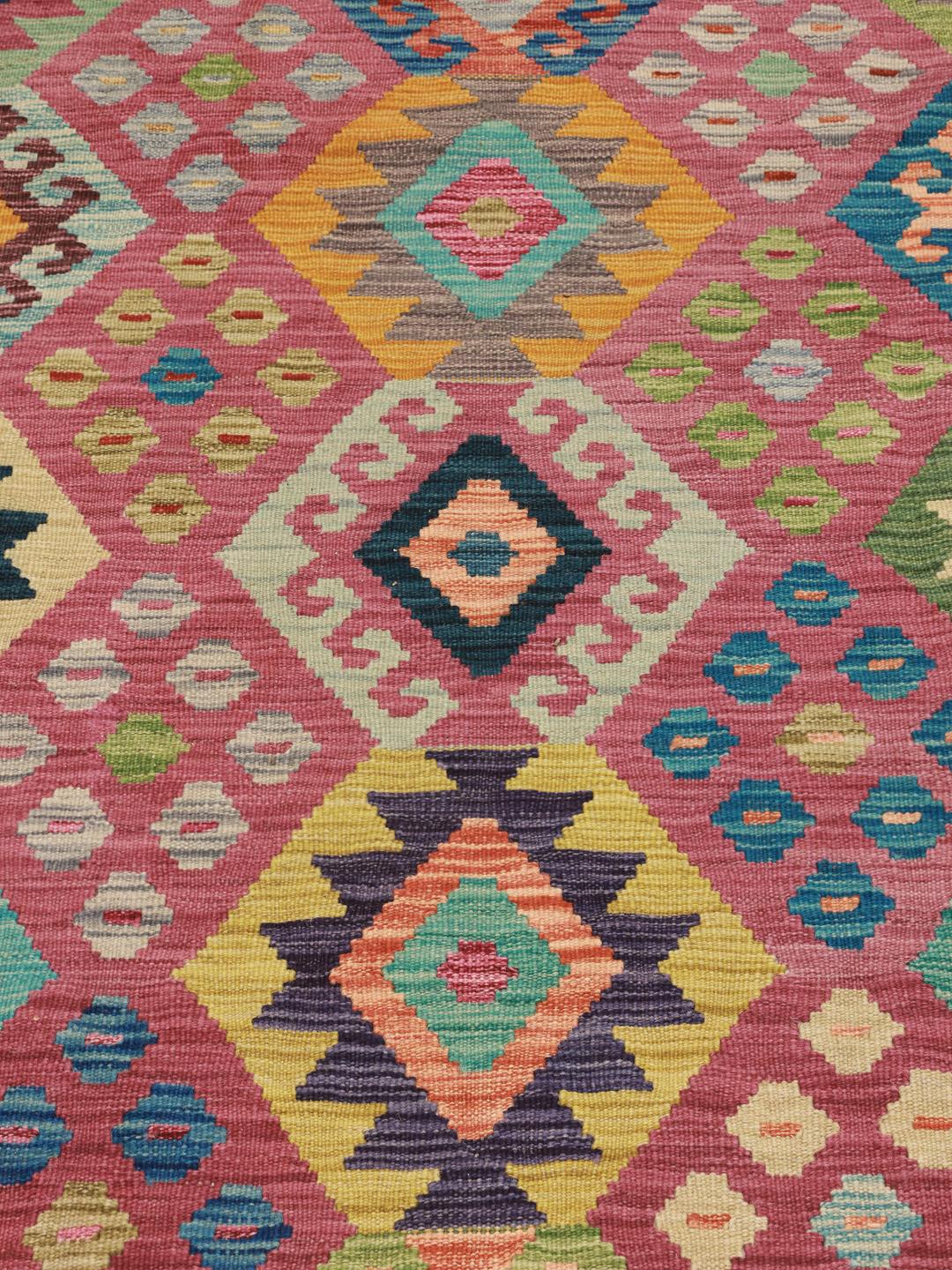
The design of this rug is defined by repeating diamond motifs, a hallmark of tribal weaving that often carries symbolic meaning within the community. The rich, multi-coloured palette reflects the traditional use of natural dyes, which were once sourced from regional plants and minerals. While patterns can be highly individualistic, they often follow tribal traditions passed down through generations, with every variation in colour or motif telling a story of the maker's heritage.
Today, these rugs are highly prized by collectors for their cultural significance and the raw skill required to produce them. Owning an authentic Afghan Kelim is an investment in a living tradition, connecting your home to a lineage of makers whose expertise has been refined over centuries. It represents a commitment to authentic, heritage-driven design that values the human story behind every thread.