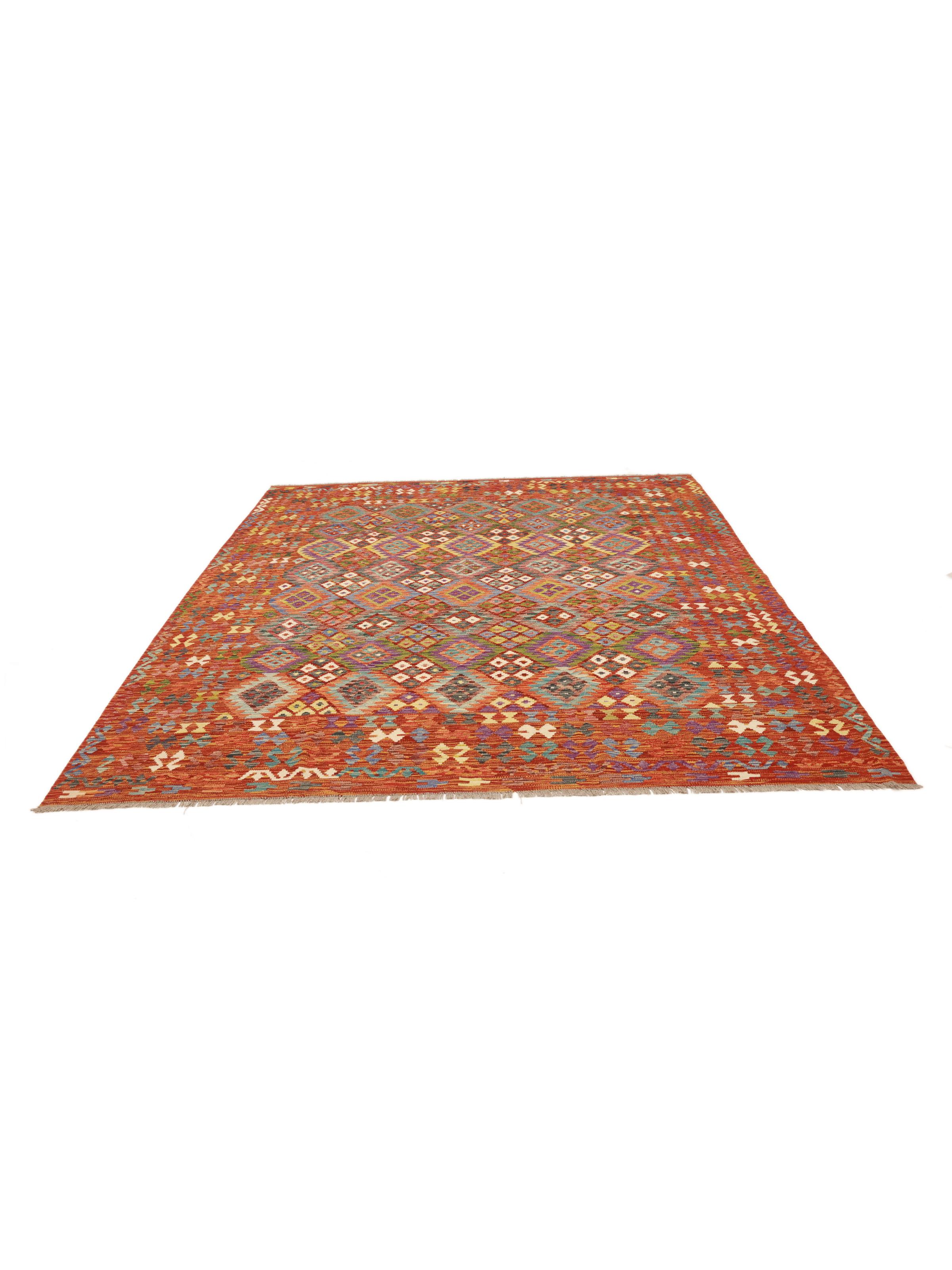
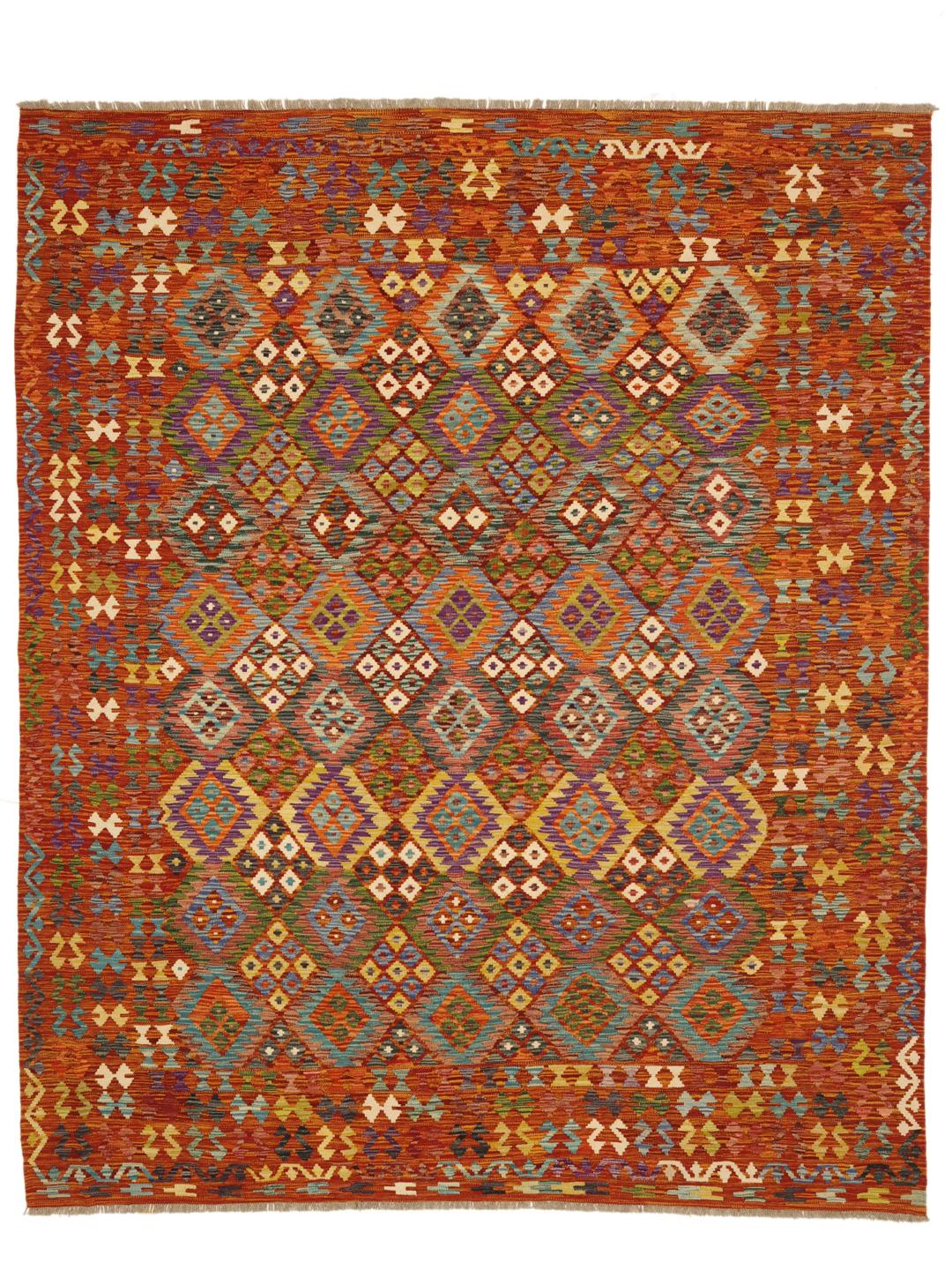
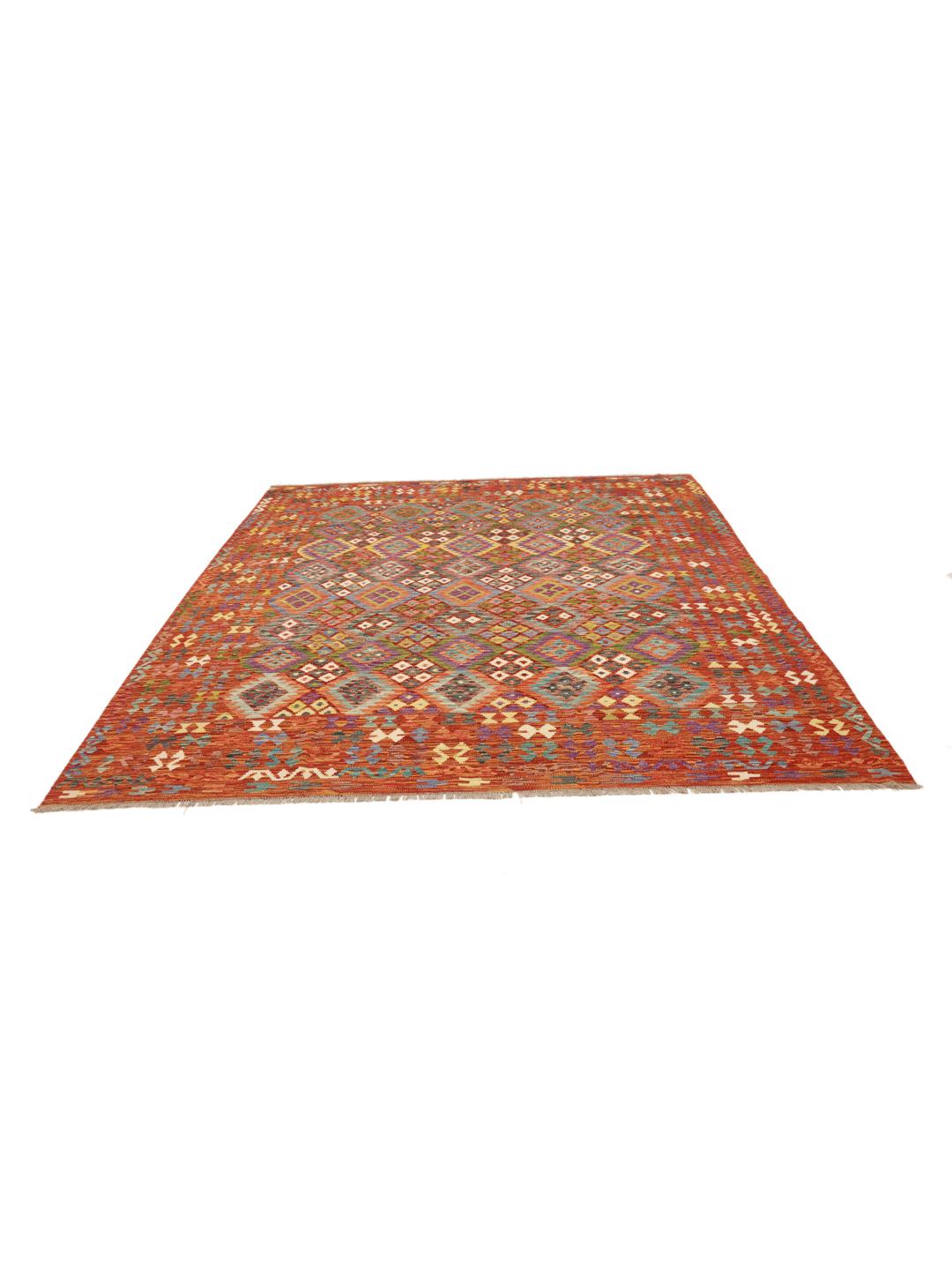
The Kelim Afghan Old Style tradition finds its roots in the nomadic cultures of the Middle East, where weaving was not merely a craft but a vital necessity for life on the move. These flat-weave rugs were originally designed as versatile, portable floor coverings, room dividers, and storage bags, serving the functional needs of families traversing the rugged landscapes of the region.
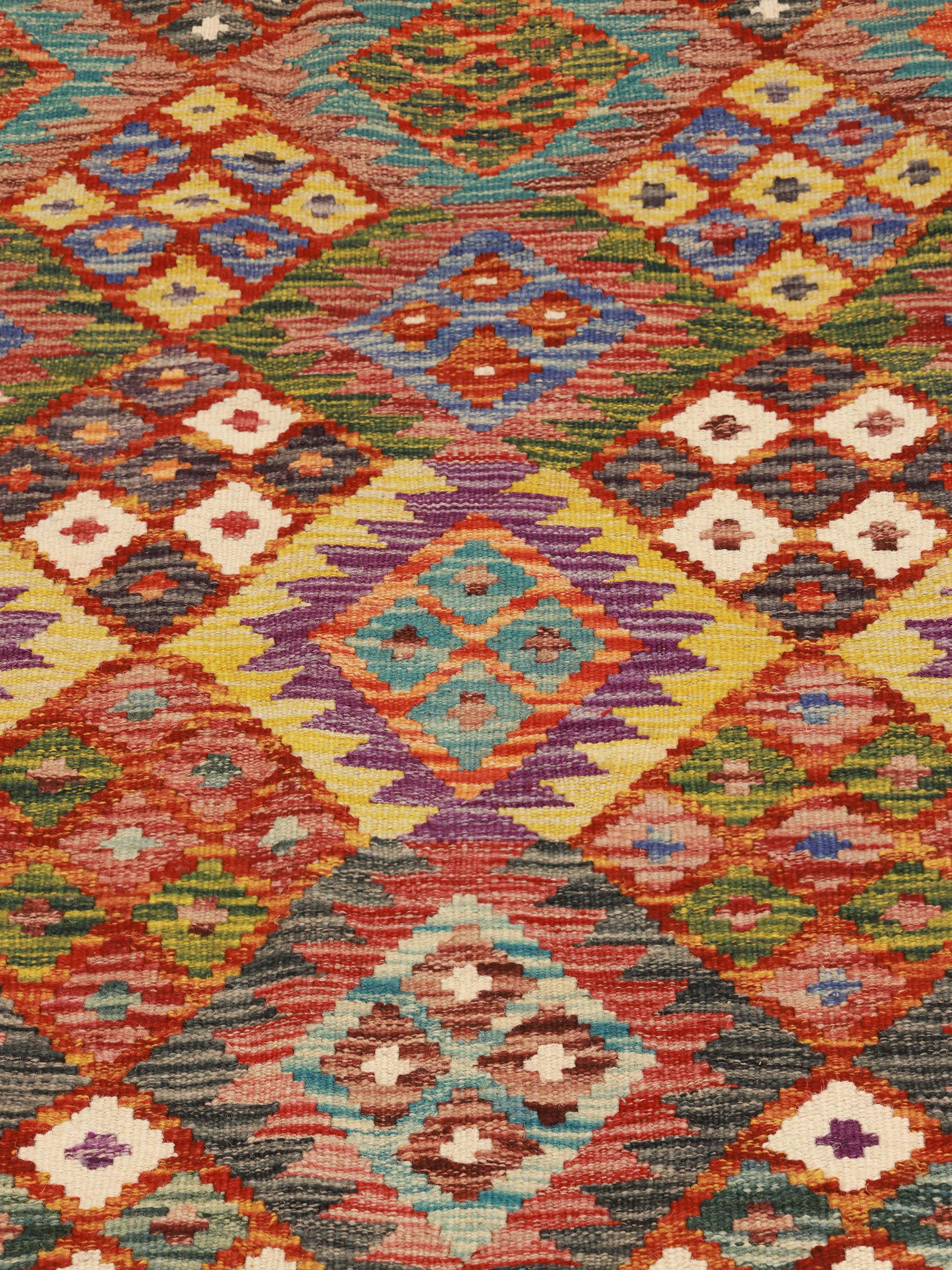
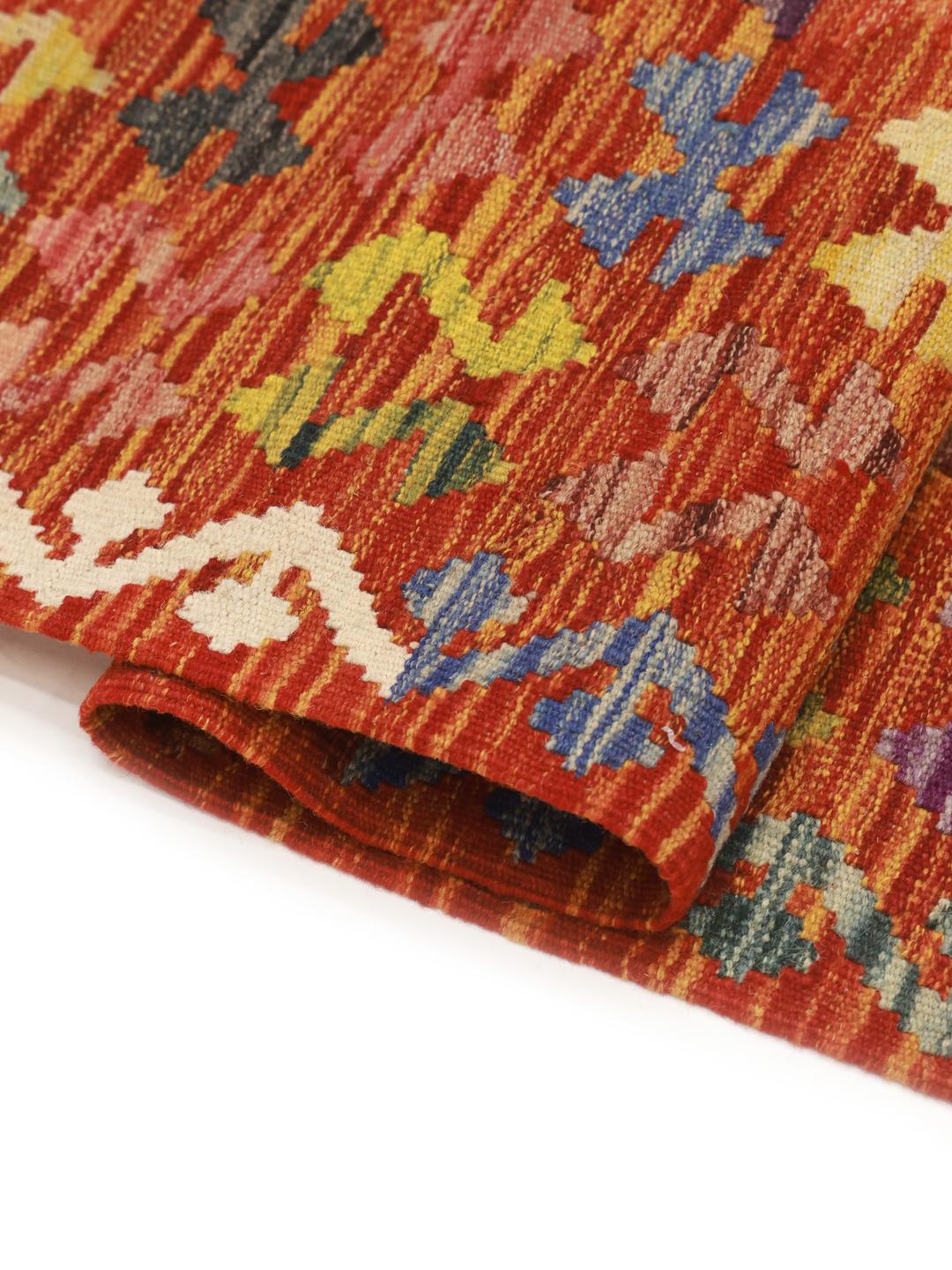
The term 'kelim' refers to the specific tapestry-weave technique where the weft threads are pulled tightly over the warp, creating a smooth, durable surface without a raised pile. This technique is highly prized for its clarity of pattern and its resilience, as the lack of pile makes the rugs less prone to collecting dust and easier to maintain over time, while the tight weave ensures a sturdy structure.
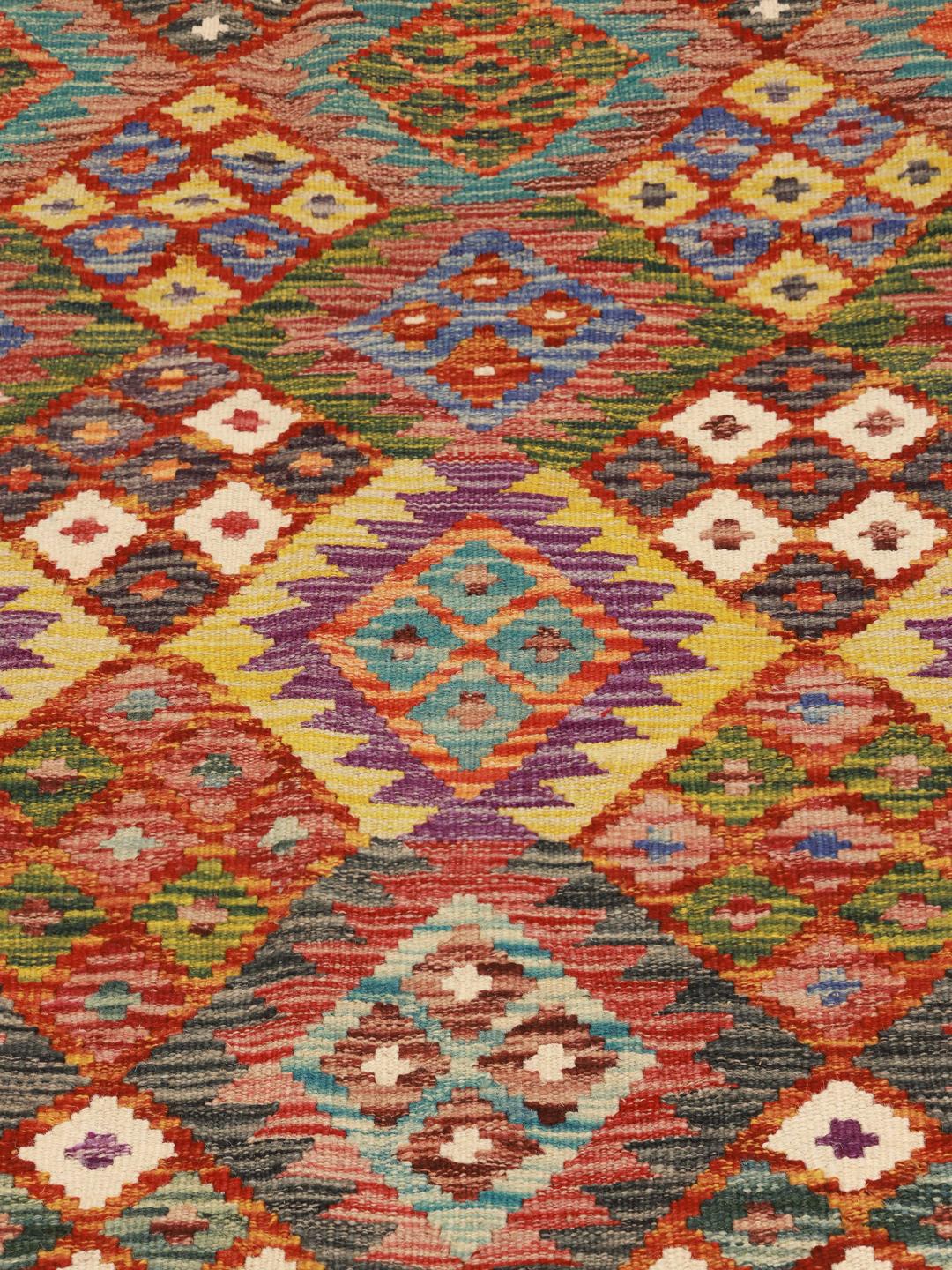
Visually, these rugs are defined by a language of geometric symbols and motifs. You will often see diamond shapes, triangles, and stylized floral elements arranged in repetitive, balanced compositions. The colours in this specific tradition are often drawn from natural dyes found in the local environment, resulting in deep, earthy reds and vibrant, contrasting accents that tell the story of the weaver's surroundings and cultural identity.
Today, these pieces are highly valued by collectors and enthusiasts who recognise the skill and history woven into every inch. Owning an Afghan kelim is an act of preserving a cultural legacy, connecting your modern home to an ancient lineage of master weavers. These rugs are not just floor coverings but enduring works of art that carry the soul of their origin, offering a depth of character that grows more beautiful with each passing year.